
Author: Vigor Forty Editorial Team
Medically Reviewed By: Editorial Review Board
Disclaimer: This article is for informational purposes only and is not a substitute for professional medical or mental health advice. Consult your physician before beginning a new exercise program or if you suspect your stress levels are impacting your health. Read our full Medical Disclaimer.
📌 Key Takeaways
- Chronic Stress and Elevated Cortisol Sabotage Your Cardio Goals: While acute cortisol is essential for energy and adaptation, chronically elevated cortisol from relentless work pressure, insufficient sleep, and excessive high-intensity training breaks down muscle, stores visceral fat, suppresses immune function, and impairs cardiovascular recovery.
- The Autonomic Nervous System Holds the Key: Your body’s balance between the sympathetic (“fight or flight”) and parasympathetic (“rest and digest”) branches determines whether you adapt to training or break down. After 40, the parasympathetic system can be slower to activate, making intentional recovery practices essential.
- Cardio Is a Double-Edged Sword: The right dose—primarily Zone 2 with a sprinkle of HIIT—lowers baseline cortisol and improves mood. Too much high-intensity work, or training without adequate recovery, elevates cortisol chronically and mimics the physiological profile of an overworked, exhausted body.
- Breathwork and Nature Exposure Are Immediate Parasympathetic Switches: Slow, extended-exhale breathing (like the 4-7-8 method) and spending time in green or blue spaces (forests, lakes, oceans) rapidly activate the vagus nerve, lowering heart rate and cortisol within minutes. These are free, portable, and profoundly effective.
- A “Stress-Informed” Training Week Adapts to Life’s Realities: Learning to adjust your planned workout based on your morning resting heart rate, heart rate variability, and subjective stress level—swapping a HIIT day for Zone 2 or complete rest when needed—prevents overtraining and keeps you progressing for decades, not weeks.
Introduction: The Hidden Variable in Every Workout
You’ve optimized your training plan. You’re hitting your Zone 2 targets, nailing your HIIT intervals, lifting heavy, and prioritizing protein. By every external metric, you should be feeling fantastic and seeing continuous improvement. But instead, you’re tired. Maybe you’re not recovering like you used to. Maybe the scale isn’t budging despite your discipline. Or maybe you just feel… off. Flat. Irritable. Wired but tired.
The missing variable is stress. Not the acute, healthy stress of a hard workout that your body recovers from and adapts to. But the chronic, low-grade, never-switched-off stress of modern American midlife: the demanding boss, the aging parents, the college tuition bills, the 24/7 news cycle, the sleep that’s never quite enough. This chronic stress saturates your body with cortisol, and when you add a heavy training load on top of an already overloaded nervous system, the result is not fitness. It’s a biological state of siege.
Understanding the interplay between life stress, training stress, and your autonomic nervous system is the mark of a mature athlete. It’s what separates the 45-year-old who is perpetually injured and frustrated from the one who keeps getting stronger, leaner, and more resilient with each passing year. This guide unpacks the physiology of cortisol, the critical balance between your sympathetic and parasympathetic nervous systems, and the practical, evidence-based tools—from breathwork to nature exposure to stress-informed training modifications—that will allow you to work with your body’s stress response, not against it. By the end, you’ll have a complete stress-management toolkit that protects your heart, your mind, and all the hard work you’ve invested in your cardio practice.
Section 1: The Physiology of Cortisol—Friend and Foe
Cortisol is not the enemy. It’s a vital glucocorticoid hormone produced by your adrenal glands that follows a natural daily rhythm: highest in the morning to help you wake up and get moving, gradually declining throughout the day to a low point in the evening that allows sleep.
The Good: Acute Cortisol and Adaptation
Exercise is a stressor that acutely spikes cortisol. This is normal and healthy. Cortisol mobilizes glucose for energy, enhances fat burning, and has anti-inflammatory effects. The acute spike, followed by a return to baseline during recovery, is part of the signaling cascade that makes your muscles repair and your cardiovascular system adapt. This is the “hormesis” effect: a small dose of stress makes you stronger.
The Bad: Chronic Cortisol Elevation
The problem arises when cortisol stays elevated chronically—from psychological stress, lack of sleep, overtraining, under-eating, or a combination of all four. In a chronically elevated state, cortisol’s effects turn destructive:
- Muscle Catabolism: Cortisol breaks down muscle protein into amino acids for glucose production, stripping away the lean mass you’re working hard to build or preserve.
- Visceral Fat Storage: Chronically high cortisol promotes the deposition of fat specifically in the abdominal cavity—the dangerous visceral fat linked to heart disease and metabolic dysfunction.
- Bone Loss: Cortisol inhibits bone formation and decreases calcium absorption.
- Immune Suppression: You get sick more often, and minor injuries take longer to heal.
- Disrupted Sleep: High evening cortisol makes it hard to fall asleep and reduces deep sleep quality, creating a vicious cycle that further elevates cortisol.
Midlife Vulnerability
After 40, the hypothalamic-pituitary-adrenal (HPA) axis can become dysregulated more easily. Perimenopausal hormonal shifts in women and declining testosterone in men interact with cortisol pathways. The same workload that felt manageable at 30 can feel overwhelming at 45, in part because the body’s stress-buffering systems have less reserve. Recognizing this is not an admission of weakness; it’s the first step to training smarter.
Section 2: The Autonomic Nervous System—Your Body’s Accelerator and Brake
Imagine your nervous system as a car. The sympathetic nervous system (SNS) is the accelerator. The parasympathetic nervous system (PNS) is the brake. Health and high performance depend on having both a responsive accelerator and a powerful, well-maintained brake. Most midlife Americans are driving through life with the accelerator pinned to the floor and the brake pads worn to nothing.
The Sympathetic State (Fight or Flight)
When you’re in a sympathetic-dominant state, your heart rate is elevated, blood is shunted away from digestion and toward your muscles, pupils dilate, and stress hormones circulate. This is the state for hard training, focused work, and genuine emergencies. The problem is that the brain doesn’t perfectly distinguish between a saber-toothed tiger, a critical work deadline, and an intense HIIT session. They all activate the SNS. Modern life provides an endless stream of low-grade SNS activators with few genuine recovery periods.
The Parasympathetic State (Rest and Digest)
The PNS, primarily mediated by the vagus nerve, slows your heart rate, enhances digestion, promotes immune function, and allows tissue repair. This is the state you need to be in for recovery, sleep, and deep physiological adaptation to your training. You cannot build muscle or improve cardiovascular fitness in a sympathetic state. Adaptation happens exclusively when the PNS is dominant.
Heart Rate Variability (HRV) as a Window
HRV measures the variation in time between heartbeats. A high HRV indicates a well-balanced autonomic nervous system that can flexibly respond to stress and then recover. A low HRV indicates sympathetic dominance and a fatigued system. Tracking your HRV trend (using a Garmin, Oura, Whoop, or Apple Watch) can tell you when your body’s “brake” is engaged and ready for a hard workout, and when it’s worn out and needs rest. A sudden drop in HRV, especially when coupled with an elevated resting heart rate, is a reliable signal to back off.
Section 3: Cardio as a Cortisol Modulator—The Goldilocks Zone
Exercise is a physical stressor. The dose determines whether it helps or harms your overall stress load.
The Cortisol Response by Intensity:
- Zone 1 (Walking, Gentle Movement): Lowers cortisol. Activates the PNS. The rhythmic, bilateral movement and gentle muscle activation clear stress hormones from the bloodstream. A daily walk is one of the most potent anti-cortisol interventions available.
- Zone 2 (Steady-State, Conversational Cardio): Slightly elevates cortisol during the session, but it returns to baseline quickly. Chronic Zone 2 training is associated with a lower baseline cortisol and a more resilient HPA axis. This is the sweet spot for stress management.
- Zone 3–4 (Tempo, Threshold): Significant cortisol spike, proportional to duration. A 20–30 minute tempo run is a moderate stress; a 90-minute marathon-pace effort is a massive stress. The recovery time is longer.
- Zone 5 (Maximal HIIT): The largest cortisol spike. This is biologically appropriate 1–2 times per week, mimicking an acute, life-threatening stressor that the body rebounds from. More than 2–3 HIIT sessions per week, or HIIT sessions when already under high life stress, pushes the HPA axis into chronic elevation.
The VigorForty Prescription:
- During periods of low life stress: 80% Zone 1–2, 20% Zone 4–5. The standard polarized model.
- During periods of high life stress: 90–100% Zone 1–2, 0–10% Zone 4–5. Drop the HIIT. Keep moving, but gently. Protect your nervous system. This is not detraining; this is strategic preservation.
Section 4: Practical Parasympathetic Activation Tools
These are your tools for deliberately applying the brake. Use them daily, and especially after hard workouts or stressful days.
1. Breathwork: The Vagus Nerve’s Direct Line
Slow, extended-exhale breathing is the fastest way to manually shift into a parasympathetic state. The inhale slightly activates the SNS; the exhale activates the PNS via the vagus nerve. By extending your exhale, you signal safety to your brain.
- The 4-7-8 Method: Inhale through your nose for 4 seconds, hold for 7 seconds, exhale slowly and completely through your mouth for 8 seconds. Repeat 4–5 cycles. This can be done before bed, after a hard workout, or during a stressful work moment.
- Box Breathing (4-4-4-4): Inhale 4 seconds, hold 4, exhale 4, hold 4. Excellent for pre-workout focus or pre-meeting calm.
- Post-Workout Cooldown Breathing: During your cool-down walk, simply focus on making your exhale twice as long as your inhale for 2–3 minutes.
2. Nature Exposure (Forest Bathing, Green Exercise)
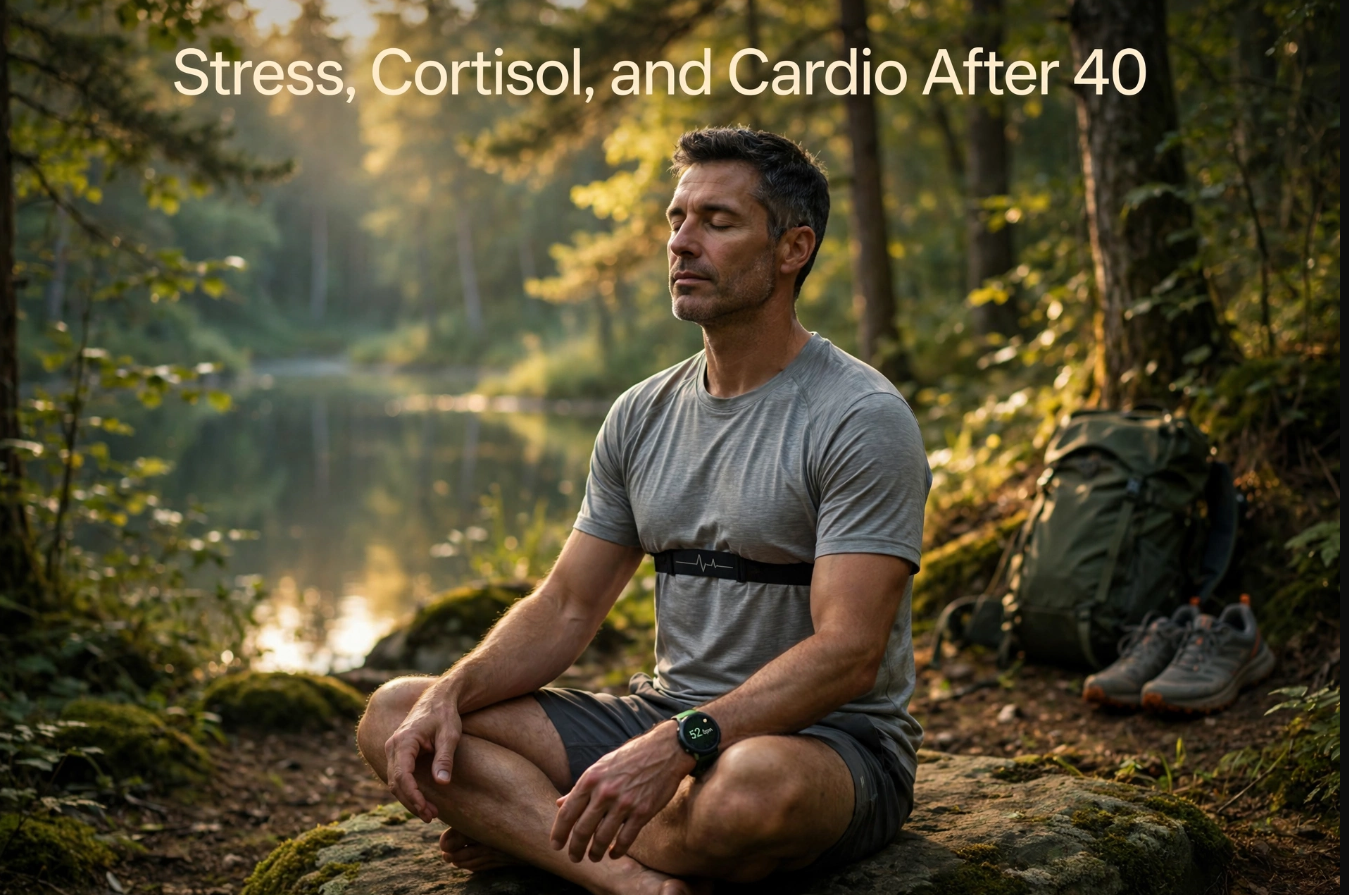
Decades of research, particularly from Japan (where it’s called shinrin-yoku), shows that time spent in natural environments—forests, parks, lakes—lowers cortisol, reduces blood pressure, and improves HRV. The phytoncides (essential oils released by trees) boost immune function. Even 20 minutes of walking in a park provides measurable benefits. Make your long weekend cardio session a trail run or a ruck in the woods whenever possible. The nature exposure compounds the stress-reducing benefits of the Zone 2 cardio.
3. Social Connection
Positive social interaction activates the PNS and releases oxytocin, which buffers cortisol. Training with a partner, joining a running group, or rucking with a friend isn’t just fun—it’s a direct nervous system intervention. Loneliness is a potent chronic stressor; community is a potent recovery tool. Schedule at least one social cardio session per week.
4. Cold Exposure (Optional, Advanced)
A brief cold shower or cold plunge (1–3 minutes at 50–59°F) at the end of a regular shower acutely spikes cortisol but, over time, trains a parasympathetic rebound. It’s a hormetic stressor that can improve mood and HRV. If you’re already highly stressed and exhausted, do not add cold exposure; it’s an additional stress. For the well-recovered athlete, it’s a useful tool.
Section 5: The Stress-Informed Training Week
A mature athlete doesn’t blindly follow a plan. They adjust the plan based on real-time feedback from their nervous system.
The Morning Check-In (2 Minutes):
Upon waking, before checking your phone, ask:
- What is my resting heart rate? (Elevated by 5+ bpm above baseline? Your body is under stress.)
- What is my HRV trend? (Dropping? You haven’t recovered.)
- How do I feel? (Rested, neutral, or exhausted? Trust your subjective sense.)
The Decision Flowchart:
- Rested (low RHR, high HRV, feel great): Green light for the planned hard session.
- Neutral (normal metrics, feel okay): Proceed with planned session but stay attuned. The warm-up will reveal more; if you feel flat after the warm-up, switch to Zone 2.
- Stressed (elevated RHR, low HRV, feel tired or irritable): Pivot. Replace today’s HIIT or tempo run with a 30–45 minute Zone 2 session or a gentle walk. No guilt. This is intelligent training.
A Sample Stress-Adaptive Week:
- Monday (Stressed): Planned HIIT → Swapped to 30 min Zone 2 walk and 10 min breathwork.
- Tuesday (Neutral): Planned Zone 2 run → Completed as planned.
- Wednesday (Rested): Planned Strength → Completed as planned, felt strong.
- Thursday (Stressed): Planned Tempo → Swapped to 40 min Zone 2 bike + mobility.
- Friday (Rested): HIIT (now done with full intensity because you’re recovered) → Completed.
- Saturday: Long outdoor Zone 2 ruck with a friend (social + nature).
- Sunday: Complete rest.
This adaptive approach prevents overtraining and burnout. Over a year, you will accumulate more quality sessions than someone who rigidly forces hard workouts when their body is screaming for rest, gets injured, and has to take weeks off.
Section 6: FAQ—Your Stress, Cortisol, and Cardio Questions
Q: I feel guilty when I swap a hard session for an easy one. How do I get over this?
A: Reframe the easy session as a high-value training decision, not a failure. You are not “skipping” a workout; you’re executing a recovery session that is precisely what your body needs to absorb the previous training and prepare for the next hard effort. Elite coaches call this “winning the recovery.” Write your swapped session in your training log with a note: “Swapped HIIT for Zone 2 due to elevated RHR. Listening to the body.” This transforms the act from a concession to a disciplined, intelligent coaching move.
Q: My job is very stressful. Can I still do HIIT?
A: Yes, but carefully. Limit HIIT to one session per week on a day when you feel relatively rested. Never do HIIT after a particularly brutal workday when your cortisol is already sky-high. Morning HIIT before the day’s stress accumulates is often better for those with high-pressure jobs. If your work stress becomes chronic for months, consider dropping HIIT entirely for a season and relying on Zone 2 and strength to maintain fitness. You will not lose your conditioning; you will protect your health.
Q: How do I know if my cortisol is actually high?
A: Clinical testing (salivary cortisol panels taken at four points during the day) can provide a definitive picture. However, a cluster of symptoms strongly suggests chronic elevation: waking up tired despite adequate sleep, a mid-afternoon energy crash, stubborn belly fat that resists diet and exercise, frequent illness, irritability, and feeling “wired but tired” at night. Morning resting heart rate is a practical daily proxy. If yours is consistently elevated, cortisol is likely a factor.
Q: Does meditation really help with cardio recovery?
A: Yes. A 2019 study in the Journal of the American College of Cardiology found that meditation significantly reduced cortisol and improved HRV in patients with heart disease. Even 5–10 minutes of mindfulness or guided meditation triggers the relaxation response, lowering heart rate and blood pressure. The breathwork protocols in this guide are essentially active meditations. They prepare the nervous system for recovery, which in turn prepares it for the next bout of high-quality training.
The VigorForty Take
The relentless American culture of “grind” and “no days off” is a direct path to a broken body and a dysregulated nervous system. After 40, the body’s capacity to absorb endless stress—physical or psychological—diminishes. This is not a weakness; it’s an invitation to train with greater intelligence and self-respect.
The athlete who understands cortisol and the autonomic nervous system holds a secret that most never learn: the brake is just as important as the accelerator. The ability to intentionally downshift, to breathe your way into a parasympathetic state, to choose a gentle walk in the woods when your body flags, is not a compromise. It’s the sophisticated act of a lifelong athlete who intends to be running, rucking, and thriving at 70 and beyond.
Listen to the signals your body sends you every morning. Use the breath as your remote control for your nervous system. Take your cardio into the forest. Train hard when you’re rested, and train easy—or not at all—when you’re not. This is the balanced, sustainable, and deeply effective path to a heart, a body, and a mind that are resilient, vibrant, and strong for all the seasons of your life.
Read All Related Articles
- The Complete Guide to Zone 2 Training After 40: How Low-Intensity Cardio Boosts Fat Loss, Longevity, and Endurance
- The Complete Guide to HIIT After 40: Joint-Friendly Workouts That Torch Fat and Protect Your Heart
- The Complete Guide to Running After 40: How to Start, Stay Injury-Free, and Build Lifelong Endurance
- The Complete Guide to Metabolic Health After 40: Reverse Insulin Resistance, Burn Stubborn Fat, and Reclaim Your Energy with Cardio
- The Complete Guide to Cardio Recovery After 40: How to Rest, Rebuild, and Come Back Stronger
- The Complete Guide to Heart Rate Training Zones After 40: Unlock Every Beat for Maximum Fat Loss, Endurance, and Longevity
- The Complete Guide to VO2 Max After 40: The #1 Predictor of Longevity and How to Improve It
- The Complete Guide to Concurrent Training After 40: How to Combine Cardio and Strength for Maximum Fat Loss, Muscle Preservation, and Longevity
- The Complete Guide to Walking and Rucking After 40: The Most Underrated Cardio for Fat Loss, Joint Health, and Longevity
- The Complete Guide to Designing Your Own Cardio Plan After 40: A Personalized Blueprint for Fat Loss, Longevity, and Peak Performance
- The Complete Guide to Cardio Nutrition After 40: Fuel Your Workouts for Maximum Fat Loss, Endurance, and Recovery
- The Complete Guide to Cardio Equipment After 40: Choosing the Best Treadmill, Bike, Rower, or Elliptical for Your Home Gym
- The Complete Guide to Injury Prevention for Cardio After 40: Run, Ride, and Ruck Pain-Free for Life
- The Complete Guide to Cardio for Fat Loss After 40: Burn Stubborn Belly Fat Without Losing Muscle or Energy
- The Complete Guide to Seasonal Cardio Training After 40: How to Periodize Your Year for Year-Round Fitness, Fat Loss, and Injury Prevention
- The Complete Guide to Cardio and Brain Health After 40: How Exercise Protects Your Memory, Mood, and Mental Sharpness
- The Complete Guide to Building a Home Gym for Cardio After 40: Design a Space That Makes Consistency Inevitable
- The Joyful Movement Manifesto: How to Love Cardio After 40 and Make It a Lifelong Practice
- The Complete Guide to Sleep and Cardio After 40: How Deep Rest Unlocks Your Best Performance, Recovery, and Longevity
- The Complete Guide to Stress, Cortisol, and Cardio After 40: How to Manage Your Nervous System for Better Recovery and Performance
- The Complete Guide to Returning to Cardio After a Layoff After 40: Your Compassionate, Science-Backed Roadmap Back to Fitness
- The Complete Guide to Cardio Through Menopause: How to Adapt Your Training for Hormonal Changes, Protect Your Heart, and Feel Strong After 40
- The Complete Guide to Cycling After 40: Low-Impact Cardio for Joint Health, Endurance, and Lifelong Fitness
- The Complete Guide to Pool and Water-Based Cardio After 40: Low-Impact Workouts for Joint Pain, Recovery, and Total-Body Fitness
- The Complete Guide to Rowing After 40: Full-Body, Low-Impact Cardio for Strength, Endurance, and Longevity
- The Complete Guide to Tracking Cardio Progress After 40: The Key Metrics That Matter More Than the Scale
- The Complete Guide to Cardio for High Blood Pressure After 40: How Exercise Lowers Your Numbers and Protects Your Heart
- The Complete Guide to Cardio for Type 2 Diabetes and Prediabetes After 40: How Exercise Reverses Insulin Resistance and Protects Your Heart
- The Complete Guide to Cardio with Arthritis After 40: Pain-Free Workouts That Strengthen Joints and Keep You Moving
- The Complete Guide to Longevity and Cardio After 40: How Aerobic Fitness Adds Years to Your Life and Life to Your Years
- The Complete Guide to Building a Cardio Habit After 40: The Science of Making Exercise Stick for Life
- The Complete Guide to Cardio and Immune Health After 40: Strengthen Your Body’s Defense System for a Resilient, Vibrant Life
- The Complete Guide to Cardio While Traveling After 40: Stay Fit on the Road, in Hotels, and Away from Home
- The Complete Guide to Cardio for Posture and Back Pain After 40: Strengthen Your Posterior Chain and Reverse the Damage of Sitting
- The Complete Guide to the Social Side of Cardio After 40: How Community, Accountability, and Connection Make You Stronger
- The VigorForty Manifesto: A Final Word on the Lifelong Practice of Movement