
Author: Vigor Forty Editorial Team
Medically Reviewed By: Editorial Review Board
Disclaimer: This article is for informational purposes only and is not a substitute for professional medical advice. Consult your physician before beginning a new exercise program, especially if you are returning from an injury, illness, or a prolonged period of inactivity. Read our full Medical Disclaimer.
📌 Key Takeaways
- Detraining Is Real but Reversible: Cardiovascular fitness begins to decline within 2–4 weeks of inactivity, with measurable drops in VO2 max, blood volume, and mitochondrial enzyme activity. However, the body retains a “muscle memory” at the cellular level, and previously fit individuals regain fitness significantly faster than those starting from scratch.
- The Biggest Barrier Is Psychological, Not Physical: The guilt, shame, and all-or-nothing thinking that accompany a layoff—”I’ve lost everything,” “I have to make up for lost time”—lead to a dangerous cycle of rushing back, getting injured or burned out, and quitting again. Compassionate, patient re-entry is the only sustainable path.
- The “50/30/20” Rule Prevents Re-Injury and Burnout: For every week you were completely inactive, plan for roughly 2–3 weeks of gradual, intelligent rebuilding. Start at 50% of your previous volume and intensity, and increase by no more than 10% per week. The older you are, the more conservative this ramp should be.
- Your First Month Back Should Be Almost Entirely Zone 1–2: The muscles, tendons, and cardiovascular system need to re-adapt to the mechanical and metabolic stress of exercise. Rushing into high-intensity work before rebuilding your aerobic base is the single most common cause of injury and extreme soreness that derails a comeback.
- This Time Can Be a Gift: A layoff, while frustrating, provides an opportunity to rebuild your movement practice with greater wisdom, better form, and a healthier relationship with exercise. You can shed the bad habits, imbalances, and compulsive patterns that may have contributed to your previous burnout or injury. You’re not starting over; you’re starting from experience.
Introduction: The Unspoken Journey of the Returning Athlete
There’s a particular kind of quiet dread that settles in when you lace up your shoes for the first time in a long time. Maybe it’s been three weeks because of a bad flu. Maybe it’s been six months since the new baby arrived and sleep evaporated. Maybe it’s been three years—a global pandemic, a divorce, a crushing work project, a slow drift away from the person you used to be who ran 5Ks and felt alive in their body. The shoes still fit, but the body feels foreign. The mind is a loudspeaker of self-criticism: You let yourself go. You’re so out of shape. This is going to hurt. You’ll never get back to where you were.
The American fitness industry has little compassion for the returning athlete. Its messaging is built on the triumphant comeback montage—the rapid, dramatic transformation scored to motivational music. The reality of returning to cardio after 40 is quieter, slower, and more emotionally complex. It’s not a montage; it’s a pilgrimage. And the way you begin that pilgrimage determines whether you arrive at a sustainable, joyful practice or crash into injury and despair before the journey truly begins.
This guide is not about punishing yourself for the time you lost. It’s about reclaiming your body with the patience and wisdom that your younger self lacked. You’ll learn exactly what happens physiologically during a layoff, how to set realistic expectations, a safe 4-week return-to-cardio protocol, how to modify your favorite VigorForty workouts for your current fitness level, and—most importantly—how to navigate the mental and emotional landscape of a comeback. Whether you’re returning from a brief hiatus or a years-long absence, this is your roadmap home. The door is open. Take a breath. Let’s step through it together.
Section 1: What Happened to Your Body During the Layoff—The Physiology of Detraining
Understanding what actually changed in your body removes the mystery and the self-blame. It’s just physiology, and it’s largely reversible.
Cardiovascular Changes (2–4 Weeks Inactivity)
- Plasma Volume: The first thing to decline. Within 2 weeks of inactivity, your blood plasma volume drops, reducing the amount of blood your heart pumps per beat (stroke volume). This is why your heart rate is higher than you remember for the same pace.
- VO2 Max: Declines by roughly 5–10% within 3–4 weeks of complete inactivity, and up to 15–20% over 2–3 months. The decline is steeper in highly trained individuals initially.
- Capillary Density: The tiny blood vessels that deliver oxygen to your muscles begin to diminish after several weeks of disuse.
Muscular and Metabolic Changes (4–8 Weeks Inactivity)
- Mitochondrial Enzyme Activity: The enzymes that drive aerobic energy production decrease, meaning your muscles become less efficient at burning fat and utilizing oxygen.
- Glycogen Storage: Muscles store less glycogen, so you may feel “flat” and fatigue more quickly during exercise.
- Muscle Atrophy: Slight loss of muscle mass begins after 3–4 weeks of disuse. Strength declines more slowly than aerobic fitness, but the loss of supportive muscle can increase injury risk when you return to impact activities.
Connective Tissue Changes (The Hidden Risk)
- Tendon and Ligament Deconditioning: While muscles and the cardiovascular system adapt relatively quickly, tendons and ligaments—which have poor blood supply—become less stiff and less able to tolerate load during a layoff. This is why joint and tendon injuries are so common during comebacks: your heart and lungs feel ready to push, but your tendons are still catching up. They require a longer, more gradual reloading period.
The Good News: Muscle Memory Is Real
Myonuclei acquired during previous training are retained in muscle cells for years, even during prolonged inactivity. When you resume training, these myonuclei accelerate muscle protein synthesis, allowing you to regain strength and size significantly faster than someone who has never trained. Your body remembers. It’s waiting for the right signal to rebuild.
Section 2: The Psychology of the Comeback—Navigating the Inner Critic
The physical obstacles are manageable. The psychological ones are often what sink the ship.
The Guilt-Shame-Crash Cycle
You feel guilty about the layoff. That guilt drives you to punish yourself with a brutally hard first workout. The workout leaves you wrecked—so sore you can barely walk, so discouraged you can’t imagine doing it again. You skip the next few days. The guilt returns, now worse because you’ve “failed” again. This cycle is the enemy. The antidote is a deliberate, pre-planned, gentle re-entry that short-circuits the guilt at its root.
Reframing the Narrative
Instead of “I lost all my fitness,” try “My body is rested, and now I have the opportunity to rebuild with greater wisdom.” Instead of “I’m so out of shape,” try “I’m in a rebuilding phase, which is a normal and respected part of any athlete’s journey.” These are not empty platitudes; they are accurate descriptions of the physiological reality. You are not broken. You are in a different phase of the cycle.
The Compassionate Voice
Imagine a good friend came to you, ashamed that they hadn’t exercised in six months, and asked for your help. How would you speak to them? Would you berate them for being lazy and tell them to go run five miles until they puked? Or would you encourage them to start with a gentle walk, celebrate their courage in starting again, and help them build slowly? Speak to yourself with that voice. It’s not soft; it’s smart.
Section 3: The VigorForty 4-Week Return-to-Cardio Protocol
This protocol assumes you are medically cleared for exercise and have been completely or mostly inactive for 2–6 months. If your layoff was longer, extend each phase by 1–2 weeks. If your layoff was shorter (2–4 weeks), you may progress slightly faster, but err on the side of caution.
The Golden Rule: 50% Volume and Zero High Intensity for the First Two Weeks
Week 1: Reconnection (All Zone 1)
- Goal: Re-establish the habit of movement without any physiological stress. Simply show up and move gently.
- Monday: 15-minute gentle walk. No watch, no pace goal. Just walk.
- Wednesday: 20-minute gentle walk. Notice how your body feels. Breathe through your nose.
- Friday: 25-minute walk, same easy pace. After the walk, do 5 minutes of gentle mobility (your favorite stretches from the Mobility Guide).
- Saturday: 20-minute walk or a very easy bike ride, completely flat, conversational.
- Total Weekly Volume: ~80 minutes of Zone 1.
Week 2: Gentle Aerobic Reintroduction (Zone 1–2)
- Goal: Slightly extend duration and introduce brief, very light aerobic efforts.
- Monday: 25-minute walk with 3 x 1-minute segments of slightly brisker walking (you can still talk easily). 1-minute easy walking between.
- Wednesday: 30-minute walk, mostly easy. If you have access to a bike, try 30 minutes of easy spinning, keeping resistance very low.
- Friday: 30-minute walk or bike. Include 4 x 1-minute brisk segments.
- Saturday: 40-minute gentle walk outdoors, ideally in a natural setting. No structure, just enjoyment.
- Total Weekly Volume: ~125 minutes, mostly Zone 1 with a few minutes of low Zone 2.
Week 3: Building the Aerobic Base (Zone 2 Introduction)
- Goal: Introduce structured Zone 2 cardio and slightly increase total volume.
- Monday: 30-minute Zone 2 walk (brisk enough that conversation is comfortable but you feel your heart working).
- Wednesday: 20-minute Zone 2 on the bike or rower. Follow with 10 minutes of core and mobility.
- Friday: 30-minute Zone 2 walk or light run-walk (if you were a runner): 5 min walk warm-up, then alternate 1 min very easy jog / 2 min walk x 6 rounds. 5 min walk cool-down.
- Saturday: 50-minute Zone 2 walk or ruck with a very light pack (5–10 lbs).
- Total Weekly Volume: ~140 minutes, mostly Zone 2.
Week 4: Reintroducing Strength and Slightly Higher Effort
- Goal: Add back one bodyweight strength session and a touch of tempo.
- Monday: 30-minute Zone 2 (your choice of modality).
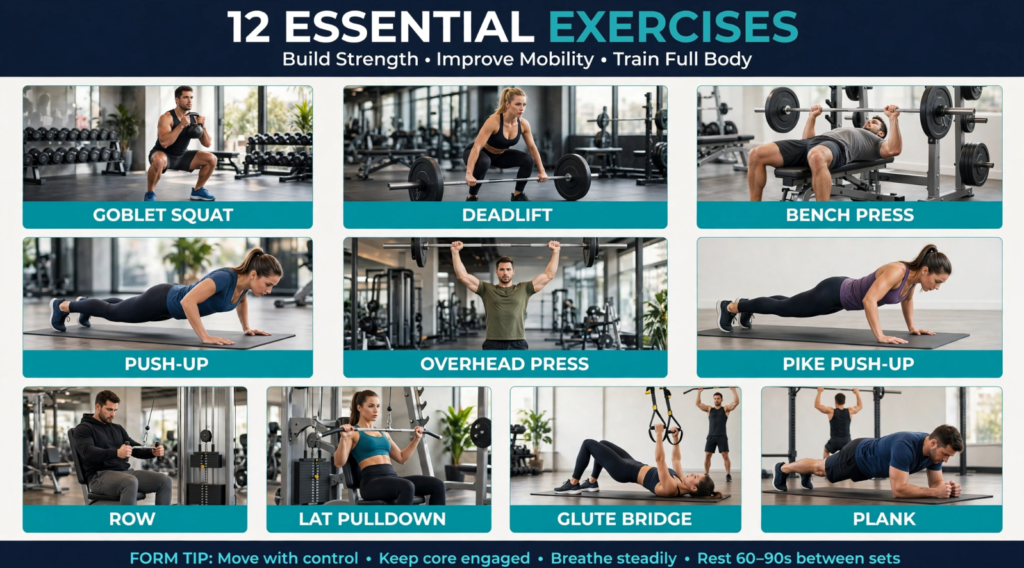
- Tuesday: Full-body bodyweight strength circuit (squats, push-ups on knees, glute bridges, rows with a band, planks) – 20 minutes.
- Thursday: 35-minute Zone 2. After your session, include 4 x 20-second strides (fast but controlled walking or light jogging, not sprinting) with 1-minute recovery.
- Saturday: 60-minute Zone 2 walk, ruck, or hike.
- Sunday: Gentle 30-minute walk or complete rest.
- Total Weekly Volume: ~150 minutes of cardio, plus one strength session.
After Week 4: You now have a solid foundation of consistent Zone 2 work and have safely re-adapted your joints and connective tissue. From here, you can gradually re-integrate one HIIT session per week (starting with the most joint-friendly options from our HIIT Guide), increase your Zone 2 durations, and progress your strength training. Follow the 10% rule for volume increases and continue to prioritize consistency over intensity.
Section 4: How to Modify Your Favorite VigorForty Workouts for Your Return
You don’t have to abandon the training system you know. You just need to dial the intensity and volume to match your current capacity.
If You Loved Zone 2 Running:
- Now: Start with Zone 2 walking. Then progress to run-walk intervals (1 min jog / 2 min walk). Gradually increase the jog intervals and decrease the walks over 4–6 weeks. Don’t run continuously until you can comfortably complete 20 minutes of run-walk without significant soreness the next day.
If You Loved HIIT:
- Now: Do not touch HIIT for at least 4 weeks. Your first “intensity” should be the Zone 2 strides described in Week 4. At Week 5–6, you can try a very modified HIIT session: 4 x 20-second easy efforts on the bike (not all-out, just picking up the pace) with 2-minute easy spins between. Only after several weeks of this should you approach a true max-effort interval.
If You Loved Rucking:
- Now: Walk without weight for the first 3 weeks. At Week 4, add a 5–10 lb pack. Add 5 lbs every 2 weeks only if your back, knees, and feet feel perfect. Rucking is demanding on the joints and postural muscles; the weight progression must be slow.
If You Loved Strength Circuits:
- Now: Bodyweight only for the first 2–3 weeks. Then add light resistance bands. Then light dumbbells. Leave your ego at the door. The strength will come back quickly thanks to muscle memory, but your tendons need time.
Section 5: Navigating the Inevitable Soreness and Setbacks
Delayed Onset Muscle Soreness (DOMS) after your first few sessions can be alarming. You may feel pain in muscles you forgot you had. This is normal, but it can be managed.
The Soreness Protocol:
- Movement is medicine: A very gentle walk, a few mobility exercises, and light stretching the day after a soreness-inducing session will reduce pain and speed recovery. Lying on the couch all day makes it worse.
- Hydrate aggressively: Water helps flush out metabolic byproducts.
- Avoid NSAIDs if possible: Ibuprofen may blunt the muscle repair signal. Save them for truly debilitating pain, not routine soreness.
- Distinguish soreness from injury: Soreness is diffuse, muscular, and improves with gentle movement. Injury pain is sharp, localized, and worsens with activity. If you suspect injury, stop and consult a physical therapist.
When You Miss a Day (or a Week):
The old all-or-nothing voice may whisper, “You’ve already blown it. Just give up.” Do not listen. A missed day is a drop in the ocean. Pick up where you left off. If you miss a full week, simply repeat the previous week’s volume rather than progressing. The comeback is not a straight line; it’s a winding path. Consistency over the long arc is the only thing that matters.
Section 6: FAQ—Your Return-to-Cardio Questions
Q: How fast will I get my fitness back?
A: Faster than you think, but slower than you want. As a general rule, for every week of inactivity, plan for about 2 weeks of rebuilding to return to your previous fitness level. If you were off for 8 weeks, expect about 16 weeks of gradual, consistent training to feel like your old self. The good news: you’ll feel significant improvements in energy, mood, and ease of movement within the first 2–4 weeks, even if your peak numbers haven’t returned.
Q: I used to run marathons. It’s been two years. Can I ever get back to that level?
A: Yes, many athletes return to high levels of performance after long layoffs. The key is to think in terms of years, not months. Your first year back should be about rebuilding the aerobic base, strengthening supporting muscles, and re-establishing consistency. A marathon or other major endurance goal might be a 2-year project. There is no rush. Your body at 45 or 55 is different than at 35; it requires more patience but is still capable of remarkable things.
Q: I gained weight during my layoff. Should I diet and exercise at the same time?
A: Not initially. Attempting a calorie deficit while reintroducing exercise is a recipe for extreme fatigue, injury, and burnout. For the first 4–8 weeks, focus solely on rebuilding the exercise habit and nourishing your body with adequate protein and whole foods. Once your training routine is solid and your body has adapted, you can gradually introduce a modest calorie deficit (as outlined in our Fat Loss Guide). Trying to do everything at once sinks the ship.
Q: What’s the best indicator that I’m ready to progress?
A: Your morning resting heart rate. When it returns to or stays at your normal baseline after a workout, you’re recovering well and can add a bit more volume or intensity. Also, how you feel: you should finish most workouts feeling energized, not drained. If you’re consistently exhausted, you’re doing too much.
The VigorForty Take
A layoff is not a failure. It’s a chapter. It’s a period of rest, of life being lived, of other priorities taking their necessary place at the front of the line. Your body has been patient, waiting for the signal to rebuild. That signal doesn’t need to be a punishing, guilt-driven return. It needs to be a gentle, consistent, and compassionate re-engagement with movement.
The protocol in this guide is designed to protect the body you have right now while building the body you’ll inhabit for the decades ahead. It respects the physiological realities of tendons that have rested, mitochondria that have idled, and a nervous system that may be frayed from the very life circumstances that caused the layoff in the first place.
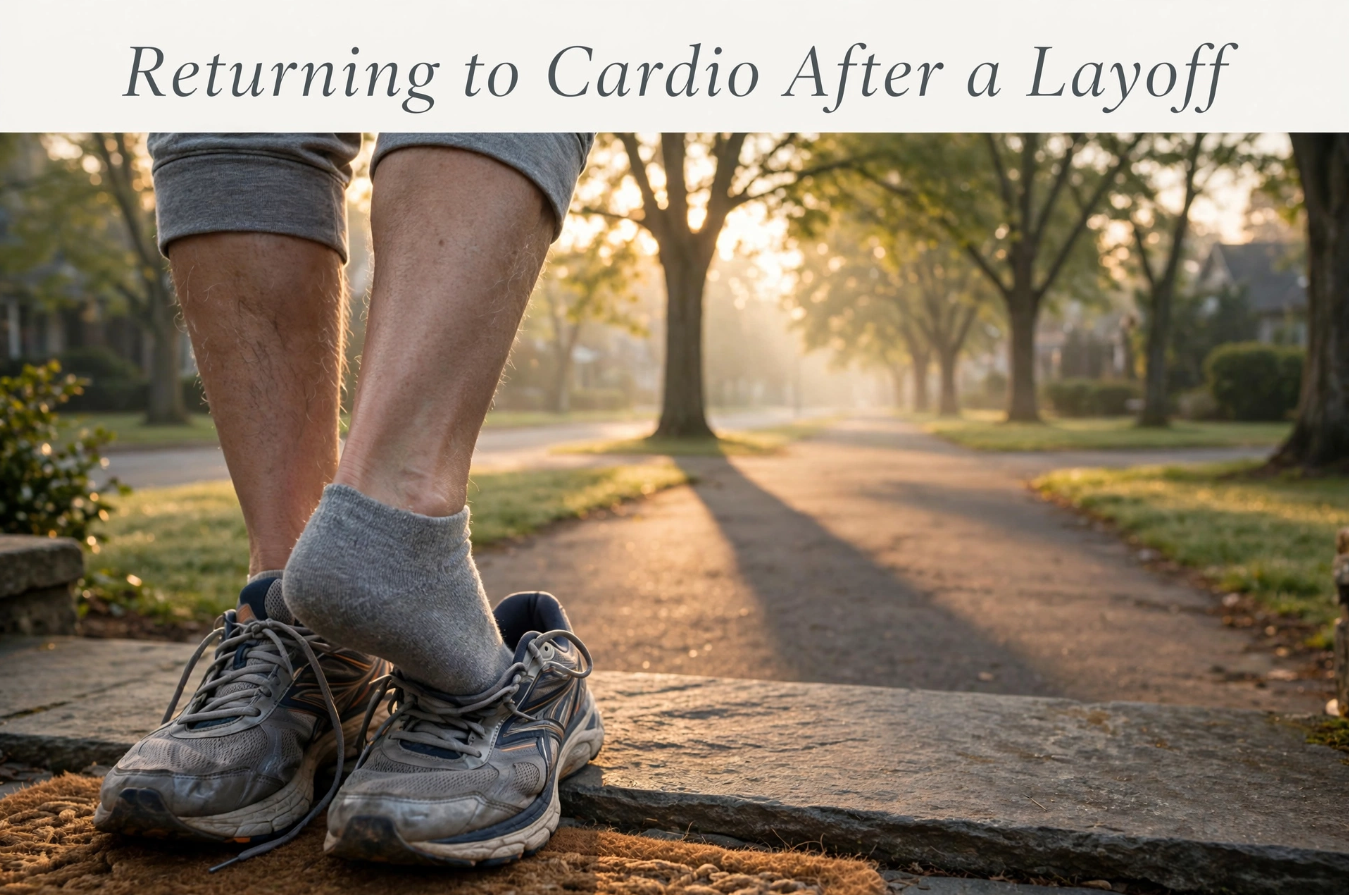
So take that first walk. Not the walk of someone trying to burn off the shame of the past, but the walk of someone coming home. Your heart, your lungs, your muscles—they all remember you. They’re ready. Start slow. Stay consistent. Be kind to yourself. The fitness you build this time will be wiser, more resilient, and far more deeply rooted than anything that came before. Welcome back.
Read All Related Articles
- The Complete Guide to Zone 2 Training After 40: How Low-Intensity Cardio Boosts Fat Loss, Longevity, and Endurance
- The Complete Guide to HIIT After 40: Joint-Friendly Workouts That Torch Fat and Protect Your Heart
- The Complete Guide to Running After 40: How to Start, Stay Injury-Free, and Build Lifelong Endurance
- The Complete Guide to Metabolic Health After 40: Reverse Insulin Resistance, Burn Stubborn Fat, and Reclaim Your Energy with Cardio
- The Complete Guide to Cardio Recovery After 40: How to Rest, Rebuild, and Come Back Stronger
- The Complete Guide to Heart Rate Training Zones After 40: Unlock Every Beat for Maximum Fat Loss, Endurance, and Longevity
- The Complete Guide to VO2 Max After 40: The #1 Predictor of Longevity and How to Improve It
- The Complete Guide to Concurrent Training After 40: How to Combine Cardio and Strength for Maximum Fat Loss, Muscle Preservation, and Longevity
- The Complete Guide to Walking and Rucking After 40: The Most Underrated Cardio for Fat Loss, Joint Health, and Longevity
- The Complete Guide to Designing Your Own Cardio Plan After 40: A Personalized Blueprint for Fat Loss, Longevity, and Peak Performance
- The Complete Guide to Cardio Nutrition After 40: Fuel Your Workouts for Maximum Fat Loss, Endurance, and Recovery
- The Complete Guide to Cardio Equipment After 40: Choosing the Best Treadmill, Bike, Rower, or Elliptical for Your Home Gym
- The Complete Guide to Injury Prevention for Cardio After 40: Run, Ride, and Ruck Pain-Free for Life
- The Complete Guide to Cardio for Fat Loss After 40: Burn Stubborn Belly Fat Without Losing Muscle or Energy
- The Complete Guide to Seasonal Cardio Training After 40: How to Periodize Your Year for Year-Round Fitness, Fat Loss, and Injury Prevention
- The Complete Guide to Cardio and Brain Health After 40: How Exercise Protects Your Memory, Mood, and Mental Sharpness
- The Complete Guide to Building a Home Gym for Cardio After 40: Design a Space That Makes Consistency Inevitable
- The Joyful Movement Manifesto: How to Love Cardio After 40 and Make It a Lifelong Practice
- The Complete Guide to Sleep and Cardio After 40: How Deep Rest Unlocks Your Best Performance, Recovery, and Longevity
- The Complete Guide to Stress, Cortisol, and Cardio After 40: How to Manage Your Nervous System for Better Recovery and Performance
- The Complete Guide to Returning to Cardio After a Layoff After 40: Your Compassionate, Science-Backed Roadmap Back to Fitness
- The Complete Guide to Cardio Through Menopause: How to Adapt Your Training for Hormonal Changes, Protect Your Heart, and Feel Strong After 40
- The Complete Guide to Cycling After 40: Low-Impact Cardio for Joint Health, Endurance, and Lifelong Fitness
- The Complete Guide to Pool and Water-Based Cardio After 40: Low-Impact Workouts for Joint Pain, Recovery, and Total-Body Fitness
- The Complete Guide to Rowing After 40: Full-Body, Low-Impact Cardio for Strength, Endurance, and Longevity
- The Complete Guide to Tracking Cardio Progress After 40: The Key Metrics That Matter More Than the Scale
- The Complete Guide to Cardio for High Blood Pressure After 40: How Exercise Lowers Your Numbers and Protects Your Heart
- The Complete Guide to Cardio for Type 2 Diabetes and Prediabetes After 40: How Exercise Reverses Insulin Resistance and Protects Your Heart
- The Complete Guide to Cardio with Arthritis After 40: Pain-Free Workouts That Strengthen Joints and Keep You Moving
- The Complete Guide to Longevity and Cardio After 40: How Aerobic Fitness Adds Years to Your Life and Life to Your Years
- The Complete Guide to Building a Cardio Habit After 40: The Science of Making Exercise Stick for Life
- The Complete Guide to Cardio and Immune Health After 40: Strengthen Your Body’s Defense System for a Resilient, Vibrant Life
- The Complete Guide to Cardio While Traveling After 40: Stay Fit on the Road, in Hotels, and Away from Home
- The Complete Guide to Cardio for Posture and Back Pain After 40: Strengthen Your Posterior Chain and Reverse the Damage of Sitting
- The Complete Guide to the Social Side of Cardio After 40: How Community, Accountability, and Connection Make You Stronger
- The VigorForty Manifesto: A Final Word on the Lifelong Practice of Movement