Author: Vigor Forty Editorial Team
Medically Reviewed By: Editorial Review Board
Disclaimer: This article is for informational purposes only and is not a substitute for professional medical or dietary advice. Consult your physician before beginning a new exercise or weight loss program. Read our full Medical Disclaimer.
📌 Key Takeaways
- The Over-40 Fat Loss Formula Differs from Your 20s: Calorie restriction and endless steady-state cardio alone often backfire after 40, leading to muscle loss, a slowed metabolism, and elevated cortisol that stubbornly holds onto belly fat. The winning formula pairs muscle-preserving strength training, strategically timed cardio, and a modest, protein-rich calorie deficit.
- Zone 2 Is Your Fat-Burning Foundation, Not High-Intensity Punishment: Low-intensity, conversational cardio (60–70% max HR) burns the highest proportion of calories from fat during exercise, spares muscle glycogen, and can be done daily without raising cortisol. It’s the sustainable, metabolic base of any fat loss plan.
- HIIT Is the Accelerant, Not the Fuel: One or two short, joint-friendly HIIT sessions per week amplify post-exercise calorie burn (EPOC), spike growth hormone to preserve lean mass, and specifically target visceral fat. More than that risks overtraining, inflammation, and stalled fat loss.
- Walking and NEAT Drive the Biggest Caloric Wedge: Structured workouts account for a fraction of your weekly energy expenditure. Non-exercise activity thermogenesis (NEAT)—daily steps, post-meal walks, fidgeting, standing—often determines whether you lose fat or stay stuck. Aim for 8,000–12,000 steps daily.
- You Cannot Out-Train a Poor Diet, but You Can Out-Synergize One: The most successful midlife fat loss combines a modest 300–500 calorie daily deficit, 1.6–2.2 g/kg of protein, and the precise cardio blend outlined here. Track progress via waist circumference and how your clothes fit, not just the scale.
Introduction: The Frustrating Fat Loss Paradox After 40
You’re doing the work. You’re logging your Zone 2 miles, sweating through your HIIT sessions, rucking on weekends. Your resting heart rate is down, your VO2 max is up, and you feel stronger. But when you look in the mirror or step on the scale, the stubborn layer of belly fat—the one that settled in around age 42—stares back, seemingly unfazed.
This is the most common and maddening complaint among midlife Americans who train. They’re doing everything “right” by the standards of their 20s and 30s—more cardio, fewer calories—and yet the results have slowed to a crawl, or worse, they’re losing weight on the scale but feeling softer, more tired, and more prone to injury.
The physiology of fat loss shifts after 40. Hormonal changes (declining growth hormone, shifting cortisol patterns, insulin resistance) conspire to protect visceral fat stores. Aggressive calorie-cutting and excessive high-intensity cardio can trigger a stress response that actually signals the body to hold onto belly fat while breaking down precious muscle tissue. The scale drops, but body composition worsens—a phenomenon sarcastically called “skinny fat.”
This guide rewrites the fat loss playbook for the over-40 cardio athlete. It integrates the training methods you’ve already learned—Zone 2, HIIT, walking, rucking, concurrent strength training—into a specific, evidence-backed protocol designed to torch fat, not muscle. You’ll learn the science of fat oxidation, the exact weekly cardio dose for body recomposition, how to pair nutrition with training for maximum effect, and how to measure progress beyond the misleading scale. Fat loss after 40 isn’t about suffering more; it’s about suffering smarter. And this guide shows you exactly how.
Section 1: The Science of Fat Loss After 40—Why It’s Different and What to Do
Understanding the physiological landscape is the first step to working with it, not against it.
Hormonal Shifts
- Growth Hormone Decline: GH, which helps mobilize fat and preserve muscle, drops significantly after 40. HIIT and heavy strength training are among the few ways to naturally spike it.
- Cortisol Sensitivity: The same stress that a 25-year-old shrugs off can keep a 45-year-old’s cortisol chronically elevated. High cortisol directs fat storage to the abdomen and promotes muscle breakdown. Too much high-intensity training and too little recovery feeds this fire.
- Insulin Resistance: Muscles become less responsive to insulin, so carbohydrates are more readily stored as fat, particularly around the organs. The solution is not zero carbs, but building muscle (your glucose sink) and timing carbs around activity.
Metabolic Adaptation
The body fights weight loss. After a period of caloric restriction, metabolic rate drops more than can be explained by weight loss alone. This “adaptive thermogenesis” is more pronounced after 40. Doing more and more cardio while eating less and less leads to a metabolic dead end: fatigue, plateaus, and rebound weight gain. The antidote is a moderate deficit, high protein, and a focus on building metabolically active muscle.
Visceral Fat vs. Subcutaneous Fat
Subcutaneous fat (the pinchable stuff under the skin) is relatively inert. Visceral fat (the deep belly fat surrounding organs) is an active endocrine organ pumping out inflammatory signals. Visceral fat is preferentially reduced by a combination of HIIT, stress management, sleep, and reduced sugar/alcohol intake. This is the fat that matters most for health, and it responds well to the VigorForty system.
Section 2: The Four Pillars of Cardio for Fat Loss
Forget the “fat-burning zone” myth that says only low-intensity cardio burns fat. The reality is more nuanced. Each intensity has a role.
Pillar 1: Zone 2 (60–70% Max HR) — The Steady Fat Oxidizer
- Fat Burn per Minute: The highest proportion of calories burned comes from fat (about 50–70%).
- Total Calorie Burn: Moderate. A 60-minute session burns 400–600 calories depending on body weight.
- Hormonal Effect: Low cortisol. Preserves muscle. Builds mitochondrial fat-burning machinery over time.
- Role in Fat Loss Plan: This is your daily bread. 3–4 sessions per week of 45–90 minutes build your metabolic base, burn significant fat calories without triggering compensatory hunger, and improve the body’s 24/7 ability to oxidize fat. Perform fasted occasionally (morning Zone 2 before breakfast) to accelerate fat adaptation, but fuel your harder days.
Pillar 2: HIIT (Zone 4–5) — The Metabolic Afterburner
- Fat Burn per Minute: Low during the session (mostly carbs), but significantly elevated for 12–24 hours after via EPOC (excess post-exercise oxygen consumption).
- Total Calorie Burn: High relative to time invested. A 20-minute HIIT session can create a total calorie burn comparable to a 45-minute steady-state session.
- Hormonal Effect: Spikes growth hormone and catecholamines (adrenaline), which specifically mobilize visceral fat. Can elevate cortisol if overdone.
- Role in Fat Loss Plan: The accelerator, not the engine. 1–2 sessions per week of 15–25 minutes, using joint-friendly modalities. This is enough to stimulate the hormonal and metabolic afterburn without chronically stressing the body.
Pillar 3: Walking and NEAT — The Silent Caloric Wedge
- Fat Burn per Minute: Low, but from a high proportion of fat.
- Total Calorie Burn: Seemingly small per minute, but massive cumulatively. 10,000 steps burns roughly 300–500 calories. Over a week, that’s 2,100–3,500 calories—equivalent to a full pound of fat.
- Hormonal Effect: Reduces cortisol, improves post-meal blood sugar, gentle on joints.
- Role in Fat Loss Plan: This is often the deciding factor. Two people doing the same structured workouts can have vastly different fat loss results based on daily step count. Aim for 8,000–12,000 steps, including a 15-minute walk after each meal.
Pillar 4: Strength Training — The Metabolic Engine Builder
- Fat Burn per Minute: Low during the session.
- Total Calorie Burn: Moderate, but the real benefit is the long-term elevation of resting metabolic rate. Every pound of muscle gained burns approximately 6–10 extra calories per day at rest.
- Hormonal Effect: Preserves and builds muscle, improves insulin sensitivity 24/7, creates a strong, resilient body that can handle more cardio without injury.
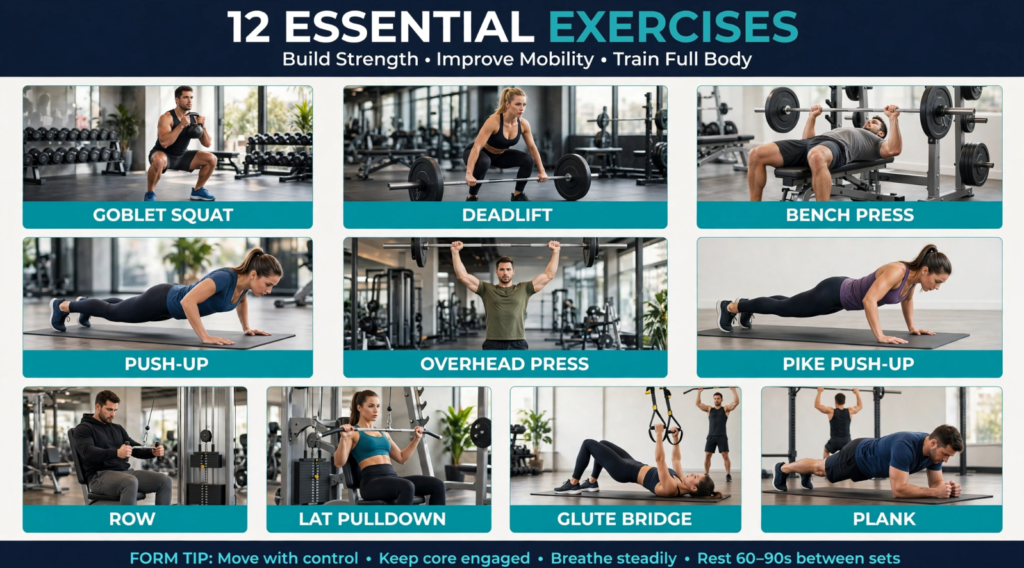
- Role in Fat Loss Plan: Non-negotiable. 2–3 full-body sessions per week. Without strength training, a significant portion of weight lost during a calorie deficit will be muscle, lowering your metabolism and making long-term fat loss nearly impossible.
Section 3: The VigorForty 8-Week Fat Loss Cardio Protocol
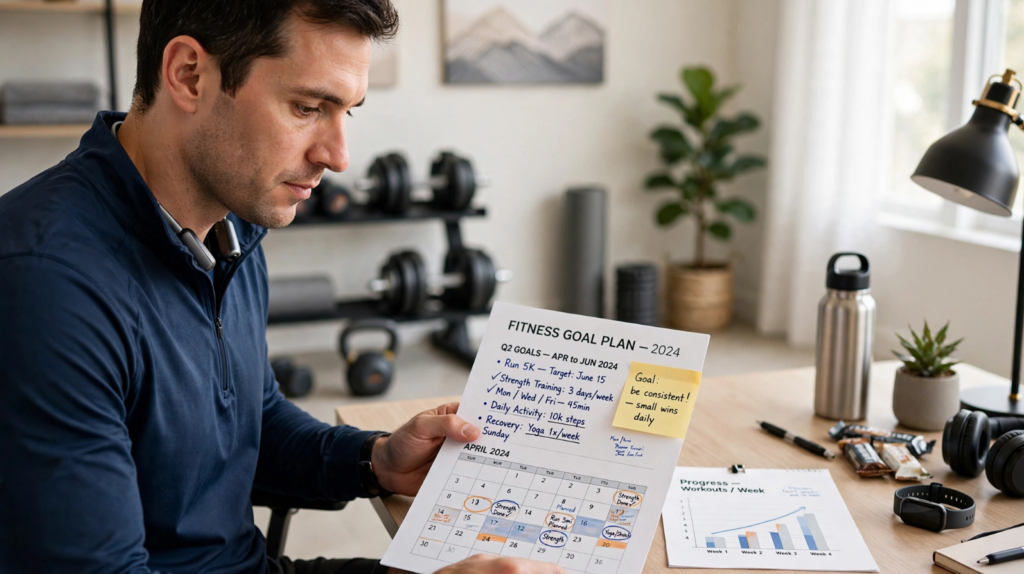
This protocol integrates the four pillars into a specific weekly plan. It assumes you have a baseline of fitness and are cleared for exercise. Pair it with a 300–500 calorie daily deficit and 1.6–2.2 g/kg of protein (see our Cardio Nutrition Guide).
Week 1–2: Metabolic Priming
- Monday: Full-body strength (45 min) + 20 min Zone 2 walk.
- Tuesday: 45 min Zone 2 (bike, ruck, or run).
- Wednesday: Full-body strength (45 min).
- Thursday: 40 min Zone 2.
- Friday: HIIT: 20 min air bike or rower intervals (Workout 1 or 2 from our HIIT Guide).
- Saturday: 75 min Zone 2 (outdoors: hike, ruck, or long walk).
- Sunday: Rest + 8,000 steps.
- Daily Steps: 8,000 minimum. Post-meal walks.
Week 3–4: Increasing Density
- Monday: Full-body strength + 25 min Zone 2.
- Tuesday: 50 min Zone 2.
- Wednesday: Full-body strength + 15 min HIIT finisher (bike: 6×20 sec hard / 100 sec easy).
- Thursday: 45 min Zone 2.
- Friday: Full-body strength (lighter, higher reps).
- Saturday: 90 min Zone 2 (ruck with 20 lbs).
- Sunday: Rest + 10,000 steps.
- Daily Steps: 10,000.
Week 5–6: Peak Fat Oxidation
- Monday: Full-body strength + 20 min Zone 2.
- Tuesday: 60 min Zone 2.
- Wednesday: HIIT: 25 min (e.g., rowing pyramid).
- Thursday: Full-body strength + 20 min Zone 2.
- Friday: 45 min Zone 2.
- Saturday: 120 min Zone 2 (long ruck or hike).
- Sunday: Active recovery: 45 min gentle walk.
- Daily Steps: 10,000–12,000.
Week 7–8: Consolidation
- Repeat Week 5–6 structure, but dial intensity back slightly on the HIIT day. Focus on feeling strong, not exhausted.
- At the end of Week 8, measure: waist circumference, morning resting heart rate, how your clothes fit, and optionally a field test (12-minute Cooper test) to see how fitness has held or improved during the deficit.
Deload Week (Week 9, Before Starting a New Cycle)
Reduce all Zone 2 volume by 30%, drop HIIT entirely, keep strength at 50% volume, maintain daily steps. This resets your hormones and prepares you for the next phase.
Section 4: The Nutritional Handshake—Fueling the Deficit Without Starving
Cardio and nutrition must work together. Refer to our Cardio Nutrition Guide for detailed macros; here is the fat-loss-specific strategy.
The 300–500 Calorie Deficit
Use a TDEE calculator to estimate maintenance calories, then subtract 300–500. A smaller deficit preserves muscle, energy, and sanity. Rapid weight loss after 40 is almost always muscle and water, followed by a rebound. Aim for 0.5–1 lb of fat loss per week.
Protein First
At 1.6–2.2 g/kg (0.7–1.0 g/lb), protein becomes your metabolic anchor. It’s the most satiating macronutrient, has the highest thermic effect (burns calories during digestion), and protects muscle in a deficit. A 180-pound person: 130–180 grams per day. Distribute across 3–4 meals.
Carbohydrate Cycling, Not Elimination
- On Strength and HIIT Days: Consume moderate carbs around your workouts (pre and post) to fuel performance and recovery.
- On Zone 2 and Rest Days: Lower carbohydrate intake, emphasizing protein, fibrous vegetables, and healthy fats. This improves metabolic flexibility and keeps insulin low for extended fat oxidation.
Hydration and Sleep as Fat Loss Agents
Mild dehydration is often mistaken for hunger. Drink 0.5 oz of water per pound of body weight daily. Sleep deprivation increases ghrelin (hunger hormone), decreases leptin (satiety hormone), and elevates cortisol. Less than 6 hours of sleep per night is strongly associated with obesity and visceral fat accumulation. Sleep is a weight-loss tool.
Section 5: Tracking Progress Beyond the Scale
The scale is a blunt instrument. Water weight, glycogen fluctuations, and muscle gain can mask fat loss and cause unnecessary frustration.
Primary Metrics (Track Every 2 Weeks)
- Waist Circumference: Measure at the navel. A decreasing waist is a direct proxy for visceral fat loss. Aim for less than half your height in inches.
- How Your Clothes Fit: A belt that needs tightening or a shirt that’s looser around the midsection is real-world proof.
- Progress Photos: Front, side, and back in consistent lighting and clothing. The mirror lies day-to-day; photos over 4-week intervals reveal the truth.
Secondary Metrics (Track Monthly)
- Fasting Glucose: Should be trending down.
- Morning Resting Heart Rate: A lower RHR indicates a stronger, more efficient heart.
- Workout Performance: Are your Zone 2 paces getting faster at the same heart rate? Are you lifting the same or heavier weights? Maintaining or improving performance in a calorie deficit is a strong sign that muscle is being preserved.
Section 6: FAQ—Your Cardio Fat Loss Questions
Q: I’m doing tons of cardio but the scale won’t budge. What’s wrong?
A: Three likely culprits: 1) You’re eating back all your exercise calories, often unknowingly (fitness trackers notoriously overestimate calorie burn). 2) Your NEAT has dropped—you’re killing yourself in workouts but moving less throughout the rest of the day. 3) Chronic stress and under-recovery are elevating cortisol and holding water. Audit your daily steps, track your food intake honestly for one week, and ensure you’re getting 7–8 hours of sleep.
Q: Should I do fasted cardio to burn more belly fat?
A: Fasted Zone 2, particularly in the morning, can upregulate fat-burning enzymes and improve metabolic flexibility. A 30–60 minute fasted walk or light jog is an excellent fat-loss tool for many over-40 individuals. However, fasted HIIT or heavy strength training is counterproductive—you’ll perform poorly and risk muscle breakdown. Fuel your hard sessions.
Q: Can I lose belly fat without losing my butt and curves?
A: Yes. This is precisely why heavy strength training (squats, deadlifts, lunges, hip thrusts) is non-negotiable during a fat loss phase. The combination of high protein, heavy lifting, and a moderate calorie deficit signals the body to burn fat while preserving or even building glute muscle. Cardio alone, without this strength anchor, often leads to a flat, less shapely physique.
Q: How long will it take to see visible results?
A: With consistent adherence to the protocol (4–5 days/week training, 90% nutrition compliance, good sleep), noticeable changes typically appear within 4 weeks. Significant, others-will-comment transformation usually takes 8–12 weeks. The first 2–3 weeks are often internal changes—better blood sugar control, lower inflammation, improved fitness—before the mirror catches up. Patience is part of the protocol.
The VigorForty Take
Fat loss after 40 is not a battle of willpower against a stubborn metabolism. It’s an engineering problem with a clear, solvable blueprint. The blueprint combines daily low-intensity movement (walking, Zone 2), a strategic weekly dose of high-intensity work (HIIT), muscle-preserving heavy strength training, and a nutrition plan that creates a modest deficit while flooding the body with protein. No starvation. No twice-a-day boot camps. No magical supplements.
Your body wants to be lean and energetic. It just needs the right signals. The chronic cardio and chronic dieting approach that worked (sort of) in your 20s now signals famine and stress, and the body clings to fat as a survival mechanism. The VigorForty approach—polarized training, protein-forward nutrition, sleep, and stress management—signals abundance, strength, and safety. The body responds by releasing its fat stores and building a metabolically active, resilient frame.
Trust the process. Measure your waist, not just the scale. Walk after your meals. Lift heavy things. Sprint occasionally, and only briefly. Sleep deeply. The belly fat that has overstayed its welcome will begin to leave, and it will be replaced by a body that looks, feels, and functions like a younger, more vibrant version of you. That’s not a promise from a supplement bottle. That’s the predictable outcome of a system that works. Now go execute.
Read All Related Articles
- The Complete Guide to Zone 2 Training After 40: How Low-Intensity Cardio Boosts Fat Loss, Longevity, and Endurance
- The Complete Guide to HIIT After 40: Joint-Friendly Workouts That Torch Fat and Protect Your Heart
- The Complete Guide to Running After 40: How to Start, Stay Injury-Free, and Build Lifelong Endurance
- The Complete Guide to Metabolic Health After 40: Reverse Insulin Resistance, Burn Stubborn Fat, and Reclaim Your Energy with Cardio
- The Complete Guide to Cardio Recovery After 40: How to Rest, Rebuild, and Come Back Stronger
- The Complete Guide to Heart Rate Training Zones After 40: Unlock Every Beat for Maximum Fat Loss, Endurance, and Longevity
- The Complete Guide to VO2 Max After 40: The #1 Predictor of Longevity and How to Improve It
- The Complete Guide to Concurrent Training After 40: How to Combine Cardio and Strength for Maximum Fat Loss, Muscle Preservation, and Longevity
- The Complete Guide to Walking and Rucking After 40: The Most Underrated Cardio for Fat Loss, Joint Health, and Longevity
- The Complete Guide to Designing Your Own Cardio Plan After 40: A Personalized Blueprint for Fat Loss, Longevity, and Peak Performance
- The Complete Guide to Cardio Nutrition After 40: Fuel Your Workouts for Maximum Fat Loss, Endurance, and Recovery
- The Complete Guide to Cardio Equipment After 40: Choosing the Best Treadmill, Bike, Rower, or Elliptical for Your Home Gym
- The Complete Guide to Injury Prevention for Cardio After 40: Run, Ride, and Ruck Pain-Free for Life
- The Complete Guide to Cardio for Fat Loss After 40: Burn Stubborn Belly Fat Without Losing Muscle or Energy
- The Complete Guide to Seasonal Cardio Training After 40: How to Periodize Your Year for Year-Round Fitness, Fat Loss, and Injury Prevention
- The Complete Guide to Cardio and Brain Health After 40: How Exercise Protects Your Memory, Mood, and Mental Sharpness
- The Complete Guide to Building a Home Gym for Cardio After 40: Design a Space That Makes Consistency Inevitable
- The Joyful Movement Manifesto: How to Love Cardio After 40 and Make It a Lifelong Practice
- The Complete Guide to Sleep and Cardio After 40: How Deep Rest Unlocks Your Best Performance, Recovery, and Longevity
- The Complete Guide to Stress, Cortisol, and Cardio After 40: How to Manage Your Nervous System for Better Recovery and Performance
- The Complete Guide to Returning to Cardio After a Layoff After 40: Your Compassionate, Science-Backed Roadmap Back to Fitness
- The Complete Guide to Cardio Through Menopause: How to Adapt Your Training for Hormonal Changes, Protect Your Heart, and Feel Strong After 40
- The Complete Guide to Cycling After 40: Low-Impact Cardio for Joint Health, Endurance, and Lifelong Fitness
- The Complete Guide to Pool and Water-Based Cardio After 40: Low-Impact Workouts for Joint Pain, Recovery, and Total-Body Fitness
- The Complete Guide to Rowing After 40: Full-Body, Low-Impact Cardio for Strength, Endurance, and Longevity
- The Complete Guide to Tracking Cardio Progress After 40: The Key Metrics That Matter More Than the Scale
- The Complete Guide to Cardio for High Blood Pressure After 40: How Exercise Lowers Your Numbers and Protects Your Heart
- The Complete Guide to Cardio for Type 2 Diabetes and Prediabetes After 40: How Exercise Reverses Insulin Resistance and Protects Your Heart
- The Complete Guide to Cardio with Arthritis After 40: Pain-Free Workouts That Strengthen Joints and Keep You Moving
- The Complete Guide to Longevity and Cardio After 40: How Aerobic Fitness Adds Years to Your Life and Life to Your Years
- The Complete Guide to Building a Cardio Habit After 40: The Science of Making Exercise Stick for Life
- The Complete Guide to Cardio and Immune Health After 40: Strengthen Your Body’s Defense System for a Resilient, Vibrant Life
- The Complete Guide to Cardio While Traveling After 40: Stay Fit on the Road, in Hotels, and Away from Home
- The Complete Guide to Cardio for Posture and Back Pain After 40: Strengthen Your Posterior Chain and Reverse the Damage of Sitting
- The Complete Guide to the Social Side of Cardio After 40: How Community, Accountability, and Connection Make You Stronger
- The VigorForty Manifesto: A Final Word on the Lifelong Practice of Movement