
Author: Vigor Forty Editorial Team
Medically Reviewed By: Editorial Review Board
Disclaimer: This article is for informational purposes only and is not a substitute for professional medical advice. If you have hypertension or are on blood pressure medication, consult your physician before starting or modifying your exercise program. Never stop or adjust prescription medications without medical supervision. Read our full Medical Disclaimer.
📌 Key Takeaways
- Nearly Half of American Adults Have High Blood Pressure—and Many Don’t Know It: Hypertension affects approximately 47% of U.S. adults, with prevalence rising sharply after age 40. It’s a primary driver of heart attacks, strokes, kidney failure, and dementia, yet it produces few noticeable symptoms until significant damage is done.
- Regular Cardio Can Lower Systolic Blood Pressure by 5–10 mmHg—Equivalent to Some Medications: Aerobic exercise is a first-line, evidence-based treatment for hypertension. The reductions achieved through consistent, moderate-intensity cardio are comparable to the effect of a single antihypertensive drug, without side effects.
- The Combination of Zone 2 and Low-Impact Modalities Is the Sweet Spot: Moderate-intensity, steady-state cardio (Zone 2) provides the most consistent blood pressure-lowering effects. Activities like brisk walking, cycling, rowing, swimming, and rucking improve endothelial function, reduce arterial stiffness, and lower systemic vascular resistance.
- Isometric Exercise and Strength Training Provide Additional, Unique Benefits: Recent research highlights that isometric exercises (wall sits, planks) and moderate resistance training produce significant blood pressure reductions and should be integrated alongside aerobic work for a comprehensive approach.
- Exercise Timing, Safety, and Monitoring Are Essential: For those with uncontrolled hypertension (above 160/100 mmHg), medical clearance is required before starting vigorous exercise. Monitoring blood pressure at home before and after workouts, avoiding the Valsalva maneuver (breath-holding) during heavy lifting, and being aware of medication interactions (like beta-blockers blunting heart rate) ensure a safe, effective program.
Introduction: The Silent Threat and Your Most Powerful Weapon
High blood pressure is called the “silent killer” for a reason. It can quietly damage your arteries, heart, brain, and kidneys for decades without a single headache, dizzy spell, or warning sign. By the time it’s detected—often at a routine checkup in your mid-40s—the process of vascular aging is already well underway. The arteries have stiffened. The heart muscle has thickened from pumping against elevated pressure. The risk of a future heart attack or stroke has silently escalated.
For the American over 40, the statistics are stark: nearly one in two adults meets the criteria for hypertension, defined as a systolic blood pressure (the top number) of 130 mmHg or higher, or a diastolic pressure (the bottom number) of 80 mmHg or higher. Many more live in the “elevated” range, on a trajectory toward full-blown hypertension. The causes are a familiar litany: a diet high in sodium and processed foods, chronic stress, inadequate sleep, excess body weight, and a sedentary lifestyle.
But here’s the empowering flip side: hypertension is exquisitely sensitive to lifestyle intervention, and cardiovascular exercise is the single most potent tool in that toolbox. A brisk walk doesn’t just burn calories; it literally teaches your blood vessels to relax. A Zone 2 bike ride doesn’t just build mitochondria; it triggers the release of nitric oxide, the master vasodilator that widens your arteries and lowers pressure. A consistent cardio practice, performed correctly and safely, can pull your numbers down as effectively as a prescription drug—while simultaneously improving every other system in your body.
This guide is your complete manual for using cardio to manage and lower your blood pressure after 40. You’ll learn the physiology of how exercise reduces hypertension, the optimal types, doses, and frequencies of cardio, the critical safety precautions to observe, how to integrate isometric and resistance training, and how to track your blood pressure to see the results of your efforts in real time. If you’ve been told your pressure is “a little high” and you want to take control, this is your roadmap.
Section 1: The Physiology of Hypertension and How Exercise Reverses It
To understand why exercise works, you need to understand what’s broken.
What Is Blood Pressure?
Blood pressure is the force of circulating blood against the walls of your arteries. Systolic pressure (the top number) is the force during a heartbeat. Diastolic pressure (the bottom number) is the force between beats. It’s regulated by a complex interplay of cardiac output, blood volume, and the tone (constriction or dilation) of your peripheral arteries.
The Hypertensive Blood Vessel
In hypertension, the endothelium—the delicate inner lining of your blood vessels—becomes dysfunctional. It produces less nitric oxide, the gas that signals smooth muscle to relax and arteries to widen. The arteries remain chronically constricted, increasing resistance. Over time, the vessel walls thicken and stiffen, locking in the high pressure. This is the vicious cycle that cardio breaks.
How Cardio Lowers Blood Pressure:
- Acute Effect (Post-Exercise Hypotension): A single bout of aerobic exercise lowers blood pressure for up to 12–16 hours afterward. This is called post-exercise hypotension. It’s driven by a sustained release of nitric oxide and a drop in sympathetic nervous system activity. Your vessels stay relaxed long after the workout ends.
- Chronic Effect (Structural Remodeling): Over weeks and months, consistent cardio stimulates the endothelium to produce more nitric oxide, improves the sensitivity of vascular smooth muscle to relax, grows new capillaries, and reduces systemic inflammation. It also lowers resting heart rate (reducing cardiac workload) and can decrease circulating blood volume by improving kidney function and sodium excretion. The result is a lower, healthier baseline blood pressure.
Section 2: The Best Types of Cardio for Blood Pressure Control
Not all exercise is equally effective for hypertension. The research points to a clear hierarchy.
Aerobic Exercise (The Gold Standard)
Moderate-intensity, steady-state aerobic exercise—the exact Zone 2 we’ve championed throughout the VigorForty system—is the most effective and best-studied form of exercise for lowering blood pressure.
- Recommended Modalities: Brisk walking, rucking, cycling, rowing, swimming, pool running, elliptical, hiking.
- Why It Works: These activities provide the rhythmic, repetitive large-muscle contractions that demand increased blood flow, stimulating the endothelium to release nitric oxide. They can be sustained for the duration needed to trigger the post-exercise hypotension effect without excessive sympathetic nervous system activation.
High-Intensity Interval Training (HIIT) (Effective, but with Caveats)
HIIT also lowers blood pressure, and some studies suggest it may be comparable or even slightly superior to moderate-intensity cardio for improving endothelial function. However, the acute spike in blood pressure during maximal intervals is significant. HIIT is appropriate for individuals with well-controlled hypertension (below 140/90 mmHg) and should be avoided by those with uncontrolled or severe hypertension. The joint-friendly HIIT protocols in our dedicated guide (air bike, rower, pool) are the safest avenues.
Isometric Exercise (The Surprising Newcomer)
A 2023 meta-analysis published in the British Journal of Sports Medicine generated significant attention by concluding that isometric exercises—particularly wall sits—were among the most effective forms of exercise for lowering systolic blood pressure. Isometric holds produce a temporary rise in pressure during the exercise, followed by a more profound vasodilation afterward.
- The Protocol: 4 x 2-minute wall sits, with 2 minutes of rest between sets. Performed 3 times per week. This can be a powerful adjunct to your aerobic training.
Resistance Training (A Critical Complement)
While dynamic resistance training alone does not lower resting blood pressure as dramatically as aerobic exercise, it is essential for building the muscle mass that improves glucose disposal, supports metabolic health, and maintains functional independence. The key for hypertensives is to avoid maximal, grind-out lifts that involve breath-holding (the Valsalva maneuver), which can cause dangerous blood pressure spikes. Moderate weight, higher repetitions (10–15 reps), and continuous breathing are the safe and effective approach.
Section 3: The VigorForty Blood Pressure-Lowering Protocol
This protocol integrates the most effective exercise types into a weekly plan designed to maximize hypotensive effects. It assumes your blood pressure is under reasonable control (below 160/100 mmHg) and you are medically cleared.
Weekly Prescription:
- Aerobic Exercise (Primary): 150–200 minutes per week of moderate-intensity (Zone 2) cardio, spread across 4–5 sessions. This is your foundation.
- HIIT (Secondary): One 20-minute session per week, using joint-friendly modalities, if blood pressure is controlled.
- Isometric Training (Adjunctive): 3 sessions per week of wall sits (4 x 2 minutes) after a cardio session or on a separate occasion.
- Resistance Training (Complementary): 2 full-body sessions per week, moderate weight, 10–15 reps, emphasizing continuous breathing.
Sample Week:
- Monday: 45 min Zone 2 brisk walk or ruck + 4 x 2 min wall sits
- Tuesday: Full-body resistance training (moderate weight, high reps) + 20 min Zone 2 bike cool-down
- Wednesday: 60 min Zone 2 swim, bike, or row
- Thursday: 20 min HIIT (air bike or rower intervals) + 4 x 2 min wall sits
- Friday: 45 min Zone 2 walk or elliptical
- Saturday: 90 min Zone 2 outdoor hike, long ruck, or bike ride + 4 x 2 min wall sits
- Sunday: Active recovery (30 min gentle walk) or complete rest
Section 4: Safety, Monitoring, and Medication Considerations
Exercising with hypertension requires some specific precautions.
Know Your Numbers Before You Go:
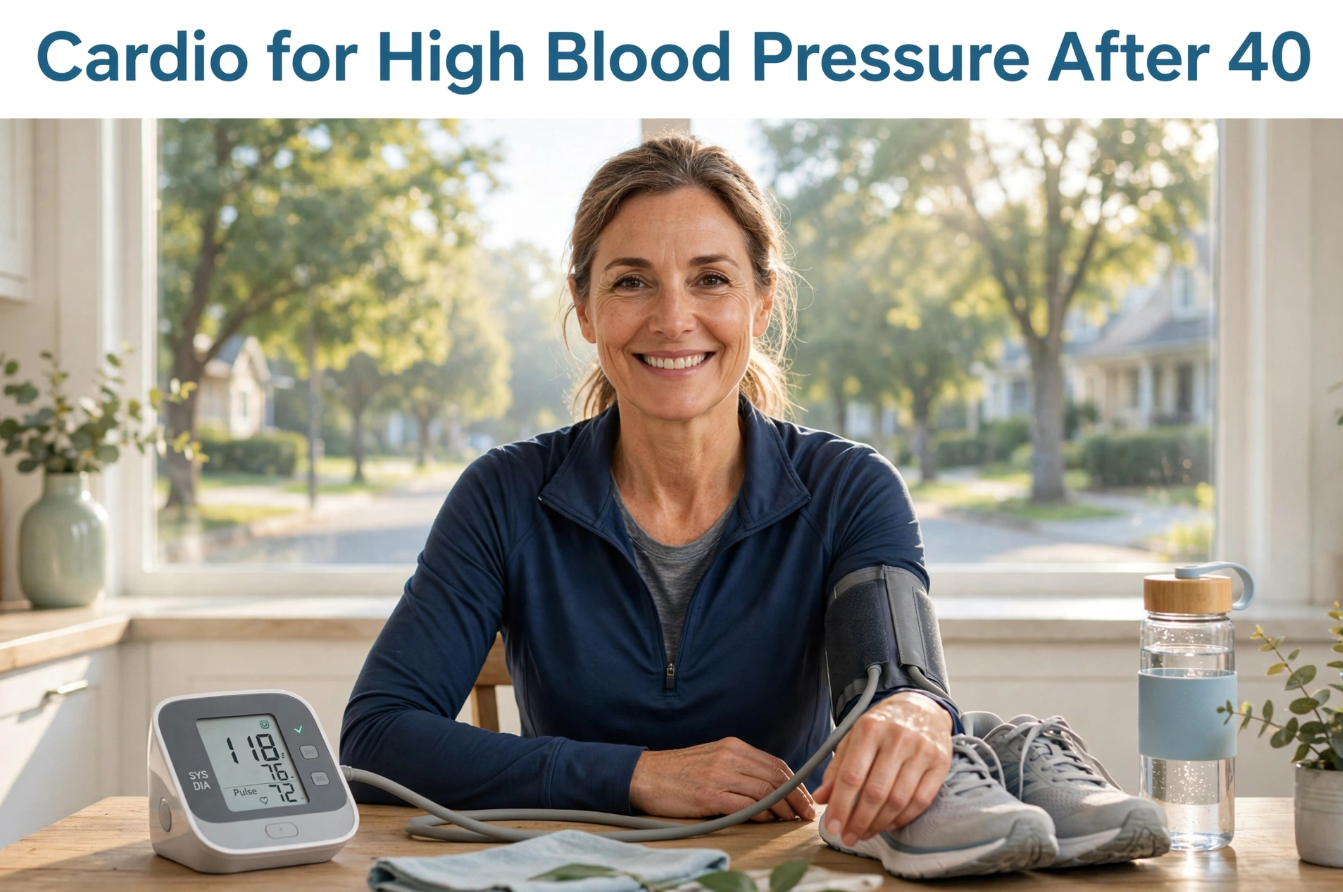
Invest in a validated home blood pressure monitor (upper arm cuff, not wrist). Take your blood pressure in the morning, before coffee or medication, after sitting quietly for 5 minutes. This is your baseline.
- If your resting systolic BP is below 160/100 mmHg: It is generally safe to proceed with moderate-intensity exercise. Vigorous exercise is safe if BP is controlled.
- If your resting systolic BP is 160–179 / 100–109 mmHg: You may still exercise, but stick to low-to-moderate intensity (Zone 1–2) and consult your doctor. Avoid HIIT and heavy lifting.
- If your resting systolic BP is 180/110 mmHg or higher: Do not exercise. Seek medical attention to get your pressure under control first.
The Beta-Blocker Factor:
If you take beta-blockers (e.g., metoprolol, atenolol), your heart rate will be significantly blunted at rest and during exercise. You cannot use standard heart rate zone formulas. You must rely on the talk test and Rate of Perceived Exertion (RPE). A “moderate” effort is one where you can still hold a conversation. Do not chase a heart rate number; chase the feeling.
Avoid the Valsalva Maneuver:
Holding your breath and straining during a heavy lift (the Valsalva maneuver) causes a sharp, transient spike in blood pressure. For the hypertensive individual, this should be avoided. Exhale during the exertion phase of a lift (exhale as you push or pull). Never hold your breath.
Cool Down Gradually:
Stopping abruptly after intense cardio can cause blood pressure to drop too quickly, leading to dizziness or fainting. Always finish your session with a 5–10 minute gradual cool-down, allowing your heart rate and blood pressure to return to baseline slowly.
Section 5: The Diet and Lifestyle Synergy
Exercise is not a silo. Its blood pressure-lowering effects are amplified by other lifestyle factors.
- The DASH Diet: The Dietary Approaches to Stop Hypertension diet emphasizes fruits, vegetables, whole grains, lean protein, and low-fat dairy while strictly limiting sodium, saturated fat, and added sugars. Pairing this with your cardio protocol produces a larger BP reduction than either alone.
- Sodium Restriction: Aim for less than 2,300 mg of sodium per day, and ideally less than 1,500 mg if you have hypertension. The majority of American sodium intake comes from processed foods and restaurant meals, not the salt shaker.
- Potassium Intake: Potassium counterbalances sodium and relaxes blood vessel walls. The same DASH diet that’s low in sodium is naturally high in potassium (bananas, potatoes, spinach, beans, avocados).
- Weight Loss: For every kilogram (2.2 lbs) of weight lost, systolic blood pressure drops by approximately 1 mmHg. The combination of the cardio protocol above and the nutritional principles from our Cardio Nutrition and Fat Loss Guides creates the most effective non-pharmacological intervention for hypertension.
- Sleep and Stress: Both of which we’ve covered in dedicated guides. Chronic sleep deprivation and unmanaged stress are direct, powerful drivers of hypertension. Prioritize 7–8 hours of sleep and the breathwork and nature exposure practices from our Stress Guide.
Section 6: FAQ—Your Blood Pressure and Cardio Questions Answered
Q: How long will it take for exercise to lower my blood pressure?
A: You will likely see an acute reduction (post-exercise hypotension) after your very first session. Meaningful, sustained reductions in your resting blood pressure typically appear within 4–12 weeks of consistent training, depending on the starting point, the volume of exercise, and concurrent dietary changes. Track your morning blood pressure weekly and look for the downward trend.
Q: My blood pressure is high only at the doctor’s office (white coat hypertension). Should I still follow this protocol?
A: Yes. White coat hypertension is not entirely benign; it often progresses to sustained hypertension over time and indicates a vascular system that is over-reactive to stress. The same exercise, nutrition, and stress management strategies apply. Monitor your blood pressure at home to get a true picture of your numbers.
Q: Can exercise allow me to come off my blood pressure medication?
A: It’s possible, but this must be managed by your physician. Many individuals are able to reduce their medication dosage or eliminate it entirely after adopting a consistent, intensive lifestyle program. However, you should never stop or adjust your medication on your own. Present your home blood pressure log and your exercise routine to your doctor, and work with them on a supervised tapering plan if your numbers consistently fall into the normal range.
Q: Is it safe to lift heavy weights with high blood pressure?
A: Moderate resistance training with continuous breathing is safe and recommended. Heavy, maximal powerlifting where you are breath-holding and straining should be avoided unless your pressure is well-controlled and you have discussed it with your doctor. The risk is a transient spike that, in a vessel weakened by chronic hypertension, could trigger an event. The smart approach is moderate weight for higher repetitions, focusing on form and breathing.
The VigorForty Take
A diagnosis of high blood pressure is not a life sentence of pills and fear. It’s a wake-up call, an invitation to engage with your cardiovascular system in a way you never have before. It’s your body telling you that the beautiful, intricate network of vessels that nourishes every cell is under strain and needs your active participation in its care.
The protocol in this guide—150+ minutes of Zone 2, a dash of careful HIIT, a sprinkle of isometric holds, and supportive strength training—is not a chore. It’s a prescription for vascular health that costs nothing, has no side effects, and improves not just your blood pressure but your energy, your body composition, your brain function, and your longevity.
The walk you take this evening is not just a walk. It’s a nitric oxide bath for your arteries. The row you do tomorrow morning is a remodeling session for your heart. The wall sit you hold is training your vessels to relax more deeply. Every session is a direct, measurable investment in a lower, healthier, and safer blood pressure.
Take your morning reading. Lace up your shoes. Get moving. And watch the numbers—the ones that truly matter—begin to move in the right direction. Your heart, your brain, your kidneys, and every mile of blood vessels in your body will thank you for the rest of your long, healthy life.
Read All Related Articles
- The Complete Guide to Zone 2 Training After 40: How Low-Intensity Cardio Boosts Fat Loss, Longevity, and Endurance
- The Complete Guide to HIIT After 40: Joint-Friendly Workouts That Torch Fat and Protect Your Heart
- The Complete Guide to Running After 40: How to Start, Stay Injury-Free, and Build Lifelong Endurance
- The Complete Guide to Metabolic Health After 40: Reverse Insulin Resistance, Burn Stubborn Fat, and Reclaim Your Energy with Cardio
- The Complete Guide to Cardio Recovery After 40: How to Rest, Rebuild, and Come Back Stronger
- The Complete Guide to Heart Rate Training Zones After 40: Unlock Every Beat for Maximum Fat Loss, Endurance, and Longevity
- The Complete Guide to VO2 Max After 40: The #1 Predictor of Longevity and How to Improve It
- The Complete Guide to Concurrent Training After 40: How to Combine Cardio and Strength for Maximum Fat Loss, Muscle Preservation, and Longevity
- The Complete Guide to Walking and Rucking After 40: The Most Underrated Cardio for Fat Loss, Joint Health, and Longevity
- The Complete Guide to Designing Your Own Cardio Plan After 40: A Personalized Blueprint for Fat Loss, Longevity, and Peak Performance
- The Complete Guide to Cardio Nutrition After 40: Fuel Your Workouts for Maximum Fat Loss, Endurance, and Recovery
- The Complete Guide to Cardio Equipment After 40: Choosing the Best Treadmill, Bike, Rower, or Elliptical for Your Home Gym
- The Complete Guide to Injury Prevention for Cardio After 40: Run, Ride, and Ruck Pain-Free for Life
- The Complete Guide to Cardio for Fat Loss After 40: Burn Stubborn Belly Fat Without Losing Muscle or Energy
- The Complete Guide to Seasonal Cardio Training After 40: How to Periodize Your Year for Year-Round Fitness, Fat Loss, and Injury Prevention
- The Complete Guide to Cardio and Brain Health After 40: How Exercise Protects Your Memory, Mood, and Mental Sharpness
- The Complete Guide to Building a Home Gym for Cardio After 40: Design a Space That Makes Consistency Inevitable
- The Joyful Movement Manifesto: How to Love Cardio After 40 and Make It a Lifelong Practice
- The Complete Guide to Sleep and Cardio After 40: How Deep Rest Unlocks Your Best Performance, Recovery, and Longevity
- The Complete Guide to Stress, Cortisol, and Cardio After 40: How to Manage Your Nervous System for Better Recovery and Performance
- The Complete Guide to Returning to Cardio After a Layoff After 40: Your Compassionate, Science-Backed Roadmap Back to Fitness
- The Complete Guide to Cardio Through Menopause: How to Adapt Your Training for Hormonal Changes, Protect Your Heart, and Feel Strong After 40
- The Complete Guide to Cycling After 40: Low-Impact Cardio for Joint Health, Endurance, and Lifelong Fitness
- The Complete Guide to Pool and Water-Based Cardio After 40: Low-Impact Workouts for Joint Pain, Recovery, and Total-Body Fitness
- The Complete Guide to Rowing After 40: Full-Body, Low-Impact Cardio for Strength, Endurance, and Longevity
- The Complete Guide to Tracking Cardio Progress After 40: The Key Metrics That Matter More Than the Scale
- The Complete Guide to Cardio for High Blood Pressure After 40: How Exercise Lowers Your Numbers and Protects Your Heart
- The Complete Guide to Cardio for Type 2 Diabetes and Prediabetes After 40: How Exercise Reverses Insulin Resistance and Protects Your Heart
- The Complete Guide to Cardio with Arthritis After 40: Pain-Free Workouts That Strengthen Joints and Keep You Moving
- The Complete Guide to Longevity and Cardio After 40: How Aerobic Fitness Adds Years to Your Life and Life to Your Years
- The Complete Guide to Building a Cardio Habit After 40: The Science of Making Exercise Stick for Life
- The Complete Guide to Cardio and Immune Health After 40: Strengthen Your Body’s Defense System for a Resilient, Vibrant Life
- The Complete Guide to Cardio While Traveling After 40: Stay Fit on the Road, in Hotels, and Away from Home
- The Complete Guide to Cardio for Posture and Back Pain After 40: Strengthen Your Posterior Chain and Reverse the Damage of Sitting
- The Complete Guide to the Social Side of Cardio After 40: How Community, Accountability, and Connection Make You Stronger
- The VigorForty Manifesto: A Final Word on the Lifelong Practice of Movement