
Author: Vigor Forty Editorial Team
Medically Reviewed By: Editorial Review Board
Disclaimer: This article is for informational purposes only and is not a substitute for professional medical advice. Read our full Medical Disclaimer.
📌 Key Takeaways
- Sustainability is the key to long-term success: The best workout program is the one you can stick with for years—not weeks or months. Consistency over decades beats intensity over months.
- Shift your mindset from “short-term goal” to “lifestyle”: Strength training isn’t something you do for a few months to get in shape—it’s something you do for life to stay healthy, strong, and capable.
- Build systems, not just goals: Goals give you direction; systems give you the daily habits that make progress inevitable. Focus on the process, not just the outcome.
- Make it enjoyable: If you hate your workouts, you won’t stick with them. Find exercises you enjoy, create a routine that fits your life, and make it something you look forward to.
- Life will interrupt—plan for it: Expect disruptions (travel, illness, busy periods) and have strategies to handle them. Flexibility is key to sustainability.
- Strength training is a lifelong journey: Your body changes over time—your training should too. Embrace the journey, not just the destination.
Introduction: The Long Game
Most people approach fitness like a sprint. They set ambitious goals, train intensely for a few weeks or months, and then… they stop. Life gets busy. Motivation fades. The results don’t come fast enough. The program was too extreme. The gym was too far away.
The result: Years of starting and stopping. Cycles of intense effort followed by long periods of inactivity. Frustration. Guilt. A sense of failure.
But here’s the truth: Fitness isn’t a sprint—it’s a marathon. A lifelong journey. The goal isn’t just to get fit; it’s to stay fit for decades. To be strong, capable, and healthy in your 40s, 50s, 60s, and beyond.
The Sustainable Approach:
| Sprint Approach | Sustainable Approach |
|---|---|
| Extreme goals | Realistic, adaptable goals |
| Intense, short-term effort | Consistent, moderate effort |
| “All or nothing” mentality | “Something is better than nothing” |
| Results-focused | Process-focused |
| Rigid program | Flexible program |
| Motivation-driven | Habit-driven |
| Quit when motivation fades | Continue when motivation fades |
The Numbers:
- 80% of people who start a fitness program quit within 6 months
- The average person starts and stops multiple times
- Only 23% of American adults meet the recommended guidelines for strength training
- But those who make fitness a lifelong habit maintain their health, strength, and function
The Difference: Those who succeed long-term don’t have more motivation or willpower. They have better systems. They’ve built fitness into their lives in a sustainable way.
This guide will show you how to build a sustainable fitness habit that lasts for life. You’ll learn how to shift your mindset, build systems, create routines that fit your life, handle setbacks, and embrace the journey.
Section 1: The Mindset Shift
From “Getting Fit” to “Being Fit”
| Mindset | “Getting Fit” | “Being Fit” |
|---|---|---|
| Timeframe | Short-term (weeks/months) | Lifelong |
| Goal | Achieve a specific outcome | Maintain a lifestyle |
| Approach | Intensive, temporary | Sustainable, ongoing |
| Motivation | External (appearance, event) | Internal (health, capability) |
| Setbacks | Failure (stop entirely) | Normal (adjust and continue) |
The Identity Shift
| Old Identity | New Identity |
|---|---|
| “I’m trying to get in shape” | “I’m a person who values strength” |
| “I’m on a diet” | “I eat to nourish my body” |
| “I’m working out to lose weight” | “I train to be strong and capable” |
| “I need to exercise” | “Exercise is part of who I am” |
How to Make the Shift:
| Strategy | How to Apply |
|---|---|
| Change your language | “I am someone who exercises” vs. “I should exercise” |
| Embrace the identity | “I’m a person who values strength” |
| Make it non-negotiable | Like brushing your teeth |
| Focus on how it makes you feel | Energy, confidence, capability |
From “All or Nothing” to “Something is Better Than Nothing”
| All or Nothing | Something is Better Than Nothing |
|---|---|
| “If I can’t do a full workout, I won’t do anything” | “I’ll do 10 minutes if that’s all I have” |
| “I missed my workout, the week is ruined” | “I missed Monday, I’ll do Tuesday” |
| “I ate one bad meal, the diet is ruined” | “I ate one bad meal, I’ll eat well next meal” |
The 80/20 Rule:
- 80% consistency is enough
- Perfection is the enemy of progress
- A 5-minute workout is better than no workout
- One missed session doesn’t derail your progress
Section 2: Building Systems, Not Just Goals
The Systems Approach
| Goals | Systems |
|---|---|
| Define the outcome | Define the daily actions |
| Give you direction | Give you the process |
| Can be disappointing | Are sustainable |
| Focus on the future | Focus on the present |
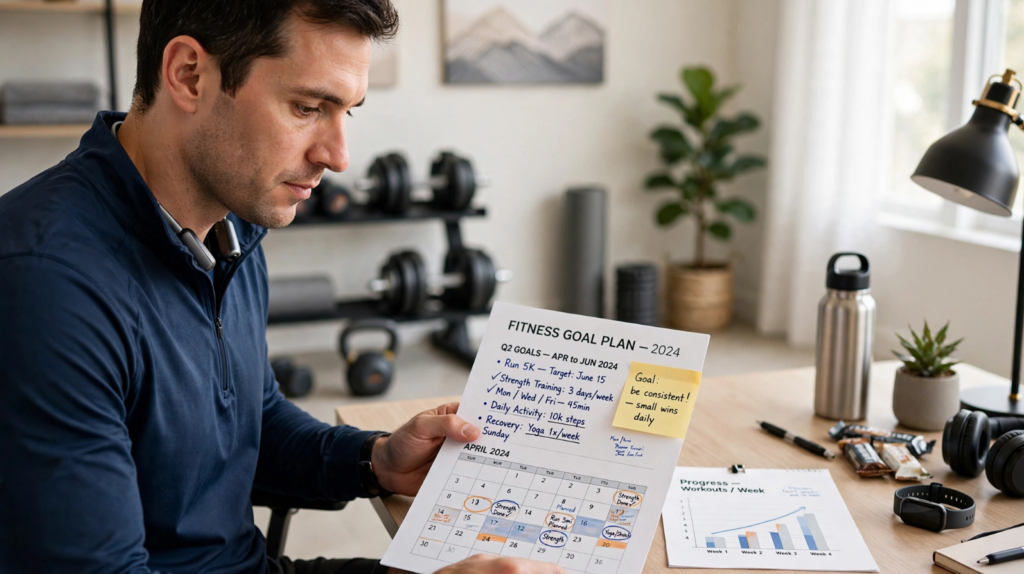
| “I want to squat 225 lbs” | “I will train 3x/week” |
The Habit Loop Revisited
| Phase | Description | Example |
|---|---|---|
| Cue | Trigger that starts the habit | Alarm goes off, put on gym clothes |
| Routine | The habit itself | Do the workout |
| Reward | Benefit you get | Feeling accomplished, endorphin rush |
Habit Stacking
The Strategy: Attach new habits to existing ones.
| Current Habit | New Habit |
|---|---|
| Coffee in the morning | Do 5 minutes of stretching while coffee brews |
| Lunch break | Take a 10-minute walk |
| After dinner | Do 10 push-ups |
| Before showering | Do 5 minutes of mobility work |
The 2-Minute Rule
The Strategy: Scale a new habit down to 2 minutes to make it easy to start.
| Big Habit | 2-Minute Version |
|---|---|
| Full workout | Put on gym clothes |
| 30-minute run | Put on running shoes |
| 10 push-ups | Do 1 push-up |
| Full stretching routine | Do 1 stretch |
Why It Works: The hardest part is starting. Once you’ve started, it’s easier to continue.
Section 3: Creating Your Sustainable Routine
The Minimalist Approach
The Strategy: Focus on the essentials and eliminate the rest. A simple routine you can stick with is better than a complex routine you can’t.
| Essential Element | Minimalist Version |
|---|---|
| Workout Frequency | 2–3 days/week |
| Exercises per Workout | 5–6 exercises |
| Workout Duration | 30–45 minutes |
| Exercise Types | Compound movements only |
Sample Minimalist Routine:
| Exercise | Sets | Reps |
|---|---|---|
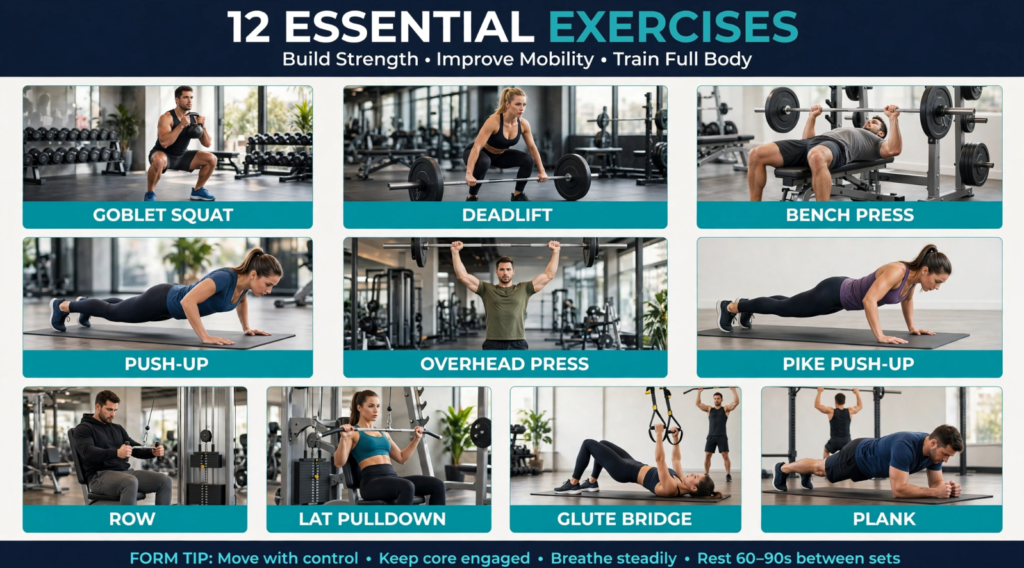
| Squats | 3 | 8–10 |
| Bench Press | 3 | 8–10 |
| Rows | 3 | 8–10 |
| Overhead Press | 3 | 8–10 |
| Plank | 3 | 45–60 sec |
The Flexible Approach
The Strategy: Have a core routine but be flexible with how and when you do it.
| Flexibility | Example |
|---|---|
| Time | Morning, lunch, evening—anytime works |
| Place | Gym, home, hotel—anywhere works |
| Equipment | Barbells, dumbbells, bands—use what’s available |
| Exercise Selection | Swap based on what’s available or how you feel |
The Non-Negotiables: The only non-negotiable is something. If you do something, it counts.
The Routine That Fits Your Life
Questions to Ask Yourself:
| Question | Your Answer |
|---|---|
| When am I most energetic? | — |
| When am I least likely to be interrupted? | — |
| What equipment do I have access to? | — |
| How much time can I realistically commit? | — |
| What exercises do I actually enjoy? | — |
| What’s my biggest obstacle to consistency? | — |
Sample Routines for Different Lifestyles:
Busy Professional (6 AM Workouts):
| Time | Activity |
|---|---|
| 5:30 AM | Wake up, hydrate |
| 5:45 AM | 30-minute workout |
| 6:15 AM | Shower, prepare for work |
| 6:45 AM | Leave for work |
Parent with Young Children (Lunch Break Workouts):
| Time | Activity |
|---|---|
| 12:00 PM | Lunch break begins |
| 12:05 PM | 25-minute workout (office or nearby gym) |
| 12:30 PM | Quick lunch |
| 12:45 PM | Return to work |
Traveling Professional (Hotel Room Workouts):
| Time | Activity |
|---|---|
| 6:30 AM | Wake up |
| 6:35 AM | 20-minute bodyweight workout |
| 6:55 AM | Shower, prepare for day |
Section 4: Making It Enjoyable
Why Enjoyment Matters
| Factor | Effect on Consistency |
|---|---|
| You enjoy it | You’ll do it consistently |
| You hate it | You’ll find excuses to skip it |
| It’s fun | You’ll look forward to it |
| It’s boring | You’ll dread it |
How to Make Training Enjoyable
1. Choose Exercises You Like
| If You Enjoy… | Focus On… |
|---|---|
| Heavy lifting | Powerlifting-style training |
| Body control | Calisthenics |
| Variety | Hybrid training |
| Competition | Sports, group classes |
| Solitude | Solo training |
2. Add Variety
| Strategy | Example |
|---|---|
| Change exercises | Swap exercises every 4–6 weeks |
| Change rep ranges | Alternate strength and hypertrophy |
| Change tempo | Slow down or speed up |
| Add challenges | New goals, new skills |
| Train with others | Workout partner, classes |
3. Make It Social
| Strategy | Example |
|---|---|
| Workout partner | Friend, spouse, family member |
| Group classes | Gym classes, group training |
| Online community | Forums, social media groups |
| Challenges | Friendly competition with friends |
4. Track and Celebrate Progress
| Strategy | Example |
|---|---|
| Track workouts | See improvement |
| Celebrate milestones | Reward yourself for goals met |
| Take photos | Visual proof of progress |
| Share achievements | Tell someone about your progress |
5. Make It Part of Your Identity
| Strategy | Example |
|---|---|
| “I’m a person who trains” | It’s just who you are |
| “I’m strong” | Embrace the identity |
| “I value my health” | It’s a core value |
Section 5: Handling Setbacks and Disruptions
Expect Disruptions
Why It Matters: Life will interrupt your routine. It’s not a matter of if—it’s when. Expecting disruptions helps you handle them better.
Common Disruptions:
| Disruption | How Often It Happens |
|---|---|
| Sickness | 1–3 times per year |
| Travel | 1–4 times per year |
| Busy periods at work | 2–4 times per year |
| Family obligations | Ongoing |
| Injury | Occasional |
| Loss of motivation | Common (seasonal) |
Strategies for Each Disruption
Sickness:
| Strategy | How to Apply |
|---|---|
| Rest completely | Don’t train while sick |
| Return gradually | 50% volume first week |
| Focus on mobility | Gentle movement when recovering |
| Don’t rush back | Full recovery matters |
Travel:
| Strategy | How to Apply |
|---|---|
| Hotel room workouts | Bodyweight exercises, bands |
| Hotel gym | Use if available |
| Bodyweight only | Push-ups, squats, planks |
| Short sessions | 15–20 minutes is enough |
| Plan ahead | Know what you’ll do |
Busy Periods:
| Strategy | How to Apply |
|---|---|
| Shorten workouts | 20 minutes is better than nothing |
| Prioritize compounds | Squat, press, row—the essentials |
| Reduce frequency | 2 days/week instead of 3 |
| Morning workouts | Before work (no excuses) |
Loss of Motivation:
| Strategy | How to Apply |
|---|---|
| 5-minute rule | Commit to 5 minutes |
| “Minimum viable workout” | 10 minutes is enough |
| Change something | New exercise, new location |
| Remember your “why” | Why did you start? |
| Trust the process | Show up anyway |
The “Never Miss Twice” Rule (Revisited)
The Principle: You will miss workouts—life happens. The key is not missing twice in a row.
Example:
- Monday: You’re tired and skip your workout (Miss 1)
- Tuesday: You get back on track with a workout (Recovery)
- Wednesday: You’re consistent (Back on track)
VS.
- Monday: You skip your workout (Miss 1)
- Tuesday: You skip again (Miss 2)
- Wednesday: Momentum is lost (Trend)
Why It Works:
- Prevents one missed day from becoming a missed week
- Maintains momentum
- Builds resilience
Section 6: The Long-Term Plan
Training Through the Decades
30s–40s: Building the Foundation
| Focus | Why |
|---|---|
| Build muscle mass | Counteracts sarcopenia |
| Build bone density | Prevents osteoporosis |
| Master technique | Prevents injury |
| Establish consistency | Builds the habit |
40s–50s: Maintaining and Adapting
| Focus | Why |
|---|---|
| Maintain muscle mass | Prevents age-related decline |
| Focus on joint health | Prevents wear and tear |
| Adapt to recovery needs | Longer recovery time |
| Modify as needed | Address specific issues |
50s–60s: Prioritizing Function
| Focus | Why |
|---|---|
| Functional strength | Supports daily activities |
| Balance and stability | Prevents falls |
| Mobility | Maintains independence |
| Joint-friendly exercises | Reduces injury risk |
60s+: Staying Active and Independent
| Focus | Why |
|---|---|
| Strength maintenance | Supports activities of daily living |
| Balance training | Prevents falls |
| Flexibility and mobility | Maintains quality of life |
| Enjoyment | Keeps you coming back |
The Evolution of Your Training
| Decade | Approach | Example |
|---|---|---|
| 30s | High volume, heavy weights | 4–5 days/week, progressive overload |
| 40s | Moderate volume, smart progression | 3–4 days/week, periodization |
| 50s | Moderate intensity, focus on form | 3 days/week, emphasis on technique |
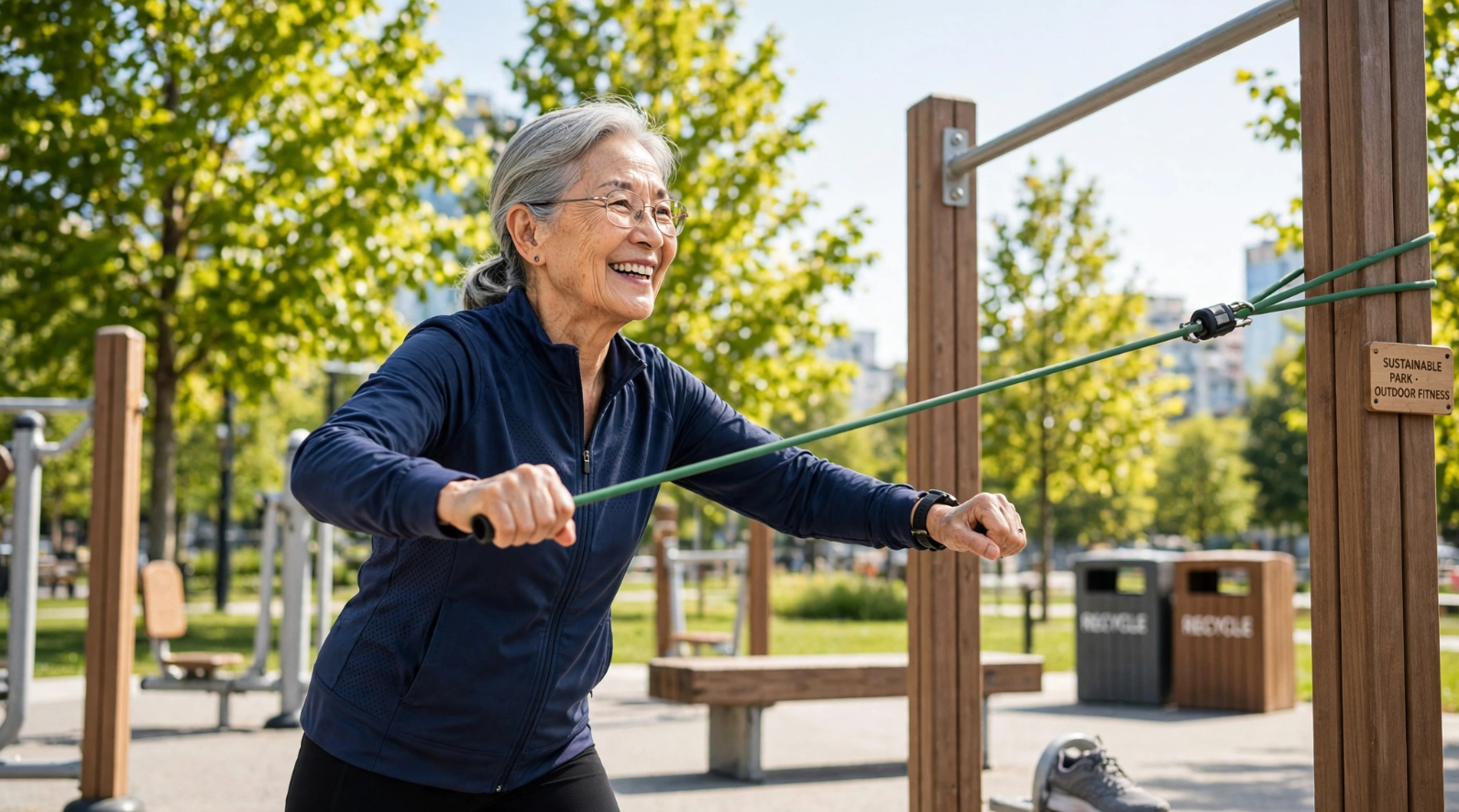
| 60s | Joint-friendly, functional focus | 2–3 days/week, bodyweight + light weights |
Section 7: Common Pitfalls and How to Avoid Them
Pitfall 1: Starting Too Aggressively
The Problem: Doing too much too soon leads to burnout or injury.
The Solution: Start slowly. Build the habit first, then increase intensity. A simple routine you can stick with is better than an intense routine you can’t.
Pitfall 2: Overemphasizing Short-Term Goals
The Problem: Focusing only on short-term goals (like “lose 10 pounds”) leads to losing motivation once the goal is achieved (or not achieved).
The Solution: Balance short-term goals with long-term vision. The goal isn’t just to lose 10 pounds—it’s to be healthy, strong, and capable for life.
Pitfall 3: Perfectionism
The Problem: “If I can’t do it perfectly, I won’t do it at all.” This leads to missed workouts and frustration.
The Solution: Embrace imperfection. Something is better than nothing. A 20-minute workout is better than no workout.
Pitfall 4: Comparing Yourself to Others
The Problem: Comparing your progress to others leads to discouragement and demotivation.
The Solution: Compare yourself to your past self. Focus on your own progress. Everyone’s journey is different.
Pitfall 5: Not Adapting to Life Changes
The Problem: Sticking to a routine that no longer fits your life (new job, new family responsibilities, etc.).
The Solution: Adapt. Your training should evolve with your life. Change your routine to match your circumstances.
Pitfall 6: Ignoring Recovery
The Problem: Training hard but not recovering adequately leads to burnout and injury.
The Solution: Prioritize sleep, nutrition, and rest days. Recovery is part of training.
Section 8: The Sustainability Checklist
Monthly Self-Check
| Question | Yes/No |
|---|---|
| Am I training consistently (3+ sessions/week)? | ☐ |
| Do I look forward to my workouts most days? | ☐ |
| Does my training fit my life? | ☐ |
| Am I making progress? | ☐ |
| Do I feel healthy and energized? | ☐ |
| Can I see myself doing this for years? | ☐ |
If You Answered “No” to Any:
| Question | Action |
|---|---|
| Not consistent | Simplify your routine; reduce barriers |
| Don’t look forward to workouts | Change exercises; make it fun |
| Doesn’t fit your life | Adjust time, place, or frequency |
| No progress | Check your programming; add progression |
| Not feeling healthy | Address sleep, nutrition, recovery |
| Can’t see yourself doing this | Shift mindset; find enjoyment |
The 5-Year Test
Ask Yourself:
| Question | Your Answer |
|---|---|
| Can I maintain this routine for 5 years? | — |
| Would I want to? | — |
| What would need to change? | — |
| What do I need to adjust to make it sustainable? | — |
Section 9: The Journey, Not the Destination
Embracing the Process
| Mindset | Result |
|---|---|
| Focus on daily actions | Consistent progress |
| Enjoy the process | Sustainable motivation |
| Celebrate small wins | Positive reinforcement |
| Accept setbacks | Resilience |
The Gifts of Lifelong Training
| Gift | How It Manifests |
|---|---|
| Strength | Physical capability in daily life |
| Confidence | Belief in your abilities |
| Health | Reduced chronic disease risk |
| Independence | Ability to do what you want |
| Energy | Vitality and zest for life |
| Role Modeling | Inspiration for family |
| Resilience | Ability to handle life’s challenges |
Section 10: FAQ—Your Top Sustainability Questions
Q: How do I stay motivated for years?
A: Motivation is unreliable—habits are reliable. Build systems that make training automatic. Focus on how training makes you feel, not just what it gives you. Enjoy the process, not just the results.
Q: What if I fall off the wagon?
A: It happens to everyone. The key is not staying off. Get back on as soon as possible. Don’t let one missed workout become two. Don’t let one bad week become a bad month.
Q: What if I get bored?
A: Change something. New exercises. New rep ranges. New training style. New goals. Variety keeps things fresh. Train with others. Join a community. Set new challenges.
Q: What if I’m not seeing progress?
A: Check your programming. Are you applying progressive overload? Are you tracking your workouts? Are you sleeping and eating enough? Progress may be slower than you’d like, but if you’re consistent, it’s happening.
Q: What if I get injured?
A: It happens. Work around the injury. Find exercises that don’t aggravate it. Seek professional help (physical therapist). Return gradually when healed. Don’t let an injury stop you entirely.
Q: Is it okay to take breaks from training?
A: Yes. Planned breaks (deloads) are beneficial. Even unplanned breaks (vacation, illness) are okay—as long as you return. A week off won’t derail you. A month off is harder but still recoverable. Six months off? It’s time to start again.
Q: Can I maintain progress with just 2 workouts per week?
A: Yes. Two well-structured full-body workouts per week can maintain muscle and strength. You may not gain as quickly as with 3–4 sessions, but you can maintain and even make slow progress.
Q: What’s the single most important factor for lifelong success?
A: Consistency. Showing up week after week, month after month, year after year. Training consistently for decades beats training intensely for months every time.
The VigorForty Take
Strength training isn’t something you do for a few months to get in shape. It’s something you do for life to stay in shape—to be strong, capable, and healthy for decades.
The principles:
- Shift your mindset — from “getting fit” to “being fit”
- Build systems, not just goals — focus on daily actions
- Make it sustainable — it must fit your life
- Make it enjoyable — you’ll stick with what you enjoy
- Handle setbacks gracefully — life happens
- Think long-term — decades, not months
- Embrace the journey — enjoy the process
The results:
- Lifelong strength and health
- Consistent progress over decades
- Energy and vitality
- Independence and capability
- Resilience and confidence
Strength training isn’t a destination—it’s a journey. A lifelong journey.
Start today. Continue tomorrow. Train for life.
This article was reviewed by the Vigor Forty Editorial Review Board on July 21, 2026.
🔗 Related Articles
- Beyond Crunches: The Best Exercises for True Core Stability
- Core Stability for Lifters: How a Strong Core Protects Your Lower Back
- The Connection Between Core Strength and Better Posture
- Top 5 Strength Training Myths Debunked
- “I’m Too Old to Start Lifting”: Why Strength Training is for Everyone
- “I Don’t Want to Get Bulky”: The Truth About Weightlifting and Muscle Growth
- Can You Build Muscle with Just Bodyweight Exercises?
- The Role of Nutrition in Strength Training: Fueling Your Gains
- The Importance of Rest and Recovery for Building Muscle
- Supplements 101: What Actually Works for Strength Athletes?
- Sleep and Strength: How Better Sleep Can Improve Your Lifts
- 5-Minute Daily Core Routine for Busy Americans
- The Science of Hypertrophy: How to Build Muscle Effectively
- Periodization: How to Plan Your Training for Long-Term Success
- Drop Sets, Supersets, and AMRAPs: Advanced Training Techniques Explained
- Strength Training for Fat Loss: A Comprehensive Guide
- How to Build Muscle and Strength with a Busy Schedule
- The Ultimate Guide to Kettlebell Training for Strength and Conditioning
- Resistance Band Workout: A Full-Body Strength Routine
- Dumbbell Only Workout: Build Muscle Anywhere
- Hybrid Training: Combining Calisthenics and Powerlifting
- The Importance of Mobility for Strength Athletes
- 5 Dynamic Warm-Up Exercises to Do Before Every Workout
- The Best of Both Worlds: Why You Should Combine Calisthenics and Weights
- Your 2027 Strength Training Roadmap: Setting Goals and Staying Consistent
- Strength Training for Life: Building a Sustainable Fitness Habit
- The 12 Best Strength Training Exercises for Americans
Affiliate Disclosure: Some links in this article may be affiliate links. If you make a purchase through these links, Vigor Forty may earn a small commission at no extra cost to you. We only recommend products we trust.