Author Box
Author: Vigor Forty Editorial Team
Medically Reviewed By: Editorial Review Board
Last Updated: August 23, 2026
Medical Disclaimer
Disclaimer: This article is for informational purposes only and is not a substitute for professional medical advice, diagnosis, or treatment. Always seek the advice of your physician or other qualified health provider with any questions you may have regarding a medical condition. Consult your physician before beginning a new exercise, diet, or supplement program, especially if you have an underlying health condition or are immunocompromised. Read our full Medical Disclaimer at vigorforty.com/disclaimer.
Perimenopause: First Physical Signs Before Menopause (Ages 40-45)
Introduction
You are 42, and something feels off. Your periods, once predictable, now arrive early one month and late the next. You wake at 3 a.m. drenched in sweat, even though the thermostat is set to 68. Your mood swings are more dramatic than they have been in years, and your waistband feels tighter despite no change in your diet. You wonder: Is this stress? Is this just aging? Or is this the beginning of something bigger?
For many women, the years between 40 and 45 mark the quiet onset of perimenopause—the transition period before menopause. It is a phase that is often misunderstood, underdiagnosed, and dismissed. But it is also a window of opportunity: a chance to understand your body’s changing needs and to prepare for the next chapter of your hormonal life.
This guide explains the first physical signs of perimenopause, what is happening inside your body, and how to navigate this transition with knowledge, compassion, and confidence.
📌 Key Takeaways
- Perimenopause Defined: The transitional period before menopause, typically starting in the early to mid-40s, when hormone levels begin to fluctuate unpredictably.
- First Signs Are Subtle: Irregular periods, sleep disturbances, mood changes, and mild hot flashes are often the earliest indicators.
- Hormones Fluctuate Wildly: Estrogen and progesterone levels rise and fall erratically, causing a wide range of physical and emotional symptoms.
- Duration Varies: Perimenopause can last anywhere from 2 to 10 years, ending when a woman has gone 12 consecutive months without a period (menopause).
- Symptoms Are Manageable: Lifestyle changes, stress management, and medical treatments can significantly improve quality of life.
- It Is Not “All in Your Head”: The physical and emotional changes are real and biologically driven. You deserve support, not dismissal.
Understanding Perimenopause: What Is Happening?
Perimenopause means “around menopause.” It is the transition during which a woman’s body shifts from regular ovulatory cycles to the permanent cessation of menstruation. Menopause itself is defined as a single point in time: 12 consecutive months without a period. Perimenopause is everything that leads up to that point.
During perimenopause, the ovaries begin to produce less estrogen and progesterone, but the decline is not smooth. Hormone levels can swing wildly—sometimes dropping sharply, sometimes spiking—leading to unpredictable symptoms. This hormonal chaos is what makes perimenopause feel so different from the relatively stable reproductive years [1].
Typical age of onset: Perimenopause most often begins between ages 40 and 44, though some women notice changes in their late 30s. The average duration is about 4 years, but it can range from 2 to 10 years [1].
Why it matters: Perimenopause is not just a precursor to menopause. It is a distinct biological phase with its own set of challenges and opportunities. Understanding it can help women advocate for their health and make informed decisions.
Causes: The Biology Behind the Transition
Perimenopause is driven by changes in the ovaries and the brain’s regulation of reproductive hormones.
1. Declining Ovarian Reserve
Women are born with a finite number of eggs. By the time a woman reaches her 40s, the number and quality of remaining eggs have declined significantly. The ovaries become less responsive to the brain’s signals, leading to irregular ovulation and hormone production [2].
2. Fluctuating Estrogen and Progesterone
During the reproductive years, estrogen and progesterone follow a predictable monthly rhythm. In perimenopause, this rhythm breaks down:
- Estrogen: May spike unexpectedly high (causing breast tenderness, bloating, heavy bleeding) or drop suddenly (causing hot flashes, night sweats, mood swings).
- Progesterone: Often declines first, leading to anovulatory cycles (cycles without ovulation) and irregular bleeding. Low progesterone can also cause sleep disturbances and anxiety [3].
3. Changes in the Hypothalamus
The hypothalamus, the brain region that regulates body temperature, sleep, and hormone release, becomes more sensitive to hormonal fluctuations. This is why hot flashes and sleep disruption are so common during perimenopause.
4. Age-Related Changes
Other age-related factors interact with hormonal changes:
- Muscle loss: Accelerates in the 40s, reducing metabolism.
- Insulin resistance: Becomes more common, promoting abdominal fat storage.
- Thyroid changes: Thyroid dysfunction becomes more prevalent and can mimic or worsen perimenopausal symptoms.
First Physical Signs of Perimenopause (Ages 40-45)
The earliest signs of perimenopause are often subtle and easily attributed to other causes. However, recognizing them can provide clarity and validation.
1. Irregular Menstrual Cycles
The most common and defining symptom of perimenopause is a change in the menstrual cycle.
What to expect:
- Shorter cycles: Periods may come every 21–24 days instead of every 28.
- Longer cycles: Periods may be skipped or come every 35–45 days or more.
- Heavy or light bleeding: Flow may become unpredictable—some periods are unusually heavy with clots, others are barely spotting.
- Skipped periods: You may miss a period entirely, then have two close together.
- PMS changes: Breast tenderness, bloating, and mood swings may worsen.
Key point: Any persistent change in your menstrual cycle after age 40 should be discussed with a doctor, especially if bleeding is very heavy, lasts longer than 7 days, or occurs after 12 months of no periods.
2. Hot Flashes and Night Sweats
Hot flashes are sudden sensations of heat, often starting in the chest and spreading to the face and neck. They may be accompanied by sweating, flushing, and a rapid heartbeat. Night sweats are hot flashes that occur during sleep, often drenching the sheets and disrupting rest [4].
Early pattern: In early perimenopause, hot flashes may be occasional and mild—a brief wave of heat, a slight flush. As estrogen declines further, they may become more frequent and intense.
Why they happen: Declining estrogen affects the hypothalamus, which mistakenly senses that the body is overheated. It triggers mechanisms to cool down—dilating blood vessels, increasing heart rate, and activating sweat glands.
3. Sleep Disturbances
Sleep problems are among the earliest and most distressing signs of perimenopause.
Common patterns:
- Difficulty falling asleep.
- Waking frequently during the night.
- Early morning awakening (3–4 a.m.) with difficulty returning to sleep.
- Night sweats that disrupt sleep.
- Vivid dreams or restless sleep.
Why it happens: Fluctuating estrogen and progesterone affect the brain’s sleep centers. Progesterone, which has a calming effect, declines first. Night sweats also directly interrupt sleep. The result is chronic sleep deprivation, which worsens other symptoms like mood swings and fatigue [4].
4. Mood Changes: Irritability, Anxiety, and Low Mood
The emotional symptoms of perimenopause are often the most confusing for women. They may feel like a return of PMS—but amplified and less predictable.
Common mood changes:
- Increased irritability or short temper.
- Anxiety or a sense of unease.
- Tearfulness or sadness.
- Difficulty concentrating (“brain fog”).
- Decreased motivation or interest in usual activities.
Why it happens: Estrogen influences serotonin, dopamine, and norepinephrine—neurotransmitters that regulate mood. When estrogen fluctuates, these brain chemicals fluctuate too. Progesterone also has calming effects, and its decline can increase anxiety [5].
Important: While mood changes are common in perimenopause, severe depression or anxiety should not be dismissed. Seek professional help if symptoms interfere with daily life.
5. Changes in Skin, Hair, and Weight
The hormonal shifts of perimenopause affect the entire body, including the skin, hair, and metabolism.
Skin changes:
- Increased dryness or thinning.
- Loss of elasticity and firmness.
- New or worsening acne (especially along the jawline).
- Increased sensitivity.
Hair changes:
- Thinning, especially at the crown or part line.
- Increased shedding.
- Changes in texture (more dry or brittle).
Weight and body shape changes:
- Gradual weight gain, especially around the abdomen.
- Increased waist circumference.
- Difficulty losing weight with the same methods.
Why it happens: Declining estrogen reduces collagen production and skin hydration. The relative increase in androgens affects hair and skin. Muscle loss reduces metabolic rate, while insulin resistance promotes abdominal fat storage.
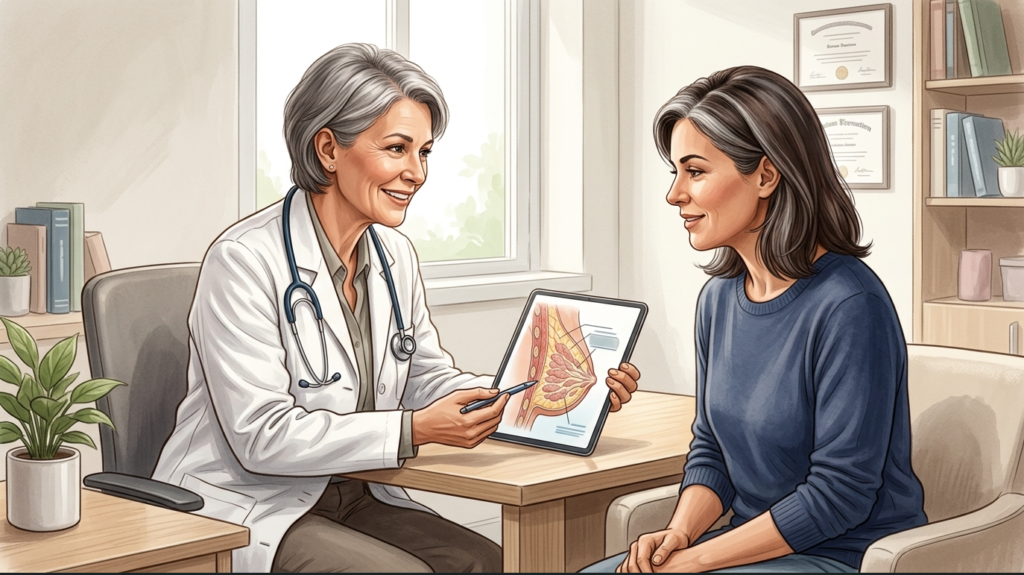
6. Breast Changes
Many women notice breast changes during perimenopause:
- Increased tenderness or soreness, especially before periods.
- Changes in size or fullness (breasts may feel more dense or less firm).
- Increased lumpiness (benign fibrocystic changes).
These changes are usually benign, but any new persistent lump, nipple discharge, or skin changes should be evaluated by a doctor.
7. Vaginal and Bladder Changes
Even in early perimenopause, some women notice:
- Vaginal dryness or discomfort during intercourse.
- Increased urinary frequency or urgency.
- More frequent urinary tract infections.
- Mild stress incontinence (leaking with coughing or sneezing).
These symptoms are related to declining estrogen, which thins the vaginal and urethral tissues. They often become more pronounced after menopause but can begin earlier.
Diagnosis: How Perimenopause Is Evaluated
Perimenopause is primarily a clinical diagnosis based on symptoms and age. There is no single blood test that definitively diagnoses it, because hormone levels fluctuate so much.
What the doctor may do:
- Medical History: Ask about menstrual changes, symptoms, age, and family history.
- Physical Exam: Including a pelvic exam to check for other causes of symptoms.
- Blood Tests (sometimes):
- FSH (follicle-stimulating hormone): May be elevated in perimenopause, but it fluctuates, so a single reading is not definitive.
- Estradiol: May be low or normal depending on the phase of the cycle.
- Thyroid panel: To rule out thyroid disease, which can mimic perimenopause.
- Complete blood count and ferritin: To check for anemia from heavy bleeding.
- Vitamin D and B12: To assess for deficiencies that can worsen fatigue and mood changes.
- Pregnancy test: If periods are irregular and pregnancy is possible.
Important: Do not let a doctor dismiss your symptoms as “just stress” or “just aging.” If you feel something is wrong, advocate for evaluation. Perimenopause is a real biological transition that deserves attention.
Treatment and Management: Finding Relief
The goal of treatment is to reduce symptoms, improve quality of life, and protect long-term health.
Lifestyle Modifications
- Regular exercise: Aerobic exercise and strength training can improve mood, sleep, weight management, and bone health. Aim for at least 150 minutes of moderate activity per week.
- Stress management: Yoga, meditation, deep breathing, or therapy can reduce cortisol and ease mood symptoms.
- Sleep hygiene: Maintain a cool, dark bedroom. Avoid screens before bed. Keep a consistent schedule.
- Balanced nutrition: Focus on whole foods, lean protein, fruits, vegetables, and healthy fats. Limit sugar, refined carbs, and alcohol.
- Avoid triggers: Some women find that caffeine, alcohol, spicy foods, and hot beverages trigger hot flashes.
Non-Hormonal Medical Treatments
- Antidepressants (SSRIs/SNRIs): Low-dose SSRIs like paroxetine or venlafaxine can reduce hot flashes and improve mood. This is a medical decision with a doctor.
- Gabapentin: An anticonvulsant that can reduce hot flashes, especially at night.
- Clonidine: A blood pressure medication that may reduce hot flashes in some women.
- Cognitive behavioral therapy (CBT): Effective for managing sleep problems and mood changes.
Hormone Therapy (HT)
Hormone therapy is the most effective treatment for hot flashes, night sweats, and vaginal symptoms. It involves estrogen, sometimes combined with progesterone (for women with a uterus) to protect the uterine lining [6].
Important considerations:
- HT is typically used at the lowest effective dose for the shortest duration needed.
- It is most beneficial for women under 60 or within 10 years of menopause.
- Risks and benefits should be discussed with a doctor, considering individual health history.
Never self-prescribe hormones or any medication. Always consult a healthcare provider.
Vaginal Treatments
For vaginal dryness and discomfort:
- Vaginal moisturizers: Over-the-counter products that hydrate tissues.
- Vaginal lubricants: For use during intercourse.
- Low-dose vaginal estrogen: Creams, tablets, or rings that deliver estrogen locally with minimal systemic absorption.
Prevention: Preparing for the Transition
While you cannot prevent perimenopause, you can prepare for it and reduce its impact.
- Build muscle now. Strength training supports metabolism, bone health, and insulin sensitivity.
- Protect your bones. Ensure adequate calcium and vitamin D. Aim for 1,000–1,200 mg of calcium and 800–1,000 IU of vitamin D daily.
- Maintain a healthy weight. Excess weight worsens hot flashes and increases health risks.
- Monitor your cardiovascular health. Perimenopause is a time of increased cardiovascular risk. Keep blood pressure, cholesterol, and blood sugar in check.
- Prioritize sleep and stress management. These are protective for both brain and body.
- Know your family history. If your mother or sisters experienced early or severe menopause symptoms, you may too.
- Stay connected. Social support reduces stress and improves emotional well-being.
When to See a Doctor
Seek medical evaluation if you:
- Have very heavy bleeding (soaking through a pad or tampon every 1–2 hours).
- Bleed for more than 7 days.
- Have bleeding after 12 months of no periods (postmenopausal bleeding—always evaluate).
- Have severe hot flashes or night sweats that interfere with sleep and daily life.
- Have severe mood changes, anxiety, or depression.
- Have persistent pelvic pain or pain during intercourse.
- Have symptoms of thyroid disease (fatigue, weight changes, cold intolerance, neck swelling).
- Have signs of anemia (extreme fatigue, pale skin, dizziness, shortness of breath).
These symptoms may indicate conditions other than perimenopause and deserve thorough evaluation.
The VigorForty Take
At VigorForty, we see perimenopause not as an ending, but as a turning point. It is the body’s signal that a new season of life is beginning—a season that can be just as rich, just as vibrant, and just as fulfilling as the years that came before.
But we also know that perimenopause can be a time of confusion, frustration, and even grief. The body you have known for decades is shifting, and it is easy to feel betrayed. We want to reframe that narrative.
Our holistic, practical recommendations:
1. Name It to Tame It
If you are 42 and your periods are irregular, your sleep is disrupted, and your mood is all over the place, you are not losing your mind. You are likely in perimenopause. Naming it removes the fear and opens the door to understanding and support.
2. Build Your Support Team
Do not navigate this alone. Find a doctor who listens and takes your symptoms seriously. Consider a menopause specialist or a gynecologist with expertise in midlife health. Connect with other women who are going through the same transition. Community is medicine.
3. Prioritize Strength—Physical and Emotional
The muscle you build now will serve you for decades. Strength training supports your metabolism, your bones, and your confidence. And just as you build physical strength, build emotional strength through therapy, journaling, or meditation. You are not weak for needing support.
4. Reclaim Your Sleep
Sleep is non-negotiable. If night sweats are keeping you up, talk to your doctor about treatment options. Create a bedtime routine that signals rest. Your brain and body will thank you.
5. Feed Your Body for the Long Haul
This is not about dieting. It is about nourishing. Eat enough protein, fiber, and healthy fats. Limit alcohol and sugar. Stay hydrated. Your body is building its next chapter on the foundation you provide now.
6. Honor the Transition
Perimenopause is not a disease. It is a natural phase of female life. It is okay to feel ambivalent about it. But try to greet it with curiosity rather than dread. What can you learn from this season? What can you release? What can you embrace?
7. Pass On What You Learn
If you have daughters or younger women in your life, talk about perimenopause. Break the silence that has kept generations of women uninformed. Tell them what to expect and that help is available. Be the guide you wish you had.
Perimenopause is not the end of your story. It is a plot twist. And like any good twist, it can lead somewhere unexpected and beautiful. You are not losing yourself. You are becoming someone new.
FAQ Section
Q1: At what age does perimenopause usually start?
A: Perimenopause most commonly begins between ages 40 and 44, though some women notice changes in their late 30s. The average duration is about 4 years, but it can last anywhere from 2 to 10 years.
Q2: Can I still get pregnant during perimenopause?
A: Yes. As long as you are having periods, even irregular ones, you can still ovulate and become pregnant. If you do not want to conceive, continue using contraception until you have gone 12 consecutive months without a period.
Q3: How do I know if I am in perimenopause or just stressed?
A: The symptoms can overlap, but perimenopause is characterized by menstrual changes—irregular, heavier, or lighter periods—along with hot flashes, night sweats, and sleep disturbances. If you are over 40 and your periods are changing, perimenopause is likely. A doctor can help rule out other causes.
Q4: Are hot flashes always a sign of perimenopause?
A: Hot flashes are a classic symptom of perimenopause, but they can also occur with thyroid problems, certain medications, and other conditions. If you are experiencing hot flashes along with irregular periods and are in your 40s, perimenopause is the most common explanation. See a doctor for evaluation.
Q5: Can hormone therapy be used during perimenopause?
A: Yes. Hormone therapy can be very effective for managing perimenopausal symptoms like hot flashes, night sweats, and irregular bleeding. Low-dose oral contraceptives are sometimes used for women in early perimenopause who also need contraception. Discuss options with your doctor.
Q6: Will I gain weight during perimenopause?
A: Many women experience gradual weight gain, especially around the abdomen, due to hormonal shifts, muscle loss, and insulin resistance. However, weight gain is not inevitable. Strength training, a balanced diet, and stress management can significantly reduce this effect.
Q7: When does perimenopause end and menopause begin?
A: Menopause is defined as the point when you have gone 12 consecutive months without a menstrual period. Perimenopause is the transition leading up to that point and ends once menopause is confirmed. After menopause, you are in the postmenopausal phase.
Conclusion
Perimenopause is not a cliff you fall off. It is a gradual descent, a winding path with its own rhythms and terrain. The early signs—irregular periods, sleep disturbances, mood swings, and the first hot flashes—can feel unsettling, but they are also signals. They are your body’s way of saying, “Things are changing. Pay attention. Take care of me.”
For women ages 40 to 45, recognizing these signs is the first step toward empowered self-care. You do not have to suffer in silence. You do not have to dismiss your symptoms as “just stress” or “just aging.” You can seek help, make changes, and prepare for the years ahead.
The transition to menopause is not a loss of womanhood. It is a new expression of it. With knowledge, support, and compassion—for yourself and from others—you can navigate this season with confidence and grace. This is not the end. It is a beginning.
References
- Mayo Clinic. (2023). Perimenopause. https://www.mayoclinic.org/diseases-conditions/perimenopause/symptoms-causes/syc-20354666
- American College of Obstetricians and Gynecologists. (2023). The menopause years. https://www.acog.org/womens-health/faqs/the-menopause-years
- Harvard Health Publishing. (2022). Perimenopause: Rocky road to menopause. https://www.health.harvard.edu/womens-health/perimenopause-rocky-road-to-menopause
- Cleveland Clinic. (2023). Perimenopause. https://my.clevelandclinic.org/health/diseases/21608-perimenopause
- National Institute on Aging. (2023). What is menopause? https://www.nia.nih.gov/health/menopause/what-menopause
- The North American Menopause Society. (2023). Hormone therapy. https://www.menopause.org/for-women/menopauseflashes/menopause-symptoms-and-treatments/hormone-therapy