

Author: Vigor Forty Editorial Team
Medically Reviewed By: Editorial Review Board
Disclaimer: This article is for informational purposes only and is not a substitute for professional medical advice. Consult your physician or a physical therapist before starting a new exercise program or if you are experiencing persistent pain. Read our full Medical Disclaimer.
📌 Key Takeaways
- Injuries After 40 Are Often Preventable, Not Inevitable: The majority of cardio-related injuries in midlife athletes stem from training errors—doing too much, too soon, too fast—and muscular weaknesses that can be systematically corrected with prehab and mobility work.
- The Kinetic Chain Rules Everything: The foot bone’s connected to the ankle bone, the ankle to the knee, the knee to the hip. A weakness or mobility restriction anywhere in the chain increases stress elsewhere. Most knee pain originates from weak hips or stiff ankles, not the knee itself.
- A 10-Minute Dynamic Warm-Up Is Non-Negotiable: Cold muscles and stiff tendons tear. A proper warm-up raises tissue temperature, activates dormant muscles (glutes!), and rehearses movement patterns. Skipping it is the fastest path to a pulled calf or a strained hamstring.
- Prehab Beats Rehab Every Time: Targeted exercises that strengthen the feet, ankles, hips, and core—performed 2–3 times per week—can prevent the four most common cardio injuries: plantar fasciitis, Achilles tendinopathy, runner’s knee, and IT band syndrome.
- Pain Is Data, Not a Weakness: Sharp, localized pain that alters your gait is a stop sign. Diffuse, muscular soreness that eases with movement is a caution sign. Learning to differentiate and respond appropriately—rest, modify, or seek help—keeps a minor niggle from becoming a 6-month layoff.
Introduction: The One Thing That Stops Most Midlife Athletes Cold
Ask a group of 45-year-olds why they don’t run anymore, why they sold the Peloton, or why their rower has become a laundry rack, and the answer is almost never “I lost interest.” It’s “my knee,” “my back,” “my Achilles,” “my hip.” Pain stops progress. Injuries, not motivation, are the grim reaper of midlife fitness.
But here’s what most people don’t realize: the majority of these injuries aren’t caused by the activity itself. Running doesn’t ruin knees. Cycling doesn’t destroy hips. Rowing doesn’t herniate discs. Training mistakes and muscular imbalances do. The body after 40 is incredibly resilient and adaptable—if you give it the right preparation, progression, and support. The problem is that most 40-somethings train with the warm-up of a 20-year-old, the strength of a desk worker, and the patience of someone who wants results by Thursday.
This guide is your prehab blueprint. It’s the safety net woven from the same principles we’ve detailed across every VigorForty guide—Zone 2 patience, joint-respecting HIIT, and rucking’s functional strength. You’ll learn the four most common cardio injuries and exactly how to prevent them, the 10-minute warm-up you should never skip, the five strength exercises that form your bulletproofing routine, and how to interpret pain so that a two-day rest doesn’t become a two-year layoff. This isn’t about wrapping yourself in bubble wrap. It’s about building a body so resilient that you can run, ride, and ruck into your 60s, 70s, and beyond without the wheels ever falling off.
Section 1: Why the Over-40 Body Is More Vulnerable—and How to Protect It
Understanding the physiological changes after 40 is the first step to preventing injury.
Stiffer Tendons and Ligaments
Collagen becomes less elastic with age. The Achilles tendon, which stores and releases elastic energy with every running stride, becomes stiffer and less able to absorb shock. This is why tendon overuse injuries (tendinopathies) spike in the 40s and 50s. Tendons adapt slowly—they require 6–8 weeks of consistent, gradual loading to strengthen, compared to 3–4 weeks for muscles.
Longer Recovery Between Sessions
Muscle protein synthesis is slower, inflammation resolves more slowly, and the nervous system takes longer to reset after intense efforts. A 48-hour recovery window that worked at 30 might need to be 72 hours at 50. Ignoring this leads to cumulative micro-trauma that one day announces itself as a full-blown injury.
Desk-Body Epidemic
The average American over 40 spends 8–10 hours a day sitting. This creates a predictable pattern of dysfunction: tight hip flexors, weak and inhibited glutes, rounded shoulders, and a stiff thoracic spine. When you stand up from that desk and go straight into a run or a HIIT class, you’re asking a body that’s been folded into a chair to suddenly produce and absorb high forces. It’s no wonder something gives.
The Good News
All of these changes are modifiable. Tendons can be progressively loaded and strengthened. Recovery can be respected and built into the weekly plan (as we detailed in our Recovery Guide). Muscle imbalances can be corrected with 15–20 minutes of targeted prehab a few times a week. The body after 40 is not a brittle, fragile thing. It’s a highly responsive machine that just requires a smarter operator.
Section 2: The Four Most Common Cardio Injuries and Their Root Causes
Know the enemy. These four conditions account for the vast majority of time-loss injuries in runners, cyclists, and ruckers over 40.
1. Plantar Fasciitis
- What It Is: Inflammation or degeneration of the thick band of tissue on the bottom of the foot, causing sharp heel pain, especially in the morning or when starting to walk after sitting.
- Root Cause: Often a combination of tight calves (which pull on the heel bone), weak foot intrinsic muscles, and a sudden increase in walking or running volume. Unsupportive footwear (worn-out sneakers, flat sandals) accelerates it.
- Prevention: Calf stretching and eccentric heel drops, foot-strengthening exercises (toe yoga, towel scrunches), and proper shoe rotation.
2. Achilles Tendinopathy
- What It Is: Pain and stiffness in the tendon above the heel, usually worse after periods of inactivity and at the start of a run or walk, then warming up slightly.
- Root Cause: Rapid increase in training load—too much hill running, too much speed work, or too heavy a ruck too soon. Tight calves and weak glutes (which shifts load to the lower leg) are contributing factors.
- Prevention: Gradual load progression, heavy slow resistance training (eccentric heel drops with weight), and avoiding sudden spikes in intensity.
3. Patellofemoral Pain Syndrome (Runner’s Knee)
- What It Is: Dull, aching pain around or behind the kneecap, aggravated by running, stairs, or prolonged sitting with bent knees.
- Root Cause: Almost always a tracking issue caused by weakness in the hips (specifically the gluteus medius and quadriceps) that allows the femur to rotate inward and the kneecap to track laterally. Not a knee problem—a hip problem that manifests in the knee.
- Prevention: Hip strengthening (clamshells, lateral band walks, glute bridges), quadriceps strengthening, and single-leg balance work.
4. IT Band Syndrome
- What It Is: Sharp pain on the outside of the knee, often coming on at a predictable point during a run or ruck and worsening with continued activity.
- Root Cause: Weak hip abductors (glute medius again) that fail to stabilize the pelvis, causing the IT band to rub over the outside of the knee. Increasing mileage too quickly is the primary training error.
- Prevention: Hip and glute strengthening, foam rolling (not the IT band itself, but the surrounding muscles: glutes, TFL, quads), and gradual mileage increases.
The Common Thread: In every single one of these, the root cause traces back to weakness in the hips, glutes, and feet, combined with training errors. The fix is almost never more rest alone—it’s strengthening the weak links and progressing intelligently.
Section 3: The 10-Minute Dynamic Warm-Up You Should Never Skip
A dynamic warm-up does three things: raises tissue temperature, activates key muscle groups, and rehearses movement patterns. Static stretching before a workout doesn’t prevent injury and can temporarily reduce power output. Save static stretching for after.
The VigorForty Pre-Cardio Warm-Up (10 Minutes)
Perform each movement for 45–60 seconds, flowing from one to the next with no rest.
- Leg Swings (Forward and Lateral): Hold a wall or pole. Swing one leg forward and back, then side to side across your body. Loosens hips and hamstrings.
- Walking Lunges with Overhead Reach: Step into a deep lunge, and as you lower, reach both arms overhead to open the hips and thoracic spine. 10 per leg.
- Bodyweight Squats: Slow and controlled, 15 reps. Focus on depth and keeping heels down. Wakes up the glutes and quads.
- Hip Circles (Hurdle Drills): Lift one knee, rotate it out to the side, and step forward as if stepping over a hurdle. 8 per leg. Activates the glute medius.
- Calf Raises and Toe Walks: 15 calf raises on each leg, then 20 steps walking on your toes. Wakes up the feet and calves.
- High Knees into Butt Kicks: 30 seconds each, progressively increasing the range of motion. Warms the hamstrings and primes the running gait.
- Leg Cradle into Knee Hug: Alternate pulling one knee to your chest (knee hug) with cradling your ankle and knee and pulling up (for the glute/piriformis). 5 each side. Opens the hips.
This entire sequence takes 10 minutes. It prepares your body for anything from a Zone 2 walk to a HIIT sprint session. Make it a ritual. You wouldn’t start your car in freezing weather and immediately redline the engine. Don’t do it to your body.
Section 4: The Prehab Five—Strength Exercises That Prevent Everything
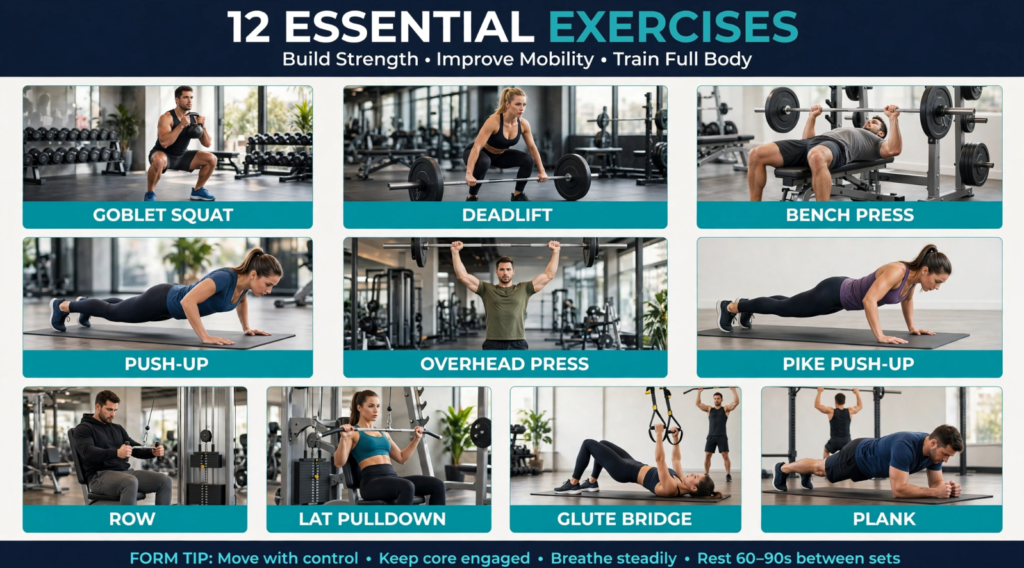
Perform these five exercises twice a week, ideally after a cardio session or on a non-cardio day. They target the exact weak links that cause the four injuries above.
1. Single-Leg Glute Bridge
Lie on your back, one knee bent, foot flat. The other leg extended straight. Drive through the planted heel and lift your hips until your body forms a straight line from shoulders to knees. Hold for 2 seconds, lower slowly. 3 sets of 12 per leg.
- Why: Isolates and strengthens the gluteus maximus, the primary hip extensor that should be powering your runs and rucks. A weak glute max shifts load to the hamstrings and lower back.
2. Lateral Band Walk
Place a mini resistance band around your ankles or just above your knees. In a slight athletic stance (knees bent, hips back), step sideways for 10–15 steps in one direction, then back. 3 sets.
- Why: Directly targets the gluteus medius, the muscle that prevents your hip from dropping and your knee from collapsing inward. This is the #1 prehab exercise for runner’s knee and IT band syndrome.
3. Eccentric Heel Drop
Stand on a step with your heels hanging off. Rise up on both toes, then shift to one foot and lower your heel very slowly (over 3–5 seconds) until it’s below the step. Use your other foot to rise back up. 3 sets of 10–15 slow lowers per leg. Add weight (a dumbbell or ruck) as you get stronger.
- Why: The gold-standard exercise for preventing and rehabbing Achilles tendinopathy and plantar fasciitis. Eccentric loading stimulates tendon repair and strengthens the calf complex.
4. Bulgarian Split Squat
Stand 2–3 feet in front of a bench or chair, place the top of your rear foot on it. Keeping your torso upright, lower until your front thigh is parallel to the ground. Drive through your front heel. 3 sets of 8–10 per leg.
- Why: Unilateral strength work that builds quad, glute, and hip stabilizer strength. Fixes the strength imbalances between legs that lead to overuse injuries on the weaker side.
5. Foot Doming (Short Foot Exercise)
Sit or stand with your foot flat on the floor. Without curling your toes, try to shorten your foot by drawing the ball of your foot toward your heel, raising the arch. Hold for 5 seconds, release. 3 sets of 10 per foot.
- Why: Strengthens the intrinsic foot muscles that support the arch and absorb shock. Weak foot intrinsics are a primary cause of plantar fasciitis. This is foot yoga, and it’s transformative if done consistently.
Section 5: Training Errors That Cause Injury and How to Avoid Them
Even with perfect prehab, training mistakes will break you. Here are the cardinal rules for the over-40 cardio athlete.
The 10% Rule
Increase your weekly total training volume (duration or distance) by no more than 10% per week. If you ran 100 minutes total last week, aim for 110 this week, not 150. The same applies to ruck weight: add 5 lbs only when your current weight feels easy for the entire session, and never increase weight and distance simultaneously.
Hard Days Hard, Easy Days Easy
This is the polarized training principle we embedded in every guide. The biggest training error is running at a moderate pace all the time—not hard enough to trigger maximal adaptation, not easy enough to allow recovery. Easy days (Zone 1–2) should feel embarrassingly slow. Hard days (Zone 4–5) should be short and truly intense. Moderate “grey zone” training is the express lane to overuse injuries and burnout.
Don’t Be a Weekend Warrior
Sitting all week and then doing a 2-hour hard ruck or a long run on Saturday is the most dangerous pattern. Your tissues need regular, consistent loading to stay resilient. A 30-minute walk or light Zone 2 session 3–4 times during the week prepares your body for the longer weekend effort far better than five days of sitting.
Respect the Deload
Every 4th week, reduce total volume by 30–40% and cut intensity. The deload week is when your body actually absorbs all the training and gets stronger. It’s not a week off; it’s a week of active, intentional recovery. Skipping deloads is the single most common path to overtraining and injury in driven midlife athletes.
Section 6: Listening to Pain—When to Push, When to Pause, When to See a Pro
Pain is a signal, not a character flaw. Learning to read that signal accurately keeps you in the game.
The Pain Scale for Decision-Making
- Pain 0–3 (Mild, Diffuse Soreness): Normal DOMS (delayed onset muscle soreness). You can train through it. Warm up thoroughly, and it should ease during the session.
- Pain 4–5 (Persistent, Localized): A specific ache that you can point to (e.g., outer knee, heel, front of shoulder). This is a warning. Reduce volume and intensity by 50% for a few days. Sub in a completely different, non-painful modality (pool running instead of road running). If it doesn’t resolve within 5–7 days, consult a physical therapist.
- Pain 6–7 (Sharp, Alters Gait): You’re limping. The pain sharpens with activity. Stop. Ice, rest, and see a sports medicine professional or physical therapist within the week.
- Pain 8–10 (Severe, Swelling, Inability to Bear Weight): Possible tear or fracture. Seek medical attention immediately.
A Note on NSAIDs
Popping ibuprofen before a run to mask pain is a terrible idea. It doesn’t fix the injury, it increases the risk of GI bleeding, and some research suggests it may impair tendon and bone healing. Use anti-inflammatories sparingly and only for acute, not chronic, pain. The goal is to heal the cause, not mute the alarm.
Section 7: Integrating Prehab Into Your Weekly Routine
You don’t need a separate “prehab day.” Prehab lives in the margins of your existing schedule.
Option 1: Post-Cardio Strength Finisher
After your Zone 2 run or bike, spend 10–15 minutes doing the Prehab Five. Your muscles are warm, and you’re already in workout clothes. It becomes a natural extension of your session.
Option 2: On Strength Days
After your main lifting session, tack on the lateral band walks, single-leg bridges, and foot doming. They complement your heavy compound lifts perfectly and take under 10 minutes.
Option 3: While Watching TV
Foot doming, calf stretches, and foam rolling are perfect couch activities. Keep a lacrosse ball or foam roller by the TV stand. Roll your feet, stretch your calves, and strengthen your arches during the evening news.
Monthly Self-Check: The Single-Leg Balance Test
Stand barefoot on one leg, eyes closed. You should be able to balance for 30+ seconds without wobbling. If you can’t, your ankle and hip stabilizers need work. Retest monthly. Improving balance is strongly correlated with reduced injury risk.
Section 8: FAQ—Your Injury Prevention Questions
Q: I have flat feet. Does that mean I’ll get injured running?
A: Not necessarily. Many successful runners have flat feet. The problem isn’t the arch shape; it’s the strength and control of the foot and hip muscles. A flat-footed person with strong intrinsic foot muscles and glutes can run pain-free. Focus on foot strengthening (toe yoga, doming) and hip stability rather than obsessing over motion-control shoes. A good running store can assess your gait, but don’t assume flat feet automatically require maximal stability shoes.
Q: How long should I rest after a mild injury flare-up?
A: For a mild tendinopathy or muscle strain (Pain 4–5), take 3–5 days off the aggravating activity. During that time, do pain-free cross-training (swimming, cycling if it doesn’t hurt, upper-body strength) and start the rehab exercises for that specific injury. Complete rest often leads to stiffness and fear. Active recovery maintains fitness and speeds healing. If pain isn’t significantly improved after a week, see a physical therapist.
Q: Can I still do HIIT if I have a history of injuries?
A: Yes, but choose low-impact modalities. Pool running, the air bike, battle ropes, and the rower (with perfect form) are all excellent options that deliver the metabolic punch of HIIT without joint impact. Avoid plyometric box jumps, hard sprints on pavement, and high-impact burpees. Refer to our HIIT guide for seven joint-friendly workouts.
Q: Is foam rolling worth it, or is it just a fad?
A: Foam rolling can reduce muscle soreness, improve short-term range of motion, and provide a calming pre-sleep ritual. However, don’t roll over bony areas, joints, or the IT band itself (despite popular advice). The IT band is a thick, fibrous sheet of connective tissue, not a muscle; rolling it won’t “release” it and can cause bruising. Roll the muscles around it: glutes, quads, hamstrings, and calves. Use a lacrosse ball for specific foot and glute trigger points.
The VigorForty Take
The difference between a midlife athlete who is still running, rucking, and cycling at 70 and one who has resigned themselves to a sedentary life isn’t luck, genetics, or “good knees.” It’s preparation. It’s the 10-minute dynamic warm-up that others skip. It’s the 15 minutes of hip and foot strengthening twice a week that feels boring but builds an invisible armor. It’s the discipline to increase mileage by only 10% this week when your ego wants to double it. It’s the wisdom to hear a quiet ache and back off for two days rather than push through into a six-month injury.
Injuries after 40 are not your destiny. They are a conversation between your training load and your body’s current capacity. That conversation can be one of constant, painful negotiation, or it can be a harmonious, long-term partnership. The prehab exercises, warm-up protocols, and training principles in this guide tilt the balance decisively toward harmony.
Treat your body like the irreplaceable vehicle it is. Warm it up before you drive it hard. Maintain the engine with targeted strength work. Don’t ignore the warning lights on the dashboard. And it will carry you faithfully, powerfully, and pain-free for decades to come.
Your next run, ride, or ruck starts with the warm-up you do today. Start it. Your future, injury-free self will thank you with every step.
Read All Related Articles
- The Complete Guide to Zone 2 Training After 40: How Low-Intensity Cardio Boosts Fat Loss, Longevity, and Endurance
- The Complete Guide to HIIT After 40: Joint-Friendly Workouts That Torch Fat and Protect Your Heart
- The Complete Guide to Running After 40: How to Start, Stay Injury-Free, and Build Lifelong Endurance
- The Complete Guide to Metabolic Health After 40: Reverse Insulin Resistance, Burn Stubborn Fat, and Reclaim Your Energy with Cardio
- The Complete Guide to Cardio Recovery After 40: How to Rest, Rebuild, and Come Back Stronger
- The Complete Guide to Heart Rate Training Zones After 40: Unlock Every Beat for Maximum Fat Loss, Endurance, and Longevity
- The Complete Guide to VO2 Max After 40: The #1 Predictor of Longevity and How to Improve It
- The Complete Guide to Concurrent Training After 40: How to Combine Cardio and Strength for Maximum Fat Loss, Muscle Preservation, and Longevity
- The Complete Guide to Walking and Rucking After 40: The Most Underrated Cardio for Fat Loss, Joint Health, and Longevity
- The Complete Guide to Designing Your Own Cardio Plan After 40: A Personalized Blueprint for Fat Loss, Longevity, and Peak Performance
- The Complete Guide to Cardio Nutrition After 40: Fuel Your Workouts for Maximum Fat Loss, Endurance, and Recovery
- The Complete Guide to Cardio Equipment After 40: Choosing the Best Treadmill, Bike, Rower, or Elliptical for Your Home Gym
- The Complete Guide to Injury Prevention for Cardio After 40: Run, Ride, and Ruck Pain-Free for Life
- The Complete Guide to Cardio for Fat Loss After 40: Burn Stubborn Belly Fat Without Losing Muscle or Energy
- The Complete Guide to Seasonal Cardio Training After 40: How to Periodize Your Year for Year-Round Fitness, Fat Loss, and Injury Prevention
- The Complete Guide to Cardio and Brain Health After 40: How Exercise Protects Your Memory, Mood, and Mental Sharpness
- The Complete Guide to Building a Home Gym for Cardio After 40: Design a Space That Makes Consistency Inevitable
- The Joyful Movement Manifesto: How to Love Cardio After 40 and Make It a Lifelong Practice
- The Complete Guide to Sleep and Cardio After 40: How Deep Rest Unlocks Your Best Performance, Recovery, and Longevity
- The Complete Guide to Stress, Cortisol, and Cardio After 40: How to Manage Your Nervous System for Better Recovery and Performance
- The Complete Guide to Returning to Cardio After a Layoff After 40: Your Compassionate, Science-Backed Roadmap Back to Fitness
- The Complete Guide to Cardio Through Menopause: How to Adapt Your Training for Hormonal Changes, Protect Your Heart, and Feel Strong After 40
- The Complete Guide to Cycling After 40: Low-Impact Cardio for Joint Health, Endurance, and Lifelong Fitness
- The Complete Guide to Pool and Water-Based Cardio After 40: Low-Impact Workouts for Joint Pain, Recovery, and Total-Body Fitness
- The Complete Guide to Rowing After 40: Full-Body, Low-Impact Cardio for Strength, Endurance, and Longevity
- The Complete Guide to Tracking Cardio Progress After 40: The Key Metrics That Matter More Than the Scale
- The Complete Guide to Cardio for High Blood Pressure After 40: How Exercise Lowers Your Numbers and Protects Your Heart
- The Complete Guide to Cardio for Type 2 Diabetes and Prediabetes After 40: How Exercise Reverses Insulin Resistance and Protects Your Heart
- The Complete Guide to Cardio with Arthritis After 40: Pain-Free Workouts That Strengthen Joints and Keep You Moving
- The Complete Guide to Longevity and Cardio After 40: How Aerobic Fitness Adds Years to Your Life and Life to Your Years
- The Complete Guide to Building a Cardio Habit After 40: The Science of Making Exercise Stick for Life
- The Complete Guide to Cardio and Immune Health After 40: Strengthen Your Body’s Defense System for a Resilient, Vibrant Life
- The Complete Guide to Cardio While Traveling After 40: Stay Fit on the Road, in Hotels, and Away from Home
- The Complete Guide to Cardio for Posture and Back Pain After 40: Strengthen Your Posterior Chain and Reverse the Damage of Sitting
- The Complete Guide to the Social Side of Cardio After 40: How Community, Accountability, and Connection Make You Stronger
- The VigorForty Manifesto: A Final Word on the Lifelong Practice of Movement