Author: Vigor Forty Editorial Team
Medically Reviewed By: Editorial Review Board
Disclaimer: This article is for informational purposes only and is not a substitute for professional medical or dietary advice. Consult your physician or a registered dietitian before making significant changes to your nutrition, especially if you have underlying health conditions. Read our full Medical Disclaimer.
📌 Key Takeaways
- You Can’t Out-Train a Poor Diet After 40: The metabolic shifts of midlife—slower muscle protein synthesis, increased insulin resistance, and hormonal changes—mean nutrition becomes the deciding factor in whether your cardio efforts translate into fat loss, lean muscle, and real cardiovascular health.
- Protein Timing and Dosage Are Everything: To preserve the muscle mass that fuels your resting metabolism and glucose disposal, aim for 1.6–2.2 grams of protein per kilogram of body weight daily, spread across 3–4 meals with 30–40g each. A post-workout dose within 60–90 minutes significantly enhances recovery and adaptation.
- Carbohydrates Are Not the Enemy—Strategic Timing Is Key: Fuel your hard workouts (HIIT, long runs, heavy lifts) with slow-digesting carbs beforehand and replenish glycogen after. On easy Zone 2 days or rest days, reduce carbohydrate intake slightly to improve metabolic flexibility and fat oxidation.
- Hydration and Electrolyte Balance Directly Impact Performance and Heart Function: After 40, the sensation of thirst can diminish, and the heart is more sensitive to electrolyte imbalances. A personalized hydration strategy—including sodium, potassium, and magnesium—prevents cramping, cardiac drift, and performance decline.
- Targeted Supplements Fill the Gaps, but Whole Foods Build the Foundation: Omega-3s, creatine, magnesium, and vitamin D support the over-40 cardio athlete. But no supplement stack can replace a diet rich in vegetables, fruits, lean proteins, and healthy fats. Pills support the plate; they don’t replace it.
Introduction: The Engine You’ve Built Needs the Right Fuel
You’ve put in the work. You’ve logged the Zone 2 hours, endured the HIIT intervals, laced up for early-morning runs, and shouldered a weighted ruck on weekends. Your heart is stronger, your mitochondria are denser, your VO2 max is climbing. But if you’re still carrying stubborn belly fat, hitting an energy wall mid-workout, or waking up sore and unrested, the missing piece isn’t more training—it’s smarter nutrition.
After 40, the old rules of “eat whatever you want, just burn it off” no longer apply. The same slice of pizza that a 25-year-old metabolizes with a shrug lingers differently in a 45-year-old’s system. Hormonal shifts, anabolic resistance (the blunted muscle-building response to protein), and years of accumulated metabolic wear change how your body processes fuel. Nutrition is no longer a supporting actor in your fitness journey—it’s the lead.
This guide translates the science of sports nutrition specifically for the midlife American cardio athlete. It covers exactly what to eat before, during, and after your Zone 2, HIIT, and endurance sessions. It breaks down daily macronutrient targets, hydration strategies, and evidence-backed supplements. And it provides sample meal plans that fit a busy, real-world schedule. Whether your goal is to drop 20 pounds of visceral fat, run your fastest 5K, or simply feel energized and sharp every day, this is your fueling blueprint.
Section 1: The Over-40 Metabolic Shift—Why Your Nutrition Must Evolve
Your body at 45 processes nutrients differently than it did at 25. Ignoring these changes leads to frustration: doing the same workouts and eating the same foods but getting worse results.
Anabolic Resistance
Muscle protein synthesis—the process of repairing and building muscle tissue—becomes less efficient with age. You need a greater dose of protein (30–40g per meal vs. 20–25g for a younger adult) to stimulate the same muscle-building response. This has direct implications for body composition: less muscle means a slower resting metabolic rate and reduced glucose disposal capacity.
Insulin Sensitivity Decline
Peripheral tissues become less responsive to insulin, meaning carbohydrates are more likely to be stored as fat, especially visceral fat, if consumed in excess and without the metabolic “sink” of regular exercise. The flip side is that consistent cardio dramatically improves insulin sensitivity, so timing your carb intake around workouts allows you to utilize them for fuel and recovery without negative metabolic consequences.
Slower Gastric Emptying and Digestion
Food sits heavier and longer in the stomach after 40. A big, fatty, or fibrous meal consumed too close to a workout can cause GI distress—bloating, cramping, reflux. Pre-workout nutrition must be lighter and timed more carefully than in your younger years.
Hormonal Changes
For women, declining estrogen affects carbohydrate metabolism and bone density, increasing the need for calcium, vitamin D, and adequate energy intake to prevent stress fractures. For men, declining testosterone can slow muscle repair, making post-workout protein timing even more critical.
Section 2: Pre-Workout Fueling—What to Eat Before Zone 2, HIIT, and Long Runs
The goal of pre-workout nutrition is to provide available energy without causing GI distress. Your approach differs by session type.
Before Zone 2 (45–90 Minutes, Low Intensity)
For most early-morning Zone 2 sessions, fasted training is safe and can even enhance fat adaptation. If you feel lightheaded or sluggish fasted, consume a small, easily digestible snack 30 minutes prior: half a banana, a rice cake with a smear of almond butter, or a few sips of a protein smoothie. Keep it under 100–150 calories. Hydrate with 8–16 oz of water.
Before HIIT (20–30 Minutes, High Intensity)
HIIT is too demanding to perform fasted without risking muscle breakdown and a poor performance. Eat a small meal or snack 60–90 minutes before consisting of 20–30g of carbohydrates and 10–15g of protein. Examples: a small bowl of oatmeal with a scoop of protein powder, a slice of whole-grain toast with an egg, or a banana and a hard-boiled egg. Avoid heavy fats and excessive fiber right before.
Before a Long Run, Ruck, or Endurance Session (90+ Minutes)
Top off glycogen stores with a balanced meal 2–3 hours before. Aim for 1–2 grams of carbohydrate per kilogram of body weight, 20–30 grams of protein, and a small amount of healthy fat. For a 180-pound man, that’s roughly 80–160 grams of carbs: a bowl of oatmeal with berries and a scoop of whey, a turkey sandwich on whole wheat, or a sweet potato with Greek yogurt. Sip water steadily in the lead-up.
Section 3: During-Workout Fueling—When Water Isn’t Enough
For sessions under 60 minutes, water is almost always sufficient. Beyond 75–90 minutes of continuous effort, your glycogen stores become depleted and you need on-the-go fuel.
Carbohydrate Guidelines for Endurance Sessions
- 60–90 minutes: 30 grams of carbs per hour (a banana, a gel, or 16 oz of a sports drink with 6% carb solution).
- 90–120 minutes: 45–60 grams of carbs per hour (a gel plus a banana, or two servings of chews).
- 120+ minutes: 60–90 grams of carbs per hour, ideally from a mix of glucose and fructose sources to maximize absorption. Some ruckers and distance runners use real food: raisins, mashed sweet potatoes in a reusable pouch, or a peanut butter and honey sandwich.
Electrolytes, Not Just Water
Plain water during long, sweaty sessions can dilute blood sodium and lead to hyponatremia (dangerously low sodium). Add electrolytes to your water: 300–600 mg of sodium, 100–200 mg of potassium, and 50–100 mg of magnesium per hour, especially in heat. Sugar-free electrolyte powders are widely available.
For HIIT and Short Sessions: Water Only
During a 20-minute HIIT session, your body doesn’t deplete glycogen or electrolytes enough to require refueling. Water is all you need. Consuming sugar during a short, high-intensity workout shuts down fat oxidation and can cause GI sloshing.
Section 4: Post-Workout Recovery Nutrition—The Critical Window
The 60–90 minutes after your workout is when your muscles are primed to absorb nutrients for repair and glycogen replenishment. After 40, this window is narrower and more important.
The Protein Priority
Consume 25–40 grams of high-quality protein. Whey protein is rapidly absorbed and rich in leucine, the amino acid that triggers muscle protein synthesis. Plant-based eaters can use a pea-rice protein blend with similar leucine content. Real food options: a chicken breast, a can of tuna, four eggs, or a bowl of Greek yogurt.
Carbohydrate Replenishment (If Needed)
After HIIT or a long run, add 0.5–1.0 grams of carbohydrates per kilogram of body weight to restore glycogen. A 180-pound man: 40–80 grams. Good sources: sweet potatoes, rice, quinoa, fruit, or a smoothie with banana and berries. After a Zone 2 session under 60 minutes, a normal meal with protein and vegetables is often sufficient; you don’t need a dedicated carb reload.
The Ideal Post-Workout Meal (Within 90 Minutes)
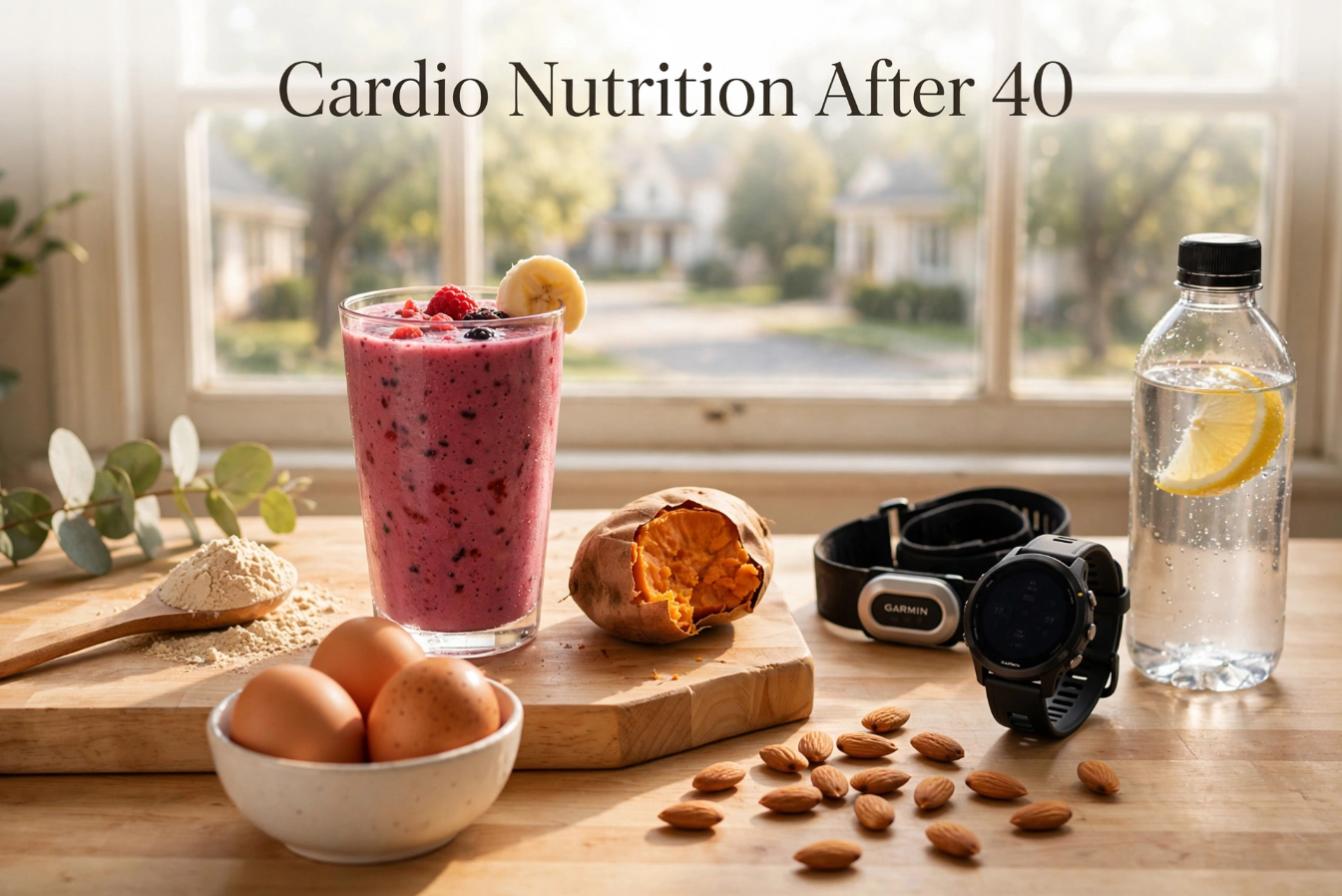
A smoothie with 1 scoop whey or plant protein, 1 banana, a handful of spinach, 1 tablespoon of almond butter, and unsweetened almond milk. Or a plate with 4–6 oz of grilled chicken, a cup of roasted sweet potatoes, and a large serving of broccoli. Hydrate with water and a pinch of sea salt.
Section 5: Daily Macros for the Over-40 Cardio Athlete
Your daily nutrition structure matters as much as the peri-workout window. Use these targets as a starting point, adjusting based on your goal.
Protein: 1.6–2.2 g/kg body weight (~0.7–1.0 g/lb)
For a 180-pound individual: 130–180 grams per day. Spread across 3–4 meals with at least 30g each. Prioritize lean meats, fish, eggs, dairy, and complete plant proteins. Protein preserves muscle, supports immune function, and has the highest thermic effect (your body burns calories digesting it).
Carbohydrates: 2–4 g/kg, Adjusted to Training Load
On heavy training days (long run, HIIT, or strength), eat toward the higher end: 3–4 g/kg. On easy Zone 2 days or rest days, eat toward the lower end: 2–2.5 g/kg. Emphasize whole-food sources: oats, potatoes, brown rice, quinoa, beans, fruits. This cycling improves metabolic flexibility without the extremes of a full keto diet.
Fats: 0.8–1.2 g/kg
Healthy fats support hormone production (including testosterone), reduce inflammation, and provide a steady energy source. Focus on monounsaturated and omega-3 fats: avocados, olive oil, nuts, seeds, fatty fish. Limit processed vegetable oils and trans fats completely.
Fiber and Micronutrients
Cardio training increases oxidative stress. A diet rich in colorful vegetables and fruits supplies antioxidants (vitamin C, polyphenols) and nitrates that support endothelial function. Aim for 5–7 servings of vegetables and 2–3 servings of fruit daily.
Section 6: Hydration and Electrolyte Strategy
Dehydration of just 2% of body weight impairs cardiovascular performance, raises heart rate, and increases perceived exertion. After 40, the thirst mechanism can be less sensitive, so proactive hydration is essential.
Daily Hydration Baseline
Drink half your body weight (in pounds) in ounces of water daily as a baseline. A 180-pound person: 90 ounces, plus extra for exercise. Monitor urine color: pale straw is hydrated; dark yellow means drink more.
Pre-Workout Hydration
Drink 16–20 oz of water 2–3 hours before exercise, and another 8–10 oz 20–30 minutes before. Add electrolytes if you’re a heavy sweater or working out in heat.
During and After
- Under 60 min: Water only.
- 60–90 min: Water + optional light electrolytes.
- 90+ min: Water with 300–600 mg sodium and 100–200 mg potassium per hour.
- Post-workout: For every pound lost during exercise (weigh yourself before and after), drink 16–20 oz of water with a pinch of salt.
Section 7: Supplements That Support the Over-40 Cardio Athlete
Whole foods first. Supplements fill specific, evidence-backed gaps.
| Supplement | Dose | Benefit for Cardio After 40 |
|---|---|---|
| Omega-3s (EPA/DHA) | 2–3g combined daily | Reduces inflammation, supports heart rhythm, enhances recovery |
| Creatine Monohydrate | 5g daily | Improves HIIT performance, preserves muscle, supports cognition |
| Magnesium Glycinate | 300–400 mg at night | Prevents cramps, supports sleep and vascular relaxation |
| Vitamin D3 + K2 | 2,000–5,000 IU D3 + 100 mcg K2 | Bone strength, immune function, calcium regulation |
| L-Citrulline or Beetroot Powder | 3–6g citrulline or 5–10g beetroot | Boosts nitric oxide, improves blood flow and endurance |
| Electrolyte Powder (sugar-free) | As needed during long sessions | Prevents cramping, cardiac drift, and hyponatremia |
| Whey or Plant Protein | 25–40g post-workout | Convenient, fast-absorbing protein for muscle repair |
Avoid: Fat burners with excessive stimulants, pre-workouts with undisclosed proprietary blends, and antioxidant megadoses (which can blunt training adaptations).
Section 8: Sample Day of Eating for a Training Day
This sample is for a 180-pound active man aiming for body recomposition. Adjust portions to your size and goals.
5:30 AM – Pre-Run (optional if fasted)
- Small banana or a few sips of a protein smoothie.
- 8 oz water.
6:00 AM – Zone 2 Run (60 min)
- Sip water during.
7:30 AM – Post-Workout Breakfast
- 2 eggs + 4 egg whites scrambled with spinach and onions.
- 1 cup cooked oatmeal with ½ cup blueberries and a drizzle of honey.
- Black coffee.
- 16 oz water with a pinch of salt.
12:00 PM – Lunch
- Large salad with 6 oz grilled chicken breast, mixed greens, cherry tomatoes, cucumber, ½ avocado, olive oil and vinegar.
- 1 cup quinoa.
- 16 oz water.
3:30 PM – Pre-HIIT Snack (45 min before)
- Rice cake with 1 tbsp almond butter and a few slices of banana.
- 8 oz water.
4:15 PM – HIIT Session (20 min)
- Water during.
5:30 PM – Post-HIIT Dinner
- 6 oz wild salmon, baked.
- 1.5 cups roasted sweet potato wedges.
- Steamed asparagus with lemon.
- 16 oz water.
9:00 PM – Bedtime
- Optional: 300 mg magnesium glycinate, 8 oz water.
Approximate totals: ~2,800 calories, 180g protein, 280g carbs, 90g fat. This is a maintenance-to-slight-deficit day for an active 180-pound man.
Section 9: FAQ—Your Cardio Nutrition Questions Answered
Q: Should I train fasted to burn more fat?
A: Fasted training (usually morning Zone 2 before breakfast) can upregulate fat-burning enzymes and improve metabolic flexibility. However, it’s not recommended for high-intensity work or sessions over 90 minutes, where performance and muscle preservation matter. For many over-40 individuals, a small pre-workout snack prevents excessive cortisol and muscle breakdown without blunting fat oxidation significantly. Experiment with fasted Zone 2 walks or light jogs, but fuel your hard days.
Q: Is it okay to have a glass of wine with dinner if I trained that day?
A: One glass, consumed with food and plenty of water, and not right before bed, is unlikely to erase your gains. However, alcohol impairs deep sleep, dehydrates you, and directly blunts muscle protein synthesis. If fat loss or peak performance are your goals, limit alcohol to 1–2 drinks per week, and avoid it entirely on hard training days.
Q: How do I avoid hitting the wall during a long run?
A: The wall is a blood sugar crash from depleted glycogen. Three strategies prevent it: 1) adequate carbohydrate loading in the 24 hours before, 2) consuming 30–60 grams of carbs per hour during the run, and 3) pacing yourself to stay in Zone 2 for the majority of the run, which preserves glycogen by oxidizing more fat. If you fuel properly and pace correctly, you should be able to run 90–120+ minutes without bonking.
Q: I’m vegan. Can I still get enough protein for cardio training after 40?
A: Absolutely. Focus on complete protein sources: soy (tofu, tempeh, edamame), quinoa, and seitan. Combine complementary proteins (rice and beans, hummus and whole wheat pita) across the day. Use a plant-based protein powder (pea-rice blend) with at least 2.5g of leucine per serving to stimulate muscle repair. Aim for 1.8–2.2 g/kg, slightly higher than the base recommendation, to account for lower digestibility of some plant proteins.
The VigorForty Take
Training and nutrition are not separate disciplines. They’re two halves of the same whole. Every Zone 2 mile you log, every HIIT interval you push through, every heavy squat you grind out—those are signals telling your body to adapt. Nutrition is the raw material your body uses to carry out those orders. Without adequate protein, your muscles can’t repair. Without strategic carbohydrates, your glycogen runs dry. Without water and electrolytes, your heart works harder for the same output. Without a colorful plate of vegetables, the inflammation from training accumulates instead of resolving.
The beautiful thing is that dialing in your nutrition after 40 doesn’t require perfection or deprivation. It requires attention and consistency. It’s the protein shake after the morning workout. It’s the extra glass of water before bed. It’s the sweet potato instead of the fries. It’s the handful of almonds in the afternoon instead of the vending machine snack. These small, repeated choices compound into a body that looks, performs, and ages differently.
You now hold the complete VigorForty cardio system: the training protocols, the recovery strategies, the heart rate zone precision, the metabolic insights, and the nutritional fuel. There is nothing left to add—only to execute. Start today. Fuel wisely. Train intelligently. And watch your midlife body become something you didn’t know was possible: stronger, leaner, and more energetic than it’s been in decades. Your future self is already thanking you.
Read All Related Articles
- The Complete Guide to Zone 2 Training After 40: How Low-Intensity Cardio Boosts Fat Loss, Longevity, and Endurance
- The Complete Guide to HIIT After 40: Joint-Friendly Workouts That Torch Fat and Protect Your Heart
- The Complete Guide to Running After 40: How to Start, Stay Injury-Free, and Build Lifelong Endurance
- The Complete Guide to Metabolic Health After 40: Reverse Insulin Resistance, Burn Stubborn Fat, and Reclaim Your Energy with Cardio
- The Complete Guide to Cardio Recovery After 40: How to Rest, Rebuild, and Come Back Stronger
- The Complete Guide to Heart Rate Training Zones After 40: Unlock Every Beat for Maximum Fat Loss, Endurance, and Longevity
- The Complete Guide to VO2 Max After 40: The #1 Predictor of Longevity and How to Improve It
- The Complete Guide to Concurrent Training After 40: How to Combine Cardio and Strength for Maximum Fat Loss, Muscle Preservation, and Longevity
- The Complete Guide to Walking and Rucking After 40: The Most Underrated Cardio for Fat Loss, Joint Health, and Longevity
- The Complete Guide to Designing Your Own Cardio Plan After 40: A Personalized Blueprint for Fat Loss, Longevity, and Peak Performance
- The Complete Guide to Cardio Nutrition After 40: Fuel Your Workouts for Maximum Fat Loss, Endurance, and Recovery
- The Complete Guide to Cardio Equipment After 40: Choosing the Best Treadmill, Bike, Rower, or Elliptical for Your Home Gym
- The Complete Guide to Injury Prevention for Cardio After 40: Run, Ride, and Ruck Pain-Free for Life
- The Complete Guide to Cardio for Fat Loss After 40: Burn Stubborn Belly Fat Without Losing Muscle or Energy
- The Complete Guide to Seasonal Cardio Training After 40: How to Periodize Your Year for Year-Round Fitness, Fat Loss, and Injury Prevention
- The Complete Guide to Cardio and Brain Health After 40: How Exercise Protects Your Memory, Mood, and Mental Sharpness
- The Complete Guide to Building a Home Gym for Cardio After 40: Design a Space That Makes Consistency Inevitable
- The Joyful Movement Manifesto: How to Love Cardio After 40 and Make It a Lifelong Practice
- The Complete Guide to Sleep and Cardio After 40: How Deep Rest Unlocks Your Best Performance, Recovery, and Longevity
- The Complete Guide to Stress, Cortisol, and Cardio After 40: How to Manage Your Nervous System for Better Recovery and Performance
- The Complete Guide to Returning to Cardio After a Layoff After 40: Your Compassionate, Science-Backed Roadmap Back to Fitness
- The Complete Guide to Cardio Through Menopause: How to Adapt Your Training for Hormonal Changes, Protect Your Heart, and Feel Strong After 40
- The Complete Guide to Cycling After 40: Low-Impact Cardio for Joint Health, Endurance, and Lifelong Fitness
- The Complete Guide to Pool and Water-Based Cardio After 40: Low-Impact Workouts for Joint Pain, Recovery, and Total-Body Fitness
- The Complete Guide to Rowing After 40: Full-Body, Low-Impact Cardio for Strength, Endurance, and Longevity
- The Complete Guide to Tracking Cardio Progress After 40: The Key Metrics That Matter More Than the Scale
- The Complete Guide to Cardio for High Blood Pressure After 40: How Exercise Lowers Your Numbers and Protects Your Heart
- The Complete Guide to Cardio for Type 2 Diabetes and Prediabetes After 40: How Exercise Reverses Insulin Resistance and Protects Your Heart
- The Complete Guide to Cardio with Arthritis After 40: Pain-Free Workouts That Strengthen Joints and Keep You Moving
- The Complete Guide to Longevity and Cardio After 40: How Aerobic Fitness Adds Years to Your Life and Life to Your Years
- The Complete Guide to Building a Cardio Habit After 40: The Science of Making Exercise Stick for Life
- The Complete Guide to Cardio and Immune Health After 40: Strengthen Your Body’s Defense System for a Resilient, Vibrant Life
- The Complete Guide to Cardio While Traveling After 40: Stay Fit on the Road, in Hotels, and Away from Home
- The Complete Guide to Cardio for Posture and Back Pain After 40: Strengthen Your Posterior Chain and Reverse the Damage of Sitting
- The Complete Guide to the Social Side of Cardio After 40: How Community, Accountability, and Connection Make You Stronger
- The VigorForty Manifesto: A Final Word on the Lifelong Practice of Movement