
Author: Vigor Forty Editorial Team
Medically Reviewed By: Editorial Review Board
Disclaimer: This article is for informational purposes only and is not a substitute for professional medical advice. Always consult your physician before beginning a new exercise program. Read our full Medical Disclaimer.
📌 Key Takeaways
- The “Interference Effect” Is Real but Manageable: Doing cardio and strength training close together can blunt some muscle-building signals. However, smart scheduling—separating modalities by at least 6 hours or prioritizing based on your primary goal—preserves both strength gains and endurance adaptations.
- Lift Heavy, Run Easy, Sprint Hard Is the Winning Formula: Heavy compound lifting preserves the muscle mass that declines with age and is your primary glucose sink. Zone 2 cardio builds the mitochondrial engine, and one session of HIIT or VO2 max intervals per week raises the ceiling. Together, they create a metabolically flexible, injury-resistant body.
- Nutrition and Recovery Are the Glue: Concurrent training increases total energy and protein demands. Failing to eat enough—especially protein (1.6–2.2 g/kg/day)—and failing to sleep 7–8 hours will lead to stagnation, overtraining, and loss of hard-earned muscle.
- Frequency and Sequencing Matter After 40: A 4–5 day weekly split works best for most midlife Americans. Strength before cardio if power and muscle are the priority; cardio before strength if endurance is the priority. Never schedule a hard leg day and a high-intensity run on back-to-back days without a recovery day in between.
- This Is the Ultimate Longevity Protocol: Combining regular strength and cardio is associated with the lowest all-cause mortality risk of any exercise pattern—even lower than cardio or strength alone. It’s not an either/or proposition; it’s a synergistic, life-extending partnership.
Introduction: The False Choice That’s Holding You Back
Walk into any big-box gym in America, and you’ll see the unspoken segregation: the runners and cyclists on the cardio deck, earbuds in, logging miles; the lifters in the weight room, moving iron, building muscle. The two tribes rarely interact, each convinced their method is the true path to health and leanness after 40.
They’re both half right—and half wrong.
The over-40 body doesn’t need a single tool. It needs a full workshop. Cardio (Zone 2, HIIT, running) builds a powerful heart, a dense capillary network, and a fat-burning mitochondrial engine. Strength training preserves the muscle mass that keeps your metabolism humming, protects your joints from impact, and ensures you can get off the toilet, carry groceries, and hike a mountain at 75 with ease. Neglect either one, and you’re leaving decades of vibrant life on the table.
Concurrent training—strategically combining endurance and resistance work in the same weekly program—is not only possible after 40; it’s the gold standard. Large-scale epidemiological studies consistently show that those who do both cardio and strength training have the lowest risk of premature death, even lower than those who do just one. But it requires a plan. Without one, you risk the “interference effect,” where the molecular signals from endurance exercise dampen the muscle-building response from lifting, leaving you spinning your wheels.
This guide gives you that plan. You’ll learn the science of how to sequence workouts for your specific goal, the ideal weekly split for a busy American over 40, how to fuel and recover from hybrid training, and how to avoid the five most common mistakes that lead to burnout and injury. By the end, you’ll stop choosing between the weight room and the road, and start building a body that’s strong, lean, and resilient for the long haul.
Section 1: The Science of the Interference Effect—What It Is and How to Outsmart It
In 1980, Dr. Robert Hickson published a seminal study showing that subjects who performed both strength and endurance training saw impaired strength gains compared to those who only lifted. This “interference effect” has been studied extensively since. The primary mechanisms:
Molecular Cross-Talk
Endurance training activates AMPK, an enzyme that promotes mitochondrial biogenesis and fat oxidation. Strength training activates mTOR, a pathway that drives muscle protein synthesis. AMPK can inhibit mTOR signaling. When you do a hard endurance session right before or after lifting, the AMPK spike can partially blunt the anabolic (muscle-building) signal from your strength work. The good news: this effect is modest, primarily affects hypertrophy (size) more than strength, and can be largely mitigated by proper spacing, nutrition, and prioritizing your primary goal.
Residual Fatigue
Even if molecular signaling is unaffected, doing a hard HIIT session the day before heavy squats means your legs are fatigued, your central nervous system isn’t fully recovered, and you’ll lift less weight. That reduced mechanical tension over time means less strength adaptation. The solution is not doing less; it’s placing hard sessions intelligently within the week.
Mitigation Strategies Proven by Research
- Separate by 6+ Hours: If you must do both on the same day, separating sessions by at least 6 hours significantly reduces interference. Morning cardio, evening lift (or vice versa).
- Prioritize Sequencing: Do your primary-goal modality first, when you’re freshest. If maintaining muscle is priority, lift before cardio. If building VO2 max is priority, run first. If you’re doing them back-to-back, finish the first, refuel with protein and carbs, and wait 30–60 minutes if possible.
- Eat Enough, Especially Protein: A high-protein diet (1.6–2.2 g/kg) and adequate total calories protect against muscle loss even with high training volumes.
- Cycle Intensity: Don’t do high-intensity cardio and heavy leg day on the same day or consecutive days. Pair hard cardio with upper-body lifting, or easy Zone 2 with leg day.
Section 2: The Over-40 Concurrent Training Advantage
While concurrent training requires smarter programming, the over-40 body reaps disproportionately large benefits from this approach.
Synergistic Metabolic Effects
Strength training builds muscle, which is metabolically active tissue that burns glucose even at rest. Cardio improves insulin sensitivity and mitochondrial function. Together, they create a powerful glucose disposal system that is far more effective than either alone. This is the metabolic health trifecta: strong muscles, insulin-sensitive tissues, and a high-capacity aerobic engine.
Injury Prevention
Running and HIIT place repetitive stress on joints. Strong muscles—particularly glutes, hamstrings, and core—absorb impact forces that would otherwise travel through the knees and lower back. Every study on running injuries points to hip and core weakness as a root cause. Your strength sessions are the best insurance policy your running habit can buy.
Body Composition
Cardio burns calories acutely and, in the case of HIIT, can elevate metabolism for hours. Strength training builds lean mass, which raises your resting metabolic rate permanently. Combining them—especially heavy, compound lifts with polarized cardio—results in the most favorable changes in body composition: less visceral fat, more lean mass, and a tighter, stronger physique.
The Mortality Data
A 2022 study in the British Journal of Sports Medicine following over 400,000 U.S. adults found that those who met both aerobic (150+ minutes moderate/vigorous) and muscle-strengthening (2+ sessions/week) guidelines had a 40% lower risk of all-cause mortality than those who met neither. Those who did only aerobic or only strength saw smaller reductions. Doing both is literally life-extending.
Section 3: The VigorForty Concurrent Training Weekly Blueprint
This blueprint integrates the cardio protocols from our Zone 2, HIIT, and Running guides with a foundational strength program. It’s designed for a 40–60-year-old with a job, family, and a desire for sustainable, life-long fitness.
The 5-Day Ideal Week (Strength Priority)
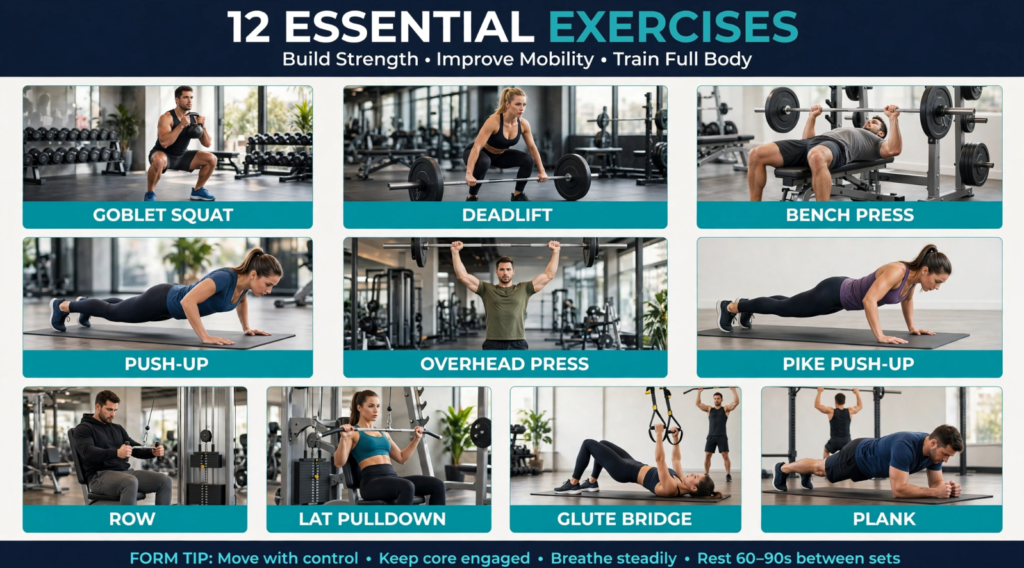
- Monday (Lower Body Strength + Zone 2): Morning: Heavy compound leg day (Squat or leg press, Romanian deadlifts, lunges, calf raises). Evening: 30–40 min Zone 2 walk or bike (promotes blood flow, aids recovery).
- Tuesday (Upper Body Strength + Short Cardio): Upper body push/pull (Bench press, rows, overhead press, pull-ups/lat pulldowns). 20 min Zone 2 finisher.
- Wednesday (HIIT or VO2 Max): Joint-friendly interval session (bike, rower, pool). 4×4 min at 90% max HR, or 30/30 sprints. 25 min total interval time.
- Thursday (Full Body Strength or Active Recovery): Option A: Lighter full-body session (kettlebells, bodyweight). Option B: 45–60 min Zone 1–2 active recovery walk or yoga.
- Friday (Upper Body Strength + Zone 2): Focus on accessory lifts and volume (shoulder raises, tricep extensions, core work). 30 min Zone 2.
- Saturday (Long Endurance): 75–120 min Zone 2 run, ruck, or ride. Embrace the long, slow, conversational pace.
- Sunday: Complete rest.
The 4-Day Minimalist Week (Time-Strapped)
- Monday: Full-body strength (Squat, press, row, deadlift variation) – 45 min.
- Tuesday: Zone 2 – 45–60 min.
- Wednesday: HIIT (20 min) + Core (10 min).
- Thursday: Active recovery or rest.
- Friday: Full-body strength (lighter, higher reps) – 40 min + 20 min Zone 2.
- Saturday: Long Zone 2 – 90 min.
- Sunday: Rest.
The 3-Day Essential Week (Survival Mode)
- Monday: Full-body strength (compound lifts, 45 min).
- Wednesday: Combined session: 20 min HIIT + 20 min Zone 2 cool-down.
- Friday: Full-body strength + 30 min Zone 2.
- Weekend: Aim for one long walk or hike (60+ min) if possible.
Section 4: Exercise Sequencing Within a Session
When you combine strength and cardio in a single gym visit, order matters.
If Your Goal Is Muscle, Strength, or Power:
Lift first. You want your central nervous system and muscles fresh for heavy loads. After a 45-minute strength session, a 20–30 minute Zone 2 cool-down on the bike or treadmill will not impair muscle gains and will actually aid recovery by flushing out metabolic byproducts. Avoid long-duration or high-intensity cardio after legs; save those for separate days or evenings.
If Your Goal Is Endurance Performance (VO2 Max, 5K Time):
Do your hard run or interval bike session first, followed by strength. You accept a small trade-off in strength gains to maximize cardiovascular quality. On these days, focus on upper-body or core strength, not heavy legs.
The Never-Do List:
- Never do high-volume, heavy leg work right before a long run or HIIT session.
- Never place a HIIT session the day after a heavy leg day. Legs need 48 hours to recover from intense resistance training before tackling maximal intervals.
- Never lift heavy on an empty stomach after a long fasted run. You’ll be catabolic and risk injury.
Section 5: Nutrition for the Concurrent Trainer
Your hybrid training demands more fuel, not less. Under-eating is the most common reason midlife concurrent trainers fail to gain muscle or lose fat.
Protein Is Non-Negotiable
Shoot for 1.6–2.2 grams of protein per kilogram of body weight per day (about 0.7–1.0 g/lb). For a 180-pound man, that’s 130–180 grams daily. Spread across 3–4 meals with 30–50g each. Protein timing: a dose within 60–90 minutes post-workout, whether it was lifting or cardio, helps repair muscle and stimulate adaptation. A post-workout smoothie with whey or plant protein, banana, and berries works perfectly.
Carbohydrates: Strategic, Not Excessive
On hard training days (HIIT, long run, heavy lifting), consume moderate carbs around your workouts to fuel performance and replenish glycogen. On easy Zone 2 days or rest days, reduce carbohydrates slightly, emphasizing protein, vegetables, and healthy fats. This cycling improves metabolic flexibility without extreme restriction.
Hydration Across Two Modalities
A strength session followed by cardio dramatically increases fluid loss. Sip water throughout. If you’re a heavy sweater, add electrolytes—sodium, potassium, magnesium. A good rule: weigh yourself before and after a combined session. For every pound lost, drink 16–20 oz of water with a pinch of salt.
Supplements That Support Concurrent Training
- Creatine Monohydrate (5g daily): Improves both strength and high-intensity cardio performance. Supports muscle preservation and cognitive function.
- Omega-3s (2–3g EPA/DHA): Helps manage inflammation from high training volumes.
- Magnesium Glycinate (300–400 mg at night): Supports muscle relaxation, sleep, and recovery.
- Vitamin D3 + K2: Bone health and immune function.
Section 6: Recovery and Deload Weeks for the Hybrid Athlete
The more modalities you add, the more systemic fatigue you accumulate. Programming recovery proactively prevents the overtraining we detailed in our Recovery Guide.
Deload Every 4th Week
Reduce your total training volume (sets × reps × weight for strength; duration for cardio) by 30–50%. Cut the HIIT session entirely. Keep all cardio in Zone 1 or low Zone 2. You’ll feel restless—that’s the point. The body supercompensates during this rest, and you’ll come back stronger.
Monitor Morning Resting Heart Rate and HRV
If your resting heart rate is elevated by 5+ bpm for two days running, or your HRV drops significantly, swap the day’s planned hard session for Zone 1 recovery. Your body is asking for more time to adapt.
Sleep Is Your Chief Anabolic Agent
Seven to eight hours of quality sleep is when muscle repair, growth hormone secretion, and cardiovascular remodeling predominantly occur. Concurrent trainers need this more than any supplement. Guard your sleep as aggressively as you guard your workout time.
Section 7: FAQ—Your Concurrent Training Questions Answered
Q: Won’t cardio kill my muscle gains?
A: Not if you program it correctly. The interference effect is most pronounced with high-volume, high-intensity cardio paired with high-volume leg training without adequate calories or recovery. Moderate Zone 2 (even 3–4 hours per week) and one HIIT session, combined with heavy lifting and sufficient protein, will not prevent muscle gain and will dramatically improve your heart health and metabolic flexibility.
Q: I’m 55 and haven’t lifted in years. Is concurrent training too much?
A: Start with the 3-Day Minimalist Week. One full-body strength day, one Zone 2 day, one combined day. Build the habit and let your body adapt for 4–6 weeks before adding volume. The key is consistency, not initial perfection.
Q: What’s the best cardio modality to pair with strength training?
A: Low-impact modalities (cycling, rowing, incline walking, rucking, swimming) preserve joint health for heavy lifting days. Running is excellent but monitor your knees and back; if you’re squatting heavy twice a week, consider running on non-lifting days or sticking to soft surfaces.
Q: Can I do concurrent training and still lose belly fat?
A: Yes, powerfully. Concurrent training attacks belly fat from multiple angles: it builds calorie-burning muscle, improves insulin sensitivity (reducing the hormonal signal to store fat), and through HIIT and Zone 2, directly oxidizes visceral fat stores. Combined with a modest calorie deficit rich in protein, it’s the most effective body recomposition strategy available.
The VigorForty Take
Concurrent training is not about doing more. It’s about doing the right things, in the right order, at the right time. It’s the recognition that your body after 40 is an integrated system, not a collection of separate parts. Your heart and your hamstrings, your mitochondria and your glutes, your VO2 max and your deadlift—they all speak to each other. When you train them together intelligently, they amplify each other.
You don’t have to spend two hours in the gym every day to pull this off. Three to five weekly sessions, sequenced with purpose, fueled adequately, and balanced by deep recovery, will transform your health more than any single-focus program ever could. You will run farther without pain, lift heavier without stiffness, and look in the mirror at a body that is both strong and lean.
Stop choosing between the treadmill and the squat rack. They belong together. Your longevity depends on it.
Read All Related Articles
- The Complete Guide to Zone 2 Training After 40: How Low-Intensity Cardio Boosts Fat Loss, Longevity, and Endurance
- The Complete Guide to HIIT After 40: Joint-Friendly Workouts That Torch Fat and Protect Your Heart
- The Complete Guide to Running After 40: How to Start, Stay Injury-Free, and Build Lifelong Endurance
- The Complete Guide to Metabolic Health After 40: Reverse Insulin Resistance, Burn Stubborn Fat, and Reclaim Your Energy with Cardio
- The Complete Guide to Cardio Recovery After 40: How to Rest, Rebuild, and Come Back Stronger
- The Complete Guide to Heart Rate Training Zones After 40: Unlock Every Beat for Maximum Fat Loss, Endurance, and Longevity
- The Complete Guide to VO2 Max After 40: The #1 Predictor of Longevity and How to Improve It
- The Complete Guide to Concurrent Training After 40: How to Combine Cardio and Strength for Maximum Fat Loss, Muscle Preservation, and Longevity
- The Complete Guide to Walking and Rucking After 40: The Most Underrated Cardio for Fat Loss, Joint Health, and Longevity
- The Complete Guide to Designing Your Own Cardio Plan After 40: A Personalized Blueprint for Fat Loss, Longevity, and Peak Performance
- The Complete Guide to Cardio Nutrition After 40: Fuel Your Workouts for Maximum Fat Loss, Endurance, and Recovery
- The Complete Guide to Cardio Equipment After 40: Choosing the Best Treadmill, Bike, Rower, or Elliptical for Your Home Gym
- The Complete Guide to Injury Prevention for Cardio After 40: Run, Ride, and Ruck Pain-Free for Life
- The Complete Guide to Cardio for Fat Loss After 40: Burn Stubborn Belly Fat Without Losing Muscle or Energy
- The Complete Guide to Seasonal Cardio Training After 40: How to Periodize Your Year for Year-Round Fitness, Fat Loss, and Injury Prevention
- The Complete Guide to Cardio and Brain Health After 40: How Exercise Protects Your Memory, Mood, and Mental Sharpness
- The Complete Guide to Building a Home Gym for Cardio After 40: Design a Space That Makes Consistency Inevitable
- The Joyful Movement Manifesto: How to Love Cardio After 40 and Make It a Lifelong Practice
- The Complete Guide to Sleep and Cardio After 40: How Deep Rest Unlocks Your Best Performance, Recovery, and Longevity
- The Complete Guide to Stress, Cortisol, and Cardio After 40: How to Manage Your Nervous System for Better Recovery and Performance
- The Complete Guide to Returning to Cardio After a Layoff After 40: Your Compassionate, Science-Backed Roadmap Back to Fitness
- The Complete Guide to Cardio Through Menopause: How to Adapt Your Training for Hormonal Changes, Protect Your Heart, and Feel Strong After 40
- The Complete Guide to Cycling After 40: Low-Impact Cardio for Joint Health, Endurance, and Lifelong Fitness
- The Complete Guide to Pool and Water-Based Cardio After 40: Low-Impact Workouts for Joint Pain, Recovery, and Total-Body Fitness
- The Complete Guide to Rowing After 40: Full-Body, Low-Impact Cardio for Strength, Endurance, and Longevity
- The Complete Guide to Tracking Cardio Progress After 40: The Key Metrics That Matter More Than the Scale
- The Complete Guide to Cardio for High Blood Pressure After 40: How Exercise Lowers Your Numbers and Protects Your Heart
- The Complete Guide to Cardio for Type 2 Diabetes and Prediabetes After 40: How Exercise Reverses Insulin Resistance and Protects Your Heart
- The Complete Guide to Cardio with Arthritis After 40: Pain-Free Workouts That Strengthen Joints and Keep You Moving
- The Complete Guide to Longevity and Cardio After 40: How Aerobic Fitness Adds Years to Your Life and Life to Your Years
- The Complete Guide to Building a Cardio Habit After 40: The Science of Making Exercise Stick for Life
- The Complete Guide to Cardio and Immune Health After 40: Strengthen Your Body’s Defense System for a Resilient, Vibrant Life
- The Complete Guide to Cardio While Traveling After 40: Stay Fit on the Road, in Hotels, and Away from Home
- The Complete Guide to Cardio for Posture and Back Pain After 40: Strengthen Your Posterior Chain and Reverse the Damage of Sitting
- The Complete Guide to the Social Side of Cardio After 40: How Community, Accountability, and Connection Make You Stronger
- The VigorForty Manifesto: A Final Word on the Lifelong Practice of Movement