Author: Vigor Forty Editorial Team
Medically Reviewed By: Editorial Review Board
Disclaimer: This article is for informational purposes only and is not a substitute for professional medical advice. Always consult your physician before beginning a new exercise or recovery regimen, especially if you have pre-existing health conditions. Read our full Medical Disclaimer.
📌 Key Takeaways
- Recovery Is the Adaptation Window, Not the Absence of Training: After 40, your cardiovascular system and musculoskeletal tissues don’t get stronger during your workout—they get stronger while you rest. Skipping recovery means skipping the very benefits you’re training for.
- Overtraining Syndrome Is Real and Prevalent in Midlife: A combination of high-intensity cardio, career stress, insufficient sleep, and calorie deficits creates a perfect storm for elevated cortisol, stalled fat loss, mood disturbances, and a plateaued VO2 max. Recognizing early signs—elevated resting heart rate, insomnia, loss of workout enthusiasm—is critical.
- Active Recovery Beats Total Sedentary Rest for Cardio Athletes: Gentle movement like walking, leisurely cycling, swimming, or yoga on recovery days increases blood flow to damaged muscle tissue, clears metabolic waste, and enhances parasympathetic (rest-and-digest) tone without adding training stress.
- Sleep Is the Single Most Potent Recovery Tool You Possess: Growth hormone, critical for muscle repair and fat metabolism, is secreted primarily during deep sleep. Even one night of shortened sleep reduces insulin sensitivity and increases cravings the next day. Prioritizing 7–8 hours of quality sleep is non-negotiable for the over-40 cardio enthusiast.
- Nutrition Timing and Composition Directly Accelerate Recovery: Consuming 25–40 grams of high-quality protein within 60–90 minutes post-workout, along with adequate carbohydrates, replenishes glycogen and halts muscle breakdown. Electrolytes, omega-3s, and hydration complete the repair cycle. Train hard, recover harder.
Introduction: The Missing Link in Your Cardio Program
If you’re reading this, you’ve likely already bought into the VigorForty approach: Zone 2 to build your mitochondrial engine, joint-friendly HIIT to torch visceral fat and spike insulin sensitivity, and a smart, progressive running plan to keep your heart and bones strong. You’re showing up, doing the work, tracking your numbers. But there’s a quiet, pervasive mistake that sidelines midlife athletes more than any single injury: the belief that more is always better, and that rest is weakness.
In the American culture of grinding, hustle, and “no days off,” recovery is often framed as laziness. But after 40, recovery isn’t a luxury you take when you break. It’s the biological process that lets your body absorb the training you’ve already done. The stress you apply during a HIIT session or a long run tears down muscle fibers, depletes glycogen, and temporarily stiffens your arteries. The magic—the mitochondrial biogenesis, the increased stroke volume, the stronger tendons, the lower resting heart rate—all happens in the hours and days after you’ve laced down and cooled off.
This guide is your blueprint for recovery mastery. You’ll learn how to listen to your body’s signals before they become screams, how to structure active recovery days, how to leverage sleep and nutrition as performance-enhancing tools, and how to avoid the overtraining syndrome that traps so many enthusiastic 40-somethings in a cycle of fatigue, fat gain, and frustration. By the end, you’ll understand that your ability to recover intelligently is what will keep you running, rowing, rucking, and thriving into your 60s and beyond.
Section 1: The Physiology of Recovery After 40—Why It’s Fundamentally Different
At 25, you could do a hard track workout, sleep five hours, eat a slice of pizza, and set a personal best the next day. Trying that at 45 is a recipe for a blown hamstring and a three-week setback. The biological clock changes the rules.
Diminished Hormonal Reserve
Testosterone and growth hormone—both critical for muscle protein synthesis and tissue repair—naturally decline with age. This doesn’t mean you can’t build muscle or recover, but it means the anabolic window is narrower. Your body needs more time and higher-quality raw materials (amino acids, sleep) to complete the same repair process. Simultaneously, cortisol—the stress hormone—tends to stay elevated longer after intense exercise, especially if life stress is also high. Chronically elevated cortisol is catabolic; it breaks down muscle, stores fat around the abdomen, and dampens immune function.
Stiffer Connective Tissues and Slower Collagen Turnover
Tendons, ligaments, and fascia lose elasticity and become less vascularized with age. The Achilles tendon, for example, receives very little blood flow compared to a muscle belly. After a hard running session, micro-tears in tendons and cartilage need 48–72 hours to repair, far longer than muscle glycogen replenishment. This is why most overuse injuries in runners over 40—plantar fasciitis, Achilles tendinopathy, IT band syndrome—stem not from a single traumatic event but from insufficient recovery between sessions that gradually degrades tissue quality.
The Parasympathetic Deficit
Your autonomic nervous system has two branches: the sympathetic (“fight or flight”) and the parasympathetic (“rest and digest”). High-intensity exercise and life stress both activate the sympathetic branch. After a workout, you need a robust parasympathetic reactivation to lower heart rate, enhance digestion, and initiate repair. With age, parasympathetic tone can be slower to re-engage, meaning you stay in a low-grade sympathetic state. This manifests as an elevated resting heart rate that doesn’t come down overnight, restless sleep, and a feeling of being “tired but wired.”
Section 2: Recognizing the Red Flags—The Overtraining Spectrum
Overtraining isn’t just about doing too many miles. It’s an imbalance between total stress (training + life + nutrition deficits) and total recovery capacity. The midlife body often whispers before it screams. Learn the language.
Early Warning Signs (Functional Overreaching)
- Morning resting heart rate elevated by 5–10 bpm above your normal baseline for 2–3 days in a row.
- A “heavy” feeling in the legs during easy Zone 2 sessions that were previously effortless.
- Irritability, lack of motivation, or dreading workouts you normally love.
- Plateaued or declining performance despite consistent effort.
- Increased sugar cravings, especially late at night.
Full-Blown Overtraining Syndrome
If early signs are ignored for weeks, overtraining syndrome sets in. This is a clinical condition characterized by persistent fatigue, depression, insomnia, frequent illness (impaired immune function), loss of libido, and a performance decrement that lasts for weeks to months even with rest. Recovery from full-blown overtraining can take months. Avoiding this entirely is the goal.
Your Most Reliable Gauge: Heart Rate Variability (HRV)
Many modern wearables (Whoop, Oura, Apple Watch with apps, Garmin) estimate HRV—the variation in time between each heartbeat. Higher HRV generally indicates a rested, parasympathetic-dominant state ready for stress. A sudden drop in HRV coupled with an elevated resting heart rate is a strong signal to swap that planned HIIT session for active recovery. If you don’t have a wearable, simply track your morning pulse manually for a week, and note the feeling. You’ll develop an intuitive sense of when you’re fresh vs. when you’re flat.
Section 3: The Active Recovery Toolkit—What to Do on Days “Off”
Complete bed rest or couch-lock is rarely the optimal recovery mode for a cardio athlete. Active recovery accelerates the healing process.
Zone 1 Walking
A 30- to 45-minute walk outdoors—heart rate below 60% of your max, pure conversation pace, no hills—is the gold standard. It increases blood flow to the legs without imposing any new mechanical stress, flushes out metabolic waste, and stimulates the parasympathetic nervous system. Morning walks with sunlight exposure also entrain circadian rhythms, improving sleep later that night.
Light Cycling or Pool Work
Spinning at extremely low resistance on a stationary bike or leisurely swimming laps puts your joints through a full, pain-free range of motion. The hydrostatic pressure of water is particularly effective for reducing muscle soreness and edema in the lower legs. Keep it purely playful; if you’re tempted to chase a number, you’ve already lost the plot.
Mobility Flows and Yoga
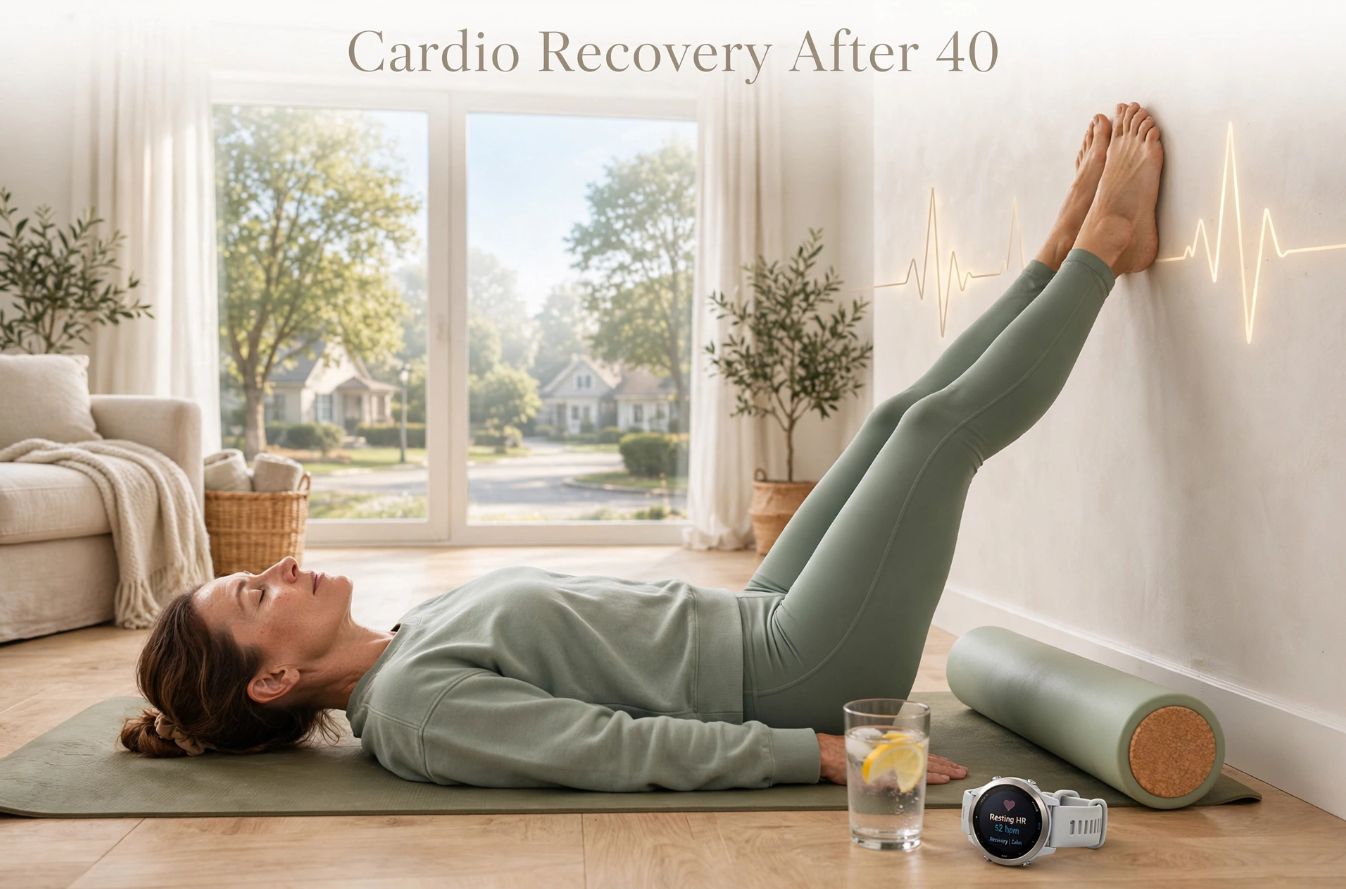
A 20-minute gentle yoga sequence or a mobility routine targeting the hips, thoracic spine, and ankles undoes the stiffness that running and cycling ingrain. Focus on breath work—extending your exhales activates the vagus nerve, directly stimulating parasympathetic tone. Poses like legs-up-the-wall, child’s pose, and reclined spinal twists are deeply restorative.
Self-Myofascial Release (Foam Rolling)
Slow, controlled rolling of the calves, quadriceps, hamstrings, and upper back can temporarily reduce muscle soreness and improve range of motion. Limit to 1–2 minutes per muscle group, avoiding bones and joints. Do this in the evening while watching TV—it bridges active recovery with relaxation.
Section 4: Sleep—The Non-Negotiable Performance Enhancer
No supplement, no gadget, no workout can compensate for chronic sleep deprivation. Sleep is when the bulk of your cardiovascular and musculoskeletal repair occurs.
Deep Sleep and Growth Hormone
Approximately 70–80% of daily growth hormone secretion occurs during slow-wave (deep) sleep, primarily in the first half of the night. This pulse of GH drives protein synthesis, bone remodeling, and fat metabolism. After 40, deep sleep naturally decreases, so protecting it becomes paramount. Alcohol within 3 hours of bed is a potent deep-sleep disruptor; that one glass of wine to “wind down” might fragment your most restorative sleep cycle.
Sleep Duration and Insulin Sensitivity
Just one night of 4–5 hours of sleep can reduce insulin sensitivity by 20–30% in healthy adults—equivalent to gaining 15–20 pounds of fat overnight metabolically. For someone already fighting midlife insulin resistance, poor sleep directly undermines the metabolic benefits of your Zone 2 and HIIT work. Aim for 7–8 hours of actual sleep time (not just time in bed). A cool (65–68°F), pitch-dark room and a consistent bed/wake time are the most effective non-pharmacological interventions.
Pre-Sleep Routine for the Cardio Athlete
- 90 minutes before bed: Dim lights, put away screens, engage in a quiet activity (reading fiction, light stretching, journaling).
- Magnesium glycinate (300–400 mg) taken with dinner or an hour before bed supports relaxation and muscle function.
- Avoid intense exercise within 2 hours of bedtime; the sympathetic after-burn and elevated core temperature can delay sleep onset.
Section 5: Recovery Nutrition—Fueling the Repair
You can’t recover from a workout you didn’t fuel for. After 40, the margin for nutritional errors is smaller.
The Post-Workout Window
Consume 25–40 grams of high-quality protein (whey, eggs, lean meat, or a plant-based blend with leucine) within 60–90 minutes of finishing a hard session. Combine with 0.5–1.0 grams of carbohydrate per kilogram of body weight to spike insulin slightly—this halts muscle protein breakdown and accelerates glycogen resynthesis. A 180-pound man needs roughly 30–40g of protein and 50–80g of carbs after a long run or HIIT. A smoothie with banana, berries, Greek yogurt, and a scoop of protein powder is a perfect, easily digestible option.
Hydration and Electrolytes
During a hard session, you lose sodium, potassium, and magnesium through sweat. Replenishing these prevents cramping and supports nerve function. Water alone after heavy sweating can dilute blood sodium and delay recovery. Add a pinch of sea salt to your meals, eat potassium-rich foods (potatoes, avocados, spinach), and consider an electrolyte supplement without sugar. Urine color is a quick proxy: pale straw means you’re hydrated.
Omega-3s and Inflammation Management
Omega-3 fatty acids (EPA/DHA) support the resolution of exercise-induced inflammation without blunting the adaptive response. Aim for 2–3 grams of combined EPA/DHA daily. Tart cherry juice or curcumin supplements can also help manage delayed onset muscle soreness without the downsides of NSAIDs (ibuprofen), which can impair muscle repair and gut health if used chronically.
Section 6: Building Recovery into Your Weekly Plan
Recovery is not something that happens to you; it’s something you schedule. Integrate it as aggressively as you schedule your hardest workouts.
The 3:1 Cycle
For every three weeks of progressive training (increasing duration or intensity), insert one deload week. In the deload week, cut total cardio volume by 30–40%, drop the HIIT session entirely, and keep all work strictly Zone 1 or low Zone 2. You’ll return the following week sharper, faster, and craving hard efforts.
Weekly Recovery Anchors
- Monday: Full rest or 20–30 min gentle walk. Your week’s recovery begins, not ends, here.
- Thursday: Active recovery day—45 min Zone 1 bike ride or yoga.
- Sunday: The post-long-run recharge. A morning walk, a foam-rolling session in the evening, an early bedtime.
The Hard/Easy Rule
Never schedule two high-intensity or long-duration sessions back-to-back. A hard day (HIIT, tempo run, long run, heavy leg day) must be followed by an easy day (Zone 2 under 60 min, active recovery walk, or complete rest). This simple rule alone prevents the majority of overtraining injuries.
Section 7: FAQ—Your Top Recovery Questions
Q: I feel guilty taking a rest day. How do I reframe this mentally?
A: Remind yourself that muscles and capillaries are built during rest, not during training. Every elite endurance athlete in the world has mandatory rest days. Write “Recovery Workout” into your calendar if it helps psychologically. Treat it as a training session for your parasympathetic nervous system—it requires as much discipline as a HIIT set.
Q: How sore is too sore to work out?
A: Mild, diffuse soreness (DOMS) that eases with movement is normal and can be trained through at reduced intensity. Sharp, localized pain, swelling, or soreness that alters your gait is an injury warning sign. If you’re dreading stairs 48 hours after a leg-intensive day, skip the planned hard session and do active recovery instead. Your body is asking for more time.
Q: Do ice baths and cold plunges speed recovery after cardio?
A: They can reduce perceived soreness and inflammation, but chronic use immediately after strength or hypertrophy training may blunt some muscle-building signals. For pure cardio recovery (running, cycling), a short cold plunge (50–59°F for 5–10 minutes) after a hot, long run can reduce next-day soreness without meaningful downsides. Avoid immediately after maximal strength sessions. Warm baths with Epsom salts are a gentler, always-safe option for muscle relaxation.
Q: Can I combine alcohol with my training recovery?
A: Alcohol is a toxin to recovery. It disrupts deep sleep, dehydrates you, impairs muscle protein synthesis, and depresses testosterone. One or two drinks on a rest day, consumed early in the evening with food and plenty of water, will not erase a training block, but regular or heavy drinking will significantly blunt your cardiovascular and metabolic gains. The dose makes the poison.
Q: What’s the single best recovery tool if I have zero budget?
A: Sleep. It’s free, it’s the most powerful, and most Americans are shorting themselves by an hour or more. Locking in a consistent, 7.5–8-hour sleep opportunity will do more for your heart rate, body composition, and performance than any roller, gun, or cryo-chamber.
The VigorForty Take
Recovery is not passive. It is an active, trainable skill that separates the 45-year-old who is perpetually injured, tired, and frustrated from the one who keeps setting decade-best times in the 5K, feels energized at work, and wakes up without stiffness. The blueprint is clear: schedule your rest days with the same ink you use for your hard workouts. Learn to read your morning heart rate and your subjective energy like a dashboard. Prioritize sleep above late-night TV and doom-scrolling. Feed your body protein and electrolytes the moment you walk in the door. And when your ego pushes you to “go hard” on a day your body is begging for a walk in the sun, listen to your body. It knows the long game.
Your heart, your mitochondria, and your joints don’t grow stronger during the 20th interval or the final mile. They grow stronger on the couch, in the bed, and on the gentle walk. Give them that gift. You’ve earned every minute of it.
Read All Related Articles
- The Complete Guide to Zone 2 Training After 40: How Low-Intensity Cardio Boosts Fat Loss, Longevity, and Endurance
- The Complete Guide to HIIT After 40: Joint-Friendly Workouts That Torch Fat and Protect Your Heart
- The Complete Guide to Running After 40: How to Start, Stay Injury-Free, and Build Lifelong Endurance
- The Complete Guide to Metabolic Health After 40: Reverse Insulin Resistance, Burn Stubborn Fat, and Reclaim Your Energy with Cardio
- The Complete Guide to Cardio Recovery After 40: How to Rest, Rebuild, and Come Back Stronger
- The Complete Guide to Heart Rate Training Zones After 40: Unlock Every Beat for Maximum Fat Loss, Endurance, and Longevity
- The Complete Guide to VO2 Max After 40: The #1 Predictor of Longevity and How to Improve It
- The Complete Guide to Concurrent Training After 40: How to Combine Cardio and Strength for Maximum Fat Loss, Muscle Preservation, and Longevity
- The Complete Guide to Walking and Rucking After 40: The Most Underrated Cardio for Fat Loss, Joint Health, and Longevity
- The Complete Guide to Designing Your Own Cardio Plan After 40: A Personalized Blueprint for Fat Loss, Longevity, and Peak Performance
- The Complete Guide to Cardio Nutrition After 40: Fuel Your Workouts for Maximum Fat Loss, Endurance, and Recovery
- The Complete Guide to Cardio Equipment After 40: Choosing the Best Treadmill, Bike, Rower, or Elliptical for Your Home Gym
- The Complete Guide to Injury Prevention for Cardio After 40: Run, Ride, and Ruck Pain-Free for Life
- The Complete Guide to Cardio for Fat Loss After 40: Burn Stubborn Belly Fat Without Losing Muscle or Energy
- The Complete Guide to Seasonal Cardio Training After 40: How to Periodize Your Year for Year-Round Fitness, Fat Loss, and Injury Prevention
- The Complete Guide to Cardio and Brain Health After 40: How Exercise Protects Your Memory, Mood, and Mental Sharpness
- The Complete Guide to Building a Home Gym for Cardio After 40: Design a Space That Makes Consistency Inevitable
- The Joyful Movement Manifesto: How to Love Cardio After 40 and Make It a Lifelong Practice
- The Complete Guide to Sleep and Cardio After 40: How Deep Rest Unlocks Your Best Performance, Recovery, and Longevity
- The Complete Guide to Stress, Cortisol, and Cardio After 40: How to Manage Your Nervous System for Better Recovery and Performance
- The Complete Guide to Returning to Cardio After a Layoff After 40: Your Compassionate, Science-Backed Roadmap Back to Fitness
- The Complete Guide to Cardio Through Menopause: How to Adapt Your Training for Hormonal Changes, Protect Your Heart, and Feel Strong After 40
- The Complete Guide to Cycling After 40: Low-Impact Cardio for Joint Health, Endurance, and Lifelong Fitness
- The Complete Guide to Pool and Water-Based Cardio After 40: Low-Impact Workouts for Joint Pain, Recovery, and Total-Body Fitness
- The Complete Guide to Rowing After 40: Full-Body, Low-Impact Cardio for Strength, Endurance, and Longevity
- The Complete Guide to Tracking Cardio Progress After 40: The Key Metrics That Matter More Than the Scale
- The Complete Guide to Cardio for High Blood Pressure After 40: How Exercise Lowers Your Numbers and Protects Your Heart
- The Complete Guide to Cardio for Type 2 Diabetes and Prediabetes After 40: How Exercise Reverses Insulin Resistance and Protects Your Heart
- The Complete Guide to Cardio with Arthritis After 40: Pain-Free Workouts That Strengthen Joints and Keep You Moving
- The Complete Guide to Longevity and Cardio After 40: How Aerobic Fitness Adds Years to Your Life and Life to Your Years
- The Complete Guide to Building a Cardio Habit After 40: The Science of Making Exercise Stick for Life
- The Complete Guide to Cardio and Immune Health After 40: Strengthen Your Body’s Defense System for a Resilient, Vibrant Life
- The Complete Guide to Cardio While Traveling After 40: Stay Fit on the Road, in Hotels, and Away from Home
- The Complete Guide to Cardio for Posture and Back Pain After 40: Strengthen Your Posterior Chain and Reverse the Damage of Sitting
- The Complete Guide to the Social Side of Cardio After 40: How Community, Accountability, and Connection Make You Stronger
- The VigorForty Manifesto: A Final Word on the Lifelong Practice of Movement