
Author: Vigor Forty Editorial Team
Medically Reviewed By: Editorial Review Board
Disclaimer: This article is for informational purposes only and is not a substitute for professional medical advice. Read our full Medical Disclaimer.
📌 Key Takeaways
- Food Is a Sleep Signal: Specific nutrients—tryptophan, magnesium, glycine, and certain B vitamins—are direct precursors to the neurotransmitters and hormones (serotonin, melatonin, GABA) that govern sleep onset and quality.
- The Glucose-Sleep Connection: Late-night blood sugar spikes and crashes fragment deep sleep architecture, reducing the restorative slow-wave sleep that clears metabolic waste from the brain.
- Caffeine Has a Half-Life of 6-8 Hours: That 3:00 PM coffee is still circulating in your bloodstream at 9:00 PM, occupying adenosine receptors and delaying sleep onset even if you “feel fine.”
- The 2-Hour Eating Window: Closing your food intake at least two hours before bed allows digestion to complete and core body temperature to drop—a physiological requirement for deep sleep initiation.
Introduction: The Forgotten Pillar
Nutrition and exercise are the two pillars of health that dominate the cultural conversation. The third pillar—sleep—is often treated as an afterthought, something to squeeze in between the end of a streaming binge and the morning alarm. Yet sleep is not merely a period of inactivity. It is an active, highly orchestrated biological process during which your brain clears metabolic waste, your immune system deploys its cellular soldiers, your muscles repair and rebuild, and your memories consolidate from short-term fragments into long-term knowledge.
You can eat the most nutrient-dense diet on the planet and follow the most intelligently designed exercise program, but if your sleep is chronically short or shallow, you are undermining both. One night of partial sleep deprivation reduces insulin sensitivity by up to 33%. It increases ghrelin (the hunger hormone) and decreases leptin (the satiety hormone), driving cravings for high-sugar, high-fat foods the following day. It elevates cortisol, which promotes abdominal fat storage and muscle breakdown. It impairs the clearance of beta-amyloid plaques, the protein aggregates associated with Alzheimer’s disease.
The good news is that the relationship between food and sleep runs both directions. Just as poor sleep degrades your nutritional choices, specific foods and eating patterns can actively enhance your ability to fall asleep quickly, stay asleep deeply, and wake feeling genuinely restored. This article is your guide to the sleep-enhancing kitchen.
Section 1: The Neurochemistry of Sleep — What Your Brain Needs to Power Down
Sleep is not the absence of wakefulness. It is a neurochemical transition from the sympathetic (“fight or flight”) dominance of the waking day to the parasympathetic (“rest and digest”) dominance of the night. That transition requires specific raw materials.
The Sleep Neurotransmitter Cascade:
- Serotonin (The Calm Precursor): Serotonin is synthesized from the amino acid tryptophan, with vitamin B6 as a necessary cofactor. Serotonin is a mood stabilizer and the direct precursor to melatonin. Without adequate serotonin, melatonin production is compromised. Carbohydrate intake (specifically, insulin release) helps shuttle competing amino acids out of the bloodstream, giving tryptophan preferential access to the brain. This is why a small, carbohydrate-containing evening snack can be sleep-promoting—but the type and timing of that carbohydrate matter enormously.
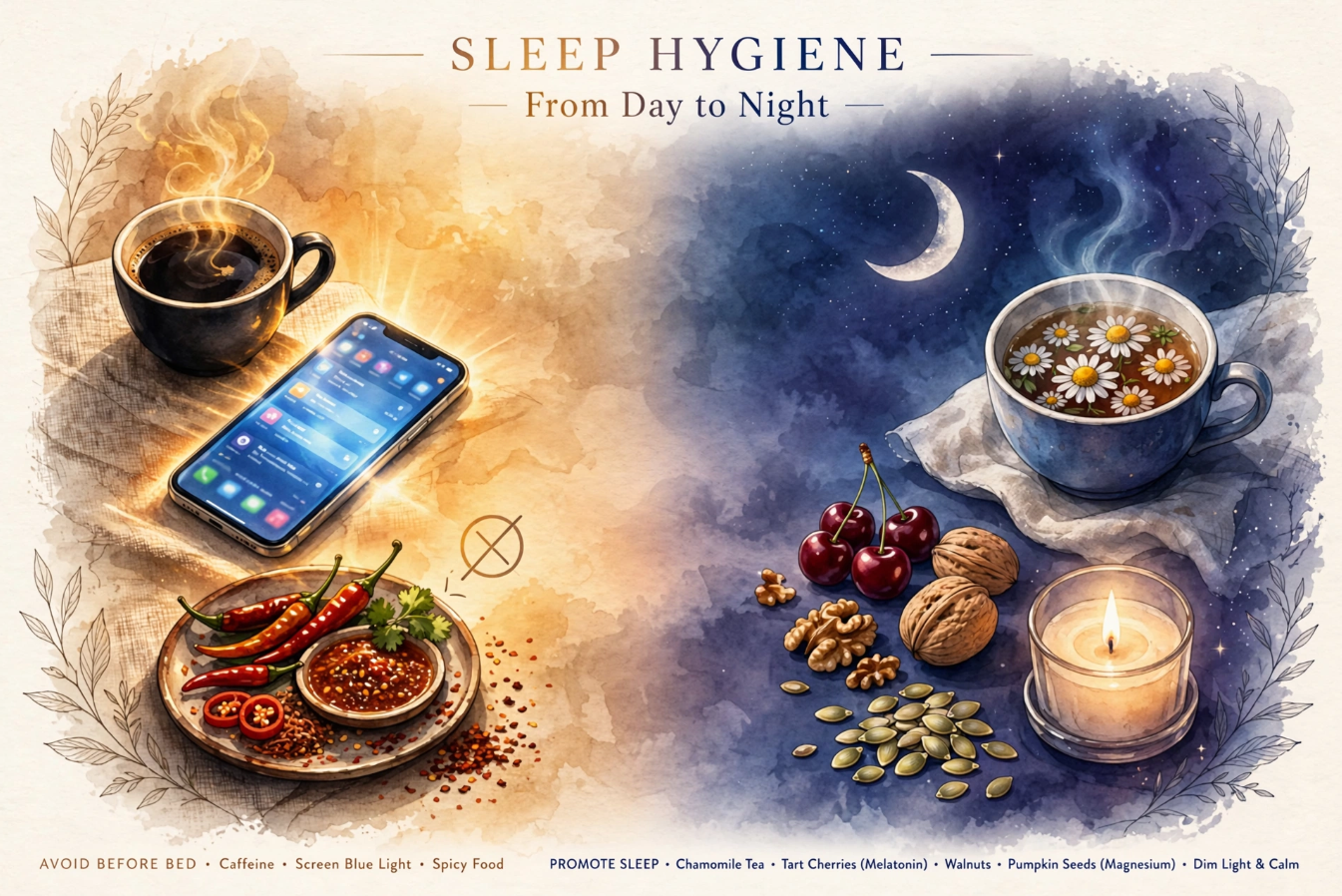
- Melatonin (The Sleep Hormone): Melatonin is produced in the pineal gland from serotonin. Its release is triggered by darkness and suppressed by light—specifically blue light in the 460-480 nm wavelength range, which is emitted by screens, LED bulbs, and fluorescent lighting. Melatonin does not knock you unconscious; it signals to every system in your body that it is nighttime, initiating the physiological cascade toward sleep. Certain foods contain small amounts of melatonin: tart cherries, walnuts, almonds, and tomatoes.
- GABA (The Brake Pedal): Gamma-aminobutyric acid is the primary inhibitory neurotransmitter in the brain. If glutamate is the accelerator pedal, GABA is the brake. It quiets racing thoughts, reduces anxiety, and relaxes muscle tension. Magnesium binds to GABA receptors and enhances their activity. The amino acid glycine acts as an inhibitory neurotransmitter in the brainstem and also lowers core body temperature, which is required for sleep onset.
- Adenosine (The Sleep Pressure Builder): Adenosine accumulates in the brain throughout the waking day, creating “sleep pressure.” The longer you are awake, the more adenosine builds up, and the sleepier you feel. Caffeine blocks adenosine receptors, which is why it keeps you awake—it is not providing energy; it is masking fatigue. Sleep clears adenosine, resetting the system for the next day.
The Vigor Forty Sleep Nutrition Strategy: Provide tryptophan, B6, magnesium, and glycine through evening food choices. Protect natural melatonin production by managing light exposure. Respect adenosine by timing caffeine intake appropriately.
Section 2: The Sleep-Promoting Nutrients — What to Eat for Deeper Rest
1. Tryptophan
- Sources: Turkey (famously), chicken, pasture-raised eggs, wild salmon, pumpkin seeds, sunflower seeds, sesame seeds, oats, and bananas.
- The Turkey Myth Clarified: Turkey contains tryptophan, but no more than other poultry. The post-Thanksgiving sleepiness is more attributable to the large, high-carbohydrate meal overall and possibly the alcohol consumed, rather than a uniquely high tryptophan load.
- The Vigor Forty Application: Include a tryptophan-rich food at dinner. The carbohydrate component of the meal (ideally a slow-digesting, fiber-intact source like sweet potato or lentils) will facilitate tryptophan’s transport into the brain.
2. Magnesium
- Sources: Pumpkin seeds, almonds, spinach, Swiss chard, dark chocolate (85%+ cacao), black beans, avocado, and bananas.
- Mechanism: Magnesium is a GABA receptor agonist—it binds to and activates the calming GABA receptors. Magnesium deficiency is associated with insomnia, restless legs syndrome, and frequent nighttime awakenings. Magnesium also regulates melatonin production and cortisol levels. Many Americans are subclinically deficient in magnesium due to depleted soil levels and low intake of leafy greens and seeds.
- The Vigor Forty Application: A small handful of pumpkin seeds or almonds as part of an evening snack, or a cup of magnesium-rich herbal tea (nettle, chamomile) before bed.
3. Glycine
- Sources: Bone broth, gelatin, collagen peptides, pork skin, chicken skin, and tougher cuts of meat cooked slowly (oxtail, shank, short ribs).
- Mechanism: Glycine is a unique amino acid with a dual sleep-promoting effect. It acts as an inhibitory neurotransmitter in the brainstem, calming neural activity. It also peripherally vasodilates blood vessels, increasing blood flow to the skin and extremities, which allows core body temperature to drop. A drop in core body temperature is a physiological prerequisite for sleep onset, which is why we sleep better in a cool room (60-67°F). Clinical trials have shown that 3 grams of glycine taken before bed reduces the time it takes to fall asleep, improves sleep quality, and reduces daytime fatigue.
- The Vigor Forty Application: A warm mug of bone broth in the evening provides glycine, hydration, and a calming ritual.
4. Vitamin B6
- Sources: Chickpeas, wild salmon, pasture-raised poultry, potatoes, bananas, pistachios.
- Mechanism: Vitamin B6 (pyridoxine) is the cofactor that converts 5-HTP to serotonin and serotonin to melatonin. Without adequate B6, the entire serotonin-melatonin cascade bottlenecks. B6 is also required for the synthesis of GABA.
- The Vigor Forty Application: Include a B6-rich food at dinner. Chickpeas in a salad or as hummus, salmon as the protein, or a banana as part of an evening snack.
5. Tart Cherries (Montmorency Variety)
- Sources: Tart cherry juice concentrate, whole tart cherries (fresh or frozen).
- Mechanism: Tart cherries are one of the few significant dietary sources of natural melatonin. They also contain anthocyanins that reduce inflammation and may indirectly improve sleep by lowering post-exercise muscle soreness and systemic inflammatory burden. Clinical trials have demonstrated that tart cherry juice consumption increases melatonin levels, total sleep time, and sleep efficiency in both healthy adults and those with insomnia.
- The Vigor Forty Application: 1-2 ounces of tart cherry concentrate diluted in water or sparkling water, consumed 60-90 minutes before bed.
Section 3: The Glycemic-Sleep Connection — Why Late-Night Sugar Destroys Deep Sleep
The relationship between blood glucose and sleep architecture is bidirectional and often overlooked.
The Spike-and-Crash Pattern:
When a high-glycemic meal or snack is consumed close to bedtime, blood glucose surges rapidly. The subsequent insulin release clears that glucose quickly, potentially dropping blood sugar below baseline during the night. This nocturnal hypoglycemia triggers a cortisol release (to mobilize stored glucose), and cortisol is a potent wakefulness signal. The result is a 2:00-3:00 AM awakening—fully alert, heart rate elevated, mind racing. This is not a random awakening; it is a neurochemical rescue response to low blood sugar.
The Deep Sleep Protector:
Conversely, a small, strategic evening snack that combines a slow-digesting carbohydrate with a tryptophan-rich protein and a small amount of healthy fat can stabilize blood glucose through the night, preventing the hypoglycemic cortisol surge and supporting uninterrupted deep sleep.
The Vigor Forty Evening Snack Template:
- Option 1: 1/2 banana (tryptophan, B6, magnesium) with 1 tablespoon almond butter (magnesium, healthy fat) and a sprinkle of pumpkin seeds (magnesium, tryptophan, zinc).
- Option 2: A small bowl of plain Greek yogurt (tryptophan, glycine) with a handful of tart cherries (melatonin) and a teaspoon of raw honey (facilitates tryptophan transport via mild insulin release).
- Option 3: 2-3 slices of turkey breast (tryptophan) wrapped around a few slices of avocado (magnesium, healthy fat) with a small handful of walnuts (melatonin, magnesium).
Section 4: The Sleep-Disrupting Foods — What to Avoid After Sunset
1. Caffeine (After 2:00 PM)
- Mechanism: Caffeine has a half-life of 6-8 hours in most adults. A 200 mg dose (one large cup of coffee) consumed at 3:00 PM leaves approximately 100 mg still circulating at 9:00 PM and 50 mg at 3:00 AM. Even if you fall asleep, caffeine fragments deep slow-wave sleep, reducing its restorative quality. Caffeine also blocks adenosine receptors, delaying the buildup of sleep pressure.
- The Vigor Forty Guideline: Establish a strict caffeine cutoff time. For most people, noon to 2:00 PM is the latest window that preserves sleep quality. Decaffeinated coffee and herbal teas are fine in the evening.
2. Alcohol (The False Friend)
- Mechanism: Alcohol is a sedative, not a sleep aid. It initially promotes GABA activity (explaining the initial relaxing effect) and can reduce the time it takes to fall asleep. However, as alcohol is metabolized in the second half of the night, it produces a rebound effect: GABA activity drops, glutamate (the excitatory neurotransmitter) surges, and sleep becomes fragmented, shallow, and unrefreshing. Alcohol also powerfully suppresses REM sleep, the stage associated with emotional processing and memory consolidation. Even one or two drinks in the evening measurably degrades sleep quality.
- The Vigor Forty Guideline: If you consume alcohol, do so earlier in the evening, with food, and limit to one drink. Ideally, have at least 3-4 alcohol-free nights per week.
3. High-Fat, Heavy Meals Close to Bedtime
- Mechanism: A large, rich meal consumed within two hours of lying down forces the digestive system to work actively while the body is trying to enter rest mode. This can cause gastroesophageal reflux (heartburn) when horizontal, as stomach acid flows into the esophagus. Digestive activity also raises core body temperature, counteracting the temperature drop needed for sleep onset.
- The Vigor Forty Guideline: Finish the last main meal at least two to three hours before bed. If hungry closer to bedtime, choose a small, easily digestible snack from the template in Section 3.
4. Spicy Foods Close to Bedtime
- Mechanism: Capsaicin, the active compound in chili peppers, raises core body temperature—the opposite of what is required for sleep onset. Spicy foods can also irritate the stomach lining and promote acid reflux when lying down.
- The Vigor Forty Guideline: Enjoy spicy foods at lunch or an early dinner, not within three hours of bed.
Section 5: The Evening Wind-Down Plate Matrix (2 Sleep-Enhancing Dinners)
Each meal combines sleep-promoting nutrients while avoiding sleep disruptors.
Dinner 1: The Glycine-Rich Braise
- Dish: Slow-Cooked Chicken Thighs with Bone Broth, Chickpeas, and Wilted Greens
- Sleep Nutrients: Glycine (bone broth, chicken thighs), tryptophan (chicken), magnesium (spinach, chickpeas), B6 (chickpeas, chicken).
- Build:
- In a slow cooker or Dutch oven, combine 4 bone-in, skin-on chicken thighs, 1 can chickpeas (drained), 2 cups chicken bone broth, 4 cloves garlic (crushed), and fresh rosemary and thyme.
- Cook on low for 4-6 hours until chicken is falling off the bone.
- Just before serving, stir in 4 cups fresh spinach until wilted.
- Serve in a shallow bowl with the broth, which is rich in glycine.
- Sleep Win: This single pot delivers glycine, tryptophan, magnesium, and B6. The warm broth provides hydration and the comfort of a hot liquid, which is inherently calming. The meal is easily digestible and can be eaten three hours before bed.
Dinner 2: The Serotonin-Building Plate
- Dish: Wild Salmon with Roasted Sweet Potato and Asparagus
- Sleep Nutrients: Tryptophan and B6 (salmon), melatonin (salmon), magnesium (asparagus, sweet potato), complex carbohydrates for tryptophan transport (sweet potato).
- Build:
- 6 oz wild salmon fillet, brushed with olive oil and roasted at 375°F for 12-15 minutes with fresh dill and lemon slices.
- 1 medium sweet potato, cubed and roasted alongside with a pinch of cinnamon.
- 1 cup asparagus spears, roasted with olive oil and a pinch of salt.
- Finish the salmon with a squeeze of fresh lemon.
- Sleep Win: Salmon provides both tryptophan and B6, the two essential precursors for serotonin and melatonin synthesis. The sweet potato provides a slow-digesting, low-glycemic carbohydrate that facilitates tryptophan entry into the brain without spiking blood sugar. Asparagus adds magnesium and folate. This is a clean, light dinner that satisfies without overloading digestion.
Section 6: The 60-Minute Pre-Sleep Ritual — Food and Beyond
The hour before bed is a critical transition zone. What you do during this window powerfully influences sleep quality.
The Vigor Forty Evening Ritual:
| Time Before Bed | Action | Purpose |
|---|---|---|
| 60 Minutes | 8 oz warm bone broth or tart cherry sparkling water | Glycine for temperature regulation, melatonin from cherries, hydration without excess fluid. |
| 45 Minutes | All screens off. Blue light blockers on if screens are unavoidable. Dim all lights to candle-brightness. | Protect natural melatonin release from blue light disruption. |
| 30 Minutes | Warm shower or bath (not scalding). | Paradoxically, a warm bath causes a subsequent drop in core body temperature when you exit, triggering sleep onset. |
| 15 Minutes | 5-10 minutes of journaling or brain dumping. Write down any racing thoughts, tomorrow’s to-do list, or worries. | Externalizes cognitive load, preventing rumination in bed. |
| 5 Minutes | 4-7-8 breathing: Inhale for 4 counts, hold for 7, exhale for 8. Repeat 4 times. | Activates the parasympathetic nervous system via vagal nerve stimulation. Lowers heart rate. |
| 0 Minutes | Into bed. Room cool (60-67°F), completely dark, quiet or white noise. | Optimal sleep environment established. |
The Bedtime Drink: Tart Cherry & Magnesium “Sleep Tonic”
- Ingredients: 2 ounces unsweetened tart cherry concentrate, 8 ounces sparkling water or still water, a pinch of magnesium glycinate powder (optional, check supplement label for dosing), and a squeeze of lime.
- Preparation: Stir all ingredients in a glass. Sip slowly over 30 minutes before bed.
- Why It Works: The tart cherry provides natural melatonin. The magnesium glycinate provides both magnesium (GABA receptor support) and glycine (core temperature reduction and inhibitory neurotransmission). The sparkling water makes it feel like a special ritual, not a medical intervention.
Section 7: The Sleep-Enhancing Shopping List
Tryptophan-Rich Proteins
- Wild salmon fillets
- Organic chicken thighs (bone-in, skin-on)
- Pasture-raised turkey breast (sliced, for evening snack)
- Pasture-raised eggs
Magnesium-Rich Foods
- Pumpkin seeds
- Raw almonds
- Fresh spinach
- Asparagus
- Bananas
- Dark chocolate (85%+ cacao)
Glycine-Rich Foods
- High-quality chicken bone broth
- Collagen peptides (optional, unflavored powder to stir into tea or broth)
Melatonin-Rich Foods
- Unsweetened tart cherry juice concentrate
- Frozen tart cherries
- Raw walnuts
Sleep-Supportive Carbohydrates
- Sweet potatoes
- Chickpeas (canned, BPA-free)
- Rolled oats (for occasional evening oatmeal)
Herbal Tea Supplies
- Chamomile tea
- Lemon balm tea
- Nettle leaf tea
- Lavender (dried, for tea or sachet)
Sleep is not a luxury for the disciplined or a gift for the genetically blessed. It is a biological requirement, and the foods you choose in the hours before bed are either scaffolding or sabotage for the deep, restorative rest your body and brain require. Build the night well, and the day will take care of itself.
Read Realated Articles
- The Complete Guide to Heart Health: Beyond Omega-3s—CoQ10, Magnesium, Potassium, and Nitric Oxide Support After 40
- The Complete Guide to Eye Health: Lutein, Zeaxanthin, Astaxanthin, and Omega-3s for Protecting Your Vision After 40
- The Complete Guide to Anti-Aging Skin, Hair, and Nails: Collagen, Biotin, Silica, and Antioxidants for a Vibrant Appearance After 40
- The Busy Parent’s Supplement Guide: Staying Energized, Resilient, and Healthy While Raising Kids After 40
- Supplements for Brain Fog and Mental Clarity: Phosphatidylserine, Bacopa Monnieri, and Lion’s Mane—What Actually Works After 40
- The Complete Guide to Digestive Health: Probiotics, Prebiotics, Digestive Enzymes, and Gut-Healing Nutrients After 40
- Supplements for Osteoarthritis: A Natural Pain Management Protocol That Protects Your Joints After 40
- The Sleep-Supplement Connection: Magnesium, Glycine, L-Theanine, and Melatonin—A Complete Protocol for Restorative Rest After 40
- The Ultimate Guide to Healthy Aging: How to Build Your Personalized Supplement Plan at 40, 50, and 60
- Menopause Beyond the Basics: Mood, Bone, Brain, and Sleep Support for the American Woman Over 40
- Selenium, Zinc, and Iodine: The Trace Minerals That Support Thyroid, Immunity, and Longevity After 40
- TSA Rules for Supplements: Traveling with Pills, Powders, and Liquids as an American Over 40
- CoQ10 After 40: Ubiquinone vs. Ubiquinol, Statin Depletion, and Mitochondrial Support
- The VigorForty Guide to Third-Party Testing: USP, NSF, ConsumerLab, and How to Verify Your Supplements Are Safe
- The VigorForty Yearly Blood Work Blueprint: Exactly What to Test and When for Optimal Health After 40
- Metabolic Health Supplements: Berberine, Inositol, and Chromium for Blood Sugar Control After 40
- The Complete Guide to Electrolytes for the Active American Over 40: Sodium, Potassium, Magnesium, and Hydration Science
- Supplement-Drug Interactions Every American Over 40 Must Know: Blood Thinners, Antidepressants, BP Meds, and Statins
- The Busy Professional’s Core 5 Supplements: No Clutter, No Hype, Just What Actually Moves the Needle After 40
- Glycine + NAC: The Under-the-Radar Longevity Stack for Glutathione, Detoxification, and Deep Sleep After 40
- Adaptogens Worth Your Money: Ashwagandha, Rhodiola, and Holy Basil—Evidence and Safe Use for the Stressed 40+ American
- Best Supplements for Joint Health After 40: Curcumin, Collagen, MSM, and Glucosamine—Ranked by Evidence
- NAD+ Precursors (NMN & NR) in 2026: Current Evidence, US Legal Status, and What’s Worth Your Money
- Budget-Friendly Blood Tests to Check Your Actual Micronutrient Gaps (And Skip the Guesswork)
- The Perimenopause Supplement Protocol: Bone, Brain, and Sleep Support for American Women Over 40
- How to Read a Supplement Facts Panel Like a Dietitian: The 5-Step Method for Over-40 Americans
- Protein Powder After 40: Whey, Plant, Collagen, and the Anabolic Threshold You Must Know
- Omega-3s Decoded: EPA, DHA, and How to Read a Fish Oil Label for the Over-40 American
- Creatine After 40: Not Just for Bodybuilders—Brain, Muscle, and Longevity Science
- 5 Magnesium Myths Busted: Glycinate, Citrate, Oxide, and Which One You Actually Need
- Vitamin D3 + K2: The Over-40 American’s Protocol for Bones, Arteries, and Immunity
- The ‘Vigor Five’: Core Daily Supplements for Energy and Longevity After 40
- How Much Protein Do You Actually Need? (The Definite Guide for Satiety and Muscle Retention)
- The Ultimate Guide to Nutrient Density: How to Eat Real Food in America