
Author: Vigor Forty Editorial Team
Medically Reviewed By: Editorial Review Board
Disclaimer: This article is for informational purposes only and is not a substitute for professional medical advice. Read our full Medical Disclaimer.
📌 Key Takeaways
- Metabolic Flexibility Declines With Age: After 40, insulin sensitivity naturally decreases, making it harder to partition carbohydrates efficiently. This fuels abdominal weight gain, energy crashes, and rising fasting glucose and HbA1c.
- Berberine Is a Botanical Powerhouse: This plant alkaloid activates AMPK, the same enzyme targeted by metformin, and has multiple human trials showing it lowers fasting blood glucose and HbA1c comparably to the drug—making it a top-tier supplement for prediabetes and metabolic syndrome.
- Inositol (Especially Myo-Inositol) Restores Insulin Signaling: Often pigeonholed as a PCOS supplement, myo-inositol actually improves insulin sensitivity in postmenopausal women and men with metabolic syndrome, making it a broad-spectrum metabolic support after 40.
- Chromium Works at the Receptor Level: This trace mineral enhances insulin binding to its receptor. The effects are modest but consistent in those who are chromium deficient, which is more common with age and high-sugar diets.
- No Pill Replaces the Foundation: None of these supplements are weight-loss miracles. Their benefits emerge only when paired with resistance training, adequate protein, whole-food carbohydrates, quality sleep, and stress management. The Vigor Five remain the base.
Introduction: The Silent Metabolic Shift That Begins in Your 40s
You may still fit into the same jeans, but something is shifting. That afternoon energy slump feels deeper. You crave carbohydrates more intensely. Your annual blood work shows a fasting glucose that’s crept from 85 to 98, or an HbA1c that’s now at 5.6%—“high-normal,” your doctor says, nothing to worry about yet. But the truth is, your metabolic machinery is beginning to lose its tight regulation.
After 40, a convergence of factors—declining muscle mass, rising visceral fat, chronic stress, suboptimal sleep, and the cumulative effect of decades of the standard American diet—pushes the body toward insulin resistance. The pancreas still produces insulin, but your cells don’t listen as well. Glucose lingers in the bloodstream longer after meals, and the liver continues pumping out sugar even when it shouldn’t. This is the prediabetic state that affects over 96 million American adults, the vast majority of whom don’t know they have it.
Pharmaceutical interventions like metformin exist, but many people seek natural, evidence-backed compounds that can be used earlier in the process to restore metabolic flexibility. Three supplements rise above the noise with solid human data: berberine, inositol, and chromium. This article dissects their mechanisms, clinical evidence, dosing protocols, and safety considerations, giving you a clear-eyed view of what each can—and cannot—do.
Section 1: The Over-40 Metabolic Landscape—Insulin Resistance Is the Root
To understand why these supplements work, you must first understand what’s breaking.
- Muscle Is Your Glucose Sink: After a meal, roughly 80% of glucose is taken up by skeletal muscle. After 40, sarcopenia and anabolic resistance shrink this glucose reservoir. Less muscle means less capacity to clear glucose.
- Visceral Fat Spews Inflammatory Signals: Belly fat isn’t inert. It secretes adipokines and inflammatory cytokines (like TNF-α) that directly interfere with insulin receptor signaling.
- The Liver Becomes Tone-Deaf: In a healthy young person, insulin tells the liver to stop making glucose after a meal. With hepatic insulin resistance, the liver ignores this signal and continues producing glucose, driving up fasting blood sugar.
- Beta-Cell Stress Begins: The pancreatic beta cells work harder to pump out more insulin to overcome resistance. Over years, they fatigue, and insulin production eventually drops—transitioning from prediabetes to full type 2 diabetes.
Supplements for metabolic health don’t replace the urgent need for resistance training, walking after meals, weight loss, and dietary changes. But the right compounds can nudge the cellular machinery back toward sensitivity, helping those lifestyle changes translate into faster results and better blood work.
Section 2: Berberine—The Metformin Mimic (Evidence Grade: A)
What It Is: Berberine is a yellow alkaloid extracted from plants like Berberis aristata, Coptis chinensis, and Hydrastis canadensis (goldenseal). It has a long history in Ayurvedic and Chinese medicine for gastrointestinal infections and inflammation.
Mechanism: Berberine’s primary metabolic target is AMP-activated protein kinase (AMPK), often called the body’s metabolic master switch. AMPK activation increases glucose uptake in muscle cells, reduces glucose production in the liver, and promotes fat oxidation. This is the same pathway targeted by metformin and by exercise itself. Berberine also modulates the gut microbiome, increasing short-chain fatty acid-producing bacteria that improve intestinal barrier function and reduce systemic inflammation.
Clinical Evidence:
- A 2008 meta-analysis of 14 randomized trials involving 1,068 patients found that berberine (500 mg, 2–3 times daily) lowered fasting blood glucose by an average of 15–20 mg/dL and HbA1c by roughly 0.9%, comparable to metformin or rosiglitazone.
- A 2015 trial in newly diagnosed type 2 diabetics found that 500 mg of berberine twice daily reduced HbA1c by 1.3% over 12 weeks, with simultaneous improvements in triglycerides and LDL cholesterol.
- A 2021 systematic review confirmed berberine’s beneficial effects on lipid profiles—particularly lowering LDL and triglycerides—making it uniquely dual-purpose for metabolic syndrome.
- Several trials have directly compared berberine to metformin, showing non-inferiority for glucose lowering, with the added benefit of lipid improvement and mild weight loss (2–4 lbs) over 3 months.
Dose: 500 mg, 2–3 times daily (total 1,000–1,500 mg), taken 15–30 minutes before meals. The timing matters—taking it before carbohydrate-containing meals blunts post-meal glucose spikes. The half-life is short, which is why divided dosing is essential.
Safety and Side Effects:
- GI Distress: The most common side effect—mild constipation or loose stools, nausea, abdominal cramping. Starting with 500 mg once daily for a week and gradually titrating up reduces GI issues. Taking with food helps.
- Drug Interactions: Berberine inhibits CYP3A4 and CYP2D6 liver enzymes, which metabolize many drugs. It can theoretically increase the levels of statins, certain beta-blockers, and antidepressants. It also slows intestinal transit, which may affect absorption of other medications. Separate berberine from other drugs by 2 hours.
- Hypoglycemia Risk (Low): Berberine alone does not cause dangerous hypoglycemia in most people because it works only when glucose is present. However, if combined with insulin or sulfonylureas, blood glucose should be monitored.
- Pregnancy: Berberine is contraindicated—it can cross the placenta and may cause kernicterus in newborns.
VigorForty Verdict: The strongest evidence-based supplement for prediabetes and metabolic syndrome. It’s not a long-term replacement for metformin in those who need it, but it is a powerful early intervention tool. Look for a standardized extract (97% berberine HCl) from a GMP-certified manufacturer.
Section 3: Inositol—The Insulin Signaling Restorer (Evidence Grade: A-)
What It Is: Inositol is a sugar alcohol (not to be confused with inositol hexanicotinate, a no-flush niacin) found in citrus fruits, beans, and grains. The two main supplemental forms are myo-inositol and D-chiro-inositol, usually in a 40:1 ratio that mimics the body’s natural balance.
Mechanism: Inositol acts as a second messenger in the insulin signaling cascade. When insulin binds to its receptor, it triggers the release of inositol phosphoglycans that activate downstream enzymes responsible for glucose uptake and glycogen synthesis. In insulin-resistant states, the body may become deficient in these inositol-containing mediators. Supplementation restores the signal.
Clinical Evidence:
- A large body of research focuses on PCOS (polycystic ovary syndrome), where inositol consistently improves insulin sensitivity, lowers androgens, and restores ovulation. PCOS is fundamentally an insulin-resistant state, so these results extend to the broader metabolic population.
- A 2020 randomized trial in postmenopausal women with metabolic syndrome found that 2 grams of myo-inositol twice daily for 12 months significantly reduced fasting glucose, HbA1c, insulin, and HOMA-IR (a measure of insulin resistance), as well as triglycerides and blood pressure—with no side effects.
- A 2021 study in older adults with impaired fasting glucose found that 1,100 mg of myo-inositol plus 27 mg of D-chiro-inositol daily for 6 months reduced HbA1c and improved lipid profiles compared to placebo.
- Inositol also supports mood and anxiety through its role in serotonin and GABA signaling—an added benefit for the stressed 40+ professional.
Dose: 2,000–4,000 mg (2–4 g) of myo-inositol daily, divided into two doses. If using a 40:1 blend (myo-inositol : D-chiro-inositol), the total myo-inositol dose is similar. Inositol is a powder with a mild, slightly sweet taste, easily dissolved in water or a morning protein shake.
Safety and Side Effects:
- Very well tolerated. High doses (above 10 g/day) can cause loose stools. At therapeutic doses (2–4 g), GI upset is rare.
- No significant drug interactions.
- May slightly lower blood sugar; monitor if on glucose-lowering medications.
VigorForty Verdict: An underutilized, safe, and effective insulin sensitizer. It’s particularly well-suited for postmenopausal women and for men with elevated fasting insulin who don’t yet have overt diabetes. The powder form is cost-effective, and the mood-stabilizing benefits are a meaningful bonus.
Section 4: Chromium—The Trace Element Tuning Fork (Evidence Grade: B)
What It Is: Chromium is an essential trace mineral. The biologically active form, trivalent chromium (Cr³⁺), is found in broccoli, barley, oats, green beans, and meat. The most common supplemental forms are chromium picolinate and chromium polynicotinate.
Mechanism: Chromium binds to an oligopeptide called chromodulin, which then binds to the insulin receptor and amplifies its signaling. In essence, chromium makes whatever insulin you have work more effectively. It does not increase insulin secretion; it enhances insulin sensitivity at the cellular level.
Clinical Evidence:
- A 2002 meta-analysis of 15 randomized trials concluded that chromium picolinate (200–1,000 mcg/day) modestly lowered fasting blood glucose and improved HbA1c in type 2 diabetics, with the effect more pronounced in those who were poorly controlled at baseline.
- A 2016 systematic review found that chromium supplementation reduced HbA1c by approximately 0.5% and fasting glucose by roughly 15 mg/dL in diabetics, though not all trials showed benefit, and the effect size is smaller than berberine.
- A 2020 study in overweight adults with carbohydrate cravings found that 600 mcg of chromium picolinate daily for 8 weeks reduced appetite and carbohydrate intake, supporting its use for those struggling with afternoon sugar cravings.
- The effect is most pronounced in individuals with marginal chromium deficiency, which is more common after 40 due to lower dietary intake, higher sugar consumption (which increases urinary chromium excretion), and reduced absorption.
Dose: 200–600 mcg of chromium picolinate or polynicotinate daily, taken with food. Split dosing is not necessary; a single dose with the largest meal of the day is sufficient.
Safety and Side Effects:
- Excellent safety profile at therapeutic doses. Trivalent chromium is not to be confused with hexavalent chromium (industrial toxin).
- Rare side effects include mild headache, dizziness, or skin irritation. High doses (above 1,200 mcg) can cause kidney strain in those with preexisting kidney disease.
- Chromium picolinate may modestly affect neurotransmitter levels; a very small number of case reports have associated it with mood changes. This is rare and unsubstantiated by larger studies.
VigorForty Verdict: Chromium is the mildest of the three metabolic supplements, but it is safe, inexpensive, and helpful for those with specific carbohydrate cravings or documented low chromium status. It works best as an add-on to berberine or inositol, not as a standalone primary intervention.
Section 5: Building Your Metabolic Health Stack
You don’t need all three. Match the stack to your metabolic profile.
| Metabolic Profile | Suggested Stack | Rationale |
|---|---|---|
| Prediabetes (fasting glucose 100–125, HbA1c 5.7–6.4) | Berberine 500 mg 3x/day before meals | Strongest evidence for glucose lowering; start here and add others if needed after 3 months. |
| High fasting insulin, normal glucose, PCOS or postmenopausal weight gain | Inositol 2–4 g/day | Restores insulin signaling; excellent safety and added mood benefits. |
| Mild insulin resistance with carb cravings | Chromium picolinate 400–600 mcg/day + Inositol 2 g/day | Chromium blunts cravings; inositol improves sensitivity. |
| Full metabolic syndrome (high glucose, high triglycerides, high waist circumference) | Berberine 500 mg 3x/day + Inositol 2 g/day | Berberine tackles glucose and lipids; inositol adds complementary signaling support. |
Important: Start one at a time. Add berberine first, assess tolerance and any GI effects over 2 weeks. Then add inositol if needed. Chromium can be added concurrently or later.
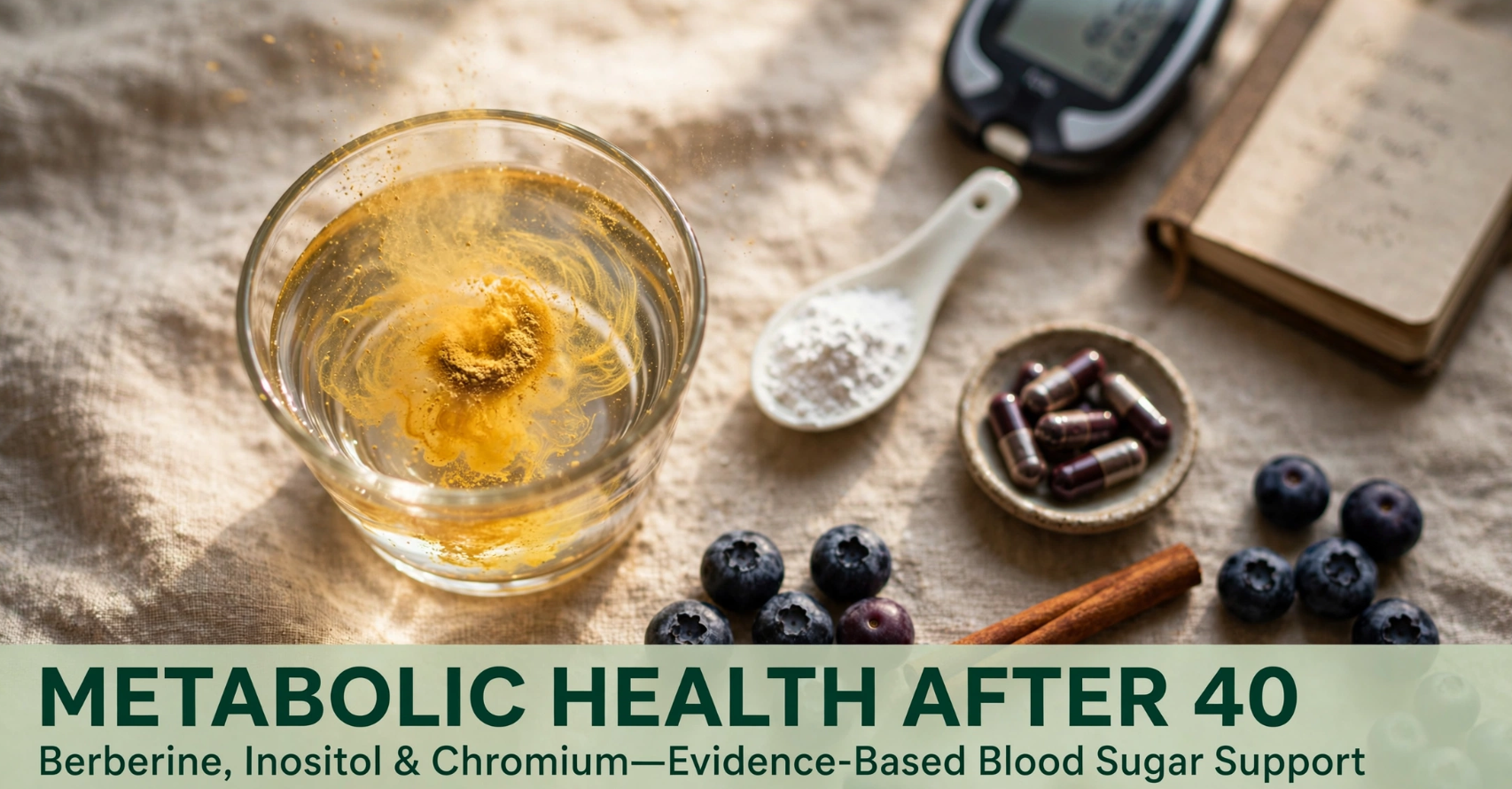
Monitoring: Track fasting glucose with a home glucometer (first thing in the morning). Get a follow-up HbA1c and fasting insulin at 3–4 months. If glucose markers are not improving, reassess the dose, quality of the supplement, and crucially—your diet, exercise, and sleep.
Section 6: The Non-Negotiable Lifestyle Foundation
These supplements cannot outrun a poor metabolic environment. If you are sedentary, eating processed carbohydrates, and sleeping 5 hours a night, no amount of berberine will keep your blood sugar normal.
- Resistance Training (2–3x/week): Builds muscle mass—your body’s primary glucose disposal tissue. A single weightlifting session can improve insulin sensitivity for 24–48 hours.
- Walk After Meals: A 10–15 minute walk after lunch and dinner significantly blunts post-meal glucose spikes by shunting glucose directly into working muscles independent of insulin.
- Protein at Every Meal: Aim for 30–40 g of protein per meal to stimulate muscle protein synthesis and increase satiety. This directly supports blood sugar stability.
- Sleep (7+ Hours): One night of partial sleep deprivation reduces insulin sensitivity by 25–33%. Guard your sleep as aggressively as you guard your diet.
- Whole-Food Carbohydrate Sources: Replace refined grains and sugars with lentils, beans, sweet potatoes, steel-cut oats, and quinoa. The fiber slows glucose absorption and feeds beneficial gut bacteria that support metabolic health.
Section 7: FAQ — Your Top Metabolic Supplement Questions
Q: Can I take berberine with my prescription metformin?
A: This is a conversation for your physician. Berberine and metformin have overlapping mechanisms (AMPK activation). Combined, they can be very effective but may increase the risk of GI distress and hypoglycemia. Some integrative physicians use them together at reduced doses; never do this without medical supervision.
Q: Will these supplements make me lose weight?
A: They are not weight-loss pills. Berberine modestly supports weight loss (2–4 lbs in clinical trials) by improving insulin sensitivity and lipid metabolism. Inositol and chromium support appetite regulation and carbohydrate metabolism. Meaningful fat loss still requires a caloric deficit, higher protein, and consistent exercise. These supplements make the metabolic terrain more favorable, but they don’t melt fat by themselves.
Q: I have normal blood sugar. Can I take these preventively?
A: Berberine is generally reserved for existing dysglycemia (prediabetes, metabolic syndrome) because its action is powerful and it can cause GI side effects. Inositol and chromium are gentler and may be used preventively, especially if you have a strong family history of type 2 diabetes or PCOS.
Q: What’s the difference between myo-inositol and D-chiro-inositol?
A: Myo-inositol is the predominant form in the body and is responsible for the majority of insulin sensitization. D-chiro-inositol is more concentrated in glycogen storage tissues. A 40:1 ratio mimics the body’s natural balance and is the most studied. Myo-inositol alone is also effective and often more cost-effective. Avoid D-chiro-inositol alone; high doses can actually worsen insulin resistance.
Q: Can I take these with the Vigor Five?
A: Yes. Berberine, inositol, or chromium integrate seamlessly with the Vigor Five. Take berberine before meals. Inositol powder can be mixed into your protein shake or water. Chromium can be taken with your D3+K2 and omega-3s in the morning. No known adverse interactions.
The VigorForty Take
The creeping blood sugar that shows up on your lab report in your mid-40s is not a life sentence of metformin and eventual diabetes—if you act early and aggressively. Berberine is the most powerful botanical tool we have, backed by multiple randomized trials demonstrating metformin-comparable glucose lowering. Inositol restores insulin signaling at the cellular level with remarkable safety. Chromium plays a quieter supporting role but can meaningfully help those with strong carbohydrate cravings.
Stack the appropriate supplement onto the bedrock of resistance training, post-meal walks, higher protein intake, and quality sleep. Recheck your labs in three months. Watch the numbers move. Metabolic decline after 40 is real—but it is far from inevitable.
Read Realated Articles
- The Complete Guide to Heart Health: Beyond Omega-3s—CoQ10, Magnesium, Potassium, and Nitric Oxide Support After 40
- The Complete Guide to Eye Health: Lutein, Zeaxanthin, Astaxanthin, and Omega-3s for Protecting Your Vision After 40
- The Complete Guide to Anti-Aging Skin, Hair, and Nails: Collagen, Biotin, Silica, and Antioxidants for a Vibrant Appearance After 40
- The Busy Parent’s Supplement Guide: Staying Energized, Resilient, and Healthy While Raising Kids After 40
- Supplements for Brain Fog and Mental Clarity: Phosphatidylserine, Bacopa Monnieri, and Lion’s Mane—What Actually Works After 40
- The Complete Guide to Digestive Health: Probiotics, Prebiotics, Digestive Enzymes, and Gut-Healing Nutrients After 40
- Supplements for Osteoarthritis: A Natural Pain Management Protocol That Protects Your Joints After 40
- The Sleep-Supplement Connection: Magnesium, Glycine, L-Theanine, and Melatonin—A Complete Protocol for Restorative Rest After 40
- The Ultimate Guide to Healthy Aging: How to Build Your Personalized Supplement Plan at 40, 50, and 60
- Menopause Beyond the Basics: Mood, Bone, Brain, and Sleep Support for the American Woman Over 40
- Selenium, Zinc, and Iodine: The Trace Minerals That Support Thyroid, Immunity, and Longevity After 40
- TSA Rules for Supplements: Traveling with Pills, Powders, and Liquids as an American Over 40
- CoQ10 After 40: Ubiquinone vs. Ubiquinol, Statin Depletion, and Mitochondrial Support
- The VigorForty Guide to Third-Party Testing: USP, NSF, ConsumerLab, and How to Verify Your Supplements Are Safe
- The VigorForty Yearly Blood Work Blueprint: Exactly What to Test and When for Optimal Health After 40
- Metabolic Health Supplements: Berberine, Inositol, and Chromium for Blood Sugar Control After 40
- The Complete Guide to Electrolytes for the Active American Over 40: Sodium, Potassium, Magnesium, and Hydration Science
- Supplement-Drug Interactions Every American Over 40 Must Know: Blood Thinners, Antidepressants, BP Meds, and Statins
- The Busy Professional’s Core 5 Supplements: No Clutter, No Hype, Just What Actually Moves the Needle After 40
- Glycine + NAC: The Under-the-Radar Longevity Stack for Glutathione, Detoxification, and Deep Sleep After 40
- Adaptogens Worth Your Money: Ashwagandha, Rhodiola, and Holy Basil—Evidence and Safe Use for the Stressed 40+ American
- Best Supplements for Joint Health After 40: Curcumin, Collagen, MSM, and Glucosamine—Ranked by Evidence
- NAD+ Precursors (NMN & NR) in 2026: Current Evidence, US Legal Status, and What’s Worth Your Money
- Budget-Friendly Blood Tests to Check Your Actual Micronutrient Gaps (And Skip the Guesswork)
- The Perimenopause Supplement Protocol: Bone, Brain, and Sleep Support for American Women Over 40
- How to Read a Supplement Facts Panel Like a Dietitian: The 5-Step Method for Over-40 Americans
- Protein Powder After 40: Whey, Plant, Collagen, and the Anabolic Threshold You Must Know
- Omega-3s Decoded: EPA, DHA, and How to Read a Fish Oil Label for the Over-40 American
- Creatine After 40: Not Just for Bodybuilders—Brain, Muscle, and Longevity Science
- 5 Magnesium Myths Busted: Glycinate, Citrate, Oxide, and Which One You Actually Need
- Vitamin D3 + K2: The Over-40 American’s Protocol for Bones, Arteries, and Immunity
- The ‘Vigor Five’: Core Daily Supplements for Energy and Longevity After 40
- How Much Protein Do You Actually Need? (The Definite Guide for Satiety and Muscle Retention)
- The Ultimate Guide to Nutrient Density: How to Eat Real Food in America