
Author: Vigor Forty Editorial Team
Medically Reviewed By: Editorial Review Board
Disclaimer: This article is for informational purposes only and is not a substitute for professional medical advice. Read our full Medical Disclaimer.
📌 Key Takeaways
- Polypharmacy Is the New Normal After 40: The average American in their 40s and 50s takes at least one prescription medication. Adding supplements without checking for interactions can dangerously amplify or diminish drug effects.
- Blood Thinners Are the Highest-Risk Category: Warfarin interacts with vitamin K, high-dose omega-3s, and many herbs. Even seemingly benign supplements like garlic or ginkgo can increase bleeding risk.
- Antidepressants and Serotonergic Supplements Don’t Mix: Combining SSRIs or MAOIs with St. John’s Wort, 5-HTP, or SAMe can trigger serotonin syndrome—a potentially life-threatening condition.
- Blood Pressure Medications Have Additive Effects with Minerals: Potassium, magnesium, and omega-3s can lower blood pressure further when combined with antihypertensives, leading to dizziness or fainting. Potassium-sparing diuretics plus potassium supplements can cause dangerous hyperkalemia.
- Statins Deplete CoQ10, and Red Yeast Rice Is Essentially a Natural Statin: Taking CoQ10 is often beneficial, but supplementing with red yeast rice while on a prescription statin can compound side effects and muscle damage.
- Communication Is Your Best Protection: Always bring a complete list of every supplement, protein powder, and herbal tea you consume to your doctor and pharmacist. They cannot flag what they don’t know about.
Introduction: The Hidden Danger in Your Medicine Cabinet
You’ve done the hard work. You’ve read the studies, chosen your Vigor Five, and built a daily supplement protocol that supports your energy, brain, and longevity. But there’s a critical step that even the most diligent health-seekers often overlook: reconciling those supplements with your prescription medications.
According to the CDC, nearly half of all Americans use at least one prescription drug, and 24% take three or more. Among adults aged 40–59, the prevalence is even higher—covering blood pressure pills, cholesterol-lowering statins, antidepressants, acid blockers, and, for some, anticoagulants. The supplement industry operates largely on trust, with labels rarely warning about drug interactions. This means the burden of safety falls squarely on you.
A 2021 study published in the Journal of the American College of Cardiology found that over 15% of patients taking cardiovascular drugs were also using supplements with known potential for adverse interactions—often without their doctor’s knowledge. The consequences can range from reduced drug efficacy (making your medication useless) to dangerous internal bleeding, kidney damage, or a sudden hypertensive crisis. This article arms you with the specific, actionable knowledge to navigate the most common and dangerous pairings, so you can protect yourself and make informed decisions.
Section 1: Why the Over-40 Body Handles Drugs and Supplements Differently
Several age-related physiological changes influence how your body responds to the combination of pharmaceuticals and supplements:
- Slower Liver Metabolism: The cytochrome P450 enzyme system in the liver, which breaks down most drugs and many herbal compounds, becomes less efficient with age. A supplement that mildly inhibits this pathway in a 30-year-old can dramatically slow drug clearance in a 50-year-old, leading to toxic accumulation.
- Reduced Kidney Clearance: Glomerular filtration rate declines with age, meaning water-soluble supplements and drug metabolites hang around longer. This is especially critical for minerals like potassium and magnesium, which are renally excreted.
- Increased Intestinal Permeability (“Leaky Gut”): Subtle changes in gut integrity and transit time can alter absorption of both drugs and supplements, making interactions more unpredictable.
- Polypharmacy Cascades: It often starts with one drug—say, a blood pressure medication that causes a slight cough, leading to a second drug, then a supplement for sleep, then another for inflammation. Each layer increases the web of possible interactions.
The bottom line: the “it’s natural, therefore safe” assumption is not only wrong—it can be deadly. Natural products are pharmacologically active. That’s the entire reason you’re taking them. And when mixed with synthetic pharmaceuticals, they can act like unregulated drugs.
Section 2: Blood Thinners (Anticoagulants and Antiplatelets)
This is the single most critical category because the consequences of a mistake—internal bleeding or a life-threatening clot—can be catastrophic.
Warfarin (Coumadin)
Warfarin works by blocking vitamin K recycling, thereby reducing the production of clotting factors. It has a narrow therapeutic window, and its effect is measured by INR (International Normalized Ratio). Any supplement that changes vitamin K intake, liver metabolism, or platelet function can push INR into a dangerous zone.
- Vitamin K (K1 and K2): This is the most direct antagonist. If you take warfarin, you must keep your vitamin K intake consistent, not necessarily zero. A sudden spike in vitamin K from a salad binge or a new K2 supplement can make warfarin less effective, risking a blood clot. Conversely, dropping your usual vitamin K intake can lead to over-anticoagulation and bleeding. Never add a K2 supplement without your doctor’s knowledge and a plan to adjust warfarin dose.
- Omega-3s (EPA/DHA): High-dose fish oil (>3,000 mg EPA+DHA) can inhibit platelet aggregation and slightly prolong bleeding time. For most people on warfarin, 1,000–2,000 mg is safe under monitoring, but the INR should be checked more frequently when starting or stopping omega-3s.
- Garlic, Ginkgo, Ginseng, and High-Dose Vitamin E: These all possess mild blood-thinning properties and can increase bleeding risk when combined with warfarin or antiplatelet drugs like clopidogrel (Plavix) and aspirin. Avoid them in concentrated supplement form. Small dietary use (e.g., cooking with garlic) is generally fine.
- St. John’s Wort: This herb powerfully induces the CYP3A4 liver enzyme, speeding up the breakdown of warfarin and rendering it less effective—putting you at risk of clots.
Direct Oral Anticoagulants (DOACs: apixaban/Eliquis, rivaroxaban/Xarelto)
These newer drugs have fewer dietary interactions and do not rely on vitamin K antagonism. However, they still carry bleeding risk, and supplements that impair platelet function (omega-3s, garlic, ginkgo, high-dose turmeric/curcumin) can compound that risk. The strongest warnings apply to aspirin and other NSAIDs, which are not supplements but are often taken as OTC pain relievers.
Section 3: Antidepressants (SSRIs, SNRIs, and MAOIs)
Mental health medications are among the most widely prescribed for 40+ Americans, and the risk of serotonin syndrome—a potentially fatal overload of serotonin in the central nervous system—is the primary concern when combining them with certain supplements.
SSRIs (fluoxetine, sertraline, citalopram, escitalopram) and SNRIs (venlafaxine, duloxetine)
- St. John’s Wort: Absolutely contraindicated. It acts similarly to a weak SSRI and can cause serotonin syndrome, rapid heart rate, confusion, and high fever when combined with prescription serotonergic drugs.
- 5-HTP and L-Tryptophan: Direct precursors to serotonin. Combining them with SSRIs increases the risk of serotonin toxicity. Do not use them together without explicit psychiatrist supervision.
- SAMe (S-adenosylmethionine): Involved in neurotransmitter synthesis, SAMe can elevate serotonin levels and should be avoided with SSRIs unless under very close medical supervision.
- Ashwagandha and Rhodiola: These adaptogens have milder, indirect effects on serotonin and GABA. While generally safer, they can theoretically increase the sedative effects of SSRIs or cause additive lethargy. Start low and inform your doctor.
MAOIs (phenelzine, tranylcypromine, selegiline)
These older antidepressants are rare but have the most dangerous interaction profile. They block the enzyme monoamine oxidase, which breaks down tyramine. Combining an MAOI with tyramine-rich foods or supplements (fermented soy, aged cheese, certain protein powders with high free-form tyrosine) can trigger a hypertensive crisis—a blood pressure spike that can cause a stroke. Additionally, anything that raises serotonin is exceptionally dangerous with MAOIs.
Section 4: Blood Pressure Medications (Antihypertensives)
The goal of these drugs is to lower blood pressure. Many supplements do the same, and the additive effect can cause hypotension (lightheadedness, fainting, falls).
- Potassium Supplements and Potassium-Sparing Diuretics (spironolactone, eplerenone): The combination can cause hyperkalemia—dangerously high potassium levels that can stop your heart. Do not take potassium supplements if you’re on these medications without direct, blood-test-guided supervision.
- Magnesium: High-dose magnesium (especially citrate or glycinate above 400 mg) relaxes blood vessels and can amplify the effects of calcium channel blockers, ACE inhibitors, and ARBs. This is usually mild and manageable but can cause dizziness if you stand up too fast. Start low and monitor blood pressure.
- Omega-3s: Their modest blood pressure-lowering effect is generally beneficial, but at high therapeutic doses (>3,000 mg), they can cause symptomatic hypotension in some individuals on multiple BP drugs.
- CoQ10: Commonly recommended alongside statins, CoQ10 can also lower blood pressure slightly, which may be additive with antihypertensives.
- Licorice Root (Glycyrrhiza): Natural licorice root raises blood pressure by inhibiting the enzyme that breaks down cortisol, causing sodium retention and potassium loss. Deglycyrrhizinated licorice (DGL) used for heartburn is safe; whole licorice root extract is not.
- Hawthorn: A traditional heart tonic, hawthorn can dilate blood vessels and increase the force of heart contractions. It can interfere with digoxin and exacerbate the effects of BP meds and nitrates. Use only under professional guidance.
Section 5: Statins (HMG-CoA Reductase Inhibitors)
Millions of Americans over 40 take atorvastatin (Lipitor), rosuvastatin (Crestor), or simvastatin to lower cholesterol. Their primary interaction is with supplements that either compound side effects or mimic the drug’s activity.
- Red Yeast Rice: This is a fermented rice product that naturally contains monacolin K—chemically identical to the statin drug lovastatin. Taking red yeast rice alongside a prescription statin is like doubling your dose and increases the risk of muscle pain, weakness, and rare but serious rhabdomyolysis. Do not combine them.
- CoQ10: Statins deplete the body’s own production of CoQ10, which is essential for mitochondrial energy production in muscle cells. A depletion of CoQ10 is one proposed mechanism for statin-related myalgia (muscle pain). Supplementing 100–200 mg of ubiquinol or ubiquinone daily is widely recommended to mitigate this, and it does not interfere with the statin’s cholesterol-lowering effect.
- Grapefruit (and Seville Oranges): Not a supplement, but so commonly consumed that it warrants mention. Grapefruit inhibits CYP3A4, dramatically increasing blood levels of certain statins (especially atorvastatin and simvastatin) and increasing the risk of muscle and liver damage. If your statin label says to avoid grapefruit, also avoid grapefruit-flavored supplements and extracts.
- Niacin (Vitamin B3): High-dose niacin lowers cholesterol but has not been shown to improve cardiovascular outcomes when added to statins, and it increases the risk of flushing, liver toxicity, and glucose intolerance. The combination is not recommended outside of rare, physician-managed cases.
Section 6: Other Common Interactions You Must Know
- Thyroid Hormone (levothyroxine, Synthroid): Calcium, iron, magnesium, and zinc supplements can bind to the medication in the gut and reduce its absorption by up to 30%. Take thyroid medication on an empty stomach, at least 4 hours apart from any mineral supplements or antacids.
- Metformin (for diabetes/prediabetes): Long-term metformin use can deplete vitamin B12. Supplementing with 1,000 mcg of methylcobalamin B12 daily is recommended and safe. Monitor B12 levels annually.
- Proton Pump Inhibitors (omeprazole, esomeprazole): Long-term PPI use reduces stomach acid, impairing the absorption of magnesium, calcium, and vitamin B12. Magnesium glycinate or citrate supplementation is often needed. B12 monitoring is also wise.
- Immunosuppressants (tacrolimus, cyclosporine): St. John’s Wort can reduce drug levels and risk organ rejection. Even ashwagandha and echinacea, which modulate immune function, should be discussed with a transplant specialist.
Section 7: The VigorForty Safe Supplementing Protocol
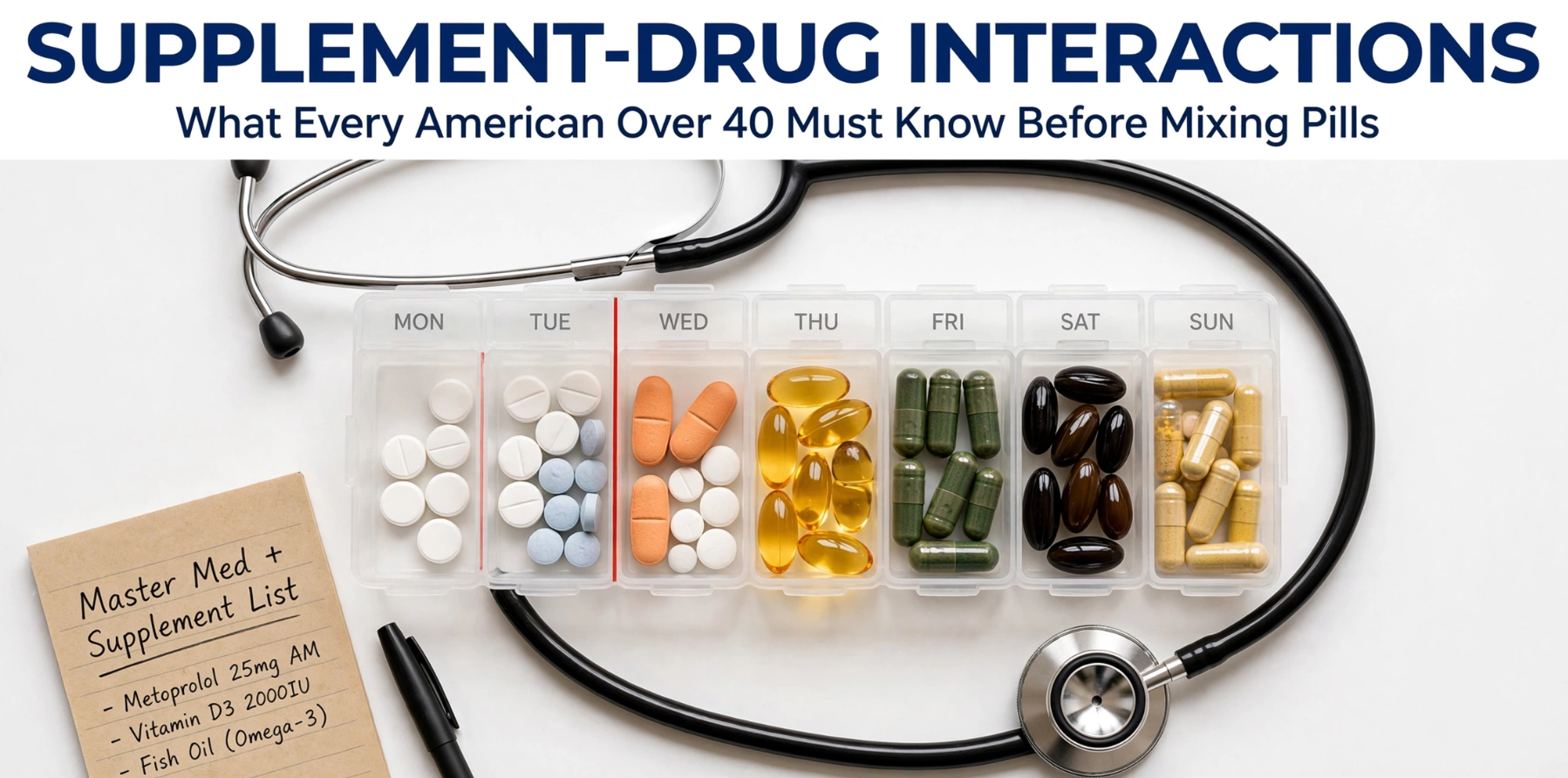
1. Create a Master List
Write down every single substance you take: prescription drugs, OTC pain relievers, all vitamins, minerals, herbs, protein powders, and even daily teas (e.g., licorice, tulsi, green tea extract). Include doses and frequency.
2. Share It With Your Doctor and Pharmacist
At every appointment, hand over this list. Do not assume they’ll ask. Pharmacists are often more knowledgeable about interactions than physicians and can provide a second safety check.
3. Use a Reliable Interaction Checker
Before starting any new supplement, run it through an online drug interaction checker such as:
- Medscape Drug Interaction Checker (free, comprehensive)
- Drugs.com Interaction Checker (user-friendly)
- Epocrates (used by clinicians)
These tools allow you to input your entire medication list and instantly flag contraindications. No tool replaces professional advice, but it’s a powerful first screen.
4. Start Low, Go Slow, and Introduce One at a Time
If you add a new supplement and a week later you feel lightheaded, have GI distress, or experience any unusual symptom, you’ll know exactly what’s causing it—provided you didn’t change five things at once. Add one supplement, observe for 3–5 days, then add the next.
5. Know the Warning Signs
Seek immediate medical attention if you experience:
- Unexplained bruising, bleeding gums, or blood in stool (possible over-anticoagulation)
- Severe muscle pain, especially with dark urine (possible statin-related rhabdomyolysis)
- Rapid heart rate, confusion, high fever, and agitation (possible serotonin syndrome)
- Chest pain, severe headache, blurred vision (possible hypertensive crisis)
FAQ: Your Most-Asked Interaction Questions
Q: Can I take all my supplements at the same time as my morning prescriptions?
A: In many cases, yes, but there are important exceptions. Thyroid medication must be taken on an empty stomach, separate from minerals. Potassium and magnesium can slow gastric emptying, potentially affecting absorption of some drugs. As a rule, take thyroid meds alone, and if in doubt, separate supplements from prescriptions by 2 hours.
Q: My doctor told me to stop all supplements before surgery. Which ones, and for how long?
A: Blood-thinning supplements (omega-3s, vitamin E, garlic, ginkgo, ginseng, curcumin) should typically be discontinued 1–2 weeks before surgery. Stimulants and adaptogens may also be stopped. Your surgeon or anesthesiologist will give you a specific list based on your procedure and medications.
Q: Is it safe to take supplements with blood pressure meds if I monitor my BP at home?
A: Yes, this is often safe and even beneficial. Magnesium, omega-3s, and CoQ10 can all support healthy blood pressure. Use a home BP monitor, keep a log, and alert your doctor if your readings consistently drop below 110/70 or if you experience dizziness. Your prescription dose may need adjustment.
Q: Can I drink herbal tea without worrying about interactions?
A: Most herbal teas consumed in normal amounts (1–3 cups/day) are benign. However, concentrated extracts (pills, tinctures) are far more potent. Licorice tea, for example, can raise blood pressure if consumed daily in large quantities. Use common sense, and add any daily concentrated herbal products to your master list.
The VigorForty Take
The supplement-drug interaction landscape is not a minefield designed to keep you from optimizing your health—but it is a serious terrain that demands respect, not fear. The same nutrients that support your longevity (vitamin K2 for bones, magnesium for sleep, omega-3s for your brain) can interact with the medications that keep your heart rhythm steady or your blood from clotting. The difference between a therapeutic combination and a dangerous one is knowledge, communication, and a methodical approach.
Take your master list to your next doctor’s visit. Run a quick interaction check before adding anything new. And never, ever assume that “natural” means “safe to mix with my prescription.” Your health is a finely tuned system—give it the informed stewardship it deserves.
Read Realated Articles
- The Complete Guide to Heart Health: Beyond Omega-3s—CoQ10, Magnesium, Potassium, and Nitric Oxide Support After 40
- The Complete Guide to Eye Health: Lutein, Zeaxanthin, Astaxanthin, and Omega-3s for Protecting Your Vision After 40
- The Complete Guide to Anti-Aging Skin, Hair, and Nails: Collagen, Biotin, Silica, and Antioxidants for a Vibrant Appearance After 40
- The Busy Parent’s Supplement Guide: Staying Energized, Resilient, and Healthy While Raising Kids After 40
- Supplements for Brain Fog and Mental Clarity: Phosphatidylserine, Bacopa Monnieri, and Lion’s Mane—What Actually Works After 40
- The Complete Guide to Digestive Health: Probiotics, Prebiotics, Digestive Enzymes, and Gut-Healing Nutrients After 40
- Supplements for Osteoarthritis: A Natural Pain Management Protocol That Protects Your Joints After 40
- The Sleep-Supplement Connection: Magnesium, Glycine, L-Theanine, and Melatonin—A Complete Protocol for Restorative Rest After 40
- The Ultimate Guide to Healthy Aging: How to Build Your Personalized Supplement Plan at 40, 50, and 60
- Menopause Beyond the Basics: Mood, Bone, Brain, and Sleep Support for the American Woman Over 40
- Selenium, Zinc, and Iodine: The Trace Minerals That Support Thyroid, Immunity, and Longevity After 40
- TSA Rules for Supplements: Traveling with Pills, Powders, and Liquids as an American Over 40
- CoQ10 After 40: Ubiquinone vs. Ubiquinol, Statin Depletion, and Mitochondrial Support
- The VigorForty Guide to Third-Party Testing: USP, NSF, ConsumerLab, and How to Verify Your Supplements Are Safe
- The VigorForty Yearly Blood Work Blueprint: Exactly What to Test and When for Optimal Health After 40
- Metabolic Health Supplements: Berberine, Inositol, and Chromium for Blood Sugar Control After 40
- The Complete Guide to Electrolytes for the Active American Over 40: Sodium, Potassium, Magnesium, and Hydration Science
- Supplement-Drug Interactions Every American Over 40 Must Know: Blood Thinners, Antidepressants, BP Meds, and Statins
- The Busy Professional’s Core 5 Supplements: No Clutter, No Hype, Just What Actually Moves the Needle After 40
- Glycine + NAC: The Under-the-Radar Longevity Stack for Glutathione, Detoxification, and Deep Sleep After 40
- Adaptogens Worth Your Money: Ashwagandha, Rhodiola, and Holy Basil—Evidence and Safe Use for the Stressed 40+ American
- Best Supplements for Joint Health After 40: Curcumin, Collagen, MSM, and Glucosamine—Ranked by Evidence
- NAD+ Precursors (NMN & NR) in 2026: Current Evidence, US Legal Status, and What’s Worth Your Money
- Budget-Friendly Blood Tests to Check Your Actual Micronutrient Gaps (And Skip the Guesswork)
- The Perimenopause Supplement Protocol: Bone, Brain, and Sleep Support for American Women Over 40
- How to Read a Supplement Facts Panel Like a Dietitian: The 5-Step Method for Over-40 Americans
- Protein Powder After 40: Whey, Plant, Collagen, and the Anabolic Threshold You Must Know
- Omega-3s Decoded: EPA, DHA, and How to Read a Fish Oil Label for the Over-40 American
- Creatine After 40: Not Just for Bodybuilders—Brain, Muscle, and Longevity Science
- 5 Magnesium Myths Busted: Glycinate, Citrate, Oxide, and Which One You Actually Need
- Vitamin D3 + K2: The Over-40 American’s Protocol for Bones, Arteries, and Immunity
- The ‘Vigor Five’: Core Daily Supplements for Energy and Longevity After 40
- How Much Protein Do You Actually Need? (The Definite Guide for Satiety and Muscle Retention)
- The Ultimate Guide to Nutrient Density: How to Eat Real Food in America