
Author: Vigor Forty Editorial Team
Medically Reviewed By: Editorial Review Board
Disclaimer: This article is for informational purposes only and is not a substitute for professional medical advice. Read our full Medical Disclaimer.
📌 Key Takeaways
- Age-Related Eye Changes Begin Early: Macular pigment density starts declining in your 30s, and the risk of age-related macular degeneration (AMD), cataracts, and dry eye syndrome rises sharply after 40. Protective nutrition during this window can preserve vision for decades.
- The AREDS2 Formula Is the Gold Standard: The Age-Related Eye Disease Study 2 (AREDS2) proved that a specific combination of lutein, zeaxanthin, vitamin C, vitamin E, and zinc significantly slows the progression of AMD in those at high risk. This formula is not a general preventive for everyone, but it is a critical intervention for those with early signs.
- Lutein and Zeaxanthin Are Your Internal Sunglasses: These two carotenoids concentrate in the macula, where they filter harmful blue light and neutralize free radicals. They also improve contrast sensitivity, reduce glare, and protect against digital eye strain—relevant for every screen-bound American over 40.
- Omega-3s Combat Dry Eye and Retinal Inflammation: DHA is a structural fat in the retina. Adequate omega-3 intake supports tear film stability, reduces ocular surface inflammation, and may lower the risk of AMD. Omega-3s are also essential for retinal cell membrane fluidity.
- Astaxanthin Offers Multi-Layered Protection: This potent antioxidant crosses the blood-retinal barrier, reduces eye fatigue from screens, improves tear production, and protects retinal cells from UV and oxidative damage.
Introduction: Your Eyes Are Windows to Your Longevity
You schedule mammograms and colonoscopies. You check your blood pressure and cholesterol. But when was your last comprehensive dilated eye exam? For many Americans over 40, eye health is an afterthought—until they notice their night driving vision fading, their eyes feeling gritty and dry after hours on screens, or the blur that requires them to hold a menu at arm’s length.
Your eyes are metabolically intense organs with a high oxygen demand and constant exposure to light-generated oxidative stress. The macula—a tiny, specialized area at the center of the retina responsible for sharp central vision—is especially vulnerable. Over decades, cumulative photo-oxidative damage depletes the macular pigment that protects it. Age-related macular degeneration (AMD) is the leading cause of irreversible blindness in Americans over 50, affecting an estimated 11 million people.
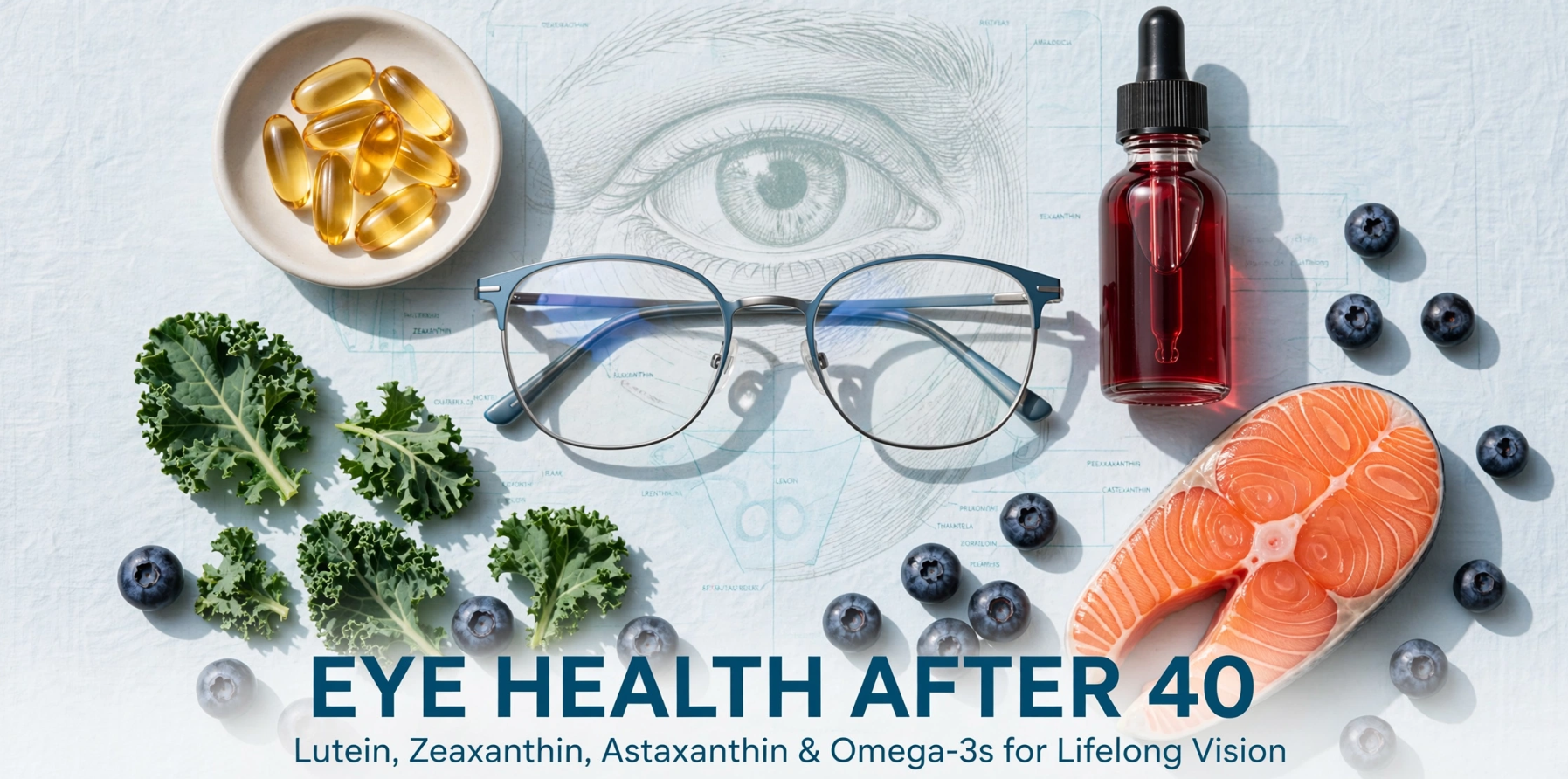
But AMD and other age-related eye diseases are not inevitable. Landmark clinical trials, most notably AREDS2, have proven that specific nutritional interventions can dramatically slow disease progression and, in some cases, reduce risk. This article gives you a complete, evidence-grounded guide to the supplements that matter most—lutein, zeaxanthin, astaxanthin, omega-3s, and the full AREDS2 formula—so you can protect your vision with the same rigor you apply to your heart and brain.
Section 1: The Aging Eye—What’s Happening After 40
Several interconnected changes occur in the eye with age. Understanding them helps you see why these specific nutrients matter.
Macular Pigment Decline
The macula contains a yellow pigment composed entirely of lutein and zeaxanthin, two carotenoids obtained exclusively from the diet. This pigment acts as an internal blue-light filter and antioxidant shield. After 40, macular pigment optical density (MPOD) begins to decline, leaving the retina increasingly vulnerable to phototoxic damage. Low MPOD is a strong risk factor for AMD.
Retinal Oxidative Stress
The retina consumes oxygen at a rate higher than any other tissue. Light exposure, especially high-energy blue light (from sunlight and digital screens), generates reactive oxygen species that damage the delicate photoreceptor cells and the retinal pigment epithelium (RPE) that nourishes them. Over decades, this oxidative damage accumulates as drusen—yellow deposits under the retina that are the hallmark of AMD.
Inflammation and Vascular Changes
Chronic systemic inflammation contributes to both “wet” AMD (abnormal blood vessel growth under the retina) and diabetic retinopathy. The retinal blood vessels are exquisitely sensitive to inflammatory cytokines and endothelial dysfunction.
Tear Film Instability
The tear film lubricates the ocular surface, supplies nutrients, and protects against infection. After 40, meibomian gland function declines, tear production often decreases, and the lipid layer that prevents tear evaporation becomes thinner. The result is dry eye syndrome, affecting millions and causing discomfort, fluctuating vision, and a gritty sensation.
Lens Clouding (Cataracts)
The crystalline lens of the eye slowly becomes less transparent as proteins oxidize and clump together. Oxidative stress is the primary driver of cataract formation, and antioxidants that protect the lens—particularly vitamin C and lutein—can reduce risk.
Section 2: The AREDS2 Formula—What It Is and Who Needs It
No conversation about eye supplements can begin without the AREDS trials. The Age-Related Eye Disease Study, sponsored by the National Eye Institute, is the largest and most definitive series of clinical trials on nutritional supplementation for AMD.
AREDS (2001): The original study found that a high-dose combination of antioxidants (vitamin C 500 mg, vitamin E 400 IU, beta-carotene 15 mg) plus zinc (80 mg as zinc oxide) with copper (2 mg to prevent copper deficiency from high zinc) reduced the risk of progression from intermediate to advanced AMD by 25% over 5 years. However, beta-carotene increased the risk of lung cancer in smokers and former smokers.
AREDS2 (2013): The follow-up study replaced beta-carotene with lutein (10 mg) and zeaxanthin (2 mg) and tested the addition of omega-3s (EPA/DHA 1,000 mg). The lutein/zeaxanthin substitution was equally effective and safer for all populations. Omega-3s did not further reduce AMD progression in this specific high-dose formula context, but they remain important for overall eye health. The final AREDS2 formula is:
| Nutrient | AREDS2 Dose | Purpose |
|---|---|---|
| Vitamin C | 500 mg | Aqueous humor antioxidant; concentrated in the lens. |
| Vitamin E | 400 IU (268 mg alpha-tocopherol) | Lipid-soluble antioxidant; protects retinal cell membranes. |
| Zinc (as zinc oxide) | 80 mg | Cofactor for retinal antioxidant enzymes; concentrated in the RPE. |
| Copper (as cupric oxide) | 2 mg | Prevents copper-deficiency anemia from high-dose zinc. |
| Lutein | 10 mg | Macular pigment; blue-light filter; antioxidant. |
| Zeaxanthin | 2 mg | Macular pigment; concentrated in the central fovea. |
Who Should Take the AREDS2 Formula:
- Individuals with intermediate AMD in one or both eyes (multiple medium drusen, one or more large drusen, or geographic atrophy not involving the fovea).
- Individuals with advanced AMD in one eye (to protect the other eye).
- The formula is not recommended for those with early AMD or no AMD, as the benefits are not proven for early-stage disease and the high zinc dose can cause GI upset and copper imbalances over very long periods.
Important Safety Note: The AREDS2 formula is a therapeutic dose, not a general multivitamin. The 80 mg zinc dose significantly exceeds the tolerable upper intake level (40 mg) and should only be used under medical supervision for the indicated condition. Do not self-prescribe this formula if you have no evidence of intermediate AMD. A comprehensive dilated eye exam can determine your AMD stage.
Section 3: Lutein and Zeaxanthin—Your Daily Blue-Light Defense
Even if you don’t need the full AREDS2 formula, lutein and zeaxanthin are critical for everyday eye health, especially for the screen-bound American.
Mechanism:
Lutein and zeaxanthin selectively absorb blue light (peak ~460 nm), the most energetic and damaging wavelength that reaches the retina from sunlight and digital devices. They also quench singlet oxygen and free radicals, preventing lipid peroxidation in the highly polyunsaturated retinal membranes. Zeaxanthin preferentially concentrates in the fovea, the very center of the macula responsible for the sharpest acuity. Lutein is distributed throughout the peripheral macula.
Benefits Beyond AMD:
- Contrast Sensitivity and Glare Recovery: Higher MPOD improves contrast sensitivity—the ability to distinguish objects against a background—and speeds up recovery from bright light glare. This translates directly to safer night driving.
- Digital Eye Strain: Lutein and zeaxanthin supplementation may reduce symptoms of prolonged screen use, including eye fatigue, blurred vision, and headache.
- Cataract Prevention: Observational studies consistently link higher dietary and plasma lutein/zeaxanthin levels with a lower risk of cataract formation and cataract surgery.
Dose:
- General prevention and screen use: 10–20 mg lutein + 2–4 mg zeaxanthin daily. Many supplements provide this as a blend. Lutein and zeaxanthin are fat-soluble; take with a meal containing fat.
- Food Sources: Dark leafy greens are the richest sources. One cup of cooked kale provides ~24 mg lutein; cooked spinach ~20 mg; collard greens ~15 mg. Egg yolks contain both lutein and zeaxanthin with high bioavailability due to the fat content. A diet rich in greens and eggs can achieve protective levels without supplementation, but the average American intake is well below 10 mg/day.
Safety: No known toxicity. High intake may cause harmless, reversible skin yellowing (carotenoderma). Lutein and zeaxanthin are Generally Recognized as Safe (GRAS).
Section 4: Omega-3s (EPA/DHA) for Dry Eye and Retinal Health
We’ve extensively covered omega-3s for heart and brain. They are equally essential for the eye.
DHA in the Retina:
DHA constitutes 50–60% of the fatty acids in the rod photoreceptor outer segment membranes. This high concentration is required for the rapid conformational changes in rhodopsin that enable phototransduction—the conversion of light to electrical signals. A deficiency of DHA impairs retinal function.
Dry Eye Syndrome:
Omega-3s, particularly EPA, reduce inflammation in the lacrimal and meibomian glands, improving both the quantity and quality of tears. A 2018 meta-analysis of 17 randomized trials concluded that omega-3 supplementation significantly improves dry eye symptoms, tear breakup time, and tear osmolarity. The clinical benefit is modest but meaningful for the millions who suffer from gritty, burning, watery eyes. Note: A large 2018 trial (DREAM study) using a specific omega-3 formulation (EPA 2,000 mg + DHA 1,000 mg) did not show superiority over placebo in a population with moderate-to-severe dry eye, but the placebo (olive oil) may have been active, and subsequent sub-analyses found benefits in certain subgroups. The overall evidence remains supportive.
AMD and Diabetic Retinopathy:
Observational studies link higher omega-3 intake with lower risk of AMD. Omega-3s reduce retinal inflammation and pathological angiogenesis (abnormal blood vessel growth). While the AREDS2 study did not show added benefit of omega-3s on top of the AREDS formula for AMD progression, omega-3s remain important for overall retinal health and vascular protection.
Dose:
- Dry eye: 1,000–2,000 mg combined EPA+DHA daily. Some eye-specific formulations include a small amount of GLA (gamma-linolenic acid, from black currant seed oil) which may add benefit.
- General retinal health: 1,000 mg combined EPA+DHA daily, consistent with the Vigor Five dose.
Section 5: Astaxanthin—The Retina’s Sunscreen
Astaxanthin is a deep red carotenoid produced by the microalgae Haematococcus pluvialis. It is one of nature’s most potent lipid-soluble antioxidants, with a unique molecular structure that allows it to span cell membranes and protect both the interior and exterior. We’ve covered its skin benefits; it is equally impressive for the eye.
Mechanism in the Eye:
Astaxanthin crosses the blood-retinal barrier and accumulates in the retina. It neutralizes reactive oxygen species, reduces inflammation, and improves blood flow to the choroid (the vascular layer nourishing the outer retina). It also relaxes the ciliary muscle, which controls lens focusing, potentially reducing eye strain from prolonged near work.
Clinical Evidence:
- Eye Fatigue and Accommodation: A 2002 randomized trial in adults with heavy screen use found that 6 mg of astaxanthin daily for 4 weeks significantly reduced eye fatigue, blurred vision, and dry eye sensation compared to placebo. Accommodation amplitude (the ability to shift focus between distances) improved.
- Retinal Blood Flow: A 2005 study showed that astaxanthin (6 mg/day) increased choroidal blood flow in healthy adults, suggesting enhanced nutrient and oxygen delivery to the retina.
- AMD Protection: Animal studies show astaxanthin protects retinal cells from light-induced damage and reduces drusen-like deposits. Human trials for AMD are smaller and shorter-term but suggest a protective role.
Dose: 4–12 mg daily, taken with a fat-containing meal. For eye-specific benefits, 6–12 mg is the typical dose.
Safety: Very safe. No known toxicity. No drug interactions. High doses may cause a harmless reddish tint to stool. Natural astaxanthin from H. pluvialis is preferred over synthetic forms.
Section 6: Additional Supporting Nutrients
Vitamin C and Vitamin E
Both are already in the AREDS2 formula at high doses for AMD patients. For the general 40+ population, obtaining these antioxidants from food (vitamin C from citrus, bell peppers; vitamin E from nuts, seeds) is sufficient for eye health. Routine high-dose supplementation is unnecessary unless AMD risk is present.
Zinc
Zinc is concentrated in the retinal pigment epithelium and is a cofactor for superoxide dismutase, catalase, and other antioxidant enzymes. Dietary zinc (oysters, beef, pumpkin seeds) supports eye health. High-dose zinc (80 mg) is reserved for the AREDS2 formula and should not be taken casually.
Bilberry and Anthocyanins
Bilberry extract is traditionally used for night vision. The evidence is inconsistent and generally weak. While anthocyanins from berries are beneficial for vascular health, they are not a substitute for lutein, zeaxanthin, and omega-3s for eye-specific outcomes. Enjoy berries for overall health, but do not rely on bilberry as a primary vision supplement.
Section 7: The VigorForty Eye Health Protocol
For General Prevention (All 40+ Adults, No AMD Diagnosis):
| Supplement | Daily Dose | Purpose |
|---|---|---|
| Lutein + Zeaxanthin | 10–20 mg lutein + 2–4 mg zeaxanthin | Macular pigment, blue-light filtration, contrast sensitivity |
| Omega-3s (EPA/DHA) | 1,000–2,000 mg combined | Retinal structure, dry eye prevention, anti-inflammatory |
| Astaxanthin (optional, for screen-heavy users) | 6–12 mg | Eye fatigue, accommodation, retinal antioxidant protection |
For Diagnosed Intermediate AMD (Under Ophthalmologist Supervision):
| Supplement | Daily Dose |
|---|---|
| Full AREDS2 Formula | Vitamin C 500 mg, Vitamin E 400 IU, Zinc 80 mg, Copper 2 mg, Lutein 10 mg, Zeaxanthin 2 mg |
| Omega-3s | 1,000–2,000 mg EPA+DHA (continue for overall health; may not alter AMD progression but supports retinal health) |
| Astaxanthin | Optional add-on; discuss with your ophthalmologist |
Lifestyle Integration:
- Annual Dilated Eye Exam: After age 40, a comprehensive dilated eye exam every 1–2 years is the only way to detect early AMD, glaucoma, and other silent conditions. If you have risk factors (family history, smoking, hypertension, diabetes), annual exams are non-negotiable.
- Blue-Light Protection from Screens: Follow the 20-20-20 rule: every 20 minutes, look at something 20 feet away for 20 seconds. Consider blue-light filtering glasses for evening screen use. Lutein and zeaxanthin provide internal filtration, but behavioral changes reduce overall exposure.
- UV-Blocking Sunglasses: Wear high-quality sunglasses that block 100% of UVA and UVB rays every day, year-round. UV light accelerates cataract formation and retinal damage.
- Do Not Smoke: Smoking is the single strongest modifiable risk factor for AMD. It triples the risk and accelerates disease progression. If you smoke, cessation is the most impactful eye health intervention you can make.
- Blood Sugar Control: Diabetes is the leading cause of blindness in working-age Americans. Maintaining a healthy HbA1c (<5.4%) through diet, exercise, and, if needed, metformin or berberine protects the retinal microvasculature from diabetic retinopathy.
- Dietary Greens and Fatty Fish: Aim for at least two servings of fatty fish (salmon, sardines, mackerel) per week and dark leafy greens (kale, spinach, collards) daily. This dietary foundation can achieve many of the same protective effects as supplementation.
Section 8: FAQ—Your Top Eye Health Questions
Q: Can supplements reverse existing macular degeneration?
A: No. Supplements can slow or halt progression from intermediate to advanced AMD, but they cannot reverse damage that has already occurred. Central vision that has been lost to geographic atrophy or disciform scarring cannot be restored. This is why early detection and intervention are crucial.
Q: I take the AREDS2 formula. Do I still need my regular Vigor Five supplements?
A: Yes, with adjustments. The AREDS2 formula provides high doses of vitamin C, E, zinc, and copper. You do not need additional high-dose C, E, or zinc beyond what’s in AREDS2. Continue your D3+K2, magnesium glycinate, omega-3s, creatine, and protein. The omega-3 dose from AREDS2 (if any) is often low; you may continue additional omega-3s for dry eye and general health. Always discuss your full supplement list with your ophthalmologist.
Q: Will blue light glasses replace the need for lutein and zeaxanthin?
A: No. Blue light glasses filter external light entering the eye. Lutein and zeaxanthin filter light at the retinal level and provide antioxidant protection. They are complementary, not interchangeable.
Q: Can I get enough lutein from food?
A: Yes, if you consistently eat 1–2 cups of cooked dark leafy greens daily. Most Americans do not. A supplement ensures a consistent intake, especially during winter or busy periods when fresh greens are less available.
Q: Is astaxanthin safe to take with fish oil?
A: Yes. They are both fat-soluble and work synergistically. Astaxanthin protects against oxidation of the omega-3 fatty acids in the retina. Take them together with a fat-containing meal.
The VigorForty Take
Your vision is precious and vulnerable. The same oxidative stress and inflammation that age your heart, brain, and joints also threaten your retinas and lenses. A targeted eye health protocol—lutein and zeaxanthin to rebuild your macular pigment, omega-3s to nourish retinal cells and soothe dry eyes, and astaxanthin for deep antioxidant protection—is a wise investment in your long-term independence and quality of life. If you are among the millions with early signs of AMD, the AREDS2 formula is a proven medical intervention, not just a supplement, and should be taken seriously under your eye doctor’s guidance.
Get your eyes examined annually. Wear your sunglasses. Eat your greens. Take your supplements. The ability to read a book, recognize your grandchildren’s faces, and drive safely into your 80s and beyond is not a given—it’s something you actively protect, starting now.
Read Realated Articles
- The Complete Guide to Heart Health: Beyond Omega-3s—CoQ10, Magnesium, Potassium, and Nitric Oxide Support After 40
- The Complete Guide to Eye Health: Lutein, Zeaxanthin, Astaxanthin, and Omega-3s for Protecting Your Vision After 40
- The Complete Guide to Anti-Aging Skin, Hair, and Nails: Collagen, Biotin, Silica, and Antioxidants for a Vibrant Appearance After 40
- The Busy Parent’s Supplement Guide: Staying Energized, Resilient, and Healthy While Raising Kids After 40
- Supplements for Brain Fog and Mental Clarity: Phosphatidylserine, Bacopa Monnieri, and Lion’s Mane—What Actually Works After 40
- The Complete Guide to Digestive Health: Probiotics, Prebiotics, Digestive Enzymes, and Gut-Healing Nutrients After 40
- Supplements for Osteoarthritis: A Natural Pain Management Protocol That Protects Your Joints After 40
- The Sleep-Supplement Connection: Magnesium, Glycine, L-Theanine, and Melatonin—A Complete Protocol for Restorative Rest After 40
- The Ultimate Guide to Healthy Aging: How to Build Your Personalized Supplement Plan at 40, 50, and 60
- Menopause Beyond the Basics: Mood, Bone, Brain, and Sleep Support for the American Woman Over 40
- Selenium, Zinc, and Iodine: The Trace Minerals That Support Thyroid, Immunity, and Longevity After 40
- TSA Rules for Supplements: Traveling with Pills, Powders, and Liquids as an American Over 40
- CoQ10 After 40: Ubiquinone vs. Ubiquinol, Statin Depletion, and Mitochondrial Support
- The VigorForty Guide to Third-Party Testing: USP, NSF, ConsumerLab, and How to Verify Your Supplements Are Safe
- The VigorForty Yearly Blood Work Blueprint: Exactly What to Test and When for Optimal Health After 40
- Metabolic Health Supplements: Berberine, Inositol, and Chromium for Blood Sugar Control After 40
- The Complete Guide to Electrolytes for the Active American Over 40: Sodium, Potassium, Magnesium, and Hydration Science
- Supplement-Drug Interactions Every American Over 40 Must Know: Blood Thinners, Antidepressants, BP Meds, and Statins
- The Busy Professional’s Core 5 Supplements: No Clutter, No Hype, Just What Actually Moves the Needle After 40
- Glycine + NAC: The Under-the-Radar Longevity Stack for Glutathione, Detoxification, and Deep Sleep After 40
- Adaptogens Worth Your Money: Ashwagandha, Rhodiola, and Holy Basil—Evidence and Safe Use for the Stressed 40+ American
- Best Supplements for Joint Health After 40: Curcumin, Collagen, MSM, and Glucosamine—Ranked by Evidence
- NAD+ Precursors (NMN & NR) in 2026: Current Evidence, US Legal Status, and What’s Worth Your Money
- Budget-Friendly Blood Tests to Check Your Actual Micronutrient Gaps (And Skip the Guesswork)
- The Perimenopause Supplement Protocol: Bone, Brain, and Sleep Support for American Women Over 40
- How to Read a Supplement Facts Panel Like a Dietitian: The 5-Step Method for Over-40 Americans
- Protein Powder After 40: Whey, Plant, Collagen, and the Anabolic Threshold You Must Know
- Omega-3s Decoded: EPA, DHA, and How to Read a Fish Oil Label for the Over-40 American
- Creatine After 40: Not Just for Bodybuilders—Brain, Muscle, and Longevity Science
- 5 Magnesium Myths Busted: Glycinate, Citrate, Oxide, and Which One You Actually Need
- Vitamin D3 + K2: The Over-40 American’s Protocol for Bones, Arteries, and Immunity
- The ‘Vigor Five’: Core Daily Supplements for Energy and Longevity After 40
- How Much Protein Do You Actually Need? (The Definite Guide for Satiety and Muscle Retention)
- The Ultimate Guide to Nutrient Density: How to Eat Real Food in America