
Author: Vigor Forty Editorial Team
Medically Reviewed By: Editorial Review Board
Disclaimer: This article is for informational purposes only and is not a substitute for professional medical advice. Read our full Medical Disclaimer.
📌 Key Takeaways
- NAD+ Declines With Age: After 40, levels of this critical coenzyme can drop by 50% or more, impairing mitochondrial energy production, DNA repair, and cellular stress resistance.
- NR and NMN Are the Two Leading Precursors: Both convert into NAD+ inside cells, but they take slightly different pathways. Human trials show they can raise NAD+ levels, but the long-term anti-aging benefits in healthy humans are still being explored.
- US Regulatory Status Is Split: Nicotinamide riboside (NR) is generally recognized as safe (GRAS) and widely available. Nicotinamide mononucleotide (NMN) is currently in a regulatory gray area—the FDA has challenged its status as a dietary supplement, though it remains available from some suppliers.
- Results Are Modest, Not Miraculous: Existing studies suggest mild improvements in blood pressure, insulin sensitivity, and aerobic capacity in middle-aged or older adults. No human study has proven life extension.
- Cost vs. Value Is Real: High-quality NR can cost $1–$3 per day; NMN often more. For those on a budget, the Vigor Five Foundation offers more proven bang for your buck. NAD+ precursors are an optional, advanced longevity add-on.
Introduction: The Most Hyped Longevity Molecule—Can It Deliver?
If you’ve spent any time in longevity circles, you’ve heard the acronyms: NAD+, NR, NMN. Social media influencers, biohacking podcasts, and supplement brands have declared NAD+ the fountain of youth—a coenzyme so fundamental that boosting it could reverse aspects of aging at the cellular level. The narrative is compelling: replenish what time depletes, and your cells will behave like younger versions of themselves.
There’s real science behind the excitement, but also a great deal of marketing noise, regulatory chaos, and inflated expectations. As of 2026, the US supplement market for NAD+ precursors is split between a legally stable form (nicotinamide riboside, or NR) and a scientifically popular but legally contested form (nicotinamide mononucleotide, or NMN). This article gives you a sober, evidence-driven tour of what these molecules do, what human trials actually show, and how to decide whether—and which—to buy without getting caught in the hype or a regulatory crackdown.
Section 1: What Is NAD+ and Why Should a 40+ Adult Care?
Nicotinamide adenine dinucleotide (NAD+) is a coenzyme found in every living cell. It’s essential for two fundamental processes:
- Energy Production: NAD+ shuttles electrons in the mitochondria, enabling the production of ATP, the cell’s energy currency. Without sufficient NAD+, mitochondria cannot efficiently convert food into energy.
- Cellular Repair and Resilience: NAD+ is consumed by sirtuins (longevity-associated proteins that regulate DNA repair and stress resistance) and PARPs (enzymes that fix DNA damage). It is also needed for the maintenance of telomeres, the protective caps on chromosomes.
After 40, NAD+ levels decline markedly. Several mechanisms drive this drop: rising levels of an enzyme called CD38 that breaks down NAD+, increased DNA damage that consumes NAD+, and chronic low-grade inflammation. The result is a gradual energy deficit in high-demand tissues like brain, muscle, and heart—contributing to the hallmark features of aging: fatigue, cognitive slowdown, and metabolic inflexibility. The promise of precursor supplementation is that by providing raw materials, you can raise NAD+ levels back toward youthful concentrations.
Section 2: The Precursor Pathways—NR vs. NMN vs. Niacin vs. Tryptophan
Your body can make NAD+ from several dietary sources, but the efficiency varies dramatically.
- Tryptophan (in turkey, eggs): The most complex and energy-inefficient route, requiring multiple enzymatic steps. It’s not a practical means of raising NAD+.
- Niacin (Vitamin B3, as nicotinic acid): A known NAD+ precursor that can cause uncomfortable flushing at high doses, limiting its use.
- Nicotinamide (another B3 form): Effective but inhibits sirtuins at high doses, which contradicts the goal of longevity.
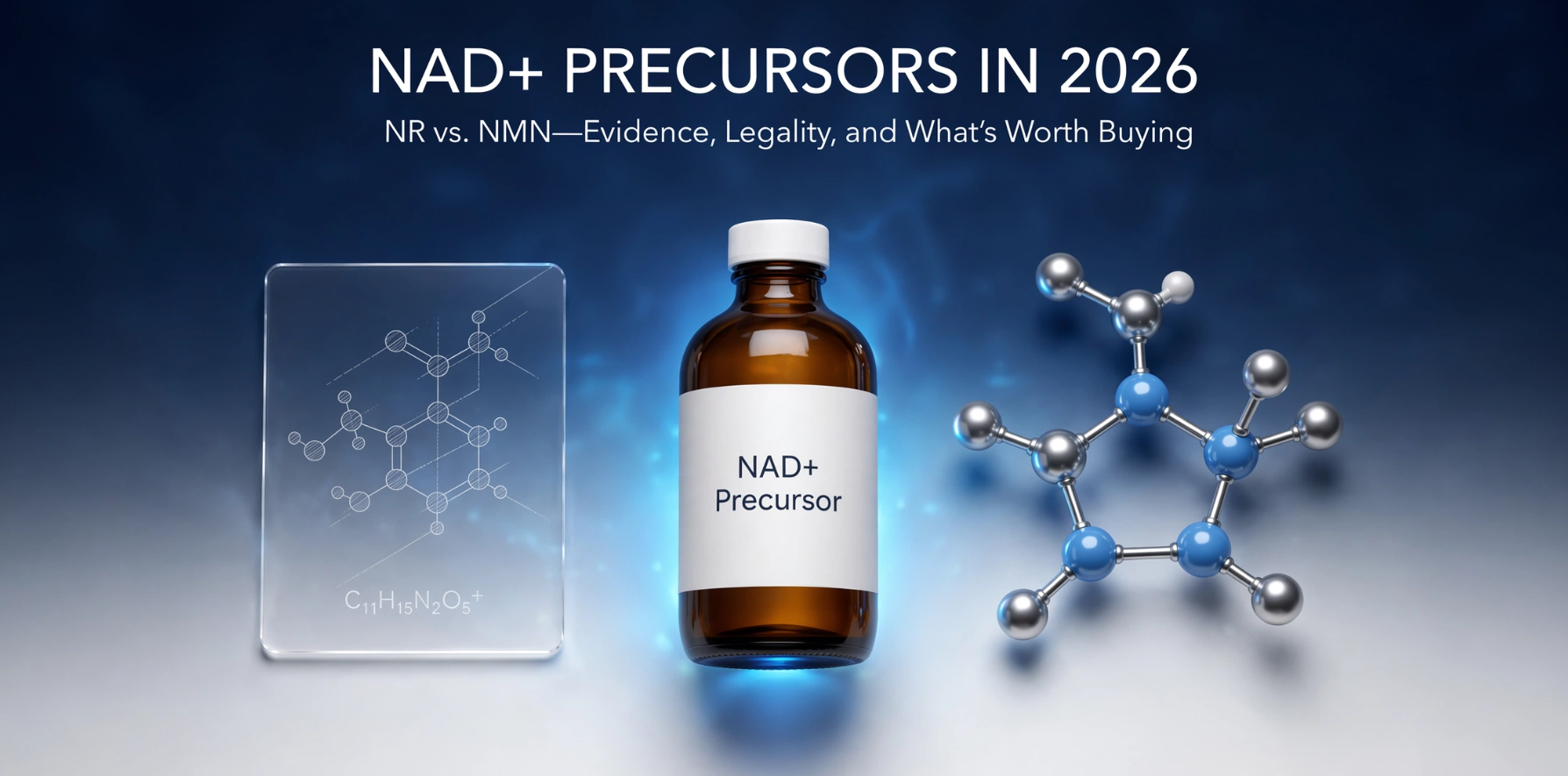
- Nicotinamide Riboside (NR): A form of vitamin B3 found in trace amounts in milk. NR enters cells and is converted to NMN, then to NAD+. It has the most extensive human safety and efficacy data in the category.
- Nicotinamide Mononucleotide (NMN): One step closer to NAD+ in the synthetic pathway. NMN must enter cells; in rodents, a dedicated transporter exists in the gut, but in humans, NMN is likely converted to NR before cell entry, making the two pathways converge.
The practical takeaway: both NR and NMN effectively raise NAD+ levels in human blood and tissues in short-term studies. The debate over which is superior is largely academic and influenced more by marketing budgets than by definitive human outcome data.
Section 3: Nicotinamide Riboside (NR)—The Evidence So Far
NR, sold under trade names like Niagen® (ChromaDex), has the largest body of published human clinical trials among NAD+ boosters. Key findings:
- NAD+ Level Increase: Multiple randomized, double-blind, placebo-controlled trials show that daily NR doses of 250–1,000 mg significantly increase blood NAD+ levels by 40–100% within 2–8 weeks, with a dose-dependent effect.
- Blood Pressure and Arterial Flexibility: A 2018 study in healthy middle-aged and older adults found that 1,000 mg of NR daily reduced systolic blood pressure by roughly 10 mmHg and decreased arterial stiffness, a marker of vascular aging.
- Inflammation and Metabolic Markers: Some trials show modest reductions in inflammatory cytokines and improvements in insulin sensitivity, though results are inconsistent across populations. A 2021 study in people with prediabetes found improved muscle mitochondrial function but no change in whole-body insulin sensitivity.
- Brain NAD+ Levels: A 2022 study confirmed that oral NR raises NAD+ in the cerebrospinal fluid of humans, confirming brain penetration. Cognitive outcome data is still preliminary.
- Safety: NR is well-tolerated at doses up to 2,000 mg/day for 12 weeks. Mild side effects include nausea, fatigue, and headache in a small percentage of users.
Bottom Line: NR consistently raises NAD+ levels and shows early signals of cardiovascular and metabolic benefit in middle-aged and older adults. Long-term outcome trials (fracture risk, cardiovascular events, cognitive decline, mortality) are still lacking.
Section 4: Nicotinamide Mononucleotide (NMN)—The Evidence and the Legal Cloud
NMN became famous after Harvard researcher David Sinclair’s lab published rodent studies showing remarkable effects: improved insulin sensitivity, reversed vascular aging, enhanced physical endurance, and extended healthspan. Human data is more limited but growing:
- Insulin Sensitivity and Muscle: A 2021 study in postmenopausal women with prediabetes found that 250 mg of NMN daily for 10 weeks improved insulin-mediated glucose disposal and muscle insulin signaling.
- Physical Function: A 2022 trial in healthy older adults (65+) showed that 600 mg of NMN daily for 12 weeks improved gait speed, grip strength, and self-reported physical function scores, along with a rise in blood NAD+.
- Aerobic Capacity: A 2023 study in recreational runners found that 300–1,200 mg/day increased NAD+ levels and measures of aerobic capacity in a dose-dependent manner.
- Safety: Short-term human trials show good tolerability up to 1,200 mg/day, with mild gastrointestinal side effects in some.
The Legal Gray Zone: In late 2022, the FDA determined that NMN cannot be marketed as a dietary supplement in the US because it was first authorized for investigation as a pharmaceutical drug (for a metabolic disease) by a company called Metro International Biotech. Under the DSHEA, an ingredient cannot be both a drug under investigation and a dietary supplement, with few exceptions. As a result, Amazon delisted most NMN products, and several US retailers pulled it from shelves. However, many online sellers continue to ship NMN to US consumers, often sourcing from China, with variable quality and legality. The regulatory landscape could shift again, but as of 2026, NMN sits in a precarious position—widely sold but not legally compliant as a supplement. NR faces no such restriction.
Section 5: The VigorForty Approach to Choosing (and Avoiding Legal Risk)
Option A: NR (Niagen® or Equivalent)
- Legal Status: Unchallenged dietary supplement. ChromaDex holds patents on NR, and its ingredient Niagen® is GRAS and has NDI notification.
- Quality Markers: Look for “Niagen®” on the label (it’s the only commercially available form of NR with substantial human data). Trusted brands include Tru Niagen, Thorne ResveraCel (contains NR + resveratrol), and Life Extension NAD+ Cell Regenerator (NR + resveratrol + quercetin).
- Dose: 300–600 mg daily, taken in the morning with or without food. Some users prefer 300 mg for maintenance, 600 mg for initial boost.
Option B: NMN (If You Accept the Risk)
- Legal Status: Uncertain; not legally marketed as a dietary supplement, yet not enforced as prescription. Purchasing is a personal risk decision. Customs could seize shipments from international sellers, and product quality is inconsistent.
- Quality Markers: If you choose NMN, insist on third-party testing (HPLC purity >99%), stabilized in liposomal or enteric-coated capsules to prevent stomach acid degradation. Avoid powders that absorb moisture and degrade rapidly. Reputable suppliers (often sold direct from manufacturer websites) include Renue by Science, Alive by Science, and DoNotAge, which publish certificates of analysis and use US-based fulfillment.
- Dose: 250–500 mg daily, taken in the morning on an empty stomach (some evidence suggests intestinal uptake is better when fasted). Some protocols increase to 1,000 mg, but human data beyond 500 mg is sparse.
Cost Comparison: NR typically costs $1.00–$1.50 per 300 mg. NMN from reputable sources is often $1.50–$3.00 per 500 mg. For a daily habit, that’s $30–$90 per month for NR, $45–$90+ for NMN. This is a meaningful supplement spend.
Section 6: Who Should Consider NAD+ Precursors—and Who Should Skip?
Consider Adding to a Solid Foundation If:
- You are 45+ and have optimized the Vigor Five (D3+K2, magnesium, omega-3s, creatine, protein).
- You have a family history of neurodegenerative disease and want to invest in long-term brain energy support (based on preclinical neuroprotection data).
- You have the budget and are committed to taking it daily for at least 3–6 months to assess subjective effects.
- You are willing to track subjective markers: energy levels, mental clarity, exercise recovery.
Skip or Postpone If:
- You haven’t locked in the nutritional, sleep, and exercise basics. A NAD+ precursor won’t fix a poor diet, chronic sleep deprivation, or a sedentary lifestyle.
- You are pregnant, breastfeeding, or have an active cancer diagnosis (NAD+ precursors might theoretically fuel certain cancer cell growth, though data is unclear).
- You are on a tight budget. The Vigor Five provide exponentially more evidence for healthspan improvement per dollar than NAD+ boosters do right now.
Section 7: Natural Ways to Support NAD+ Without a Pill
Before you reach for a bottle, know that some well-established lifestyle practices also support NAD+ levels:
- Exercise, especially high-intensity interval training (HIIT) and resistance training: Activates AMPK, which upregulates NAMPT, the rate-limiting enzyme in the NAD+ salvage pathway.
- Caloric restriction and intermittent fasting: Fasting raises NAD+ and sirtuin activity.
- Sauna / heat exposure: Heat stress increases NAD+ synthesis and mitochondrial biogenesis.
- Avoiding excess UV radiation and alcohol: Both deplete NAD+ through increased DNA damage and oxidative stress.
These interventions are free and produce whole-body benefits that no supplement can fully replicate. Think of NR or NMN as a potential amplifier of a healthy lifestyle, not a replacement for it.
Section 8: FAQ — Your Burning NAD+ Questions
Q: Can I take NR or NMN with my other supplements?
A: Yes. NR and NMN are often stacked with resveratrol (a sirtuin activator) and quercetin (a CD38 inhibitor) to theoretically enhance NAD+ retention. The Vigor Five are fully compatible.
Q: Do I need to cycle NAD+ precursors?
A: There is no evidence that cycling is necessary, but some users follow a 5-day on, 2-day off pattern to mimic intermittent metabolic stress. It’s a personal preference.
Q: Will I feel something immediately?
A: Unlikely. Effects are subtle and build over weeks to months. Some users report improved mental clarity and physical stamina after 4–8 weeks. If you expect a caffeine-like kick, you’ll be disappointed.
Q: Is NMN legal now? Can I bring it into the US?
A: As of 2026, NMN’s status as a dietary supplement is denied by the FDA, and major US retailers do not sell it. International shipments may be seized by customs, though many still pass. NR faces no such restrictions and is sold in major chains. VigorForty recommends NR for legal peace of mind.
The VigorForty Take
NAD+ precursors sit on the frontier of longevity science—intriguing, biologically plausible, and backed by early human evidence of safety and moderate benefit. They are not fountains of youth, but they may nudge the cellular energy landscape in a favorable direction for aging bodies. If you choose to experiment, use the legally safe, well-studied NR form, buy from a transparent brand that uses third-party testing, and give it three months before deciding if the subjective improvement justifies the cost. But never lose sight of the hierarchy: sleep, nutrition, exercise, and the Vigor Five foundation first. NR and NMN are the icing, not the cake.
Read Realated Articles
- The Complete Guide to Heart Health: Beyond Omega-3s—CoQ10, Magnesium, Potassium, and Nitric Oxide Support After 40
- The Complete Guide to Eye Health: Lutein, Zeaxanthin, Astaxanthin, and Omega-3s for Protecting Your Vision After 40
- The Complete Guide to Anti-Aging Skin, Hair, and Nails: Collagen, Biotin, Silica, and Antioxidants for a Vibrant Appearance After 40
- The Busy Parent’s Supplement Guide: Staying Energized, Resilient, and Healthy While Raising Kids After 40
- Supplements for Brain Fog and Mental Clarity: Phosphatidylserine, Bacopa Monnieri, and Lion’s Mane—What Actually Works After 40
- The Complete Guide to Digestive Health: Probiotics, Prebiotics, Digestive Enzymes, and Gut-Healing Nutrients After 40
- Supplements for Osteoarthritis: A Natural Pain Management Protocol That Protects Your Joints After 40
- The Sleep-Supplement Connection: Magnesium, Glycine, L-Theanine, and Melatonin—A Complete Protocol for Restorative Rest After 40
- The Ultimate Guide to Healthy Aging: How to Build Your Personalized Supplement Plan at 40, 50, and 60
- Menopause Beyond the Basics: Mood, Bone, Brain, and Sleep Support for the American Woman Over 40
- Selenium, Zinc, and Iodine: The Trace Minerals That Support Thyroid, Immunity, and Longevity After 40
- TSA Rules for Supplements: Traveling with Pills, Powders, and Liquids as an American Over 40
- CoQ10 After 40: Ubiquinone vs. Ubiquinol, Statin Depletion, and Mitochondrial Support
- The VigorForty Guide to Third-Party Testing: USP, NSF, ConsumerLab, and How to Verify Your Supplements Are Safe
- The VigorForty Yearly Blood Work Blueprint: Exactly What to Test and When for Optimal Health After 40
- Metabolic Health Supplements: Berberine, Inositol, and Chromium for Blood Sugar Control After 40
- The Complete Guide to Electrolytes for the Active American Over 40: Sodium, Potassium, Magnesium, and Hydration Science
- Supplement-Drug Interactions Every American Over 40 Must Know: Blood Thinners, Antidepressants, BP Meds, and Statins
- The Busy Professional’s Core 5 Supplements: No Clutter, No Hype, Just What Actually Moves the Needle After 40
- Glycine + NAC: The Under-the-Radar Longevity Stack for Glutathione, Detoxification, and Deep Sleep After 40
- Adaptogens Worth Your Money: Ashwagandha, Rhodiola, and Holy Basil—Evidence and Safe Use for the Stressed 40+ American
- Best Supplements for Joint Health After 40: Curcumin, Collagen, MSM, and Glucosamine—Ranked by Evidence
- NAD+ Precursors (NMN & NR) in 2026: Current Evidence, US Legal Status, and What’s Worth Your Money
- Budget-Friendly Blood Tests to Check Your Actual Micronutrient Gaps (And Skip the Guesswork)
- The Perimenopause Supplement Protocol: Bone, Brain, and Sleep Support for American Women Over 40
- How to Read a Supplement Facts Panel Like a Dietitian: The 5-Step Method for Over-40 Americans
- Protein Powder After 40: Whey, Plant, Collagen, and the Anabolic Threshold You Must Know
- Omega-3s Decoded: EPA, DHA, and How to Read a Fish Oil Label for the Over-40 American
- Creatine After 40: Not Just for Bodybuilders—Brain, Muscle, and Longevity Science
- 5 Magnesium Myths Busted: Glycinate, Citrate, Oxide, and Which One You Actually Need
- Vitamin D3 + K2: The Over-40 American’s Protocol for Bones, Arteries, and Immunity
- The ‘Vigor Five’: Core Daily Supplements for Energy and Longevity After 40
- How Much Protein Do You Actually Need? (The Definite Guide for Satiety and Muscle Retention)
- The Ultimate Guide to Nutrient Density: How to Eat Real Food in America