
Author: Vigor Forty Editorial Team
Medically Reviewed By: Editorial Review Board
Disclaimer: This article is for informational purposes only and is not a substitute for professional medical advice. Read our full Medical Disclaimer.
📌 Key Takeaways
- Gut Function Declines With Age: Stomach acid, digestive enzyme output, and intestinal motility all decrease after 40. The gut microbiome loses diversity, and the intestinal lining becomes more permeable (“leaky gut”), contributing to bloating, food sensitivities, and systemic inflammation.
- Probiotics Are Not One-Size-Fits-All: Different strains serve different purposes. Lactobacillus and Bifidobacterium blends support general gut health; specific strains like Lactobacillus rhamnosus GG and Saccharomyces boulardii have stronger evidence for antibiotic-associated diarrhea and IBS.
- Prebiotics Feed Your Good Bacteria, but Start Slowly: Inulin, FOS, and GOS promote beneficial bacteria growth, but rapid introduction can cause gas and bloating. Start with small doses and increase gradually, or prioritize whole-food sources like garlic, onions, and green bananas.
- Digestive Enzymes Are “Relief on Demand”: If you experience bloating, fullness, or indigestion after meals—especially fatty or high-fiber meals—a broad-spectrum digestive enzyme with lipase, protease, amylase, and lactase can offer immediate symptom relief.
- Gut-Healing Nutrients Repair the Lining: L-glutamine, zinc carnosine, collagen peptides, and bone broth provide the raw materials to heal the intestinal barrier. They are especially important if you have a history of NSAID use, chronic stress, or alcohol consumption.
Introduction: The Gut After 40—Why Your Digestion Feels Different
You used to eat pizza at midnight and wake up fine. Now, a rich dinner leaves you bloated and uncomfortable. Foods you’ve eaten for years suddenly feel heavy, cause gas, or trigger an unpredictable bowel response. You’re not imagining it. The gut ages along with the rest of the body, and after 40, a cascade of subtle changes alters digestion, absorption, and the delicate microbial ecosystem that influences everything from immunity to mood.
Stomach acid secretion declines—a condition called hypochlorhydria—impairing protein digestion and vitamin B12 absorption. The pancreas releases fewer digestive enzymes, making it harder to break down fats and carbohydrates. Intestinal motility slows, leading to constipation and small intestinal bacterial overgrowth (SIBO) in some individuals. The mucus layer that protects the gut lining thins, and tight junctions between intestinal cells can loosen, increasing intestinal permeability.
The gut microbiome—home to trillions of bacteria, fungi, and viruses—loses diversity with age, especially when antibiotic use, processed diets, and chronic stress are layered on top. This dysbiosis fuels systemic inflammation, contributing to joint pain, brain fog, and metabolic dysfunction.
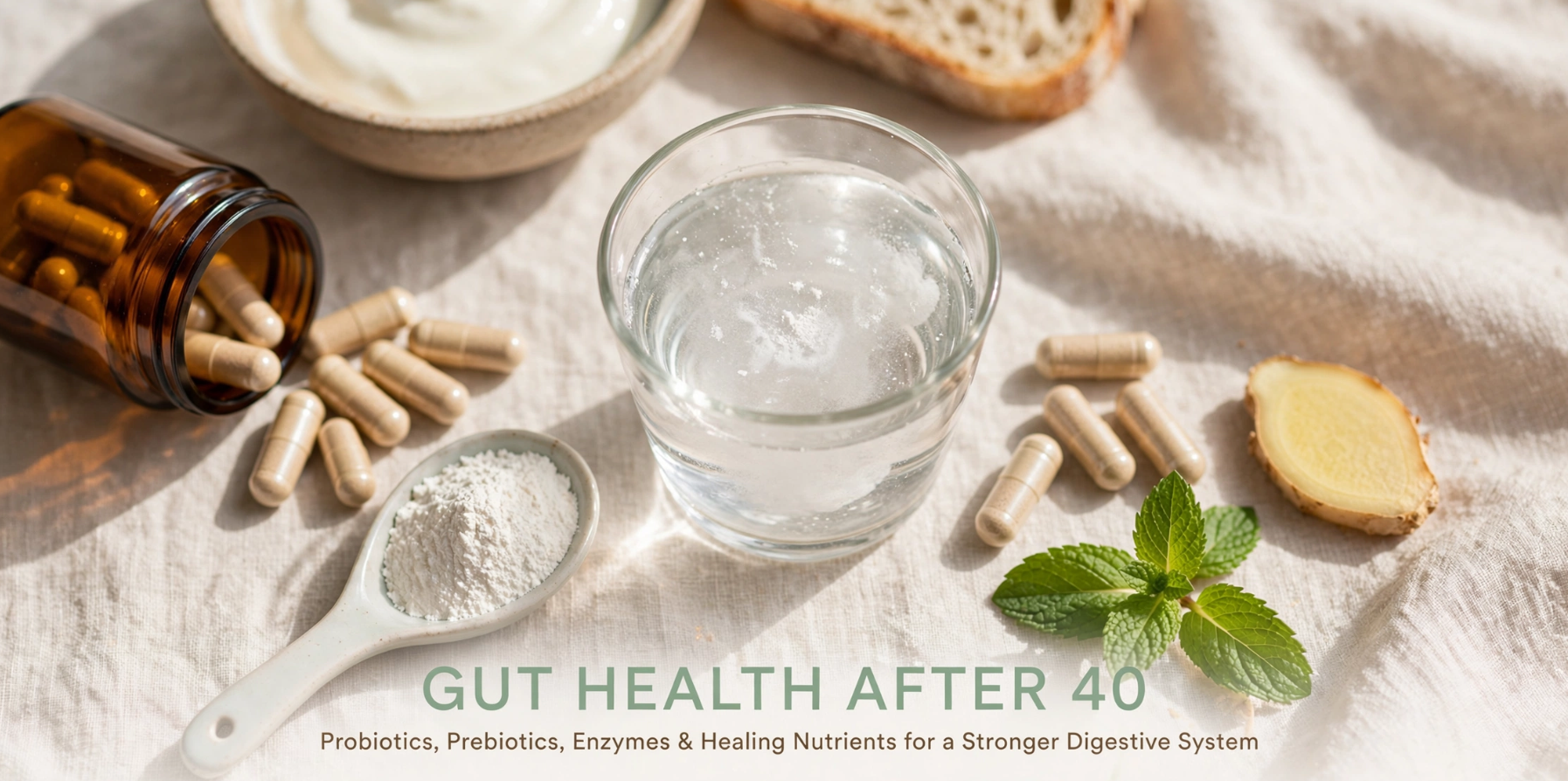
The supplement industry has flooded the market with probiotics, prebiotics, enzymes, and “gut-healing” powders. This guide brings order to the chaos. It explains what each category does, who needs it, how to choose a quality product, and how to combine them into a personalized gut-health protocol that addresses the specific challenges of aging digestion.
Section 1: The Aging Gut—What’s Actually Happening
Understanding the biology helps you match the right supplement to the right problem.
1. Declining Stomach Acid (Hypochlorhydria)
Parietal cells in the stomach lining produce hydrochloric acid (HCl). Their function declines with age, and this is accelerated by chronic stress, H. pylori infection, and proton pump inhibitors (PPIs). Low stomach acid leads to poor protein digestion, reduced absorption of B12, iron, calcium, and magnesium, and an increased risk of small intestinal bacterial overgrowth (SIBO). Symptoms include heartburn (paradoxically often caused by too little acid, not too much), bloating immediately after meals, and undigested food in stool.
2. Pancreatic Enzyme Insufficiency
The pancreas releases lipase (for fats), protease (for proteins), and amylase (for starches). Output can decline with age, chronic stress, and pancreatic insults (alcohol, gallstones). Symptoms include floating, greasy stools, post-meal bloating, and a feeling of fullness that lasts for hours.
3. Slowed Motility
The migrating motor complex (MMC), the “housekeeper” wave that sweeps debris and bacteria through the small intestine, slows with age and is impaired by stress, snacking, and certain medications (opioids, anticholinergics). This contributes to constipation and SIBO.
4. Microbiome Shifts and Dysbiosis
The diversity and stability of the gut microbiome decline. Beneficial species like Bifidobacteria and Faecalibacterium prausnitzii decrease, while pro-inflammatory bacteria can increase. This shift is driven by diet, medication, stress, and reduced physical activity. Dysbiosis contributes to intestinal permeability, systemic inflammation, and altered neurotransmitter production (the gut-brain axis).
5. Intestinal Permeability (“Leaky Gut”)
The intestinal lining is a single cell layer thick, renewed every 3–5 days. Tight junctions between cells can become permeable when exposed to inflammatory foods, alcohol, NSAIDs, stress, and dysbiosis. Partially digested food proteins and bacterial toxins cross into the bloodstream, triggering systemic immune activation and inflammation.
Section 2: Probiotics—The Living Microbes
What They Are: Live microorganisms that, when administered in adequate amounts, confer a health benefit to the host. They do not “colonize” the gut permanently in most cases; they transiently modulate the existing ecosystem, competing with pathogens, producing short-chain fatty acids, and interacting with the immune system.
Not All Probiotics Are Equal:
The category “probiotics” is as broad as “medication.” Different strains have radically different effects, and matching the strain to the condition is critical. The most common genera are Lactobacillus, Bifidobacterium, Saccharomyces (a beneficial yeast), and soil-based organisms (Bacillus species).
Evidence-Based Applications for the 40+ Adult:
| Condition | Strain(s) with Best Evidence | Typical Dose | Notes |
|---|---|---|---|
| General gut health, bloating, regularity | Multi-strain Lactobacillus + Bifidobacterium blend (e.g., L. acidophilus, L. plantarum, B. lactis, B. longum) | 10–50 billion CFU daily | More strains ≠ better; focus on well-researched species. |
| Antibiotic-associated diarrhea | Lactobacillus rhamnosus GG (Culturelle), Saccharomyces boulardii (Florastor) | 10–20 billion CFU (LGG) or 500 mg (S. boulardii) twice daily during and for 1–2 weeks after antibiotics. | Take at least 2 hours apart from the antibiotic dose. S. boulardii is a yeast and not killed by antibiotics. |
| Irritable Bowel Syndrome (IBS) | Bifidobacterium infantis 35624 (Align), Lactobacillus plantarum 299v | 1 capsule daily of the specific patented strain. | Strain-specific; generic multi-strain blends may not provide the same benefit. |
| Traveler’s diarrhea prevention | Saccharomyces boulardii or Lactobacillus rhamnosus GG | Start 2–3 days before travel; continue through trip. | Evidence is moderate; hygiene and food safety are primary. |
| Mood and cognitive support | Lactobacillus helveticus R0052 + Bifidobacterium longum R0175 (Cerebiome®) | 3 billion CFU daily. | Emerging evidence for the gut-brain axis; modest effects on anxiety and stress. |
How to Choose a Quality Probiotic:
- Strain specificity: Look for the exact strain designation on the label (e.g., “Lactobacillus rhamnosus GG,” not just “Lactobacillus rhamnosus”).
- Potency at expiration: CFU count should be guaranteed at the time of expiration, not just at time of manufacture. The product should list a viable count “at end of shelf life.”
- Stability and packaging: Most probiotics are sensitive to heat, moisture, and oxygen. Shelf-stable, individually blister-packed capsules or spore-form probiotics (Bacillus coagulans) are more resilient. Refrigerated probiotics require a reliable cold chain.
- Third-party testing: USP, NSF, or ConsumerLab verification ensures the product contains the listed strains and is free of contaminants.
Who Should Be Cautious:
- Severely immunocompromised individuals, those with central venous catheters, or patients with severe acute pancreatitis should avoid probiotics unless under direct medical supervision. Probiotics can very rarely translocate into the bloodstream in these populations.
Section 3: Prebiotics—Fuel for Your Flora
What They Are: Non-digestible food ingredients that selectively stimulate the growth and activity of beneficial bacteria in the colon. They are typically soluble fibers or oligosaccharides.
Key Prebiotics:
- Inulin (chicory root fiber): Long-chain, fermentable. Feeds Bifidobacteria.
- FOS (fructooligosaccharides): Shorter-chain, sweeter. Ferments more quickly; may cause more gas.
- GOS (galactooligosaccharides): Derived from milk sugar. Well-tolerated and potent Bifidobacterium stimulator.
- Partially Hydrolyzed Guar Gum (PHGG): A low-gas, well-tolerated prebiotic fiber that also improves regularity.
- Resistant Starch: Found in green bananas, plantains, cooked-and-cooled potatoes and rice. Feeds butyrate-producing bacteria.
Benefits for the 40+ Adult:
- Increase butyrate production, the primary fuel for colonocytes (intestinal cells), improving gut barrier integrity.
- Improve bowel regularity and stool consistency.
- Enhance calcium and magnesium absorption—especially relevant for bone health.
- Modestly improve glucose metabolism and satiety.
Dose and Tolerance:
Start with a very low dose—1–2 grams per day—and increase gradually over 2–4 weeks to a target of 5–10 grams per day. Rapid introduction of prebiotics can cause significant gas, bloating, and cramping. PHGG and GOS are generally better tolerated than inulin or FOS. If you have IBS or SIBO, prebiotics may exacerbate symptoms; proceed with caution and consult a practitioner.
Food-First Approach: Garlic, onions, leeks, asparagus, Jerusalem artichokes, slightly underripe bananas, cooked-and-cooled potatoes, and oats are all excellent prebiotic sources. A diet rich in diverse plant fibers is the best long-term strategy for microbiome health; supplements can be used to target specific deficits.
Section 4: Digestive Enzymes—On-the-Spot Relief
What They Are: Concentrated enzymes that break down macronutrients. Typically derived from microbial fermentation (fungal) or animal sources (porcine pancreas).
What a Broad-Spectrum Enzyme Contains:
- Lipase: Breaks down fats.
- Protease: Breaks down proteins.
- Amylase: Breaks down starches and carbohydrates.
- Lactase: Breaks down milk sugar (lactose). Essential for the ~65% of the global population with reduced lactase activity after childhood.
- Cellulase, hemicellulase, phytase: Break down plant cell walls and phytic acid. Humans do not produce these endogenously; they come from microbes.
When to Use:
- Post-meal bloating, fullness, or indigestion, especially after fatty or large meals.
- Lactose intolerance: a lactase enzyme taken with dairy prevents symptoms.
- Suspected exocrine pancreatic insufficiency (diagnosed by a gastroenterologist; requires prescription-strength pancreatic enzymes).
- Post-cholecystectomy (gallbladder removal): difficulty emulsifying fats; a digestive enzyme with ox bile may help.
Dose: 1–2 capsules at the beginning of a meal. Enzymes are active in the stomach and small intestine; they must be present with the food to work. Look for products that list enzyme activity units (e.g., FIP for lipase, USP for protease, DU for amylase) rather than just milligrams, as activity—not weight—determines efficacy.
Safety: Generally very safe. High doses can cause mouth irritation or GI upset. Those with gastritis or peptic ulcers should use with caution, as protease can theoretically irritate eroded mucosa.
Section 5: Gut-Healing Nutrients—Repairing the Lining
If you suspect increased intestinal permeability—bloating after meals, food sensitivities, joint pain, brain fog, skin rashes, and a history of NSAID or antibiotic use—addressing the gut barrier is the foundation.
1. L-Glutamine
- What it is: The most abundant amino acid in the body and the primary fuel source for enterocytes (intestinal cells).
- Mechanism: Glutamine directly nourishes the small intestinal lining, promotes tight junction protein expression, and reduces intestinal permeability caused by stress and inflammation.
- Evidence: Human trials in critically ill patients and those with short bowel syndrome show glutamine preserves gut barrier function. In healthy adults with mild gut permeability, 5–10 grams daily is commonly used with good anecdotal and mechanistic support.
- Dose: 5–10 grams of L-glutamine powder, once daily on an empty stomach (morning). Start at 5 grams and increase over a week.
2. Zinc Carnosine
- What it is: A chelate of zinc and L-carnosine, designed to adhere to the stomach and intestinal lining and release zinc directly to the mucosa.
- Mechanism: Stabilizes tight junctions, promotes mucosal healing, reduces gastric inflammation, and inhibits H. pylori growth.
- Evidence: Multiple randomized trials show zinc carnosine significantly improves symptoms and accelerates healing in gastric ulcers, NSAID-induced gut damage, and leaky gut. A 2007 trial found it reduced small intestinal permeability in NSAID users by 50%.
- Dose: 75 mg of zinc carnosine (providing 16–18 mg of elemental zinc) twice daily, with or without food. Use for 4–8 weeks as a therapeutic course, not indefinitely.
3. Collagen Peptides and Bone Broth
- What they are: Rich sources of glycine, proline, and glutamine—the amino acids that build the structural proteins of the gut lining.
- Mechanism: Glycine supports mucosal repair and has anti-inflammatory effects. Proline is essential for collagen turnover in the intestinal matrix.
- Evidence: More mechanistic and anecdotal than robustly clinical for gut healing specifically, but the amino acid profile directly supports intestinal regeneration.
- Dose: 10–15 grams of collagen peptides daily, or 1–2 cups of high-quality bone broth with meals. This overlaps with joint and skin benefits, making it a multi-purpose supplement.
Section 6: The VigorForty Gut Health Protocol
Layer these interventions based on your primary complaint.
| Primary Complaint | Core Supplement(s) | Add-On |
|---|---|---|
| General bloating, irregularity, “sluggish gut” | Multi-strain probiotic (10–50 billion CFU) + PHGG prebiotic (start at 2 g/day, titrate up) | Digestive enzyme with large meals. |
| Post-meal bloating, fullness, indigestion | Broad-spectrum digestive enzyme (1–2 caps at meal start) | Consider betaine HCl with pepsin if hypochlorhydria is suspected (start under practitioner guidance). |
| Antibiotic recovery | Saccharomyces boulardii + Lactobacillus rhamnosus GG during and 2 weeks post-antibiotics | Continue multi-strain probiotic for 1–2 months after. |
| Leaky gut (food sensitivities, joint pain, brain fog, history of NSAIDs) | L-glutamine 5–10 g/day (AM, empty stomach) + Zinc Carnosine 75 mg twice daily (4–8 week course) | Collagen peptides 10–15 g/day, omega-3s (already in Vigor Five). |
| IBS with diarrhea or alternating | Bifidobacterium infantis 35624 or Saccharomyces boulardii | PHGG (well-tolerated prebiotic for IBS). |
| Constipation-predominant | PHGG or magnesium citrate (already in Vigor Five) | Increase hydration and movement; consider kiwi or prunes as food-based interventions. |
General Daily Gut Maintenance for 40+:
- Probiotic: A multi-strain Lacto-Bifido blend, 10–50 billion CFU daily.
- Prebiotic: At least 25–35 grams of fiber daily from diverse whole-plant foods. Use PHGG or GOS if fiber intake is low.
- Digestive Enzymes: Used as needed for large or fatty meals, not necessarily every meal.
- Gut-Healing Nutrients: Use L-glutamine and zinc carnosine therapeutically for 4–8 weeks if leaky gut is suspected; then transition to maintenance with collagen peptides and a fiber-rich diet.
Section 7: FAQ—Your Top Digestive Health Questions
Q: Can I take a probiotic every day forever?
A: Yes, it’s safe for long-term use in healthy individuals. However, it’s ideal to cycle strains occasionally (every 3–6 months) to promote diversity, and to focus primarily on a diverse, fiber-rich diet to feed your native bacteria.
Q: I heard probiotics can make SIBO worse. Is that true?
A: In some cases, yes. Certain probiotics, especially those containing prebiotics (synbiotics) or strains that produce D-lactic acid, can exacerbate symptoms in SIBO. If you suspect SIBO (bloating within 30–60 minutes of eating, distension, belching), consult a gastroenterologist for breath testing before self-prescribing probiotics. Soil-based probiotics (Bacillus species) may be better tolerated.
Q: Do I need a digestive enzyme if I have heartburn?
A: Heartburn can be caused by low stomach acid (not just high). Using a digestive enzyme with betaine HCl can sometimes improve heartburn by speeding gastric emptying and reducing the backflow of poorly digested food. However, if heartburn is chronic, first rule out Barrett’s esophagus, hiatal hernia, or H. pylori infection with your gastroenterologist. Do not use betaine HCl if you have active gastritis or ulcers.
Q: Can bone broth replace collagen powder?
A: Bone broth is a wonderful food with a complex nutrient profile, but its amino acid content is inconsistent and varies batch to batch. Collagen peptides provide a standardized, reliable dose of glycine and proline. Use both: bone broth for its minerals and culinary benefits; collagen powder for precise therapeutic dosing.
Q: How do I know if I have leaky gut?
A: There is no single validated clinical test. Zonulin (a protein that modulates tight junctions) can be measured in blood, but results are variable. The lactulose-mannitol test measures intestinal permeability but is not widely standardized. Clinically, leaky gut is often diagnosed based on a constellation of symptoms (food sensitivities, bloating, fatigue, joint pain, skin issues, brain fog) and a history of triggers (NSAIDs, antibiotics, chronic stress, poor diet). The therapeutic trial—improving symptoms with gut-healing nutrients—is often the most practical diagnostic approach.
The VigorForty Take
Your gut is not just a passive tube. It’s an intelligent, responsive ecosystem that digests your food, trains your immune system, produces neurotransmitters, and forms the barrier between your internal body and the outside world. After 40, it needs more deliberate support: probiotics to reinforce the microbial community, prebiotic fibers to feed it, enzymes to compensate for declining digestive output, and targeted nutrients to repair the lining when it’s been damaged.
Start with a high-quality, strain-specific probiotic and a fiber-rich diet. Add enzymes as a mealtime tool. Use L-glutamine and zinc carnosine as a targeted therapeutic course if leaky gut is likely. This gut-health protocol integrates seamlessly with your Vigor Five and supports the energy, immunity, and inflammation control that underpin healthy aging.
Read Realated Articles
- The Complete Guide to Heart Health: Beyond Omega-3s—CoQ10, Magnesium, Potassium, and Nitric Oxide Support After 40
- The Complete Guide to Eye Health: Lutein, Zeaxanthin, Astaxanthin, and Omega-3s for Protecting Your Vision After 40
- The Complete Guide to Anti-Aging Skin, Hair, and Nails: Collagen, Biotin, Silica, and Antioxidants for a Vibrant Appearance After 40
- The Busy Parent’s Supplement Guide: Staying Energized, Resilient, and Healthy While Raising Kids After 40
- Supplements for Brain Fog and Mental Clarity: Phosphatidylserine, Bacopa Monnieri, and Lion’s Mane—What Actually Works After 40
- The Complete Guide to Digestive Health: Probiotics, Prebiotics, Digestive Enzymes, and Gut-Healing Nutrients After 40
- Supplements for Osteoarthritis: A Natural Pain Management Protocol That Protects Your Joints After 40
- The Sleep-Supplement Connection: Magnesium, Glycine, L-Theanine, and Melatonin—A Complete Protocol for Restorative Rest After 40
- The Ultimate Guide to Healthy Aging: How to Build Your Personalized Supplement Plan at 40, 50, and 60
- Menopause Beyond the Basics: Mood, Bone, Brain, and Sleep Support for the American Woman Over 40
- Selenium, Zinc, and Iodine: The Trace Minerals That Support Thyroid, Immunity, and Longevity After 40
- TSA Rules for Supplements: Traveling with Pills, Powders, and Liquids as an American Over 40
- CoQ10 After 40: Ubiquinone vs. Ubiquinol, Statin Depletion, and Mitochondrial Support
- The VigorForty Guide to Third-Party Testing: USP, NSF, ConsumerLab, and How to Verify Your Supplements Are Safe
- The VigorForty Yearly Blood Work Blueprint: Exactly What to Test and When for Optimal Health After 40
- Metabolic Health Supplements: Berberine, Inositol, and Chromium for Blood Sugar Control After 40
- The Complete Guide to Electrolytes for the Active American Over 40: Sodium, Potassium, Magnesium, and Hydration Science
- Supplement-Drug Interactions Every American Over 40 Must Know: Blood Thinners, Antidepressants, BP Meds, and Statins
- The Busy Professional’s Core 5 Supplements: No Clutter, No Hype, Just What Actually Moves the Needle After 40
- Glycine + NAC: The Under-the-Radar Longevity Stack for Glutathione, Detoxification, and Deep Sleep After 40
- Adaptogens Worth Your Money: Ashwagandha, Rhodiola, and Holy Basil—Evidence and Safe Use for the Stressed 40+ American
- Best Supplements for Joint Health After 40: Curcumin, Collagen, MSM, and Glucosamine—Ranked by Evidence
- NAD+ Precursors (NMN & NR) in 2026: Current Evidence, US Legal Status, and What’s Worth Your Money
- Budget-Friendly Blood Tests to Check Your Actual Micronutrient Gaps (And Skip the Guesswork)
- The Perimenopause Supplement Protocol: Bone, Brain, and Sleep Support for American Women Over 40
- How to Read a Supplement Facts Panel Like a Dietitian: The 5-Step Method for Over-40 Americans
- Protein Powder After 40: Whey, Plant, Collagen, and the Anabolic Threshold You Must Know
- Omega-3s Decoded: EPA, DHA, and How to Read a Fish Oil Label for the Over-40 American
- Creatine After 40: Not Just for Bodybuilders—Brain, Muscle, and Longevity Science
- 5 Magnesium Myths Busted: Glycinate, Citrate, Oxide, and Which One You Actually Need
- Vitamin D3 + K2: The Over-40 American’s Protocol for Bones, Arteries, and Immunity
- The ‘Vigor Five’: Core Daily Supplements for Energy and Longevity After 40
- How Much Protein Do You Actually Need? (The Definite Guide for Satiety and Muscle Retention)
- The Ultimate Guide to Nutrient Density: How to Eat Real Food in America