
Author: Vigor Forty Editorial Team
Medically Reviewed By: Editorial Review Board
Disclaimer: This article is for informational purposes only and is not a substitute for professional medical advice. Read our full Medical Disclaimer.
📌 Key Takeaways
- Menopause Is a Full-Body Transition, Not Just Hot Flashes: Declining estrogen affects serotonin, GABA, bone remodeling, cerebral blood flow, and sleep architecture. Brain fog, anxiety, joint pain, insomnia, and bone loss are equally real and treatable symptoms.
- The Hormonal Shift Begins in Perimenopause: The 4–10 years before final menses are marked by wild fluctuations in estrogen and progesterone. Symptoms often start here, even when periods are still regular. This is the optimal window for nutritional intervention.
- Targeted Supplements Can Fill the Hormonal Void: A foundation of vitamin D3+K2, magnesium glycinate, omega-3s, creatine, and protein must be augmented with collagen peptides, a methylated B-complex, ashwagandha or rhodiola, and sometimes targeted phytoestrogens or black cohosh—with careful attention to safety.
- Bone, Brain, and Mood Are Interconnected: Estrogen loss accelerates bone resorption, reduces neurotransmitter synthesis, and impairs glucose metabolism in the brain. A holistic protocol addresses all three simultaneously rather than chasing individual symptoms with isolated pills.
- Hormone Therapy Is a Valid Option, and Supplements Complement It: For women who choose or cannot take menopausal hormone therapy (MHT), supplements provide meaningful symptom relief and long-term protection. For those on MHT, supplements still support underlying nutritional needs and can enhance outcomes.
Introduction: The Change That Changes Everything
Menopause is not a single event. It’s a decade-long metamorphosis that reshapes a woman’s biology, cognition, and emotional landscape. Yet the cultural conversation remains narrow: hot flashes and night sweats. In reality, the hormonal shifts of perimenopause and menopause ripple through every system—bone, brain, heart, muscle, and mood. The 45-year-old executive who suddenly can’t remember where she put her keys, the 48-year-old who wakes at 3 AM with a racing heart and a sense of dread, the 52-year-old who feels her joints stiffen as if she’s aged twenty years overnight—they are all experiencing menopause, just not the version they were taught to expect.
The good news is that this transition, while inevitable, is modifiable. Targeted nutrition, strategic supplementation, resistance training, and stress management can profoundly smooth the ride and protect long-term health. This article provides a comprehensive supplement protocol that goes beyond the standard multivitamin, addressing the four pillars most impacted by estrogen withdrawal: mood, bone, brain, and sleep. It is designed for the American woman who refuses to accept that feeling awful is “just part of getting older.”
Section 1: The Estrogen Withdrawal—What Actually Happens
Estrogen is not just a reproductive hormone. Receptors for estrogen are distributed throughout the brain, bone, heart, bladder, skin, and joints. It acts as a:
- Neurotransmitter modulator, increasing serotonin and norepinephrine activity and promoting synaptic plasticity.
- Vasodilator, maintaining blood flow to the brain and skin.
- Bone protector, inhibiting osteoclast activity and promoting calcium absorption.
- Collagen stimulator, supporting skin elasticity and joint cartilage.
- Anti-inflammatory agent, reducing oxidative stress and cytokine production.
- Sleep regulator, influencing body temperature and the activity of GABA and melatonin.
As ovarian estrogen production declines—erratically in perimenopause, then permanently—every one of these protective functions weakens. The symptoms that emerge are not character flaws or signs of weakness; they are predictable physiological consequences of hormone withdrawal. The supplement protocols in this article aim to buffer these losses, providing the raw materials your body needs to compensate and protect itself for the decades ahead.
Section 2: The Menopause Foundation—The Vigor Five Are Non-Negotiable
Before adding any menopause-specific supplement, the Vigor Five must be firmly in place. These address the core nutrient gaps that estrogen loss widens.
| Supplement | Menopause-Specific Rationale | Dose |
|---|---|---|
| Vitamin D3 + K2 | Estrogen helps maintain bone density; D3 and K2 are critical for calcium metabolism and cardiovascular protection as estrogen’s vascular protection declines. | 2,000–4,000 IU D3 + 100–200 mcg K2 MK-7 daily with fat. |
| Magnesium Glycinate | Supports GABA activity, reduces anxiety and muscle tension, and improves the sleep that hot flashes and night sweats disrupt. | 200–400 mg elemental magnesium, 30–60 min before bed. |
| Omega-3s (EPA/DHA) | EPA directly supports mood stability and reduces inflammation; DHA is essential for brain cell membranes and cognitive clarity. Some studies show reduced hot flash severity. | 1,000–2,000 mg combined EPA+DHA daily. |
| Creatine Monohydrate | Compensates for the loss of estrogen’s anabolic effect on muscle, supports brain energy metabolism, and may help maintain bone density when paired with resistance exercise. | 5 grams daily, no loading. |
| Protein / EAAs | Hits the leucine threshold (2.5–3 g/meal) to counter anabolic resistance, which is compounded by estrogen loss. Supports muscle preservation and satiety. | 25–40 g protein per shake, or 10–15 g EAAs, 1–2 times/day. |
Foundation First: If you do nothing else, lock in these five for at least 4 weeks. They will stabilize your energy, improve sleep quality, and reduce the inflammation that amplifies joint pain and mood swings.
Section 3: Mood and Anxiety—Calming the Estrogen-Amplified Stress Response
Mood disruption in menopause is not just “being hormonal.” Estrogen increases serotonin synthesis, reduces the breakdown of serotonin and dopamine, and potentiates GABA. As estrogen fluctuates and then drops, the brain’s ability to maintain emotional equilibrium frays. Anxiety, irritability, and depressive symptoms spike—especially in women with a prior history of mood disorders.
Targeted Supplement Strategies:
1. Methylated B-Complex
- Why: B6 (as P5P) is a cofactor for serotonin and GABA synthesis. Folate (as methylfolate) and B12 (as methylcobalamin) support methylation, which regulates neurotransmitter breakdown. Many women in their 40s have MTHFR variants that impair conversion of synthetic folic acid, making methylated forms essential.
- Dose: A full-spectrum B-complex with active forms, taken in the morning with food. Look for methylfolate (400 mcg), methylcobalamin (1,000 mcg), and P5P (5–10 mg).
- Evidence: Randomized trials show that methylated B-complexes improve mood scores and reduce homocysteine, a cardiovascular risk factor that rises after menopause.
2. Ashwagandha (Withania somnifera)
- Why: Cortisol often rises in perimenopause as progesterone drops, creating a state of “tired but wired.” Ashwagandha is an adaptogenic herb that lowers serum cortisol, reduces perceived stress, and improves sleep quality.
- Dose: 300–600 mg of standardized root extract (≥5% withanolides) daily, in divided doses. KSM-66® and Sensoril® are well-studied extracts. Take the larger dose in the evening if sleep is the priority.
- Evidence: A 2021 trial in perimenopausal women found significant improvements in sleep quality, anxiety, and hot flash severity with ashwagandha.
- Caution: Avoid in autoimmune conditions (it may stimulate immune activity), and cycle 5 days on, 2 days off to maintain sensitivity. Discuss with your doctor if taking thyroid medication, sedatives, or antidepressants.
3. Rhodiola Rosea (For Fatigue-Dominant Mood)
- Why: If your primary mood complaint is crushing fatigue with brain fog, rhodiola—taken in the morning—improves mental stamina and reduces burnout symptoms without overstimulation.
- Dose: 200–400 mg standardized to 3% rosavins and 1% salidroside, in the morning.
Section 4: Bone Density—The Silent Erosion You Must Stop Now
Bone is living tissue, constantly remodeling. Estrogen inhibits osteoclasts (cells that break down bone). When estrogen drops, osteoclast activity increases unchecked, leading to rapid bone loss. A woman can lose up to 20% of her bone density in the 5–7 years surrounding menopause. Hip fractures and vertebral compression fractures are the devastating late consequences.
Targeted Supplement Strategies:
1. Collagen Peptides (Hydrolyzed Type I & III)
- Why: Collagen is the organic scaffold upon which calcium and phosphate mineralize. Estrogen is a key regulator of collagen synthesis. Postmenopausal women who supplement collagen peptides show improvements in bone mineral density (BMD).
- Dose: 10–15 grams daily, dissolved in coffee, tea, or a smoothie. Look for grass-fed bovine or wild-caught marine collagen, third-party purity tested.
- Evidence: A 2019 randomized controlled trial in postmenopausal women found that 5 grams of collagen peptides daily for 12 months significantly increased femoral neck BMD and reduced markers of bone degradation.
2. Calcium from Food, Not Pills
- Why: High-dose calcium supplements (≥1,000 mg) do not reliably reduce fracture risk and increase the risk of kidney stones and arterial calcification. The D3+K2 foundation directs dietary calcium into bones. Prioritize food sources: yogurt (300 mg/cup), sardines with bones (325 mg/3 oz), collard greens (270 mg/cup), and fortified unsweetened almond or soy milk.
- Goal: 1,200 mg total daily calcium from food. If you consistently fall short, supplement no more than 500 mg of calcium citrate at a time, and never without K2.
3. Magnesium (Already in Your Vigor Five)
- Magnesium is a cofactor for vitamin D activation and parathyroid hormone regulation. Adequate magnesium is as important as calcium for bone health, yet it’s often overlooked.
4. Trace Minerals (Boron, Zinc, Manganese, Copper)
- These are cofactors for enzymes that cross-link collagen and build bone matrix. A high-quality multivitamin or a standalone bone mineral complex can fill gaps. Boron (3 mg/day) has been shown to reduce urinary calcium and magnesium loss and increase vitamin D activity. Do not oversupplement; a balanced diet with nuts, seeds, legumes, and vegetables usually supplies sufficient amounts.
Section 5: Brain Fog and Cognitive Protection—The Overlooked Symptom
“Brain fog” is the most common yet least discussed menopause symptom. Women describe difficulty finding words, losing their train of thought in meetings, forgetting names, and feeling mentally sluggish. This is not dementia—it’s the brain adjusting to estrogen withdrawal. Estrogen enhances cerebral blood flow, promotes glucose uptake in neurons, supports synaptic connections, and protects against oxidative stress.
Targeted Supplement Strategies:
1. Omega-3s (DHA Emphasis)
- DHA is the most abundant fatty acid in the brain’s gray matter. Adequate DHA intake is associated with larger brain volumes and lower risk of cognitive decline. Ensure your omega-3 supplement delivers at least 500 mg of DHA per serving.
2. Creatine Monohydrate
- Brain creatine levels decline with age and, likely, with estrogen loss. Creatine supplementation has been shown to improve short-term memory, processing speed, and mental fatigue resistance, especially during sleep deprivation or high cognitive load. A daily 5-gram scoop is a powerful brain ally.
3. Phosphatidylserine (Optional Advanced Add-On)
- Phosphatidylserine is a phospholipid concentrated in brain cell membranes. It supports neurotransmitter release and has been shown in clinical trials to improve memory and cognitive function in older adults with cognitive decline. A typical dose is 100–300 mg/day. This is an advanced, higher-cost option for women with persistent, bothersome brain fog.
4. Sleep Is Cognitive Medicine
- Brain fog is often a symptom of sleep disruption. Magnesium glycinate and ashwagandha restore sleep architecture. Without deep sleep, the glymphatic system cannot clear beta-amyloid, and memory consolidation fails. Prioritize sleep interventions before adding more cognitive supplements.
Section 6: Sleep—Restoring Deep Rest When Progesterone Fades
Progesterone is a potent neurosteroid that binds to GABA-A receptors, producing a calming, sleep-promoting effect. In perimenopause, progesterone is the first hormone to decline, often dropping years before estrogen. This unopposed estrogen dominance creates a state of hyperarousal: the classic 3 AM awakening with a racing mind, night sweats, and difficulty returning to sleep.
Targeted Supplement Strategies:
1. Magnesium Glycinate (Foundation)
- Already in your Vigor Five. Magnesium quiets the sympathetic nervous system and relaxes muscles. Take 200–400 mg before bed. If night sweats are drenching, consider adding an electrolyte drink with sodium and potassium earlier in the day to maintain hydration.
2. Ashwagandha (Evening Dose)
- Lowers cortisol, reducing the stress-induced awakenings that progesterone withdrawal amplifies.
3. L-Theanine (Optional Add-On for Racing Mind)
- An amino acid from green tea, theanine increases alpha brain waves (relaxed alertness) and modestly boosts GABA and dopamine. It doesn’t cause drowsiness but quiets mental chatter. Dose: 100–200 mg at bedtime.
4. Melatonin (Short-Term, Low-Dose)
- Melatonin production declines with age and may be further affected by hormonal shifts. Use 0.5–3 mg at the same time each night for 1–3 months during a sleep crisis. It is not a long-term solution but can reset the circadian rhythm. Do not combine with high-dose ashwagandha initially; start one at a time.
5. Avoid Alcohol Completely During a Sleep Crisis
- Alcohol fragments sleep architecture and suppresses REM sleep. It also triggers vasomotor flushing (hot flashes). Women in perimenopause are often more sensitive to alcohol’s sleep-disrupting effects. Removing alcohol for 30 days can be as effective as any supplement.
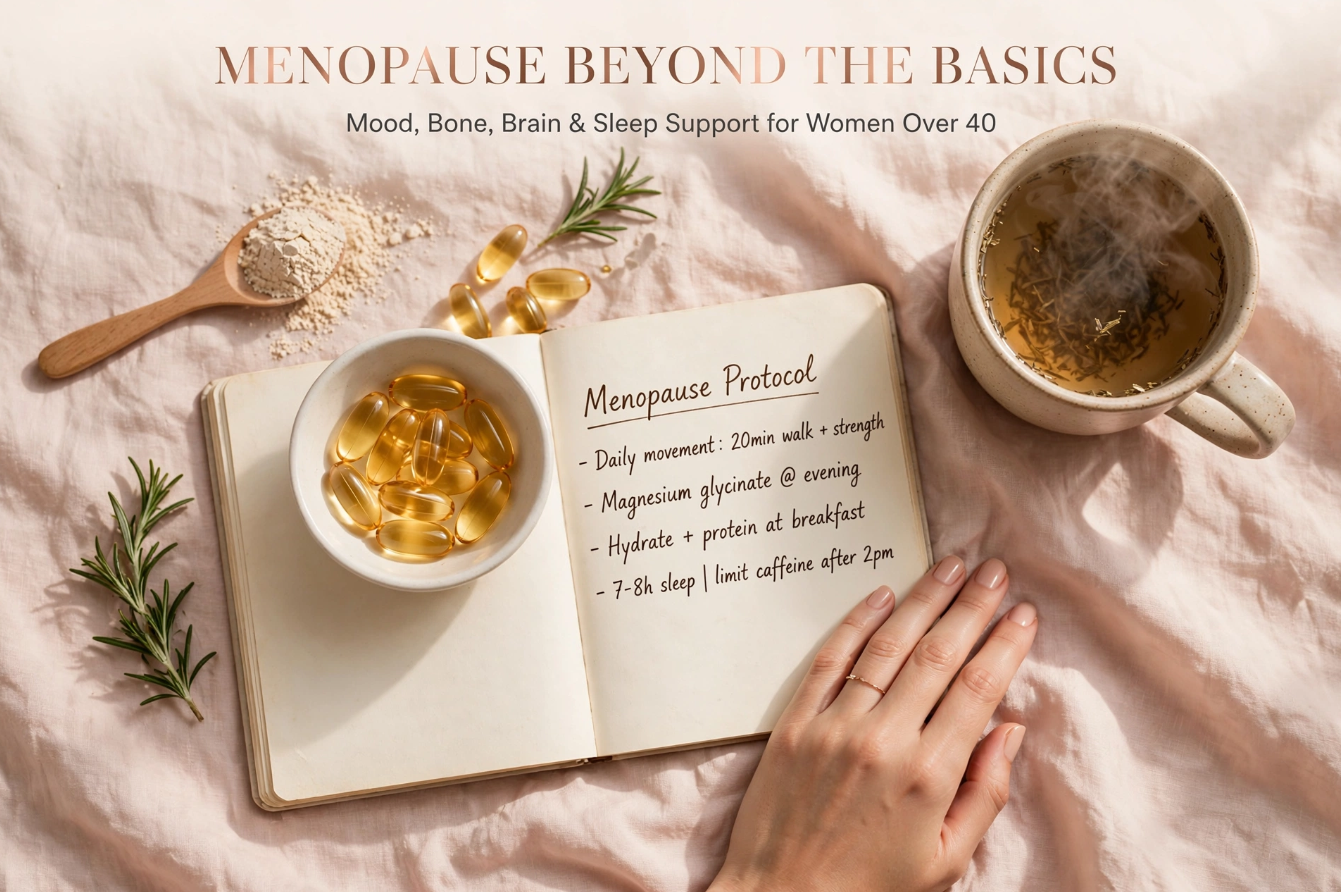
Section 7: The Complete Menopause Protocol—A Daily Schedule
| Time of Day | Supplement | Dose | Purpose |
|---|---|---|---|
| Morning (with breakfast) | Vitamin D3 + K2 | 2,000-4,000 IU + 100-200 mcg | Bone, immune, mood |
| Omega-3s (EPA/DHA) | 1,000-2,000 mg combined | Brain, heart, mood, inflammation | |
| Methylated B-Complex | 1 capsule | Energy, mood, methylation | |
| Rhodiola (if fatigue-dominant) | 200-400 mg | Mental stamina, burnout | |
| Collagen Peptides | 10-15 g in coffee/smoothie | Bone, joints, skin | |
| Anytime (daily) | Creatine Monohydrate | 5 g in water/coffee | Muscle, brain, bone |
| Protein Shake (as needed) | 25-40 g protein | Leucine threshold, muscle preservation | |
| Evening (30-60 min before bed) | Magnesium Glycinate | 200-400 mg elemental | Sleep, anxiety, muscle relaxation |
| Ashwagandha (if evening dosing) | 300-600 mg | Cortisol reduction, sleep | |
| L-Theanine (optional) | 100-200 mg | Quieting mental chatter |
Start Low, Go Slow: Introduce magnesium and D3+K2 first. Add omega-3s and creatine next. Then layer in collagen, B-complex, and ashwagandha one at a time, with a week between additions. This allows you to identify what helps and what doesn’t.
Section 8: A Note on Phytoestrogens and Black Cohosh
Many women ask about soy isoflavones, red clover, and black cohosh. The evidence is mixed, and product quality varies dramatically.
- Soy Isoflavones (Genistein, Daidzein): Whole soy foods (edamame, tofu, tempeh) are excellent protein sources and provide modest phytoestrogenic effects that may reduce hot flash frequency by 20–30%. Soy isoflavone supplements show inconsistent results. If you choose an extract, select one with genistein at 30–60 mg/day and confirm it has been third-party tested. Avoid high-dose isoflavone isolates if you have a history of estrogen-sensitive cancer, and discuss with your oncologist.
- Black Cohosh (Cimicifuga racemosa): Some women report significant hot flash relief with black cohosh, but the clinical trial data is conflicted. More concerningly, black cohosh has been associated with rare cases of liver toxicity. If you choose to try it, use only a product from a reputable manufacturer that has passed USP or ConsumerLab testing, and monitor liver enzymes. Do not use if you have any pre-existing liver condition.
- VigorForty Verdict: The foundation supplements and targeted amino acids (glycine, theanine) and adaptogens (ashwagandha) have better safety profiles and address the root mechanisms of menopause symptoms more comprehensively than most single-herb “menopause formulas.”
Section 9: FAQ—Your Most-Asked Menopause Supplement Questions
Q: I’m on hormone therapy (MHT). Can I still take these supplements?
A: Yes, and in fact, many of these supplements complement MHT. Magnesium supports sleep regardless of hormonal status. Vitamin D3+K2 protects bones alongside estrogen. Omega-3s reduce cardiovascular risk, which estrogen also addresses. Always inform your prescribing physician, particularly about the K2 and ashwagandha.
Q: I had breast cancer and cannot take estrogen. Are these supplements safe?
A: Most are safe and beneficial. Vitamin D, magnesium, omega-3s, creatine, protein, collagen, and methylated B-complex are non-hormonal and support overall health. Avoid high-dose soy isoflavones, black cohosh, and other phytoestrogenic herbs unless cleared by your oncologist. Ashwagandha does not have estrogenic activity, but its immune-modulating effects warrant a discussion with your oncologist.
Q: How long will it take before I feel better?
A: Sleep often improves within 1–2 weeks of starting magnesium and ashwagandha. Mood and brain fog may take 4–6 weeks to noticeably lift. Joint pain and bone density changes take 3–6 months of consistent collagen and vitamin D use. Be patient and persistent.
Q: Can these supplements replace my antidepressant or anti-anxiety medication?
A: No. Do not discontinue prescribed medications without your physician’s guidance. These supplements are adjunctive support, not replacements for pharmacotherapy in moderate-to-severe mood disorders. They may allow some women to lower medication doses over time under supervision, but this is a nuanced medical decision.
Q: I’m still having regular periods but feel terrible. Is this perimenopause?
A: Very possibly. Perimenopause can begin 8–10 years before the final period, with symptoms peaking in the late perimenopause. Check your FSH and estradiol on day 3 of your cycle if you’re still menstruating. Even if lab values are “normal,” the fluctuation pattern is what causes symptoms. Trust your body’s signals, and start building the foundation now.
The VigorForty Take
Menopause is a biological transition, not a disease to be cured. But that doesn’t mean you must suffer through it untreated. The right supplements—grounded in a strong Vigor Five foundation and augmented with collagen, B-complex, adaptogens, and careful minerals—can stabilize mood, protect your bones, clear the brain fog, and restore restorative sleep. Pair this protocol with heavy resistance training, a Mediterranean-style diet, and a ruthless commitment to sleep, and you will navigate this passage with strength, clarity, and resilience. You are not “losing” your youth; you are entering a new, powerful phase. Equip yourself accordingly.
Read Realated Articles
- The Complete Guide to Heart Health: Beyond Omega-3s—CoQ10, Magnesium, Potassium, and Nitric Oxide Support After 40
- The Complete Guide to Eye Health: Lutein, Zeaxanthin, Astaxanthin, and Omega-3s for Protecting Your Vision After 40
- The Complete Guide to Anti-Aging Skin, Hair, and Nails: Collagen, Biotin, Silica, and Antioxidants for a Vibrant Appearance After 40
- The Busy Parent’s Supplement Guide: Staying Energized, Resilient, and Healthy While Raising Kids After 40
- Supplements for Brain Fog and Mental Clarity: Phosphatidylserine, Bacopa Monnieri, and Lion’s Mane—What Actually Works After 40
- The Complete Guide to Digestive Health: Probiotics, Prebiotics, Digestive Enzymes, and Gut-Healing Nutrients After 40
- Supplements for Osteoarthritis: A Natural Pain Management Protocol That Protects Your Joints After 40
- The Sleep-Supplement Connection: Magnesium, Glycine, L-Theanine, and Melatonin—A Complete Protocol for Restorative Rest After 40
- The Ultimate Guide to Healthy Aging: How to Build Your Personalized Supplement Plan at 40, 50, and 60
- Menopause Beyond the Basics: Mood, Bone, Brain, and Sleep Support for the American Woman Over 40
- Selenium, Zinc, and Iodine: The Trace Minerals That Support Thyroid, Immunity, and Longevity After 40
- TSA Rules for Supplements: Traveling with Pills, Powders, and Liquids as an American Over 40
- CoQ10 After 40: Ubiquinone vs. Ubiquinol, Statin Depletion, and Mitochondrial Support
- The VigorForty Guide to Third-Party Testing: USP, NSF, ConsumerLab, and How to Verify Your Supplements Are Safe
- The VigorForty Yearly Blood Work Blueprint: Exactly What to Test and When for Optimal Health After 40
- Metabolic Health Supplements: Berberine, Inositol, and Chromium for Blood Sugar Control After 40
- The Complete Guide to Electrolytes for the Active American Over 40: Sodium, Potassium, Magnesium, and Hydration Science
- Supplement-Drug Interactions Every American Over 40 Must Know: Blood Thinners, Antidepressants, BP Meds, and Statins
- The Busy Professional’s Core 5 Supplements: No Clutter, No Hype, Just What Actually Moves the Needle After 40
- Glycine + NAC: The Under-the-Radar Longevity Stack for Glutathione, Detoxification, and Deep Sleep After 40
- Adaptogens Worth Your Money: Ashwagandha, Rhodiola, and Holy Basil—Evidence and Safe Use for the Stressed 40+ American
- Best Supplements for Joint Health After 40: Curcumin, Collagen, MSM, and Glucosamine—Ranked by Evidence
- NAD+ Precursors (NMN & NR) in 2026: Current Evidence, US Legal Status, and What’s Worth Your Money
- Budget-Friendly Blood Tests to Check Your Actual Micronutrient Gaps (And Skip the Guesswork)
- The Perimenopause Supplement Protocol: Bone, Brain, and Sleep Support for American Women Over 40
- How to Read a Supplement Facts Panel Like a Dietitian: The 5-Step Method for Over-40 Americans
- Protein Powder After 40: Whey, Plant, Collagen, and the Anabolic Threshold You Must Know
- Omega-3s Decoded: EPA, DHA, and How to Read a Fish Oil Label for the Over-40 American
- Creatine After 40: Not Just for Bodybuilders—Brain, Muscle, and Longevity Science
- 5 Magnesium Myths Busted: Glycinate, Citrate, Oxide, and Which One You Actually Need
- Vitamin D3 + K2: The Over-40 American’s Protocol for Bones, Arteries, and Immunity
- The ‘Vigor Five’: Core Daily Supplements for Energy and Longevity After 40
- How Much Protein Do You Actually Need? (The Definite Guide for Satiety and Muscle Retention)
- The Ultimate Guide to Nutrient Density: How to Eat Real Food in America