

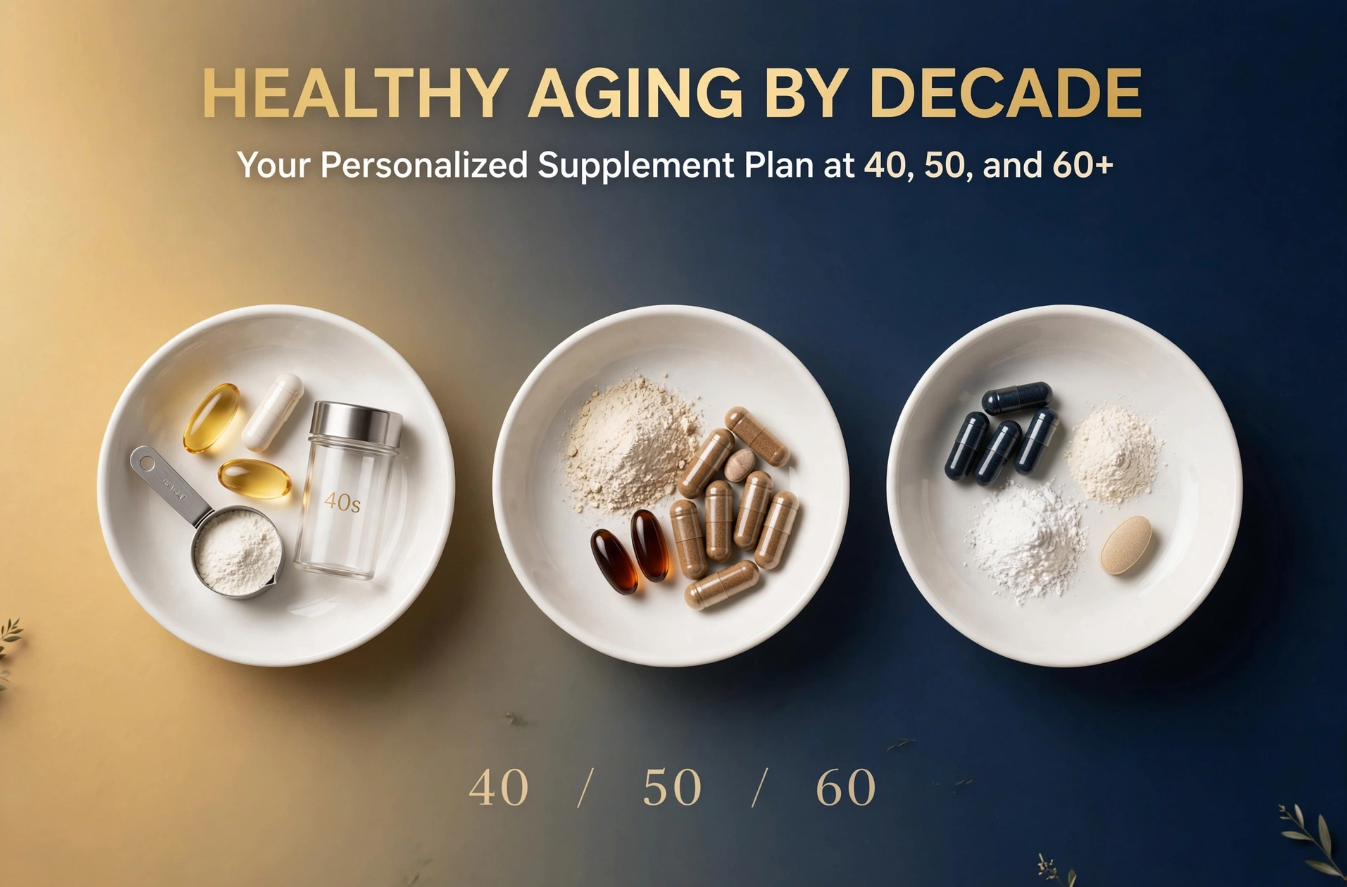
Author: Vigor Forty Editorial Team
Medically Reviewed By: Editorial Review Board
Disclaimer: This article is for informational purposes only and is not a substitute for professional medical advice. Read our full Medical Disclaimer.
📌 Key Takeaways
- Aging Is Not a Switch That Flips at 65: The biological processes that drive aging—mitochondrial decline, inflammation, hormonal shifts, muscle loss, and nutrient depletion—begin in your 30s and accelerate at predictable inflection points around 40, 50, and 60. Your supplement strategy must evolve with these changes.
- Your 40s Are the Foundation Decade: This is when insulin resistance, sarcopenia, and micronutrient gaps silently take hold. The Vigor Five (D3+K2, magnesium, omega-3s, creatine, protein) plus annual blood work and resistance training are the core prescription.
- Your 50s Require Hormonal and Structural Reinforcement: For women, menopause accelerates bone loss, cognitive changes, and cardiovascular risk. For men, testosterone declines gradually but measurably. Collagen, adaptogens, CoQ10, and targeted trace minerals enter the protocol. The Vigor Five remain, but doses and adjuncts shift.
- Your 60s and Beyond Demand Cognitive and Frailty Prevention: NAD+ precursors (NR), GlyNAC, phosphatidylserine, and continued emphasis on protein and creatine help preserve brain energy, muscle mass, and cellular detoxification. Polypharmacy risks increase, making supplement-drug interaction vigilance critical.
- Personalization Trumps Protocol: These decade-based plans are starting points. Your genetics, diet, medications, blood work, and symptoms are the true compass. Use annual testing to fine-tune, and never stop adjusting.
Introduction: The Long Game of Healthspan
Most supplement advice is static: “Take this pill every day forever.” But you are not static. At 40, your body has different needs than at 50, which are different still at 60. The endocrine shifts of perimenopause and andropause, the slow accumulation of oxidative damage, the gradual decline in mitochondrial efficiency, and the changing risk-benefit calculus of certain supplements all demand a dynamic, age-adapted strategy.
This guide distills everything VigorForty has covered—the Vigor Five, adaptogens, joint nutrients, metabolic health supplements, NAD+ precursors, GlyNAC, trace minerals, and more—into three clear, actionable protocols. Each decade adds targeted layers onto the solid foundation you built in the previous one. You do not need to take everything at once. You need to take the right things at the right time, supported by the right blood tests and lifestyle habits.
Section 1: The Non-Negotiable Pillars at Every Age
Before we layer on decade-specific supplements, three pillars transcend age. If you do nothing else, lock these in for life.
1. Annual Blood Work
You cannot navigate without a map. At every age, know your fasting insulin, HbA1c, hs-CRP, vitamin D, B12, ferritin, thyroid panel, and a full lipid panel (with ApoB every few years). Adjust your protocol based on trends, not guesses. The VigorForty Blood Work Blueprint provides the full roadmap.
2. Resistance Training and Protein
Sarcopenia begins in your 30s and accelerates without intervention. At every age, aim for 1.6–2.2 g/kg of protein daily, spread across 3–4 meals each delivering at least 30–40 grams of protein. Pair this with 2–3 weekly sessions of heavy resistance training. No supplement can replace this foundation. Creatine and protein powder exist to make hitting these targets easier; they do not replace the work.
3. Sleep and Stress Management
Sleep is when your brain clears metabolic waste, your muscles repair, and your hormones regulate. Magnesium glycinate supports sleep at any age. As you move through your 50s and beyond, adaptogens like ashwagandha and glycine become increasingly valuable to counter rising cortisol and sleep fragmentation. Guard 7–8 hours of quality sleep as if your life depends on it—because it does.
Section 2: The 40s Protocol—Building the Foundation
What’s Happening:
- Anabolic resistance begins; muscle protein synthesis requires a stronger stimulus.
- Vitamin D synthesis in the skin declines.
- Insulin sensitivity begins to fade, driven by a combination of muscle loss, stress, and dietary patterns.
- For women, perimenopause may start in the early-to-mid 40s, bringing subtle sleep disruption and mood shifts.
- For men, testosterone begins a slow decline (~1% per year after 35), but overt symptoms are less common.
The 40s Daily Stack:
| Supplement | Dose | Rationale |
|---|---|---|
| Vitamin D3 + K2 | 2,000–4,000 IU D3 + 100–200 mcg K2 MK-7 | Bone, immune, mood; most indoor Americans are insufficient. |
| Magnesium Glycinate | 200–400 mg elemental (evening) | Sleep, stress, muscle relaxation, insulin sensitivity. |
| Omega-3s (EPA/DHA) | 1,000–2,000 mg combined | Anti-inflammatory, brain, heart; counters the omega-6 overload of the standard American diet. |
| Creatine Monohydrate | 5 g daily | Muscle, brain energy, cognitive resilience; the most evidence-backed anti-sarcopenia supplement. |
| Protein Powder or EAAs | 25–40 g protein per shake, as needed | Bridges the leucine gap when whole-food meals fall short. |
| Methylated B-Complex | 1 capsule (morning) | Energy metabolism, methylation, mood support; crucial if MTHFR variants or high stress. |
Optional Add-Ons (Symptom-Driven):
- Ashwagandha (300–600 mg): If high stress, poor sleep, or perimenopausal anxiety.
- Collagen Peptides (10–15 g): If early joint stiffness or for skin and bone matrix support.
- CoQ10 (100 mg ubiquinone): If taking a statin, or if energy and recovery feel sluggish.
Key Lab Markers to Track:
Fasting insulin, HbA1c, hs-CRP, vitamin D, ferritin, B12, TSH, Free T3, Free T4, lipid panel. Obtain a baseline in your late 30s or early 40s and repeat annually.
Section 3: The 50s Protocol—Hormonal and Structural Reinforcement
What’s Happening:
- For women, menopause is central. Estrogen and progesterone withdrawal accelerates bone loss, shifts fat distribution, increases cardiovascular risk, and impacts brain energy and mood. Hot flashes, brain fog, joint stiffness, and insomnia are common.
- For men, testosterone decline becomes more clinically apparent: reduced muscle mass, increased abdominal fat, lower energy, and sometimes mood changes.
- Both sexes face rising cardiovascular risk, creeping insulin resistance, and a higher likelihood of being on one or more prescription medications (statins, BP drugs, metformin).
The 50s Daily Stack (Everything from the 40s, Plus These Reinforcements):
| Supplement | Dose | Rationale |
|---|---|---|
| Collagen Peptides | 10–15 g daily | Bone scaffold, joint cartilage, skin elasticity; critical for postmenopausal women. |
| CoQ10 (Ubiquinol preferred) | 100–200 mg | Mitochondrial support; statin depletion; heart and muscle energy. If 55+, use ubiquinol. |
| Ashwagandha or Rhodiola | 300–600 mg ashwagandha (evening) or 200–400 mg rhodiola (morning) | Cortisol modulation, sleep, mental stamina. Choose based on primary symptom: anxiety/sleep (ashwagandha) or fatigue/burnout (rhodiola). |
| Additional Bone Support (if needed) | Calcium from food (1,200 mg total) + K2 (continued) + magnesium (continued) + trace minerals (boron, zinc, manganese) | Protect against the rapid bone density decline of menopause. High-dose calcium pills not recommended. |
| Glycine (additional) | 3 g before bed | Sleep quality, collagen turnover, glutathione precursor. |
Optional Add-Ons:
- Berberine (500 mg, 2–3x/day before meals): If insulin resistance, prediabetes, or metabolic syndrome is present.
- Selenium (100–200 mcg): If Hashimoto’s thyroiditis or low selenium status.
- Zinc (15–30 mg) + Copper (1–2 mg): If immune function is compromised or testosterone support is desired (under monitoring).
Key Lab Markers to Track (in addition to 40s panel):
ApoB (every 2–3 years), Lp(a) once, Omega-3 Index, RBC magnesium, hormone panel (estradiol, FSH for women; total and free testosterone, SHBG for men if symptomatic), DHEA-S. Bone density scan (DEXA) for women at menopause and every 2–5 years thereafter.
Medication Awareness:
The 50s are when polypharmacy often begins. Use the VigorForty Supplement-Drug Interaction Guide to review your entire list with your doctor and pharmacist at every visit.
Section 4: The 60s and Beyond—Longevity, Cognition, and Frailty Prevention
What’s Happening:
- NAD+ levels are significantly reduced, impairing mitochondrial efficiency and DNA repair.
- Glutathione synthesis declines, weakening cellular detoxification and antioxidant defense.
- Brain changes accelerate: processing speed, working memory, and executive function may show measurable decline. The risk of neurodegenerative diseases rises.
- Sarcopenia and frailty become immediate threats to independence and metabolic health.
- Polypharmacy is now the norm for many, increasing the risk of nutrient depletions and drug-supplement interactions.
The 60s+ Daily Stack (Everything from the 40s and 50s, Plus These Longevity Add-Ons):
| Supplement | Dose | Rationale |
|---|---|---|
| Nicotinamide Riboside (NR) | 300–600 mg (morning) | Raises NAD+ levels; supports mitochondrial and brain energy. Use Niagen® (NR) for legal safety and the most human data. |
| GlyNAC (Glycine + NAC) | 3–5 g glycine + 600–1,200 mg NAC (split doses) | Restores glutathione, reduces oxidative stress and inflammation, improves muscle strength and cognition. Start with lower NAC dose. |
| Phosphatidylserine | 100–300 mg | Brain cell membrane integrity, memory, and cognitive function. |
| Magnesium L-Threonate (optional add-on) | 1,000–2,000 mg (providing ~144 mg elemental Mg) | Crosses blood-brain barrier; may enhance synaptic density and cognitive function. Can replace a portion of magnesium glycinate dose, but does not fully replace glycine’s sleep benefits. |
| Ubiquinol (upgraded CoQ10) | 100–200 mg | Superior absorption in older adults. |
Optional Add-Ons (High-Risk Individuals):
- Lutein, Zeaxanthin, and Meso-Zeaxanthin: For macular degeneration prevention.
- Vitamin K2 (higher dose MK-7, 180–360 mcg): Enhanced arterial calcification reversal and bone support (if not on warfarin).
- Extra Protein/EAAs: Older adults often need more protein (2.0–2.2 g/kg) to overcome anabolic resistance; EAAs between meals can help.
Key Lab Markers to Track (in addition to all previous):
eGFR (kidney function) becomes critical as many supplements are renally cleared. Monitor creatinine and electrolytes. Cystatin C for more accurate kidney function if muscle mass is low. Advanced cardiac markers if risk factors present. Cognitive screening annually. DEXA scan for bone density and body composition every 2–3 years.
Polypharmacy and Deprescribing:
At this age, you must work with a geriatrician, clinical pharmacist, or integrative physician who can help deprescribe unnecessary medications and monitor the increasing web of interactions. The VigorForty Supplement-Drug Interaction guide is now mandatory reading.
Section 5: The Decade-by-Decade Cheat Sheet
| Age | Core Stack | Key Additions | Primary Focus | Critical Labs |
|---|---|---|---|---|
| 40s | Vigor Five (D3+K2, Mg Glycinate, Omega-3s, Creatine, Protein) + Methylated B-Complex | Ashwagandha, Collagen, CoQ10 (if statin) | Insulin sensitivity, muscle preservation, stress, early perimenopause | Fasting insulin, HbA1c, hs-CRP, vitamin D, B12, ferritin, full thyroid, lipids |
| 50s | 40s stack + Collagen + CoQ10 (ubiquinol) + Adaptogen (Ashwagandha or Rhodiola) + Bone minerals | Berberine, Selenium, Zinc, Glycine | Bone density, menopause/andropause, cardiovascular protection, sleep, cognition | Add ApoB, Lp(a), Omega-3 Index, RBC Mg, hormones, DEXA |
| 60s+ | 50s stack + NR + GlyNAC + Phosphatidylserine + Magnesium L-Threonate (optional) | Eye nutrients, higher protein/EAAs | NAD+, glutathione, brain energy, frailty prevention, deprescribing | Add eGFR, cystatin C, cognitive screen, regular DEXA |
Section 6: How to Personalize This Plan—The Test-Adjust-Test Cycle
These decade-based protocols are templates, not rigid prescriptions. The gap between “template” and “personalized” is filled by blood work and symptom tracking.
Step 1: Baseline Testing
Draw the core annual panel for your age bracket. Identify deficiencies and risk markers.
Step 2: Build Your Stack
Start with the Vigor Five. Add targeted supplements based on your lab results and symptoms. Use the table above as your menu; you don’t order every dish.
Step 3: Adjust and Retest
After 3–6 months, retest the markers you aimed to improve. Did vitamin D rise to 50 ng/mL? Did fasting insulin fall below 6? If yes, maintain. If no, adjust dose, change form, or investigate absorption issues.
Step 4: Cycle and Evolve
- Some supplements (ashwagandha, rhodiola, high-dose NAC) benefit from cycling (5 days on, 2 off, or 8 weeks on, 2 off).
- As you cross into a new decade or experience a major health event (surgery, new diagnosis, new medication), revisit your stack and remove what’s no longer needed.
- The goal is the minimum effective dose of the fewest effective supplements to maintain optimal biomarkers and symptom control.
Section 7: FAQ—Your Healthy Aging Questions
Q: I’m 45. Can I just start the 50s protocol now to get ahead of aging?
A: Some elements, like collagen and CoQ10, are reasonable earlier if you have specific symptoms or risk factors (joint stiffness, statin use). But avoid layering advanced longevity supplements (NR, GlyNAC) until your 50s or 60s, when the biological decline they target becomes more pronounced. Building a strong foundation in your 40s is more powerful than piling on longevity compounds prematurely.
Q: I’m overwhelmed by the number of pills. How do I simplify?
A: Prioritize the Vigor Five—those are non-negotiable. Then pick the one or two targeted supplements that address your most bothersome symptom. For a 55-year-old woman with poor sleep and joint pain, that might be magnesium and collagen. You do not need to take everything in the table. Use it as a menu, not a mandatory feast.
Q: When should I stop taking a particular supplement?
A: Stop if your lab values have normalized and your doctor agrees the deficiency is resolved, if you experience side effects, if you start a new medication with a known interaction, or if you’ve been on a cycling-appropriate supplement for the recommended duration. Regular blood work prevents both deficiency and excess.
Q: Can diet alone replace all these supplements?
A: In an ideal world, yes. In the real world of soil depletion, indoor living, high stress, and age-related absorption changes, some targeted supplementation is extremely difficult to replicate with food alone. Vitamin D, omega-3s, and creatine are particularly challenging to optimize without supplements. Focus on a nutrient-dense, Mediterranean-style diet, and use supplements to close the remaining gaps that blood work reveals.
The VigorForty Take
Healthy aging is not about chasing immortality in a pill. It’s about providing your body with the precise raw materials it needs at each stage of life so that your cells can function as close to their biological potential as possible. At 40, that means plugging the foundational gaps and preserving muscle and metabolic health. At 50, it means reinforcing your bones, brain, and hormonal resilience. At 60 and beyond, it means defending your mitochondria, clearing senescent damage, and protecting the cognitive engine that makes life rich and meaningful.
This decade-by-decade blueprint is your companion for the long game. Start where you are. Test, adjust, and evolve. The goal is not to take the most supplements. The goal is to take the right ones, at the right time, so you can feel strong, sharp, and fully alive at every age.
Read Realated Articles
- The Complete Guide to Heart Health: Beyond Omega-3s—CoQ10, Magnesium, Potassium, and Nitric Oxide Support After 40
- The Complete Guide to Eye Health: Lutein, Zeaxanthin, Astaxanthin, and Omega-3s for Protecting Your Vision After 40
- The Complete Guide to Anti-Aging Skin, Hair, and Nails: Collagen, Biotin, Silica, and Antioxidants for a Vibrant Appearance After 40
- The Busy Parent’s Supplement Guide: Staying Energized, Resilient, and Healthy While Raising Kids After 40
- Supplements for Brain Fog and Mental Clarity: Phosphatidylserine, Bacopa Monnieri, and Lion’s Mane—What Actually Works After 40
- The Complete Guide to Digestive Health: Probiotics, Prebiotics, Digestive Enzymes, and Gut-Healing Nutrients After 40
- Supplements for Osteoarthritis: A Natural Pain Management Protocol That Protects Your Joints After 40
- The Sleep-Supplement Connection: Magnesium, Glycine, L-Theanine, and Melatonin—A Complete Protocol for Restorative Rest After 40
- The Ultimate Guide to Healthy Aging: How to Build Your Personalized Supplement Plan at 40, 50, and 60
- Menopause Beyond the Basics: Mood, Bone, Brain, and Sleep Support for the American Woman Over 40
- Selenium, Zinc, and Iodine: The Trace Minerals That Support Thyroid, Immunity, and Longevity After 40
- TSA Rules for Supplements: Traveling with Pills, Powders, and Liquids as an American Over 40
- CoQ10 After 40: Ubiquinone vs. Ubiquinol, Statin Depletion, and Mitochondrial Support
- The VigorForty Guide to Third-Party Testing: USP, NSF, ConsumerLab, and How to Verify Your Supplements Are Safe
- The VigorForty Yearly Blood Work Blueprint: Exactly What to Test and When for Optimal Health After 40
- Metabolic Health Supplements: Berberine, Inositol, and Chromium for Blood Sugar Control After 40
- The Complete Guide to Electrolytes for the Active American Over 40: Sodium, Potassium, Magnesium, and Hydration Science
- Supplement-Drug Interactions Every American Over 40 Must Know: Blood Thinners, Antidepressants, BP Meds, and Statins
- The Busy Professional’s Core 5 Supplements: No Clutter, No Hype, Just What Actually Moves the Needle After 40
- Glycine + NAC: The Under-the-Radar Longevity Stack for Glutathione, Detoxification, and Deep Sleep After 40
- Adaptogens Worth Your Money: Ashwagandha, Rhodiola, and Holy Basil—Evidence and Safe Use for the Stressed 40+ American
- Best Supplements for Joint Health After 40: Curcumin, Collagen, MSM, and Glucosamine—Ranked by Evidence
- NAD+ Precursors (NMN & NR) in 2026: Current Evidence, US Legal Status, and What’s Worth Your Money
- Budget-Friendly Blood Tests to Check Your Actual Micronutrient Gaps (And Skip the Guesswork)
- The Perimenopause Supplement Protocol: Bone, Brain, and Sleep Support for American Women Over 40
- How to Read a Supplement Facts Panel Like a Dietitian: The 5-Step Method for Over-40 Americans
- Protein Powder After 40: Whey, Plant, Collagen, and the Anabolic Threshold You Must Know
- Omega-3s Decoded: EPA, DHA, and How to Read a Fish Oil Label for the Over-40 American
- Creatine After 40: Not Just for Bodybuilders—Brain, Muscle, and Longevity Science
- 5 Magnesium Myths Busted: Glycinate, Citrate, Oxide, and Which One You Actually Need
- Vitamin D3 + K2: The Over-40 American’s Protocol for Bones, Arteries, and Immunity
- The ‘Vigor Five’: Core Daily Supplements for Energy and Longevity After 40
- How Much Protein Do You Actually Need? (The Definite Guide for Satiety and Muscle Retention)
- The Ultimate Guide to Nutrient Density: How to Eat Real Food in America