
Author: Vigor Forty Editorial Team
Medically Reviewed By: Editorial Review Board
Disclaimer: This article is for informational purposes only and is not a substitute for professional medical advice. Read our full Medical Disclaimer.
📌 Key Takeaways
- Hormones Are a Symphony, Not a Solo: Your endocrine system is an interconnected network. Thyroid function, insulin sensitivity, cortisol rhythm, and sex hormone balance all influence each other. Addressing one in isolation often fails.
- Fat Is Hormonal Building Material: Cholesterol is the precursor to all steroid hormones—estrogen, progesterone, testosterone, cortisol, and aldosterone. A very low-fat diet can impair hormone production.
- Blood Sugar Stability Is Hormonal Stability: Insulin is a master hormone. When insulin is chronically elevated due to poor glucose control, it disrupts the delicate balance of sex hormones, cortisol, and thyroid function.
- The Liver-Gut-Hormone Axis: Your liver processes and clears used hormones. Your gut bacteria influence hormone recirculation. When either system is sluggish, hormonal imbalances compound.
Introduction: The Invisible Conductors
You cannot see them. You cannot feel their release into your bloodstream in the way you feel a muscle contract or your heart beat. Yet hormones orchestrate virtually every process in your body—your metabolism, your mood, your energy, your libido, your ability to build muscle and burn fat, your sleep quality, and your resilience to stress.
When hormones are in balance, you feel it. Energy is steady throughout the day. Sleep is deep and restorative. Mood is stable. Weight responds predictably to diet and exercise. Libido is present and healthy. Menstrual cycles are regular and manageable. When hormones fall out of balance, the symptoms are diffuse and frustrating: unexplained weight gain (especially around the midsection), fatigue that sleep doesn’t fix, brain fog, hair thinning, low mood, irregular cycles, and a metabolism that seems to have ground to a halt.
The conventional approach to hormonal imbalance is often to treat each symptom or lab value in isolation—a thyroid pill here, a birth control prescription there, a recommendation to “eat less and move more.” But the endocrine system does not operate in silos. It is a symphony, and food is the sheet music. The nutrients you consume provide the building blocks for hormone synthesis, the cofactors for hormone activation, and the signals that tell your glands to increase or decrease production.
This article is your guide to eating for endocrine harmony—supporting your thyroid, stabilizing your insulin, nourishing your adrenal glands, and helping your liver and gut process hormones efficiently.
Section 1: The Endocrine Symphony — Understanding the Interconnected Web
Before addressing specific foods, it is essential to understand how the major hormonal players interact. Treating one hormone in isolation is like tuning a single violin while the rest of the orchestra plays out of key.
The Key Players:
- Insulin (The Metabolic Gatekeeper): Produced by the beta cells of the pancreas, insulin’s primary job is to shuttle glucose from the bloodstream into cells for energy or storage. When cells become resistant to insulin’s signal (due to excess visceral fat, inflammation, chronic high sugar intake, or sedentary behavior), the pancreas compensates by producing more insulin. This state of hyperinsulinemia is profoundly disruptive to the entire endocrine system. It stimulates the ovaries to produce excess testosterone (driving PCOS in women). It increases the conversion of testosterone to estrogen in fat tissue. It promotes fat storage, especially visceral fat, which is itself an endocrine organ that pumps out inflammatory cytokines. It impairs the conversion of the thyroid hormone T4 into its active form, T3.
- Thyroid Hormones (The Metabolic Thermostat): The thyroid gland produces T4 (inactive, storage form) and a smaller amount of T3 (active form). T4 must be converted into T3 in peripheral tissues—primarily the liver and kidneys—by enzymes that require selenium and zinc as cofactors. T3 then enters cells and regulates metabolic rate, body temperature, and energy production. Hypothyroidism (low thyroid function) slows metabolism, causes fatigue, weight gain, hair loss, cold intolerance, and brain fog. The most common cause of hypothyroidism in the developed world is Hashimoto’s thyroiditis, an autoimmune condition where the immune system attacks the thyroid gland—meaning it is an immune and inflammatory condition, not just an endocrine one.
- Cortisol (The Stress Hormone): Produced by the adrenal glands, cortisol follows a natural circadian rhythm—highest in the early morning to help you wake, declining steadily throughout the day, reaching a low point in the late evening to allow sleep. Chronic stress (physical, psychological, or metabolic) disrupts this rhythm, leading to either elevated evening cortisol (difficulty falling asleep, feeling “tired but wired”) or flattened cortisol output (waking exhaustion, afternoon crashes). Elevated cortisol increases insulin resistance, promotes muscle breakdown, stimulates abdominal fat storage, and suppresses thyroid function and sex hormone production.
- Sex Hormones (Estrogen, Progesterone, Testosterone): Produced primarily in the ovaries and testes, with smaller amounts from the adrenal glands. These hormones regulate reproduction, libido, bone density, muscle mass, mood, and cognitive function. Their balance is exquisitely sensitive to insulin levels, cortisol levels, body fat percentage, and the availability of precursor nutrients—particularly cholesterol and healthy fats.
The Interconnection in Practice:
A typical cascade might look like this: Chronic stress elevates cortisol → elevated cortisol causes insulin resistance → insulin resistance drives up insulin levels → high insulin stimulates ovarian testosterone production and disrupts ovulation → progesterone drops relative to estrogen → estrogen dominance symptoms appear (heavy periods, breast tenderness, mood swings) → estrogen must be cleared by the liver, but a sluggish liver (from fatty liver due to insulin resistance) cannot process it efficiently → estrogen recirculates, worsening the imbalance.
The dietary strategy must address all nodes simultaneously.
Section 2: The Hormone-Building Nutrients — Essential Raw Materials
Hormones are synthesized from specific nutrients. Deficiencies in these raw materials directly impair hormone production.
1. Healthy Fats and Cholesterol
- Why They Matter: All steroid hormones—cortisol, aldosterone, estrogen, progesterone, testosterone, and DHEA—are synthesized from cholesterol. If dietary cholesterol and fat intake are too low, hormone production is compromised. This is one reason why very low-fat diets can lead to low libido, amenorrhea (loss of menstrual periods), and low testosterone in men. The body can synthesize cholesterol internally, but this process requires energy and specific enzymes, and dietary sources provide a reliable substrate.
- Sources: Pasture-raised eggs (yolks especially), wild fatty fish, grass-fed butter and ghee, extra-virgin olive oil, avocado, raw nuts and seeds, coconut oil.
- The Vigor Forty Guideline: Include a source of healthy fat at every meal. Do not fear egg yolks or quality animal fats. The focus is on quality—pasture-raised, wild, unprocessed—not quantity.
2. Selenium and Zinc (The Thyroid Minerals)
- Why They Matter: The enzyme that converts T4 into active T3 (deiodinase) requires selenium as a cofactor. Without adequate selenium, T4 cannot be activated, and hypothyroid symptoms persist even if the thyroid gland is producing sufficient T4. Zinc is required for thyroid hormone synthesis and for the proper function of thyroid hormone receptors on cells. Deficiencies in either mineral impair thyroid function.
- Sources of Selenium: Brazil nuts (1-2 per day provides all you need), wild salmon, sardines, pasture-raised eggs, sunflower seeds.
- Sources of Zinc: Oysters (the richest source), grass-fed beef, pumpkin seeds, chickpeas, lentils, cashews.
- The Vigor Forty Guideline: Consume 1-2 Brazil nuts daily for selenium. Include a zinc-rich food at least once per day. If you do not eat oysters or red meat regularly, pay extra attention to pumpkin seeds and lentils.
3. Magnesium (The Calming Mineral)
- Why It Matters: Magnesium is required for over 300 enzymatic reactions. It supports thyroid hormone production, improves insulin sensitivity, and helps regulate the hypothalamic-pituitary-adrenal (HPA) axis that governs cortisol release. Magnesium deficiency is associated with insulin resistance, elevated cortisol, poor sleep, and increased inflammation—all of which disrupt hormonal balance. The mineral is rapidly depleted by stress, alcohol, caffeine, and high sugar intake.
- Sources: Pumpkin seeds, almonds, spinach, Swiss chard, avocado, dark chocolate (85%+), black beans.
- The Vigor Forty Guideline: Include magnesium-rich foods daily. Consider an Epsom salt bath in the evening—magnesium sulfate is absorbed transdermally and supports relaxation and sleep.
4. Vitamin D (The Hormone Modulator)
- Why It Matters: Vitamin D is technically a secosteroid hormone, not just a vitamin. Vitamin D receptors are present on virtually every cell in the body, including endocrine glands. Low vitamin D status is associated with insulin resistance, thyroid autoimmunity (Hashimoto’s), poor ovarian function, and low testosterone. Vitamin D also modulates the immune system, which is critical given that the most common cause of hypothyroidism is autoimmune.
- Sources: Sunlight (the most effective source), wild fatty fish, pasture-raised egg yolks, UV-exposed mushrooms, and supplements (D3 with K2 for absorption).
- The Vigor Forty Guideline: Test your serum 25-hydroxyvitamin D level. Target 40-60 ng/mL. Sensible sun exposure plus dietary sources. Supplementation of 2,000-4,000 IU D3 daily is commonly recommended for maintenance when sun exposure is insufficient.
5. Cruciferous Vegetables and Liver Detoxification Support
- Why They Matter: The liver processes and packages used hormones for elimination through the bile and stool. This process occurs in two phases. Phase I (cytochrome P450 enzymes) modifies the hormone. Phase II (conjugation pathways, including glucuronidation and sulfation) packages it for excretion. Cruciferous vegetables contain compounds—specifically indole-3-carbinol (I3C) and sulforaphane—that support Phase I balance and Phase II activity, helping the liver clear estrogen efficiently and preventing its recirculation. This is particularly important for estrogen dominance conditions (PMS, fibroids, endometriosis, heavy periods).
- Sources: Broccoli, broccoli sprouts, cauliflower, Brussels sprouts, kale, cabbage, arugula, bok choy.
- The Vigor Forty Guideline: Include 1-2 servings of cruciferous vegetables daily. Lightly steam or sauté rather than boiling, to preserve the enzyme myrosinase needed to activate sulforaphane.
Section 3: The Blood Sugar-Hormone Connection — Why Glucose Control Is Non-Negotiable
If there is a single dietary intervention with the greatest leverage over hormonal health, it is stabilizing blood glucose and lowering insulin.
The Insulin Domino Effect:
- High insulin → ovaries produce excess androgens → PCOS symptoms (acne, hair growth, irregular cycles).
- High insulin → sex hormone binding globulin (SHBG) production in the liver decreases → more free, active testosterone and estrogen circulate → hormonal imbalance symptoms amplify.
- High insulin → fat cells grow, particularly visceral fat → visceral fat produces aromatase, an enzyme that converts testosterone into estrogen → further hormonal imbalance in both men and women.
- High insulin → inflammation increases → thyroid autoimmunity risk rises → T4 to T3 conversion decreases.
The Hormone-Balancing Glucose Strategy:
This is the Food Sequencing Protocol from our Glucose Guardians article, applied specifically to hormonal health.
- Eat Protein at Breakfast: A protein-rich breakfast (eggs, Greek yogurt, smoked salmon, leftover dinner protein) stabilizes blood glucose for the entire day and reduces cravings. A high-carbohydrate, low-protein breakfast sets off a day-long blood sugar roller coaster.
- Apply Food Sequencing at Every Meal: Vegetables and fiber first → protein and fat second → carbohydrates last. This reduces the post-meal glucose spike by up to 75% and lowers the insulin response.
- Prioritize Low-Glycemic Carbohydrates: Sweet potatoes, steel-cut oats, quinoa, lentils, chickpeas, and barley release glucose slowly and support steady insulin levels. Refined grains, white rice, white bread, and sugar spike insulin rapidly.
- Eat at Regular Intervals: Going excessively long without eating can cause blood sugar to drop, triggering a cortisol release to mobilize stored glucose. This cortisol surge can be particularly destabilizing for women, whose HPA axis is more sensitive to energy deficits. Three balanced meals with protein, fat, and fiber, spaced roughly 4-5 hours apart, supports steady glucose and cortisol.
Section 4: The Hormone-Balancing Plate Matrix (3 Meals for Endocrine Harmony)
Each meal combines hormone-supporting nutrients with blood sugar-stabilizing structure.
Meal 1: The Thyroid-Supporting Breakfast
- Dish: Brazil Nut & Seed Porridge with Berries
- Hormone Nutrients: Selenium (Brazil nuts), zinc and magnesium (pumpkin seeds), omega-3s (flaxseeds, hemp hearts), vitamin D (fortified almond milk, or pastured egg on the side), iodine (optional seaweed sprinkle).
- Build:
- Porridge Base: 1/3 cup steel-cut oats or quinoa flakes cooked in water or unsweetened almond milk.
- Seed Mix: Stir in 1 tablespoon ground flaxseed, 1 tablespoon hemp hearts, and 1 tablespoon pumpkin seeds.
- Selenium Boost: 2 Brazil nuts, finely chopped, sprinkled on top.
- Berries: 1/2 cup wild blueberries or raspberries for antioxidants and fiber.
- Optional: A sprinkle of dried seaweed flakes (nori or dulse) for iodine, an essential thyroid nutrient. Use sparingly; excess iodine can exacerbate autoimmune thyroid conditions.
- Hormone Win: This breakfast provides selenium, zinc, and iodine—the three critical thyroid minerals—along with magnesium for insulin sensitivity and flaxseed lignans for healthy estrogen metabolism. The high fiber and protein stabilize blood glucose from the first meal of the day.
Meal 2: The Liver-Supporting Lunch
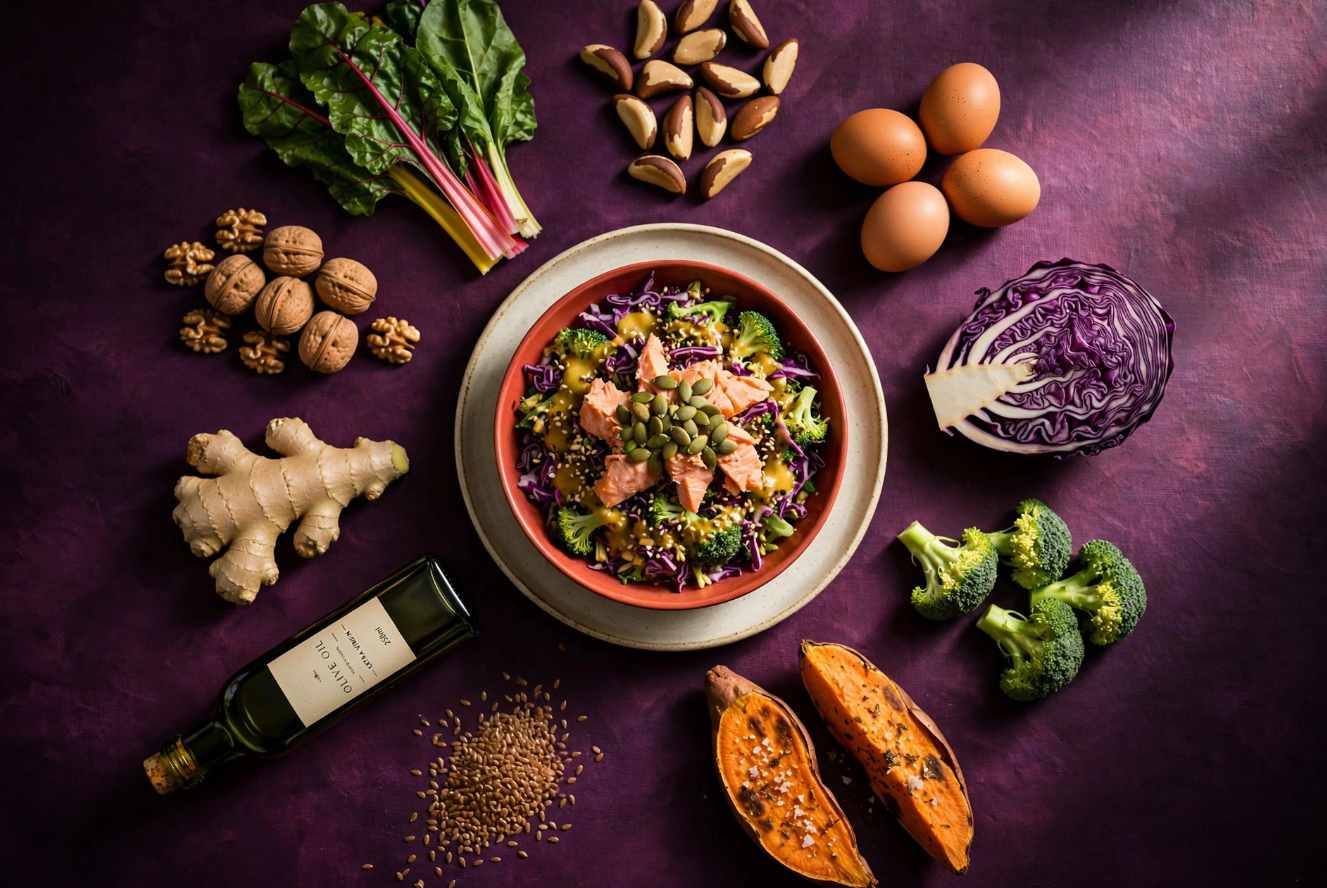
- Dish: Cruciferous Crunch Bowl with Salmon and Miso-Ginger Dressing
- Hormone Nutrients: Sulforaphane and I3C (broccoli, kale, cabbage), selenium and omega-3s (salmon), probiotics (miso), magnesium (edamame, pumpkin seeds).
- Build:
- Base: 2 cups mixed shredded kale, shredded red cabbage, and arugula.
- Cruciferous Crunch: 1/2 cup lightly steamed broccoli florets and 1/4 cup shredded Brussels sprouts (raw or lightly steamed).
- Protein: 5 oz wild salmon fillet, baked or poached and flaked.
- Additional: 1/4 cup shelled edamame, 1 tablespoon pumpkin seeds.
- Dressing: 1 tablespoon white miso paste whisked with 2 tablespoons extra-virgin olive oil, 1 tablespoon rice vinegar, 1 teaspoon grated fresh ginger, and a splash of warm water to thin.
- Hormone Win: This bowl is a liver detoxification powerhouse. The cruciferous vegetables support Phase I and Phase II estrogen clearance. The miso provides probiotics that support the gut-hormone axis. The salmon provides selenium and omega-3s. The olive oil provides the monounsaturated fats needed for hormone synthesis.
Meal 3: The Cortisol-Calming Dinner
- Dish: Herb-Baked Chicken Thighs with Magnesium-Rich Greens and Roasted Sweet Potato
- Hormone Nutrients: Tryptophan and glycine (chicken thighs), magnesium (Swiss chard, sweet potato), B6 (chicken, sweet potato), slow-digesting carbohydrate for evening cortisol management.
- Build:
- Chicken: 2 bone-in, skin-on organic chicken thighs, rubbed with olive oil, fresh rosemary, thyme, garlic, and lemon zest. Baked at 375°F for 35-40 minutes until skin is crispy and meat is tender.
- Greens: 3 cups Swiss chard, stems removed, sautéed gently in olive oil with minced garlic until just wilted. Swiss chard is exceptionally rich in magnesium.
- Carbohydrate: 1 medium sweet potato, roasted alongside the chicken or steamed and mashed with a pat of grass-fed butter and a pinch of cinnamon.
- Hormone Win: This is an evening meal designed to lower cortisol and support the transition to sleep. The chicken provides tryptophan for serotonin and melatonin synthesis. The Swiss chard and sweet potato are rich in magnesium, which calms the nervous system and supports GABA activity. The slow-digesting sweet potato provides steady glucose through the night, preventing the 3:00 AM hypoglycemic cortisol spike.
Section 5: The Hormone-Disrupting Foods — What to Minimize
1. Refined Sugar and High-Fructose Corn Syrup
These spike insulin, promote visceral fat accumulation (which produces aromatase and inflammatory cytokines), and deplete magnesium and B vitamins needed for hormone processing.
2. Industrial Seed Oils
High omega-6 intake promotes systemic inflammation, which disrupts hormone receptor sensitivity and contributes to insulin resistance. Eliminate soybean, corn, sunflower, safflower, and canola oils. Use olive oil, avocado oil, and coconut oil instead.
3. Conventionally Raised Meat and Dairy (Hormones and Antibiotics)
Conventionally raised livestock may be treated with growth hormones and antibiotics, which can act as endocrine disruptors in humans. Choose pasture-raised, organic, or grass-fed when possible.
4. Plastic Food Containers (Endocrine Disruptors)
BPA, phthalates, and other plasticizers leach into food, especially when heated. These chemicals mimic estrogen in the body, contributing to estrogen dominance. Store food in glass, stainless steel, or ceramic. Never microwave food in plastic.
5. Excess Alcohol
Alcohol stresses the liver, impairing its ability to clear used hormones. It also disrupts blood sugar, depletes magnesium and B vitamins, and fragments sleep—all of which compound hormonal imbalance. Limit to occasional use or eliminate during a healing phase.
Section 6: The Hormone-Balancing Shopping List
Thyroid-Supporting Minerals
- Brazil nuts (selenium; 1-2 per day)
- Wild salmon (selenium, omega-3s, vitamin D)
- Sardines in olive oil (selenium, omega-3s)
- Pasture-raised eggs (selenium, zinc, cholesterol)
- Pumpkin seeds (zinc, magnesium)
- Seaweed flakes (iodine; use sparingly—nori, dulse, or kelp)
Liver-Supporting Cruciferous Vegetables
- Broccoli and broccoli sprouts
- Cauliflower
- Brussels sprouts
- Kale (curly or Lacinato)
- Red or green cabbage
- Arugula
Blood Sugar-Stabilizing Carbohydrates
- Sweet potatoes
- Steel-cut oats
- Quinoa
- Lentils and chickpeas
- Barley
Hormone-Building Healthy Fats
- Extra-virgin olive oil
- Avocados and avocado oil
- Grass-fed butter or ghee
- Raw walnuts and almonds
- Flaxseeds (grind fresh), chia seeds, hemp hearts
Gut-Hormone Support
- Raw sauerkraut or kimchi
- White miso paste
- Plain kefir
Magnesium-Rich Foods
- Swiss chard
- Spinach
- Almonds
- Dark chocolate (85%+ cacao)
- Black beans
Your endocrine system is not a collection of independent parts that can be treated in isolation. It is a delicately balanced symphony, and the food you eat every day is the conductor’s baton. Feed your hormones the raw materials they need, protect them from the disruptors that damage them, and watch your energy, mood, and metabolism transform.
Read Realated Articles
- The Complete Guide to Heart Health: Beyond Omega-3s—CoQ10, Magnesium, Potassium, and Nitric Oxide Support After 40
- The Complete Guide to Eye Health: Lutein, Zeaxanthin, Astaxanthin, and Omega-3s for Protecting Your Vision After 40
- The Complete Guide to Anti-Aging Skin, Hair, and Nails: Collagen, Biotin, Silica, and Antioxidants for a Vibrant Appearance After 40
- The Busy Parent’s Supplement Guide: Staying Energized, Resilient, and Healthy While Raising Kids After 40
- Supplements for Brain Fog and Mental Clarity: Phosphatidylserine, Bacopa Monnieri, and Lion’s Mane—What Actually Works After 40
- The Complete Guide to Digestive Health: Probiotics, Prebiotics, Digestive Enzymes, and Gut-Healing Nutrients After 40
- Supplements for Osteoarthritis: A Natural Pain Management Protocol That Protects Your Joints After 40
- The Sleep-Supplement Connection: Magnesium, Glycine, L-Theanine, and Melatonin—A Complete Protocol for Restorative Rest After 40
- The Ultimate Guide to Healthy Aging: How to Build Your Personalized Supplement Plan at 40, 50, and 60
- Menopause Beyond the Basics: Mood, Bone, Brain, and Sleep Support for the American Woman Over 40
- Selenium, Zinc, and Iodine: The Trace Minerals That Support Thyroid, Immunity, and Longevity After 40
- TSA Rules for Supplements: Traveling with Pills, Powders, and Liquids as an American Over 40
- CoQ10 After 40: Ubiquinone vs. Ubiquinol, Statin Depletion, and Mitochondrial Support
- The VigorForty Guide to Third-Party Testing: USP, NSF, ConsumerLab, and How to Verify Your Supplements Are Safe
- The VigorForty Yearly Blood Work Blueprint: Exactly What to Test and When for Optimal Health After 40
- Metabolic Health Supplements: Berberine, Inositol, and Chromium for Blood Sugar Control After 40
- The Complete Guide to Electrolytes for the Active American Over 40: Sodium, Potassium, Magnesium, and Hydration Science
- Supplement-Drug Interactions Every American Over 40 Must Know: Blood Thinners, Antidepressants, BP Meds, and Statins
- The Busy Professional’s Core 5 Supplements: No Clutter, No Hype, Just What Actually Moves the Needle After 40
- Glycine + NAC: The Under-the-Radar Longevity Stack for Glutathione, Detoxification, and Deep Sleep After 40
- Adaptogens Worth Your Money: Ashwagandha, Rhodiola, and Holy Basil—Evidence and Safe Use for the Stressed 40+ American
- Best Supplements for Joint Health After 40: Curcumin, Collagen, MSM, and Glucosamine—Ranked by Evidence
- NAD+ Precursors (NMN & NR) in 2026: Current Evidence, US Legal Status, and What’s Worth Your Money
- Budget-Friendly Blood Tests to Check Your Actual Micronutrient Gaps (And Skip the Guesswork)
- The Perimenopause Supplement Protocol: Bone, Brain, and Sleep Support for American Women Over 40
- How to Read a Supplement Facts Panel Like a Dietitian: The 5-Step Method for Over-40 Americans
- Protein Powder After 40: Whey, Plant, Collagen, and the Anabolic Threshold You Must Know
- Omega-3s Decoded: EPA, DHA, and How to Read a Fish Oil Label for the Over-40 American
- Creatine After 40: Not Just for Bodybuilders—Brain, Muscle, and Longevity Science
- 5 Magnesium Myths Busted: Glycinate, Citrate, Oxide, and Which One You Actually Need
- Vitamin D3 + K2: The Over-40 American’s Protocol for Bones, Arteries, and Immunity
- The ‘Vigor Five’: Core Daily Supplements for Energy and Longevity After 40
- How Much Protein Do You Actually Need? (The Definite Guide for Satiety and Muscle Retention)
- The Ultimate Guide to Nutrient Density: How to Eat Real Food in America