
Author: Vigor Forty Editorial Team
Medically Reviewed By: Editorial Review Board
Disclaimer: This article is for informational purposes only and is not a substitute for professional medical advice. Read our full Medical Disclaimer.
📌 Key Takeaways
- Immunity Is Constant, Not Seasonal: Your immune system operates 365 days a year, not just during cold season. The nutrients you consume daily determine the baseline readiness of your white blood cells, natural killer cells, and antibody production.
- 70% of Your Immune System Lives in Your Gut: The gut-associated lymphoid tissue (GALT) is the largest immune organ in the body. Feeding gut bacteria with prebiotic fibers and fermented foods directly strengthens immune surveillance.
- Micronutrient Deficiencies Are Immune Deficiencies: Vitamin D, zinc, vitamin C, and selenium are not optional supplements—they are non-negotiable cofactors for immune cell function. Subclinical deficiencies are widespread and silently impair your defenses.
- Sleep and Food Work Together: The immune-enhancing nutrients you eat are deployed during deep sleep. Without adequate sleep, even the most nutrient-dense diet cannot fully protect you.
Introduction: The Fortress Within
Every day, your body encounters an invisible world of potential threats. Viruses drift through the air you breathe. Harmful bacteria hitch a ride on the food you eat. Fungal spores settle on surfaces you touch. Yet most days, you remain healthy. You feel nothing. You go about your life unaware that a sophisticated, multi-layered defense network has identified, contained, and neutralized these threats before they could establish a foothold.
This is your immune system—a complex, distributed intelligence that distinguishes self from non-self with astonishing precision. It includes physical barriers (skin, mucous membranes), innate immune cells (macrophages, neutrophils, natural killer cells) that respond rapidly and generically, and adaptive immune cells (T-cells, B-cells) that create targeted, long-lasting memory against specific pathogens.
But this fortress is not self-maintaining. It requires a constant supply of raw materials—vitamins, minerals, amino acids, and fatty acids—to build new immune cells, produce antibodies, and generate the oxidative burst that destroys pathogens. When these nutrients are in short supply, the fortress develops cracks. Not always visible cracks, and not immediately, but vulnerabilities that a sufficiently strong pathogen can exploit.
The immune-resilient kitchen is not about guzzling orange juice at the first sign of a sniffle or megadosing vitamin C when a coworker comes to work sick. It is about building baseline immunological fitness through daily, consistent, whole-food nutrition. This article shows you exactly how.
Section 1: The Gut-Immune Axis — Your First Line of Defense
Approximately 70% of your immune cells reside in your gut. This is not a design flaw. The gastrointestinal tract is the largest interface between the sterile interior of your body and the outside world. Every bite of food you swallow carries potential antigens—foreign proteins, bacteria, viruses, and toxins. Your gut-associated lymphoid tissue (GALT) is stationed there to sample, assess, and respond to everything that passes through.
The Three Layers of Gut Immunity:
- The Physical Barrier: A single layer of epithelial cells, sealed by tight junction proteins, forms the intestinal lining. This barrier is only one cell thick—delicate and dependent on nutrition. The amino acid glutamine is the primary fuel source for these enterocytes. Zinc is essential for maintaining tight junction integrity. Without adequate glutamine and zinc, the barrier becomes permeable, allowing partially digested food particles and bacterial endotoxins to cross into the bloodstream—a condition commonly called “leaky gut.” This triggers systemic immune activation and chronic inflammation.
- The Chemical Barrier: Specialized cells in the stomach produce hydrochloric acid, which sterilizes incoming food by killing most ingested pathogens. Goblet cells throughout the intestines secrete mucus, which traps pathogens and prevents them from reaching the epithelial surface. Paneth cells secrete antimicrobial peptides called defensins, which act as natural antibiotics. Vitamin D is a critical regulator of defensin production. Low vitamin D status means lower defensin levels and reduced chemical defense.
- The Microbial Barrier: Your commensal gut bacteria—the beneficial residents—compete with potential pathogens for space and nutrients. A diverse, well-fed microbiome simply outcompetes invaders. The short-chain fatty acids (butyrate, propionate, acetate) produced when beneficial bacteria ferment fiber strengthen the intestinal barrier and regulate immune cell differentiation. Fiber is not just for digestion; it is immune fuel.
The Vigor Forty Gut-Immune Protocol:
- Daily Prebiotic Fiber: Jerusalem artichokes, leeks, onions, garlic, asparagus, green bananas, cooked-and-cooled potatoes (see the Gut-Brain Kitchen article for full details).
- Daily Fermented Foods: Raw sauerkraut, kimchi, plain kefir, miso paste. A tablespoon or two at each meal.
- Glutamine Support: Bone broth, grass-fed beef, pasture-raised eggs, and cottage cheese are rich in glutamine.
- Zinc Support: Oysters (the richest source), pumpkin seeds, lentils, grass-fed beef, and cashews.
Section 2: The Immune Nutrient Powerhouse — Four Non-Negotiable Micronutrients
While dozens of nutrients support immune function, four are so critical that subclinical deficiency measurably impairs immune competence. Many Americans are deficient in at least one.
1. Vitamin D — The Immune Orchestrator
- Why It Matters: Vitamin D receptors are expressed on virtually all immune cells, including macrophages, dendritic cells, T-cells, and B-cells. Vitamin D modulates both the innate and adaptive arms. It stimulates the production of antimicrobial peptides (cathelicidin and defensins) in epithelial cells and macrophages. It also suppresses excessive inflammatory cytokine production, preventing the “cytokine storm” that characterizes severe respiratory infections. Large meta-analyses have shown that individuals with low serum vitamin D levels have significantly higher rates of upper respiratory tract infections, and that daily or weekly vitamin D supplementation reduces infection risk—especially in those who are deficient.
- Food Sources: Wild-caught fatty fish (salmon, mackerel, sardines), pasture-raised egg yolks, UV-exposed mushrooms, and fortified foods. However, food alone is often insufficient to correct deficiency.
- The Sun Factor: Sensible, regular sun exposure (10-30 minutes of midday sun on arms and legs, depending on skin type and latitude) is the most effective way to raise vitamin D levels. During winter months at northern latitudes, supplementation is often necessary.
- The Vigor Forty Recommendation: Test your serum 25-hydroxyvitamin D level. Optimal range is 40-60 ng/mL. Many functional medicine practitioners recommend 2,000-4,000 IU of vitamin D3 daily with a meal containing fat for maintenance, though individual dosing should be guided by blood work.
2. Zinc — The Cell Division Commander
- Why It Matters: Zinc is an essential cofactor for over 300 enzymes and is critically required for the development, differentiation, and function of immune cells. Both innate immune cells (neutrophils, macrophages, natural killer cells) and adaptive immune cells (T-cells, B-cells) depend on zinc for their activity. Zinc deficiency impairs the production of antibodies and the activity of thymic hormones that mature T-cells. Zinc also directly inhibits viral replication by interfering with viral RNA polymerase.
- Food Sources:
- Highest: Oysters (a single serving provides 500%+ of the RDA).
- Good: Grass-fed beef, lamb, pumpkin seeds, cashews, chickpeas, lentils, quinoa.
- Bioavailability Note: Zinc from animal sources is more bioavailable than from plant sources, as phytates in whole grains and legumes bind zinc and inhibit absorption. Soaking, sprouting, or fermenting grains and legumes reduces phytate content.
- The Vigor Forty Recommendation: Prioritize zinc-rich foods daily. If considering supplementation, 15-30 mg of zinc picolinate or zinc citrate with food is a common maintenance dose. Long-term high-dose zinc supplementation can cause copper deficiency, so balance is key.
3. Vitamin C — The Oxidative Burst Fuel
- Why It Matters: Phagocytic immune cells (neutrophils and macrophages) destroy engulfed pathogens using an “oxidative burst”—a rapid release of reactive oxygen species. Vitamin C protects these cells from their own oxidative weapons as they do their work. It also stimulates the production and migration of neutrophils to sites of infection, enhances natural killer cell activity, and supports the structural integrity of skin and mucous membranes through its role in collagen synthesis. Plasma vitamin C levels drop rapidly during infection, indicating high immune demand.
- Food Sources: Citrus fruits are famous but not the richest sources.
- Highest: Acerola cherries, camu camu powder, rose hips, guava.
- Excellent: Red bell peppers (more vitamin C than oranges, gram for gram), kiwi, strawberries, papaya, broccoli, Brussels sprouts.
- The Vigor Forty Recommendation: Eat 2-3 vitamin C-rich foods daily. One red bell pepper, one kiwi, and a serving of broccoli cover the RDA many times over. High-dose vitamin C supplementation (above 1,000 mg) can cause gastrointestinal distress and has diminishing returns as absorption decreases and urinary excretion increases.
4. Selenium — The Antiviral Mineral
- Why It Matters: Selenium is incorporated into selenoproteins, including the glutathione peroxidase family—enzymes that protect cells from oxidative damage. Selenium deficiency has been shown to increase the mutation rate of viruses, allowing them to become more virulent. Adequate selenium status supports the function of natural killer cells and the production of antibodies. The soil content of selenium varies dramatically by region; many parts of the world have selenium-depleted soil, and thus selenium-depleted food.
- Food Sources:
- Most Reliable: Brazil nuts. One single Brazil nut provides 68-96 mcg of selenium—exceeding the RDA of 55 mcg. Do not eat more than 2-3 per day, as selenium toxicity is possible at very high intakes.
- Good: Sardines, wild salmon, pasture-raised eggs, sunflower seeds, grass-fed beef.
- The Vigor Forty Recommendation: Eat 1-2 Brazil nuts daily. This single habit corrects subclinical selenium deficiency more reliably than any other food.
Section 3: The Immune-Boosting Food Matrix — Beyond Micronutrients
Whole foods contain complex mixtures of bioactive compounds that support immunity through mechanisms beyond vitamin and mineral content.
Garlic (Allium sativum)
- Active Compound: Allicin, which is formed when garlic is crushed or chopped and allowed to sit for 10 minutes before cooking.
- Mechanism: Allicin has direct antimicrobial, antiviral, and antifungal properties. It also stimulates immune cells including macrophages and lymphocytes. In clinical trials, aged garlic extract supplementation reduced the severity and duration of cold and flu symptoms.
- Usage: Crush or chop garlic and let it rest for 10 minutes before adding to heat. This allows the alliinase enzyme to convert alliin into active allicin. Add to soups, stir-fries, dressings, and roasted vegetables at the end of cooking to preserve the heat-sensitive allicin.
Medicinal Mushrooms (Shiitake, Maitake, Reishi, Turkey Tail)
- Active Compounds: Beta-glucans, a type of polysaccharide fiber that immune cells recognize as a “training signal.”
- Mechanism: Beta-glucans bind to receptors on macrophages and natural killer cells, priming them for a faster, more effective response to actual pathogens. This is not immune “boosting” so much as immune training—it calibrates the innate immune system for optimal readiness.
- Usage: Sauté shiitake and maitake mushrooms in olive oil and garlic for a side dish. Add mushroom powders (reishi, turkey tail) to coffee, tea, soups, or smoothies. Cook mushrooms thoroughly; their cell walls are made of chitin, which is indigestible unless heat breaks it down.
Ginger (Zingiber officinale)
- Active Compounds: Gingerols and shogaols.
- Mechanism: Ginger has direct antiviral activity against certain respiratory viruses. It also inhibits the production of pro-inflammatory cytokines while promoting the production of anti-inflammatory cytokines, helping to modulate the immune response rather than simply stimulating it. Ginger is a natural diaphoretic, meaning it promotes gentle sweating, which can be supportive during a fever.
- Usage: Fresh ginger tea: steep 1-2 inches of sliced fresh ginger in boiling water for 10 minutes. Add lemon and raw honey. Use fresh ginger in stir-fries, soups, and dressings.
Raw Honey
- Active Compounds: Hydrogen peroxide (produced by the glucose oxidase enzyme naturally present in honey), methylglyoxal (especially in Manuka honey), bee defensin-1, and a diverse array of polyphenols and flavonoids.
- Mechanism: Honey has broad-spectrum antimicrobial activity. It creates a hyperosmotic environment that dehydrates bacteria while the hydrogen peroxide and bee peptides directly kill pathogens. Clinical trials have shown honey to be more effective than some over-the-counter cough suppressants for nighttime cough in children. Honey also supports the growth of beneficial gut bacteria as a prebiotic.
- Usage: Stir into warm (not boiling) tea—excessive heat destroys the glucose oxidase enzyme. Take a teaspoon straight at the first sign of a scratchy throat. Choose raw, unprocessed honey for maximum enzyme activity. Manuka honey has a higher concentration of methylglyoxal and is often rated by its Unique Manuka Factor (UMF); a UMF of 10+ is considered therapeutic.
Section 4: The Immune-Resilient Plate Matrix (3 Fortifying Meals)
Each meal combines multiple immune-supporting nutrients in delicious, practical ways.
Meal 1: The Zinc-Bomb Breakfast
- Dish: Smoked Oyster & Spinach Scramble
- Immune Nutrients: Zinc (oysters), vitamin C (bell pepper), vitamin D (eggs), selenium (eggs), allicin (garlic).
- Build:
- 2 pasture-raised eggs + 1 egg white scrambled gently in olive oil.
- Mid-scramble, add a large handful of baby spinach, 1/4 cup diced red bell pepper, and 1 clove of garlic, crushed and rested for 10 minutes.
- Plate and top with 1 tin of smoked oysters (packed in olive oil), drained and arranged on the side or folded in.
- Serve with 1 slice of sprouted grain toast.
- Immune Win: Oysters are the single richest food source of zinc. Combined with vitamin C from the bell pepper (which enhances zinc absorption) and vitamin D and selenium from the eggs, this breakfast covers all four critical immune micronutrients before 9:00 AM.
Meal 2: The Mushroom & Ginger Immunity Bowl
- Dish: Ginger-Garlic Mushroom Soup with Bone Broth
- Immune Nutrients: Beta-glucans (shiitake, maitake), gingerols (ginger), allicin (garlic), glutamine (bone broth), zinc (chicken, if added).
- Build:
- In a soup pot, sauté 2 cups sliced shiitake and maitake mushrooms in olive oil until golden and reduced.
- Add 4 cloves garlic (crushed and rested), 2 tablespoons grated fresh ginger, and 1/2 teaspoon turmeric. Sauté for 1 minute until fragrant.
- Pour in 4 cups high-quality chicken bone broth. Bring to a simmer.
- Add 1 cup shredded cooked chicken (optional, for extra zinc and protein).
- Simmer for 10 minutes. Finish with a squeeze of fresh lemon juice and a handful of chopped fresh cilantro.
- Serve with a drizzle of extra-virgin olive oil.
- Immune Win: This soup is a multi-layered immune intervention. The mushroom beta-glucans prime innate immune cells. The ginger and garlic provide direct antiviral and anti-inflammatory activity. The bone broth supplies glutamine for gut barrier repair. The lemon adds vitamin C. This is what to eat at the first sign of feeling run down.
Meal 3: The Selenium-Rich Recovery Plate
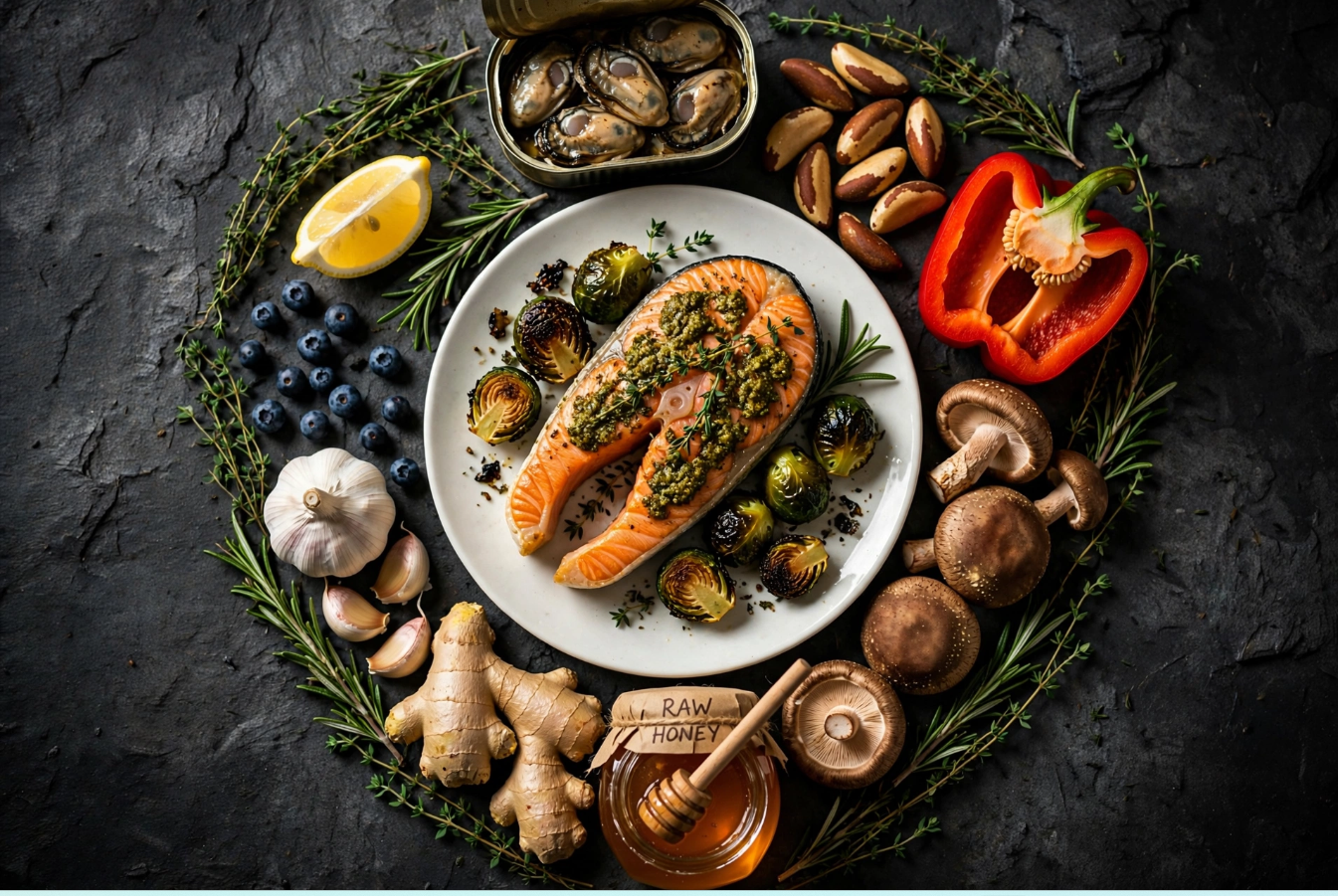
- Dish: Herb-Crusted Salmon with Roasted Brussels Sprouts and Brazil Nut Pesto
- Immune Nutrients: Selenium (salmon, Brazil nuts), vitamin D (salmon), vitamin C (Brussels sprouts, lemon), sulforaphane (Brussels sprouts), allicin (garlic in pesto).
- Build:
- Salmon: 6 oz wild salmon fillet, crusted with mixed fresh herbs (parsley, dill, thyme) and baked at 375°F for 12-15 minutes.
- Brussels Sprouts: Halved and roasted alongside the salmon, tossed in olive oil and a pinch of salt.
- Brazil Nut Pesto: In a food processor, combine 4 Brazil nuts, 1 cup fresh basil, 1 clove garlic, juice of 1/2 lemon, 3 tablespoons extra-virgin olive oil, and a pinch of salt. Process until a chunky paste forms. Spoon over the salmon.
- Immune Win: The Brazil nut pesto delivers a full day’s selenium in a delicious, fresh sauce. The salmon provides vitamin D and additional selenium. Brussels sprouts are a cruciferous vegetable rich in vitamin C and sulforaphane, which activates the Nrf2 antioxidant pathway that protects immune cells from oxidative damage during pathogen defense.
Section 5: The Immune-Lifestyle Connection — What Food Cannot Do Alone
Even the most nutrient-dense diet cannot fully compensate for lifestyle factors that suppress immunity.
Sleep: The Immune Deployment Phase
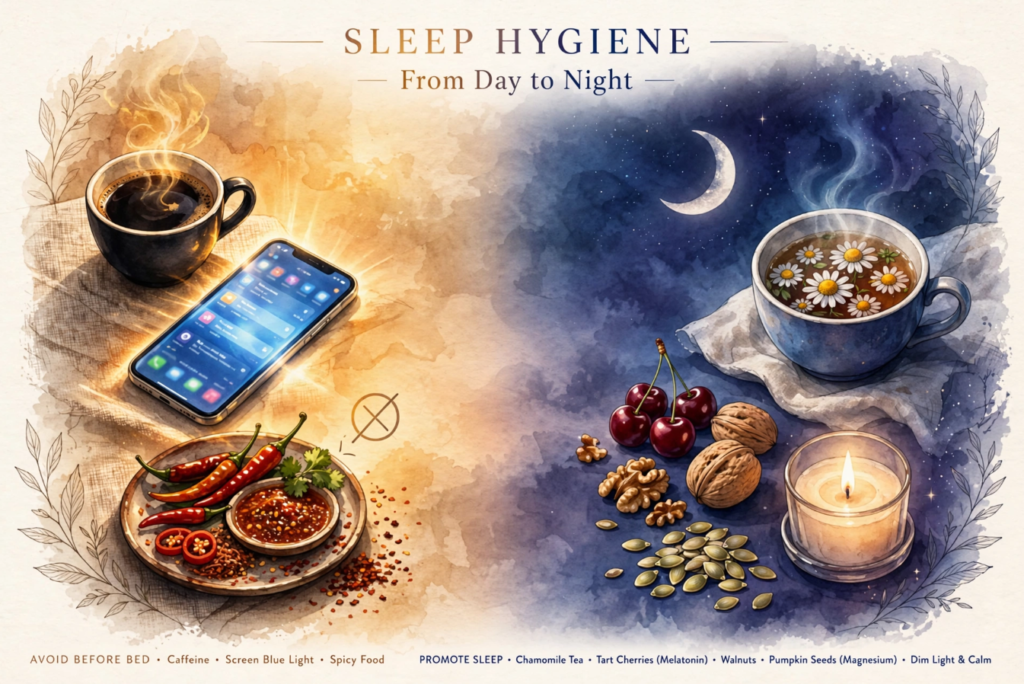
Sleep is not a passive state. During deep slow-wave sleep, the body releases prolactin and growth hormone, which support the production and differentiation of immune cells. T-cell activity and the production of antibodies peak during sleep. One night of partial sleep deprivation (4 hours) reduces natural killer cell activity by approximately 70%. Chronic sleep deprivation is associated with lower antibody responses to vaccination and increased susceptibility to respiratory infections.
- The Vigor Forty Guideline: 7-9 hours per night. Consistent bed and wake times anchor the circadian rhythm, which governs immune cell trafficking.
Exercise: The Immune Mobilizer
Moderate, regular physical activity mobilizes immune cells into the bloodstream, enhances immune surveillance, and reduces inflammation. Each bout of moderate exercise causes a transient increase in natural killer cell activity. However, prolonged, exhaustive exercise (marathon running, overtraining) temporarily suppresses immunity, creating an “open window” of increased infection risk.
- The Vigor Forty Guideline: Daily moderate movement (walking, cycling, swimming, strength training) is immune-enhancing. Rest days and recovery are equally important.
Stress: The Cortisol Connection
Chronic stress elevates cortisol, which is immunosuppressive. Cortisol reduces the production and activity of lymphocytes, suppresses natural killer cell function, and shrinks the thymus gland where T-cells mature. The relationship between chronic stress and increased respiratory infection susceptibility is one of the most robust findings in psychoneuroimmunology.
- The Vigor Forty Guideline: Incorporate daily stress-reduction practices: meditation, deep breathing, time in nature, social connection, and the 12-minute parasympathetic pause before meals described in our Gut-Brain Kitchen article.
Section 6: The Immune-Resilient Shopping List
Vitamin D Foods
- Wild Sockeye salmon (fresh or frozen)
- Wild sardines in olive oil
- Pasture-raised eggs
- UV-exposed mushrooms (check label)
Zinc Foods
- Canned smoked oysters (2-3 tins)
- Grass-fed beef (if you eat red meat)
- Pumpkin seeds
- Lentils, chickpeas
Vitamin C Foods
- Red bell peppers (the richest common source)
- Kiwi fruit
- Oranges, grapefruit
- Broccoli, Brussels sprouts
- Fresh lemons
Selenium Foods
- Brazil nuts (small bag; 1-2 per day max)
- Wild salmon
- Sunflower seeds
Immune-Boosting Botanicals
- Fresh garlic (multiple heads)
- Fresh ginger root (large knob)
- Fresh turmeric root
- Shiitake and maitake mushrooms (fresh or dried)
- Raw, unprocessed honey (local if possible)
- Green tea (for EGCG)
Gut-Immune Support
- High-quality bone broth (chicken or beef)
- Raw sauerkraut or kimchi (refrigerated section)
- Plain kefir
Your immune system is not a switch you flip on during cold season. It is a fortress you build, brick by brick, meal by meal, night of sleep by night of sleep. The immune-resilient kitchen provides the raw materials. Your daily habits provide the construction crew. Together, they build a defense that serves you for life.
Read Related Articles
- Precision Protein: How to Calculate Your Exact Intake for Muscle Preservation (Especially on GLP-1s)
- The Metabolic Kitchen: A 5-Day Nutrient-Dense Meal Prep Guide for Lasting Energy
- The 15-Minute Metabolic Plate: High-Speed Nutrient-Dense Cooking for the Time-Starved Professional
- The Gut-Brain Kitchen: Fermented Foods, Prebiotic Fibers, and the 30-Plant Diversity Challenge
- The Focus Plate: Brain-Boosting Nutrients and Recipes for Mental Clarity and Cognitive Longevity
- The Fat Clarity Guide: Healthy vs. Inflammatory Fats and How to Cook with Each One
- The Functional Hydration Guide: Nutrient-Dense Beverages for Energy, Focus, and Metabolic Health
- The Anti-Inflammatory Kitchen: Foods That Heal, Foods That Harm, and Building a Pain-Relieving Plate
- The Immune-Resilient Kitchen: Year-Round Foods and Recipes to Fortify Your Body’s Defenses
- The Sleep-Enhancing Kitchen: Foods, Timing, and Rituals for Deep, Restorative Rest
- The Hormone-Balancing Kitchen: Foods and Recipes to Support Thyroid, Insulin, and Endocrine Health