
Author: Vigor Forty Editorial Team
Medically Reviewed By: Editorial Review Board
Disclaimer: This article is for informational purposes only and is not a substitute for professional medical advice. Read our full Medical Disclaimer.
📌 Key Takeaways
- Osteoarthritis (OA) Is Not Just “Wear and Tear”: It’s a complex, inflammatory condition involving cartilage breakdown, synovial inflammation, and bone remodeling. After 40, cumulative joint stress, metabolic inflammation, and age-related declines in cartilage repair accelerate its progression.
- The Right Supplements Target Root Mechanisms, Not Just Pain: Curcumin, collagen peptides, omega-3s, MSM, and vitamin D address the inflammation, cartilage degradation, and bone changes driving OA—offering disease-modifying potential, not just symptom masking.
- NSAIDs Have Long-Term Risks: Chronic use of ibuprofen or naproxen for joint pain damages the gut lining, kidneys, and cardiovascular system. An evidence-based supplement protocol can reduce or eliminate NSAID reliance for many people.
- It Takes 8–12 Weeks to See Full Benefit: Unlike painkillers, joint supplements work slowly by rebuilding tissue and resolving inflammation. Consistency and patience are essential. Combining supplements with targeted exercise and weight management amplifies results.
- Glucosamine and Chondroitin Are Conditional, Not Universal: They help some people significantly and others not at all. Pharmaceutical-grade glucosamine sulfate—not hydrochloride—is the form with evidence. If no benefit is felt within 3 months, discontinue.
Introduction: When Your Joints Demand a Smarter Strategy
You’ve earned the creaky knees and stiff fingers, right? Decades of running, lifting, typing, and simply living on gravity’s terms. The standard American approach to joint pain is deceptively simple: pop an ibuprofen, ice it, and push through. But after 40, that strategy begins to extract a hidden toll—on your gut lining, your kidneys, your cardiovascular system, and ultimately, on the cartilage you’re trying to protect.
Osteoarthritis affects over 32 million Americans, and its prevalence rises sharply after age 45. It’s not a passive wearing down of cartilage like tread on a tire. It’s an active, inflammatory, and metabolically driven process. The synovial membrane becomes inflamed, chondrocytes (cartilage cells) begin producing destructive enzymes, and the underlying bone remodels abnormally. This is why simply “resting” a painful joint often doesn’t fix it—and why drugs that only block pain leave the disease process unchecked.
This article builds a complete, tiered supplement protocol for osteoarthritis, ranking each ingredient by the strength of its human evidence. It also integrates the lifestyle factors that no pill can replace. By the end, you’ll have a clear, science-backed plan to reduce pain, improve function, and actively protect your joints for the decades ahead.
Section 1: Understanding Osteoarthritis After 40—More Than Just Cartilage
Osteoarthritis is a whole-joint disease. The cartilage, synovial fluid, subchondral bone, menisci, ligaments, and surrounding muscles are all involved. Key drivers include:
- Chronic Low-Grade Inflammation: Elevated inflammatory cytokines (IL-1β, TNF-α, IL-6) promote cartilage degradation and pain sensitization. This systemic inflammation often stems from visceral fat, poor diet, and metabolic syndrome—explaining why OA is strongly linked to obesity and diabetes.
- Oxidative Stress: Reactive oxygen species damage chondrocytes and degrade hyaluronic acid in synovial fluid, reducing its lubricating properties.
- Loss of Proteoglycans: Cartilage’s ability to hold water and resist compression depends on aggrecan, a proteoglycan that diminishes with age and inflammation. Collagen fibers become disorganized and less resilient.
- Subchondral Bone Changes: The bone beneath cartilage thickens and develops microcracks and bone marrow lesions, contributing to pain and further cartilage stress.
- Muscle Weakness: Weak periarticular muscles fail to absorb shock, transferring excess load directly to the joint. Quadriceps weakness, for example, is a stronger predictor of knee OA progression than almost any structural factor.
Effective supplements target these root mechanisms—inflammation, oxidative stress, cartilage matrix degradation, and bone remodeling—not just pain perception.
Section 2: The Tiered Evidence Ranking for OA Supplements
We’ve previously covered joint health supplements broadly. Here, we rank them specifically for osteoarthritis, using human randomized controlled trials and meta-analyses as the standard of evidence.
| Tier | Supplement | Evidence Level | Primary Mechanism |
|---|---|---|---|
| 1 (Strongest) | High-absorption curcumin | A | Potent anti-inflammatory; inhibits NF-kB, COX-2, and multiple cytokines; comparable to NSAIDs in some trials. |
| 1 | Omega-3s (EPA/DHA) | A | Resolve inflammation via resolvins and protectins; improve joint lubrication; reduce NSAID use. |
| 2 (Strong) | Collagen peptides (hydrolyzed type II or I/III) | A- | Stimulate chondrocytes to synthesize new type II collagen and aggrecan; reduce pain and improve function in knee OA. |
| 2 | Vitamin D3 + K2 | A- | Vitamin D supports cartilage health and muscle function; deficiency worsens OA pain and progression. K2 prevents calcium deposition in cartilage. |
| 3 (Moderate) | MSM (methylsulfonylmethane) | B+ | Anti-inflammatory; reduces oxidative stress; improves pain and function in knee OA, especially when combined with glucosamine. |
| 3 | Glucosamine sulfate (pharmaceutical-grade) | B (conditional) | Provides substrate for glycosaminoglycan synthesis; may slow joint space narrowing over 2–3 years in knee OA. |
| 4 (Supportive) | Boswellia serrata (AKBA-rich) | B | Inhibits 5-lipoxygenase, reducing leukotriene-driven inflammation; reduces pain and improves function. |
| 4 | Undenatured type II collagen (UC-II®) | B | Oral tolerance induction—small doses of collagen may “train” the immune system to stop attacking joint cartilage in inflammatory OA. |
Section 3: The Core OA Protocol—Non-Negotiable Daily Foundation
This stack addresses the three primary drivers of OA: inflammation, cartilage degradation, and bone/joint nutrition.
| Supplement | Daily Dose | Why It’s Here | Notes |
|---|---|---|---|
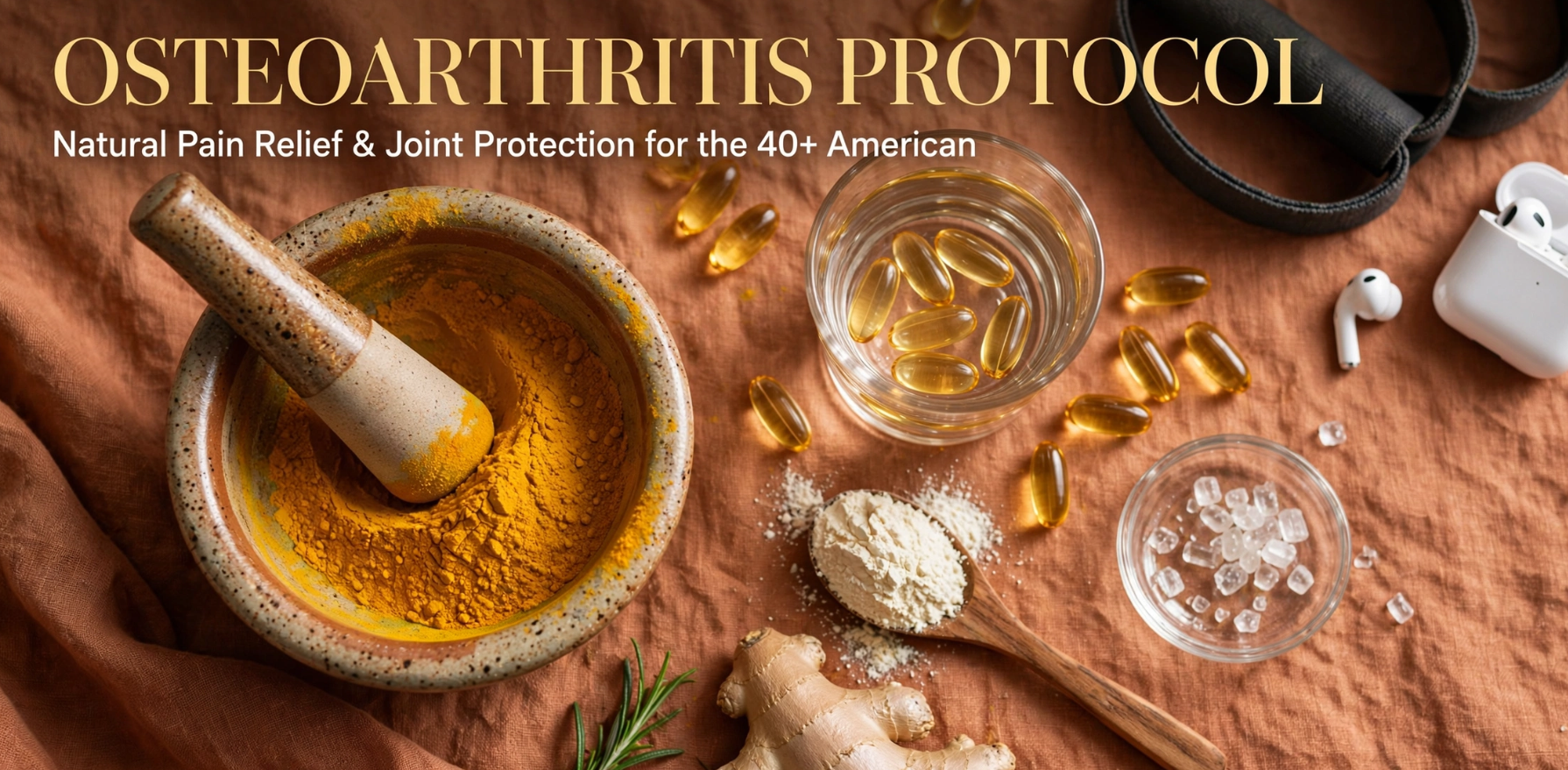
| High-absorption curcumin | 500–1,500 mg of enhanced extract (e.g., Meriva®, BCM-95®, Longvida®) | Blocks multiple inflammatory pathways; reduces OA pain comparably to NSAIDs. | Take with a fat-containing meal. Divided doses (2–3x/day) maintain steady blood levels. |
| Omega-3s (EPA/DHA) | 2,000–3,000 mg combined EPA+DHA | Generates resolvins that actively turn off joint inflammation. | Higher dose than general health; ensure IFOS or NSF certification. |
| Collagen peptides (hydrolyzed type I/III or type II) | 10–15 g hydrolyzed collagen peptides OR 40 mg UC-II® | Provides building blocks for cartilage repair; stimulates chondrocyte activity. | Unflavored powder dissolves easily in coffee or smoothies. UC-II® is a much smaller dose but requires a specific patented form. |
| Vitamin D3 + K2 | 2,000–4,000 IU D3 + 100–200 mcg K2 MK-7 | Supports cartilage health, muscle function, and calcium regulation in bone. | Often already in your Vigor Five. Ensure blood level of 40–60 ng/mL. |
Timing and Stacking:
- Morning with breakfast: Curcumin, omega-3s, vitamin D3+K2 (all fat-soluble). Collagen powder mixed into coffee or oatmeal.
- Evening: Magnesium glycinate (from Vigor Five) for muscle relaxation around the joint.
- Start all four together. You may notice reduced stiffness within 2–4 weeks and reduced pain within 8–12 weeks.
Section 4: Add-On Supplements for Enhanced Relief
Once the core protocol has been in place for 4–6 weeks, you can layer on one or two of the following for additional relief, depending on your specific symptoms.
1. MSM (Methylsulfonylmethane)
- Best for: Persistent mild-to-moderate pain that hasn’t fully responded to curcumin and collagen alone.
- Dose: 1,500–3,000 mg daily, divided into two doses with meals. Start at 1,500 mg and increase after 2 weeks if needed.
- Evidence: A 2011 trial found 3 g/day significantly reduced pain and improved function. A 2018 combination study showed additive effects with glucosamine.
2. Glucosamine Sulfate (Pharmaceutical-Grade Only)
- Best for: Those with moderate knee OA who want to try a cartilage-building approach. Not for those with shellfish allergy (unless using vegetarian fermented glucosamine).
- Dose: 1,500 mg of glucosamine sulfate once daily. Avoid glucosamine hydrochloride (HCl), which has weaker evidence.
- Evidence: The large GAIT trial was negative overall but positive in a subgroup with moderate-to-severe pain. European trials using pharmaceutical-grade sulfate (e.g., Dona®, Rotta formulation) are more consistently positive, showing reduced joint space narrowing over 3 years.
- Verdict: Try for 3 months. If no benefit, discontinue. This is not a mandatory supplement.
3. Boswellia Serrata (Indian Frankincense)
- Best for: Inflammatory OA with visible joint swelling or warmth.
- Dose: 100–250 mg of a standardized extract providing 30% AKBA (acetyl-11-keto-β-boswellic acid), taken with food.
- Evidence: Multiple trials show significant reductions in pain and improvements in function within 1–2 weeks, with effects sustained over months. AKBA inhibits 5-lipoxygenase, a key enzyme in leukotriene-driven inflammation.
4. Undenatured Type II Collagen (UC-II®)
- Best for: Those who prefer a very small capsule (40 mg) over a 10-gram scoop of powder.
- Dose: 40 mg daily, taken on an empty stomach in the morning.
- Evidence: A 2009 trial in knee OA patients found that 40 mg UC-II® was more effective than 1,500 mg glucosamine + 1,200 mg chondroitin for pain reduction. The mechanism is oral tolerance—exposing the gut immune system to small amounts of type II collagen may reduce the autoimmune attack on joint cartilage.
Section 5: The NSAID Problem—Why You Need a Better Long-Term Plan
Non-steroidal anti-inflammatory drugs (ibuprofen, naproxen, diclofenac, meloxicam, celecoxib) are the most commonly used medications for OA pain. They work—acutely. But chronic use carries significant risks that compound with age:
- Gastrointestinal: NSAIDs inhibit COX-1, which protects the stomach lining. Chronic use causes gastritis, ulcers, and bleeding. After 40, GI mucosal defense weakens, and the risk of serious GI events rises.
- Renal: NSAIDs reduce blood flow to the kidneys, potentially causing acute kidney injury and accelerating chronic kidney disease. This is especially dangerous for those with borderline renal function, diabetes, or hypertension.
- Cardiovascular: All NSAIDs (except naproxen at low dose) carry an FDA black box warning for increased risk of heart attack and stroke. This risk is dose- and duration-dependent.
- Cartilage: Paradoxically, some evidence suggests that certain NSAIDs (especially indomethacin) may accelerate cartilage breakdown by inhibiting proteoglycan synthesis, though the clinical significance remains debated.
The goal of an evidence-based supplement protocol is not necessarily to eliminate all NSAID use forever—there will be flares—but to reduce chronic, daily reliance to occasional, targeted use. Many of our readers report that after 8–12 weeks on the core OA protocol, they reach for ibuprofen only a few times a month instead of a few times a day.
Section 6: The Non-Negotiable Lifestyle Foundation—No Supplement Works Alone
Even the most potent anti-inflammatory stack cannot fully overcome a pro-inflammatory lifestyle. These pillars are as essential as any pill.
1. Resistance Training and Targeted Physical Therapy
Weak muscles are the single greatest modifiable risk factor for OA progression. Strengthening the quadriceps, glutes, and core offloads the knee and hip joints. A 2021 systematic review found that supervised resistance training reduced knee OA pain as effectively as NSAIDs, with the added benefits of improved function, metabolic health, and longevity. Work with a physical therapist or qualified trainer to design a program that strengthens without exacerbating pain.
2. Weight Management
Each pound of body weight places approximately 4 pounds of force on the knee joint during walking. A 10-pound weight loss reduces knee compressive forces by 40 pounds per step. Even modest weight loss (5–10% of body weight) significantly reduces OA pain and inflammation. No supplement can match this mechanical and metabolic benefit.
3. Anti-Inflammatory Diet
Adopt a Mediterranean-style eating pattern: abundant vegetables, fruits, olive oil, fatty fish, nuts, legumes, and whole grains, with minimal processed foods, refined sugar, and industrial seed oils. This dietary pattern naturally provides the polyphenols, omega-3s, and fiber that reduce systemic inflammation and support a healthy gut microbiome—which, in turn, influences joint inflammation.
4. Movement is Medicine
Joints are not hinges that wear out with use. They are living tissues that depend on cyclic loading for nutrition and waste removal. Daily gentle movement—walking, cycling, swimming, yoga—circulates synovial fluid, delivers nutrients to chondrocytes, and maintains range of motion. Prolonged rest and immobilization worsen OA.
Section 7: FAQ—Your Top Osteoarthritis Supplement Questions
Q: Can I take curcumin if I’m on a blood thinner?
A: Curcumin has mild antiplatelet effects. If you take warfarin (Coumadin), clopidogrel (Plavix), or apixaban (Eliquis), consult your prescribing physician. It can often be used safely at standard doses with monitoring, but the combination increases bleeding risk and requires awareness. The same applies before scheduled surgery—discontinue curcumin 1–2 weeks prior.
Q: How long before I can walk without knee pain?
A: Most people notice reduced morning stiffness and easier movement within 2–4 weeks. Significant pain reduction typically takes 8–12 weeks of consistent supplementation combined with exercise and dietary improvements. Joint repair is a slow biological process; patience is essential.
Q: Is glucosamine worth it if I have severe OA?
A: In advanced OA with significant joint space narrowing, glucosamine is unlikely to regrow cartilage. At that stage, curcumin, omega-3s, and collagen become more important for managing inflammation and pain, while physical therapy and weight management address function. Joint replacement evaluation may be appropriate for end-stage disease.
Q: Can I take all these supplements with my blood pressure medications?
A: Omega-3s and curcumin can mildly lower blood pressure—typically a beneficial additive effect. Magnesium (from your Vigor Five) also lowers BP modestly. Monitor your blood pressure at home, and if it drops below 110/70 or you experience lightheadedness, inform your doctor, who may adjust your medication dose.
Q: I’m in my 40s and only have mild creaking. Do I need all of this?
A: No. Start with curcumin and omega-3s as a preventive anti-inflammatory base. Add collagen if you’re physically active and want to support cartilage health proactively. Use the full protocol only if pain and stiffness meaningfully impact your daily life. Prevention requires fewer supplements than treatment.
The VigorForty Take
Osteoarthritis is not an inevitable sentence to chronic pain and immobility. It is a complex, modifiable disease. The right supplements—curcumin to quell the inflammatory fire, omega-3s to actively resolve it, collagen to rebuild the cartilage scaffold, and vitamin D to nourish the bone—provide a powerful, natural foundation. Layer on MSM or boswellia as needed. But never forget that the most potent interventions are free: strong muscles to unload the joint, a healthy weight to reduce mechanical stress, and daily movement to keep the joint alive.
Your knees, hips, and hands have carried you through decades. Invest in their long-term health with the same evidence-based rigor you apply to your heart and brain.
Read Realated Articles
- The Complete Guide to Heart Health: Beyond Omega-3s—CoQ10, Magnesium, Potassium, and Nitric Oxide Support After 40
- The Complete Guide to Eye Health: Lutein, Zeaxanthin, Astaxanthin, and Omega-3s for Protecting Your Vision After 40
- The Complete Guide to Anti-Aging Skin, Hair, and Nails: Collagen, Biotin, Silica, and Antioxidants for a Vibrant Appearance After 40
- The Busy Parent’s Supplement Guide: Staying Energized, Resilient, and Healthy While Raising Kids After 40
- Supplements for Brain Fog and Mental Clarity: Phosphatidylserine, Bacopa Monnieri, and Lion’s Mane—What Actually Works After 40
- The Complete Guide to Digestive Health: Probiotics, Prebiotics, Digestive Enzymes, and Gut-Healing Nutrients After 40
- Supplements for Osteoarthritis: A Natural Pain Management Protocol That Protects Your Joints After 40
- The Sleep-Supplement Connection: Magnesium, Glycine, L-Theanine, and Melatonin—A Complete Protocol for Restorative Rest After 40
- The Ultimate Guide to Healthy Aging: How to Build Your Personalized Supplement Plan at 40, 50, and 60
- Menopause Beyond the Basics: Mood, Bone, Brain, and Sleep Support for the American Woman Over 40
- Selenium, Zinc, and Iodine: The Trace Minerals That Support Thyroid, Immunity, and Longevity After 40
- TSA Rules for Supplements: Traveling with Pills, Powders, and Liquids as an American Over 40
- CoQ10 After 40: Ubiquinone vs. Ubiquinol, Statin Depletion, and Mitochondrial Support
- The VigorForty Guide to Third-Party Testing: USP, NSF, ConsumerLab, and How to Verify Your Supplements Are Safe
- The VigorForty Yearly Blood Work Blueprint: Exactly What to Test and When for Optimal Health After 40
- Metabolic Health Supplements: Berberine, Inositol, and Chromium for Blood Sugar Control After 40
- The Complete Guide to Electrolytes for the Active American Over 40: Sodium, Potassium, Magnesium, and Hydration Science
- Supplement-Drug Interactions Every American Over 40 Must Know: Blood Thinners, Antidepressants, BP Meds, and Statins
- The Busy Professional’s Core 5 Supplements: No Clutter, No Hype, Just What Actually Moves the Needle After 40
- Glycine + NAC: The Under-the-Radar Longevity Stack for Glutathione, Detoxification, and Deep Sleep After 40
- Adaptogens Worth Your Money: Ashwagandha, Rhodiola, and Holy Basil—Evidence and Safe Use for the Stressed 40+ American
- Best Supplements for Joint Health After 40: Curcumin, Collagen, MSM, and Glucosamine—Ranked by Evidence
- NAD+ Precursors (NMN & NR) in 2026: Current Evidence, US Legal Status, and What’s Worth Your Money
- Budget-Friendly Blood Tests to Check Your Actual Micronutrient Gaps (And Skip the Guesswork)
- The Perimenopause Supplement Protocol: Bone, Brain, and Sleep Support for American Women Over 40
- How to Read a Supplement Facts Panel Like a Dietitian: The 5-Step Method for Over-40 Americans
- Protein Powder After 40: Whey, Plant, Collagen, and the Anabolic Threshold You Must Know
- Omega-3s Decoded: EPA, DHA, and How to Read a Fish Oil Label for the Over-40 American
- Creatine After 40: Not Just for Bodybuilders—Brain, Muscle, and Longevity Science
- 5 Magnesium Myths Busted: Glycinate, Citrate, Oxide, and Which One You Actually Need
- Vitamin D3 + K2: The Over-40 American’s Protocol for Bones, Arteries, and Immunity
- The ‘Vigor Five’: Core Daily Supplements for Energy and Longevity After 40
- How Much Protein Do You Actually Need? (The Definite Guide for Satiety and Muscle Retention)
- The Ultimate Guide to Nutrient Density: How to Eat Real Food in America