
Author: Vigor Forty Editorial Team
Medically Reviewed By: Editorial Review Board
Disclaimer: This article is for informational purposes only and is not a substitute for professional medical advice. Read our full Medical Disclaimer.
📌 Key Takeaways
- Trace Minerals Are Micronutrient Gatekeepers: Selenium, zinc, and iodine are needed in tiny amounts—micrograms to milligrams—but their absence causes outsized damage. They are essential cofactors for thyroid hormone production, immune cell function, antioxidant defense, and DNA repair.
- After 40, Subclinical Deficiencies Are Common: Soil depletion, dietary shifts (less seafood, less organ meat, more processed food), reduced stomach acid, and certain medications (PPIs, diuretics, metformin) silently erode trace mineral status. You may not have overt disease, but suboptimal levels can cause fatigue, brain fog, hair thinning, slow wound healing, and frequent infections.
- Thyroid Function Requires All Three: T4 is an inactive prohormone that must be converted to active T3 by selenium-dependent enzymes. Zinc is required for thyroid hormone receptor function. Iodine is the structural backbone of T4 and T3. A deficiency in any one mineral can create hypothyroid symptoms—even if TSH is “normal.”
- Immune Competence Depends on Zinc and Selenium: Zinc is essential for the development and activity of innate and adaptive immune cells; even mild zinc deficiency impairs T-cell function. Selenium status influences viral virulence; low selenium is associated with more severe viral infections and poorer vaccine responses.
- Supplementation Must Be Precise: The therapeutic window for these minerals is narrow. Selenium over 400 mcg/day is toxic. Zinc over 40 mg/day without copper balancing can cause copper deficiency and neurological problems. Iodine above 1,100 mcg/day can trigger autoimmune thyroiditis in susceptible individuals. Test first, then supplement with precision, not with guesswork.
Introduction: The Mighty Minerals Hiding in Plain Sight
The supplement world fixates on megadose vitamin C, trendy adaptogens, and the latest nootropic peptide. Meanwhile, three quiet, unglamorous elements—selenium, zinc, and iodine—operate behind the scenes in virtually every cell, enabling your thyroid to regulate metabolism, your immune system to fight infections, and your DNA to repair itself. They are called trace minerals because you need them in tiny amounts, but their impact is anything but small.
By the time you hit your 40s, a lifetime of subtle dietary shortfalls, medication use, and age-related absorption changes can leave you running on empty. The symptoms—low-grade fatigue, stubborn weight gain, thinning hair, catching every cold that circles the office—are often dismissed as “just getting older.” In reality, they may be early warnings of trace mineral insufficiency.
This article gives you a complete, science-grounded guide to selenium, zinc, and iodine: their interconnected roles in thyroid health and immunity, how to detect a shortfall, and exactly how to replenish safely without tipping into toxicity. It’s a precision tool for the health-savvy American who wants to optimize the fundamentals, not chase fads.
Section 1: The Thyroid-Trace Mineral Axis—Why Your Metabolism Depends on All Three
The thyroid gland produces two hormones: thyroxine (T4), the inactive storage form, and triiodothyronine (T3), the active form that enters every cell to regulate metabolic rate, body temperature, heart rate, and brain function. The production, conversion, and cellular reception of these hormones depend on an intricate ballet of trace minerals.
Iodine: The Structural Backbone
Iodine atoms are literally part of the T4 and T3 molecules—T4 contains four iodine atoms, T3 contains three. Without sufficient iodine, the thyroid cannot synthesize thyroid hormones, leading to goiter (thyroid enlargement) and hypothyroidism. Iodine deficiency is the world’s leading preventable cause of intellectual disability. In the US, iodine deficiency was largely eliminated by iodized salt, but it has re-emerged in certain populations: pregnant women, people who avoid processed foods and table salt, and those following paleo or whole-foods diets that exclude iodized salt and processed grain products (which are often made with iodine-fortified dough conditioners). Additionally, vegetarian and vegan diets can be low in iodine because major sources—fish, dairy, eggs—are absent or limited.
Selenium: The Converter and Protector
The thyroid gland has the highest concentration of selenium per gram of tissue of any organ in the body. Selenium is a component of the iodothyronine deiodinase enzymes that convert T4 into active T3 in the liver, kidney, and target tissues. Without enough selenium, T4 builds up while T3 drops, producing classic hypothyroid symptoms—fatigue, cold intolerance, weight gain, brain fog—even though TSH and T4 may appear “normal” on a lab test. Selenium is also the cofactor for glutathione peroxidase, an antioxidant enzyme that protects the thyroid gland from the hydrogen peroxide generated during thyroid hormone synthesis. Inadequate selenium leads to oxidative damage and thyroid inflammation, contributing to autoimmune thyroiditis (Hashimoto’s disease). Multiple randomized trials show that selenium supplementation (200 mcg/day as selenomethionine) reduces thyroid peroxidase antibodies (TPOAb) by 20–40% in Hashimoto’s patients, improves thyroid echogenicity on ultrasound, and in some studies enhances well-being and quality of life.
Zinc: The Cellular Receptor Key
Zinc is required for the synthesis and proper folding of thyroid hormone receptors in the nuclei of cells. T3 can be abundant in the bloodstream, but if the cellular receptors cannot bind it due to zinc deficiency, the hormonal signal is silent. Zinc also plays a role in the hypothalamic-pituitary-thyroid axis, influencing TSH release. Mild-to-moderate zinc deficiency has been linked to lower serum T3 and elevated TSH. Importantly, combining zinc with selenium may have synergistic effects on thyroid function, particularly in those with autoimmune thyroid disease.
Section 2: Selenium—The Longevity Mineral
Why It Matters After 40:
Selenium is incorporated into at least 25 selenoproteins, including antioxidant enzymes (glutathione peroxidases), thyroid deiodinases, and selenoprotein P, which transports selenium throughout the body. Its roles extend well beyond the thyroid.
Immune Surveillance and Antiviral Defense:
Selenium deficiency allows viruses to mutate into more virulent strains inside the host. The classic example is the Coxsackie B virus, which causes Keshan disease (a fatal cardiomyopathy) in selenium-deficient regions of China. Even mild selenium insufficiency impairs the proliferation of T-cells and natural killer cells. Low selenium status is associated with higher rates and severity of viral infections, including influenza and possibly SARS-CoV-2. A 2021 study in Germany found that COVID-19 patients with the lowest serum selenium had significantly higher mortality risk.
Cancer Prevention:
The Nutritional Prevention of Cancer (NPC) trial, a large randomized controlled study, found that 200 mcg/day of selenium-enriched yeast reduced total cancer incidence by 37% and prostate cancer incidence by 63% in men with low baseline selenium. Subsequent trials have been mixed, but a 2018 Cochrane review concluded that selenium likely reduces the risk of certain cancers in populations with low selenium status, while providing no benefit—and possibly harm—in selenium-replete individuals. This underscores the need to know your status before supplementing.
Cardiovascular Protection:
Selenium’s antioxidant properties reduce lipid peroxidation and inflammation, which are central to atherosclerosis. Observational studies consistently link higher selenium levels to lower cardiovascular mortality, although intervention trials have not fully confirmed this benefit.
Dose, Form, and Safety:
- Optimal serum selenium: 120–150 mcg/L. Most Americans achieve 100–130 mcg/L from diet alone, but intake varies regionally (soil selenium content differs dramatically) and with dietary patterns.
- Supplement if: You live in a low-selenium region (Pacific Northwest, Great Lakes, parts of Europe, New Zealand), follow a plant-based diet, or have Hashimoto’s with elevated TPO antibodies.
- Form: Selenomethionine (organic, yeast-bound) is the best-absorbed and most studied form. Sodium selenite (inorganic) is less bioavailable but still used in some clinical contexts.
- Dose: 100–200 mcg/day. Do not exceed 400 mcg/day (Tolerable Upper Intake Level) to avoid selenosis (hair loss, nail brittleness, garlic-breath odor, GI upset, neurologic symptoms).
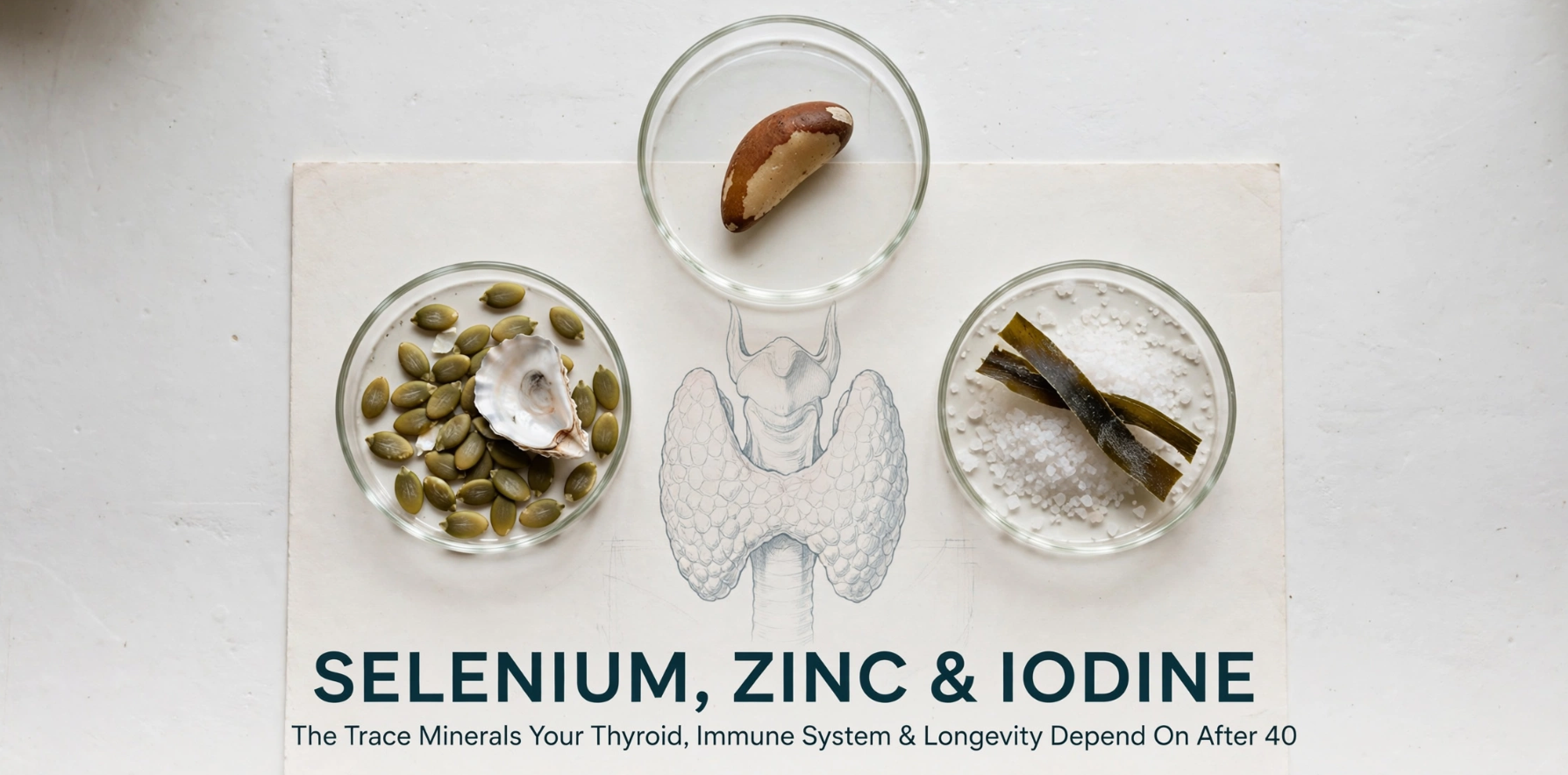
- Food Sources: Brazil nuts are the richest known source—a single nut can provide 68–96 mcg. Two per day reliably supply 200 mcg. Seafood (tuna, sardines, shrimp), organ meats, and pasture-raised eggs are also excellent sources.
Section 3: Zinc—The Gatekeeper of Immunity and Healing
Why It Matters After 40:
Zinc is a cofactor for over 300 enzymes and is essential for DNA synthesis, cell division, protein synthesis, and the proper functioning of both innate and adaptive immunity. The body has no dedicated zinc storage depot, so a consistent daily intake is mandatory. After 40, several factors conspire to reduce zinc status: dietary intake often drops as calorie needs decline, stomach acid secretion—required for zinc absorption—can decrease, and chronic diseases (diabetes, liver disease) and medications (PPIs, ACE inhibitors, thiazide diuretics) increase urinary zinc loss.
Immune Function:
Zinc is critical for the development and activation of T-lymphocytes, B-lymphocytes, and natural killer cells. Mild zinc deficiency impairs chemotaxis and phagocytosis by neutrophils and macrophages. A 2020 meta-analysis of randomized controlled trials found that zinc lozenges (≥75 mg/day) reduced the duration of the common cold by 33% when started within 24 hours of symptom onset. Chronic zinc supplementation (10–40 mg/day) modestly reduces infection rates in older adults and improves antibody responses to vaccination.
Wound Healing and Skin Integrity:
Zinc is required for collagen synthesis, keratinocyte proliferation, and epithelial tissue repair. Slow-healing cuts, cracked skin, or thinning hair can be signs of mild zinc insufficiency. Adequate zinc status supports the maintenance of the gut barrier and skin integrity—first-line defenses against pathogens.
Testosterone and Reproductive Health:
Zinc is involved in testosterone synthesis and sperm formation. Zinc deficiency is associated with low testosterone and impaired spermatogenesis. While zinc supplementation does not boost testosterone in zinc-replete men, it can restore normal levels in those who are deficient.
Dose, Form, and Safety:
- Optimal serum zinc: 80–120 mcg/dL. Plasma zinc is a reasonable screening test but can be lowered by inflammation.
- Supplement if: You have poor wound healing, frequent infections, hair thinning, white spots on nails (a potential but not definitive sign), are on a plant-based diet (phytates in grains and legumes inhibit absorption), or take a PPI long-term.
- Form: Zinc picolinate, zinc citrate, and zinc bisglycinate are well-absorbed and gentle on the stomach. Zinc oxide is poorly absorbed and mainly used in topical creams. Zinc gluconate is common in lozenges.
- Dose: 15–30 mg of elemental zinc daily for maintenance. 30–50 mg/day short-term (2–4 weeks) for immune boosting during illness. Doses above 40 mg/day long-term can cause copper deficiency, leading to anemia and peripheral neuropathy. Always pair higher-dose zinc with 1–2 mg of copper (ideally taken at a different time of day, as they compete for absorption). The ideal Zn:Cu ratio is 8:1 to 15:1.
- Food Sources: Oysters (by far the richest—3 oz provides 74 mg), beef, crab, lobster, pumpkin seeds, lentils, chickpeas. Animal-based zinc is more bioavailable than plant-based zinc.
Section 4: Iodine—The Thyroid’s Fuel Source
Why It Matters After 40:
Iodine is a non-negotiable structural component of thyroid hormones. In the US, the shift away from iodized salt (due to concerns about sodium and the popularity of sea salt and pink salt, which are not iodized) and the reduction in processed food consumption (which used to supply hidden iodine from dairy sanitizers and bread conditioners) has led to a gradual decline in iodine intake. Pregnant and lactating women, vegans, and those who consciously avoid salt are at highest risk.
The Iodine-Autoimmunity Paradox:
This is the most critical nuance of iodine supplementation. Severe iodine deficiency causes hypothyroidism and goiter. However, excessive iodine intake—especially sudden, large-dose supplementation—can trigger or exacerbate Hashimoto’s thyroiditis in genetically susceptible individuals. The mechanism: high iodine levels increase the iodination of thyroglobulin, making it more immunogenic, and stimulate the expression of inflammatory cytokines in thyroid cells. The J-shaped curve of iodine status means that both too little and too much increase the risk of thyroid dysfunction.
Cognitive Function:
Adequate iodine is essential for brain function throughout life. In adults, mild-to-moderate iodine deficiency is associated with subtle cognitive slowing and reduced processing speed. Restoring iodine status improves cognitive performance in deficient populations.
Fibrocystic Breast Disease:
Iodine is concentrated in breast tissue, and molecular iodine supplementation (3–6 mg/day) has been shown to reduce the pain and nodularity of fibrocystic breast disease, a common benign condition in perimenopausal women. This is a therapeutic, not maintenance, dose and should only be undertaken with medical supervision.
Dose, Form, and Safety:
- Optimal urinary iodine concentration: 100–299 mcg/L (population median). Individual spot urinary iodine is highly variable and reflects recent intake rather than long-term status.
- Supplement if: You have confirmed iodine deficiency via 24-hour urinary iodine collection (the gold standard), you follow a vegan or strict whole-foods diet without iodized salt, or you are pregnant/lactating (RDA increases to 220/290 mcg/day).
- Form: Potassium iodide is the most common supplemental form. Molecular iodine (I2) is used in fibrocystic breast disease protocols. “Lugol’s solution” (a mix of iodine and potassium iodide) is a potent liquid form that requires extremely careful measurement—a single drop can supply several milligrams, far beyond the daily need.
- Dose: The RDA for adults is 150 mcg. Most multivitamins provide 150 mcg, which is safe for the general population. For those with Hashimoto’s, even 150 mcg can be problematic; discuss with your endocrinologist. Never self-prescribe high-dose iodine (>1 mg) without explicit medical supervision.
- Food Sources: Seaweed (kelp, nori, dulse, kombu) is the richest source—but iodine content varies wildly, and a single serving of kelp can contain over 2,000 mcg, exceeding the safe upper limit. Fish, dairy, eggs, and iodized salt provide moderate, more predictable amounts.
Section 5: The Synergistic Protocol—How to Supplement All Three Safely
These minerals don’t exist in isolation. Thyroid health and immune function require balanced repletion.
| Mineral | Testing | Maintenance Dose (Diet Sufficient) | Therapeutic Dose (Known Deficiency or Condition) | Upper Safe Limit (UL) |
|---|---|---|---|---|
| Selenium | Serum selenium, or RBC selenium | 100–200 mcg/day | 200 mcg/day (Hashimoto’s, low selenium status) | 400 mcg/day |
| Zinc | Plasma zinc (fasting morning), or RBC zinc | 15–30 mg/day | 30–50 mg/day short-term for immune boost | 40 mg/day from supplements (long-term) |
| Iodine | 24-hr urinary iodine, or spot UI with creatinine | 150 mcg/day (in multivitamin or iodized salt use) | Only under medical supervision for deficiency; avoid blind high-dose | 1,100 mcg/day |
Important Pairings:
- Zinc + Copper: If supplementing zinc above 30 mg/day for more than a few weeks, add 1–2 mg of copper (as copper bisglycinate) taken at a different time of day. Many zinc supplements now include a balanced dose of copper.
- Selenium + Iodine: If both are deficient (common in developing countries), correct selenium first before starting iodine. Selenium deficiency impairs the thyroid’s ability to process a sudden iodine load, increasing autoimmune risk. In the US, this is less of a concern but remains relevant for those with Hashimoto’s.
- Selenium + Vitamin E: These antioxidants synergize. Many selenium supplements include mixed tocopherols, or you can obtain vitamin E from nuts and seeds.
Who Should NOT Supplement Without Testing:
- Anyone with autoimmune thyroid disease should check thyroid antibodies and discuss selenium and iodine with their endocrinologist. Selenium is often recommended; iodine is often not.
- Anyone with Wilson’s disease (copper accumulation) should avoid zinc.
- Anyone with a history of kidney stones (zinc oxalate stones are rare but possible) should moderate zinc intake.
Section 6: FAQ—Your Top Trace Mineral Questions
Q: Can I get enough from a multivitamin?
A: Most multis contain 100–150 mcg of iodine, 15–30 mg of zinc, and 55–200 mcg of selenium. This is sufficient for basic maintenance in a person with a decent diet. If you have a confirmed deficiency or a specific condition (Hashimoto’s, recurrent infections), targeted, higher-dose single-mineral supplements are more appropriate.
Q: How fast does zinc work for a cold?
A: Zinc lozenges (zinc gluconate or acetate, 75–100 mg/day in divided doses) started within 24 hours of the first sniffle can reduce cold duration by 2–3 days. The effect is local—the zinc ions coat the throat and inhibit viral replication. Once the infection is systemic, the effect diminishes. Do not use this high dose for more than 1–2 weeks.
Q: Is pink Himalayan salt a good source of iodine?
A: No. Pink salt, sea salt, and other unrefined salts contain only trace amounts of iodine unless fortified. Iodized table salt is the reliable dietary source. If you avoid iodized salt, ensure you get 150 mcg/day from other sources.
Q: I’m taking thyroid medication (levothyroxine). Can I add selenium?
A: Yes, selenium can support T4-to-T3 conversion and reduce thyroid antibodies without interfering with levothyroxine absorption. Take them at least 4 hours apart from thyroid medication (just as you do with calcium and iron). Do not take iodine without your endocrinologist’s approval.
The VigorForty Take
Selenium, zinc, and iodine are the underappreciated workhorses of metabolic and immune health. They cost pennies per day, are backed by decades of clinical research, and address the silent, subclinical shortfalls that rob you of energy, mental clarity, and resilience after 40. But unlike the more forgiving B vitamins or vitamin C, these trace minerals require precision. Test your levels, choose the right form and dose, and respect their narrow therapeutic windows. When balanced correctly, they will quietly but powerfully optimize your thyroid function, sharpen your immune response, and contribute to a longer, more vibrant healthspan.
Pair them with your Vigor Five, a diet rich in seafood, organ meats, and nuts, and the blood-testing protocol you’ve already built. The result is a complete, self-correcting system that leaves nothing to guesswork.
Read Realated Articles
- The Complete Guide to Heart Health: Beyond Omega-3s—CoQ10, Magnesium, Potassium, and Nitric Oxide Support After 40
- The Complete Guide to Eye Health: Lutein, Zeaxanthin, Astaxanthin, and Omega-3s for Protecting Your Vision After 40
- The Complete Guide to Anti-Aging Skin, Hair, and Nails: Collagen, Biotin, Silica, and Antioxidants for a Vibrant Appearance After 40
- The Busy Parent’s Supplement Guide: Staying Energized, Resilient, and Healthy While Raising Kids After 40
- Supplements for Brain Fog and Mental Clarity: Phosphatidylserine, Bacopa Monnieri, and Lion’s Mane—What Actually Works After 40
- The Complete Guide to Digestive Health: Probiotics, Prebiotics, Digestive Enzymes, and Gut-Healing Nutrients After 40
- Supplements for Osteoarthritis: A Natural Pain Management Protocol That Protects Your Joints After 40
- The Sleep-Supplement Connection: Magnesium, Glycine, L-Theanine, and Melatonin—A Complete Protocol for Restorative Rest After 40
- The Ultimate Guide to Healthy Aging: How to Build Your Personalized Supplement Plan at 40, 50, and 60
- Menopause Beyond the Basics: Mood, Bone, Brain, and Sleep Support for the American Woman Over 40
- Selenium, Zinc, and Iodine: The Trace Minerals That Support Thyroid, Immunity, and Longevity After 40
- TSA Rules for Supplements: Traveling with Pills, Powders, and Liquids as an American Over 40
- CoQ10 After 40: Ubiquinone vs. Ubiquinol, Statin Depletion, and Mitochondrial Support
- The VigorForty Guide to Third-Party Testing: USP, NSF, ConsumerLab, and How to Verify Your Supplements Are Safe
- The VigorForty Yearly Blood Work Blueprint: Exactly What to Test and When for Optimal Health After 40
- Metabolic Health Supplements: Berberine, Inositol, and Chromium for Blood Sugar Control After 40
- The Complete Guide to Electrolytes for the Active American Over 40: Sodium, Potassium, Magnesium, and Hydration Science
- Supplement-Drug Interactions Every American Over 40 Must Know: Blood Thinners, Antidepressants, BP Meds, and Statins
- The Busy Professional’s Core 5 Supplements: No Clutter, No Hype, Just What Actually Moves the Needle After 40
- Glycine + NAC: The Under-the-Radar Longevity Stack for Glutathione, Detoxification, and Deep Sleep After 40
- Adaptogens Worth Your Money: Ashwagandha, Rhodiola, and Holy Basil—Evidence and Safe Use for the Stressed 40+ American
- Best Supplements for Joint Health After 40: Curcumin, Collagen, MSM, and Glucosamine—Ranked by Evidence
- NAD+ Precursors (NMN & NR) in 2026: Current Evidence, US Legal Status, and What’s Worth Your Money
- Budget-Friendly Blood Tests to Check Your Actual Micronutrient Gaps (And Skip the Guesswork)
- The Perimenopause Supplement Protocol: Bone, Brain, and Sleep Support for American Women Over 40
- How to Read a Supplement Facts Panel Like a Dietitian: The 5-Step Method for Over-40 Americans
- Protein Powder After 40: Whey, Plant, Collagen, and the Anabolic Threshold You Must Know
- Omega-3s Decoded: EPA, DHA, and How to Read a Fish Oil Label for the Over-40 American
- Creatine After 40: Not Just for Bodybuilders—Brain, Muscle, and Longevity Science
- 5 Magnesium Myths Busted: Glycinate, Citrate, Oxide, and Which One You Actually Need
- Vitamin D3 + K2: The Over-40 American’s Protocol for Bones, Arteries, and Immunity
- The ‘Vigor Five’: Core Daily Supplements for Energy and Longevity After 40
- How Much Protein Do You Actually Need? (The Definite Guide for Satiety and Muscle Retention)
- The Ultimate Guide to Nutrient Density: How to Eat Real Food in America