

Author: Vigor Forty Editorial Team
Medically Reviewed By: Editorial Review Board
Disclaimer: This article is for informational purposes only and is not a substitute for professional medical advice. Read our full Medical Disclaimer.
📌 Key Takeaways
- Parenting After 40 Is Physically and Mentally Demanding: Sleep deprivation, constant physical activity, emotional labor, and scarce personal time create a perfect storm for burnout, immune suppression, and accelerated aging. A targeted supplement strategy can preserve your energy and resilience.
- The Vigor Five Are Your Foundation, Now More Than Ever: Vitamin D3+K2, magnesium glycinate, omega-3s, creatine, and protein/EAAs address the core physiological drains of parenting: poor sleep, stress, muscle loss, and brain fog.
- Energy and Immune Defense Are the Top Priorities: Adaptogens like ashwagandha (for sleep and stress) and rhodiola (for daytime fatigue), along with zinc, vitamin C, and a methylated B-complex, keep you functional through broken nights and germ-filled environments.
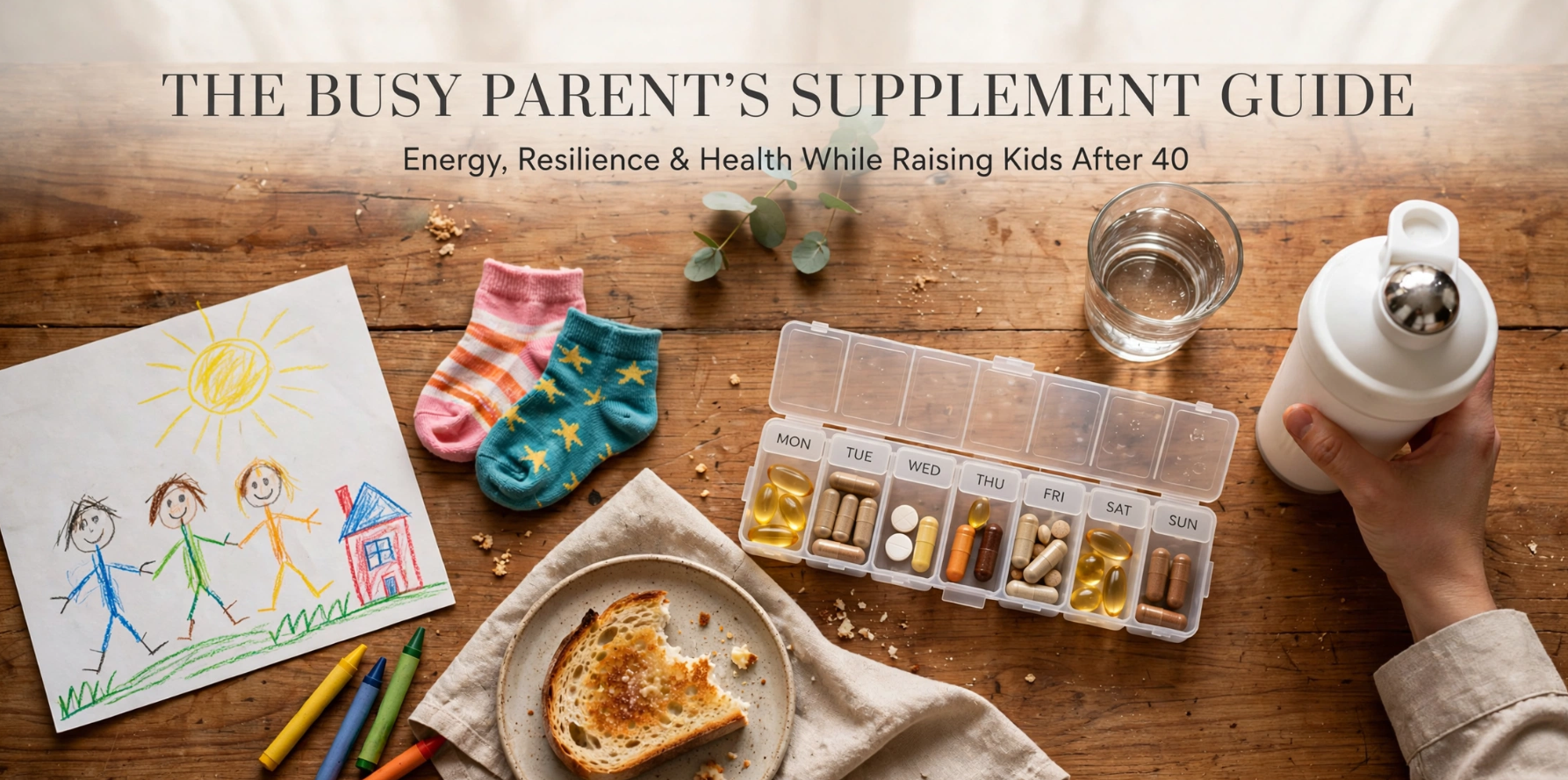
- Convenience Is Non-Negotiable: Pre-portioned supplements, single-serve packets, and a simplified morning-and-evening ritual ensure you actually take them. A weekly pill organizer and a shaker bottle in the car are your best friends.
- You Cannot Pour from an Empty Cup: Parental burnout is real, and supplements are tools—not replacements—for the boundaries, sleep, and self-care that sustain you long-term. Prioritizing your health is not selfish; it’s modeling resilience for your children.
Introduction: The Beautiful, Exhausting Reality of Parenting After 40
You’re pushing 45, and your youngest is learning to ride a bike. Your teenager needs help with algebra at 9 PM, and the baby still wakes twice a night. Your career demands focus, your partner needs connection, and somewhere in the chaos, you’re supposed to eat well, exercise, and get eight hours of sleep. The math doesn’t work.
Parenting after 40 is a profound joy and a relentless physical, mental, and emotional marathon. Your body at this age does not bounce back from sleep deprivation the way it did at 25. Cortisol runs higher, recovery takes longer, and the energy required to simply keep up can feel overwhelming. Many parents in this stage fall into a pattern of surviving on caffeine, sugar, and sheer willpower—until the inevitable crash.
Supplements cannot raise your children or unclog your schedule. But the right ones, taken consistently, can provide the biochemical foundation that keeps your brain sharp, your immune system resilient against every daycare bug, your muscles capable of carrying car seats and toddlers, and your mood stable enough to be the patient parent you want to be. This guide is for the tired, devoted parent who needs a plan that works in the slivers of time between bedtime stories and morning chaos.
Section 1: The Unique Physiological Demands of Parenting After 40
Raising children in midlife creates a specific set of biological stressors that differ from the challenges of a child-free 40-something.
Chronic Sleep Fragmentation
Infants and young children wake frequently. Older children and teens have late-night needs and early-morning activities. Even when total sleep hours approach adequate, sleep architecture is often fragmented—lacking deep, restorative slow-wave sleep. This impairs glymphatic clearance, reduces growth hormone secretion (critical for tissue repair), and spikes cortisol, which in turn drives abdominal fat storage and insulin resistance.
Sustained Physical Load
Carrying a 30-pound toddler, bending over bathtubs, wrestling car seats, and the sheer constant motion of parenting places high physical demand on joints, back, and shoulders. Recovery time shortens after 40, and injuries that would have healed in a week now linger for months.
Constant Immune Exposure
Children are vectors. Daycares and schools expose you to a rotating carousel of viruses. After 40, the immune system’s response to novel pathogens slows, and recovery from even minor illnesses takes longer.
Emotional Labor and Decision Fatigue
Parenting is a non-stop cognitive load. Scheduling, worrying, teaching, mediating sibling disputes, and managing a household while working a job consume executive function reserves. This mental exhaustion depletes neurotransmitters and increases the risk of anxiety and depression.
Vanishing Personal Time
The opportunity to exercise, meal prep, and relax is drastically reduced. Convenience foods replace nutrient-dense meals. Exercise becomes an afterthought. Supplements must fit into the cracks—a 30-second ritual, not a 10-minute protocol.
Section 2: The Non-Negotiable Core Stack for Parents
The Vigor Five remain the bedrock. For parents, each takes on added urgency.
| Supplement | Parenting-Specific Role | Practical Dose |
|---|---|---|
| Vitamin D3 + K2 | Immune defense against daycare bugs; mood stability during dark winter months and indoor confinement. | 2,000–4,000 IU D3 + 100–200 mcg K2 MK-7 with breakfast. |
| Magnesium Glycinate | Calms the nervous system after overstimulating days; supports the sleep you do get; eases muscle tension from carrying children. | 200–400 mg elemental magnesium 30–60 minutes before bed. |
| Omega-3s (EPA/DHA) | Brain fog defense; mood support (EPA); DHA for your own cognitive function, not just your child’s development. | 1,000–2,000 mg combined EPA+DHA with a meal. |
| Creatine Monohydrate | Physical energy for lifting, carrying, and playing; cognitive stamina for mental load and sleep deprivation. | 5 g daily, mixed into morning coffee or water. |
| Protein Powder or EAAs | Quick, no-prep meal when you’ve fed everyone but yourself; hits the leucine threshold to preserve muscle when exercise is inconsistent. | 25–40 g protein or 10–15 g EAAs, as needed (post-workout, or as a meal replacement when time vanishes). |
The 60-Second Morning Routine:
Keep a small basket on the kitchen counter. In it: your D3+K2, omega-3 softgels, a tub of creatine with a 5-gram scoop, and a shaker bottle. While the coffee brews, swallow the softgels, stir the creatine into your coffee, and if you haven’t eaten breakfast, shake up a protein drink. You’re done before the toaster pops.
The 30-Second Evening Routine:
Magnesium glycinate capsules sit on your nightstand next to a glass of water. When you climb into bed—however late—take them. Do not go to the kitchen; do not think. Just swallow and lie down.
Section 3: Targeted Energy and Stress Support—Supplements for the Survive-and-Thrive Parent
On top of the core stack, these supplements directly address the parental energy crisis and stress load.
1. Ashwagandha — The Patience Preserver
- Why: Ashwagandha lowers cortisol, the stress hormone that spikes when you’re juggling a crying toddler, a work call, and a burning dinner. Over time, high cortisol frays your nerves, impairs sleep, and deposits belly fat. Ashwagandha helps you respond to chaos with a fractionally calmer nervous system—the difference between snapping and taking a breath.
- Dose: 300–600 mg of standardized root extract (≥5% withanolides) daily. Evening dosing supports sleep; morning dosing supports daytime stress. Split the dose if both are needed.
- Caution: Cycle 5 days on, 2 days off. Avoid if you have autoimmune conditions or take sedatives.
2. Rhodiola Rosea — The “I’m Exhausted but Must Function” Ally
- Why: Rhodiola fights mental and physical fatigue without overstimulation. On mornings after a broken night with a sick child, 200–400 mg can help you feel human enough to get through the day without three pots of coffee.
- Dose: 200–400 mg standardized to 3% rosavins and 1% salidroside, taken in the morning. Do not take after 2 PM as it can interfere with sleep.
- Pair with: Creatine. Rhodiola fights fatigue; creatine fuels brain ATP. Together, they are a powerful post-sleep-deprivation recovery tool.
3. Methylated B-Complex — The Energy Pathway Activator
- Why: B vitamins are cofactors for converting food into ATP and synthesizing neurotransmitters. Chronic stress, poor diet, and alcohol (that glass of wine after bedtime) deplete B vitamins. A methylated complex ensures you absorb them even with common MTHFR variants.
- Dose: One capsule in the morning with food. Look for methylfolate, methylcobalamin, and pyridoxal-5-phosphate.
Section 4: Immune Defense for the Whole Family
Parents get sick more often because children bring pathogens home. These supplements shore up your immune system to reduce frequency, severity, and duration.
1. Zinc
- Why: Zinc is essential for the development and function of innate and adaptive immune cells. Even mild deficiency impairs immune response. Zinc lozenges (75–100 mg/day in divided doses) started at the first sign of a cold can reduce its duration by 30–40%.
- Maintenance Dose: 15–30 mg of zinc picolinate or citrate daily with food. If taken long-term above 30 mg, add 1–2 mg of copper.
- Acute Dose: Zinc gluconate or acetate lozenges at the first sniffle, for 3–5 days only.
2. Vitamin C (as ascorbic acid or buffered)
- Why: While vitamin C does not prevent colds in the general population, it modestly reduces duration and severity, especially in those under high physical stress. Parenting qualifies. A 2013 Cochrane review found that regular supplementation reduced cold duration by 8% in adults; therapeutic doses at onset show larger effects.
- Maintenance Dose: 250–500 mg twice daily from food (citrus, bell peppers, kiwis) or a basic supplement. No need for megadoses.
- Acute Dose: 1,000 mg twice daily at the start of illness.
3. Elderberry (Sambucus nigra)
- Why: Elderberry extract has been shown in several randomized trials to reduce the duration and severity of cold and flu symptoms by 2–4 days. It may inhibit viral entry and replication. A 2019 meta-analysis confirmed these effects for upper respiratory symptoms.
- Dose: 500–1,000 mg of standardized elderberry extract at the onset of symptoms, continued for 3–5 days. Syrup or lozenge forms are equally effective.
4. Probiotics for Immune Training
- Why: Specific probiotic strains (Lactobacillus rhamnosus GG, Lactobacillus plantarum, Bifidobacterium lactis) reduce the incidence and duration of respiratory and gastrointestinal infections in children and adults. A 2015 Cochrane review found probiotics reduced the risk of acute upper respiratory infections by 47% in adults.
- Dose: 10–50 billion CFU of a multi-strain blend containing documented immune-supportive strains, taken daily. Especially relevant during cold and flu season.
Section 5: Practical Meal and Supplement Timing for Parents
The pace of parenting rarely allows for calm, structured meals. Here is how to adapt.
Breakfast (Chaos Window, 6–8 AM)
- Swallow your D3+K2, omega-3s, methylated B-complex, and any morning adaptogen (rhodiola) with a quick bite: a hard-boiled egg, a protein bar, or a slice of whole-grain toast with peanut butter. The fat aids absorption.
- Stir creatine into your one precious cup of coffee.
- If you don’t have time to eat, a protein shake with collagen added provides amino acids and joint support in 60 seconds.
Lunch (Often Missed or Eaten Standing Up)
- Keep a stash of pre-portioned protein powder or EAA sachets at work or in your bag. If lunch is a handful of your kid’s leftover goldfish, drink a protein shake alongside it. You need at least 30 grams of protein at this meal to sustain muscle and satiety.
- Consider a greens powder as a vegetable-insurance policy—not a replacement, but a backup on days when produce is absent.
Afternoon Slump (3–4 PM)
- A second small dose of rhodiola (100–200 mg) if exhaustion is overwhelming. Alternatively, a 10-minute walk outside or 5 minutes of deep breathing. Caffeine after 2 PM is strongly discouraged—it will further fragment your already tenuous sleep.
Dinner (The One Family Meal, 6–7 PM)
- Aim for a palm-sized portion of protein (chicken, fish, lentils), a colorful vegetable, and a healthy fat. This is your anchor meal. If dinner is chaotic, prioritize the protein.
Bedtime (9–11 PM, or Whenever the Last Child Sleeps)
- Ashwagandha (if using for sleep) and magnesium glycinate. A cup of chamomile or tulsi tea. Put your phone in another room—the temptation to scroll after the kids are finally down is powerful and directly destroys sleep quality. Use a real alarm clock.
Section 6: The VigorForty Parenting Supplement Schedule Cheat Sheet
| Time | Supplement | Purpose |
|---|---|---|
| Morning (with any food) | Vitamin D3 + K2, Omega-3s, Methylated B-Complex | Immunity, brain, energy |
| Rhodiola Rosea (if fatigued) | Energy, resilience | |
| Creatine (5 g in coffee/water) | Brain and muscle energy | |
| Protein shake (if no breakfast) | Muscle preservation, satiety | |
| Throughout the day | Water with electrolytes (if dehydrated from constant activity) | Hydration, energy |
| Afternoon (if needed) | Small protein snack or EAA drink | Bridge to dinner, prevent crash |
| Evening (30–60 min before bed) | Magnesium Glycinate | Sleep, muscle relaxation |
| Ashwagandha (if using for sleep/cortisol) | Stress recovery, sleep quality | |
| As needed (illness onset) | Zinc lozenges, Elderberry, Vitamin C | Immune defense |
Section 7: The Self-Care That Supplements Cannot Replace
Supplements support your body. They cannot substitute for the boundaries and habits that protect your mental and physical health as a parent. Do not neglect these:
Sleep Prioritization
You will have seasons of unavoidable sleep deprivation (newborns, sick children). In calmer seasons, treat your bedtime as sacred. Go to bed when the children do, at least a few nights a week. The dishes can wait.
Exercise Snacks
A 60-minute gym session may be unrealistic. Three 10-minute “movement snacks”—a brisk walk, bodyweight squats while coffee brews, a few push-ups before bed—accumulate into meaningful fitness. Combine with your creatine for muscle preservation.
Emotional Boundaries
Parental burnout is real and dangerous. If you are perpetually irritable, detached, or overwhelmed, seek support—a therapist, a parenting group, a trusted friend. No supplement can treat clinical depression or anxiety. The adaptogens and nutrients in this guide support, but do not replace, professional mental healthcare.
Modeling for Your Children
When your children see you prioritizing your health—taking your vitamins, drinking water, setting boundaries around rest—they internalize a powerful lesson. You are not being selfish. You are teaching them that health is the foundation upon which a full, generous life is built.
The VigorForty Take
Parenting after 40 is a high-wire act. The right supplements can be your safety net—keeping your immune system robust, your brain clear, your energy stable, and your mood resilient enough to show up as the parent you want to be. Build the Vigor Five foundation. Add ashwagandha or rhodiola for the relentless stress. Fortify your immune system with zinc, vitamin C, and elderberry during cold season. Pre-portion your supplements. Simplify. Give yourself grace. You are doing one of the hardest, most important jobs on the planet. Equip yourself accordingly.
Read Realated Articles
- The Complete Guide to Heart Health: Beyond Omega-3s—CoQ10, Magnesium, Potassium, and Nitric Oxide Support After 40
- The Complete Guide to Eye Health: Lutein, Zeaxanthin, Astaxanthin, and Omega-3s for Protecting Your Vision After 40
- The Complete Guide to Anti-Aging Skin, Hair, and Nails: Collagen, Biotin, Silica, and Antioxidants for a Vibrant Appearance After 40
- The Busy Parent’s Supplement Guide: Staying Energized, Resilient, and Healthy While Raising Kids After 40
- Supplements for Brain Fog and Mental Clarity: Phosphatidylserine, Bacopa Monnieri, and Lion’s Mane—What Actually Works After 40
- The Complete Guide to Digestive Health: Probiotics, Prebiotics, Digestive Enzymes, and Gut-Healing Nutrients After 40
- Supplements for Osteoarthritis: A Natural Pain Management Protocol That Protects Your Joints After 40
- The Sleep-Supplement Connection: Magnesium, Glycine, L-Theanine, and Melatonin—A Complete Protocol for Restorative Rest After 40
- The Ultimate Guide to Healthy Aging: How to Build Your Personalized Supplement Plan at 40, 50, and 60
- Menopause Beyond the Basics: Mood, Bone, Brain, and Sleep Support for the American Woman Over 40
- Selenium, Zinc, and Iodine: The Trace Minerals That Support Thyroid, Immunity, and Longevity After 40
- TSA Rules for Supplements: Traveling with Pills, Powders, and Liquids as an American Over 40
- CoQ10 After 40: Ubiquinone vs. Ubiquinol, Statin Depletion, and Mitochondrial Support
- The VigorForty Guide to Third-Party Testing: USP, NSF, ConsumerLab, and How to Verify Your Supplements Are Safe
- The VigorForty Yearly Blood Work Blueprint: Exactly What to Test and When for Optimal Health After 40
- Metabolic Health Supplements: Berberine, Inositol, and Chromium for Blood Sugar Control After 40
- The Complete Guide to Electrolytes for the Active American Over 40: Sodium, Potassium, Magnesium, and Hydration Science
- Supplement-Drug Interactions Every American Over 40 Must Know: Blood Thinners, Antidepressants, BP Meds, and Statins
- The Busy Professional’s Core 5 Supplements: No Clutter, No Hype, Just What Actually Moves the Needle After 40
- Glycine + NAC: The Under-the-Radar Longevity Stack for Glutathione, Detoxification, and Deep Sleep After 40
- Adaptogens Worth Your Money: Ashwagandha, Rhodiola, and Holy Basil—Evidence and Safe Use for the Stressed 40+ American
- Best Supplements for Joint Health After 40: Curcumin, Collagen, MSM, and Glucosamine—Ranked by Evidence
- NAD+ Precursors (NMN & NR) in 2026: Current Evidence, US Legal Status, and What’s Worth Your Money
- Budget-Friendly Blood Tests to Check Your Actual Micronutrient Gaps (And Skip the Guesswork)
- The Perimenopause Supplement Protocol: Bone, Brain, and Sleep Support for American Women Over 40
- How to Read a Supplement Facts Panel Like a Dietitian: The 5-Step Method for Over-40 Americans
- Protein Powder After 40: Whey, Plant, Collagen, and the Anabolic Threshold You Must Know
- Omega-3s Decoded: EPA, DHA, and How to Read a Fish Oil Label for the Over-40 American
- Creatine After 40: Not Just for Bodybuilders—Brain, Muscle, and Longevity Science
- 5 Magnesium Myths Busted: Glycinate, Citrate, Oxide, and Which One You Actually Need
- Vitamin D3 + K2: The Over-40 American’s Protocol for Bones, Arteries, and Immunity
- The ‘Vigor Five’: Core Daily Supplements for Energy and Longevity After 40
- How Much Protein Do You Actually Need? (The Definite Guide for Satiety and Muscle Retention)
- The Ultimate Guide to Nutrient Density: How to Eat Real Food in America