
Author: Vigor Forty Editorial Team
Medically Reviewed By: Editorial Review Board
Disclaimer: This article is for informational purposes only and is not a substitute for professional medical advice. Read our full Medical Disclaimer.
📌 Key Takeaways
- Yes, you can build significant muscle with bodyweight exercises: Push-ups, squats, pull-ups, and their progressions create enough resistance to stimulate muscle growth—especially for beginners and intermediates.
- Progressive overload is the key: Your muscles don’t know the difference between lifting a dumbbell and lifting your body weight. They only know tension. By making exercises harder (variations, tempo, volume), you can continue building muscle.
- Bodyweight training builds functional, balanced muscle: It develops strength that translates directly to daily activities while improving joint stability and body awareness.
- Advanced lifters may need additional resistance: Once you’ve mastered the most challenging bodyweight variations, you may need to add external weight (weighted vest, backpack, bands) for continued progress.
- The evidence is clear: Research shows that bodyweight training produces significant muscle growth—comparable to weight training in many studies.
Introduction: The Bodyweight Question
“Can you really build muscle without weights?”
This is one of the most common questions in fitness. And it’s understandable. We’re constantly told that to build muscle, you need to lift heavy weights. The image of a bodybuilder with a barbell is deeply ingrained in our fitness culture.
But the answer is a resounding yes.
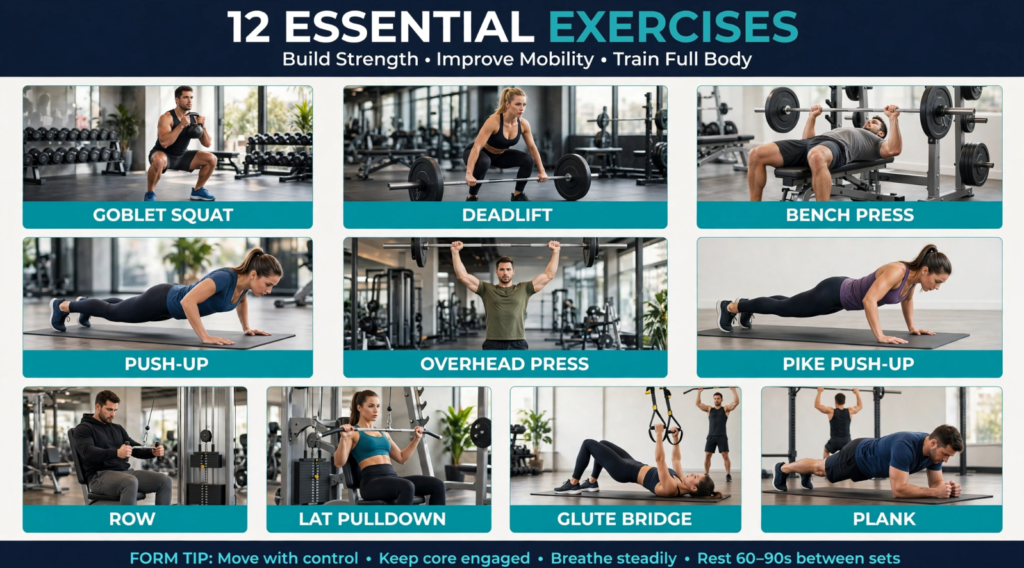
Bodyweight exercises can build significant muscle—especially for beginners and intermediates. Push-ups, squats, pull-ups, dips, and their countless variations create enough resistance to stimulate muscle growth. And with the right progression strategies, you can continue building muscle for years without ever touching a dumbbell.
The evidence is clear:
| Study | Finding |
|---|---|
| Meta-Analysis (2019) | Bodyweight training produces significant muscle hypertrophy, comparable to weight training in beginners and intermediates |
| Study (2020) | Push-up training produced similar chest and triceps growth to bench press training in untrained individuals |
| Long-Term Studies | Advanced calisthenics practitioners develop physiques comparable to weight-trained individuals |
This guide will show you exactly how to build muscle with bodyweight exercises. You’ll learn the science of muscle growth, the best exercises for each muscle group, how to progress over time, and why bodyweight training is one of the most effective and accessible forms of strength training.
Section 1: The Science of Muscle Growth
How Muscle Grows
Muscle growth (hypertrophy) occurs when three conditions are met:
| Condition | What It Means | How Bodyweight Training Provides It |
|---|---|---|
| Mechanical Tension | Muscles are placed under load | Your body weight provides resistance |
| Muscle Damage | Microscopic tears occur in muscle fibers | Challenging exercises create damage |
| Metabolic Stress | The “burn” from fatigue triggers growth signals | High-rep sets and short rest create metabolic stress |
Your muscles don’t know the difference. They don’t care if the tension comes from a barbell or your own body weight. They only know tension, fatigue, and damage—and they respond by growing stronger.
The Role of Progressive Overload
The Key Principle: To build muscle, you must progressively increase the challenge to your muscles over time.
In Bodyweight Training, Progressive Overload Looks Like:
| Method | Example |
|---|---|
| Harder Variations | Knee push-ups → Full push-ups → Diamond push-ups |
| More Reps | 3 sets of 10 → 3 sets of 12 → 3 sets of 15 |
| More Sets | 3 sets → 4 sets → 5 sets |
| Slower Tempo | 1 sec down, 1 sec up → 3 sec down, 3 sec up |
| Less Rest | 60 sec rest → 45 sec → 30 sec |
| Added Weight | Bodyweight → +10 lbs (backpack, vest) |
The Research on Bodyweight Training
| Finding | Source |
|---|---|
| Push-ups build chest and triceps | Study: Push-ups vs. Bench Press produced similar muscle growth in untrained individuals |
| Pull-ups build back and biceps | Multiple studies: Pull-ups are one of the most effective back exercises |
| Squats build legs | Research: Bodyweight squats (with progression) build significant leg muscle |
| Advanced calisthenics builds comparable physiques | Observations: Advanced calisthenics athletes have impressive muscle development |
Section 2: The Best Bodyweight Exercises for Each Muscle Group
Chest
| Exercise | Muscle Focus | Difficulty |
|---|---|---|
| Wall Push-ups | Chest, shoulders, triceps | Beginner |
| Incline Push-ups | Lower chest, shoulders | Beginner |
| Knee Push-ups | Chest, triceps | Beginner-Intermediate |
| Full Push-ups | Chest, shoulders, triceps | Intermediate |
| Diamond Push-ups | Inner chest, triceps | Intermediate-Advanced |
| Decline Push-ups | Upper chest | Advanced |
| Archer Push-ups | Unilateral chest strength | Advanced |
| One-Arm Push-ups | Maximal chest strength | Elite |
Back
| Exercise | Muscle Focus | Difficulty |
|---|---|---|
| Scapular Pull-ups | Scapular control, lats | Beginner |
| Bodyweight Rows | Lats, rhomboids, biceps | Beginner |
| Negative Pull-ups | Lats, biceps | Beginner-Intermediate |
| Full Pull-ups | Lats, biceps, upper back | Intermediate |
| Chin-ups | Biceps, lower lats | Intermediate |
| Wide Grip Pull-ups | Outer lats | Intermediate-Advanced |
| Archer Pull-ups | Unilateral back strength | Advanced |
| One-Arm Pull-ups | Maximal back strength | Elite |
Shoulders
| Exercise | Muscle Focus | Difficulty |
|---|---|---|
| Incline Push-ups | Front delts | Beginner |
| Pike Push-ups | Front delts, triceps | Intermediate |
| Handstand Push-ups (against wall) | Shoulders, triceps | Advanced |
| Archer Push-ups | Shoulder stability | Advanced |
| Pseudo-Planche Push-ups | Shoulder strength | Advanced |
Legs
| Exercise | Muscle Focus | Difficulty |
|---|---|---|
| Bodyweight Squats | Quads, glutes, hamstrings | Beginner |
| Deep Squats | Full leg development | Beginner-Intermediate |
| Bulgarian Split Squats | Unilateral leg strength | Intermediate |
| Lunges | Quads, glutes, balance | Beginner |
| Pistol Squats | Maximal leg strength | Advanced |
| Shrimp Squats | Unilateral leg strength | Advanced |
| Jump Squats | Explosive power | Intermediate |
Core
| Exercise | Muscle Focus | Difficulty |
|---|---|---|
| Planks | Full core stability | Beginner |
| Dead Bugs | Deep core control | Beginner |
| Bird Dogs | Core and balance | Beginner |
| Side Planks | Obliques | Intermediate |
| Hollow Body Holds | Deep core strength | Intermediate |
| Hanging Leg Raises | Lower abs, hip flexors | Advanced |
| L-Sits | Full core strength | Advanced |
| Dragon Flags | Maximal core strength | Elite |
Section 3: Building a Muscle-Building Bodyweight Program
Program A: Beginner (3 Days/Week)
Goal: Build foundational strength and muscle
| Monday | Sets | Reps | Rest |
|---|---|---|---|
| Incline Push-ups | 3 | 10–15 | 60 sec |
| Bodyweight Squats | 3 | 12–15 | 60 sec |
| Bodyweight Rows | 3 | 8–12 | 60 sec |
| Glute Bridges | 3 | 12–15 | 60 sec |
| Plank | 3 | 30–45 sec | 60 sec |
| Wednesday | Sets | Reps | Rest |
|---|---|---|---|
| Knee Push-ups | 3 | 10–12 | 60 sec |
| Deep Squats | 3 | 10–12 | 60 sec |
| Scapular Pull-ups | 3 | 10–12 | 60 sec |
| Bird Dogs | 3 | 10 per side | 60 sec |
| Side Plank | 3 | 20–30 sec per side | 60 sec |
| Friday | Sets | Reps | Rest |
|---|---|---|---|
| Full Push-ups | 3 | 8–10 | 60 sec |
| Bulgarian Split Squats | 3 | 8–10 per leg | 60 sec |
| Negative Pull-ups | 3 | 3–5 | 60 sec |
| Glute Bridges | 3 | 15 | 60 sec |
| Dead Bugs | 3 | 10 per side | 60 sec |
Program B: Intermediate (3–4 Days/Week)
Goal: Build significant muscle and strength
| Monday | Sets | Reps | Rest |
|---|---|---|---|
| Diamond Push-ups | 3 | 8–12 | 60–90 sec |
| Full Pull-ups | 3 | 5–8 | 60–90 sec |
| Pistol Squat Progressions | 3 | 5–8 per leg | 60–90 sec |
| Hanging Leg Raises | 3 | 8–12 | 60 sec |
| Wednesday | Sets | Reps | Rest |
|---|---|---|---|
| Decline Push-ups | 3 | 8–12 | 60–90 sec |
| Bodyweight Rows (feet elevated) | 3 | 8–12 | 60–90 sec |
| Bulgarian Split Squats | 3 | 8–10 per leg | 60–90 sec |
| Hollow Body Holds | 3 | 30–45 sec | 60 sec |
| Friday | Sets | Reps | Rest |
|---|---|---|---|
| Pike Push-ups | 3 | 8–12 | 60–90 sec |
| Chin-ups | 3 | 5–8 | 60–90 sec |
| Jump Squats | 3 | 10–15 | 60–90 sec |
| Plank with Leg Lifts | 3 | 10–12 per side | 60 sec |
Program C: Advanced (4–5 Days/Week)
Goal: Maximize muscle growth and strength
Split: Upper/Lower or Push/Pull/Legs
Upper Day Example:
| Exercise | Sets | Reps | Rest |
|---|---|---|---|
| Archer Push-ups | 4 | 5–8 per side | 60–90 sec |
| Weighted Pull-ups | 4 | 5–8 | 60–90 sec |
| Handstand Push-ups (wall) | 3 | 5–8 | 60–90 sec |
| Archer Pull-ups | 3 | 3–5 per side | 60–90 sec |
Lower Day Example:
| Exercise | Sets | Reps | Rest |
|---|---|---|---|
| Pistol Squats | 4 | 5–8 per leg | 60–90 sec |
| Shrimp Squats | 3 | 5–8 per leg | 60–90 sec |
| Jump Squats | 3 | 10–15 | 60–90 sec |
| Hanging Leg Raises | 3 | 10–15 | 60 sec |
Section 4: Progression Strategies for Muscle Growth
The 2-Rep Rule
When you can do 2 more reps than your target with perfect form, progress to a harder variation.
Example (Push-ups):
- Target: 3 sets of 10 reps
- Week 1: 3 x 10 (struggling on last set)
- Week 2: 3 x 11 (could do 1–2 more)
- Week 3: 3 x 12 (could do 2 more with good form)
- Week 4: Progress to Diamond Push-ups, 3 x 8–10
Tempo Progression
Slow down the movement to increase time under tension.
| Standard | Slow | Pause |
|---|---|---|
| 1 sec down, 1 sec up | 3 sec down, 3 sec up | 2 sec down, 2 sec pause, 2 sec up |
| Less muscle growth | More muscle growth | Maximum muscle growth |
Volume Progression
| Week | Sets | Total Reps | Result |
|---|---|---|---|
| 1 | 3 x 10 = 30 | Baseline | — |
| 2 | 3 x 12 = 36 | +20% | Progress |
| 3 | 4 x 12 = 48 | +60% | Significant progress |
| 4 | Progress to harder variation | — | Continue growth |
Rest Reduction
| Week | Rest Time | Effect |
|---|---|---|
| 1 | 90 seconds | Baseline |
| 2 | 75 seconds | Increased metabolic stress |
| 3 | 60 seconds | Significant metabolic stress |
| 4 | 45 seconds | Maximum metabolic stress |
Section 5: Sample 12-Week Bodyweight Muscle-Building Plan
Phase 1: Foundation (Weeks 1–4)
Goal: Build a base, perfect form, establish consistency
| Exercise | Sets | Reps | Progression |
|---|---|---|---|
| Knee Push-ups | 3 | 8–12 | Add 1–2 reps per week |
| Bodyweight Squats | 3 | 12–15 | Add 2–3 reps per week |
| Bodyweight Rows | 3 | 8–10 | Add 1 rep per week |
| Plank | 3 | 30–45 sec | Add 5 sec per week |
Phase 2: Building (Weeks 5–8)
Goal: Build muscle, increase difficulty
| Exercise | Sets | Reps | Progression |
|---|---|---|---|
| Full Push-ups | 3 | 8–12 | Add 1 rep per week |
| Deep Squats | 3 | 12–15 | Add 2 reps per week |
| Negative Pull-ups | 3 | 3–5 | Add 1 rep per week |
| Glute Bridges | 3 | 15–20 | Add 2 reps per week |
| Side Plank | 3 | 30–45 sec | Add 5 sec per week |
Phase 3: Intensification (Weeks 9–12)
Goal: Maximize muscle growth
| Exercise | Sets | Reps | Progression |
|---|---|---|---|
| Diamond Push-ups | 3 | 8–12 | Add 1 rep per week |
| Bulgarian Split Squats | 3 | 8–10 per leg | Add 1 rep per week |
| Pull-ups | 3 | 5–8 | Add 1 rep per week |
| Hanging Leg Raises | 3 | 8–12 | Add 1 rep per week |
| Hollow Body Holds | 3 | 30–45 sec | Add 5 sec per week |
What to Expect
| Week | Expected Progress |
|---|---|
| 1–2 | Improved energy, better form, slight soreness |
| 3–4 | Noticeable strength gains, easier movements |
| 5–6 | Visible muscle changes in some areas |
| 7–8 | Significant strength gains, harder progressions |
| 9–10 | Continued visible muscle development |
| 11–12 | Peak results, possible need for new challenges |
Section 6: Nutrition for Muscle Growth with Bodyweight Training
Protein Requirements
The Rule: 0.8–1.2g of protein per pound of body weight daily.
Example (150 lb person): 120–180g protein per day.
| Meal | Protein | Food Example |
|---|---|---|
| Breakfast | 30g | 3 eggs + Greek yogurt |
| Lunch | 40g | Chicken breast + quinoa |
| Dinner | 50g | Salmon + vegetables |
| Snack | 20g | Protein shake |
| Post-Workout | 25g | Whey protein |
| Total | 165g | — |
Caloric Considerations
| Goal | Calories | Approach |
|---|---|---|
| Build Muscle | Surplus (+300–500/day) | Eat more than you burn |
| Build Muscle + Lose Fat | Maintenance | Eat what you burn |
| Lose Fat | Deficit (-300–500/day) | Eat less than you burn |
Hydration
- Daily Goal: 8–10 cups (64–80 oz) minimum
- Before Workout: 16–20 oz
- During Workout: 8–16 oz per hour
- After Workout: 16–24 oz
Section 7: Bodyweight vs. Weight Training for Muscle Growth
The Comparison
| Factor | Bodyweight Training | Weight Training |
|---|---|---|
| Muscle Growth Potential | High (beginners/intermediates); Moderate (advanced) | High (all levels) |
| Progressive Overload | Variations, tempo, volume | Weight increases |
| Accessibility | Anywhere, anytime | Requires equipment |
| Joint Health | Usually joint-friendly | Can be joint-friendly with good form |
| Functional Strength | Excellent | Good |
| Maximal Strength | Limited by body weight | Potentially unlimited |
| Advanced Growth | Requires weight progression | Can continue indefinitely |
When to Add Weight
Signs It’s Time to Add External Weight:
| Sign | What It Means |
|---|---|
| 3 sets of 15 reps with perfect form is easy | You’ve mastered the hardest variation |
| You’ve been at the same variation for 4+ weeks | You need a new stimulus |
| You want to build maximal strength | You need heavier load |
| You’re an advanced lifter | Bodyweight alone is insufficient |
How to Add Weight:
| Method | Equipment | Cost |
|---|---|---|
| Weighted Vest | Durable, comfortable | $50–200 |
| Backpack with Books | Household items | Free |
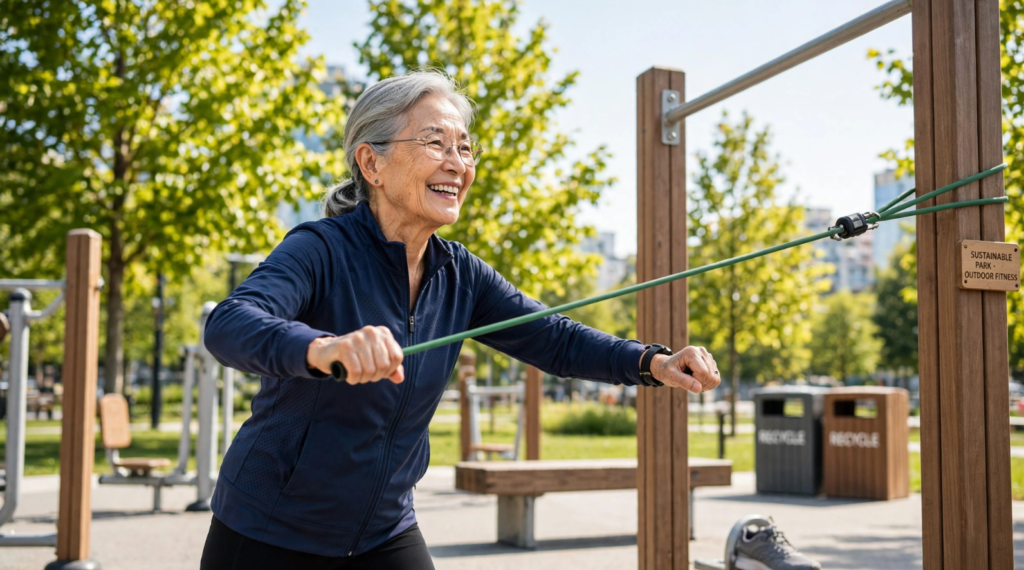
| Resistance Bands | Portable, versatile | $20–50 |
| Dumbbells/Kettlebells | Versatile | $50–200+ |
Section 8: Common Mistakes in Bodyweight Muscle Building
Mistake 1: Not Progressing
The Problem: Doing the same exercise with the same reps week after week.
The Fix: Apply progressive overload. Add reps, change tempo, progress to harder variations, or add sets.
Mistake 2: Not Training to Failure
The Problem: Stopping sets too early—leaving 5+ reps in the tank.
The Fix: Train to RPE 7–8 (2–3 reps left in the tank). For maximum growth, occasionally train to RPE 9–10 (0–1 reps left).
Mistake 3: Only Doing Upper Body
The Problem: Focusing on push-ups and pull-ups, neglecting legs.
The Fix: Include squats, lunges, glute bridges, and their progressions. A balanced body is a strong body.
Mistake 4: Not Eating Enough Protein
The Problem: Not consuming adequate protein for muscle repair and growth.
The Fix: Aim for 0.8–1.2g of protein per pound of body weight. Distribute across meals (20–40g per meal).
Mistake 5: Inconsistent Training
The Problem: Training sporadically—a few weeks on, a few weeks off.
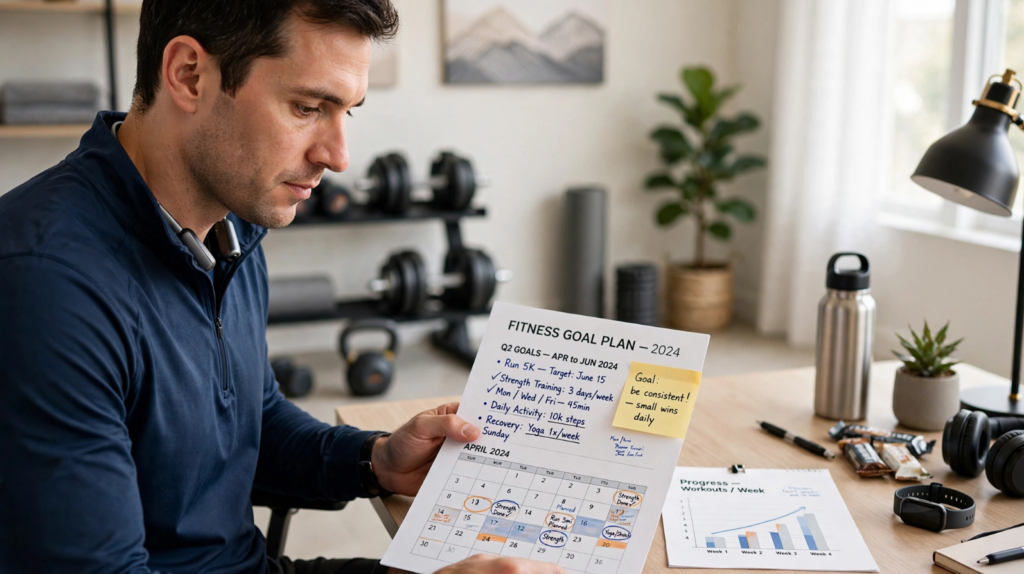
The Fix: Commit to 2–4 sessions per week, every week. Consistency builds results.
Mistake 6: Neglecting Recovery
The Problem: Not getting enough sleep or rest days.
The Fix: Prioritize 7–9 hours of sleep and at least 1–2 rest days per week. Muscle grows during recovery, not during training.
Section 9: FAQ—Your Top Bodyweight Muscle Questions
Q: Can I really build muscle with just push-ups and squats?
A: Yes—especially if you’re a beginner or intermediate. Push-ups and squats (with progressions) can build significant muscle. As you get stronger, you’ll need to progress to harder variations (diamond push-ups, pistol squats) or add weight.
Q: How long does it take to build muscle with bodyweight exercises?
A: Many people notice visible changes in 6–12 weeks with consistent training and proper nutrition. Significant muscle growth typically takes 6–12 months of consistent training.
Q: Do I need to lift heavy to build muscle?
A: No—for beginners and intermediates, bodyweight exercises can build significant muscle. The key is progressive overload, not absolute weight. Advanced lifters may eventually need external weight for continued progress.
Q: Are bodyweight exercises enough for advanced lifters?
A: Advanced lifters may need additional resistance (weighted vests, bands, dumbbells) for continued progress. However, advanced calisthenics athletes have impressive physiques built primarily with bodyweight.
Q: Is bodyweight training better than weight training?
A: Neither is universally “better.” Both have advantages. Bodyweight training is accessible, joint-friendly, and builds functional strength. Weight training offers unlimited progressive overload and is more efficient for maximal strength and muscle size. The best approach is often a combination.
Q: Can I build a muscular back with just bodyweight exercises?
A: Yes. Pull-ups (and their progressions) are one of the most effective back exercises. Bodyweight rows, negative pull-ups, and scapular pull-ups build back strength and muscle.
Q: What about legs—can I build them without weights?
A: Yes—for beginners and intermediates. Bodyweight squats, deep squats, Bulgarian split squats, lunges, and pistol squats build significant leg muscle. Advanced lifters may need added weight for maximal leg development.
Q: How do I progress when bodyweight exercises get easy?
A: Options include:
- Harder variations (diamond push-ups, pistol squats)
- More reps (3 x 10 → 3 x 15)
- Slower tempo (3 sec down, 3 sec up)
- Added weight (weighted vest, backpack)
- Less rest (60 sec → 30 sec)
- More sets (3 → 4–5)
The VigorForty Take
The question isn’t whether you can build muscle with bodyweight exercises. The question is whether you’re willing to commit to the principles that build muscle: progressive overload, consistency, and proper nutrition.
The truth is clear:
- Bodyweight exercises build significant muscle—especially for beginners and intermediates
- Progressive overload is the key—not the equipment
- Advanced trainees may need additional resistance, but bodyweight remains valuable
- Nutrition and recovery are as important as training
Bodyweight training offers unique advantages:
- Accessible (anywhere, anytime)
- Joint-friendly
- Builds functional strength
- Develops body awareness and control
- Cost-effective
The principles are simple:
- Choose challenging exercises: Push-ups, squats, pull-ups, and their progressions
- Progress consistently: Harder variations, more reps, slower tempo, added weight
- Train regularly: 2–4 times per week
- Eat for muscle: Adequate protein and calories
- Recover: Sleep and rest days
Your body is a gym. Use it wisely, and it will transform.
This article was reviewed by the Vigor Forty Editorial Review Board on July 19, 2026.
🔗 Related Articles
- Beyond Crunches: The Best Exercises for True Core Stability
- Core Stability for Lifters: How a Strong Core Protects Your Lower Back
- The Connection Between Core Strength and Better Posture
- Top 5 Strength Training Myths Debunked
- “I’m Too Old to Start Lifting”: Why Strength Training is for Everyone
- “I Don’t Want to Get Bulky”: The Truth About Weightlifting and Muscle Growth
- Can You Build Muscle with Just Bodyweight Exercises?
- The Role of Nutrition in Strength Training: Fueling Your Gains
- The Importance of Rest and Recovery for Building Muscle
- Supplements 101: What Actually Works for Strength Athletes?
- Sleep and Strength: How Better Sleep Can Improve Your Lifts
- 5-Minute Daily Core Routine for Busy Americans
- The Science of Hypertrophy: How to Build Muscle Effectively
- Periodization: How to Plan Your Training for Long-Term Success
- Drop Sets, Supersets, and AMRAPs: Advanced Training Techniques Explained
- Strength Training for Fat Loss: A Comprehensive Guide
- How to Build Muscle and Strength with a Busy Schedule
- The Ultimate Guide to Kettlebell Training for Strength and Conditioning
- Resistance Band Workout: A Full-Body Strength Routine
- Dumbbell Only Workout: Build Muscle Anywhere
- Hybrid Training: Combining Calisthenics and Powerlifting
- The Importance of Mobility for Strength Athletes
- 5 Dynamic Warm-Up Exercises to Do Before Every Workout
- The Best of Both Worlds: Why You Should Combine Calisthenics and Weights
- Your 2027 Strength Training Roadmap: Setting Goals and Staying Consistent
- Strength Training for Life: Building a Sustainable Fitness Habit
- The 12 Best Strength Training Exercises for Americans
Affiliate Disclosure: Some links in this article may be affiliate links. If you make a purchase through these links, Vigor Forty may earn a small commission at no extra cost to you. We only recommend products we trust.