Author: Vigor Forty Editorial Team
Medically Reviewed By: Editorial Review Board
Disclaimer: This article is for informational purposes only and is not a substitute for professional medical advice. Read our full Medical Disclaimer.
📌 Key Takeaways
- You can build significant muscle with just dumbbells: A pair of adjustable dumbbells is one of the most versatile and effective pieces of equipment for building strength and muscle—anywhere, anytime.
- Dumbbells offer unique advantages over barbells: They allow for a greater range of motion, correct muscle imbalances, and engage stabilizer muscles more effectively.
- Compound exercises should be your foundation: Squats, presses, rows, and deadlifts with dumbbells work multiple muscle groups and provide the most “bang for your buck.”
- You can train every muscle group with dumbbells: From chest and back to shoulders, arms, legs, and core—there’s a dumbbell exercise for every muscle.
- Adjustable dumbbells save space and money: One set replaces an entire rack of fixed dumbbells, making them ideal for home gyms and small spaces.
- Progressive overload is key: Track your weights, increase gradually, and challenge yourself to keep making gains.
Introduction: The Ultimate Home Gym Essential
If you had to choose one piece of equipment for your home gym, what would it be?
A barbell? A kettlebell? Resistance bands?
For many, the answer is a pair of dumbbells. And for good reason.
Dumbbells are incredibly versatile. With a single pair of adjustable dumbbells, you can perform hundreds of exercises targeting every muscle group. You can train chest, back, shoulders, arms, legs, and core—all with one piece of equipment. And because they’re compact, they fit in almost any space.
The Dumbbell Advantage:
| Benefit | Why It Matters |
|---|---|
| Versatility | Hundreds of exercises; every muscle group |
| Space Efficiency | One set replaces an entire rack of dumbbells |
| Unilateral Training | Corrects muscle imbalances |
| Greater Range of Motion | More natural movement patterns |
| Stabilizer Engagement | Works smaller stabilizing muscles |
| Safety | Easier to bail out of a lift (drop safely) |
| Cost-Effective | One set costs less than a full gym |
Dumbbells vs. Barbells:
| Factor | Dumbbells | Barbells |
|---|---|---|
| Range of Motion | Greater | Limited by bar |
| Stabilizer Muscles | More engagement | Less engagement |
| Unilateral Training | Easy | Difficult |
| Maximal Weight | Limited by grip | Almost unlimited |
| Space Requirement | Minimal | Significant |
| Safety | Safer (can drop) | Requires spotter |
| Learning Curve | Gentler | Steeper |
This guide will show you everything you need to know about building muscle with just dumbbells. You’ll learn essential exercises for every muscle group, sample workouts, progression strategies, and how to get the most out of your dumbbells.
Section 1: Choosing Your Dumbbells
Types of Dumbbells
| Type | Description | Best For |
|---|---|---|
| Fixed Dumbbells | Single weight, non-adjustable | Gyms, specific weights |
| Adjustable Dumbbells | Change weight by adding/removing plates | Home gyms, space-saving |
| Dial Dumbbells | Turn dial to adjust weight (e.g., Bowflex) | Quick changes, convenience |
| Plate-Loaded | Standard plates loaded onto handles | Versatility, heavy weight |
Weight Range
| Experience | Recommended Weight Range |
|---|---|
| Beginner (Women) | 5–25 lbs per dumbbell |
| Beginner (Men) | 10–35 lbs per dumbbell |
| Intermediate (Women) | 10–35 lbs per dumbbell |
| Intermediate (Men) | 20–50 lbs per dumbbell |
| Advanced (Women) | 20–50+ lbs per dumbbell |
| Advanced (Men) | 40–75+ lbs per dumbbell |
What to Look For
| Feature | Why It Matters |
|---|---|
| Adjustability | Multiple weights in one set saves space and money |
| Weight Range | Choose a range that matches your current strength and goals |
| Build Quality | Metal construction is more durable than plastic |
| Comfortable Handle | Knurled or rubberized handles provide secure grip |
| Easy Adjustment | Quick changes keep workouts flowing |
| Storage | Consider how you’ll store them |
Recommendations:
| Budget | Option |
|---|---|
| Budget | CAP Barbell Adjustable Dumbbells ($100–150) |
| Mid-Range | Bowflex SelectTech 552 ($350–400) |
| Premium | PowerBlock Elite ($400–600) |
| Space-Saving | Ironmaster Quick-Lock ($300–500) |
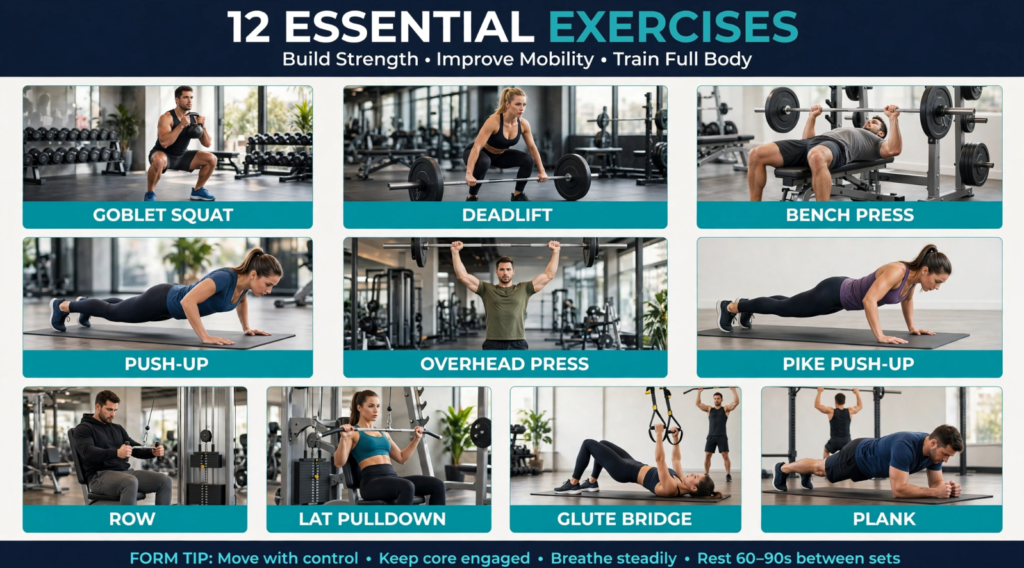
Section 2: The Essential Dumbbell Exercises
Chest
Exercise 1: Dumbbell Bench Press
| Detail | Information |
|---|---|
| Muscles Worked | Chest, triceps, front shoulders |
| Setup | Lie on a flat bench, dumbbells at chest level |
| Form | Press dumbbells up, keeping them over your chest, control the descent |
| Sets & Reps | 3–4 x 8–12 reps |
Exercise 2: Incline Dumbbell Press
| Detail | Information |
|---|---|
| Muscles Worked | Upper chest, shoulders, triceps |
| Setup | Bench at 30–45° incline, dumbbells at chest level |
| Form | Press dumbbells up, control the descent |
| Sets & Reps | 3–4 x 8–12 reps |
Exercise 3: Dumbbell Flyes
| Detail | Information |
|---|---|
| Muscles Worked | Chest (pecs), front shoulders |
| Setup | Lie on a flat or incline bench, dumbbells above chest, palms facing |
| Form | Lower dumbbells in an arc motion (like hugging a tree), squeeze chest at the top |
| Sets & Reps | 3 x 10–15 reps |
Back
Exercise 4: Dumbbell Rows
| Detail | Information |
|---|---|
| Muscles Worked | Lats, rhomboids, biceps, rear delts |
| Setup | One knee and hand on a bench, other foot on floor |
| Form | Pull dumbbell up toward your hip, squeeze shoulder blade, control the descent |
| Sets & Reps | 3–4 x 8–12 reps per side |
Exercise 5: Dumbbell Pullovers
| Detail | Information |
|---|---|
| Muscles Worked | Lats, chest, triceps |
| Setup | Lie across a bench (shoulders on bench, hips off), dumbbell above chest |
| Form | Lower dumbbell behind your head in an arc, pull back over your chest |
| Sets & Reps | 3 x 10–15 reps |
Exercise 6: Bent-Over Dumbbell Rows (Two-Arm)
| Detail | Information |
|---|---|
| Muscles Worked | Mid-back, lats, biceps |
| Setup | Stand with feet shoulder-width apart, hinge at hips, back straight |
| Form | Pull both dumbbells toward your lower chest, squeeze shoulder blades, control descent |
| Sets & Reps | 3–4 x 8–12 reps |
Exercise 7: Renegade Rows
| Detail | Information |
|---|---|
| Muscles Worked | Back, core, shoulders |
| Setup | Start in a push-up position with hands on dumbbells |
| Form | Row one dumbbell up, keeping your body stable, lower, repeat on other side |
| Sets & Reps | 3 x 8–10 reps per side |
Shoulders
Exercise 8: Dumbbell Overhead Press
| Detail | Information |
|---|---|
| Muscles Worked | Shoulders, triceps, upper chest |
| Setup | Sit or stand, dumbbells at shoulder height, palms forward |
| Form | Press dumbbells overhead, keeping them slightly in front of your ears, control the descent |
| Sets & Reps | 3–4 x 8–12 reps |
Exercise 9: Dumbbell Lateral Raises
| Detail | Information |
|---|---|
| Muscles Worked | Side delts |
| Setup | Stand with dumbbells at your sides, slight bend in elbows |
| Form | Raise dumbbells out to your sides to shoulder height, control the descent |
| Sets & Reps | 3 x 12–15 reps |
Exercise 10: Dumbbell Front Raises
| Detail | Information |
|---|---|
| Muscles Worked | Front delts |
| Setup | Stand with dumbbells at your sides, palms facing down |
| Form | Raise dumbbells in front of you to shoulder height, control the descent |
| Sets & Reps | 3 x 12–15 reps |
Exercise 11: Dumbbell Reverse Flyes
| Detail | Information |
|---|---|
| Muscles Worked | Rear delts, upper back |
| Setup | Hinge at hips, back straight, dumbbells hanging down |
| Form | Raise dumbbells out to your sides (thumbs up), squeeze shoulder blades, control descent |
| Sets & Reps | 3 x 12–15 reps |
Biceps & Triceps
Exercise 12: Dumbbell Bicep Curls
| Detail | Information |
|---|---|
| Muscles Worked | Biceps |
| Setup | Stand with dumbbells at your sides, palms facing forward |
| Form | Curl dumbbells up, squeeze biceps, control the descent |
| Sets & Reps | 3 x 10–15 reps |
Exercise 13: Hammer Curls
| Detail | Information |
|---|---|
| Muscles Worked | Biceps, brachialis |
| Setup | Stand with dumbbells at your sides, palms facing each other |
| Form | Curl dumbbells up (palms still facing each other), squeeze, control descent |
| Sets & Reps | 3 x 10–15 reps |
Exercise 14: Dumbbell Tricep Extensions
| Detail | Information |
|---|---|
| Muscles Worked | Triceps |
| Setup | Sit or stand, one dumbbell behind your head, both hands on the handle |
| Form | Lower dumbbell behind your head, extend arms, squeeze triceps |
| Sets & Reps | 3 x 10–15 reps |
Exercise 15: Tricep Kickbacks
| Detail | Information |
|---|---|
| Muscles Worked | Triceps |
| Setup | Hinge at hips, back straight, dumbbells at your sides |
| Form | Extend arms backward, squeezing triceps, control the return |
| Sets & Reps | 3 x 12–15 reps |
Legs
Exercise 16: Dumbbell Squats
| Detail | Information |
|---|---|
| Muscles Worked | Quads, glutes, hamstrings, core |
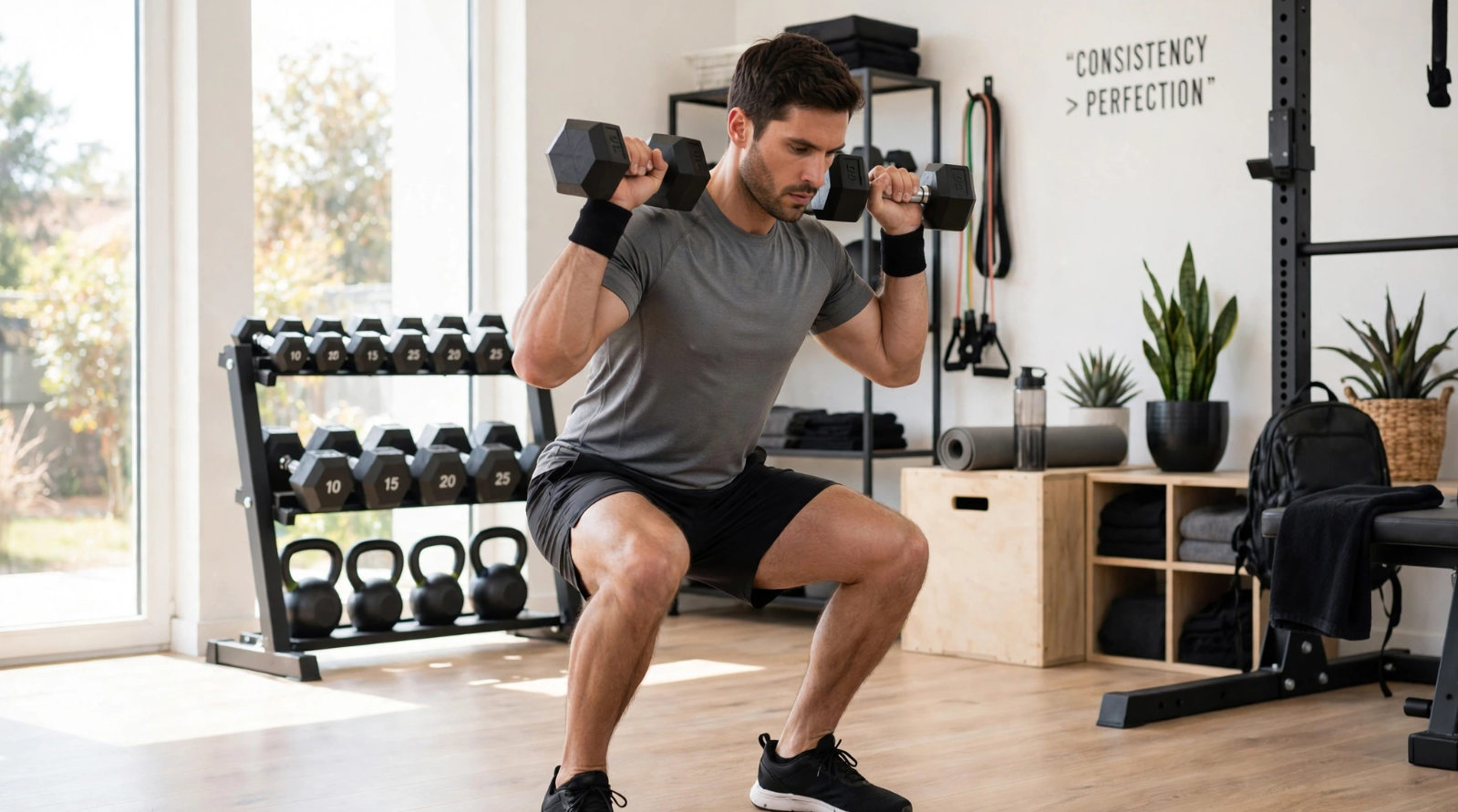
| Setup | Hold dumbbells at your sides or at shoulders (goblet style) |
| Form | Squat down, keeping chest up, drive through heels, return to standing |
| Sets & Reps | 3–4 x 8–12 reps |
Exercise 17: Goblet Squats
| Detail | Information |
|---|---|
| Muscles Worked | Quads, glutes, core |
| Setup | Hold one dumbbell vertically against your chest |
| Form | Squat down, keeping chest up, drive through heels, return to standing |
| Sets & Reps | 3–4 x 8–12 reps |
Exercise 18: Dumbbell Lunges
| Detail | Information |
|---|---|
| Muscles Worked | Quads, glutes, hamstrings, core |
| Setup | Hold dumbbells at your sides |
| Form | Step forward into a lunge, lower until both knees at 90°, push back to start |
| Sets & Reps | 3 x 8–10 reps per leg |
Exercise 19: Dumbbell Romanian Deadlifts (RDLs)
| Detail | Information |
|---|---|
| Muscles Worked | Hamstrings, glutes, lower back |
| Setup | Hold dumbbells at your sides, slight bend in knees |
| Form | Hinge at hips, keeping back straight, lower dumbbells, squeeze glutes to return |
| Sets & Reps | 3–4 x 8–12 reps |
Exercise 20: Dumbbell Calf Raises
| Detail | Information |
|---|---|
| Muscles Worked | Calves |
| Setup | Stand on a step (optional), dumbbells at your sides |
| Form | Rise onto your toes, squeeze calves, lower with control |
| Sets & Reps | 3 x 15–20 reps |
Core
Exercise 21: Dumbbell Russian Twists
| Detail | Information |
|---|---|
| Muscles Worked | Core, obliques |
| Setup | Sit on the floor, knees bent, hold a dumbbell with both hands |
| Form | Lean back slightly, twist torso from side to side, touching dumbbell to the floor |
| Sets & Reps | 3 x 12–15 reps per side |
Exercise 22: Dumbbell Side Bends
| Detail | Information |
|---|---|
| Muscles Worked | Obliques |
| Setup | Stand with dumbbell in one hand, arm at your side |
| Form | Lean to the side (toward the dumbbell), engage obliques, return to upright |
| Sets & Reps | 3 x 12–15 reps per side |
Exercise 23: Dumbbell Woodchoppers
| Detail | Information |
|---|---|
| Muscles Worked | Core, obliques, shoulders |
| Setup | Stand with feet shoulder-width apart, hold one dumbbell with both hands |
| Form | Chop diagonally from high to low (or low to high), engaging your core |
| Sets & Reps | 3 x 10–12 reps per side |
Exercise 24: Dumbbell Plank Drags
| Detail | Information |
|---|---|
| Muscles Worked | Core, shoulders |
| Setup | Start in a push-up position, dumbbell on the floor to one side |
| Form | Drag the dumbbell across your body to the other side with one hand, repeat |
| Sets & Reps | 3 x 10–12 reps per side |
Section 3: Sample Dumbbell-Only Workouts
Workout A: Full Body Beginner (3 Days/Week)
Schedule: Monday, Wednesday, Friday
| Exercise | Sets | Reps | Rest |
|---|---|---|---|
| Goblet Squats | 3 | 10–12 | 60 sec |
| Dumbbell Bench Press | 3 | 10–12 | 60 sec |
| Dumbbell Rows | 3 | 10–12 | 60 sec |
| Dumbbell Overhead Press | 3 | 10–12 | 60 sec |
| Dumbbell Bicep Curls | 3 | 12–15 | 45 sec |
| Plank | 3 | 45–60 sec | 45 sec |
Workout B: Upper/Lower Split (4 Days/Week)
Monday: Upper Body A
| Exercise | Sets | Reps | Rest |
|---|---|---|---|
| Dumbbell Bench Press | 4 | 8–10 | 60–90 sec |
| Dumbbell Rows | 4 | 8–10 | 60–90 sec |
| Dumbbell Overhead Press | 3 | 8–10 | 60 sec |
| Dumbbell Lateral Raises | 3 | 12–15 | 45 sec |
| Dumbbell Bicep Curls | 3 | 10–12 | 45 sec |
| Tricep Kickbacks | 3 | 12–15 | 45 sec |
Tuesday: Lower Body A
| Exercise | Sets | Reps | Rest |
|---|---|---|---|
| Dumbbell Squats | 4 | 8–10 | 60–90 sec |
| Dumbbell RDLs | 4 | 8–10 | 60–90 sec |
| Dumbbell Lunges | 3 | 8–10 per leg | 60 sec |
| Dumbbell Calf Raises | 3 | 15–20 | 45 sec |
| Dumbbell Russian Twists | 3 | 12–15 per side | 45 sec |
Thursday: Upper Body B
| Exercise | Sets | Reps | Rest |
|---|---|---|---|
| Incline Dumbbell Press | 4 | 8–10 | 60–90 sec |
| Bent-Over Rows | 4 | 8–10 | 60–90 sec |
| Dumbbell Pullovers | 3 | 10–12 | 60 sec |
| Dumbbell Reverse Flyes | 3 | 12–15 | 45 sec |
| Hammer Curls | 3 | 10–12 | 45 sec |
| Tricep Extensions | 3 | 10–12 | 45 sec |
Friday: Lower Body B
| Exercise | Sets | Reps | Rest |
|---|---|---|---|
| Goblet Squats | 4 | 8–10 | 60–90 sec |
| Dumbbell Deadlifts | 4 | 8–10 | 60–90 sec |
| Bulgarian Split Squats | 3 | 8–10 per leg | 60 sec |
| Dumbbell Calf Raises | 3 | 15–20 | 45 sec |
| Dumbbell Side Bends | 3 | 12–15 per side | 45 sec |
Workout C: Push/Pull/Legs (3 Days/Week)
Monday: Push (Chest, Shoulders, Triceps)
| Exercise | Sets | Reps | Rest |
|---|---|---|---|
| Dumbbell Bench Press | 4 | 8–10 | 60–90 sec |
| Incline Dumbbell Press | 3 | 10–12 | 60 sec |
| Dumbbell Overhead Press | 3 | 8–10 | 60 sec |
| Dumbbell Lateral Raises | 3 | 12–15 | 45 sec |
| Tricep Extensions | 3 | 10–12 | 45 sec |
| Tricep Kickbacks | 3 | 12–15 | 45 sec |
Wednesday: Pull (Back, Biceps)
| Exercise | Sets | Reps | Rest |
|---|---|---|---|
| Dumbbell Rows | 4 | 8–10 | 60–90 sec |
| Bent-Over Rows | 3 | 10–12 | 60 sec |
| Dumbbell Pullovers | 3 | 10–12 | 60 sec |
| Dumbbell Reverse Flyes | 3 | 12–15 | 45 sec |
| Dumbbell Bicep Curls | 3 | 10–12 | 45 sec |
| Hammer Curls | 3 | 10–12 | 45 sec |
Friday: Legs
| Exercise | Sets | Reps | Rest |
|---|---|---|---|
| Dumbbell Squats | 4 | 8–10 | 60–90 sec |
| Dumbbell RDLs | 4 | 8–10 | 60–90 sec |
| Dumbbell Lunges | 3 | 8–10 per leg | 60 sec |
| Dumbbell Calf Raises | 3 | 15–20 | 45 sec |
| Dumbbell Russian Twists | 3 | 12–15 per side | 45 sec |
Workout D: The 20-Minute Dumbbell Finisher
| Exercise | Duration | Rest |
|---|---|---|
| Dumbbell Squats | 45 sec | 15 sec |
| Dumbbell Press | 45 sec | 15 sec |
| Dumbbell Rows | 45 sec | 15 sec |
| Dumbbell Curls | 45 sec | 15 sec |
| Dumbbell Lateral Raises | 45 sec | 15 sec |
Repeat: 2–3 rounds (10–15 minutes total)
Workout E: Home Dumbbell Circuit (30 Minutes)
Circuit Format: 3 rounds
| Exercise | Reps | Rest |
|---|---|---|
| Goblet Squats | 12–15 reps | 0 sec |
| Dumbbell Bench Press | 10–12 reps | 0 sec |
| Dumbbell Rows | 10–12 reps | 0 sec |
| Dumbbell Overhead Press | 10–12 reps | 0 sec |
| Dumbbell Bicep Curls | 12–15 reps | 0 sec |
| Plank | 45 seconds | 0 sec |
Rest: 60–90 seconds between rounds
Section 4: Progressive Overload with Dumbbells
How to Progress
| Method | How to Apply |
|---|---|
| Increase Weight | Add 2.5–5 lbs when you can complete all reps with good form |
| Increase Reps | Add 1–2 reps per set |
| Increase Sets | Add 1 set per exercise |
| Decrease Rest | Shorten rest periods (60 sec → 45 sec) |
| Slow the Tempo | Increase time under tension (3 sec down, 3 sec up) |
| Improve Form | Full range of motion, controlled movements |
| Add Isometric Holds | Hold at peak contraction for 2–3 seconds |
The “2-Rep Rule”
When you can complete 2 more reps than your target with good form, increase the weight.
Example:
- Target: 3 sets of 10 reps
- If you can do 3 sets of 12 reps → Increase weight by 2.5–5 lbs
Sample Progression (Bench Press)
| Week | Weight | Sets x Reps | Notes |
|---|---|---|---|
| 1 | 30 lbs | 3 x 10 | Baseline |
| 2 | 30 lbs | 3 x 11 | Add rep |
| 3 | 30 lbs | 3 x 12 | Max reps |
| 4 | 35 lbs | 3 x 10 | Increase weight |
| 5 | 35 lbs | 3 x 11 | Add rep |
| 6 | 35 lbs | 3 x 12 | Max reps |
Section 5: Combining Dumbbells with Other Training
Option 1: Dumbbells + Bodyweight
| Day | Focus | Exercises |
|---|---|---|
| Monday | Upper Body | Dumbbell Press, Rows, Push-ups, Pull-ups |
| Wednesday | Lower Body | Dumbbell Squats, RDLs, Lunges, Bodyweight Squats |
| Friday | Full Body | Dumbbell Press, Rows, Squats, Plank, Push-ups |
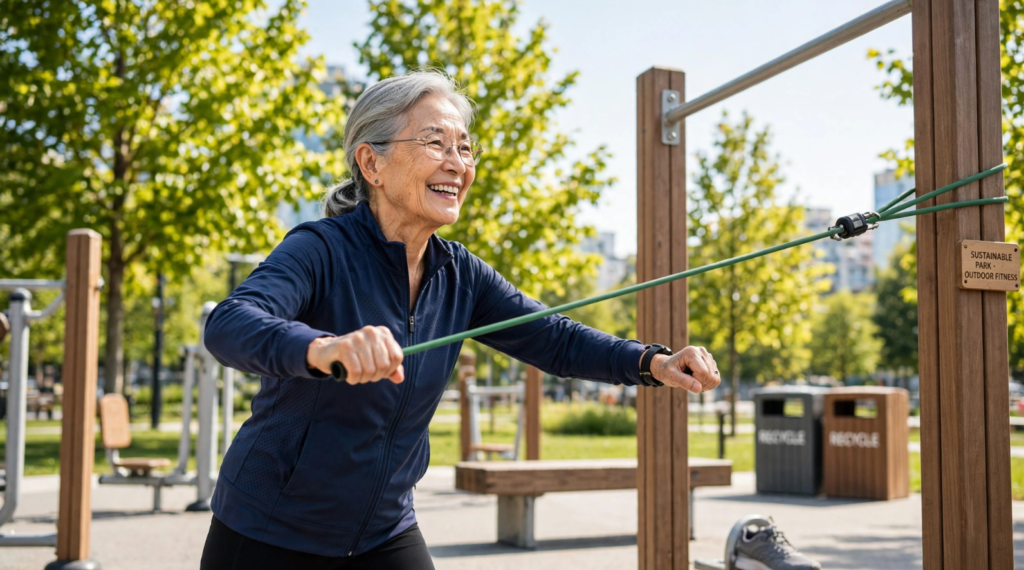
Option 2: Dumbbells + Resistance Bands
| Exercise | How to Combine |
|---|---|
| Presses | Bands add tension at the top |
| Rows | Bands add resistance at peak contraction |
| Squats | Bands add tension at the top |
| Deadlifts | Bands add variable resistance |
Option 3: Dumbbells + Cardio
| Type | How to Combine |
|---|---|
| HIIT | Dumbbell circuits (40 sec work, 20 sec rest) |
| LISS | Dumbbells after cardio (strength training) |
| Supersets | Cardio intervals between dumbbell sets |
Section 6: Dumbbell Workout Benefits for Americans Over 40
Why Dumbbells Are Ideal for Midlife
| Benefit | How It Helps |
|---|---|
| Joint-Friendly | Natural range of motion compared to machines |
| Versatile | One set replaces multiple pieces of equipment |
| Space-Saving | Fits in a small corner of a room |
| Safe | Easier to “bail out” of a lift than a barbell |
| Corrects Imbalances | Unilateral training identifies and fixes weaknesses |
| Functional | Improves everyday strength and coordination |
Modifications for Older Adults
| Exercise | Modification |
|---|---|
| Squats | Goblet squats (easier to maintain form) |
| Presses | Seated press (more stable) |
| Rows | Supported rows (bench or chair) |
| Deadlifts | RDLs (less range of motion) |
| Lunges | Shorten range of motion, use support |
Section 7: Common Dumbbell Mistakes
Mistake 1: Using Too Much Weight
The Problem: Sacrificing form for heavy weight.
The Fix: Start light, focus on form, progress gradually. Quality over quantity.
Mistake 2: Limited Range of Motion
The Problem: Partial reps, not using full range.
The Fix: Use full range of motion. Lower weights to increase range if needed.
Mistake 3: Not Engaging Stabilizers
The Problem: Letting the weight “swing,” using momentum.
The Fix: Control the weight throughout the movement. Slow down the tempo.
Mistake 4: Neglecting the Eccentric Phase
The Problem: Dropping the weight in the lowering phase.
The Fix: Control the descent (2–3 seconds). This is where muscle damage and growth occur.
Mistake 5: Not Tracking Progress
The Problem: Using the same weight week after week.
The Fix: Track your workouts. Apply progressive overload.
Mistake 6: Only Doing One Variation
The Problem: Always doing the same exercises.
The Fix: Vary exercises, angles, and rep ranges for continued progress.
Section 8: FAQ—Your Top Dumbbell Questions
Q: Can I build muscle with just dumbbells?
A: Yes. Dumbbells are one of the most effective tools for building muscle. With progressive overload, you can build significant muscle with just dumbbells—especially for the upper body and legs (with heavier weights).
Q: What weight dumbbells should I start with?
A: Beginners: Women (5–15 lbs), Men (10–25 lbs). Adjustable dumbbells are ideal because they cover multiple weights in one set. Choose a weight that allows you to complete 8–12 reps with good form.
Q: Can I do a full-body workout with just dumbbells?
A: Yes. With a pair of dumbbells, you can perform exercises for every muscle group—squats, presses, rows, deadlifts, curls, etc. The variety is virtually unlimited.
Q: Are dumbbells better than barbells?
A: Neither is “better”—they have different strengths. Dumbbells allow greater range of motion, engage stabilizers, and correct imbalances. Barbells allow heavier loading and are more efficient for powerlifting. Both are valuable.
Q: Do I need a bench for dumbbell workouts?
A: A bench is helpful but not essential. You can do many exercises standing or on the floor. If you have a bench, it adds variety (incline presses, seated rows). But you can still build significant muscle without one.
Q: How often should I train with dumbbells?
A: 3–4 days per week is ideal. This provides enough frequency for progress while allowing adequate recovery. Two days per week is sufficient for beginners or maintenance.
Q: Can I lose weight with just dumbbells?
A: Yes. Dumbbell training builds muscle, which increases your metabolism. Combined with a caloric deficit and proper nutrition, you can lose fat while preserving muscle.
Q: What if my dumbbells don’t go heavy enough?
A: Options:
- Use slower tempo (more time under tension)
- Increase reps (15–20 reps)
- Decrease rest (shorter rest periods)
- Use drop sets
- Use unilateral exercises (one arm/leg at a time)
The VigorForty Take
Dumbbells are one of the most versatile and effective pieces of fitness equipment. With a single pair of adjustable dumbbells, you can build muscle, increase strength, and improve your health—anywhere, anytime.
The principles:
- Choose the right weight (adjustable is ideal)
- Master the basics (squat, press, row, deadlift, curl)
- Use proper form (quality over quantity)
- Progress consistently (increase weight, reps, or difficulty)
- Train regularly (3–4 days per week)
- Track your progress (ensure you’re improving)
The benefits:
- Significant muscle and strength gains
- Improved functional strength
- Better body composition
- Convenience and accessibility
- Cost-effectiveness
You don’t need a gym to get strong. You don’t need a barbell to build muscle. You just need dumbbells and the commitment to use them.
This article was reviewed by the Vigor Forty Editorial Review Board on July 21, 2026.
🔗 Related Articles
- Beyond Crunches: The Best Exercises for True Core Stability
- Core Stability for Lifters: How a Strong Core Protects Your Lower Back
- The Connection Between Core Strength and Better Posture
- Top 5 Strength Training Myths Debunked
- “I’m Too Old to Start Lifting”: Why Strength Training is for Everyone
- “I Don’t Want to Get Bulky”: The Truth About Weightlifting and Muscle Growth
- Can You Build Muscle with Just Bodyweight Exercises?
- The Role of Nutrition in Strength Training: Fueling Your Gains
- The Importance of Rest and Recovery for Building Muscle
- Supplements 101: What Actually Works for Strength Athletes?
- Sleep and Strength: How Better Sleep Can Improve Your Lifts
- 5-Minute Daily Core Routine for Busy Americans
- The Science of Hypertrophy: How to Build Muscle Effectively
- Periodization: How to Plan Your Training for Long-Term Success
- Drop Sets, Supersets, and AMRAPs: Advanced Training Techniques Explained
- Strength Training for Fat Loss: A Comprehensive Guide
- How to Build Muscle and Strength with a Busy Schedule
- The Ultimate Guide to Kettlebell Training for Strength and Conditioning
- Resistance Band Workout: A Full-Body Strength Routine
- Dumbbell Only Workout: Build Muscle Anywhere
- Hybrid Training: Combining Calisthenics and Powerlifting
- The Importance of Mobility for Strength Athletes
- 5 Dynamic Warm-Up Exercises to Do Before Every Workout
- The Best of Both Worlds: Why You Should Combine Calisthenics and Weights
- Your 2027 Strength Training Roadmap: Setting Goals and Staying Consistent
- Strength Training for Life: Building a Sustainable Fitness Habit
- The 12 Best Strength Training Exercises for Americans
Affiliate Disclosure: Some links in this article may be affiliate links. If you make a purchase through these links, Vigor Forty may earn a small commission at no extra cost to you. We only recommend products we trust.