
Author: Vigor Forty Editorial Team
Medically Reviewed By: Editorial Review Board
Disclaimer: This article is for informational purposes only and is not a substitute for professional medical advice. Read our full Medical Disclaimer.
📌 Key Takeaways
- Hybrid training combines the best of both worlds: Calisthenics builds functional strength, body control, and joint stability while powerlifting develops maximal strength, bone density, and raw power.
- You don’t have to choose one discipline over the other: Many of the strongest and most functional athletes combine both approaches for complete development.
- Calisthenics and powerlifting complement each other perfectly: Powerlifting builds the raw strength for heavy lifts; calisthenics builds the body control, mobility, and stability to support them.
- The hybrid approach is ideal for Americans over 40: It builds muscle, protects joints, develops functional strength, and improves mobility—everything you need to stay strong and capable through midlife and beyond.
- Proper programming prevents interference: With the right balance of volume, intensity, and recovery, you can make significant progress in both disciplines simultaneously.
Introduction: The Best of Both Worlds
For years, the fitness world has been divided.
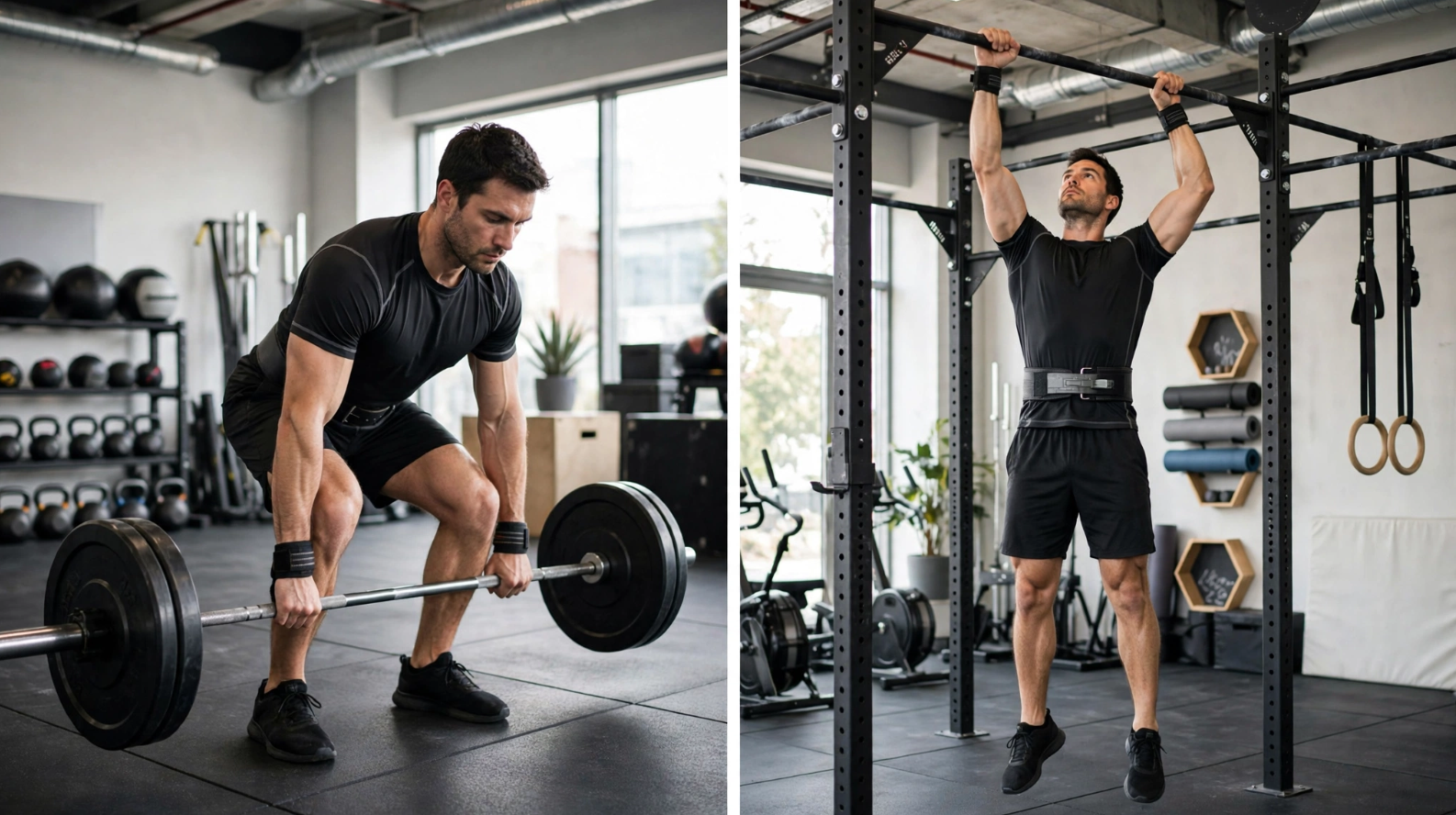
On one side: the powerlifters. Barbells, heavy weights, low reps, and the pursuit of maximal strength. Squat, bench, deadlift—these are their sacred movements.
On the other side: the calisthenics athletes. Bodyweight mastery, functional movement, and the pursuit of control and endurance. Push-ups, pull-ups, planches, and levers—these are their tools.
But what if you don’t have to choose?
What if you could combine the raw strength of powerlifting with the functional control of calisthenics? What if you could build maximal strength while also developing exceptional body awareness and joint stability? What if you could be both strong and functional?
This is hybrid training.
The hybrid approach recognizes that powerlifting and calisthenics are not competing disciplines—they’re complementary. Powerlifting builds the raw strength that makes calisthenics easier. Calisthenics builds the body control, stability, and mobility that make powerlifting safer and more efficient.
The Synergy:
| Quality | Powerlifting | Calisthenics | Hybrid Result |
|---|---|---|---|
| Maximal Strength | High | Moderate | Very High |
| Functional Strength | Moderate | High | Very High |
| Joint Stability | Moderate | High | Very High |
| Body Control | Low | High | Very High |
| Muscle Mass | High | Moderate | High |
| Bone Density | High | Moderate | Very High |
| Mobility | Low-Moderate | High | Very High |
| Injury Resilience | Moderate | High | Very High |
The Hybrid Athlete:
A hybrid athlete can:
- Deadlift 400+ pounds (powerlifting)
- Perform 20+ pull-ups (calisthenics)
- Squat heavy (powerlifting)
- Perform a pistol squat (calisthenics)
- Bench press heavy (powerlifting)
- Perform a muscle-up (calisthenics)
- Move with control and awareness (calisthenics)
- Generate raw power (powerlifting)
This guide will show you how to combine calisthenics and powerlifting into a single, effective training program. You’ll learn the principles of hybrid training, sample workouts, programming strategies, and how to balance both disciplines for maximum results.
Section 1: The Case for Hybrid Training
Why Combine Calisthenics and Powerlifting?
Powerlifting Strengths:
| Quality | How Powerlifting Develops It |
|---|---|
| Maximal Strength | Heavy barbell work builds raw strength |
| Bone Density | Heavy loading stimulates bone formation |
| Muscle Hypertrophy | Heavy weights build significant muscle mass |
| Neuromuscular Efficiency | Teaches your nervous system to recruit muscle fibers |
| Absolute Power | Builds the ability to generate maximum force |
Powerlifting Weaknesses:
| Quality | How Powerlifting Falls Short |
|---|---|
| Body Control | Limited emphasis on body awareness |
| Joint Stability | Can be harsh on joints without supporting work |
| Mobility | Often neglected |
| Core Stability | Limited to bracing (not full core development) |
| Injury Resilience | Heavy loading increases injury risk without support |
Calisthenics Strengths:
| Quality | How Calisthenics Develops It |
|---|---|
| Body Control | Teaches you to control your body in space |
| Joint Stability | Strengthens stabilizers and connective tissues |
| Functional Strength | Strength that translates to daily activities |
| Core Stability | Develops the entire core system |
| Mobility | Full range of motion in every exercise |
| Injury Resilience | Builds resilient joints and connective tissues |
Calisthenics Weaknesses:
| Quality | How Calisthenics Falls Short |
|---|---|
| Maximal Strength | Limited by body weight |
| Bone Density | Less loading than heavy barbell work |
| Lower Body Strength | Difficult to build maximal leg strength |
| Absolute Power | Limited by body weight resistance |
The Hybrid Advantage
| Benefit | How It Works |
|---|---|
| Complete Development | Builds all aspects of strength and fitness |
| Injury Prevention | Calisthenics strengthens supporting structures |
| Improved Lifts | Better body control and mobility improves powerlifting form |
| Better Body Composition | High muscle mass + functional strength |
| Sustainability | Less injury risk means longer training career |
| Variety | Keeps training interesting and engaging |
| Adaptability | Can train anywhere (calisthenics) and in the gym (powerlifting) |
Section 2: The Principles of Hybrid Training
Principle 1: Balance Volume
The Rule: Distribute training volume between both disciplines appropriately.
| Experience Level | Powerlifting % | Calisthenics % |
|---|---|---|
| Beginner | 60% | 40% |
| Intermediate | 50% | 50% |
| Advanced | 40% | 60% |
Principle 2: Prioritize Recovery
The Rule: Hybrid training demands more recovery—both disciplines are demanding. Prioritize sleep, nutrition, and rest days.
| Recovery Factor | Recommendation |
|---|---|
| Sleep | 8–9 hours per night |
| Protein | 1.0–1.2g per pound of body weight |
| Rest Days | At least 2 full rest days per week |
| Deloads | Every 4–6 weeks |
Principle 3: Choose Complementary Exercises
The Rule: Select powerlifting and calisthenics exercises that complement each other.
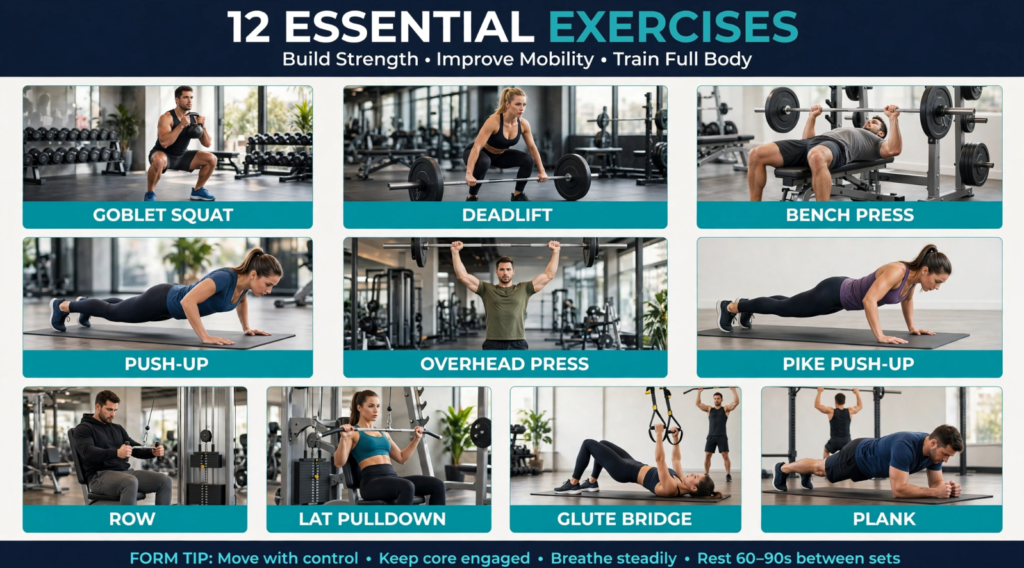
| Powerlifting Exercise | Complementary Calisthenics Exercise |
|---|---|
| Squat | Pistol Squats, Bulgarian Split Squats |
| Deadlift | Glute Bridges, Nordic Curls |
| Bench Press | Push-ups, Dips |
| Overhead Press | Handstand Push-ups, Pike Push-ups |
| Rows/Pull-ups | Pull-ups, Bodyweight Rows |
Principle 4: Periodize Your Training
The Rule: Plan your training in phases, alternating emphasis between powerlifting and calisthenics.
| Phase | Duration | Focus | Volume Split |
|---|---|---|---|
| Phase 1 | 4–6 weeks | Powerlifting Emphasis | 70% Powerlifting, 30% Calisthenics |
| Phase 2 | 4–6 weeks | Balanced | 50% Powerlifting, 50% Calisthenics |
| Phase 3 | 4–6 weeks | Calisthenics Emphasis | 30% Powerlifting, 70% Calisthenics |
| Deload | 1–2 weeks | Recovery | Light both |
Principle 5: Train Movements, Not Muscles
The Rule: Focus on movement patterns rather than individual muscles.
| Movement Pattern | Powerlifting | Calisthenics |
|---|---|---|
| Squat | Barbell Squat | Pistol Squat |
| Hinge | Deadlift | Glute Bridge |
| Push | Bench Press | Push-ups |
| Pull | Rows | Pull-ups |
| Core | Bracing | Planks, Hollow Body |
Section 3: Sample Hybrid Training Programs
Program A: 3-Day Hybrid (Beginner)
Schedule: Monday, Wednesday, Friday
Monday: Powerlifting Focus
| Exercise | Sets | Reps | Rest |
|---|---|---|---|
| Barbell Squats | 3 | 6–8 | 90 sec |
| Bench Press | 3 | 6–8 | 90 sec |
| Bent-Over Rows | 3 | 8–10 | 90 sec |
| Plank | 3 | 45–60 sec | 60 sec |
| Push-ups | 3 | 8–12 | 60 sec |
Wednesday: Calisthenics Focus
| Exercise | Sets | Reps | Rest |
|---|---|---|---|
| Pistol Squat Progression | 3 | 5–8 per leg | 60 sec |
| Push-up Progression | 3 | 8–12 | 60 sec |
| Pull-up Progression | 3 | 5–8 | 60 sec |
| Glute Bridges | 3 | 15–20 | 60 sec |
| Dead Bugs | 3 | 10 per side | 45 sec |
Friday: Full Body Hybrid
| Exercise | Sets | Reps | Rest |
|---|---|---|---|
| Goblet Squats | 3 | 8–10 | 60 sec |
| Dumbbell Bench Press | 3 | 8–10 | 60 sec |
| Dumbbell Rows | 3 | 8–10 | 60 sec |
| Dips (chair) | 3 | 8–12 | 60 sec |
| Bird Dogs | 3 | 10 per side | 45 sec |
Program B: 4-Day Hybrid (Intermediate)
Schedule: Monday, Tuesday, Thursday, Friday
Monday: Powerlifting (Upper Body)
| Exercise | Sets | Reps | Rest |
|---|---|---|---|
| Bench Press | 4 | 5–8 | 90 sec |
| Incline Dumbbell Press | 3 | 8–10 | 60 sec |
| Dumbbell Rows | 4 | 8–10 | 60 sec |
| Pull-ups | 3 | 5–8 | 60 sec |
| Tricep Pushdowns (or Dips) | 3 | 10–12 | 45 sec |
| Face Pulls | 3 | 12–15 | 45 sec |
Tuesday: Calisthenics (Lower Body/Core)
| Exercise | Sets | Reps | Rest |
|---|---|---|---|
| Pistol Squat Progression | 3 | 5–8 per leg | 60 sec |
| Glute Bridges (Single-Leg) | 3 | 10–12 per leg | 60 sec |
| Bulgarian Split Squats | 3 | 8–10 per leg | 60 sec |
| Hollow Body Holds | 3 | 45–60 sec | 45 sec |
| Side Planks | 3 | 30–45 sec per side | 45 sec |
Thursday: Powerlifting (Lower Body)
| Exercise | Sets | Reps | Rest |
|---|---|---|---|
| Barbell Squats | 4 | 5–8 | 90 sec |
| Deadlifts (or RDLs) | 4 | 5–8 | 90 sec |
| Leg Press | 3 | 10–12 | 60 sec |
| Leg Curls | 3 | 10–12 | 60 sec |
| Calf Raises | 3 | 15–20 | 45 sec |
Friday: Calisthenics (Upper Body/Core)
| Exercise | Sets | Reps | Rest |
|---|---|---|---|
| Weighted Push-ups | 3 | 8–12 | 60 sec |
| Weighted Pull-ups | 3 | 5–8 | 60 sec |
| Dips (weighted) | 3 | 8–12 | 60 sec |
| Bodyweight Rows | 3 | 10–12 | 60 sec |
| Plank (weighted) | 3 | 45–60 sec | 45 sec |
Program C: 5-Day Hybrid (Advanced)
Schedule: Monday, Tuesday, Wednesday, Friday, Saturday
Monday: Powerlifting (Strength)
| Exercise | Sets | Reps | Rest |
|---|---|---|---|
| Squats | 5 | 5 | 90–120 sec |
| Bench Press | 5 | 5 | 90–120 sec |
| Deadlifts | 5 | 5 | 90–120 sec |
Tuesday: Calisthenics (Skills)
| Exercise | Sets | Reps | Rest |
|---|---|---|---|
| Muscle-up Progression | 5 | 3–5 | 90 sec |
| Handstand Push-up Progression | 5 | 3–5 | 90 sec |
| Front Lever Progression | 5 | 3–5 | 90 sec |
| L-Sit Progression | 5 | 10–15 sec | 60 sec |
Wednesday: Powerlifting (Hypertrophy)
| Exercise | Sets | Reps | Rest |
|---|---|---|---|
| Squats | 4 | 8–10 | 60–90 sec |
| Incline Bench Press | 4 | 8–10 | 60–90 sec |
| Romanian Deadlifts | 4 | 8–10 | 60–90 sec |
| Dumbbell Rows | 4 | 8–10 | 60–90 sec |
Friday: Calisthenics (Volume)
| Exercise | Sets | Reps | Rest |
|---|---|---|---|
| Push-ups | 4 | 12–15 | 60 sec |
| Pull-ups | 4 | 8–12 | 60 sec |
| Dips | 4 | 10–15 | 60 sec |
| Bodyweight Squats | 4 | 15–20 | 60 sec |
| Hanging Leg Raises | 4 | 10–15 | 60 sec |
Saturday: Powerlifting (Peak)
| Exercise | Sets | Reps | Rest |
|---|---|---|---|
| Squats | 3 | 3–5 | 90–120 sec |
| Bench Press | 3 | 3–5 | 90–120 sec |
| Deadlifts | 3 | 3–5 | 90–120 sec |
Section 4: Exercise Selection for Hybrid Training
Upper Body Push
| Powerlifting Exercise | Calisthenics Variation | How to Progress |
|---|---|---|
| Barbell Bench Press | Push-ups (weighted) | Increase weight on both |
| Incline Dumbbell Press | Incline Push-ups | Vary angles |
| Overhead Press | Pike Push-ups | Progress to handstand |
| Dips (weighted) | Dips (bodyweight) | Add weight gradually |
Upper Body Pull
| Powerlifting Exercise | Calisthenics Variation | How to Progress |
|---|---|---|
| Bent-Over Rows | Bodyweight Rows | Lower bar height |
| Lat Pulldowns | Pull-ups (weighted) | Increase weight on both |
| Face Pulls | Band Pull-Aparts | Increase resistance |
| Dumbbell Rows | Inverted Rows | Vary foot position |
Lower Body
| Powerlifting Exercise | Calisthenics Variation | How to Progress |
|---|---|---|
| Barbell Squats | Pistol Squats | Progress to full pistol |
| Deadlifts | Glute Bridges | Add weight |
| Romanian Deadlifts | Single-Leg RDLs | Progress to no support |
| Leg Press | Bulgarian Split Squats | Increase reps/difficulty |
| Lunges | Walking Lunges | Add weight |
Core
| Powerlifting Exercise | Calisthenics Variation | How to Progress |
|---|---|---|
| Weighted Planks | Bodyweight Planks | Increase time/difficulty |
| Pallof Press | Side Planks | Increase difficulty |
| Russian Twists | Hollow Body Holds | Add weight or movement |
Section 5: The Hybrid Training Week
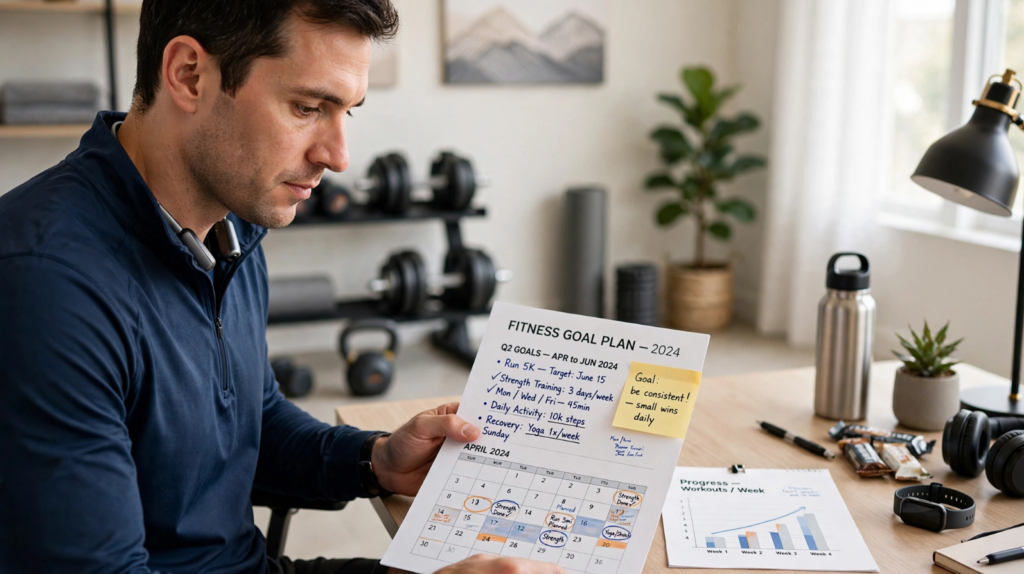
Sample Weekly Schedule (4-Day)
| Day | Workout | Duration | Focus |
|---|---|---|---|
| Monday | Powerlifting (Upper) | 60–75 min | Strength |
| Tuesday | Calisthenics (Lower/Core) | 45–60 min | Control and stability |
| Wednesday | Rest or Active Recovery | — | Recovery |
| Thursday | Powerlifting (Lower) | 60–75 min | Strength |
| Friday | Calisthenics (Upper/Core) | 45–60 min | Control and stability |
| Saturday | Active Recovery | — | Recovery |
| Sunday | Complete Rest | — | Recovery |
Sample Weekly Schedule (3-Day)
| Day | Workout | Duration | Focus |
|---|---|---|---|
| Monday | Powerlifting (Full Body) | 60–75 min | Strength |
| Wednesday | Calisthenics (Full Body) | 45–60 min | Control and stability |
| Friday | Hybrid (Full Body) | 60–75 min | Both |
| Saturday | Active Recovery | — | Recovery |
| Sunday | Complete Rest | — | Recovery |
Section 6: Progression Strategies
Powerlifting Progression
| Method | How to Apply |
|---|---|
| Linear Progression | Add 2.5–5 lbs to main lifts each week |
| Double Progression | Increase reps first, then weight |
| Periodization | Vary volume and intensity over time |
Example (Squat):
| Week | Sets x Reps | Weight |
|---|---|---|
| 1 | 3 x 8 | 185 lbs |
| 2 | 3 x 9 | 185 lbs |
| 3 | 3 x 10 | 185 lbs |
| 4 | 3 x 8 | 190 lbs |
Calisthenics Progression
| Method | How to Apply |
|---|---|
| Leverage Progression | Move to harder variations (e.g., knee push-up → full push-up) |
| Tempo Progression | Slow down the movement (3 sec down, 3 sec up) |
| Range of Motion | Increase depth or range (e.g., partial squat → full squat) |
| Rep Progression | Add reps to current variation |
| Weighted Progression | Add weight (vest, backpack) |
Example (Push-ups):
| Week | Variation | Sets x Reps |
|---|---|---|
| 1 | Knee Push-ups | 3 x 10 |
| 2 | Knee Push-ups | 3 x 12 |
| 3 | Full Push-ups | 3 x 8 |
| 4 | Full Push-ups | 3 x 10 |
| 5 | Diamond Push-ups | 3 x 8 |
Section 7: Balancing Volume and Recovery
Volume Guidelines
| Discipline | Weekly Sets (per muscle) |
|---|---|
| Powerlifting | 8–15 sets (compounds) |
| Calisthenics | 8–15 sets (compound and accessory) |
| Total | 16–30 sets (per muscle group per week) |
Recovery Considerations
| Factor | Recommendation |
|---|---|
| Sleep | 8–9 hours per night |
| Protein | 1.0–1.2g per pound of body weight |
| Rest Days | At least 2 full rest days per week |
| Active Recovery | Light walking, stretching on rest days |
| Deloads | Every 4–6 weeks (reduce volume by 40–50%) |
Signs of Overtraining
| Sign | What It Means |
|---|---|
| Decreased Performance | Fatigue outweighs adaptation |
| Persistent Soreness | Inadequate recovery |
| Poor Sleep | Overtraining or burnout |
| Mood Changes | Fatigue, irritability |
| Frequent Illness | Weakened immune system |
| Plateau or Regression | Adaptation has stalled |
Section 8: The Hybrid Athlete’s Mindset
The Philosophy
| Mindset | What It Means |
|---|---|
| Strength is Function | The goal is functional strength—strength that serves you |
| Balance is Key | Don’t neglect either discipline for the other |
| Long-Term Perspective | This is a lifelong journey, not a short-term project |
| Quality over Quantity | Form matters more than weight or reps |
| Adaptability | Adjust your training based on how you feel |
The Identity
| Identity | Focus |
|---|---|
| Powerlifter | Maximizing the big three lifts |
| Calisthenics Athlete | Maximizing bodyweight mastery |
| Hybrid Athlete | Building complete strength |
The Hybrid Identity:
A hybrid athlete:
- Can move heavy weights (powerlifting)
- Can move their body with control (calisthenics)
- Builds strength that serves their life
- Is resilient to injury
- Is capable in any situation
- Is strong, functional, and healthy
Section 9: Common Hybrid Training Mistakes
Mistake 1: Doing Too Much of One
The Problem: Neglecting one discipline in favor of the other.
The Fix: Balance your training. Even if you prefer one discipline, include work from the other. Both contribute to your overall development.
Mistake 2: Not Allowing Enough Recovery
The Problem: Training too hard and too often.
The Fix: Prioritize sleep, nutrition, and rest days. Hybrid training demands more recovery—respect that.
Mistake 3: Neglecting Lower Body Calisthenics
The Problem: Focusing on upper body calisthenics (push-ups, pull-ups) and neglecting lower body.
The Fix: Include pistol squats, Bulgarian split squats, and glute bridges. Lower body calisthenics builds functional leg strength.
Mistake 4: Not Using Progressive Overload in Calisthenics
The Problem: Doing the same calisthenics exercises with the same reps.
The Fix: Progress to harder variations, add reps, or add weight. Calisthenics needs progressive overload like any other training.
Mistake 5: Overtraining
The Problem: Training both disciplines hard, with no recovery.
The Fix: Listen to your body. If you’re fatigued, take a rest day. Deload regularly.
Mistake 6: Ignoring Mobility
The Problem: Not including mobility work in your hybrid program.
The Fix: Include mobility work in your warm-ups and rest days. Powerlifting can make you stiff; calisthenics can help counteract that, but dedicated mobility work is essential.
Section 10: FAQ—Your Top Hybrid Training Questions
Q: Can I combine calisthenics and powerlifting effectively?
A: Yes. Many athletes combine both disciplines successfully. The key is proper programming, balance, and recovery. You can build significant strength in both areas.
Q: Which should I prioritize—powerlifting or calisthenics?
A: It depends on your goals. If you want maximal strength, prioritize powerlifting. If you want functional strength and body control, prioritize calisthenics. For most people, a balanced approach works best.
Q: Will calisthenics interfere with my powerlifting progress?
A: Not if programmed properly. Calisthenics can actually improve your powerlifting by building joint stability, body control, and mobility. The key is managing volume and recovery.
Q: Can I build muscle with hybrid training?
A: Yes. Both powerlifting and calisthenics are effective for muscle growth. The combination provides a well-rounded stimulus for muscle hypertrophy.
Q: How many days per week should I train?
A: 3–4 days per week is ideal for most people. This allows enough training frequency for progress while allowing adequate recovery. Some advanced athletes train 5–6 days per week with proper recovery.
Q: Should I do powerlifting or calisthenics first in a workout?
A: It depends on your priority. If you want to maximize powerlifting strength, do powerlifting first when you’re fresh. If you want to prioritize calisthenics skills, do calisthenics first. For most people, alternating the order works well.
Q: Can I do hybrid training as a beginner?
A: Yes—with appropriate scaling. Beginners should start with a simpler version (e.g., 3-day full body workouts combining both disciplines) and gradually increase complexity.
Q: What equipment do I need for hybrid training?
A: For powerlifting: barbell, plates, squat rack, bench. For calisthenics: pull-up bar, parallel bars (optional). A basic home gym or gym membership covers both.
The VigorForty Take
Hybrid training is the future of strength training. It recognizes that true strength is not just about how much you can lift or how many pull-ups you can do—it’s about being capable, resilient, and functional in every situation.
The principles:
- Balance both disciplines — don’t neglect one for the other
- Choose complementary exercises — movements that support each other
- Prioritize recovery — hybrid training demands more
- Progress consistently — apply progressive overload to both
- Listen to your body — adjust based on how you feel
The benefits:
- Complete strength and fitness
- Improved joint health and mobility
- Better body control and awareness
- Enhanced powerlifting performance
- Enhanced calisthenics performance
- Injury resilience
- Long-term sustainability
You don’t have to choose between being strong and being functional. You can be both.
Be the hybrid athlete. Build complete strength. Train for life.
This article was reviewed by the Vigor Forty Editorial Review Board on July 21, 2026.
🔗 Related Articles
- Beyond Crunches: The Best Exercises for True Core Stability
- Core Stability for Lifters: How a Strong Core Protects Your Lower Back
- The Connection Between Core Strength and Better Posture
- Top 5 Strength Training Myths Debunked
- “I’m Too Old to Start Lifting”: Why Strength Training is for Everyone
- “I Don’t Want to Get Bulky”: The Truth About Weightlifting and Muscle Growth
- Can You Build Muscle with Just Bodyweight Exercises?
- The Role of Nutrition in Strength Training: Fueling Your Gains
- The Importance of Rest and Recovery for Building Muscle
- Supplements 101: What Actually Works for Strength Athletes?
- Sleep and Strength: How Better Sleep Can Improve Your Lifts
- 5-Minute Daily Core Routine for Busy Americans
- The Science of Hypertrophy: How to Build Muscle Effectively
- Periodization: How to Plan Your Training for Long-Term Success
- Drop Sets, Supersets, and AMRAPs: Advanced Training Techniques Explained
- Strength Training for Fat Loss: A Comprehensive Guide
- How to Build Muscle and Strength with a Busy Schedule
- The Ultimate Guide to Kettlebell Training for Strength and Conditioning
- Resistance Band Workout: A Full-Body Strength Routine
- Dumbbell Only Workout: Build Muscle Anywhere
- Hybrid Training: Combining Calisthenics and Powerlifting
- The Importance of Mobility for Strength Athletes
- 5 Dynamic Warm-Up Exercises to Do Before Every Workout
- The Best of Both Worlds: Why You Should Combine Calisthenics and Weights
- Your 2027 Strength Training Roadmap: Setting Goals and Staying Consistent
- Strength Training for Life: Building a Sustainable Fitness Habit
- The 12 Best Strength Training Exercises for Americans
Affiliate Disclosure: Some links in this article may be affiliate links. If you make a purchase through these links, Vigor Forty may earn a small commission at no extra cost to you. We only recommend products we trust.