
Author: Vigor Forty Editorial Team
Medically Reviewed By: Editorial Review Board
Disclaimer: This article is for informational purposes only and is not a substitute for professional medical advice. Read our full Medical Disclaimer.
📌 Key Takeaways
- The “Protein+” Trend: While grocery shelves are flooded with protein-fortified snacks, true muscle retention relies on total daily intake and sourcing rather than buzzwords.
- Precision Calculation: Generalized guesses fall short; optimal intake scales dynamically based on your physical activity and metabolic goals.
- The GLP-1 Necessity: For Americans using advanced weight-loss medications, deliberate protein consumption is a vital shield against hazardous muscle wasting.
- Source Balance: Blending lean animal proteins with fiber-rich plant proteins yields the highest metabolic and cardiovascular rewards.
Introduction: Beyond the “Protein+” Hype
Walk down any American grocery aisle today and you will be bombarded by “Protein+” branding. From protein-fortified cereals to chips and cookies, the United States is currently experiencing a massive demand for protein-focused foods. This craze is driven by a collective desire to build lean tissue, stay full longer, and optimize metabolic health.
However, this commercial boom has birthed a prevailing myth: the idea that more protein is always better, no matter the source or distribution.
While protein is an essential macronutrient, blindly consuming heavily processed protein snacks won’t automatically yield a lean physique. This is particularly critical for a rapidly growing demographic in the US: the millions of Americans utilizing GLP-1 weight-loss medications (like semaglutide and tirzepatide). Because these medical interventions dramatically suppress appetite, individuals must be incredibly deliberate about consuming high-quality protein. Without it, rapid weight loss can lead to muscle wasting rather than targeted fat loss.
To break free from the hype, we must look at the actual science of how to preserve muscle mass.
Section 1: The Exact Math — Calculating Your Real Requirement
Generic guidelines often suggest a flat daily number for protein, but your body doesn’t work in broad generalizations. To effectively trigger satiety and preserve muscle mass, your intake needs to be calculated precisely based on your total body weight and lifestyle demands.
The baseline Recommended Dietary Allowance (RDA) set by federal guidelines is just $0.8 \text{ grams per kilogram of body weight}$ ($0.36 \text{ grams per pound}$). It is crucial to understand that this number is the bare minimum required to avoid malnutrition—it is not the optimal level needed to maintain functional lean mass as we age or during fat loss.
To find your true requirement, use this personalized calculation:
Plaintext
Optimal Daily Protein (Grams) = Body Weight in kg × Activity Factor
(To get your weight in kilograms, divide your weight in pounds by 2.2)
Step 1: Choose Your Activity Factor
- Maintenance & General Fitness: Multiply your weight in kg by 1.2 to 1.4. Choose this if you are active but keeping your weight stable.
- Active Muscle Building & Resistance Training: Multiply your weight in kg by 1.6 to 1.8. Choose this if you lift weights regularly to shift your body composition.
- Caloric Deficits & GLP-1 Weight-Loss Therapy: Multiply your weight in kg by 2.0. Choose this if you are actively eating fewer calories or using weight-loss medications. When total energy intake drops, your body actively tries to burn muscle for fuel; an elevated intake acts as a structural shield.
Step 2: Mind the Satiety Threshold
Your body cannot efficiently store excess protein for structural use later in the day. Spacing your target protein intake across 3 to 4 meals (roughly 25 to 40 grams per meal) keeps muscle protein synthesis active while keeping your hunger hormones (like ghrelin) entirely suppressed throughout the afternoon.
Section 2: Building the Matrix — Animal vs. Plant-Based Proteins
When increasing your daily target, look past processed bars and focus on whole food sources. A balanced intake incorporates both clean animal sources and nutrient-dense plant alternatives. This balanced approach directly aligns with the American Heart Association (AHA) dietary guidelines, which heavily emphasize shifting toward lean cuts, fish, and rich plant-derived proteins to maintain vascular health.
To make meeting your goals easier, focus your grocery cart around these high-yield foundations:
Clean Animal Sources (High Essential Amino Acids)
- Wild-Caught Cold-Water Fish: Salmon, mackerel, and sardines deliver clean protein alongside powerful Omega-3 fatty acids that support heart health and reduce joint inflammation.
- Lean Poultry & Eggs: Skinless chicken breast, turkey, and whole eggs provide highly bioavailable proteins with an optimal distribution of leucine—the key amino acid that sparks muscle recovery.
- Low-Fat Cultured Dairy: Plain Greek yogurt and cottage cheese provide slow-digesting casein protein, making them exceptional choices for sustained satiety.
Plant-Based Champions (High Fiber & Micronutrients)
- Legumes & Pulses: Lentils, chickpeas, and black beans are excellent sources of protein that also supply dense amounts of prebiotic fiber to optimize the gut microbiome.
- Organic Soy Varieties: Tempeh and edamame are rare plant options that serve as “complete proteins,” meaning they contain all nine essential amino acids your body cannot synthesize on its own.
- Seeds & High-Protein Snacks: Swapping out processed vending machine snacks for dry-roasted pumpkin seeds, hemp hearts, or raw almonds provides a clean shot of protein, magnesium, and healthy monounsaturated fats.
Section 3: The Medical Block — Muscle Preservation in Deficits
The absolute necessity of adequate protein intake during weight loss is strongly supported by clinical literature and major sports medicine organizations.
Sports Medicine Guidelines
The American College of Sports Medicine (ACSM) and the International Society of Sports Nutrition (ISSN) explicitly state that lifestyle changes involving caloric deficits must be accompanied by elevated protein intake. Their data demonstrates that when individuals drop their calories without prioritizing protein, a significant percentage of the weight lost comes directly from skeletal muscle mass. This loss lowers resting metabolic rates and leaves the individual more vulnerable to quick weight rebound once the diet ends.
Clinical Findings on Accelerated Deficits
Modern clinical trials focusing on metabolic health and weight loss interventions—including data tracking patients on GLP-1 weight-loss medications—clearly highlight a structural risk: rapid fat loss without muscle preservation steps compromises functional longevity.
When protein intake meets or exceeds the $2.0 \text{ g/kg}$ threshold alongside basic resistance exercise, the body safely preserves lean skeletal muscle while drawing its energy deficit almost exclusively from adipose (fat) tissue. This preservation keeps your metabolism firing efficiently, maintains your physical strength, and ensures that your weight loss journey genuinely improves your long-term healthspan.
Read Realated Articles
- The Complete Guide to Heart Health: Beyond Omega-3s—CoQ10, Magnesium, Potassium, and Nitric Oxide Support After 40
- The Complete Guide to Eye Health: Lutein, Zeaxanthin, Astaxanthin, and Omega-3s for Protecting Your Vision After 40
- The Complete Guide to Anti-Aging Skin, Hair, and Nails: Collagen, Biotin, Silica, and Antioxidants for a Vibrant Appearance After 40
- The Busy Parent’s Supplement Guide: Staying Energized, Resilient, and Healthy While Raising Kids After 40
- Supplements for Brain Fog and Mental Clarity: Phosphatidylserine, Bacopa Monnieri, and Lion’s Mane—What Actually Works After 40
- The Complete Guide to Digestive Health: Probiotics, Prebiotics, Digestive Enzymes, and Gut-Healing Nutrients After 40
- Supplements for Osteoarthritis: A Natural Pain Management Protocol That Protects Your Joints After 40
- The Sleep-Supplement Connection: Magnesium, Glycine, L-Theanine, and Melatonin—A Complete Protocol for Restorative Rest After 40
- The Ultimate Guide to Healthy Aging: How to Build Your Personalized Supplement Plan at 40, 50, and 60
- Menopause Beyond the Basics: Mood, Bone, Brain, and Sleep Support for the American Woman Over 40
- Selenium, Zinc, and Iodine: The Trace Minerals That Support Thyroid, Immunity, and Longevity After 40
- TSA Rules for Supplements: Traveling with Pills, Powders, and Liquids as an American Over 40
- CoQ10 After 40: Ubiquinone vs. Ubiquinol, Statin Depletion, and Mitochondrial Support
- The VigorForty Guide to Third-Party Testing: USP, NSF, ConsumerLab, and How to Verify Your Supplements Are Safe
- The VigorForty Yearly Blood Work Blueprint: Exactly What to Test and When for Optimal Health After 40
- Metabolic Health Supplements: Berberine, Inositol, and Chromium for Blood Sugar Control After 40
- The Complete Guide to Electrolytes for the Active American Over 40: Sodium, Potassium, Magnesium, and Hydration Science
- Supplement-Drug Interactions Every American Over 40 Must Know: Blood Thinners, Antidepressants, BP Meds, and Statins
- The Busy Professional’s Core 5 Supplements: No Clutter, No Hype, Just What Actually Moves the Needle After 40
- Glycine + NAC: The Under-the-Radar Longevity Stack for Glutathione, Detoxification, and Deep Sleep After 40
- Adaptogens Worth Your Money: Ashwagandha, Rhodiola, and Holy Basil—Evidence and Safe Use for the Stressed 40+ American
- Best Supplements for Joint Health After 40: Curcumin, Collagen, MSM, and Glucosamine—Ranked by Evidence
- NAD+ Precursors (NMN & NR) in 2026: Current Evidence, US Legal Status, and What’s Worth Your Money
- Budget-Friendly Blood Tests to Check Your Actual Micronutrient Gaps (And Skip the Guesswork)
- The Perimenopause Supplement Protocol: Bone, Brain, and Sleep Support for American Women Over 40
- How to Read a Supplement Facts Panel Like a Dietitian: The 5-Step Method for Over-40 Americans
- Protein Powder After 40: Whey, Plant, Collagen, and the Anabolic Threshold You Must Know
- Omega-3s Decoded: EPA, DHA, and How to Read a Fish Oil Label for the Over-40 American
- Creatine After 40: Not Just for Bodybuilders—Brain, Muscle, and Longevity Science
- 5 Magnesium Myths Busted: Glycinate, Citrate, Oxide, and Which One You Actually Need
- Vitamin D3 + K2: The Over-40 American’s Protocol for Bones, Arteries, and Immunity
- The ‘Vigor Five’: Core Daily Supplements for Energy and Longevity After 40
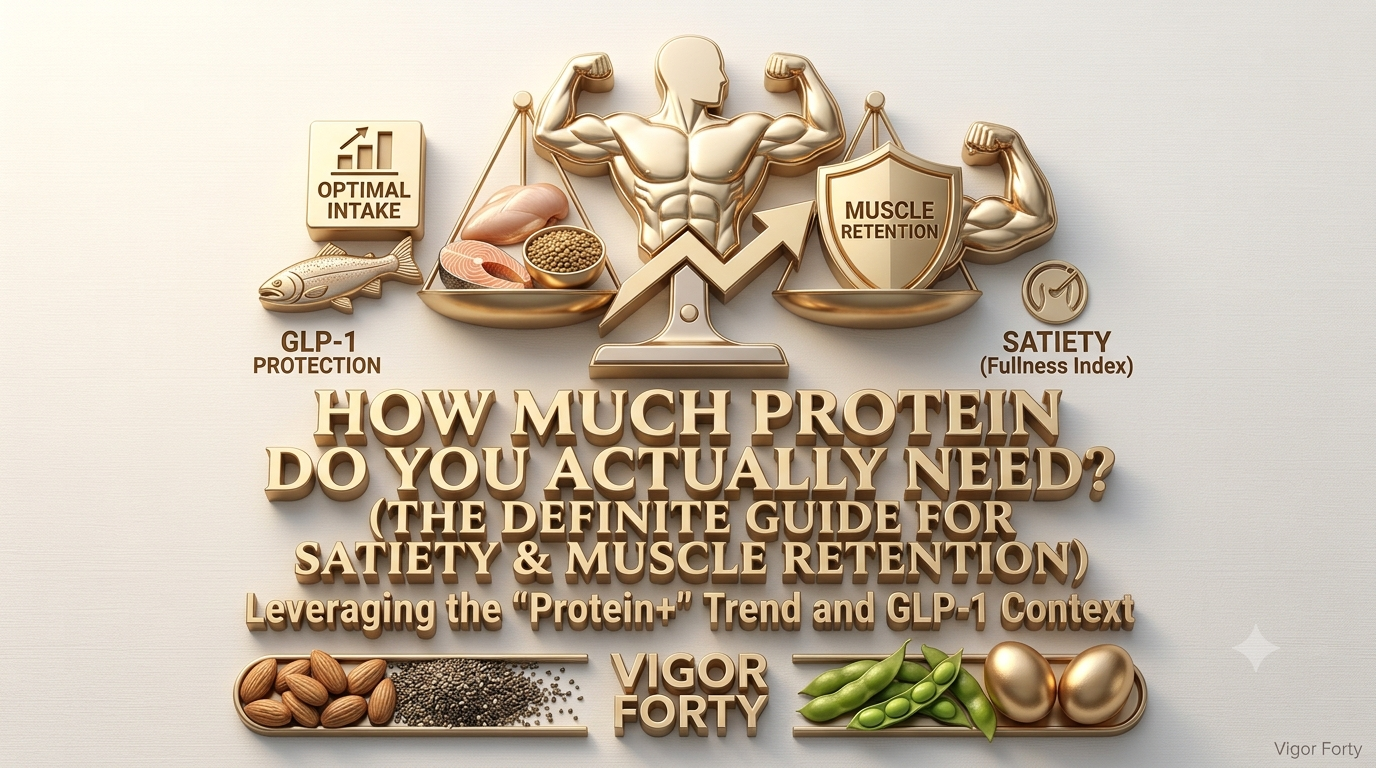
- How Much Protein Do You Actually Need? (The Definite Guide for Satiety and Muscle Retention)
- The Ultimate Guide to Nutrient Density: How to Eat Real Food in America