

Author: Vigor Forty Editorial Team
Medically Reviewed By: Editorial Review Board
Disclaimer: This article is for informational purposes only and is not a substitute for professional medical advice. Read our full Medical Disclaimer.
📌 Key Takeaways
- The Late-Night Habit: Over 40% of Americans regularly consume calories after 8:00 PM, a habit directly linked to insulin resistance and poor sleep quality.
- Circadian Biology: Human metabolism is not static; insulin sensitivity peaks in the morning and drops significantly as darkness falls.
- The Cortisol-Insulin Axis: Eating during high-stress windows changes how calories are partitioned, making the body more prone to fat storage.
- Clinical Strategy: Aligning your heaviest meals with daylight hours optimizes glucose clearance and supports the body’s natural evening repair cycle.
Introduction: The 24-Hour American Lifestyle
In modern America, the boundaries between day and night have blurred. Artificial lighting, late-night shift work, and digital entertainment have created a 24-hour lifestyle. Unfortunately, our biology has not updated to match. While a significant amount of fitness advice focuses strictly on what to eat and how much to eat, emerging clinical science demonstrates that when you eat plays a massive role in your overall metabolic health.
Every organ in your body operates on an internal 24-hour clock known as a circadian rhythm. When we consume heavy meals late into the night, we disrupt this delicate system, forcing our digestive organs to work when they are programmed to rest and repair. Shifting toward circadian nutrient timing is a powerful, science-backed tool to stabilize blood sugar, optimize energy levels, and combat systemic inflammation.
Section 1: The Science of Daylight Metabolism
Your master circadian clock is controlled by a region in the brain called the suprachiasmatic nucleus (SCN), which responds directly to light. This master clock synchronizes peripheral clocks residing in your liver, pancreas, and fat tissues.
Plaintext
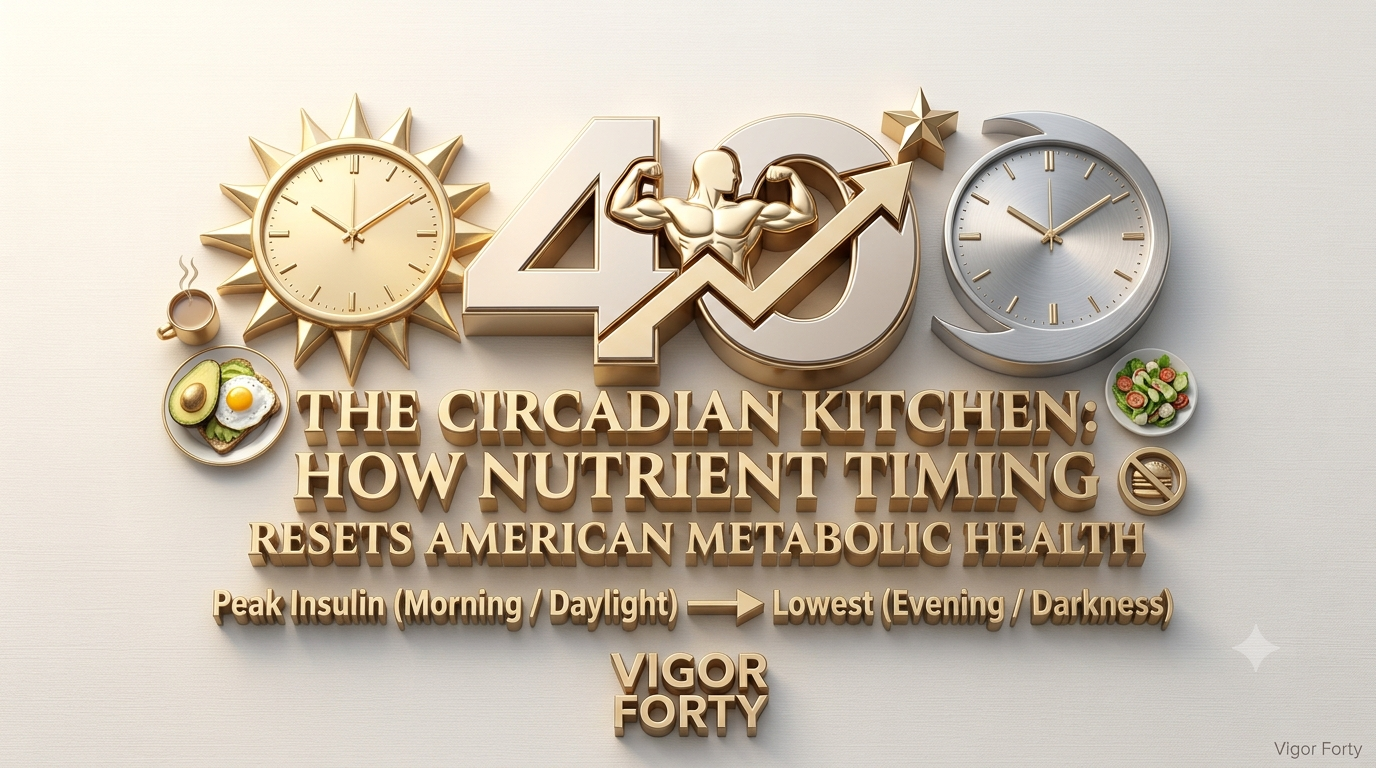
Insulin Sensitivity = Peak (Morning / Daylight) ──► Lowest (Evening / Darkness)
- The Morning Advantage: Human biology is naturally wired to process food most efficiently during daylight hours. Early in the day, pancreas function is optimal, and insulin sensitivity is at its highest. This means your body can clear glucose from the bloodstream into muscle cells with minimal effort.
- The Midnight Slump: As darkness falls, the brain secretes melatonin to prepare the body for sleep. Melatonin actively downregulates insulin production. If you consume a high-carbohydrate or high-fat meal late at night, your body struggles to clear the glucose, resulting in prolonged high blood sugar, elevated triglycerides, and increased systemic stress.
Section 2: Re-Engineering Your Daily Eating Window
Transitioning to a circadian-aligned diet does not mean you have to follow an extreme fasting protocol. Instead, it means actively front-loading your day with nutrient-dense fuel and tapering your intake as the sun goes down.
The strategy below outlines how to successfully restructure a typical daily eating schedule for optimal metabolic health:
| Daily Time Window | Ideal Food Selection | Circadian Purpose |
| 7:00 AM – 9:00 AM (Breakfast) | High-protein, healthy fats (e.g., eggs, avocado, smoked salmon) | Signals the liver that the active day has begun; stabilizes the morning cortisol spike without causing a blood sugar crash. |
| 12:00 PM – 2:00 PM (Lunch) | Largest meal of the day; complex carbs, lean protein, dense fiber | Matches the true peak of your metabolic capacity and daily energy expenditure, allowing for optimal nutrient absorption. |
| 6:00 PM – 7:30 PM (Dinner) | Light, easily digestible protein and leafy greens (e.g., baked white fish and asparagus) | Provides necessary amino acids for overnight muscle repair without overloading a slowing digestive tract. |
| After 8:00 PM (Post-Dinner) | Zero calories; non-caffeinated herbal teas (e.g., chamomile) | Allows blood sugar and insulin levels to drop completely, triggering the body’s natural cellular cleanup process (autophagy). |
Section 3: The Medical Block (Endocrine & Sleep Consensus)
Aligning food intake with natural sleep-wake cycles is a strategy strongly backed by leading clinical organizations focused on long-term preventative health.
The Endocrine Society
Clinical positions held by the Endocrine Society emphasize that chronic circadian disruption—such as frequent late-night eating—is an independent risk factor for obesity, cardiovascular disease, and type 2 diabetes. Their published clinical trials demonstrate that individuals who restrict their eating windows to earlier portions of the day experience significant improvements in blood pressure, lower levels of oxidative stress, and vastly improved insulin sensitivity, even when total daily caloric intake remains exactly the same.
The American Academy of Sleep Medicine (AASM)
The AASM consistently highlights the direct link between gastrointestinal work and sleep architecture. Digesting a heavy meal requires a substantial shift in blood flow to the gut, raising your core body temperature. Because a natural drop in core body temperature is a critical biological trigger required for deep, restorative slow-wave sleep, eating late directly degrades your sleep quality, leaving you fatigued, foggy, and prone to poor dietary choices the following morning.