Author: Vigor Forty Editorial Team
Medically Reviewed By: Editorial Review Board
Disclaimer: This article is for informational purposes only and is not a substitute for professional medical advice. Read our full Medical Disclaimer.
📌 Key Takeaways
- Sleep is the most powerful recovery tool available: During deep sleep, your body releases growth hormone, repairs muscle tissue, and consolidates motor skills. No supplement or recovery technique can replace quality sleep.
- Poor sleep directly impairs strength and performance: Even one night of poor sleep reduces strength, power, endurance, and cognitive function. Chronic sleep deprivation leads to plateaus, injury, and burnout.
- Most adults need 7–9 hours of quality sleep per night: Yet over 35% of Americans get less than 7 hours. For strength athletes, this is not enough for optimal recovery and performance.
- Sleep affects hormones that regulate muscle growth: Sleep deprivation decreases testosterone and growth hormone while increasing cortisol (a stress hormone that breaks down muscle).
- Better sleep improves every aspect of training: More strength, better technique, faster recovery, greater motivation, and reduced injury risk. Sleep is the ultimate performance enhancer.
Introduction: The Most Underrated Performance Enhancer
If there were a supplement that could:
- Increase strength by 5–15%
- Improve recovery by 30–50%
- Boost testosterone and growth hormone
- Reduce injury risk
- Improve mood and motivation
- Enhance cognitive function
- Support fat loss
…every strength athlete would take it. They’d pay hundreds of dollars for it. They’d tell everyone about it.
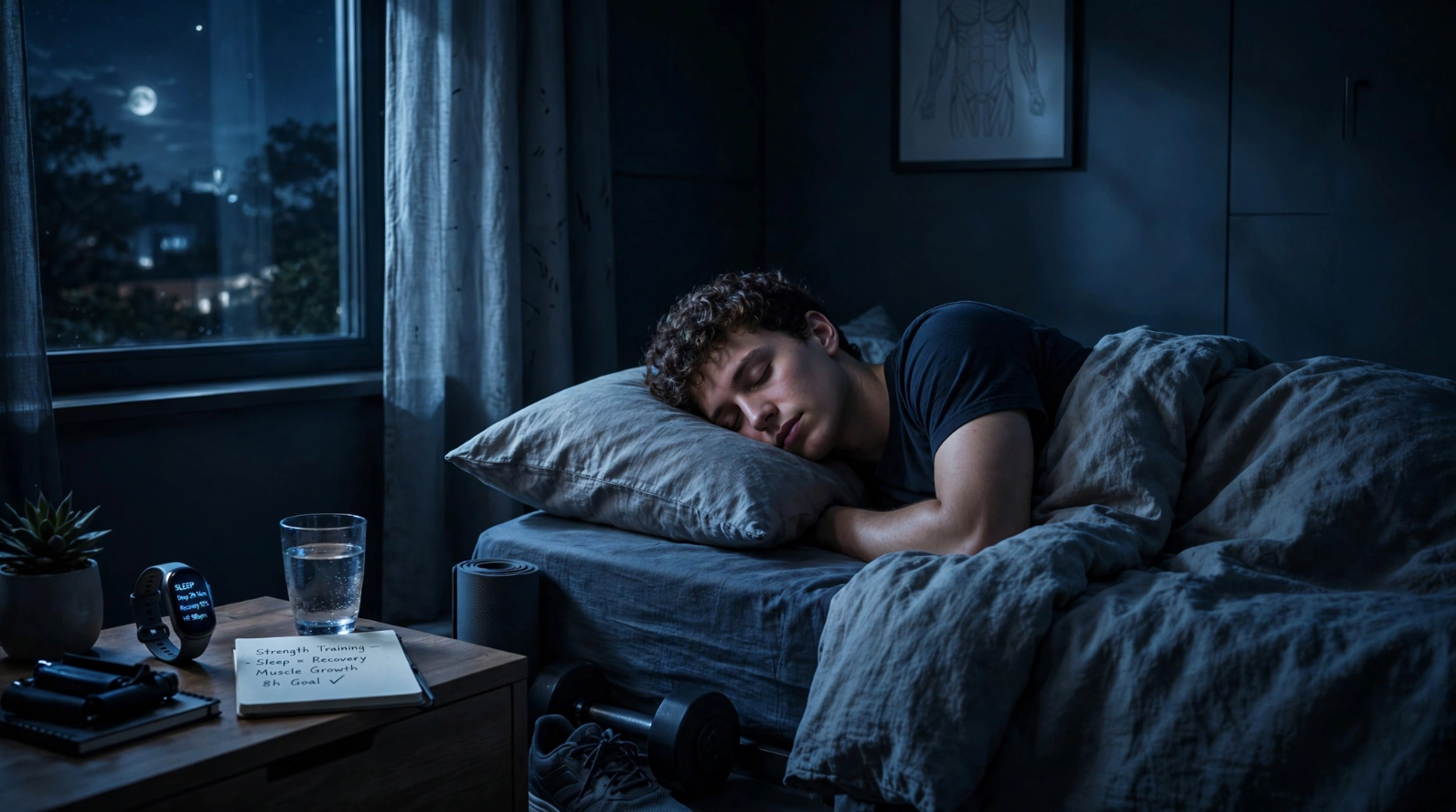
That supplement exists. It’s called sleep. And it’s free.
Yet most people treat sleep as optional—something to sacrifice when they’re busy, stressed, or just want more time in their day. They prioritize training over recovery, thinking that more time in the gym equals more results.
The Reality:
| Sleep Duration | Effect on Strength | Effect on Recovery | Effect on Hormones |
|---|---|---|---|
| 7–9 hours | Optimal | Optimal | Optimal |
| 6–7 hours | Reduced (5–10%) | Slowed (20–30%) | Suboptimal |
| 5–6 hours | Significantly reduced (10–20%) | Significantly slowed (30–50%) | Impaired |
| <5 hours | Severely reduced | Severely impaired | Disrupted |
The numbers:
- 35% of Americans get less than 7 hours of sleep per night
- 50% of adults report feeling tired during the day
- Sleep deprivation costs the U.S. economy over $400 billion annually
- Athletes who sleep 8+ hours per night have 50% fewer injuries
This guide will show you why sleep matters for strength training, how it affects your muscles and performance, and exactly what you can do to improve your sleep quality and quantity.
Section 1: The Science of Sleep and Muscle Growth
What Happens During Sleep
| Sleep Stage | What Happens | Recovery Benefit |
|---|---|---|
| Stage 1 | Light sleep; transition to sleep | Rest, relaxation |
| Stage 2 | Heart rate slows; body temperature drops | Rest, tissue repair begins |
| Stage 3 (Deep Sleep) | Deep sleep; growth hormone release | Maximum tissue repair and regeneration |
| REM Sleep | Dreaming; brain activity increases | Cognitive function; motor skill consolidation |
The Recovery Processes During Sleep
1. Growth Hormone Release
| Fact | Detail |
|---|---|
| What It Does | Stimulates muscle growth, fat metabolism, and tissue repair |
| When It’s Released | Primarily during deep sleep (Stages 3) |
| Effect of Sleep Deprivation | Significant reduction in growth hormone release |
| Impact | Slower recovery; reduced muscle growth |
2. Muscle Protein Synthesis
| Fact | Detail |
|---|---|
| What It Does | Builds new muscle tissue |
| When It’s Highest | During sleep (post-workout) |
| Effect of Sleep Deprivation | Reduced protein synthesis |
| Impact | Less muscle growth; slower recovery |
3. Glycogen Replenishment
| Fact | Detail |
|---|---|
| What It Does | Restores muscle glycogen (energy stores) |
| When It Happens | During sleep |
| Effect of Sleep Deprivation | Incomplete glycogen replenishment |
| Impact | Reduced energy for next workout |
4. Cortisol Regulation
| Fact | Detail |
|---|---|
| What It Does | Stress hormone; breaks down muscle tissue when elevated |
| Effect of Sleep Deprivation | Increased cortisol levels |
| Impact | Muscle breakdown; reduced growth; impaired recovery |
The Hormonal Effects of Sleep Deprivation
| Hormone | Effect of Sleep Deprivation | Impact on Strength |
|---|---|---|
| Testosterone | Decreased (15–20% reduction) | Reduced muscle growth; lower strength |
| Growth Hormone | Decreased | Slower recovery; reduced growth |
| Cortisol | Increased (stress hormone) | Muscle breakdown; impaired recovery |
| Insulin Sensitivity | Decreased | Impaired nutrient uptake; muscle growth reduced |
| Leptin | Decreased (appetite regulator) | Increased hunger; potential weight gain |
Section 2: How Sleep Affects Strength Performance
Strength and Power
| Sleep Duration | Effect on 1RM | Effect on Power |
|---|---|---|
| 7–9 hours | Optimal performance | Optimal performance |
| 6 hours | 5–10% reduction | 5–10% reduction |
| 5 hours | 10–20% reduction | 10–20% reduction |
| <5 hours | 20–30%+ reduction | 20–30%+ reduction |
The Research:
- Study (2019): Sleep extension (8+ hours) increased strength by 5–10% in athletes
- Study (2020): Sleep deprivation reduced leg press strength by 10–15%
- Study (2021): Athletes who slept 8+ hours had significantly better power output than those who slept <6 hours
Recovery and Muscle Soreness
| Sleep Duration | Recovery Time | Muscle Soreness |
|---|---|---|
| 7–9 hours | Optimal (24–48 hours) | Moderate |
| 6 hours | Slowed (48–72 hours) | Increased |
| 5 hours | Significantly slowed (72+ hours) | Significant |
| <5 hours | Severely impaired | Severe |
The Research:
- Study (2018): Sleep deprivation increased muscle soreness by 20–30% after training
- Study (2020): Athletes who slept 7+ hours had 50% fewer injuries than those who slept <6 hours
Technique and Motor Learning
| Factor | Effect of Sleep Deprivation |
|---|---|
| Motor Skill Consolidation | Impaired—new skills not solidified |
| Technique Quality | Poorer execution; increased injury risk |
| Coordination | Reduced; slower reaction times |
| Cognitive Function | Impaired; reduced focus and decision-making |
Motivation and Perceived Effort
| Factor | Effect of Sleep Deprivation |
|---|---|
| Motivation to Train | Reduced |
| Perceived Effort | Higher (everything feels harder) |
| Performance | Lower relative to effort |
| Consistency | Less consistent adherence |
Section 3: The Sleep-Strength Connection in Action
The Case Study
Scenario: Two identical athletes training exactly the same program.
| Factor | Athlete A | Athlete B |
|---|---|---|
| Sleep | 7.5 hours per night | 5.5 hours per night |
| Training | 3x/week full body | 3x/week full body |
| Nutrition | Same | Same |
Results After 12 Weeks:
| Metric | Athlete A | Athlete B |
|---|---|---|
| Squat 1RM | +25 lbs | +10 lbs |
| Bench Press 1RM | +15 lbs | +5 lbs |
| Muscle Gain | +4 lbs | +1 lb |
| Recovery Time | 24–48 hours | 72+ hours |
| Injury Rate | None | 2 minor injuries |
| Motivation | High | Low |
| Overall Progress | Significant | Minimal |
The Difference: 2 hours of sleep per night.
Section 4: How Much Sleep Do You Need?
General Recommendations
| Age | Recommended Hours |
|---|---|
| 18–60 years | 7+ hours per night |
| 61–64 years | 7–9 hours per night |
| 65+ years | 7–8 hours per night |
Strength Athletes
| Activity Level | Recommended Hours |
|---|---|
| Sedentary | 7 hours |
| Moderately Active | 7–8 hours |
| Highly Active (Strength Training) | 8–9 hours |
| Elite Athletes | 9–10 hours |
Key Point: Strength athletes need more sleep than sedentary individuals. Training creates stress that requires more recovery. Most strength athletes should aim for at least 8 hours.
Signs You Need More Sleep
| Sign | What It Means |
|---|---|
| Persistent fatigue | Not enough sleep or quality |
| Poor performance | Sleep deprivation reduces strength |
| Increased soreness | Inadequate recovery |
| Frequent injuries | Impaired recovery and motor control |
| Mood changes | Fatigue, irritability |
| Difficulty concentrating | Cognitive impairment |
| Weight gain or difficulty losing fat | Hormonal disruption (cortisol, leptin) |
| Need for caffeine | Dependence on stimulants |
Section 5: The Sleep Optimization Protocol
Phase 1: Set Your Schedule (Consistency)
| Strategy | How to Do It |
|---|---|
| Set a Consistent Sleep Schedule | Same bedtime and wake time every day (including weekends) |
| Set a Wake-Up Time | Choose a time that works for your daily schedule |
| Count Backward 7.5–8 Hours | Determine your optimal bedtime |
| Use an Alarm to Go to Bed | Set an alarm 30–60 minutes before bed to start winding down |
Example:
- Wake-up time: 6:00 AM
- Bedtime (8 hours): 10:00 PM
- Wind-down begins: 9:00 PM
Phase 2: Optimize Your Environment
| Strategy | How to Do It |
|---|---|
| Keep It Cool | Ideal temperature: 65–68°F (18–20°C) |
| Keep It Dark | Blackout curtains, eye mask, no light sources |
| Keep It Quiet | White noise machine, earplugs, or fan |
| Keep It Comfortable | Quality mattress and pillows |
| Declutter | A clean, organized bedroom promotes relaxation |
Phase 3: Develop a Wind-Down Routine
| Strategy | How to Do It |
|---|---|
| Dim Lights | 1–2 hours before bed |
| Avoid Screens | No phones, tablets, or computers (blue light disrupts melatonin) |
| Relaxing Activities | Reading, stretching, meditation, journaling |
| Warm Bath | Warm bath or shower 1–2 hours before bed |
| Consistent Routine | Same activities in the same order every night |
Sample Wind-Down Routine:
| Time | Activity |
|---|---|
| 9:00 PM | Dim lights, put away devices |
| 9:15 PM | Light stretching or foam rolling |
| 9:30 PM | Warm shower |
| 9:45 PM | Read a book (physical book or e-ink) |
| 10:00 PM | Lights out, sleep |
Phase 4: Optimize Your Nutrition
| Strategy | How to Do It |
|---|---|
| Avoid Caffeine (8 hours before bed) | Caffeine has a 6-hour half-life; stays in your system |
| Avoid Alcohol Before Bed | Disrupts sleep architecture (especially REM sleep) |
| Avoid Heavy Meals (2–3 hours before bed) | Digestion disrupts sleep |
| Hydrate (but not too much) | Enough to not be thirsty, not so much you wake to urinate |
| Consider Sleep-Supporting Foods | Tart cherry juice (melatonin), kiwi, chamomile tea, magnesium-rich foods |
Pre-Bed Snack Ideas:
| Snack | Why It Helps |
|---|---|
| Greek yogurt + berries | Protein + carbs for overnight recovery |
| Cottage cheese | Casein protein for slow release |
| Banana | Magnesium and carbs |
| Chamomile tea | Relaxation |
Phase 5: Manage Stress
| Strategy | How to Do It |
|---|---|
| Meditation | 5–10 minutes before bed |
| Deep Breathing | 4-7-8 breathing (inhale 4, hold 7, exhale 8) |
| Journaling | Write down thoughts, to-do lists, worries |
| Gratitude Practice | Write 3 things you’re grateful for |
| Progressive Muscle Relaxation | Tense and relax each muscle group |
4-7-8 Breathing Technique:
- Inhale through your nose for 4 seconds
- Hold your breath for 7 seconds
- Exhale through your mouth for 8 seconds
- Repeat 4–8 times
This technique activates the parasympathetic nervous system, promoting relaxation and sleep.
Section 6: Napping for Extra Recovery
When Napping Helps
| Situation | Benefit of Napping |
|---|---|
| Sleep Debt | Partially repays sleep debt |
| Post-Workout | Supports recovery and growth hormone release |
| Midday Fatigue | Restores energy and focus |
| Mental Performance | Improves cognitive function |
| Physical Performance | Improves power and endurance |
How to Nap Effectively
| Factor | Recommendation |
|---|---|
| Duration | 20–30 minutes (avoid entering deep sleep) |
| Timing | Early afternoon (1:00–3:00 PM) |
| Environment | Dark, quiet, cool room |
| Frequency | 1–2 times per day when needed |
Power Nap Protocol:
- Set an alarm for 20–30 minutes
- Lie down in a quiet, dark place
- Close your eyes and relax
- Sleep or rest until the alarm goes off
- Wake up and move (short walk, light stretching)
The Caffeine Nap:
- Drink a cup of coffee quickly
- Nap immediately for 15–20 minutes
- Wake up as caffeine is taking effect
- Feel refreshed (caffeine + rest)
Section 7: Common Sleep Mistakes
Mistake 1: Inconsistent Sleep Schedule
The Problem: Different bedtimes and wake times on weekdays vs. weekends.
The Fix: Same bedtime and wake time every day (within 1 hour). Your body works best with a consistent schedule.
Mistake 2: Screen Time Before Bed
The Problem: Blue light from screens suppresses melatonin production.
The Fix: No screens (phone, tablet, computer) 60–90 minutes before bed. Use blue light blockers if you must use screens.
Mistake 3: Caffeine Late in the Day
The Problem: Caffeine has a 6-hour half-life—meaning 50% of it is still in your system after 6 hours.
The Fix: No caffeine after 2:00 PM (or 12:00 PM if you’re sensitive). This ensures caffeine doesn’t disrupt your sleep.
Mistake 4: Alcohol Before Bed
The Problem: Alcohol disrupts sleep architecture—especially REM sleep.
The Fix: Avoid alcohol 3–4 hours before bed. Consider reducing or eliminating alcohol entirely.
Mistake 5: Eating Heavy Meals Late
The Problem: Digestion disrupts sleep, especially if you eat heavy, fatty, or spicy foods.
The Fix: Eat your last meal 2–3 hours before bed. If you need a snack, keep it light (Greek yogurt, banana, cottage cheese).
Mistake 6: Exercising Too Late
The Problem: Exercise (especially high-intensity) raises body temperature and adrenaline—both of which disrupt sleep.
The Fix: Finish training at least 2–3 hours before bed. Light stretching or yoga before bed is fine.
Mistake 7: Worrying About Sleep
The Problem: “Performance anxiety” about sleep makes it harder to fall asleep.
The Fix: If you can’t sleep, get up and do something relaxing (read, stretch). Return to bed when you feel tired.
Mistake 8: Sleeping Too Much
The Problem: Sleeping more than 9 hours can disrupt your circadian rhythm.
The Fix: Stick to 7–9 hours. Consistency matters more than duration.
Section 8: Sleep and Age
How Sleep Changes with Age
| Age | Sleep Changes | Implications |
|---|---|---|
| 20s–30s | Good sleep quality and duration | Maintain good habits |
| 40s | Some sleep fragmentation | More attention to sleep hygiene |
| 50s | Reduced deep sleep; more waking | Sleep quality more important |
| 60s | Significantly reduced deep sleep | Counteract with good habits |
| 70s+ | Sleep fragmentation; earlier bedtime | Manage expectations; prioritize sleep quality |
Age-Related Sleep Challenges
| Challenge | Solution |
|---|---|
| Frequent Urination | Limit fluids 2–3 hours before bed; empty bladder before bed |
| Night Sweats | Cool room; moisture-wicking sheets |
| Joint Pain | Nighttime anti-inflammatory; proper pillows and mattress |
| Insomnia | Wind-down routine; avoid screens; manage stress |
| Early Wake-Ups | Dark room; consistent schedule |
Section 9: Sample Sleep Schedule
The Optimal Sleep Schedule
| Time | Activity |
|---|---|
| 5:00 AM | Wake up |
| 5:30 AM | Light exposure (sunlight or bright light) |
| 6:00 AM | Breakfast |
| 12:00 PM | Lunch |
| 1:00 PM | Light exposure (sunlight) |
| 3:00 PM | Last caffeine of the day |
| 6:00 PM | Dinner |
| 8:00 PM | Dim lights |
| 9:00 PM | Wind-down routine begins (no screens) |
| 9:30 PM | Light stretching or reading |
| 10:00 PM | Lights out |
| 10:30 PM | Asleep |
Sleep Tracking
How to Track:
| Tool | Benefit |
|---|---|
| Sleep Tracker (Watch/App) | Tracks sleep stages and duration |
| Sleep Diary | Records patterns; identifies issues |
| Morning Energy Level | Subjective measure of sleep quality |
Section 10: FAQ—Your Top Sleep Questions
Q: How much sleep do I really need for muscle growth?
A: Most strength athletes should aim for 8–9 hours of quality sleep per night. This maximizes growth hormone release, muscle protein synthesis, and recovery. If you’re not getting 7+ hours, you’re leaving gains on the table.
Q: Is it better to sleep more or train more?
A: Sleep is more important. Training without adequate sleep is inefficient and increases injury risk. If you have to choose, prioritize sleep.
Q: Can I catch up on sleep on weekends?
A: To some extent, but it’s not the same as consistent sleep. Catching up can help partially repay sleep debt, but it doesn’t fully compensate for chronic deprivation. Consistency is more important.
Q: What’s the best sleep temperature?
A: 65–68°F (18–20°C). Your body temperature needs to drop to fall asleep and stay asleep. A cool room supports this process.
Q: Is napping good for recovery?
A: Yes. Napping (20–30 minutes) supports recovery, especially if you’re sleep-deprived or doing heavy training. Early afternoon (1:00–3:00 PM) is the best time.
Q: Should I use sleep supplements (melatonin, etc.)?
A: Melatonin can be helpful for resetting your sleep schedule, but it’s not a long-term solution. It works best for jet lag or shift work. Use it sparingly (0.3–1mg). Magnesium (glycinate) before bed can support sleep.
Q: How does sleep affect testosterone?
A: Sleep deprivation (less than 5 hours per night) significantly reduces testosterone levels—by 10–15%. Chronic sleep deprivation can lower testosterone to levels seen in men 10–15 years older.
Q: Can I build muscle if I don’t sleep well?
A: You can, but you’ll build less muscle, recover slower, and be more prone to injury. Sleep is one of the most important factors for muscle growth. Without adequate sleep, you’re leaving significant gains on the table.
The VigorForty Take
Sleep is the most powerful recovery tool available. No supplement, recovery technique, or training program can compensate for poor sleep.
The principles are simple:
- Aim for 8–9 hours of quality sleep per night
- Be consistent—same bedtime and wake time every day
- Optimize your environment—cool, dark, quiet
- Develop a wind-down routine—dim lights, no screens, relaxing activities
- Avoid caffeine and alcohol in the hours before bed
- Manage stress with meditation, breathing, or journaling
- Consider napping for extra recovery
The benefits are profound:
- More strength and power
- Faster recovery
- Better muscle growth
- Improved technique and motor learning
- Reduced injury risk
- Better mood and motivation
- Enhanced overall health
Sleep is not optional. It’s essential. Treat it that way.
Your muscles grow during sleep. Your strength is built during rest. Your performance depends on recovery.
Prioritize sleep. Build more muscle. Get stronger. Live better.
This article was reviewed by the Vigor Forty Editorial Review Board on July 20, 2026.
🔗 Related Articles
- Beyond Crunches: The Best Exercises for True Core Stability
- Core Stability for Lifters: How a Strong Core Protects Your Lower Back
- The Connection Between Core Strength and Better Posture
- Top 5 Strength Training Myths Debunked
- “I’m Too Old to Start Lifting”: Why Strength Training is for Everyone
- “I Don’t Want to Get Bulky”: The Truth About Weightlifting and Muscle Growth
- Can You Build Muscle with Just Bodyweight Exercises?
- The Role of Nutrition in Strength Training: Fueling Your Gains
- The Importance of Rest and Recovery for Building Muscle
- Supplements 101: What Actually Works for Strength Athletes?
- Sleep and Strength: How Better Sleep Can Improve Your Lifts
- 5-Minute Daily Core Routine for Busy Americans
- The Science of Hypertrophy: How to Build Muscle Effectively
- Periodization: How to Plan Your Training for Long-Term Success
- Drop Sets, Supersets, and AMRAPs: Advanced Training Techniques Explained
- Strength Training for Fat Loss: A Comprehensive Guide
- How to Build Muscle and Strength with a Busy Schedule
- The Ultimate Guide to Kettlebell Training for Strength and Conditioning
- Resistance Band Workout: A Full-Body Strength Routine
- Dumbbell Only Workout: Build Muscle Anywhere
- Hybrid Training: Combining Calisthenics and Powerlifting
- The Importance of Mobility for Strength Athletes
- 5 Dynamic Warm-Up Exercises to Do Before Every Workout
- The Best of Both Worlds: Why You Should Combine Calisthenics and Weights
- Your 2027 Strength Training Roadmap: Setting Goals and Staying Consistent
- Strength Training for Life: Building a Sustainable Fitness Habit
- The 12 Best Strength Training Exercises for Americans
Affiliate Disclosure: Some links in this article may be affiliate links. If you make a purchase through these links, Vigor Forty may earn a small commission at no extra cost to you. We only recommend products we trust.