
Author: Vigor Forty Editorial Team
Medically Reviewed By: Editorial Review Board
Disclaimer: This article is for informational purposes only and is not a substitute for professional medical advice. Read our full Medical Disclaimer.
📌 Key Takeaways
- Autophagy Is Your Cells’ Housekeeping Service: Derived from Greek for “self-eating,” autophagy is the process by which cells sweep up damaged proteins, worn-out mitochondria, and invading pathogens, then recycle the components into fresh, functional parts. It’s essential for cellular quality control and slows several hallmarks of aging simultaneously.
- Autophagy Declines With Age—and That Decline Accelerates After 40: The same machinery that kept your cells pristine in your 20s becomes sluggish, leaving behind protein aggregates, dysfunctional mitochondria, and a growing backlog of debris that drives inflammation and disease.
- You Can Activate Autophagy Without Extreme Measures: While prolonged fasting is a potent trigger, shorter daily time-restricted eating, exercise, certain foods (polyphenols, spermidine), and even coffee can stimulate meaningful autophagy. You don’t need to starve yourself to benefit.
- The VigorForty Lifestyle Already Supports Autophagy: Exercise snacks, resistance training, a Mediterranean-style diet rich in polyphenols, and the 10–12-hour eating window all gently nudge your body toward more frequent cellular cleanup without harsh interventions.
- Autophagy Is a Delicate Balance—More Isn’t Always Better: The goal is regular, rhythmic activation, not a constant state of maximal autophagy. Excessive fasting or over-exercising can backfire. The sweet spot after 40 is consistent, moderate stimulation woven into your existing routine.
Introduction: Your Cells Have a Built-In Janitor—But He’s Getting Lazy
Imagine your home if you never took out the trash, never swept the floors, and never repaired broken appliances. Within months, the mess would make the space unlivable. Your cells face the same challenge. Every day, they generate waste—misfolded proteins, damaged mitochondria, oxidized lipids, and invading microbes. If that waste isn’t constantly cleared and recycled, it accumulates into toxic clutter that gums up cellular machinery and accelerates aging.
The process that handles this cleanup is autophagy. It’s a deeply ancient, evolutionarily conserved system that’s been operating in your cells since you were an embryo. In your youth, autophagy ran efficiently, keeping your cells clean and functional. But after 40, it begins to slow. The janitor gets lazy. The trash piles up. And that accumulating debris is now understood to be a central driver of age-related diseases: neurodegeneration, cardiovascular disease, metabolic dysfunction, and even cancer.
For years, autophagy was something only basic scientists discussed. Then the 2016 Nobel Prize in Physiology or Medicine was awarded to Yoshinori Ohsumi for his work mapping the genes that control the process. Suddenly, autophagy became a buzzword in longevity circles, often attached to extreme fasting protocols that can feel intimidating or unsustainable. The truth is more practical. You can harness autophagy with simple, gentle lifestyle habits that work with your after-40 physiology, not against it.
This article explains exactly what autophagy does, why it falters after midlife, and how to activate it using exercise, time-restricted eating, specific nutrients, and habits you’re probably already building. We’ll ground everything in the VigorForty system, making autophagy a natural extension of your existing health protocol. No 72-hour water fasts required.
Section 1: What Is Autophagy? The Cellular Recycling Plant
At its core, autophagy is a survival mechanism. When a cell is stressed—by nutrient deprivation, low energy, or damage—it doesn’t immediately die. First, it tries to clean house and generate fuel from its own damaged components. This process has three main forms, but the one most relevant to aging is macroautophagy, which we’ll simply call autophagy.
The Process in Three Acts:
- Detection and Tagging: Damaged proteins, old mitochondria, and aggregated waste are identified by sensor proteins and tagged with a molecular marker (ubiquitin).
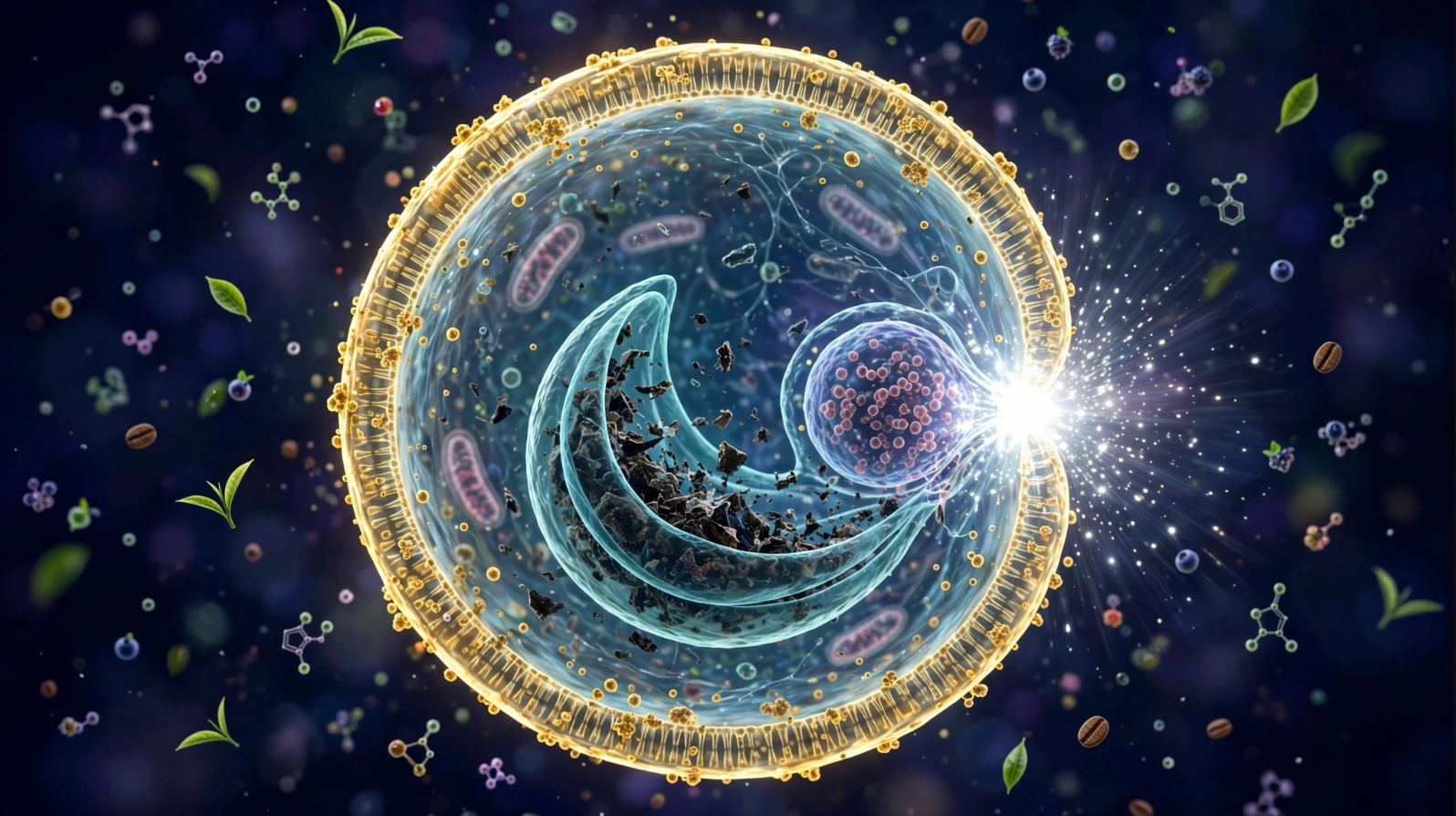
- Engulfment: A double-membrane structure called a phagophore forms and wraps around the tagged debris, sealing it into a vesicle called an autophagosome.
- Degradation and Recycling: The autophagosome fuses with a lysosome, the cell’s acid-filled recycling center. Enzymes break the garbage down into amino acids, fatty acids, and sugars, which are released back into the cytoplasm to build new, functional components.
Think of it as a municipal waste-to-energy plant: trash goes in, raw materials and power come out. Without this system, cells choke on their own waste. The brain, heart, and skeletal muscle—organs with high metabolic activity and long-lived cells—are especially dependent on robust autophagy.
What Autophagy Protects Against:
- Neurodegeneration: Impaired autophagy allows toxic proteins like amyloid-beta and tau to accumulate, directly linking it to Alzheimer’s disease. Animal studies show that restoring autophagy in the brain clears these proteins and improves cognitive function.
- Cardiovascular Disease: Autophagy removes damaged mitochondria from heart muscle cells and protects the endothelium from oxidative damage. Mice with autophagy defects develop atherosclerosis and heart failure early.
- Cancer: Autophagy plays a dual role; it can suppress early tumor formation by clearing damaged organelles that produce DNA-damaging reactive oxygen species. In established cancers, some tumor cells hijack autophagy to survive. This complexity is why “more autophagy” isn’t a blanket prescription—it’s context-dependent.
- Metabolic Disease: Autophagy regulates pancreatic beta-cell function and insulin sensitivity. Impaired autophagy in the liver and muscle contributes to insulin resistance and fatty liver disease.
- Immune Senescence: Autophagy helps clear intracellular pathogens and supports the function of immune cells. Its decline contributes to the weakened immune response seen with age.
Section 2: Why Autophagy Slows Down After 40
The autophagy machinery doesn’t break overnight. It experiences a gradual, multi-factorial decline that mirrors the hallmarks of aging you learned in the previous article.
Key Drivers of Autophagy Decline in Midlife:
- mTOR Overactivation: The mechanistic target of rapamycin (mTOR) is a master growth sensor. When nutrients and insulin are abundant, mTOR is active, telling cells to grow and divide—and it simultaneously suppresses autophagy. After 40, constant eating, high insulin levels from creeping insulin resistance, and a sedentary lifestyle keep mTOR chronically switched on. Autophagy stays suppressed.
- AMPK Decline: AMP-activated protein kinase (AMPK) is the energy sensor that rises when cellular ATP is low. It directly activates autophagy and inhibits mTOR. Physical inactivity and chronic overnutrition depress AMPK, removing a key autophagy trigger.
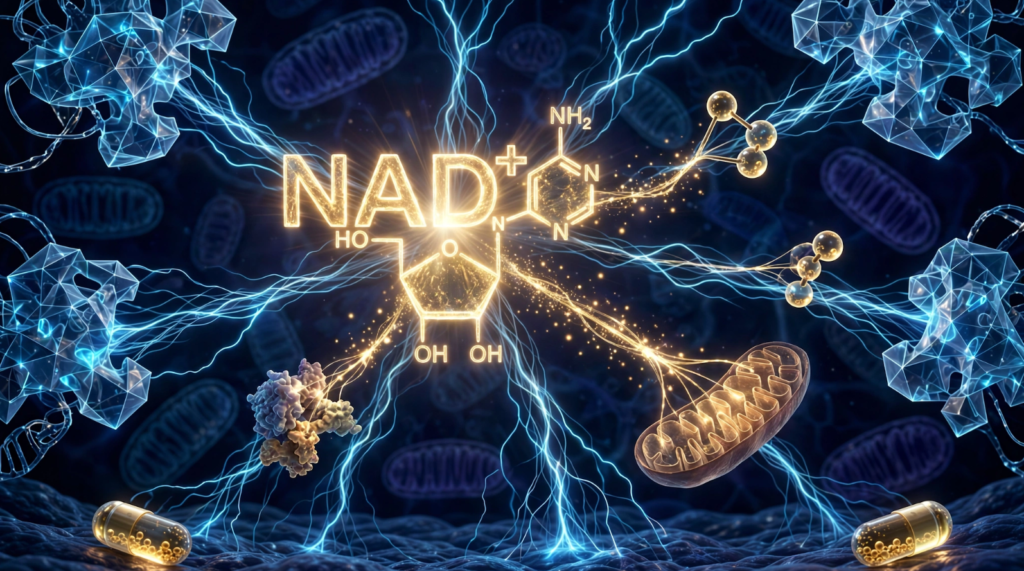
- NAD+ Depletion: NAD+ is required for the activity of sirtuins, proteins that regulate autophagy and mitochondrial health. As NAD+ levels fall after 40, sirtuin activity drops, and autophagy efficiency decreases. This directly connects autophagy to the mitochondrial and epigenetic hallmarks.
- Lysosomal Dysfunction: It’s not just the engulfment that fails; the lysosomes themselves become less acidic and less efficient at breaking down cargo. This creates a backlog of autophagosomes that can’t complete the process, known as “autophagic flux impairment.” Lipofuscin, an indigestible pigment, accumulates in lysosomes and is a classic marker of cellular aging.
- Hormonal Changes: Declining estrogen and testosterone affect autophagy regulation. Estrogen, in particular, is a potent inducer of autophagy in the brain and cardiovascular system. Perimenopause and menopause represent a significant shift in autophagic tone for women.
The Midlife Opportunity: Because mTOR overactivation and AMPK suppression are so heavily driven by lifestyle, the 40+ window is exactly when targeted interventions—fasting patterns, exercise, specific nutrients—can most powerfully restore autophagic balance. You’re not fighting a broken system; you’re reactivating a suppressed one.
Section 3: How to Activate Autophagy—The VigorForty Protocol
The goal is rhythmic, consistent activation, not a constant state of extreme autophagy. Think of it like taking out the trash every night rather than letting it pile up for a month and then doing a massive, exhausting purge.
1. Time-Restricted Eating (The Gentle Fast)
The Mechanism: When you stop eating, insulin levels fall. After several hours, liver glycogen stores deplete, and the body begins shifting into a fat-burning, ketogenic state. This drop in insulin and rise in glucagon activates AMPK, inhibits mTOR, and stimulates autophagy. The longer the fast, the deeper the autophagic response, but significant activation begins within 12–16 hours.
The VigorForty Approach: A daily 12–14 hour overnight fast. Finish dinner by 7 PM, eat breakfast at 7–9 AM. This pattern aligns with your circadian rhythm, activates autophagy in the early morning hours, and is sustainable for life. It does not require skipping meals or feeling hungry. If you’re already doing a 10-hour window comfortably, extend to 12. Occasional longer fasts (16–18 hours) are optional and can be done once or twice a week, but they are not required for benefit.
What the Research Shows: A 2021 study in Nature Communications demonstrated that time-restricted eating improves autophagy markers, reduces oxidative stress, and enhances mitochondrial function in humans, independent of calorie restriction. The simple act of consolidating eating into a defined window is enough.
2. Exercise—The Autophagy Power Switch
The Mechanism: Exercise stresses muscles, depletes local energy, and transiently increases reactive oxygen species. This triple signal potently activates AMPK and inhibits mTOR in muscle, liver, and even brain tissue. Autophagy is required for the beneficial metabolic effects of exercise—mice genetically engineered to lack exercise-induced autophagy don’t gain the endurance or metabolic benefits.
The VigorForty Approach:
- Aerobic Exercise (Zone 2): 30–45 minutes of brisk walking, light cycling, or swimming activates autophagy in multiple tissues. This is your bread and butter.
- High-Intensity Intervals (Exercise Snacks): Brief, vigorous bursts (your 1–2 minute snacks) produce a rapid AMPK spike. These are highly time-efficient autophagy activators.
- Resistance Training: Lifting weights induces autophagy in muscle, which is required for the removal of damaged proteins after the stress of contraction. It also triggers mitophagy—the selective autophagy of damaged mitochondria.
- Timing Tip: Exercising in a fasted state (e.g., morning before breakfast) amplifies the autophagy signal because AMPK is already elevated and mTOR is already suppressed. However, fed exercise still stimulates autophagy; fasted exercise is an amplifier, not a requirement.
3. Nutritional Autophagy Activators
Certain dietary compounds have been shown to induce or support autophagy independently of fasting. You can think of these as “autophagy spices” that add flavor and cellular benefit to your Mediterranean plate.
- Coffee (Both Caffeinated and Decaf): Polyphenols in coffee, particularly chlorogenic acid, have been shown to stimulate autophagy in the liver, muscle, and brain in animal models. This effect is independent of caffeine. Your morning cup is an autophagy activator.
- Green Tea (EGCG): Epigallocatechin gallate, the primary catechin in green tea, activates AMPK and inhibits mTOR, promoting autophagy. A cup or two in the afternoon, when caffeine might disrupt sleep, can be a gentle autophagy nudge.
- Spermidine: A naturally occurring polyamine found in wheat germ, soybeans, aged cheese, mushrooms, and natto. Spermidine is one of the most studied autophagy inducers, with human trials showing associations with reduced mortality and improved cardiovascular health. A spermidine-rich diet or a low-dose supplement (1–2 mg/day) is an emerging longevity tool.
- Resveratrol (Red Grapes, Blueberries, Dark Chocolate): Activates sirtuin 1, which deacetylates key autophagy proteins, promoting the process. A handful of blueberries or a square of dark chocolate (85%+) is a delicious autophagy snack.
- Curcumin (Turmeric): The active compound in turmeric induces autophagy and reduces inflammation. Adding turmeric to meals, or taking a bioavailable curcumin supplement, supports cellular cleanup.
- Omega-3 Fatty Acids (EPA/DHA): Your VigorForty staple. Omega-3s improve autophagic flux, particularly in the brain, by reducing inflammation and supporting lysosomal function.
The Mediterranean Diet Synergy: The foods that dominate the Mediterranean pattern—olive oil (oleuropein), vegetables (sulforaphane from broccoli), berries, nuts, and fatty fish—are all rich in autophagy-modulating compounds. This is one reason the Mediterranean diet is considered geroprotective; it’s an autophagy-supporting diet in practice.
4. Sauna and Heat Stress
The Mechanism: Heat stress activates heat shock proteins (HSPs), which are molecular chaperones that help refold damaged proteins and tag irreparable ones for autophagic degradation. Regular sauna use upregulates HSPs and enhances proteostasis—the balance of protein folding and degradation.
The VigorForty Approach: If you have access to a sauna, 2–4 sessions per week of 15–20 minutes at 170–180°F, followed by a cool-down, is the protocol associated with the mortality reductions discussed in the Biological Aging article. If you don’t have a sauna, a hot bath that induces a mild sweat can elevate HSPs modestly. This is an amplifier, not a core requirement.
5. Sleep and Circadian Rhythm
The Mechanism: Autophagy follows a circadian rhythm. It’s upregulated during the biological night, coinciding with the fasting period and the body’s repair processes. Disrupted sleep—shift work, jet lag, chronic insomnia—blunts the normal nocturnal autophagy peak and leaves cells with a daily accumulation of unprocessed waste.
The VigorForty Approach: All your sleep hygiene efforts—consistent bedtime, dark cool room, no late alcohol, morning light—are autophagy-supporting interventions. Protecting your circadian rhythm protects your cellular janitor’s work schedule.
Section 4: The Autophagy Activation Menu—Pick Your Level
You don’t need to do everything. Choose the tier that fits your life.
Tier 1—Baseline (Everyone Should Do This):
- 12-hour overnight fast (7 PM to 7 AM) at least 5 days per week.
- Daily exercise: 30-minute walk plus one exercise snack.
- Mediterranean diet rich in polyphenols: berries, green tea, coffee, olive oil.
- Consistent sleep schedule (7–8 hours).
- Supplements: VigorFive stack (magnesium, omega-3s, D3+K2, creatine, protein).
Tier 2—Enhanced (Add 2–3 of These):
- Extend overnight fast to 14–16 hours, 2 days per week.
- Add a 5-minute post-meal walk after lunch and dinner to boost AMPK.
- Include autophagy-specific foods: spermidine-rich wheat germ on oatmeal, a daily cup of green tea, turmeric in cooking.
- Add one sauna session or hot bath per week.
- Consider an NAD+ precursor (NMN/NR) to support sirtuin function and autophagic flux.
Tier 3—Advanced (For the Dedicated Self-Optimizer):
- 16–18 hour fast, 2–3 days per week, or a quarterly 24-hour fast (only if medically appropriate).
- Regular sauna: 3–4 sessions per week.
- Stack fasted morning exercise (walk or bodyweight circuit before breakfast).
- Supplement with spermidine (1–2 mg/day) or a senolytic compound (fisetin, under physician guidance—covered in a future article).
- Track autophagic biomarkers? No easy consumer test exists yet. Focus on functional outcomes: stable energy, good muscle maintenance, improved metabolic markers.
Section 5: FAQ—Your Autophagy Questions
Q: Will I lose muscle if I fast for autophagy?
A: Not if your overall nutrition and protein intake are adequate. Time-restricted eating within a 12–16 hour window does not cause muscle loss; in fact, it preserves muscle by improving insulin sensitivity and stimulating growth hormone secretion. Ensure you’re hitting your protein target (1.6–2.0 g/kg) during your eating window, and continue resistance training. Muscle loss is a concern with prolonged, multi-day fasts, not with daily overnight fasting.
Q: Can women over 40 practice intermittent fasting safely?
A: Yes, but with nuance. Some women find that aggressive fasting (16+ hours daily) disrupts their menstrual cycle or increases cortisol. A gentler 12–14 hour fast is generally well-tolerated and still activates autophagy. Women in perimenopause and menopause may benefit from a slightly shorter fasting window and an emphasis on nutrient density during the eating period. Listen to your body. If fasting makes you feel anxious, exhausted, or disrupts sleep, shorten the window or skip it and rely on exercise and nutrition for autophagy.
Q: I drink coffee in the morning—does that break the fast and stop autophagy?
A: Black coffee (no sugar, cream, or milk) contains virtually zero calories and does not significantly raise insulin or mTOR. The polyphenols in coffee may actually enhance autophagy, as discussed. Black coffee, unsweetened tea, and water are compatible with a fasting window. Adding butter, MCT oil, or cream breaks the fast because the fat and calories activate nutrient-sensing pathways.
Q: How do I know if autophagy is working?
A: There’s no easy at-home test for autophagy in humans. Researchers measure autophagic flux in blood cells or muscle biopsies. For the everyday person, the signs are indirect but meaningful: improved insulin sensitivity (stable energy, fewer cravings), better exercise recovery, reduced inflammation (less joint pain, clearer skin), and over months, improvements in your health metrics. A reduction in fasting insulin or inflammatory markers on your annual bloodwork is a good sign.
Q: Can I over-activate autophagy?
A: Yes. In the context of prolonged fasting, extreme caloric restriction, or overtraining, excessive autophagy can theoretically start breaking down healthy tissue. This is rare in people eating a balanced diet. The VigorForty approach—rhythmic, moderate activation through lifestyle—is designed to avoid this. The body’s feedback loops are robust; you’re nudging them, not breaking them.
The VigorForty Take
Autophagy sounds exotic, but it’s happening inside you right now—quietly, constantly, in every cell. The only question is how efficiently it’s working. After 40, the answer is often “less efficiently than it used to.” But the levers that restore it are not extreme biohacks. They’re the exact habits you’ve been building throughout your time at VigorForty.
An overnight fast that lets your body rest from digestion. A morning walk that wakes up AMPK. A plate full of colorful plants that deliver polyphenols. A cup of coffee and a square of dark chocolate that signal your cells to clean house. A good night’s sleep that lets the janitor work his night shift. These are the tools. They’re gentle, sustainable, and deeply powerful.
You don’t need to starve. You don’t need to buy expensive devices. You need to understand that your cells have a built-in cleanup crew and that your daily choices either support or suppress it. The next time you finish dinner, glance at the clock, and decide to close the kitchen until tomorrow morning, you’re not just practicing “discipline.” You’re giving your cells the signal they’ve been waiting for: it’s time to take out the trash. Your future brain, heart, and muscles will thank you—one recycled protein at a time.