Author: Vigor Forty Editorial Team
Medically Reviewed By: Editorial Review Board
Disclaimer: This article is for informational purposes only and is not a substitute for professional medical advice. Read our full Medical Disclaimer.
📌 Key Takeaways
- NAD+ Is a Critical Coenzyme That Declines With Age: Nicotinamide adenine dinucleotide (NAD+) is essential for converting food into cellular energy, repairing damaged DNA, and regulating longevity proteins called sirtuins. After 40, NAD+ levels can drop by 50% or more, contributing to the aging process at a fundamental level.
- NMN and NR Are NAD+ Precursors That Raise NAD+ Levels: Nicotinamide mononucleotide (NMN) and nicotinamide riboside (NR) are forms of vitamin B3 that your body can convert into NAD+. Human trials show they effectively boost NAD+ levels, but the translation to proven anti-aging benefits is still an active area of research.
- Sirtuins Are the “Longevity Proteins” That NAD+ Activates: Sirtuins regulate DNA repair, mitochondrial biogenesis, inflammation, and metabolic health. They require NAD+ to function, so when NAD+ drops, sirtuins go silent—and the protective effects fade. Boosting NAD+ reactivates these pathways.
- Lifestyle Raises NAD+ Without a Pill: Exercise, time-restricted eating, sauna use, and a diet rich in B3 (niacin, tryptophan) all naturally increase NAD+ levels and sirtuin activity. These are the foundation. Supplements are an optional amplifier, not a replacement.
- Hype Outpaces Evidence—But the Core Science Is Solid: NAD+ precursors are not miracle drugs, and they won’t make you immortal. However, the biological rationale is strong, and early human data is promising for metabolic health, inflammation, and possibly biological age. This article separates the signal from the noise.
Introduction: The Molecule That Powers Your Cells and Protects Your DNA—And Why It Fades After 40
Inside every cell in your body, a quiet but devastating decline is underway. It doesn’t announce itself with pain or obvious symptoms. It’s a gradual dimming, a slow loss of a molecule so essential to life that without it, your cells can’t produce energy, repair DNA damage, or activate their longevity defenses. That molecule is NAD+, and after 40, its levels start to fall off a cliff.
NAD+ is the bridge between everything you’ve been learning about biological aging. It’s the fuel for the mitochondrial engines you read about in the previous article. It’s the on-switch for sirtuins, the proteins that regulate the epigenome and keep genes functioning youthfully. It’s consumed by the DNA repair enzymes that fix the damage accumulating in your genome every day. When NAD+ is abundant, these systems hum. When NAD+ is scarce, they sputter, and the hallmarks of aging accelerate.
The supplement industry has seized on this science with predictable enthusiasm. NMN and NR, two forms of vitamin B3 that the body can convert into NAD+, are now marketed as anti-aging pills. David Sinclair, the Harvard scientist who has become the face of NAD+ research, takes NMN daily and has written bestsellers about it. Podcasts are awash in ads. But what does the actual evidence show? Can you really take a pill and turn back the cellular clock? Or is this another case of sound science getting ahead of human proof?
This article gives you a clear, un-hyped look at the NAD+ system. You’ll understand what NAD+ does, why it plummets after 40, the difference between NMN and NR, the sirtuin connection, what human trials have actually shown, and whether supplementation is right for you. We’ll place NAD+ support in the context of your existing VigorForty protocol—showing you how lifestyle first, and supplements second, can keep your NAD+ levels and your sirtuins working for decades to come.
Section 1: What Is NAD+? The Cellular Currency of Life
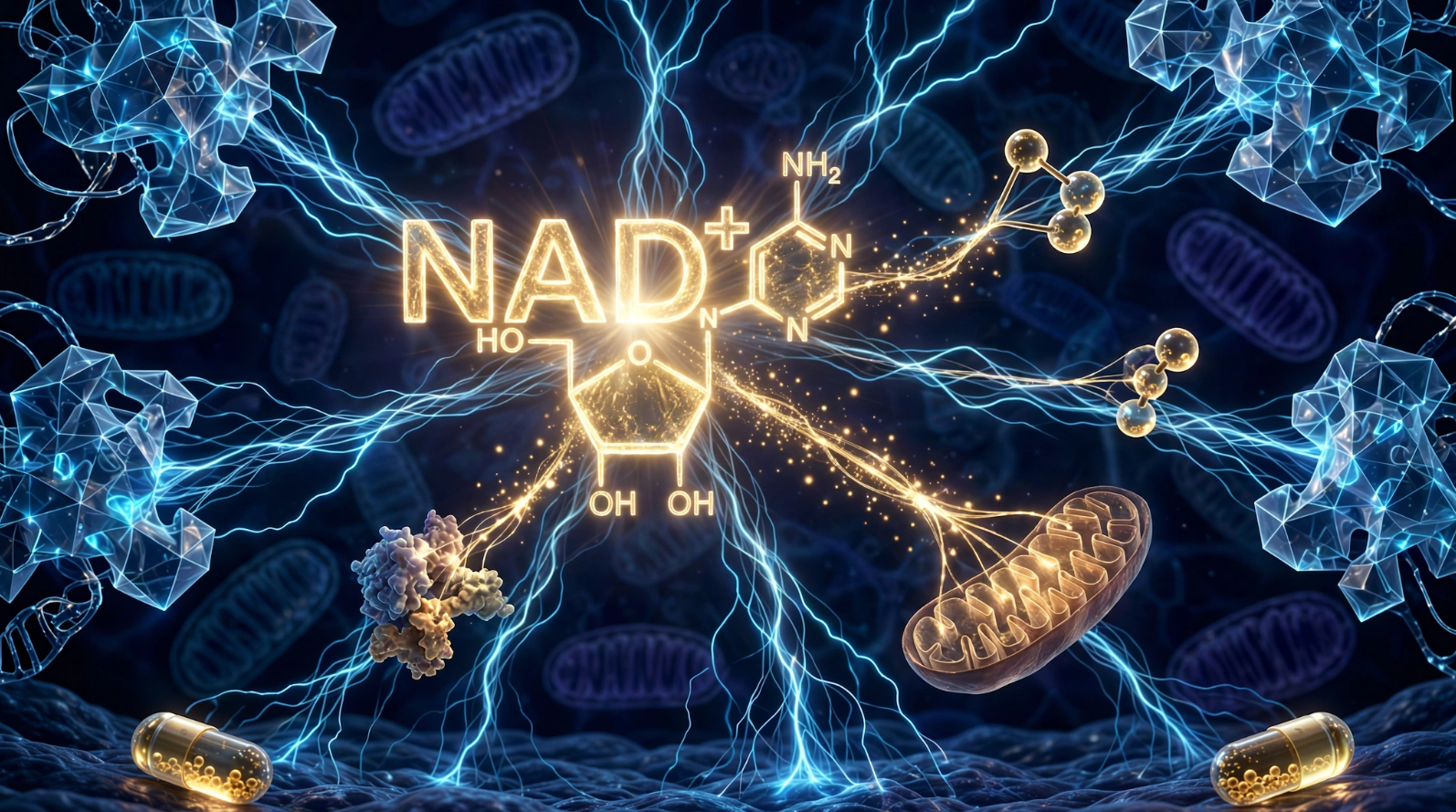
NAD+ (nicotinamide adenine dinucleotide) is a coenzyme present in every living cell. It exists in two forms: NAD+ (oxidized) and NADH (reduced). They shuttle electrons back and forth, making them central to cellular metabolism and energy production.
Three Core Functions of NAD+:
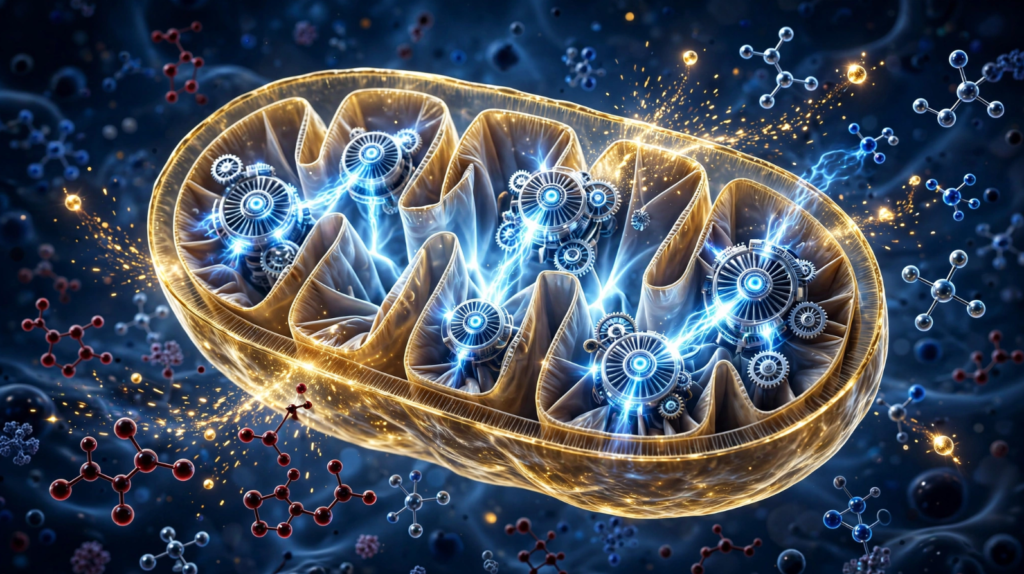
- Energy Production (Redox Reactions): In the mitochondria, NAD+ accepts electrons during the Krebs cycle and hands them off to the electron transport chain. This is the fundamental process that generates ATP, your cellular energy currency. Without sufficient NAD+, the mitochondrial assembly line slows down. Fatigue, brain fog, and metabolic sluggishness are the downstream results.
- DNA Repair: Your DNA is under constant assault—UV radiation, oxidative stress, toxins, and replication errors cause thousands of lesions per cell per day. The enzyme PARP-1 (poly-ADP-ribose polymerase) detects these breaks and consumes NAD+ to fuel the repair process. When NAD+ levels are high, PARP-1 works efficiently. When NAD+ is low, DNA damage accumulates unrepaired, accelerating genomic instability—one of the nine hallmarks of aging.
- Sirtuin Activation: Sirtuins are a family of seven proteins (SIRT1–7) that regulate longevity pathways. They remove acetyl groups from proteins, altering their activity. Sirtuins control mitochondrial biogenesis, inflammation, insulin sensitivity, and epigenetic stability. But they have a unique requirement: they consume NAD+ to do their job. Without NAD+, sirtuins are present but inactive—like light switches without electricity. This is arguably the most important longevity connection.
The NAD+ Synthesis and Salvage Pathways:
Your body makes NAD+ from several dietary precursors:
- Tryptophan: The amino acid in turkey and dairy. It’s a multi-step, inefficient pathway.
- Nicotinic Acid (Niacin): The classic form of vitamin B3. It can cause flushing at high doses.
- Nicotinamide (NAM): Another form of B3, common in supplements. It’s converted to NAD+ but can inhibit sirtuins at high levels.
- Nicotinamide Riboside (NR): A more direct precursor. NR enters cells and is converted to NMN, then to NAD+.
- Nicotinamide Mononucleotide (NMN): One step away from NAD+. NMN is converted directly to NAD+ by an enzyme called NMNAT.
The body also has a salvage pathway that recycles nicotinamide (a byproduct of sirtuin and PARP activity) back into NAD+. This is a critical efficiency loop. In youth, the salvage pathway keeps NAD+ levels high. With age, inflammation and oxidative stress downregulate the key enzyme NAMPT, and the salvage pathway falters.
Section 2: The NAD+ Cliff—Why Levels Drop After 40
NAD+ levels are not static. They decline steadily from young adulthood, and the slope steepens after 40. Multiple mechanisms contribute to this midlife drop.
The Inflammaging Connection:
Chronic low-grade inflammation, or inflammaging, rises after 40. Inflammatory cytokines upregulate CD38, an enzyme on the surface of immune cells that voraciously consumes NAD+. CD38 levels increase with age and are a major driver of NAD+ depletion. This links the decline directly to the immune system’s aging.
PARP-1 Overactivation:
As DNA damage accumulates with age, PARP-1 enzymes become chronically hyperactive, constantly consuming NAD+ to repair the growing backlog of breaks. This depletes the NAD+ pool and leaves less available for sirtuins and mitochondria. It’s a vicious cycle: DNA damage consumes NAD+, low NAD+ impairs DNA repair, more damage accumulates.
Declining NAMPT and Salvage Efficiency:
The salvage pathway enzyme NAMPT is downregulated by oxidative stress, circadian disruption, and aging itself. When the salvage pathway slows, the cell can’t recycle nicotinamide back into NAD+ efficiently. The NAD+ pool shrinks, even if dietary precursors are adequate.
Metabolic Dysfunction:
Insulin resistance, fatty liver, and obesity all correlate with lower NAD+ levels. This is partly due to increased CD38 activity from inflamed adipose tissue and partly due to mitochondrial dysfunction that diverts NAD+ away from sirtuins and toward basic energy metabolism.
The Rate of Decline:
Studies using magnetic resonance spectroscopy and blood assays estimate that NAD+ levels drop by roughly 10–15% per decade after age 20, accelerating after 40. By age 50, tissue NAD+ levels can be half of what they were at 25. This matches the timing of the midlife energy and recovery slump that so many Americans report.
Section 3: NMN vs. NR—What’s the Difference, and What Does the Evidence Show?
Both NMN and NR are NAD+ precursors that have been tested in human trials. They are similar but not identical.
Nicotinamide Riboside (NR):
NR is a form of vitamin B3 that was discovered in milk. It enters cells via specific transporters (ENTs) and is then converted to NMN by an enzyme called NRK. From there, NMN becomes NAD+. NR has been studied in multiple human randomized controlled trials.
Key NR Trials:
- A 2016 study in Nature Communications gave 1,000 mg NR daily to healthy middle-aged adults and found it raised blood NAD+ levels by up to 60% within a few weeks, with no serious side effects.
- A 2018 trial in obese, insulin-resistant men found NR improved insulin sensitivity and increased NAD+ in muscle, though effects were modest.
- A 2020 trial in older adults found NR lowered blood pressure and reduced arterial stiffness, a significant cardiovascular aging marker.
- Trials on exercise performance have been mixed; some show improved mitochondrial function, others show no significant effect.
Nicotinamide Mononucleotide (NMN):
NMN is one step closer to NAD+ and has been the focus of David Sinclair’s research. Early human trials have been mostly small and often conducted in Japan.
Key NMN Trials:
- A 2021 study in Science gave 250 mg NMN daily to postmenopausal women with prediabetes and found improved muscle insulin sensitivity, a significant metabolic benefit.
- A 2022 trial in healthy middle-aged adults found NMN well-tolerated and effective at raising blood NAD+ levels. Some subjects showed improved walking speed and grip strength, though the study wasn’t powered for those endpoints.
- Several ongoing trials are testing NMN for cardiovascular function, cognitive aging, and physical performance.
NMN vs. NR—Practical Differences:
- Both effectively raise NAD+ levels. There’s no definitive head-to-head human trial showing one is superior.
- NR has more published human safety data and is widely available as a supplement in the U.S.
- NMN has been more prominently associated with anti-aging research, but the U.S. FDA has recently scrutinized NMN as potentially requiring drug regulation, limiting some availability. As of 2024, NMN is available but under regulatory discussion; NR faces no such issues.
- NR tends to be slightly cheaper and is produced by several major supplement manufacturers (Tru Niagen).
The Bottom Line: Both NMN and NR raise NAD+ levels in humans. The best choice may come down to availability, tolerability, and personal response. Neither is a proven “fountain of youth,” but both are reasonable, evidence-informed supplements for the 40+ individual interested in NAD+ support.
Section 4: Sirtuins—The Longevity Proteins That NAD+ Fuels
The sirtuins (SIRT1–7) are a family of proteins that sense NAD+ levels and translate them into cellular actions. They are a primary reason NAD+ matters for aging.
The Sirtuin Family Functions:
- SIRT1: The best studied. Regulates mitochondrial biogenesis, glucose metabolism, fat mobilization, inflammation, and stress resistance. It deacetylates PGC-1α, the master mitochondrial regulator.
- SIRT2: Involved in cell cycle regulation and may suppress tumor formation.
- SIRT3: Located in mitochondria. Regulates energy metabolism, antioxidant defenses, and protects against age-related hearing loss and cardiac hypertrophy.
- SIRT6: Regulates DNA repair, telomere maintenance, and inflammation. Mice overexpressing SIRT6 live longer. SIRT6 activation is a major focus of longevity research.
- SIRT4 & SIRT5: Regulate amino acid and fatty acid metabolism.
- SIRT7: Located in the nucleolus, regulates ribosomal RNA transcription.
The Sirtuin-NAD+ Connection:
When NAD+ levels are high, sirtuins are active and exert their protective effects: DNA is repaired, mitochondria are renewed, inflammation is suppressed, and insulin sensitivity is maintained. When NAD+ drops, sirtuins become quiescent. The protective shield goes down. This is the molecular basis for why NAD+ depletion accelerates aging—not because NAD+ itself is magical, but because it is the essential co-substrate for the sirtuins that guard your cellular health.
Activating Sirtuins Without Supplements:
Sirtuins are also activated by lifestyle factors that signal “mild stress” or “low energy”:
- Caloric Restriction and Fasting: Lower insulin and glucose activate SIRT1 and SIRT3. This is the ancestral mechanism—food scarcity triggers longevity pathways to conserve resources and repair damage.
- Exercise: Acute exercise activates SIRT1 and SIRT3 in muscle, promoting mitochondrial biogenesis and fat oxidation.
- Polyphenols: Resveratrol (red grapes, wine), fisetin (strawberries), quercetin (apples, onions), and EGCG (green tea) are known sirtuin activators. They mimic the effects of caloric restriction on sirtuin pathways.
- Heat and Cold Stress: Both sauna and cold exposure activate sirtuins through hormetic pathways.
This means your Mediterranean diet, time-restricted eating, Zone 2 exercise, and sauna use are directly activating sirtuins—independently of supplementation. NAD+ precursors amplify these effects by ensuring the sirtuins have enough fuel.
Section 5: The VigorForty NAD+ Support Protocol
This protocol places lifestyle at the center and uses NAD+ precursors as an optional amplifier.
Tier 1—Lifestyle Foundation (Non-Negotiable, No Pills):
- Daily Zone 2 Aerobic Exercise: 30–45 minutes of brisk walking or light cycling. This activates AMPK, increases NAMPT, and boosts NAD+ synthesis naturally. Exercise also activates sirtuins directly.
- Time-Restricted Eating (12–14 hours): Overnight fasting lowers insulin, raises AMPK, and activates sirtuins, while reducing CD38-mediated NAD+ depletion.
- Mediterranean Diet Rich in Niacin and Polyphenols: Foods naturally high in NAD+ precursors: turkey, chicken, tuna, salmon, mushrooms, avocados, peanuts, and whole grains. Polyphenol-rich foods: berries, green tea, olive oil, dark chocolate.
- Sauna or Heat Exposure: 2–4 sessions per week, if accessible. Heat stress raises NAD+ and activates sirtuins.
- Circadian Rhythm Optimization: Consistent sleep/wake times and morning light. Circadian disruption suppresses NAMPT and impairs the NAD+ salvage pathway.
Tier 2—Targeted Niacin (If You Want a Simple, Low-Cost Boost):
Nicotinic acid (niacin) at 100–250 mg per day is an effective NAD+ precursor that has been used for decades. It can cause a flushing sensation (warmth, redness), which is harmless but uncomfortable. Flush-free formulations (inositol hexanicotinate) are less effective for NAD+ boosting. If you tolerate the flush, niacin is the cheapest NAD+ precursor.
Tier 3—NR or NMN Supplementation (Optional, Advanced):
- NR (Nicotinamide Riboside): 250–500 mg per day. Available as Tru Niagen or generic brands. Good human safety data. Reasonable starting point.
- NMN (Nicotinamide Mononucleotide): 250–500 mg per day, typically in the morning on an empty stomach. May have slightly more direct anti-aging research association, but regulatory status is in flux. Purchase from reputable, third-party tested sources.
- Combination: Some formulations include both NR and NMN. No strong evidence for combination superiority.
- Duration: If you choose to supplement, commit to at least 8–12 weeks before evaluating. Take in the morning, as NAD+ has a circadian rhythm and dosing later may affect sleep.
What to Expect:
- Some users report subtle improvements in energy, mental clarity, and exercise recovery within weeks.
- Others notice no subjective effect but see improvements in blood markers (lower inflammation, better insulin sensitivity) over months.
- If you feel no difference after 3–4 months and your blood markers are stable, you may not need supplementation—your lifestyle may be maintaining your NAD+ levels adequately.
Who Should Be Cautious:
- If you have a history of cancer, discuss NAD+ supplementation with your oncologist. Some cancer cells use NAD+ pathways to fuel growth. Human evidence of risk is lacking, but the theoretical concern warrants a conversation.
- Pregnant or breastfeeding women should avoid NAD+ precursors due to lack of safety data.
- If you are on multiple medications, consult your physician to check for interactions.
Section 6: FAQ—Your NAD+ Questions
Q: Is taking NMN or NR just an expensive way to get vitamin B3?
A: Partly. Niacin is also an NAD+ precursor and is far cheaper. However, NMN and NR bypass the rate-limiting steps that become less efficient with age. In older adults, the conversion of niacin to NAD+ may be slower, and NMN/NR may more reliably raise NAD+ levels. If you’re on a budget and tolerate niacin well, it’s a valid first step. If you want a more direct precursor with no flush, NR is the most studied and accessible option.
Q: David Sinclair takes NMN. Should I just do what he does?
A: David Sinclair is a brilliant scientist, but he’s also deeply invested in companies that sell NAD+ precursors, creating a potential conflict of interest. His personal regimen (NMN, resveratrol, metformin, etc.) is an experiment of one. That said, the underlying science is legitimate. Follow the evidence, not the guru. The human trial data supports NAD+ precursors for metabolic health; the anti-aging immortality claims are not yet proven.
Q: Can I get enough NAD+ from food alone?
A: You can support NAD+ levels significantly with a niacin-rich diet (turkey, chicken, tuna, peanuts, mushrooms, avocados, whole grains) and the lifestyle foundation—exercise, fasting, and sauna. Whether this is “enough” to offset the age-related decline depends on your individual biology and your goals. Many people maintain good energy and metabolic health on lifestyle alone. Others, especially those with high stress or metabolic challenges, may benefit from supplemental precursors.
Q: What’s the deal with the FDA and NMN? Is it banned?
A: In 2022, the FDA determined that NMN cannot be sold as a dietary supplement in the U.S. because it was first investigated as a drug. This decision is currently being challenged and the enforcement status is fluid. As of now, NMN is still available from some retailers, but availability may change. NR (Tru Niagen) is unaffected and remains fully available as a supplement. If you want regulatory certainty, choose NR.
Q: Will taking NAD+ precursors make me feel young again?
A: They are not magic. If your diet is poor, you’re sedentary, and you sleep five hours a night, an NMN pill will not compensate. NAD+ support is a piece of the longevity puzzle, not the whole picture. When layered on top of the VigorForty lifestyle—exercise, Mediterranean eating, good sleep, stress management, and the core supplement stack—NAD+ precursors may amplify your results. Expect subtle, gradual improvements in energy and metabolic markers, not a sudden fountain of youth.
The VigorForty Take
NAD+ has become the celebrity molecule of the anti-aging world, and like many celebrities, it’s surrounded by both genuine admiration and breathless hype. The truth, as is often the case in science, sits in the sober middle. NAD+ is profoundly important. It does decline with age. Boosting it through lifestyle—exercise, fasting, sauna, polyphenols, and circadian alignment—is a rock-solid, evidence-based strategy that activates your sirtuins and protects your DNA without costing a dime beyond your groceries and your walking shoes.
Whether to add a pill—NR or NMN—is a personal decision. The human evidence is promising for metabolic health and likely for aspects of biological aging, but it is not definitive. If you have the means, a 6-month trial of NR at 500 mg per day is a reasonable experiment for a 40+ adult. Track your energy, your blood work (fasting insulin, hs-CRP, lipids), and your subjective sense of clarity and recovery. Let the data guide you.
Above all, remember that NAD+ is not a standalone fix. It is a coenzyme that fuels the machinery you’ve been meticulously building: the mitochondria strengthened by your Zone 2 walks, the autophagy triggered by your overnight fast, the sirtuins activated by your colorful plate and your sauna sessions. NAD+ is the electricity, but you are building the power grid. Keep building. The molecule will do its part if you do yours.