
Author: Vigor Forty Editorial Team
Medically Reviewed By: Editorial Review Board
Disclaimer: This article is for informational purposes only and is not a substitute for professional medical advice. Read our full Medical Disclaimer.
📌 Key Takeaways
- Mitochondria Are the Engines of Every Cell: These tiny organelles convert the food you eat and the oxygen you breathe into ATP, the energy currency that powers every heartbeat, thought, and muscle contraction. Your body produces roughly your body weight in ATP every day, almost all of it inside mitochondria.
- Mitochondrial Function Declines Significantly After 40: Damaged mitochondrial DNA, oxidative stress, and reduced quality control (mitophagy) cause mitochondria to become fewer, less efficient, and leakier with age. This decline is a root cause of midlife fatigue, slower metabolism, brain fog, muscle loss, and increased disease risk.
- You Can Stimulate New Mitochondrial Growth (Biogenesis) and Repair at Any Age: Zone 2 aerobic exercise is the single most powerful stimulus for creating new, healthy mitochondria. Resistance training, high-intensity bursts, and even cold exposure also trigger mitochondrial adaptations.
- Targeted Supplements Support Mitochondrial Health Directly: CoQ10, NAD+ precursors (NMN/NR), creatine, magnesium, and PQQ work at different points in the mitochondrial energy pipeline. Several of these are already in your VigorForty protocol.
- The VigorForty Mitochondrial Protocol Integrates Seamlessly: Combining your existing exercise snacks, the Mediterranean diet, the supplement stack, and gentle time-restricted eating gives your mitochondria the precise signals they need to repair, replicate, and power you through the next several decades.
Introduction: The Hidden Energy Crisis Happening Inside Your Cells
You remember what it felt like to have boundless energy. In your 20s, you could stay up late, wake up early, and power through the day with little more than coffee and momentum. Now, at 45 or 55, the tank feels smaller. A bad night’s sleep leaves you foggy for two days. A hard workout requires a full day of recovery. The afternoon slump hits harder. You’ve attributed this to “just getting older,” but under the microscope, something very specific is happening: your mitochondria are declining.
Every cell in your body—except red blood cells—contains hundreds to thousands of mitochondria. Muscle cells, brain neurons, and heart muscle are packed with them because these tissues have enormous energy demands. Your heart, which beats 100,000 times a day, is the most mitochondrial-dense organ in your body. When mitochondria falter, these high-energy systems suffer first. The fatigue isn’t psychological or motivational; it’s energetic. Your power plants are producing less ATP, and they’re leaking more damaging byproducts in the process.
The good news is that mitochondrial health is remarkably responsive to the right inputs. Unlike the fixed genetic code in your nucleus, mitochondria can replicate, fuse together to share resources, and be selectively cleared and replaced through mitophagy—a specialized form of the autophagy you learned about in the previous article. You can build new mitochondria at 50, 60, and beyond. You can improve the efficiency of the ones you have. And in doing so, you can reclaim a significant portion of the energy, mental clarity, and metabolic resilience that you thought were lost to age.
This article explains what mitochondria do, why they sputter after 40, and exactly how to restore them using the exercise, nutrition, and supplement tools you’re already integrating into your VigorForty life. This is the cellular energy blueprint.
Section 1: What Mitochondria Do—And Why They’re Unique
Mitochondria are often described as the “powerhouses of the cell,” but that factory-floor analogy undersells their sophistication. They are dynamic, self-replicating organelles with their own DNA, inherited exclusively from your mother. They communicate with the nucleus, regulate calcium signaling, control apoptosis (programmed cell death), and even influence hormone synthesis.
The ATP Assembly Line:
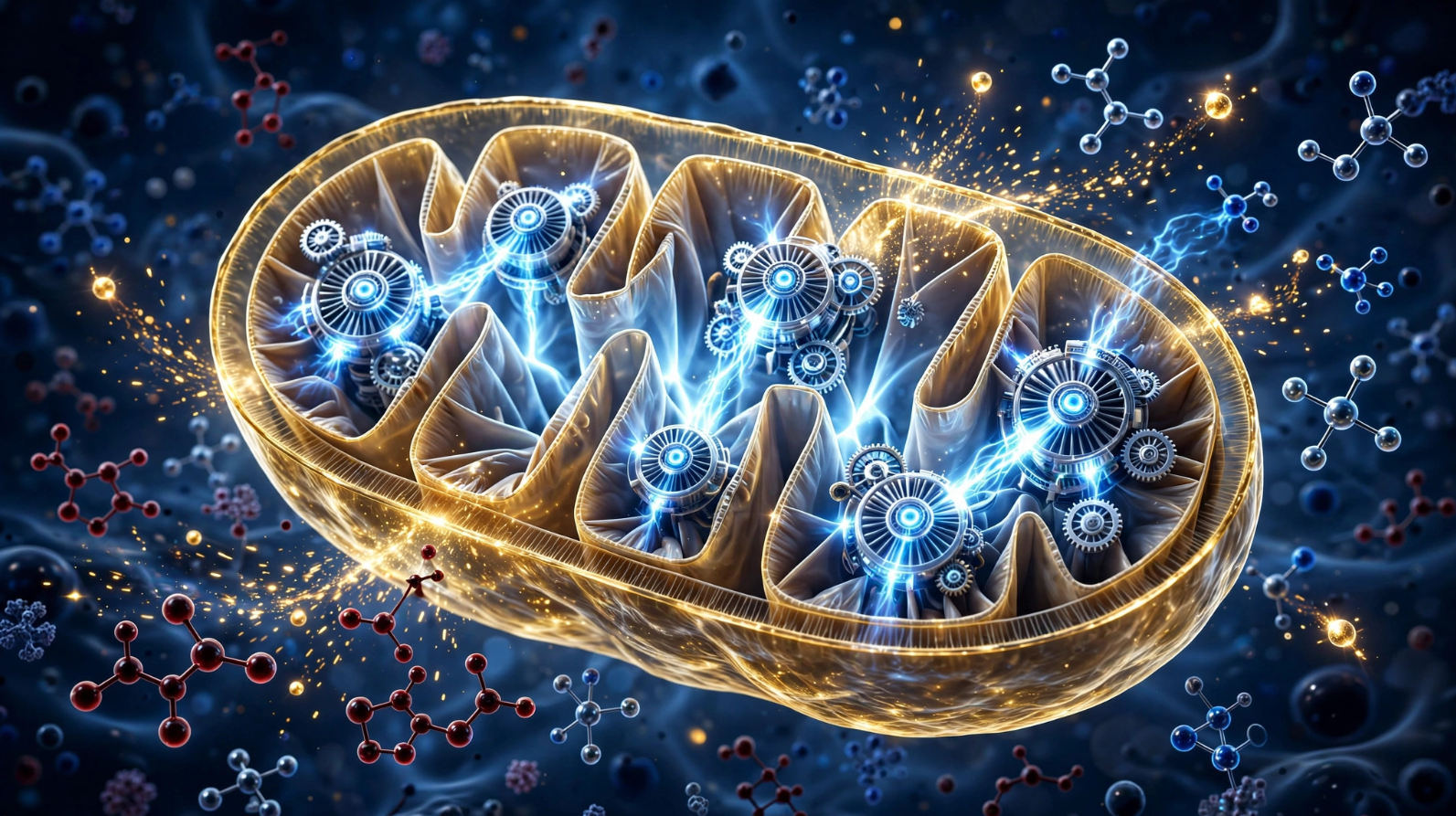
The core job is converting food into usable energy through a process called oxidative phosphorylation. Inside the inner mitochondrial membrane, a series of protein complexes (the electron transport chain) shuttle electrons, pumping protons across the membrane. The resulting gradient drives an enzyme called ATP synthase, which spins like a microscopic turbine to manufacture ATP. The efficiency of this process determines how much energy you extract from every bite of food and every breath of air.
Why They’re Vulnerable:
Unlike nuclear DNA, mitochondrial DNA (mtDNA) is not protected by histones and has limited repair machinery. It sits right next to the electron transport chain, where reactive oxygen species (ROS) are generated as a natural byproduct. When ROS production outpaces antioxidant defenses, mtDNA mutates, proteins are damaged, and the energy assembly line breaks down. This is the mitochondrial free radical theory of aging, and while it’s not the whole story, it’s a significant part of it.
Mitochondrial Dynamics—Fission, Fusion, and Mitophagy:
Healthy mitochondria are not static. They constantly undergo:
- Fusion: Damaged mitochondria merge with healthy ones, mixing contents and diluting damage.
- Fission: A mitochondrion splits into two, allowing the removal of irreparably damaged sections.
- Mitophagy: Severely damaged mitochondria are tagged, engulfed by an autophagosome, and degraded in the lysosome. This is mitochondrial autophagy.
With age, fusion declines, fission becomes excessive, and mitophagy stalls. The result: a growing population of dysfunctional, leaky mitochondria that produce less ATP and more oxidative stress. This is the cellular energy crisis in a nutshell.
Section 2: The Midlife Mitochondrial Meltdown
After 40, several converging factors accelerate mitochondrial decline. Understanding them helps you target your interventions precisely.
1. mtDNA Mutation Accumulation:
Decades of exposure to ROS, environmental toxins, and replication errors leave mtDNA riddled with small deletions and mutations. By midlife, some mitochondria have lost entire segments of their genome, rendering them incapable of building key electron transport chain proteins.
2. NAD+ Depletion:
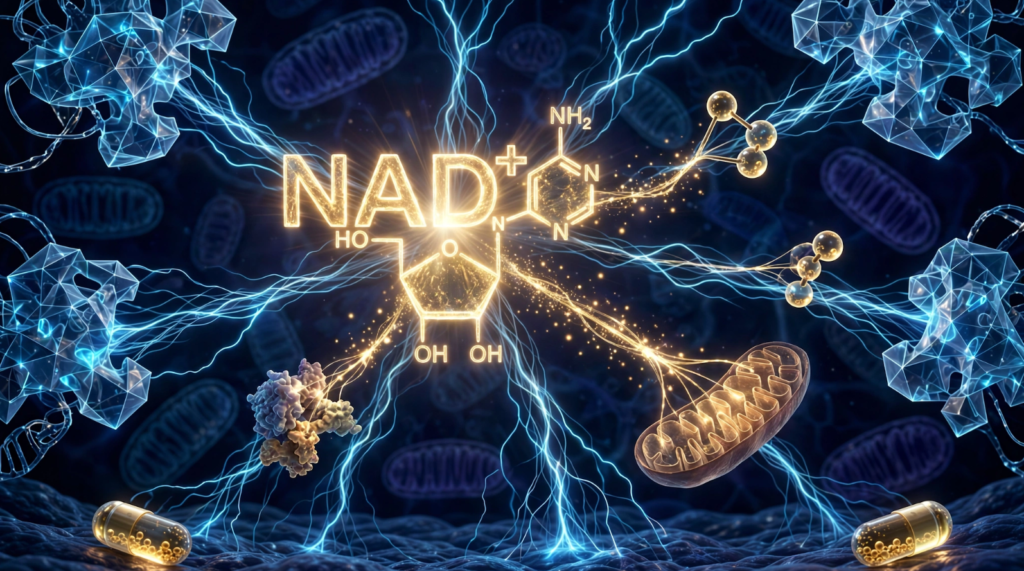
NAD+ is a coenzyme critical for mitochondrial function. It shuttles electrons in the Krebs cycle and is consumed by sirtuins (longevity proteins) and PARP enzymes (DNA repair). NAD+ levels drop by up to 50% between ages 40 and 60. Without enough NAD+, the mitochondrial electron transport chain slows, and sirtuin-mediated quality control falters. This directly connects mitochondrial aging to the epigenetic and nutrient-sensing hallmarks from the Biological Aging overview.
3. Reduced Biogenesis Signaling:
The master regulator of mitochondrial biogenesis is PGC-1α, a protein that turns on genes for new mitochondria. Exercise, cold exposure, and caloric restriction activate PGC-1α. A sedentary lifestyle, chronic overnutrition, and insulin resistance suppress it. Most Americans over 40 have chronically low PGC-1α activity, meaning they’re not sending the signal to build new mitochondria.
4. CoQ10 Decline:
Coenzyme Q10 shuttles electrons between Complexes I/II and Complex III in the electron transport chain. Without adequate CoQ10, the chain backs up, ROS production spikes, and ATP output drops. As you learned in the Heart Health Guide, CoQ10 levels in the heart and other tissues decline with age, and statin drugs accelerate this depletion.
5. Loss of Mitophagy:
The mitophagy pathway, reliant on proteins like PINK1 and Parkin, becomes less efficient with age. Damaged mitochondria that should be tagged and recycled instead linger, leaking ROS and triggering inflammation. Restoring mitophagy is a major goal of both exercise and fasting interventions.
Section 3: The VigorForty Mitochondrial Restoration Protocol
This protocol uses targeted exercise, nutrition, supplements, and lifestyle tweaks to stimulate biogenesis, support existing mitochondrial function, and enhance quality control.
1. Exercise—The Most Powerful Mitochondrial Medicine
Exercise is the single most effective intervention for mitochondrial health. Different types of exercise target mitochondria in different ways.
Zone 2 Aerobic Training (The Foundation):
Zone 2 is exercise at 60–70% of your maximum heart rate—a pace where you can hold a conversation but feel like you’re working. Brisk walking, light cycling, swimming, or hiking. This intensity optimally stimulates PGC-1α, triggering mitochondrial biogenesis and improving the efficiency of existing mitochondria. It also enhances the ability to burn fat for fuel, which takes pressure off glucose metabolism.
Protocol: 3–4 sessions per week, 30–60 minutes each. This is your mitochondrial fertilizer. Every minute in Zone 2 tells your muscle cells: “Build more power plants.”
High-Intensity Bursts (Exercise Snacks):
Brief, vigorous intervals—the 1–2 minute exercise snacks from your habit plan—activate AMPK, which triggers mitophagy and clears out damaged mitochondria. High-intensity efforts also stimulate the production of brain-derived neurotrophic factor (BDNF), which supports mitochondrial health in neurons.
Protocol: 3–5 short bursts per day, scattered into your routine. Stair climbs, fast walking up a hill, air squats at high speed. These are the quality-control sweepers.
Resistance Training:
Lifting weights stresses muscle fibers, causing micro-damage that requires energy-intensive repair. This stimulates mitochondrial biogenesis in muscle tissue and increases muscle mass, which is itself a mitochondrial reservoir. More muscle means more total body mitochondrial capacity.
Protocol: 2–3 sessions per week, as you’re already doing. Compound movements (squats, push-ups, rows, lunges) engage large muscle groups, maximizing the mitochondrial stimulus.
2. Nutrition for Mitochondrial Health
Your Mediterranean Diet Blueprint is already highly supportive of mitochondrial function. Emphasize these specific elements:
- Polyphenols: Colorful fruits and vegetables, dark chocolate, green tea, and olive oil contain compounds that activate AMPK and sirtuins, supporting mitochondrial biogenesis and antioxidant defenses.
- Healthy Fats: Mitochondrial membranes are built from phospholipids that require healthy fats. Olive oil, avocados, nuts, and fatty fish provide the raw materials.
- Moderate Protein: Adequate protein supports muscle maintenance, and muscle houses mitochondria. The VigorForty target of 1.6–2.0 g/kg is ideal.
- Time-Restricted Eating: As discussed in the autophagy article, a 12–14 hour overnight fast activates AMPK and NAD+-dependent sirtuins, promoting mitophagy. This is the cellular “spring cleaning” that clears out old, dysfunctional mitochondria.
3. The Mitochondrial Supplement Stack
Several of your existing supplements directly support mitochondrial function. Here’s how each fits, plus a few targeted additions.
- CoQ10 (Ubiquinol, 100–200 mg/day): Non-negotiable for mitochondrial electron transport. If you’re over 55 or on a statin, this is essential. It’s already in your Heart Health Protocol. Take it with a fat-containing meal for absorption.
- Magnesium Glycinate (300–400 mg/day): Magnesium is required for ATP synthesis (ATP is stored and transported as Mg-ATP). Deficiency impairs mitochondrial function. Already in your VigorFive stack.
- Creatine Monohydrate (5 g/day): Creatine phosphate acts as a rapid energy buffer, regenerating ATP during high-demand moments. This spares mitochondrial oxygen consumption and protects against energy crashes. Already in your VigorFive stack.
- Omega-3s (EPA/DHA, 1,000–2,000 mg/day): EPA and DHA improve mitochondrial membrane fluidity, reduce oxidative damage, and enhance ATP production efficiency. Already in your stack.
- NAD+ Precursor (NMN or NR, 250–500 mg/day—Optional Add-On): As NAD+ declines, mitochondrial function suffers. Supplementing with nicotinamide mononucleotide (NMN) or nicotinamide riboside (NR) can raise NAD+ levels, supporting the electron transport chain, sirtuins, and mitophagy. This is an advanced, optional addition. Morning dosing, empty stomach. Discuss with your physician.
- PQQ (Pyrroloquinoline Quinone, 10–20 mg/day—Optional Add-On): PQQ is a unique compound that stimulates mitochondrial biogenesis by activating PGC-1α pathways. It also functions as an antioxidant, protecting mtDNA. Found naturally in kiwi, parsley, and green tea, but at low levels. A small dose supplement can amplify the biogenesis signal, especially when combined with exercise.
- L-Carnitine (500–1,000 mg/day—Optional for Targeted Energy): L-carnitine shuttles long-chain fatty acids into the mitochondrial matrix for beta-oxidation. It’s particularly useful for those who feel fatigued or are on a lower-carb diet. If you eat red meat regularly, you likely get enough. If not, an acetyl-L-carnitine supplement may support brain and muscle mitochondrial function.
The Layered Approach:
- Core (Everyone): CoQ10, magnesium, creatine, omega-3s. (Your VigorFive plus CoQ10.)
- Optional Add 1: NAD+ precursor if you’re over 50 or noticing significant energy decline.
- Optional Add 2: PQQ or L-carnitine for a further mitochondrial boost.
4. Lifestyle Amplifiers
- Cold Exposure: Brief cold showers or cold plunges stimulate mitochondrial biogenesis in brown adipose tissue and muscle by activating PGC-1α. 30–60 seconds of cold at the end of your shower is sufficient for a mitochondrial nudge.
- Sauna and Heat Stress: Heat stress increases mitochondrial efficiency and triggers mitophagy, as discussed in the autophagy article. Sauna and cold exposure are complementary; they create hormetic stress that strengthens mitochondrial resilience.
- Sleep and Circadian Alignment: Mitochondria follow a circadian rhythm. Deep sleep is when mitophagy peaks and mitochondrial repair occurs. Prioritizing sleep is a direct mitochondrial intervention. Poor sleep equals poor mitochondrial maintenance.
- Stress Management: Chronic stress elevates cortisol, which impairs mitochondrial function and promotes oxidative damage. Your breathwork, meditation, and the morning light habit all protect your mitochondria by keeping cortisol in check.
Section 4: The VigorForty Mitochondrial Day
Here’s what a day optimized for mitochondrial health might look like, using the habits you’ve already built.
- Morning (6:30 AM): Wake, drink water, step outside for 2 minutes of daylight. (Circadian anchor.)
- Morning Movement (7:00 AM): 30-minute brisk walk or light jog in Zone 2. (Biogenesis signal.) Follow with 5 air squats and 5 push-ups. (Resistance and burst signal.)
- Breakfast (8:00 AM, after 12-hour fast): Eggs, spinach, olive oil, whole-grain toast, coffee. (Polyphenols, healthy fats, CoQ10 from olive oil.) Supplements: D3+K2, omega-3s, CoQ10, creatine.
- Midday (12:00 PM): Mediterranean plate: canned salmon, mixed greens, quinoa, cherry tomatoes, olive oil and lemon. Green tea. (Polyphenols, omega-3s.)
- Afternoon Movement Snack (3:00 PM): 2-minute stair climb or fast walk around the block. (AMPK spike, mitophagy.)
- Dinner (6:30 PM): Grilled chicken, roasted vegetables, sweet potato. Small square of dark chocolate. (Polyphenols, magnesium.)
- Evening (8:00 PM): Kitchen closed. 12–14 hour fast begins.
- Wind-Down (9:30 PM): Dim lights, 5-minute breathwork or mobility flow. Magnesium supplement.
- Sleep (10:00 PM–6:00 AM): Cool, dark room. Mitochondrial repair and mitophagy peak.
This is not a rigid schedule. It’s a template built from the habits, exercise snacks, Mediterranean framework, and supplement protocol you already own. The mitochondrial benefits are a natural consequence of these integrated pieces.
Section 5: FAQ—Your Mitochondrial Questions
Q: I feel tired all the time. Is it my mitochondria?
A: It could be a contributor, but fatigue is multi-factorial. Mitochondrial dysfunction is one piece of the puzzle, alongside poor sleep, chronic stress, iron deficiency, thyroid issues, or depression. The protocol in this article—Zone 2 exercise, CoQ10, magnesium, creatine, and improved sleep—addresses mitochondrial energy production directly and often yields noticeable improvements in daily energy within 4–6 weeks. If fatigue persists, see your doctor for a full workup, including thyroid panel, iron studies, and inflammatory markers.
Q: Can I take CoQ10 and an NAD+ precursor together?
A: Yes. They work at different points in the mitochondrial energy pipeline. CoQ10 shuttles electrons within the electron transport chain. NAD+ fuels the Krebs cycle and sirtuins. They are complementary, not redundant. Many mitochondrial support formulations combine them. Take CoQ10 with a meal; take NMN/NR on an empty stomach in the morning, as absorption may be better.
Q: Is PQQ worth taking, or is it hype?
A: PQQ has solid mechanistic evidence and a few small human trials showing improved mitochondrial function and reduced inflammation markers. It’s not as heavily studied as CoQ10 or creatine, but it’s promising. If your budget allows and you’re already doing the core protocol, PQQ is a reasonable add-on for mitochondrial biogenesis. If you’re on a tight budget, prioritize CoQ10 and creatine first.
Q: I have a mitochondrial disease or chronic fatigue syndrome. Does this protocol apply?
A: The general principles—gentle Zone 2 exercise, anti-inflammatory nutrition, and mitochondrial supplements—are often recommended by integrative physicians for these conditions, but dosing and exercise tolerance must be individualized. Work closely with a specialist. Do not self-treat a diagnosed mitochondrial disorder with supplements without medical guidance; some supplements can interact with medications or have unexpected effects.
Q: How long does it take to improve mitochondrial function?
A: You can see subjective improvements in energy and endurance within 2–4 weeks of consistent Zone 2 exercise and supplementation. Significant mitochondrial biogenesis—actual new mitochondria—takes 6–8 weeks of consistent training. Mitophagy and quality control improvements begin within days of implementing time-restricted eating and exercise. Think of it as a renovation project: the cleanup starts immediately, but the full remodel takes a couple of months.
The VigorForty Take
Your mitochondria have been powering you since before you took your first breath. Every step, every thought, every beat of your heart—trillions of tiny rotary engines, spinning ATP synthase turbines, converting the food you eat into the energy you live on. For decades, they’ve done this work quietly, faithfully, and largely unnoticed. Now, after 40, they’re asking for some attention.
The midlife energy decline you feel is not your imagination. It’s not a character flaw. It’s a measurable, biological shift in mitochondrial number, efficiency, and quality control. But it’s also a shift you can push back against—vigorously, effectively, and with tools that are already in your hands. A brisk walk in Zone 2. A handful of supplements with breakfast. A night of deep, restorative sleep. A day of eating colorful, whole foods. These are not just “healthy habits.” They are direct mitochondrial medicine.
You don’t need to accept fatigue as your new normal. You don’t need to resign yourself to brain fog and slow recovery. Your mitochondria are listening. Give them the signals—the movement, the nutrients, the fasting window, the rest—and they will respond. New mitochondria will grow. Old, damaged ones will be cleared away. The energy you thought was gone for good will begin to return, not in a flood, but in a steady, reliable current that carries you through your days with greater clarity and vitality. Your power plants are waiting. Fuel them well.