

Author: Vigor Forty Editorial Team
Medically Reviewed By: Editorial Review Board
Disclaimer: This article is for informational purposes only and is not a substitute for professional medical advice. Read our full Medical Disclaimer.
📌 Key Takeaways
- Brain Fog After 40 Is Multifactorial: Hormonal shifts, chronic stress, poor sleep, systemic inflammation, and mitochondrial decline all contribute to the feeling of mental cloudiness, forgetfulness, and slow processing that many experience in midlife.
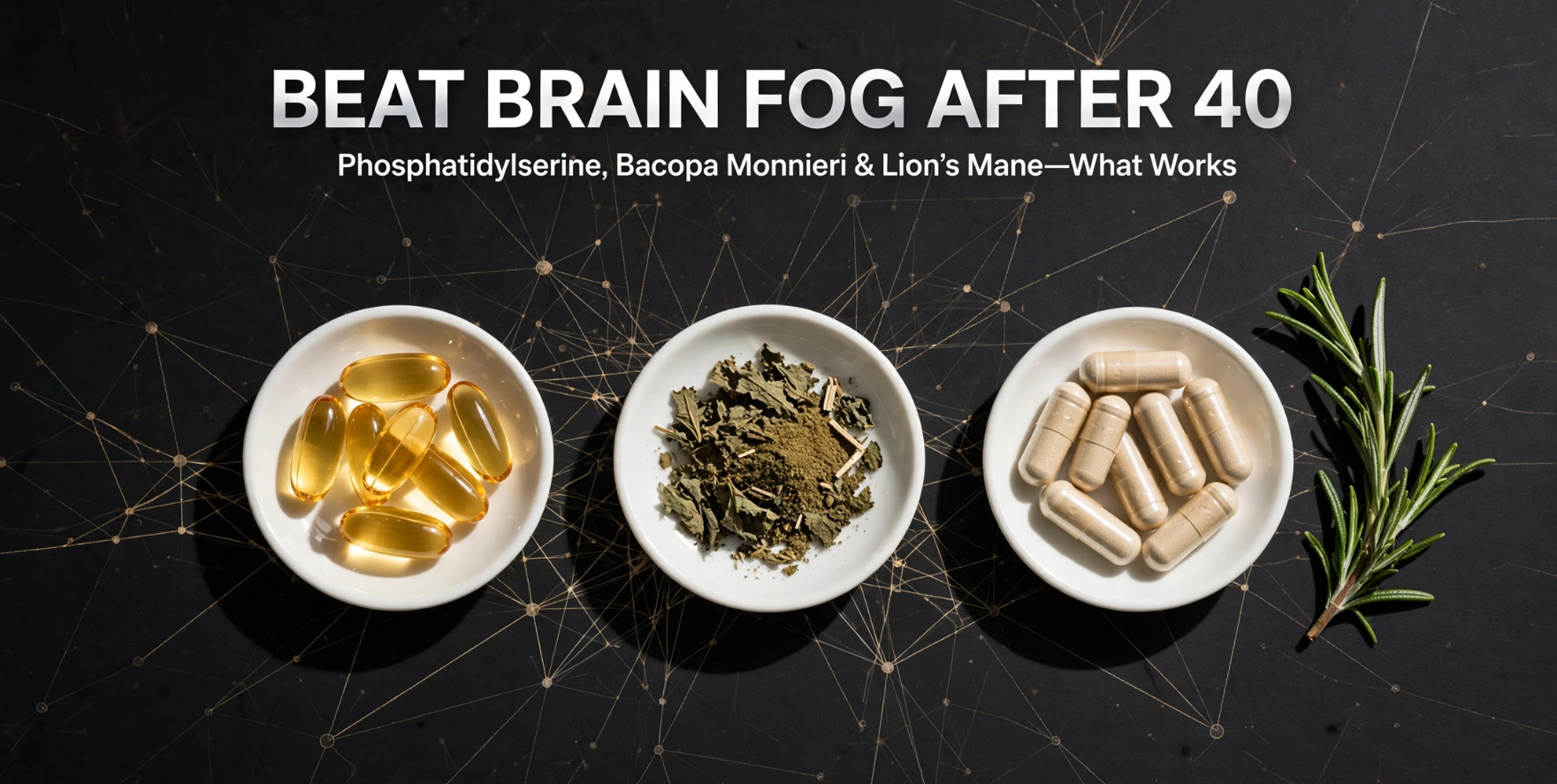
- Three Supplements Stand Out for Cognitive Support: Phosphatidylserine maintains brain cell membrane fluidity and supports neurotransmitter release. Bacopa monnieri enhances memory formation and reduces anxiety through adaptogenic mechanisms. Lion’s mane stimulates nerve growth factor (NGF) and may support neurogenesis and focus.
- No Single Pill Is a Magic Bullet: These supplements work best when combined with the Vigor Five foundation, quality sleep, stress management, and a diet rich in omega-3s, polyphenols, and adequate protein. Cognitive decline is a complex process; supplements are a supporting tool, not a cure.
- Effects Are Cumulative, Not Immediate: Most users notice subtle improvements in clarity, word recall, and sustained focus after 4–8 weeks of consistent use. Acute effects are uncommon, and patience is essential.
- Quality and Sourcing Matter Greatly: Bacopa must be standardized to bacosides; lion’s mane must be from the fruiting body (not mycelium on grain); phosphatidylserine should be from sunflower lecithin (not bovine) for safety and purity.
Introduction: When Your Mind Feels Like It’s Wading Through Mud
You walk into a room and forget why. You struggle to find the right word in a meeting. You read the same paragraph three times and it still doesn’t stick. Brain fog—the sensation of mental fatigue, slowed processing, and hazy recall—is one of the most common and distressing complaints among Americans over 40.
It’s tempting to attribute it to aging and accept it as inevitable. But brain fog is not a diagnosis; it’s a symptom. It arises from a collision of physiological stressors: declining estrogen or testosterone, rising cortisol, systemic inflammation from poor diet or leaky gut, impaired mitochondrial energy production, and disrupted sleep architecture. These factors converge on the prefrontal cortex and hippocampus, impairing executive function, memory consolidation, and sustained attention.
The good news is that specific, well-researched supplements can meaningfully sharpen cognitive function by addressing root mechanisms—supporting neuronal membrane integrity, modulating stress hormones, and promoting neurotrophic factors that encourage brain cell growth and repair. This article examines the three most evidence-backed nootropic supplements for the 40+ brain: phosphatidylserine, bacopa monnieri, and lion’s mane. It separates genuine clinical promise from marketing hype, providing clear guidance on dosing, timing, and realistic expectations.
Section 1: What Causes Brain Fog After 40? A Systems-Level View
Brain fog is not a single entity. It emerges from one or more of these interconnected disruptions:
- Neuroinflammation: Systemic inflammation from poor diet, obesity, insulin resistance, and gut dysbiosis triggers microglial activation in the brain. Activated microglia release inflammatory cytokines that slow neural transmission and impair synaptic plasticity.
- Hormonal Withdrawal: Estrogen and testosterone are neuroprotective. They enhance cerebral blood flow, promote synaptic spine density, and modulate neurotransmitters like acetylcholine and dopamine. Perimenopause and andropause disrupt these functions, leading to brain fog, especially in the prefrontal cortex (executive function) and hippocampus (memory).
- HPA Axis Dysregulation: Chronic stress elevates cortisol, which over time damages hippocampal neurons and impairs the conversion of short-term to long-term memory. High cortisol also reduces brain-derived neurotrophic factor (BDNF), a protein essential for neuronal survival and growth.
- Mitochondrial Dysfunction: Neurons are energetically expensive. They require a constant supply of ATP. After 40, mitochondrial efficiency declines, and the brain’s energy supply can falter, particularly under high cognitive load or sleep deprivation.
- Poor Sleep and Glymphatic Clearance: Deep sleep activates the glymphatic system, which clears beta-amyloid and tau proteins. Fragmented sleep allows these neurotoxic waste products to accumulate, directly impairing cognitive function.
- Nutritional Deficiencies: Vitamin B12, vitamin D, omega-3s, and magnesium are all critical for cognitive function. Deficiencies are common after 40 and often present as brain fog.
Effective supplements target one or more of these mechanisms. The Vigor Five (D3+K2, magnesium, omega-3s, creatine, protein) already address several. The three supplements in this article go deeper, targeting synaptic structure, stress adaptation, and neurogenesis.
Section 2: Phosphatidylserine — The Membrane Stabilizer
What It Is:
Phosphatidylserine (PS) is a phospholipid concentrated in the inner leaflet of brain cell membranes. It’s essential for maintaining membrane fluidity, facilitating the release of neurotransmitters (acetylcholine, dopamine, norepinephrine), and supporting glucose metabolism in neurons. PS also buffers the HPA axis, blunting the cortisol spike in response to acute stress.
Why It Matters After 40:
PS levels in the brain decline with age. This decline correlates with reduced neurotransmitter activity and cognitive slowing. Supplementation provides the raw material to replenish neuronal membrane PS, restore efficient signal transduction, and dampen the cortisol-driven damage that contributes to hippocampal atrophy and brain fog.
Clinical Evidence:
- Multiple randomized controlled trials have shown that PS (300–600 mg/day) improves memory, learning, concentration, and word recall in older adults with cognitive decline. A 2015 meta-analysis of 10 trials concluded that PS significantly improves cognitive function in the elderly, particularly in those with mild cognitive impairment.
- A 2010 study in healthy young adults under stress found that 300 mg of PS daily reduced the cortisol response to mental stress and improved mood and processing speed.
- A 2022 trial in middle-aged adults with subjective memory complaints found that 400 mg of PS daily for 12 weeks improved verbal memory and attention compared to placebo.
Dose and Form:
- Dose: 200–400 mg daily, taken with a meal (it’s fat-soluble).
- Form: Choose PS derived from sunflower lecithin, not bovine cortex. Sunflower-sourced PS is identical in structure, free of prion concerns, and suitable for vegetarians. Avoid soy-derived PS if you have soy sensitivities.
Safety: Extremely well-tolerated. High doses (above 600 mg) can cause mild insomnia in some individuals—take in the morning or early afternoon. No significant drug interactions. PS is not a stimulant; it will not cause jitters or agitation.
VigorForty Verdict: The most direct structural support for brain cell membranes and neurotransmitter activity. Particularly useful for stress-induced brain fog and age-related memory decline. Combines well with omega-3s (DHA) for synergistic membrane support.
Section 3: Bacopa Monnieri — The Memory Enhancer
What It Is:
Bacopa monnieri, also known as Brahmi, is a staple of Ayurvedic medicine used for centuries to enhance memory, learning, and concentration. Its active compounds are bacosides, triterpenoid saponins that cross the blood-brain barrier and exert neuroprotective and adaptogenic effects.
Mechanism:
- Dendritic Arborization: Bacopa promotes the growth and branching of dendrites, the extensions of neurons that receive signals from other neurons. More dendritic branches mean more synaptic connections, directly supporting learning and memory.
- Antioxidant Defense: Bacopa scavenges free radicals in the hippocampus and prefrontal cortex, protecting neurons from oxidative damage.
- Acetylcholine Modulation: Bacopa modestly inhibits acetylcholinesterase, the enzyme that breaks down acetylcholine, the neurotransmitter critical for attention and memory.
- Stress Reduction: Bacopa is an adaptogen, reducing cortisol and increasing serotonin, which contributes to its anxiety-reducing and mood-stabilizing effects.
Clinical Evidence:
- A 2014 systematic review of 9 randomized controlled trials concluded that bacopa monnieri significantly improves memory, particularly free recall and speed of information processing, with effects becoming apparent after 4–6 weeks of consistent use.
- A 2016 trial in healthy older adults found that 300 mg of standardized bacopa extract daily for 12 weeks improved verbal memory, attention, and mood compared to placebo.
- Bacopa also reduces anxiety. A 2020 trial in adults with elevated stress found that 300 mg twice daily reduced anxiety and improved cognitive performance under pressure.
Dose and Standardization:
- Dose: 300–600 mg daily, standardized to ≥50% bacosides. This typically means 150–300 mg of active bacosides per day.
- Timing: Take with a meal containing fat to enhance absorption of the triterpenoid saponins. Divided doses (morning and early afternoon) reduce the risk of mild GI upset.
- Important: Bacopa works slowly. Benefits typically manifest after 4–6 weeks and peak at 8–12 weeks. Do not expect an immediate nootropic “hit.” This is a long-term brain investment.
Safety and Side Effects:
- Generally well-tolerated. The most common side effects are mild GI cramping, nausea, and loose stools, especially at the start. Taking with food reduces these.
- Bacopa can increase thyroid hormone levels; those with hyperthyroidism or taking thyroid medication should consult their physician.
- Bacopa has mild acetylcholinesterase inhibition and could theoretically interact with anticholinergic medications. Separate by at least 2 hours.
- Do not combine with high-dose ashwagandha or other sedative adaptogens without monitoring, as bacopa can increase fatigue in some individuals.
VigorForty Verdict: The best evidence-backed botanical for long-term memory enhancement. Ideal for the 40+ individual who struggles to learn new information, remember names, or feels “slow” in recall. Not ideal for those seeking immediate cognitive stimulation; pair with phosphatidylserine for a broader structural and functional approach.
Section 4: Lion’s Mane (Hericium erinaceus) — The Neurogenesis Promoter
What It Is:
Lion’s mane is a medicinal mushroom with a long history of use in Traditional Chinese Medicine. Its unique active compounds—hericenones (in the fruiting body) and erinacines (in the mycelium)—are small molecules that cross the blood-brain barrier and stimulate the production of nerve growth factor (NGF), a protein essential for the survival, maintenance, and regeneration of neurons.
Mechanism:
- NGF Stimulation: Lion’s mane is one of the only known natural NGF inducers. NGF supports cholinergic neurons in the basal forebrain—the cells that deteriorate in Alzheimer’s disease—and promotes synaptic plasticity in the hippocampus.
- Neurogenesis: By increasing NGF and BDNF, lion’s mane encourages the growth of new neurons and the formation of new synaptic connections.
- Anti-inflammatory and Antioxidant: Lion’s mane reduces microglial activation and oxidative stress in the brain, protecting against neuroinflammation.
- Myelination: Emerging evidence suggests lion’s mane may support the myelin sheath that insulates nerve fibers, improving signal conduction speed.
Clinical Evidence:
- Human trials are smaller and fewer than for phosphatidylserine or bacopa, but promising. A 2009 double-blind, placebo-controlled trial in Japanese adults with mild cognitive impairment found that 3 grams of lion’s mane fruiting body powder daily for 16 weeks significantly improved cognitive function scores, with effects fading upon discontinuation.
- A 2019 trial in healthy adults found that 1.8 grams of lion’s mane daily improved scores on a cognitive test battery compared to placebo after 12 weeks, though the effect size was modest.
- A 2010 study showed lion’s mane reduced anxiety and depression scores in menopausal women over 4 weeks, possibly via NGF-mediated mood enhancement.
- Anecdotally, many users report improved focus, mental clarity, and “fluidity of thought” within 2–4 weeks.
Dose and Form:
- Dose: 500–3,000 mg of a dual extract (water and alcohol) from the fruiting body, standardized to >25% beta-glucans and containing hericenones. Mycelium-on-grain products (often labeled “full spectrum” but grown on brown rice) contain fewer bioactive compounds; avoid these.
- Timing: Can be taken in the morning or early afternoon with food. Some users prefer morning for cognitive focus; others find it mildly relaxing and take it later.
- Pairing: Combines well with phosphatidylserine for membrane structure and bacopa for memory. No known antagonistic interactions.
Safety: Excellent safety profile. Rare mild GI upset. Lion’s mane is a food (edible mushroom) and is very well-tolerated. No significant drug interactions reported. Those with mushroom allergies should avoid.
VigorForty Verdict: The most promising supplement for promoting neuroplasticity and long-term brain health. The human evidence is less robust than for PS or bacopa, but the NGF mechanism is compelling and the safety profile is excellent. Best used as a long-term cognitive protection strategy, not for immediate cognitive enhancement.
Section 5: The VigorForty Brain Fog Protocol
Brain fog is a symptom, not a disease. Before adding supplements, ensure the Vigor Five are solid: D3+K2, magnesium glycinate, omega-3s, creatine, and adequate protein. Then, layer on the most appropriate cognitive supplement(s) based on your primary complaint.
| Primary Brain Fog Symptom | Best Supplement | Dose |
|---|---|---|
| Stress-induced fog, mental fatigue, difficulty multitasking | Phosphatidylserine | 300–400 mg daily with food (morning) |
| Poor memory, slow recall, difficulty learning new things | Bacopa Monnieri | 300–600 mg (standardized to 50% bacosides) with a fat-containing meal |
| Lack of mental clarity, focus, and creative fluidity; long-term brain protection | Lion’s Mane | 1,000–3,000 mg of fruiting body dual extract |
| Combination of all three (severe fog) | Phosphatidylserine + Bacopa (morning) + Lion’s Mane (morning/afternoon) | PS 300 mg, Bacopa 300 mg, Lion’s Mane 1,500 mg |
Stacking Guidance:
- Start with one supplement for 2 weeks. If tolerated and no significant GI issues, add the second. Assess for 4 weeks. Add the third only if you are confident in the effects of the first two.
- Take all in the morning or early afternoon to avoid any subtle stimulation at night (bacopa and lion’s mane can have mild stimulating or paradoxical relaxation effects depending on the individual).
- Give the stack a full 8-week trial before evaluating. Brain supplements are not caffeine; they build over time.
Lifestyle Non-Negotiables:
- Sleep: If you’re sleeping less than 7 hours, no supplement will lift your brain fog. Prioritize magnesium glycinate, glycine, and sleep hygiene.
- Exercise: Aerobic exercise increases BDNF and hippocampal volume. Resistance training improves insulin sensitivity, which is critical for brain glucose metabolism. Aim for 150 minutes of moderate aerobic activity and 2–3 resistance sessions weekly.
- Diet: A Mediterranean-style diet rich in polyphenols (berries, dark leafy greens, olive oil, nuts) reduces neuroinflammation. Avoid processed foods, industrial seed oils, and refined sugar.
- Stress Management: Chronic cortisol kills hippocampal neurons. Ashwagandha, meditation, and breathwork are essential for sustained cognitive health.
- Social Connection and Novelty: Learning a new skill, engaging in complex conversation, and exposing your brain to novel stimuli are powerful neuroplasticity drivers. No pill replaces this.
Section 6: FAQ—Your Top Brain Fog Supplement Questions
Q: Can I take all three with my SSRI/SNRI?
A: Phosphatidylserine and lion’s mane are generally safe with antidepressants. Bacopa has mild serotonergic effects and could theoretically increase the risk of serotonin syndrome when combined with high-dose SSRIs, SNRIs, or MAOIs, though clinical reports of this are rare. Always inform your prescribing physician and start with low doses.
Q: I’m perimenopausal. Which is best for hormone-related brain fog?
A: Phosphatidylserine is excellent for stress-related fog and cortisol dysregulation. Creatine and omega-3s are also critical for brain energy in hormonal transition. Lion’s mane is a strong long-term protective addition. Bacopa is best if memory loss feels prominent.
Q: Can I take bacopa and lion’s mane with my morning coffee?
A: Yes. No known interactions with caffeine. Some individuals find the combination too stimulating; if so, take bacopa with a meal later in the morning.
Q: How do I know if my brain fog is something more serious (early dementia)?
A: Brain fog that is severe, progressive, and impacts daily function (getting lost in familiar places, inability to manage finances, profound personality changes) warrants a comprehensive neurological evaluation. Mild cognitive decline is common after 40; dementia is not. A physician can perform standardized cognitive tests and, if indicated, brain imaging to differentiate.
Q: I feel nothing after 2 weeks. Should I stop?
A: No. With the exception of some acute effect from phosphatidylserine on stress, these are not rapid-onset compounds. Give bacopa and lion’s mane a minimum of 8 weeks. If no benefit at all after 12 weeks, they may not be the right fit for your brain chemistry.
The VigorForty Take
Brain fog is not your new normal. It’s a signal—a composite of inflammation, hormonal flux, stress, and mitochondrial fatigue—that your brain needs more targeted support. Phosphatidylserine restores the structural integrity of your neuronal membranes and buffers cortisol. Bacopa monnieri slowly but meaningfully enhances memory and reduces the anxiety that clouds thinking. Lion’s mane stimulates the nerve growth factors that keep your brain plastic, resilient, and capable of forming new connections.
Build the Vigor Five foundation. Add these cognitive allies one at a time. Be patient. Track your mental clarity, word-finding, and focus over weeks, not days. Your brain is not fading—it’s asking for the right fuel. Give it precisely that, and it will reward you with sharpness, presence, and the deep satisfaction of a mind fully engaged with life.
Read Realated Articles
- The Complete Guide to Heart Health: Beyond Omega-3s—CoQ10, Magnesium, Potassium, and Nitric Oxide Support After 40
- The Complete Guide to Eye Health: Lutein, Zeaxanthin, Astaxanthin, and Omega-3s for Protecting Your Vision After 40
- The Complete Guide to Anti-Aging Skin, Hair, and Nails: Collagen, Biotin, Silica, and Antioxidants for a Vibrant Appearance After 40
- The Busy Parent’s Supplement Guide: Staying Energized, Resilient, and Healthy While Raising Kids After 40
- Supplements for Brain Fog and Mental Clarity: Phosphatidylserine, Bacopa Monnieri, and Lion’s Mane—What Actually Works After 40
- The Complete Guide to Digestive Health: Probiotics, Prebiotics, Digestive Enzymes, and Gut-Healing Nutrients After 40
- Supplements for Osteoarthritis: A Natural Pain Management Protocol That Protects Your Joints After 40
- The Sleep-Supplement Connection: Magnesium, Glycine, L-Theanine, and Melatonin—A Complete Protocol for Restorative Rest After 40
- The Ultimate Guide to Healthy Aging: How to Build Your Personalized Supplement Plan at 40, 50, and 60
- Menopause Beyond the Basics: Mood, Bone, Brain, and Sleep Support for the American Woman Over 40
- Selenium, Zinc, and Iodine: The Trace Minerals That Support Thyroid, Immunity, and Longevity After 40
- TSA Rules for Supplements: Traveling with Pills, Powders, and Liquids as an American Over 40
- CoQ10 After 40: Ubiquinone vs. Ubiquinol, Statin Depletion, and Mitochondrial Support
- The VigorForty Guide to Third-Party Testing: USP, NSF, ConsumerLab, and How to Verify Your Supplements Are Safe
- The VigorForty Yearly Blood Work Blueprint: Exactly What to Test and When for Optimal Health After 40
- Metabolic Health Supplements: Berberine, Inositol, and Chromium for Blood Sugar Control After 40
- The Complete Guide to Electrolytes for the Active American Over 40: Sodium, Potassium, Magnesium, and Hydration Science
- Supplement-Drug Interactions Every American Over 40 Must Know: Blood Thinners, Antidepressants, BP Meds, and Statins
- The Busy Professional’s Core 5 Supplements: No Clutter, No Hype, Just What Actually Moves the Needle After 40
- Glycine + NAC: The Under-the-Radar Longevity Stack for Glutathione, Detoxification, and Deep Sleep After 40
- Adaptogens Worth Your Money: Ashwagandha, Rhodiola, and Holy Basil—Evidence and Safe Use for the Stressed 40+ American
- Best Supplements for Joint Health After 40: Curcumin, Collagen, MSM, and Glucosamine—Ranked by Evidence
- NAD+ Precursors (NMN & NR) in 2026: Current Evidence, US Legal Status, and What’s Worth Your Money
- Budget-Friendly Blood Tests to Check Your Actual Micronutrient Gaps (And Skip the Guesswork)
- The Perimenopause Supplement Protocol: Bone, Brain, and Sleep Support for American Women Over 40
- How to Read a Supplement Facts Panel Like a Dietitian: The 5-Step Method for Over-40 Americans
- Protein Powder After 40: Whey, Plant, Collagen, and the Anabolic Threshold You Must Know
- Omega-3s Decoded: EPA, DHA, and How to Read a Fish Oil Label for the Over-40 American
- Creatine After 40: Not Just for Bodybuilders—Brain, Muscle, and Longevity Science
- 5 Magnesium Myths Busted: Glycinate, Citrate, Oxide, and Which One You Actually Need
- Vitamin D3 + K2: The Over-40 American’s Protocol for Bones, Arteries, and Immunity
- The ‘Vigor Five’: Core Daily Supplements for Energy and Longevity After 40
- How Much Protein Do You Actually Need? (The Definite Guide for Satiety and Muscle Retention)
- The Ultimate Guide to Nutrient Density: How to Eat Real Food in America