

Author: Vigor Forty Editorial Team
Medically Reviewed By: Editorial Review Board
Disclaimer: This article is for informational purposes only and is not a substitute for professional medical advice. Read our full Medical Disclaimer.
📌 Key Takeaways
- Less Is More When Time Is Scarce: You don’t need a cabinet full of pills. Five evidence-backed supplements, taken daily, cover the most critical nutrient gaps, energy deficits, and aging-related losses that busy 40+ professionals face.
- The Core Five Are Non-Negotiable: Vitamin D3+K2, magnesium glycinate, omega-3s (EPA/DHA), creatine monohydrate, and a high-quality protein powder (or EAAs) form a biological foundation that supports brain function, muscle preservation, stress resilience, and metabolic health.
- Convenience Drives Consistency: Pre-portioning supplements, using a simple morning-and-evening ritual, and leveraging travel-friendly options (single-serve packets, capsules) removes decision fatigue and ensures adherence even during 60-hour work weeks.
- This Stack Replaces Dozens of Trendy Pills: Adaptogens, nootropics, and specialty formulas are optional add-ons. The Core Five alone address the biological vulnerabilities of a high-stress, low-sleep, desk-bound lifestyle.
- Results Require Patience and Repetition: You won’t feel transformed overnight. But within 4–8 weeks, expect better energy stability, sharper afternoon focus, deeper sleep, and improved recovery from exercise—the exact outcomes a busy professional needs most.
Introduction: The Supplement Trap That Swallows Smart, Busy People
You’re successful, driven, and stretched thin. Your calendar is a chessboard of meetings, deadlines, family obligations, and maybe—if you’re lucky—45 minutes for a workout. You know you should prioritize your health, so you turn to supplements. But somewhere along the way, the kitchen counter became a graveyard of half-empty bottles: a mushroom complex you never felt, a “mental clarity” nootropic that just gave you a headache, a greens powder that tastes like lawn clippings.
The problem isn’t your discipline. The problem is the supplement industry’s relentless push to make you believe you need a unique pill for every minor complaint. The busier you are, the more vulnerable you are to that message, because you don’t have the time to research each purchase. You buy hope in a bottle, and hope rarely delivers.
This article strips everything back to first principles. For the 40+ American professional who needs maximum physiological support with minimum complexity, there are exactly five evidence-backed supplements that form a complete, non-negotiable foundation. They don’t require refrigeration, they travel easily, they cost about $3–$4 a day combined, and they address the specific metabolic, cognitive, and structural deficits that a demanding, modern life creates. Everything else is optional seasoning.
Section 1: Why Busy Professionals Over 40 Lose Their Edge—and How Nutrients Fill the Gap
A 45-year-old attorney working 55-hour weeks, grabbing a sad desk salad for lunch, sleeping 6 hours, and washing down the stress with a glass of Cabernet is the archetype of a modern American professional. This lifestyle creates a predictable set of biological vulnerabilities:
- Chronic Low-Grade Sleep Deprivation: Reduces insulin sensitivity, elevates cortisol, and impairs memory consolidation. The brain’s glymphatic system, which clears metabolic waste during deep sleep, cannot function fully.
- Sitting for 9+ Hours: Accelerates muscle atrophy in the glutes and postural muscles, slows metabolic rate, and contributes to insulin resistance independent of exercise.
- Decision Fatigue and Cognitive Load: The prefrontal cortex, responsible for executive function, is metabolically expensive. It runs on ATP and requires a steady supply of oxygen, glucose, and micronutrient cofactors.
- Unpredictable Nutrition: Skipped breakfasts, high-carb grab-and-go lunches, and late dinners rich in inflammatory omega-6 oils create a nutrient-poor, pro-inflammatory internal environment.
- Blunted Protein Synthesis: Even if you exercise, the anabolic resistance of aging muscle means your post-workout turkey sandwich with 20 grams of protein isn’t enough to fully flip the muscle-building switch.
Targeted supplements don’t fix a bad lifestyle, but they buffer the physiological damage and keep you performing at a higher level while you work to improve the fundamentals. The Core Five are chosen specifically to address these gaps.
Section 2: The Busy Professional’s Core Five—What They Do and Why They’re Non-Negotiable
| Supplement | Daily Dose | Primary Role for the Busy Professional |
|---|---|---|
| Vitamin D3 + K2 | 2,000–4,000 IU D3 + 100–200 mcg K2 MK-7 | Immune resilience (fewer sick days), mood stability, bone preservation despite sitting. |
| Magnesium Glycinate | 200–400 mg elemental magnesium (evening) | Stress mitigation, deeper sleep despite a racing mind, muscle relaxation from neck/shoulder tension. |
| Omega-3s (EPA/DHA) | 1,000–2,000 mg combined EPA+DHA | Brain fog defense, cardiovascular protection from chronic stress, anti-inflammatory buffer against poor diet. |
| Creatine Monohydrate | 5 g daily (any time) | Cognitive stamina for long meetings, muscle preservation despite intermittent exercise, rapid ATP regeneration. |
| Protein Powder (or EAAs) | 25–40 g protein or 10–15 g EAAs | Guaranteed leucine threshold hit when time crushes whole-food meals; post-workout or as a meal replacement. |
The Morning Ritual (2 minutes):
- D3+K2 softgel with breakfast (or coffee with a splash of cream for fat absorption).
- Omega-3 softgel alongside it.
- 5 g creatine stirred into coffee or a glass of water. Micronized creatine dissolves clear and is tasteless.
- If using EAAs: scoop into a shaker cup, add water, and sip during your commute or first morning meeting.
The Evening Ritual (1 minute):
- 200–400 mg magnesium glycinate capsule(s) 30–60 minutes before bed, with a small glass of water.
The Protein Gap Filler:
- Keep a shaker bottle and pre-portioned protein powder baggies in your desk drawer, briefcase, or car. When lunch is a sad sandwich with 15 grams of protein, drink a 30-gram shake to hit the leucine threshold. It’s not a meal replacement; it’s insurance.
That’s the entire protocol. Five supplements. Two daily touchpoints. Less than five minutes of total attention per day. No exotic dosing schedules, no loading phases, no cycling required.
Section 3: Travel, Long Days, and the No-Excuses Execution System
The number one reason busy professionals abandon supplement routines is disruption to the normal environment. A business trip, an early flight, a late-night project—suddenly the bottles are in the wrong place, and you skip a day, then a week. Here’s how to bulletproof adherence.
The Pre-Portioned Travel Kit:
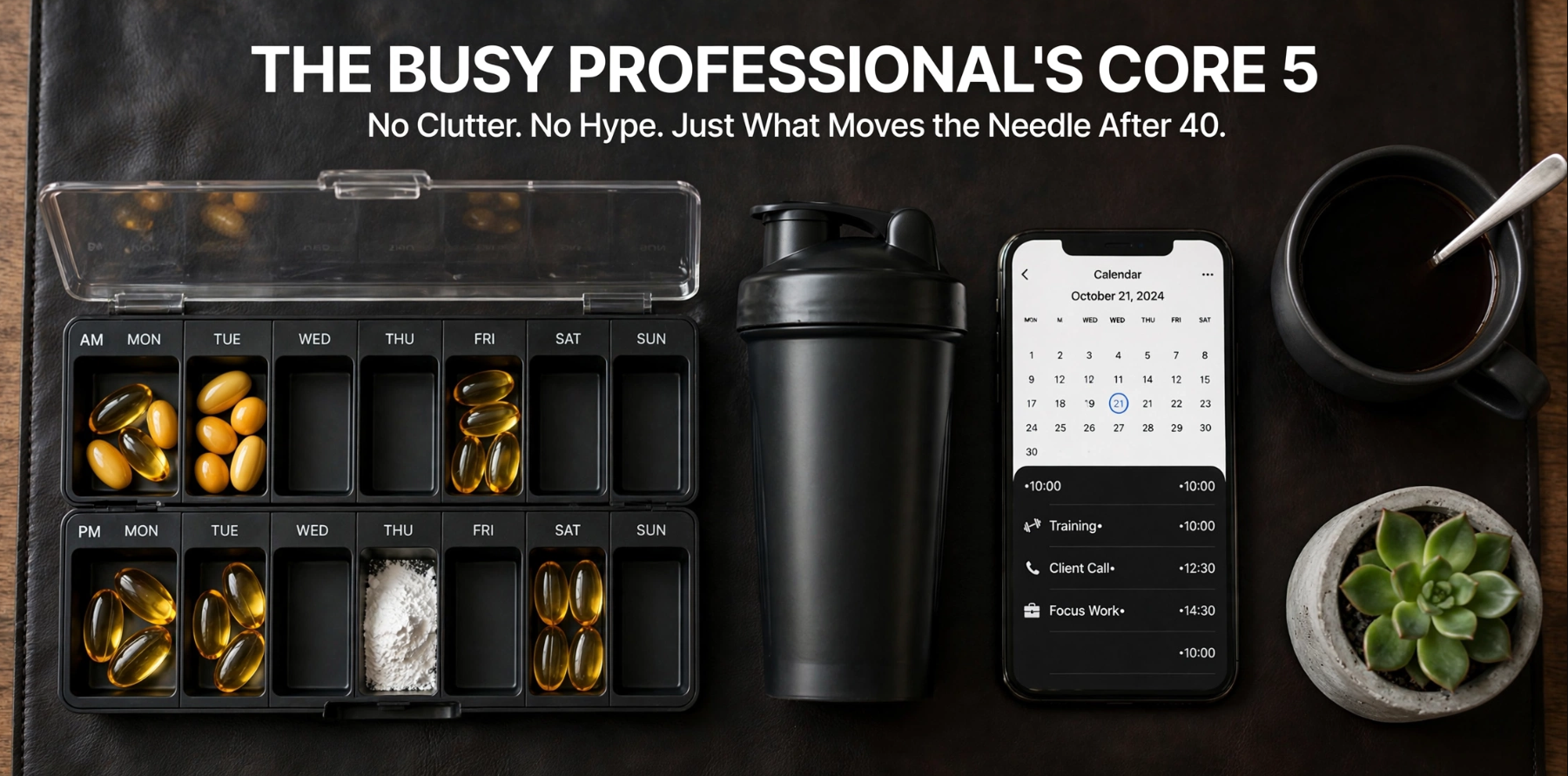
Purchase a small, compartmentalized pill organizer (the 7-day, AM/PM type) or a set of small resealable bags. Every Sunday evening, pre-fill each day’s compartments: one AM side with D3+K2, omega-3, and creatine (in a tiny baggie), and one PM side with magnesium. Place the whole week’s organizer in your work bag or carry-on. No bottles, no thinking.
The Ultralight Travel Version:
When space is extremely tight (single carry-on, overnight trip):
- D3+K2 + Omega-3: Many brands offer combined D3+K2+Omega-3 softgels in a single pill. This isn’t ideal for separation of dosing, but for 2–3 days, it maintains adherence.
- Magnesium: Bring a small tube of magnesium glycinate capsules; count out exactly how many you need.
- Creatine: Bring a single 5-gram stick pack or a tiny resealable bag of powder. Many companies now sell creatine in travel-friendly single-serve sachets.
- Protein: Pack a few EAA capsules or individual protein packets. If flying, dry powder under 12 ounces is TSA-approved.
The “All-Nighter” Exception Protocol:
If you’re pulling a rare late work night and will sleep poorly, you still take the morning stack when you wake, regardless of the hour. Magnesium is taken whenever you actually go to bed, even if that’s 3 AM. Creatine and protein are especially critical during sleep deprivation—creatine helps maintain cognitive function, and protein preserves muscle that high cortisol would otherwise catabolize. Do not skip.
Section 4: What This Stack Replaces (Stop Wasting Money on These)
One of the greatest benefits of the Core Five is that it allows you to confidently stop buying the following categories of supplements, which collectively drain hundreds of dollars per year from busy professionals with negligible return:
- Multivitamins: A low-quality, once-daily multi delivers inadequate doses of active nutrients (often using poorly absorbed forms like magnesium oxide and folic acid) and provides a false sense of security. The Core Five target the specific deficiencies that matter.
- Generic “Stress” or “Adrenal Support” Blends: These are often proprietary blends with undisclosed doses of ashwagandha, rhodiola, or holy basil alongside filler herbs. If you have a specific stress profile that benefits from adaptogens, buy the standardized, single-ingredient extract and add it after you’ve established the foundation. (See our Adaptogens article for guidance.)
- “Brain Focus” Nootropic Stacks: Most contain caffeine, theanine, and a sprinkle of underdosed racetams or herbal extracts. Creatine and omega-3s provide the foundational brain energy support; magnesium and glycine from protein support neurotransmitter balance.
- Greens Powders: While whole-food concentrates aren’t harmful, they do not replace vegetables and are a poor value for the nutrients provided. Spend that money on frozen spinach and broccoli instead.
- Collagen (as a standalone muscle-support supplement): Collagen is great for joints and skin, but it is not a complete protein for muscle maintenance. The Core Five’s protein powder or EAAs cover muscle, and collagen can be added later if joint pain is a specific issue.
Section 5: What to Expect—A Timeline for the Skeptical Professional
You’re results-driven. You want to know when you’ll feel the return on this investment. Here’s a realistic, no-hype timeline for a 45-year-old professional who starts the Core Five while maintaining their existing (imperfect) diet and exercise routine.
| Timeframe | Subjective Effects | Physiological Changes |
|---|---|---|
| Week 1–2 | Possibly more vivid dreams or a slight “heaviness” of sleep from magnesium glycinate. No dramatic energy change yet. | Magnesium begins to support GABA activity; creatine begins to saturate muscles. |
| Week 3–4 | Afternoon brain fog may lift slightly. Sleep feels more restorative; you wake less often. Workout recovery improves mildly—less next-day soreness. | Muscle creatine stores approaching saturation; omega-3s begin to shift inflammatory balance. |
| Week 5–8 | Tangible cognitive clarity: you can sustain focus through long meetings without needing a 3 PM coffee. Joint stiffness after sitting decreases. You feel “sharper” but not wired. | Tissue EPA/DHA levels rising; vitamin D approaching optimal range if previously low; anabolic resistance partially overcome by consistent leucine dosing. |
| 3–6 Months | Consistent energy across the day. Improved body composition if paired with resistance training (less abdominal fat, more visible muscle tone). Fewer sick days. | Full benefit realized: optimized nutrient status, reduced systemic inflammation, preserved lean mass, and enhanced mitochondrial efficiency. |
The key variable is your starting point. If you’re profoundly vitamin D deficient (many desk-bound professionals are), the improvement in mood and immunity will be faster and more noticeable. If you already eat salmon twice a week and take vitamin D, the effects will be subtler but still cumulative.
Section 6: FAQ — Quick Answers for the Time-Crunched Reader
Q: Can I really skip a multivitamin and just take these five?
A: Yes. The Core Five fill the most common, clinically significant nutrient gaps after 40. A multi delivers trace amounts of dozens of nutrients, many of which you’re already getting from food. The Core Five deliver therapeutic doses of the nutrients with the strongest evidence for cognitive, musculoskeletal, and metabolic support.
Q: Is this stack safe with my blood pressure medication or statin?
A: Magnesium and omega-3s can mildly lower blood pressure, which is generally additive and beneficial with antihypertensives, but you should monitor for lightheadedness. Omega-3s and statins are commonly co-prescribed. CoQ10 is often added with statins (see our earlier article). Creatine and protein have no known interactions. Always inform your doctor.
Q: I can’t swallow large pills. What are my options?
A: Many of these supplements are available as powders (creatine, magnesium glycinate, protein) or in small softgels (D3+K2, omega-3s). Magnesium glycinate powder tastes slightly sweet and can be dissolved in warm water as a nighttime tea. Liquid omega-3s are also available.
Q: What if I miss a day?
A: Nothing bad happens. Tissue saturation of creatine and omega-3s means missing one day has negligible impact. Just resume the next day. Do not double dose.
Q: I already eat very clean. Do I still need the Core Five?
A: Possibly not all of them. If you eat fatty fish 4–5 times per week, you may not need an omega-3 supplement. If you work outdoors in a sunny climate, your vitamin D might be adequate (a blood test can confirm). The Core Five are a baseline; personalize based on your diet, lifestyle, and blood work.
The VigorForty Take
You don’t need more supplements. You need the right supplements, taken consistently, with zero mental overhead. The Core Five—D3+K2, magnesium glycinate, omega-3s, creatine, and protein/EAAs—are the only daily pills and powders that have the evidence, the safety profile, and the practical convenience to earn a permanent spot in your busy life. Set up your weekly pill organizer, stash a shaker cup at work, and reclaim the mental energy you’ve been spending on supplement confusion. Build the foundation, protect your brain and body, and pour the rest of your energy into your work, your family, and the things that actually matter.
Read Realated Articles
- The Complete Guide to Heart Health: Beyond Omega-3s—CoQ10, Magnesium, Potassium, and Nitric Oxide Support After 40
- The Complete Guide to Eye Health: Lutein, Zeaxanthin, Astaxanthin, and Omega-3s for Protecting Your Vision After 40
- The Complete Guide to Anti-Aging Skin, Hair, and Nails: Collagen, Biotin, Silica, and Antioxidants for a Vibrant Appearance After 40
- The Busy Parent’s Supplement Guide: Staying Energized, Resilient, and Healthy While Raising Kids After 40
- Supplements for Brain Fog and Mental Clarity: Phosphatidylserine, Bacopa Monnieri, and Lion’s Mane—What Actually Works After 40
- The Complete Guide to Digestive Health: Probiotics, Prebiotics, Digestive Enzymes, and Gut-Healing Nutrients After 40
- Supplements for Osteoarthritis: A Natural Pain Management Protocol That Protects Your Joints After 40
- The Sleep-Supplement Connection: Magnesium, Glycine, L-Theanine, and Melatonin—A Complete Protocol for Restorative Rest After 40
- The Ultimate Guide to Healthy Aging: How to Build Your Personalized Supplement Plan at 40, 50, and 60
- Menopause Beyond the Basics: Mood, Bone, Brain, and Sleep Support for the American Woman Over 40
- Selenium, Zinc, and Iodine: The Trace Minerals That Support Thyroid, Immunity, and Longevity After 40
- TSA Rules for Supplements: Traveling with Pills, Powders, and Liquids as an American Over 40
- CoQ10 After 40: Ubiquinone vs. Ubiquinol, Statin Depletion, and Mitochondrial Support
- The VigorForty Guide to Third-Party Testing: USP, NSF, ConsumerLab, and How to Verify Your Supplements Are Safe
- The VigorForty Yearly Blood Work Blueprint: Exactly What to Test and When for Optimal Health After 40
- Metabolic Health Supplements: Berberine, Inositol, and Chromium for Blood Sugar Control After 40
- The Complete Guide to Electrolytes for the Active American Over 40: Sodium, Potassium, Magnesium, and Hydration Science
- Supplement-Drug Interactions Every American Over 40 Must Know: Blood Thinners, Antidepressants, BP Meds, and Statins
- The Busy Professional’s Core 5 Supplements: No Clutter, No Hype, Just What Actually Moves the Needle After 40
- Glycine + NAC: The Under-the-Radar Longevity Stack for Glutathione, Detoxification, and Deep Sleep After 40
- Adaptogens Worth Your Money: Ashwagandha, Rhodiola, and Holy Basil—Evidence and Safe Use for the Stressed 40+ American
- Best Supplements for Joint Health After 40: Curcumin, Collagen, MSM, and Glucosamine—Ranked by Evidence
- NAD+ Precursors (NMN & NR) in 2026: Current Evidence, US Legal Status, and What’s Worth Your Money
- Budget-Friendly Blood Tests to Check Your Actual Micronutrient Gaps (And Skip the Guesswork)
- The Perimenopause Supplement Protocol: Bone, Brain, and Sleep Support for American Women Over 40
- How to Read a Supplement Facts Panel Like a Dietitian: The 5-Step Method for Over-40 Americans
- Protein Powder After 40: Whey, Plant, Collagen, and the Anabolic Threshold You Must Know
- Omega-3s Decoded: EPA, DHA, and How to Read a Fish Oil Label for the Over-40 American
- Creatine After 40: Not Just for Bodybuilders—Brain, Muscle, and Longevity Science
- 5 Magnesium Myths Busted: Glycinate, Citrate, Oxide, and Which One You Actually Need
- Vitamin D3 + K2: The Over-40 American’s Protocol for Bones, Arteries, and Immunity
- The ‘Vigor Five’: Core Daily Supplements for Energy and Longevity After 40
- How Much Protein Do You Actually Need? (The Definite Guide for Satiety and Muscle Retention)
- The Ultimate Guide to Nutrient Density: How to Eat Real Food in America