
Author: Vigor Forty Editorial Team
Medically Reviewed By: Editorial Review Board
Disclaimer: This article is for informational purposes only and is not a substitute for professional medical advice. Read our full Medical Disclaimer.
📌 Key Takeaways
- Adaptogens Help Your Body Handle Stress: They modulate the hypothalamic-pituitary-adrenal (HPA) axis and the sympatho-adrenal system, helping to normalize cortisol, reduce fatigue, and restore balance without overstimulating or sedating you.
- Ashwagandha Is the Cortisol Tamer: The most researched adaptogen for anxiety and sleep; clinical trials show it significantly lowers serum cortisol, reduces stress scores, and improves sleep quality—especially in chronically stressed adults.
- Rhodiola Rosea Fights Burnout: Best taken in the morning, rhodiola reduces mental fatigue, improves cognitive performance under pressure, and modestly enhances physical endurance. It’s the “get it done” adaptogen.
- Holy Basil (Tulsi) Calms the Mind and Body: A gentler, everyday tonic that lowers stress biomarkers, balances blood sugar, and supports immune function. Ideal for those who feel “wired but tired.”
- Quality and Standardization Matter Immensely: Adaptogen products vary wildly in potency. Look for standardized extracts (withanolides for ashwagandha, rosavins/salidroside for rhodiola, ursolic acid for tulsi) and third-party testing. Avoid unstandardized root powders.
- Cycling and Personalization Are Key: Adaptogens are not intended for indefinite continuous use. Cyclic use (e.g., 5 days on, 2 days off; or 8 weeks on, 2 weeks off) maintains effectiveness and respects the body’s dynamic feedback systems.
Introduction: The Modern Stress Epidemic Hits Hardest After 40
Between career pressures, caregiving demands, financial worries, and the relentless pace of digital life, the average American over 40 is carrying a chronic stress load that would have been unrecognizable a century ago. The body’s stress response—designed for short bursts of survival—is now switched on semi-permanently. The result: elevated cortisol, fragmented sleep, stubborn belly fat, foggy thinking, and a deep, dragging fatigue that sleep alone doesn’t fix.
Adaptogenic herbs offer a distinct promise: they don’t simply sedate you like a sleeping pill, nor do they stimulate you like caffeine. Instead, they help the body mount a more resilient, balanced response to stress, normalizing the HPA axis and protecting against the wear and tear of chronic stress. The concept originates from Ayurveda and Traditional Chinese Medicine, but modern clinical trials have validated specific adaptogens for specific outcomes.
The problem is the adaptogen market is flooded with cheap root powders, unverified extracts, and multi-herb blends that hide weak doses inside proprietary formulas. This article brings rigor to the category. We’ll examine the three best-evidenced adaptogens for 40+ Americans—ashwagandha, rhodiola, and holy basil—giving you precise guidance on what works, what doesn’t, and how to use each safely.
Section 1: How Adaptogens Actually Work—Not Magic, Just Biology
The term “adaptogen” was coined in the mid-20th century by Soviet scientist Dr. Nikolai Lazarev to describe substances that increase non-specific resistance to stress. To qualify, an herb must be:
- Non-toxic at normal doses.
- Non-specific—helping the body resist a wide range of stressors (physical, chemical, biological).
- Normalizing—restoring physiological function toward balance, regardless of whether it’s too high or too low.
At the molecular level, adaptogens work primarily through the hypothalamic-pituitary-adrenal (HPA) axis and the sympatho-adrenal system. They modulate the release of cortisol from the adrenal glands, protect neurons from stress-induced damage, support mitochondrial energy production, and regulate the expression of heat shock proteins that protect cells. Unlike pharmaceutical anxiolytics that directly bind GABA receptors, adaptogens gently nudge the system back toward homeostasis over days and weeks.
For the 40+ American, this is especially relevant. With age, the HPA axis becomes more rigid, cortisol clearance slows, and the brain’s sensitivity to stress hormones increases. Adaptogens, when used correctly, can soften that edge.
Section 2: Ashwagandha (Withania somnifera) — The Cortisol Tamer
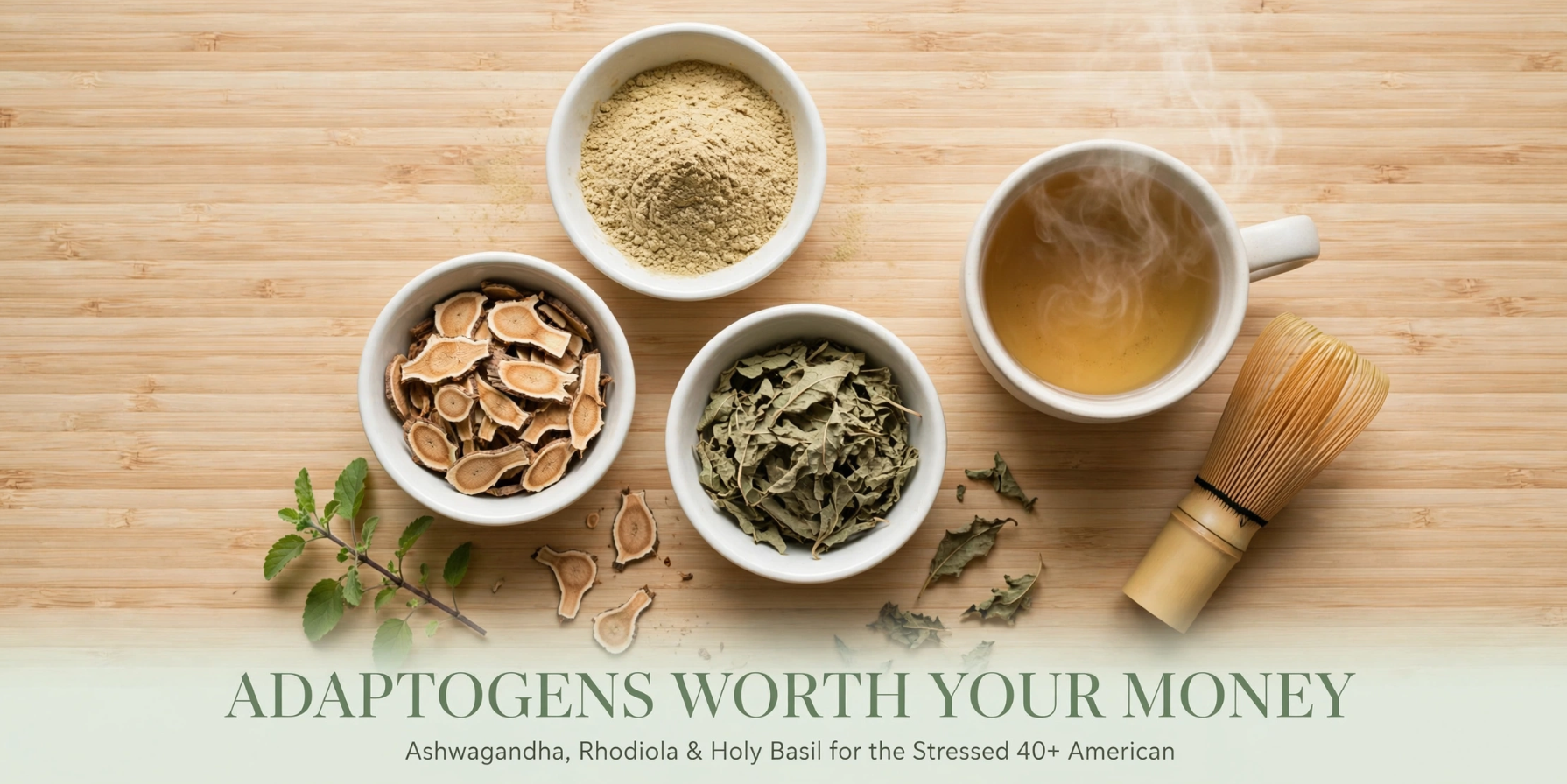
What It Is: Ashwagandha is a foundational herb in Ayurveda, often called “Indian ginseng” (though botanically unrelated). The root and leaf contain bioactive compounds called withanolides that exert anxiolytic, anti-inflammatory, and neuroprotective effects.
Mechanism: Ashwagandha reduces cortisol by modulating the HPA axis, likely by influencing GABA receptors (without directly binding them like benzodiazepines) and by reducing the activity of the enzyme 11β-HSD1 that reactivates cortisol in tissues. It also possesses antioxidant properties and may support thyroid hormone conversion.
Clinical Evidence:
- A 2019 double-blind, placebo-controlled trial of 60 adults with self-reported chronic stress found that 240 mg of a standardized ashwagandha extract (Sensoril®) daily reduced morning serum cortisol by 23% and significantly lowered scores on the Perceived Stress Scale and Hamilton Anxiety Scale after 60 days.
- A 2021 study in perimenopausal women specifically found that 300 mg of root extract twice daily improved sleep quality, reduced hot flash severity, and lowered anxiety scores over 8 weeks.
- Multiple meta-analyses confirm ashwagandha’s modest but reliable effect on anxiety, stress, and sleep—with effect sizes comparable to some anti-anxiety medications but with far fewer side effects.
Dose: 300–600 mg of a root extract standardized to ≥5% withanolides, taken in divided doses (morning and evening) or as a single evening dose if sleep is the primary target. Sensoril® and KSM-66® are two well-studied trademarked extracts. Start low (300 mg) for one week before increasing.
Safety and Contraindications: Ashwagandha is generally well-tolerated. Rare side effects include mild GI upset and drowsiness. It is a nightshade, so individuals with nightshade sensitivities or autoimmune conditions (especially those with lupus or rheumatoid arthritis) should use caution. Ashwagandha can interact with thyroid hormones (increasing T4 levels), sedatives, and immunosuppressants. Pregnant women should avoid it. VigorForty recommends cycling: 8 weeks on, 2 weeks off, or 5 days on, 2 days off.
VigorForty Verdict: The strongest adaptogen for high-stress, high-anxiety individuals who can’t shut off their minds. Ideal for the 40-something executive or caregiver burning the candle at both ends.
Section 3: Rhodiola Rosea (Golden Root) — The Fatigue Fighter
What It Is: Rhodiola is a succulent plant growing in cold, mountainous regions of Europe and Asia. Its root contains rosavins, salidroside, and tyrosol—compounds that enhance physical and mental resilience.
Mechanism: Rhodiola acts primarily by modulating the sympathetic nervous system and improving cellular energy metabolism. It increases the synthesis and resynthesis of ATP, enhances oxygen utilization, and protects neurons from oxidative stress. It also appears to influence serotonin, dopamine, and norepinephrine levels in stress-sensitive brain regions.
Clinical Evidence:
- A 2012 systematic review of 11 human trials concluded that rhodiola extract significantly reduces mental fatigue and improves cognitive performance under stress, with benefits evident after just 3–7 days of use.
- A 2017 double-blind trial in 100 adults with burnout symptoms found that 400 mg of rhodiola extract (SHR-5®) for 12 weeks significantly improved emotional stability, motivation, concentration, and overall perceived stress compared to placebo.
- Physical performance studies show modest improvements in time to exhaustion and oxygen uptake, though effects are less pronounced than for mental fatigue.
Dose: 200–600 mg daily, standardized to 3% rosavins and 1% salidroside. Take in the morning or early afternoon, as rhodiola can be mildly stimulating and may interfere with sleep if taken late in the day. Do not take on an empty stomach if prone to mild dizziness.
Safety and Contraindications: Rhodiola is generally safe and well-tolerated. Some individuals experience mild jitteriness, dry mouth, or dizziness at the start. It should be avoided in individuals with bipolar disorder as it may precipitate manic episodes in susceptible individuals. Use with caution if taking antidepressants (MAOIs, SSRIs) due to theoretical additive effects on serotonin. Cycle similarly to ashwagandha.
VigorForty Verdict: The go-to adaptogen for the “tired but wired” state—when you need to power through a demanding day but want to do it without crashing. Excellent for project deadlines, shift work, and combating the afternoon slump without caffeine.
Section 4: Holy Basil (Ocimum sanctum/Tulsi) — The Gentle Balancer
What It Is: Holy basil, or tulsi, is a sacred plant in India consumed as a tea, powder, or extract for thousands of years. Unlike ashwagandha and rhodiola, tulsi is a gentle, everyday tonic suitable for long-term use.
Mechanism: Tulsi contains eugenol, ursolic acid, and rosmarinic acid—compounds that reduce cortisol, lower blood glucose, and exert antimicrobial and immune-modulating effects. It acts as a mild COX-2 inhibitor (anti-inflammatory) and protects organs from chemical and heavy metal stress.
Clinical Evidence:
- A 2017 randomized trial in adults with generalized anxiety disorder found that 500 mg of tulsi extract twice daily for 60 days significantly reduced anxiety, depression, and stress scores, with results comparable to a lower-dose adaptogen comparator.
- Multiple smaller trials show that tulsi improves fasting glucose, lipid profiles, and markers of oxidative stress, making it particularly interesting for the metabolically stressed 40+ individual with borderline blood sugar or cholesterol.
- Tulsi also supports immune function—reducing the duration and severity of upper respiratory infections, relevant for the working American exposed to constant low-grade pathogens.
Dose: 500–1,000 mg of a standardized leaf extract (ursolic acid ≥2.5%) or 2–3 cups of strong tulsi tea daily. Tulsi is the gentlest adaptogen and can be taken long-term without cycling, though occasional breaks are still prudent.
Safety: Very safe. Rare mild GI upset. Tulsi may have a mild blood-thinning effect and should be used cautiously with anticoagulants. It may also mildly lower blood glucose; diabetics on medication should monitor levels.
VigorForty Verdict: The perfect adaptogen for those who don’t have a single overwhelming stressor but feel the daily “grind” wearing them down. It’s also the best choice for those who want a gentle, long-term tonic without noticeable psychoactive effects. Great as a tea in the evening wind-down ritual.
Section 5: Choosing Your Adaptogen Based on Your Stress Profile
Not every adaptogen fits every person. Match your primary symptom cluster.
| Stress Profile | Best Adaptogen | Why |
|---|---|---|
| Wired and Anxious at Night, Can’t Shut Off | Ashwagandha (evening dose) | Lowers cortisol, supports GABA-ergic calm, and improves sleep architecture. |
| Daytime Fatigue, Brain Fog, Burnout | Rhodiola Rosea (morning dose) | Enhances mental stamina and energy without overstimulation. |
| General Life Stress, Mild Anxiety, “Worn Down” | Holy Basil (Tulsi) (daily tonic) | Gently lowers stress markers, balances blood sugar, and supports immune resilience. |
| Both Daytime Fatigue and Nighttime Anxiety | Rhodiola AM + Ashwagandha PM | Synergistic coverage of the full circadian stress cycle. Use after establishing tolerance to each individually. |
Important: Do not start both simultaneously. Introduce one adaptogen for 2 weeks, assess tolerance and effect, then add the second if needed.
Section 6: How to Avoid the Junk — Reading an Adaptogen Label
Adaptogen products are among the most adulterated in the supplement industry. Follow these rules:
- Demand Standardization: “Ashwagandha root powder 500 mg” is useless unless you know the withanolide content. Look for “standardized to ≥5% withanolides” or a trademarked extract with published clinical data (Sensoril®, KSM-66®).
- Look for Latin Names: Ashwagandha should be labeled Withania somnifera. Rhodiola: Rhodiola rosea. Holy basil: Ocimum sanctum or Ocimum tenuiflorum. This confirms species identity.
- No Proprietary Blends: A product that lists an “Adaptogen Complex 1,000 mg” with five herbs but no individual doses is a red flag. You need to know exactly how much of each standardized extract you’re taking.
- Third-Party Testing: USP, NSF, ConsumerLab, or a publicly accessible certificate of analysis from the manufacturer. Adaptogens sourced from certain regions (China, India) can be contaminated with heavy metals or pesticides if not tested.
Section 7: FAQ — Your Top Adaptogen Questions
Q: Can I take adaptogens with my prescription antidepressant or anti-anxiety medication?
A: Ashwagandha and rhodiola can influence serotonin and GABA pathways, theoretically interacting with SSRIs, SNRIs, MAOIs, and benzodiazepines. Holy basil has fewer known interactions. Always consult your prescribing physician and pharmacist. Do not stop your medication abruptly in favor of adaptogens; these herbs are adjuncts, not replacements for prescribed treatment.
Q: Are adaptogens habit-forming?
A: No. Unlike benzodiazepines or opioids, adaptogens do not cause dependence or withdrawal. However, your body may adjust to their presence; cycling maintains effectiveness and prevents tachyphylaxis (diminishing response).
Q: Can I drink coffee with rhodiola?
A: Yes, but start with half your usual caffeine dose to assess your combined response. Rhodiola amplifies mental energy, and some individuals feel overstimulated when combining full doses. Adjust accordingly.
Q: How long until I feel results?
A: Rhodiola: often within 3–10 days for mental fatigue. Ashwagandha: 2–4 weeks for anxiety and sleep improvement. Holy basil: 4–8 weeks for baseline stress reduction. Be patient; adaptogens are slow builders, not instant hits.
Q: Can I take all three adaptogens together?
A: It’s unnecessary and expensive. Master one adaptogen based on your stress profile before considering a second. Some individuals use a morning rhodiola and evening ashwagandha protocol successfully, but start one at a time.
The VigorForty Take
Adaptogens are not miracle herbs, but they are the closest thing nature offers to a “stress vaccine”—helping your body cope more gracefully with the unrelenting pressures of modern American life after 40. Ashwagandha is your sleep-and-calm ally. Rhodiola is your crisp, fatigue-defeating morning kick. Holy basil is the gentle daily companion for those who simply need to feel more resilient. Choose the one that matches your stress profile, buy a standardized, third-party tested extract, and cycle it intelligently. Pair it with the Vigor Five, a whole-foods diet, and consistent sleep hygiene, and you’ll give your stressed-out nervous system the reset it’s been begging for.
Read Realated Articles
- The Complete Guide to Heart Health: Beyond Omega-3s—CoQ10, Magnesium, Potassium, and Nitric Oxide Support After 40
- The Complete Guide to Eye Health: Lutein, Zeaxanthin, Astaxanthin, and Omega-3s for Protecting Your Vision After 40
- The Complete Guide to Anti-Aging Skin, Hair, and Nails: Collagen, Biotin, Silica, and Antioxidants for a Vibrant Appearance After 40
- The Busy Parent’s Supplement Guide: Staying Energized, Resilient, and Healthy While Raising Kids After 40
- Supplements for Brain Fog and Mental Clarity: Phosphatidylserine, Bacopa Monnieri, and Lion’s Mane—What Actually Works After 40
- The Complete Guide to Digestive Health: Probiotics, Prebiotics, Digestive Enzymes, and Gut-Healing Nutrients After 40
- Supplements for Osteoarthritis: A Natural Pain Management Protocol That Protects Your Joints After 40
- The Sleep-Supplement Connection: Magnesium, Glycine, L-Theanine, and Melatonin—A Complete Protocol for Restorative Rest After 40
- The Ultimate Guide to Healthy Aging: How to Build Your Personalized Supplement Plan at 40, 50, and 60
- Menopause Beyond the Basics: Mood, Bone, Brain, and Sleep Support for the American Woman Over 40
- Selenium, Zinc, and Iodine: The Trace Minerals That Support Thyroid, Immunity, and Longevity After 40
- TSA Rules for Supplements: Traveling with Pills, Powders, and Liquids as an American Over 40
- CoQ10 After 40: Ubiquinone vs. Ubiquinol, Statin Depletion, and Mitochondrial Support
- The VigorForty Guide to Third-Party Testing: USP, NSF, ConsumerLab, and How to Verify Your Supplements Are Safe
- The VigorForty Yearly Blood Work Blueprint: Exactly What to Test and When for Optimal Health After 40
- Metabolic Health Supplements: Berberine, Inositol, and Chromium for Blood Sugar Control After 40
- The Complete Guide to Electrolytes for the Active American Over 40: Sodium, Potassium, Magnesium, and Hydration Science
- Supplement-Drug Interactions Every American Over 40 Must Know: Blood Thinners, Antidepressants, BP Meds, and Statins
- The Busy Professional’s Core 5 Supplements: No Clutter, No Hype, Just What Actually Moves the Needle After 40
- Glycine + NAC: The Under-the-Radar Longevity Stack for Glutathione, Detoxification, and Deep Sleep After 40
- Adaptogens Worth Your Money: Ashwagandha, Rhodiola, and Holy Basil—Evidence and Safe Use for the Stressed 40+ American
- Best Supplements for Joint Health After 40: Curcumin, Collagen, MSM, and Glucosamine—Ranked by Evidence
- NAD+ Precursors (NMN & NR) in 2026: Current Evidence, US Legal Status, and What’s Worth Your Money
- Budget-Friendly Blood Tests to Check Your Actual Micronutrient Gaps (And Skip the Guesswork)
- The Perimenopause Supplement Protocol: Bone, Brain, and Sleep Support for American Women Over 40
- How to Read a Supplement Facts Panel Like a Dietitian: The 5-Step Method for Over-40 Americans
- Protein Powder After 40: Whey, Plant, Collagen, and the Anabolic Threshold You Must Know
- Omega-3s Decoded: EPA, DHA, and How to Read a Fish Oil Label for the Over-40 American
- Creatine After 40: Not Just for Bodybuilders—Brain, Muscle, and Longevity Science
- 5 Magnesium Myths Busted: Glycinate, Citrate, Oxide, and Which One You Actually Need
- Vitamin D3 + K2: The Over-40 American’s Protocol for Bones, Arteries, and Immunity
- The ‘Vigor Five’: Core Daily Supplements for Energy and Longevity After 40
- How Much Protein Do You Actually Need? (The Definite Guide for Satiety and Muscle Retention)
- The Ultimate Guide to Nutrient Density: How to Eat Real Food in America