
Author: Vigor Forty Editorial Team
Medically Reviewed By: Editorial Review Board
Disclaimer: This article is for informational purposes only and is not a substitute for professional medical advice. Read our full Medical Disclaimer.
📌 Key Takeaways
- Perimenopause Is a Metabolic Transition, Not Just a Hormonal One: Declining estrogen affects bone density, brain function, sleep architecture, muscle maintenance, and cardiovascular risk. A targeted supplement strategy can buffer these changes.
- The Vigor Five Remain Foundational: Vitamin D3+K2, magnesium glycinate, omega-3s, creatine monohydrate, and adequate protein are even more critical during the 4–10 year perimenopausal window.
- Three Targeted Add-Ons Matter: Collagen peptides for joint and skin integrity, ashwagandha or rhodiola for cortisol regulation and sleep, and a bioavailable B-complex for energy and methylation support round out a perimenopause-specific stack.
- Calcium Should Come from Food, Not Pills: High-dose calcium supplements increase the risk of kidney stones and arterial calcification without clearly reducing fracture risk. Prioritize yogurt, sardines, and leafy greens.
- Symptom Relief Takes Consistency: Hormonal fluctuations won’t stop overnight, but sustaining the right nutrient baseline for 8–12 weeks significantly improves hot flash severity, sleep quality, and mental clarity.
Introduction: The Transition No One Prepared You For
Perimenopause—the years leading up to menopause—typically begins in the early to mid-40s and can last anywhere from four to ten years. Estrogen and progesterone levels don’t decline smoothly; they fluctuate wildly, creating a cascade of symptoms that many women initially misattribute to stress or aging: unexplained weight gain around the midsection, relentless fatigue, brain fog, joint stiffness, and sleep that feels frustratingly shallow.
While hormone replacement therapy (HRT) is an option for some, millions of American women seek complementary nutritional strategies to manage symptoms and protect long-term health. The supplement aisle, however, is flooded with “menopause formulas” that are long on marketing and short on evidence-based dosing.
This article is your clear-eyed, science-anchored protocol. We’ll build on the Vigor Five foundation and add three targeted supplements that address the specific biological vulnerabilities of the perimenopausal transition—without overloading you with a dozen pill bottles.
Section 1: What’s Actually Happening Inside a Perimenopausal Body
Understanding the physiology helps you see why specific nutrients matter.
- Estrogen’s Protective Effect Declines: Estrogen is vasoactive (dilates blood vessels), neuroprotective, and anabolic to bone and muscle. Its withdrawal impacts nearly every system.
- Cortisol Becomes Unopposed: Progesterone, which has calming GABA-ergic effects, drops first and often more abruptly. The resulting high cortisol-to-progesterone ratio drives anxiety, belly fat deposition, and nighttime awakenings.
- Bone Resorption Accelerates: The rate of bone breakdown outpaces bone formation for the first time in decades, leading to a loss of up to 20% of bone density in the years surrounding menopause.
- Muscle Protein Synthesis Slows Further: Anabolic resistance we’ve discussed for all 40+ adults is compounded by estrogen loss, making protein intake and resistance training non-negotiable.
- Thermoregulation Shifts: The hypothalamus, which regulates body temperature, becomes more sensitive to small changes, triggering hot flashes and night sweats.
A supplement protocol for perimenopause must therefore support bone mineralization, buffer the stress response, preserve muscle mass, reduce systemic inflammation, and provide the raw materials for neurotransmitters that support mood and sleep.
Section 2: The Foundation — Why the Vigor Five Are Even More Critical Now
If you’ve read our Vigor Five series, you know the core daily stack: D3+K2, magnesium glycinate, omega-3s, creatine monohydrate, and protein. In perimenopause, each gains extra relevance.
| Supplement | Perimenopause-Specific Role |
|---|---|
| Vitamin D3 + K2 | Directs calcium into bones at a time of rapid bone loss. D3 also modulates immune function, which can flare as estrogen drops. |
| Magnesium Glycinate | Supports GABA activity to calm the nervous system, eases muscle tension and cramps, and aids the sleep that hot flashes disrupt. |
| Omega-3s (EPA/DHA) | Reduces systemic inflammation that worsens joint pain and mood instability. EPA in particular supports mood and hot flash severity reduction in some studies. |
| Creatine Monohydrate | Combats sarcopenia and cognitive fatigue. Emerging evidence suggests creatine may also help maintain bone density when combined with resistance exercise. |
| Protein Powder (or EAAs) | Critical for hitting the 30–40g per meal leucine threshold to counter anabolic resistance, especially since appetite can fluctuate. |
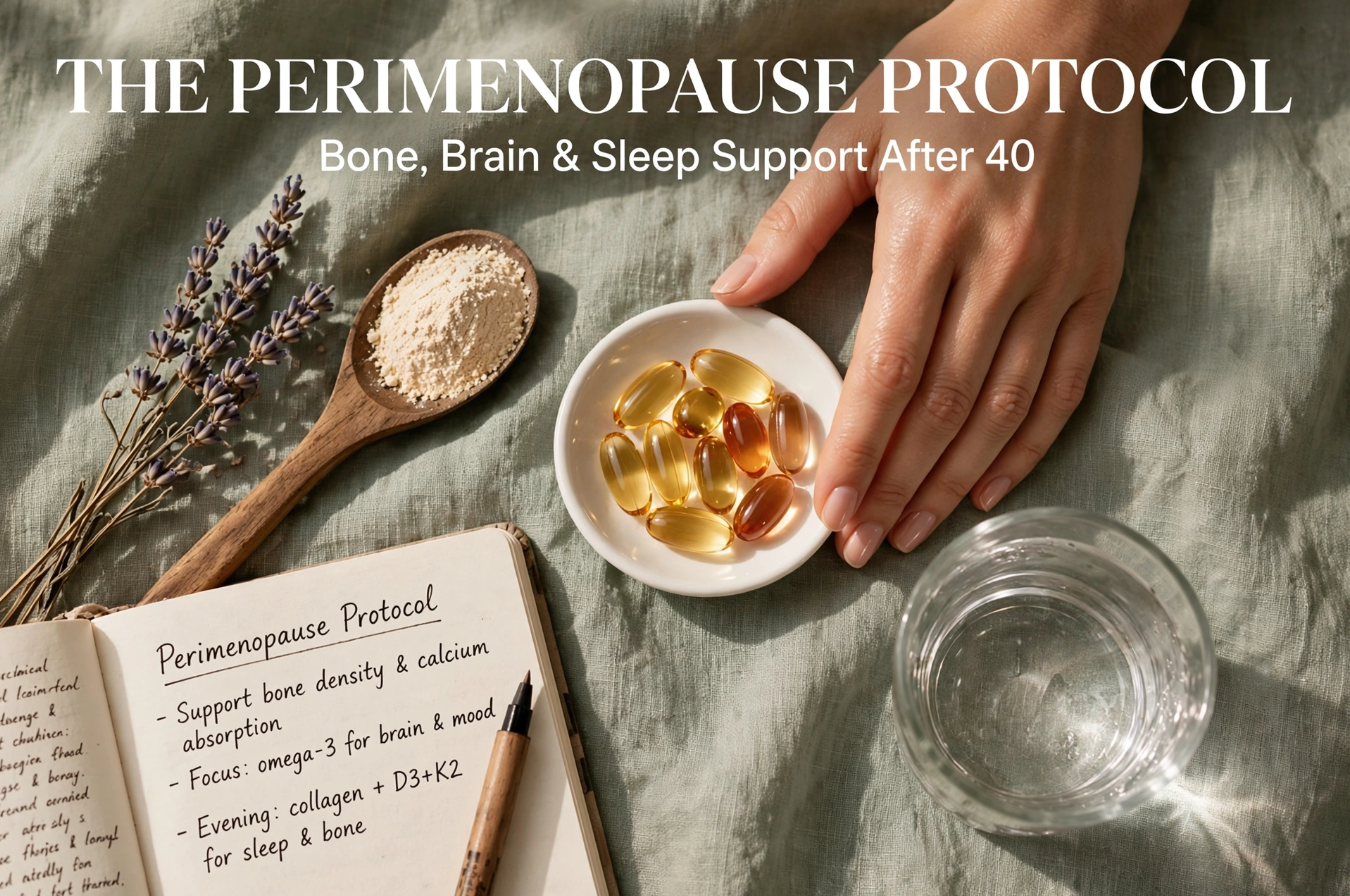
Baseline Protocol: Continue with the standard Vigor Five dosages: 2,000–4,000 IU D3+K2, 200–400 mg magnesium glycinate at night, 1,000–2,000 mg EPA+DHA, 5g creatine, and 25–40g protein powder as needed to hit daily targets. If you’re not already on these, start here for at least 4 weeks before adding anything else.
Section 3: Three Targeted Add-Ons for Perimenopause
Once the foundation is solid, these three supplements address the most disruptive symptoms with solid evidence.
3.1 Collagen Peptides (Hydrolyzed Type I & III)
Why: Estrogen is a key regulator of collagen synthesis in skin, joints, and connective tissue. As estrogen declines, collagen production drops sharply—leading to creaky joints, thinner skin, and the sudden appearance of fine lines. Collagen peptides provide the specific amino acids (glycine, proline, hydroxyproline) that serve as building blocks for the body’s own collagen matrix.
Evidence: A 2019 randomized controlled trial in postmenopausal women found that 5 grams of hydrolyzed collagen daily for 12 months significantly increased bone mineral density at the femoral neck and improved markers of bone turnover. Multiple studies show improvements in skin elasticity and joint pain with 10 grams per day over 8–12 weeks.
Dose: 10–15 grams of hydrolyzed collagen peptides daily. Unflavored powder dissolves easily in coffee, oatmeal, or a morning protein shake. Look for grass-fed bovine or wild-caught marine sources, with third-party purity testing.
Important Note: Collagen is not a complete protein for muscle. Do not count it toward your daily muscle-building protein target. Think of it as a targeted joint, skin, and bone matrix supplement.
3.2 Ashwagandha (Withania somnifera) — The Cortisol Modulator
Why: Perimenopause often brings a heightened stress response—waking at 3 AM with a racing mind, feeling “wired but tired.” Ashwagandha is an adaptogenic herb that has been shown in multiple clinical trials to lower serum cortisol levels and improve sleep quality in stressed but otherwise healthy adults. It also modestly supports thyroid function, which can become sluggish in perimenopause.
Evidence: A 2019 double-blind, placebo-controlled study of 60 adults found that 240 mg of a standardized ashwagandha extract (Sensoril®) significantly reduced perceived stress and cortisol levels over 60 days. Another 2021 study in perimenopausal women specifically found improvements in sleep quality and reduced hot flash severity with 300 mg of root extract twice daily.
Dose: 300–600 mg of a standardized root extract (with 5% withanolides) taken once or twice daily. Morning dosing helps manage daytime stress; evening dosing aids sleep. Start with a lower dose and cycle 5 days on, 2 days off to maintain sensitivity, or use for 8–12 weeks then assess.
Contraindications: Ashwagandha is a nightshade and may aggravate autoimmune conditions. It can also interact with thyroid medications, sedatives, and drugs metabolized by the liver. Consult your doctor if you have any relevant conditions or take prescriptions.
Alternative: If ashwagandha doesn’t suit you, Rhodiola rosea is an energizing adaptogen that combats fatigue and brain fog, dosed at 200–400 mg standardized to 3% rosavins, taken in the morning.
3.3 Methylated B-Complex — Energy, Mood, and Homocysteine Control
Why: B vitamins are cofactors in neurotransmitter synthesis, energy production, and methylation—a biochemical process that regulates DNA repair, detoxification, and neurotransmitter breakdown. During perimenopause, stress, poor sleep, and fluctuating hormones deplete B-vitamin reserves. Additionally, many women in their 40s carry genetic variants (like MTHFR) that impair the conversion of synthetic folic acid into the active methylfolate the body needs.
Evidence: Sufficient folate, B12, and B6 are associated with lower homocysteine levels—a risk marker for cardiovascular disease and cognitive decline, both of which accelerate post-menopause. Methylated forms (methylfolate, methylcobalamin, pyridoxal-5-phosphate) bypass genetic conversion issues and are directly usable.
Dose: A comprehensive B-complex that provides the active forms, not synthetic folic acid. Look for:
- Methylfolate (as L-5-MTHF) – 400 mcg
- Methylcobalamin (B12) – 1,000 mcg
- Pyridoxal-5-phosphate (B6) – 5–10 mg
- Riboflavin-5-phosphate (B2) – 10–25 mg
- Other Bs at typical RDA levels.
Take in the morning with food, as B vitamins can be mildly stimulating.
Section 4: The Complete Perimenopause Daily Supplement Schedule
This simple table integrates the Vigor Five foundation with the targeted add-ons.
| Time of Day | Supplement | Dose | Purpose |
|---|---|---|---|
| Morning (with breakfast) | Vitamin D3 + K2 | 2,000-4,000 IU D3 + 100-200 mcg K2 MK-7 | Bone, immune, mood |
| Omega-3s (EPA/DHA) | 1,000-2,000 mg combined EPA+DHA | Inflammation, mood, heart | |
| Methylated B-Complex | 1 capsule | Energy, methylation, brain | |
| Ashwagandha (if splitting dose) | 300 mg | Daytime cortisol modulation | |
| Collagen Peptides | 10-15 g in coffee/smoothie | Joints, skin, bone matrix | |
| Anytime (daily) | Creatine Monohydrate | 5 g in water/coffee | Muscle, brain, bone |
| Protein Shake (as needed) | 25-40 g protein | Hit leucine threshold | |
| Evening (before bed) | Magnesium Glycinate | 200-400 mg elemental | Sleep, anxiety, muscle relaxation |
| Ashwagandha (if single evening dose) | 300-600 mg | Cortisol reduction, sleep |
Start Low, Go Slow: If you’re new to multiple supplements, introduce one at a time over a few weeks. Begin with magnesium and D3+K2, then omega-3s, then creatine, then the perimenopause-specific add-ons. This way, you can identify exactly what’s helping and isolate any side effects.
Section 5: What Doesn’t Belong in Your Cart
The market is full of “women’s vitality” blends that are expensive and ineffective. Specifically avoid:
- High-Dose Calcium Pills (above 500 mg per serving): Calcium supplementation has not been shown to meaningfully reduce fracture risk and may increase cardiovascular risk and kidney stones. You’re far better off getting calcium from food: yogurt (300 mg/cup), canned sardines with bones (325 mg/3 oz), and cooked collard greens (270 mg/cup). The D3+K2 ensures you absorb and direct dietary calcium properly.
- Black Cohosh, Dong Quai, and Unstandardized Herbal Menopause Blends: While some women report symptom relief, the evidence is inconsistent and product quality varies wildly. These herbs can also be estrogenic and contraindicated for certain breast cancer survivors. Focus on the evidence-backed nutrients above first.
- “Night Sweat Relief” Blends with Undisclosed Proprietary Formulas: If you can’t see the exact dose, you’re flying blind.
Section 6: FAQ — Your Top Perimenopause Supplement Questions
Q: Will these supplements stop my hot flashes completely?
A: They are not a pharmaceutical replacement. Omega-3s and ashwagandha may reduce severity and frequency by lowering inflammation and cortisol, but they won’t eliminate hot flashes in most women. The goal is symptom reduction and whole-body support, not a cure.
Q: I’m on HRT. Can I still take these supplements?
A: Generally, yes. In fact, many of these supplements complement HRT by supporting bone, brain, and muscle health. Always inform your prescribing doctor, especially about the vitamin K2 and ashwagandha.
Q: Do I really need creatine? I don’t want to bulk up.
A: Creatine does not cause bulkiness in women. It supports energy production in brain and muscle cells, helping you maintain strength, cognitive clarity, and potentially bone density—without any significant increase in body size.
Q: Is soy protein or soy isoflavones a better option than these supplements?
A: Whole soy foods (edamame, tofu, tempeh) are excellent protein sources and contain phytoestrogens that may modestly reduce hot flashes. Soy isoflavone supplements show mixed results. Prioritize whole soy foods over extracts. If you choose an isoflavone supplement, select one with genistein as the primary isoflavone at a moderate dose (30–60 mg) and check with your oncologist if you have a history of estrogen-sensitive cancer.
The VigorForty Take
Perimenopause is a biological inflection point, not a disease. The right nutrients, taken consistently, can transform this transition from a period of suffering into one of proactive strength-building. The Vigor Five provide the foundation. Collagen supports your joints and bones, ashwagandha calms the cortisol storm, and a methylated B-complex keeps your brain and energy online. Pair this protocol with heavy resistance training, ample sleep, and stress management, and you’ll enter menopause stronger, not diminished.
Read Realated Articles
- The Complete Guide to Heart Health: Beyond Omega-3s—CoQ10, Magnesium, Potassium, and Nitric Oxide Support After 40
- The Complete Guide to Eye Health: Lutein, Zeaxanthin, Astaxanthin, and Omega-3s for Protecting Your Vision After 40
- The Complete Guide to Anti-Aging Skin, Hair, and Nails: Collagen, Biotin, Silica, and Antioxidants for a Vibrant Appearance After 40
- The Busy Parent’s Supplement Guide: Staying Energized, Resilient, and Healthy While Raising Kids After 40
- Supplements for Brain Fog and Mental Clarity: Phosphatidylserine, Bacopa Monnieri, and Lion’s Mane—What Actually Works After 40
- The Complete Guide to Digestive Health: Probiotics, Prebiotics, Digestive Enzymes, and Gut-Healing Nutrients After 40
- Supplements for Osteoarthritis: A Natural Pain Management Protocol That Protects Your Joints After 40
- The Sleep-Supplement Connection: Magnesium, Glycine, L-Theanine, and Melatonin—A Complete Protocol for Restorative Rest After 40
- The Ultimate Guide to Healthy Aging: How to Build Your Personalized Supplement Plan at 40, 50, and 60
- Menopause Beyond the Basics: Mood, Bone, Brain, and Sleep Support for the American Woman Over 40
- Selenium, Zinc, and Iodine: The Trace Minerals That Support Thyroid, Immunity, and Longevity After 40
- TSA Rules for Supplements: Traveling with Pills, Powders, and Liquids as an American Over 40
- CoQ10 After 40: Ubiquinone vs. Ubiquinol, Statin Depletion, and Mitochondrial Support
- The VigorForty Guide to Third-Party Testing: USP, NSF, ConsumerLab, and How to Verify Your Supplements Are Safe
- The VigorForty Yearly Blood Work Blueprint: Exactly What to Test and When for Optimal Health After 40
- Metabolic Health Supplements: Berberine, Inositol, and Chromium for Blood Sugar Control After 40
- The Complete Guide to Electrolytes for the Active American Over 40: Sodium, Potassium, Magnesium, and Hydration Science
- Supplement-Drug Interactions Every American Over 40 Must Know: Blood Thinners, Antidepressants, BP Meds, and Statins
- The Busy Professional’s Core 5 Supplements: No Clutter, No Hype, Just What Actually Moves the Needle After 40
- Glycine + NAC: The Under-the-Radar Longevity Stack for Glutathione, Detoxification, and Deep Sleep After 40
- Adaptogens Worth Your Money: Ashwagandha, Rhodiola, and Holy Basil—Evidence and Safe Use for the Stressed 40+ American
- Best Supplements for Joint Health After 40: Curcumin, Collagen, MSM, and Glucosamine—Ranked by Evidence
- NAD+ Precursors (NMN & NR) in 2026: Current Evidence, US Legal Status, and What’s Worth Your Money
- Budget-Friendly Blood Tests to Check Your Actual Micronutrient Gaps (And Skip the Guesswork)
- The Perimenopause Supplement Protocol: Bone, Brain, and Sleep Support for American Women Over 40
- How to Read a Supplement Facts Panel Like a Dietitian: The 5-Step Method for Over-40 Americans
- Protein Powder After 40: Whey, Plant, Collagen, and the Anabolic Threshold You Must Know
- Omega-3s Decoded: EPA, DHA, and How to Read a Fish Oil Label for the Over-40 American
- Creatine After 40: Not Just for Bodybuilders—Brain, Muscle, and Longevity Science
- 5 Magnesium Myths Busted: Glycinate, Citrate, Oxide, and Which One You Actually Need
- Vitamin D3 + K2: The Over-40 American’s Protocol for Bones, Arteries, and Immunity
- The ‘Vigor Five’: Core Daily Supplements for Energy and Longevity After 40
- How Much Protein Do You Actually Need? (The Definite Guide for Satiety and Muscle Retention)
- The Ultimate Guide to Nutrient Density: How to Eat Real Food in America