
Author: Vigor Forty Editorial Team
Medically Reviewed By: Editorial Review Board
Disclaimer: This article is for informational purposes only and is not a substitute for professional medical advice. Read our full Medical Disclaimer.
📌 Key Takeaways
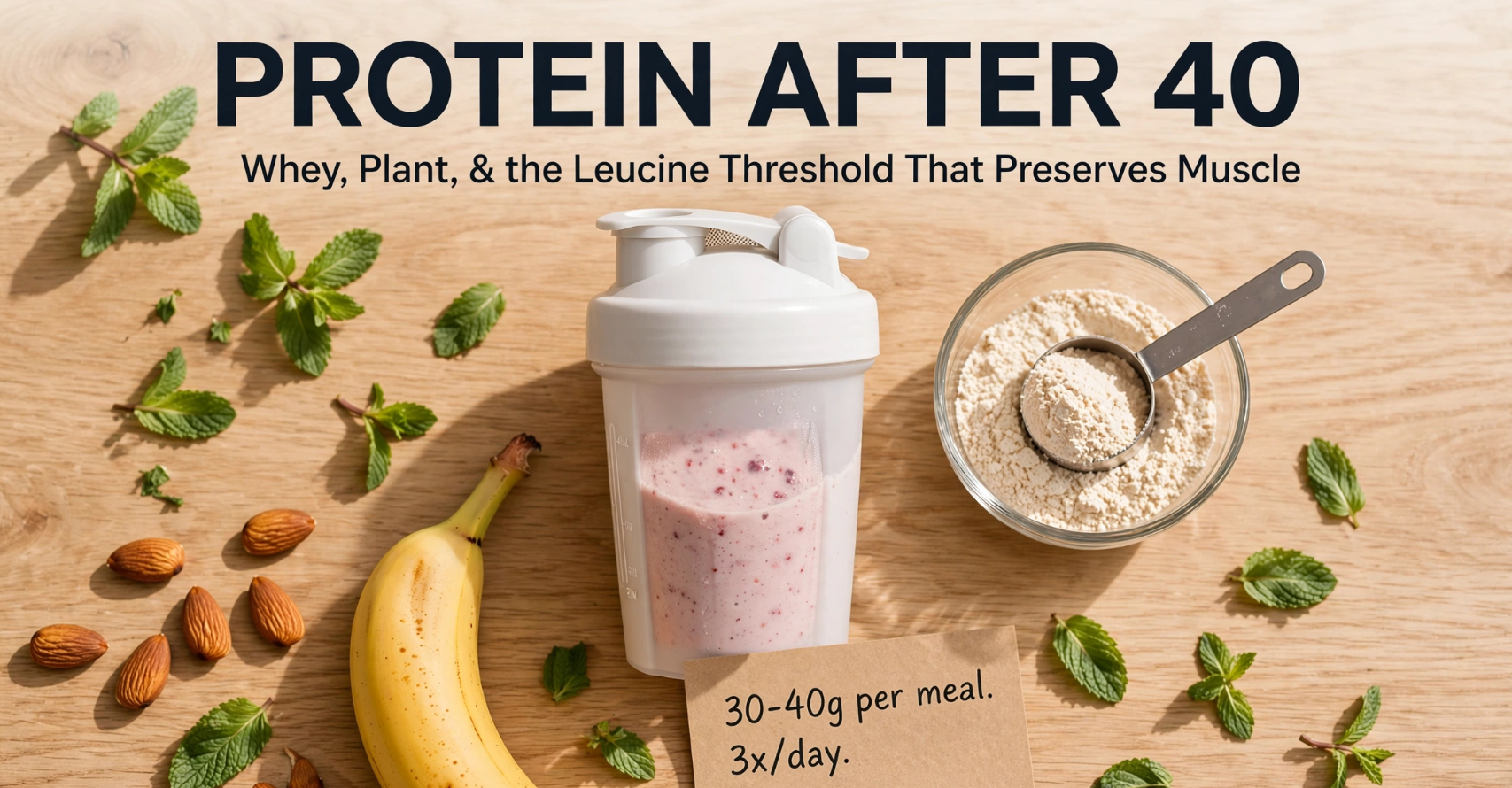
- Anabolic Resistance Is Real After 40: Your muscles become less responsive to dietary protein. To stimulate the same muscle-building signal as a 25-year-old, you need a higher per-meal dose of leucine-rich protein—approximately 30–40 grams.
- Not All Proteins Are Equal for Muscle: Whey protein isolate is the gold standard for rapid digestion and leucine content. Plant blends (pea + rice) can match it if properly formulated. Collagen is not a muscle-building protein.
- The Leucine Threshold Is Non-Negotiable: You need roughly 2.5–3 grams of leucine per meal to trigger muscle protein synthesis. Without that trigger, protein calories are used for energy, not repair.
- Third-Party Testing Is Mandatory: Protein powders are at high risk for heavy metal contamination and “amino spiking” (cheap fillers that inflate protein counts). Look for NSF for Sport, USP, or Clean Label Project certification.
- Whole Foods First, Powder Second: A protein supplement fills the gap when whole food isn’t practical—post-workout, during travel, or when appetite is low. It does not replace the nutrient density of salmon, eggs, or Greek yogurt.
Introduction: The Muscle You’re Losing Starts in Your 40s
Sarcopenia—age-related muscle loss—doesn’t announce itself with pain or obvious symptoms. It begins silently, chipping away at your lean mass at roughly 1% per year from age 40 onward. The consequence isn’t just a slower metabolism or less strength in the gym. Loss of muscle mass correlates directly with loss of independence, poorer metabolic health, increased fall risk, and higher all-cause mortality.
The primary countermeasure is resistance training. But training without adequate protein is like laying bricks with no mortar. After 40, your body develops something called anabolic resistance—the same amount of protein that once stimulated robust muscle repair now produces a muted response. To overcome this, you need strategic protein dosing, specifically targeting the leucine threshold that flips the muscle-building switch.
A protein supplement—whether a whey shake, a plant blend, or essential amino acids—provides a convenient, measurable way to consistently hit that threshold, especially when life is busy and whole-food meals are rushed or skipped. This article is your complete guide to choosing, dosing, and safely using protein powder after 40.
Section 1: Why Protein Becomes a Bigger Deal After 40
Three physiological changes converge to make protein a higher priority in middle age:
1. Anabolic Resistance
Skeletal muscle in a 45-year-old shows a blunted response to lower doses of protein. The cellular machinery (mTOR pathway) that signals “build and repair” simply requires a stronger stimulus. Research consistently shows that while a 20-something can maximally stimulate muscle protein synthesis with 20 grams of high-quality protein, a person over 40 needs 30–40 grams per meal, providing at least 2.5–3 grams of leucine.
2. Declining Digestion and Appetite
Stomach acid production can decrease with age, slightly impairing protein digestion. Additionally, busy schedules, stress, and shifts in hunger hormones often lead to skipped meals or carb-heavy, protein-poor lunches. The protein powder becomes a practical tool to bridge those gaps without requiring a full sit-down meal.
3. Hormonal Shifts
Perimenopause in women brings a decline in estrogen, which is anabolic to muscle. Men experience a gradual decline in testosterone. These hormonal shifts accelerate muscle loss unless countered by progressive resistance exercise and higher protein intake.
The consensus among sports nutrition and aging researchers is that adults over 40 should aim for 1.6–2.2 grams of protein per kilogram of body weight (0.73–1.0 g/lb) daily, spread across three to four meals, each containing at least 30–40 grams of protein.
Section 2: The Protein Powder Landscape — Whey, Casein, Plant, and Collagen
Navigating the protein aisle requires understanding what each source delivers—and what it doesn’t.
Whey Protein (Isolate and Concentrate)
- Source: Milk, separated during cheese production.
- Digestion Speed: Fast; amino acids peak in the blood within 60–90 minutes.
- Leucine Content: Highest among proteins, typically 10–12% leucine by weight. A 30-gram serving delivers 3+ grams of leucine easily.
- Best For: Post-workout recovery, breakfast shakes, any time rapid amino acid delivery is desired.
- Considerations: Whey concentrate contains small amounts of lactose and fat; whey isolate is >90% protein with minimal lactose. Choose isolate if lactose-intolerant. Grass-fed and cold-processed options preserve delicate bioactive compounds.
Casein Protein
- Source: Milk, the curd portion.
- Digestion Speed: Slow; forms a gel in the stomach, releasing amino acids over 6–8 hours.
- Leucine Content: Slightly lower than whey, but still robust.
- Best For: Sustained amino acid delivery, such as before bed. Not ideal as a standalone post-workout protein due to slow absorption.
Plant Protein Blends (Pea, Rice, Soy, Hemp)
- Source: Isolated proteins from yellow peas, brown rice, soybeans, or hemp seeds.
- Digestion Speed: Moderate, comparable to whey for some blends.
- Leucine Content: Single-source plant proteins are lower in leucine and often deficient in one or more essential amino acids. Pea protein is rich in lysine but low in methionine; rice protein is the inverse. A pea + rice blend corrects this and can match whey’s amino acid profile when properly formulated.
- Best For: Vegans, those with dairy allergies, or anyone preferring plant-based nutrition.
- Considerations: Look for organic certification due to pesticide residues in conventional peas and rice. Third-party testing for heavy metals is critical for plant proteins.
Collagen Peptides
- Source: Animal connective tissue (bovine, porcine, marine).
- Digestion Speed: Moderate.
- Leucine Content: Extremely low. Collagen is rich in glycine, proline, and hydroxyproline—amino acids that support skin, joints, and connective tissue—but it lacks tryptophan and is nearly devoid of leucine.
- Best For: Joint support, skin elasticity, gut lining. It is not a muscle-building protein. Do not count collagen toward your daily protein target for muscle maintenance.
Essential Amino Acids (EAAs)
- Source: Free-form amino acids, usually fermented from plant sources.
- Digestion Speed: Extremely rapid; absorbed directly without digestion.
- Leucine Content: Customizable; most EAA supplements provide 2.5–5 grams of leucine per serving.
- Best For: Fasted training, between meals to sustain protein synthesis, or for those who struggle to digest whole protein powders. EAAs are a very efficient way to stimulate muscle protein synthesis with minimal calories.
Section 3: The Leucine Threshold — Your Daily Activation Switch
Leucine is the single most important amino acid for muscle maintenance after 40. It acts as the trigger for the mTOR pathway, the master regulator of cell growth and protein synthesis. Without adequate leucine, the other amino acids you consume will not be efficiently used for muscle repair.
Target: 2.5–3.0 grams of leucine per meal, achieved 3–4 times per day.
Practical Leucine Content in Common Scoops:
- 30g whey isolate: ~3.2g leucine
- 35g pea protein: ~2.5g leucine (blend with rice to optimize)
- 10g EAAs: typically 2.5–5g leucine (check label)
- 30g collagen peptides: <1g leucine (insufficient)
This is why the standard advice of “have a protein shake” must be refined. A 15-gram scoop of cheap protein with 1 gram of leucine is not enough. You need the full dose, or you’re just consuming expensive calories.
Section 4: How to Read a Protein Powder Label Without Getting Conned
The protein powder market is rife with clever marketing and outright deception. Here’s your label checklist:
1. Protein Per Serving vs. Scoop Weight
A product might market “30g per serving” but the scoop weighs 45g. That’s only 67% protein by weight—the rest is fat, carbs, or fillers. A high-quality whey isolate should be 90%+ protein by weight. Do the math: (grams of protein ÷ grams of serving size) × 100 = protein percentage.
2. Amino Spiking (Protein Fraud)
Some manufacturers add cheap free-form amino acids (glycine, taurine, creatine) to boost the “protein” count on lab tests, because the crude nitrogen test can’t distinguish whole protein from isolated amino acids. The result: you think you’re getting 25g of muscle-building protein, but you’re getting 15g of protein and 10g of cheap glycine. Look for products with third-party verification that specifically tests for amino acid profile integrity. Avoid labels that list glycine or taurine high on the ingredient list in a protein powder.
3. Proprietary Blends Are Red Flags
If the label says “Proprietary Protein Matrix” and lists several protein sources without individual amounts, you have no idea what you’re getting. Reputable brands declare exact amounts: “Whey Protein Isolate – 25g.”
4. Heavy Metals and Contaminants
Plant-based proteins are particularly susceptible to heavy metal absorption from soil (lead, cadmium, arsenic). A Clean Label Project study found many top-selling plant proteins contained concerning levels. Insist on brands that publish heavy metal results or carry NSF, USP, or Clean Label Project certification.
5. Artificial Sweeteners and Gums
Sucralose, acesulfame potassium, and xanthan gum are common and generally safe in moderation, but if you experience bloating or gastrointestinal distress, switch to an unflavored or stevia-sweetened product with minimal thickeners.
Section 5: The VigorForty Protein Protocol — Timing, Dosing, and Application
Daily Intake Target: 1.6–2.2 g/kg (0.73–1.0 g/lb) of body weight. For a 180-pound man, that’s 130–180 grams; for a 140-pound woman, 102–140 grams.
Meal Distribution: Aim for 30–40g of protein at each of 3–4 meals. A shake makes hitting that target at breakfast or post-workout trivially easy.
Post-Workout Window: Consume 30–40g of fast-digesting protein within 2 hours post-exercise. Whey isolate or a pea-rice blend is ideal. The window is not urgent down to the minute; total daily intake matters most.
Evening Strategy: A casein shake or a serving of Greek yogurt before bed provides slow-release amino acids through the overnight fast, supporting repair during sleep.
Travel and Busy Days: A pre-portioned bag of whey or EAA powder in your briefcase ensures you never face a 5-hour meeting with only a granola bar. Mix with water and go.
Section 6: Quick Pick Recommendations — What VigorForty Looks For
Whey Isolate (Grass-Fed, Cold-Processed): Unflavored or naturally sweetened with stevia/monk fruit. No artificial colors, no proprietary blends. NSF for Sport or Informed Sport certified. Brands like Transparent Labs, Naked Nutrition, AGN Roots, or Pure Choice.
Plant Blend (Pea + Rice): Organic, third-party heavy-metal tested. Look for a complete amino acid profile with >2.5g leucine per serving. Brands like Ora Organic, Garden of Life Sport, or Sunwarrior Warrior Blend.
EAAs (Free-Form): Unflavored powder or capsules. Leucine content clearly listed, no “proprietary blend.” Brands like Thorne, Kion, or BulkSupplements pure EAA powder.
Collagen Peptides: Sourced from grass-fed bovine or wild-caught marine, hydrolyzed for solubility. Not a muscle-builder. Use as a joint and skin add-on.
Section 7: FAQ — Your Most-Asked Protein Questions
Q: Will protein powder damage my kidneys?
A: In healthy individuals with normal kidney function, high-protein diets do not cause kidney damage. This myth traces back to research on patients with pre-existing kidney disease, who are often placed on protein-restricted diets. If your kidneys are healthy, 1.6–2.2 g/kg is safe.
Q: Do I need protein powder if I eat meat and eggs?
A: Not necessarily. If you consistently hit 30–40g of protein per meal from whole foods, a powder may be redundant. However, many 40+ Americans find it difficult to achieve that at breakfast or in the post-workout window. The powder provides convenience and precision.
Q: I’m perimenopausal. Does protein matter more?
A: Yes. Declining estrogen reduces the anabolic response. Higher protein intake and resistance training are key to preserving bone density and lean mass during this transition.
Q: Can I just drink collagen for my daily protein?
A: No. Collagen is a supporting player for joints and skin but does not contain the essential amino acids required for muscle maintenance. Count it separately.
Q: What about protein bars?
A: Most are candy bars with protein powder added. They are often high in sugar alcohols, processed fibers, and saturated fats. Use sparingly; a quality powder shake is cleaner.
The VigorForty Take
Protein isn’t optional after 40—it’s the brick and mortar your body needs to resist the slow erosion of muscle and metabolic function. A high-quality protein powder or EAA supplement ensures that you consistently hit the leucine threshold required to flip the anabolic switch, regardless of how chaotic your day becomes. Combine it with the full Vigor Five—D3+K2, magnesium, creatine, and omega-3s—and you have an evidence-based, no-nonsense foundation for the second half of your active life.
Read Realated Articles
- The Complete Guide to Heart Health: Beyond Omega-3s—CoQ10, Magnesium, Potassium, and Nitric Oxide Support After 40
- The Complete Guide to Eye Health: Lutein, Zeaxanthin, Astaxanthin, and Omega-3s for Protecting Your Vision After 40
- The Complete Guide to Anti-Aging Skin, Hair, and Nails: Collagen, Biotin, Silica, and Antioxidants for a Vibrant Appearance After 40
- The Busy Parent’s Supplement Guide: Staying Energized, Resilient, and Healthy While Raising Kids After 40
- Supplements for Brain Fog and Mental Clarity: Phosphatidylserine, Bacopa Monnieri, and Lion’s Mane—What Actually Works After 40
- The Complete Guide to Digestive Health: Probiotics, Prebiotics, Digestive Enzymes, and Gut-Healing Nutrients After 40
- Supplements for Osteoarthritis: A Natural Pain Management Protocol That Protects Your Joints After 40
- The Sleep-Supplement Connection: Magnesium, Glycine, L-Theanine, and Melatonin—A Complete Protocol for Restorative Rest After 40
- The Ultimate Guide to Healthy Aging: How to Build Your Personalized Supplement Plan at 40, 50, and 60
- Menopause Beyond the Basics: Mood, Bone, Brain, and Sleep Support for the American Woman Over 40
- Selenium, Zinc, and Iodine: The Trace Minerals That Support Thyroid, Immunity, and Longevity After 40
- TSA Rules for Supplements: Traveling with Pills, Powders, and Liquids as an American Over 40
- CoQ10 After 40: Ubiquinone vs. Ubiquinol, Statin Depletion, and Mitochondrial Support
- The VigorForty Guide to Third-Party Testing: USP, NSF, ConsumerLab, and How to Verify Your Supplements Are Safe
- The VigorForty Yearly Blood Work Blueprint: Exactly What to Test and When for Optimal Health After 40
- Metabolic Health Supplements: Berberine, Inositol, and Chromium for Blood Sugar Control After 40
- The Complete Guide to Electrolytes for the Active American Over 40: Sodium, Potassium, Magnesium, and Hydration Science
- Supplement-Drug Interactions Every American Over 40 Must Know: Blood Thinners, Antidepressants, BP Meds, and Statins
- The Busy Professional’s Core 5 Supplements: No Clutter, No Hype, Just What Actually Moves the Needle After 40
- Glycine + NAC: The Under-the-Radar Longevity Stack for Glutathione, Detoxification, and Deep Sleep After 40
- Adaptogens Worth Your Money: Ashwagandha, Rhodiola, and Holy Basil—Evidence and Safe Use for the Stressed 40+ American
- Best Supplements for Joint Health After 40: Curcumin, Collagen, MSM, and Glucosamine—Ranked by Evidence
- NAD+ Precursors (NMN & NR) in 2026: Current Evidence, US Legal Status, and What’s Worth Your Money
- Budget-Friendly Blood Tests to Check Your Actual Micronutrient Gaps (And Skip the Guesswork)
- The Perimenopause Supplement Protocol: Bone, Brain, and Sleep Support for American Women Over 40
- How to Read a Supplement Facts Panel Like a Dietitian: The 5-Step Method for Over-40 Americans
- Protein Powder After 40: Whey, Plant, Collagen, and the Anabolic Threshold You Must Know
- Omega-3s Decoded: EPA, DHA, and How to Read a Fish Oil Label for the Over-40 American
- Creatine After 40: Not Just for Bodybuilders—Brain, Muscle, and Longevity Science
- 5 Magnesium Myths Busted: Glycinate, Citrate, Oxide, and Which One You Actually Need
- Vitamin D3 + K2: The Over-40 American’s Protocol for Bones, Arteries, and Immunity
- The ‘Vigor Five’: Core Daily Supplements for Energy and Longevity After 40
- How Much Protein Do You Actually Need? (The Definite Guide for Satiety and Muscle Retention)
- The Ultimate Guide to Nutrient Density: How to Eat Real Food in America