

Author: Vigor Forty Editorial Team
Medically Reviewed By: Editorial Review Board
Disclaimer: This article is for informational purposes only and is not a substitute for professional medical advice. Read our full Medical Disclaimer.
📌 Key Takeaways
- EPA and DHA Are the Active Players: Alpha-linolenic acid (ALA) from plants converts poorly to the long-chain omega-3s your body actually uses. You need direct sources of eicosapentaenoic acid (EPA) and docosahexaenoic acid (DHA) from marine or algal oil.
- The American Omega Imbalance Is Real: The typical US diet delivers a 15:1 ratio of inflammatory omega-6 to anti-inflammatory omega-3 fatty acids, driving silent systemic inflammation that accelerates aging. Supplementing with EPA/DHA helps rebalance that ratio.
- Triglyceride Form Beats Ethyl Ester: Fish oil in the natural triglyceride form is better absorbed than the semi-synthetic ethyl ester form found in many cheap supplements. Re-esterified triglyceride (rTG) offers the highest bioavailability.
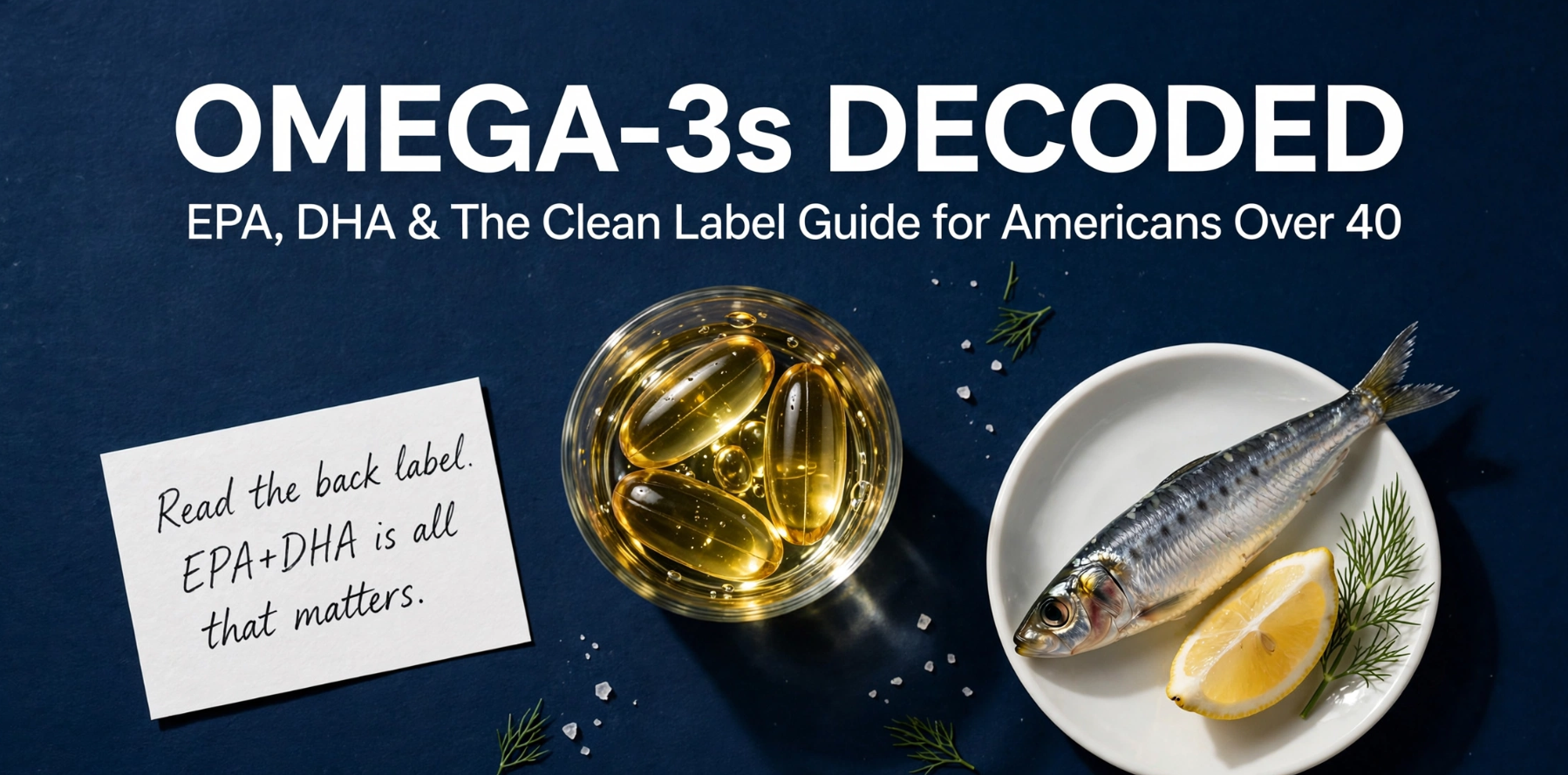
- Total Oil Isn’t Omega-3: A 1,000 mg fish oil softgel may contain only 300 mg of combined EPA+DHA. Always read the back label for actual EPA and DHA content, not just “fish oil” weight.
- Rancidity Is a Hidden Risk: Oxidized fish oil is pro-inflammatory, not anti-. Third-party testing (IFOS, NSF, USP) ensures freshness, purity, and freedom from heavy metals.
Introduction: Why Your Heart, Brain, and Joints Are Begging for Omega-3s
Walk into any American kitchen, and you’ll find a bottle of vegetable oil—soybean, corn, or canola—the invisible backbone of processed foods and restaurant cooking. These oils are rich in omega-6 fatty acids, precursors to pro-inflammatory molecules that, when chronically elevated, contribute to heart disease, arthritis, and even cognitive decline. Our ancestors consumed a roughly balanced 1:1 ratio of omega-6 to omega-3. Today, that ratio has blown out to 15:1 or higher. This isn’t abstract biochemistry; it’s a measurable driver of the low-grade, whole-body inflammation that speeds up aging after 40.
Omega-3 fatty acids, specifically the long-chain marine forms EPA and DHA, are the counterweight. They don’t just “thin the blood” or “lower triglycerides”—they actively resolve inflammation, maintain brain cell membrane fluidity, support mood regulation, and protect the delicate endothelium lining your arteries. Yet most Americans fall woefully short. Supplementing with a clean, potent fish oil or algal oil is not an optional add-on; it is a foundational repair strategy for a modern diet out of balance.
This article cuts through the marketing fog and gives you the tools to choose a superior omega-3 supplement with the precision of a clinical researcher.
Section 1: The Omega-3 Players — ALA, EPA, DHA, and Why Plant Sources Fall Short
The omega-3 family tree has three main branches:
- ALA (Alpha-Linolenic Acid): Found in flaxseeds, chia seeds, and walnuts. ALA is an essential fatty acid—your body can’t make it. However, the conversion of ALA to EPA and DHA is terribly inefficient in humans, with rates of 5-10% for EPA and under 1% for DHA. For a 40+ American seeking cardiovascular and cognitive protection, relying on flaxseed oil is insufficient.
- EPA (Eicosapentaenoic Acid): A 20-carbon omega-3 that directly competes with arachidonic acid (omega-6) in enzymatic pathways, reducing the production of pro-inflammatory prostaglandins and cytokines. EPA is heavily linked to cardiovascular risk reduction and mood support.
- DHA (Docosahexaenoic Acid): A 22-carbon omega-3 that is the most abundant fatty acid in the brain’s gray matter and the retina. DHA provides structural integrity to cell membranes, enabling rapid signal transmission. After 40, preserving DHA status is critical for maintaining cognitive processing speed, memory, and vision.
The VigorForty Guideline: Seek supplements providing substantial amounts of both EPA and DHA. A general health dose is 1,000–2,000 mg of combined EPA+DHA. For therapeutic triglyceride lowering, 2,000–4,000 mg may be used under medical supervision.
Section 2: The Over-40 Benefits That Actually Have Solid Evidence
The internet is full of wild omega-3 claims. Here’s what peer-reviewed, human data actually supports:
Cardiovascular Protection
The REDUCE-IT trial, using a high-dose EPA ethyl ester (icosapent ethyl), showed a 25% relative risk reduction in major cardiovascular events. For the 40-something American with borderline high triglycerides or a family history of heart disease, this is a major intervention lever. Omega-3s also modestly lower blood pressure and improve arterial flexibility.
Brain Structure and Mood
DHA makes up 30% of brain phospholipids. Low DHA intake correlates with increased risk of age-related cognitive decline, depression, and anxiety. Clinical trials show EPA in particular has antidepressant effects, likely through anti-inflammatory pathways and improved neuroplasticity.
Joint Pain and Stiffness
EPA and DHA are precursors to resolvins and protectins, molecules that actively turn off inflammation. For the active 40-something with creaky knees or stiff hands in the morning, a consistent omega-3 habit can reduce reliance on NSAIDs over time. It’s not a painkiller; it’s a long-term anti-inflammatory buffer.
Eye Health
DHA is a structural fat in the retina. Adequate intake is linked to a lower risk of age-related macular degeneration, the leading cause of blindness in older Americans.
Section 3: Reading a Fish Oil Label Like a VigorForty Editor
Most people make the mistake of looking at the front of the bottle. The only truth lives on the Supplement Facts panel.
Step 1: Ignore “Total Fish Oil.”
A softgel that says “1,400 mg Fish Oil” on the front might contain only 400 mg of EPA+DHA. The rest is filler fat. Flip the bottle over and look for two numbers: EPA (Eicosapentaenoic Acid) and DHA (Docosahexaenoic Acid). Add them together. That’s your working dose per serving.
Step 2: Check the Molecular Form.
- Natural Triglyceride (TG): The form found in fish, absorbed well. Mostly in premium, fresh oils and cod liver oil.
- Ethyl Ester (EE): Semi-synthetic, cheaper to produce. Absorption is lower unless taken with a high-fat meal. Much of the mass-market product is EE.
- Re-esterified Triglyceride (rTG): Ethyl esters converted back to triglyceride form. Highest bioavailability, often found in concentrated, high-potency formulas. Look for the word “triglyceride” on the label or the abbreviation rTG.
Step 3: Purity and Freshness Certifications.
Fish can accumulate mercury, PCBs, and dioxins. A reputable brand will voluntarily submit to third-party testing. Look for:
- IFOS (International Fish Oil Standards): Publishes actual product star ratings for potency, purity, and freshness.
- NSF for Sport or USP: Confirms label accuracy and absence of contaminants.
- GOED (Global Organization for EPA and DHA Omega-3s): Members adhere to strict quality standards.
Step 4: The Smell Test.
A fresh fish oil should smell faintly like the ocean or be nearly odorless. A strong, pungent “fishy” odor indicates oxidation (rancidity). Rancid oil is pro-inflammatory, doing the opposite of what you paid for. Never buy fish oil that you can’t return if it smells off upon opening, and prefer brands that include a natural antioxidant like vitamin E (mixed tocopherols) to protect freshness.
Section 4: Triglyceride vs. Ethyl Ester — The Absorption Gap That Matters
In the natural triglyceride form, the fatty acids are bound to a glycerol backbone, just as they are in fish. Your pancreatic lipase enzymes recognize and efficiently cleave this structure. In the ethyl ester form, the fatty acids are bound to ethanol. Absorption requires an additional enzymatic step, which is less efficient, especially if not taken with a very fatty meal.
Studies consistently show that re-esterified triglyceride (rTG) fish oils achieve significantly higher plasma EPA and DHA levels compared to identical doses of ethyl esters. Concentrated fish oils (with high EPA+DHA per softgel) are almost always ethyl ester or rTG. If you’re investing in a high-potency product for therapeutic effect, insist on rTG to ensure you’re actually absorbing what you pay for.
Section 5: Plant-Based and Algal Oil Options
For vegetarians, vegans, or those with fish allergies, algal oil offers a direct, sustainable source of EPA and DHA. Algae are where fish get their omega-3s in the first place. Algal oil is produced in controlled fermentation tanks, which eliminates concerns about ocean contaminants and heavy metals. It’s typically more expensive per gram of EPA+DHA but is a perfectly valid, effective alternative. Look for algal oil brands that state EPA and DHA content clearly and have third-party purity testing.
Section 6: Dosing, Timing, and Avoiding Fish Burps
Daily Dose: 1,000–2,000 mg combined EPA+DHA for general health and inflammation balance. If you rarely eat fatty fish (salmon, sardines, mackerel), aim for the higher end. For targeted therapy (elevated triglycerides), a doctor may prescribe 4,000 mg of combined EPA+DHA or pure EPA medication.
Timing: Take with a meal that contains fat—dinner is often ideal. The dietary fat triggers bile release, which emulsifies the oil and dramatically improves absorption. Taking fish oil on an empty stomach is a common cause of poor absorption and reflux.
Avoiding Fish Burps: Enteric-coated softgels are designed to pass through the stomach and dissolve in the small intestine, reducing reflux. Freezing the fish oil softgels is another popular tactic: the oil enters the intestine as a frozen bead and melts there, bypassing the stomach altogether. If burps persist, switch to a high-quality rTG liquid oil and keep it refrigerated.
Section 7: FAQ — Your Top Omega-3 Questions
Q: Can I just eat salmon instead of taking pills?
A: Absolutely, and you should. Two 3.5-ounce servings of fatty fish per week provide roughly 500 mg of EPA+DHA per serving. If you consistently eat fatty fish 2-3 times weekly, you may not need a high-dose supplement. However, for therapeutic anti-inflammatory effects, supplementation ensures a reliable daily intake without the variable mercury and cost of wild salmon.
Q: Does fish oil thin my blood dangerously?
A: Omega-3s mildly inhibit platelet aggregation, but the effect is not clinically significant enough to cause spontaneous bleeding in healthy individuals. If you are on prescription blood thinners (warfarin, clopidogrel, apixaban) or scheduled for major surgery, discuss supplementation with your physician.
Q: Is cod liver oil the same as fish oil?
A: No. Cod liver oil is from the liver of cod fish and contains naturally high amounts of vitamins A and D in addition to EPA/DHA. While rich in omega-3s, the vitamin A content can accumulate to toxic levels if dosed high. For long-term high-dose omega-3 therapy, standard fish oil (from body flesh) or concentrated fish oil is safer.
Q: How long does it take to notice a difference?
A: Anti-inflammatory effects build over 4–12 weeks. Joint stiffness may improve gradually. Blood lipid changes can be seen on a lab test after 3–4 months of consistent use.
The VigorForty Take
An omega-3 supplement is not a mere “health oil.” It’s a direct biochemical countermeasure against the inflammatory imbalance that defines modern American diets and accelerates aging after 40. Choose a re-esterified triglyceride or natural triglyceride fish oil, verify the combined EPA+DHA content reaches at least 1,000 mg daily, and insist on IFOS, NSF, or USP certification for purity and freshness. Take it with dinner, every day, forever.
Alongside your D3+K2, magnesium, creatine, and protein powder, a clean omega-3 completes the Vigor Five—your evidence-based foundation for a healthier, sharper second half of life.
Read Realated Articles
- The Complete Guide to Heart Health: Beyond Omega-3s—CoQ10, Magnesium, Potassium, and Nitric Oxide Support After 40
- The Complete Guide to Eye Health: Lutein, Zeaxanthin, Astaxanthin, and Omega-3s for Protecting Your Vision After 40
- The Complete Guide to Anti-Aging Skin, Hair, and Nails: Collagen, Biotin, Silica, and Antioxidants for a Vibrant Appearance After 40
- The Busy Parent’s Supplement Guide: Staying Energized, Resilient, and Healthy While Raising Kids After 40
- Supplements for Brain Fog and Mental Clarity: Phosphatidylserine, Bacopa Monnieri, and Lion’s Mane—What Actually Works After 40
- The Complete Guide to Digestive Health: Probiotics, Prebiotics, Digestive Enzymes, and Gut-Healing Nutrients After 40
- Supplements for Osteoarthritis: A Natural Pain Management Protocol That Protects Your Joints After 40
- The Sleep-Supplement Connection: Magnesium, Glycine, L-Theanine, and Melatonin—A Complete Protocol for Restorative Rest After 40
- The Ultimate Guide to Healthy Aging: How to Build Your Personalized Supplement Plan at 40, 50, and 60
- Menopause Beyond the Basics: Mood, Bone, Brain, and Sleep Support for the American Woman Over 40
- Selenium, Zinc, and Iodine: The Trace Minerals That Support Thyroid, Immunity, and Longevity After 40
- TSA Rules for Supplements: Traveling with Pills, Powders, and Liquids as an American Over 40
- CoQ10 After 40: Ubiquinone vs. Ubiquinol, Statin Depletion, and Mitochondrial Support
- The VigorForty Guide to Third-Party Testing: USP, NSF, ConsumerLab, and How to Verify Your Supplements Are Safe
- The VigorForty Yearly Blood Work Blueprint: Exactly What to Test and When for Optimal Health After 40
- Metabolic Health Supplements: Berberine, Inositol, and Chromium for Blood Sugar Control After 40
- The Complete Guide to Electrolytes for the Active American Over 40: Sodium, Potassium, Magnesium, and Hydration Science
- Supplement-Drug Interactions Every American Over 40 Must Know: Blood Thinners, Antidepressants, BP Meds, and Statins
- The Busy Professional’s Core 5 Supplements: No Clutter, No Hype, Just What Actually Moves the Needle After 40
- Glycine + NAC: The Under-the-Radar Longevity Stack for Glutathione, Detoxification, and Deep Sleep After 40
- Adaptogens Worth Your Money: Ashwagandha, Rhodiola, and Holy Basil—Evidence and Safe Use for the Stressed 40+ American
- Best Supplements for Joint Health After 40: Curcumin, Collagen, MSM, and Glucosamine—Ranked by Evidence
- NAD+ Precursors (NMN & NR) in 2026: Current Evidence, US Legal Status, and What’s Worth Your Money
- Budget-Friendly Blood Tests to Check Your Actual Micronutrient Gaps (And Skip the Guesswork)
- The Perimenopause Supplement Protocol: Bone, Brain, and Sleep Support for American Women Over 40
- How to Read a Supplement Facts Panel Like a Dietitian: The 5-Step Method for Over-40 Americans
- Protein Powder After 40: Whey, Plant, Collagen, and the Anabolic Threshold You Must Know
- Omega-3s Decoded: EPA, DHA, and How to Read a Fish Oil Label for the Over-40 American
- Creatine After 40: Not Just for Bodybuilders—Brain, Muscle, and Longevity Science
- 5 Magnesium Myths Busted: Glycinate, Citrate, Oxide, and Which One You Actually Need
- Vitamin D3 + K2: The Over-40 American’s Protocol for Bones, Arteries, and Immunity
- The ‘Vigor Five’: Core Daily Supplements for Energy and Longevity After 40
- How Much Protein Do You Actually Need? (The Definite Guide for Satiety and Muscle Retention)
- The Ultimate Guide to Nutrient Density: How to Eat Real Food in America