
Author: Vigor Forty Editorial Team
Medically Reviewed By: Editorial Review Board
Disclaimer: This article is for informational purposes only and is not a substitute for professional medical advice. Read our full Medical Disclaimer.
📌 Key Takeaways
- Progressive overload is the single most important principle in strength training: Without it, your muscles have no reason to grow stronger. With it, you can make continuous progress for years.
- It’s simply about gradually increasing the challenge: Add weight, add reps, add sets, improve form, or reduce rest—any of these can create progressive overload.
- Your body adapts to stress: When you lift weights, you create microscopic damage in your muscle fibers. Your body repairs them stronger than before to handle the stress next time. This is how strength is built.
- Small increments add up over time: Adding just 2.5–5 pounds per week to your main lifts results in 130–260 pounds of progress in a year. Consistency beats intensity.
- Progressive overload applies to calisthenics too: You can’t just keep doing the same number of push-ups forever. You need to progress to harder variations, add reps, or change tempo.
Introduction: The Engine of Progress
If there’s one concept that separates those who make progress in the gym from those who spin their wheels, it’s progressive overload.
It sounds technical, but the idea is simple: to get stronger, you must continually challenge your muscles with more work than they’re used to. If you lift the same weight for the same number of reps week after week, your muscles have no reason to adapt. They’ve already adapted to that stimulus. You’re maintaining, not building.
Progressive overload is the engine of all strength gains. It’s the reason your muscles grow. It’s the reason you can lift more weight this month than you could last month. It’s the principle that turns effort into results.
This is how progressive overload works:
- You expose your muscles to a stress they’re not used to (lifting weights, doing push-ups)
- This creates microscopic damage in your muscle fibers
- Your body repairs the damage and makes your muscles slightly stronger
- Next time, the same stress is easier
- To keep making progress, you need to add more stress (more weight, more reps, etc.)
- The cycle repeats
Without progressive overload, you’re just going through the motions. You’re working out, but you’re not getting stronger. You’re maintaining, not improving.
This guide will teach you everything you need to know about progressive overload: what it is, how to apply it, common mistakes, and how to design your own progression plan for both weightlifting and calisthenics.
Section 1: What Is Progressive Overload?
The Definition
Progressive overload is the gradual increase of stress placed on the body during training. This stress causes the body to adapt and become stronger, more muscular, or more enduring.
The concept was first formalized in the 1950s by Dr. Thomas Delorme, who developed the principle of “progressive resistance exercise” for rehabilitation. He discovered that patients who gradually increased the weight they lifted recovered faster and built more strength than those who didn’t.
The Three Types of Overload
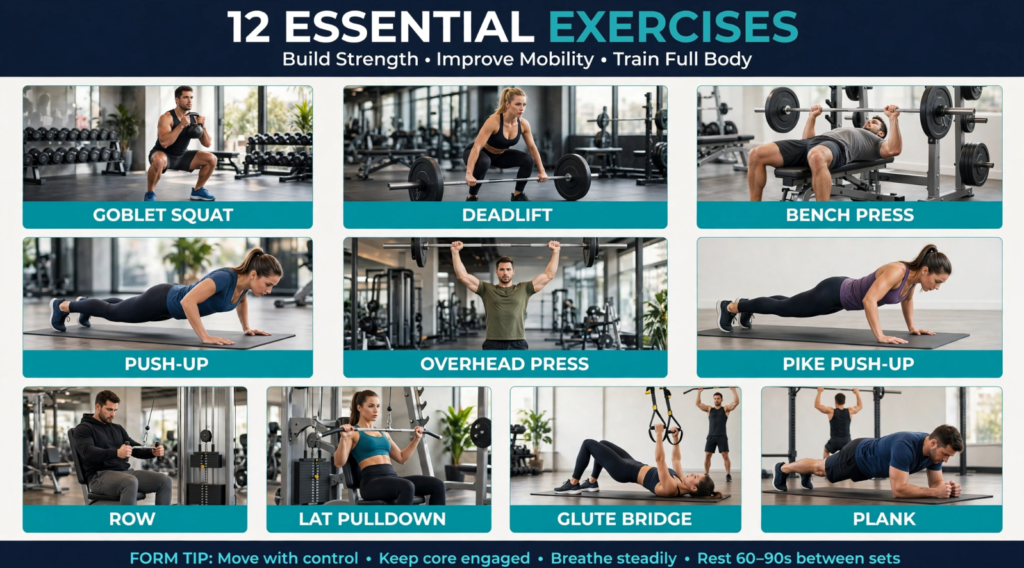
- Mechanical Overload: Increasing the force your muscles must produce (more weight, harder variation)
- Metabolic Overload: Increasing the work your muscles must do (more reps, more sets, less rest)
- Neuromuscular Overload: Increasing the skill or coordination required (complex movements, faster or slower tempo)
Why It Works
When you challenge your muscles beyond their current capacity, several things happen:
- Muscle Hypertrophy: Muscle fibers grow larger and stronger
- Neural Adaptations: Your nervous system becomes more efficient at recruiting muscle fibers
- Connective Tissue Strengthening: Tendons and ligaments become stronger
- Bone Density Increase: Bones respond to stress by becoming denser
- Metabolic Changes: Your muscles become more efficient at using energy
All of these adaptations are triggered by progressive overload. Without it, they don’t happen.
Section 2: How to Apply Progressive Overload
There are many ways to apply progressive overload. The best approach depends on your goals, your experience level, and the type of training you’re doing.
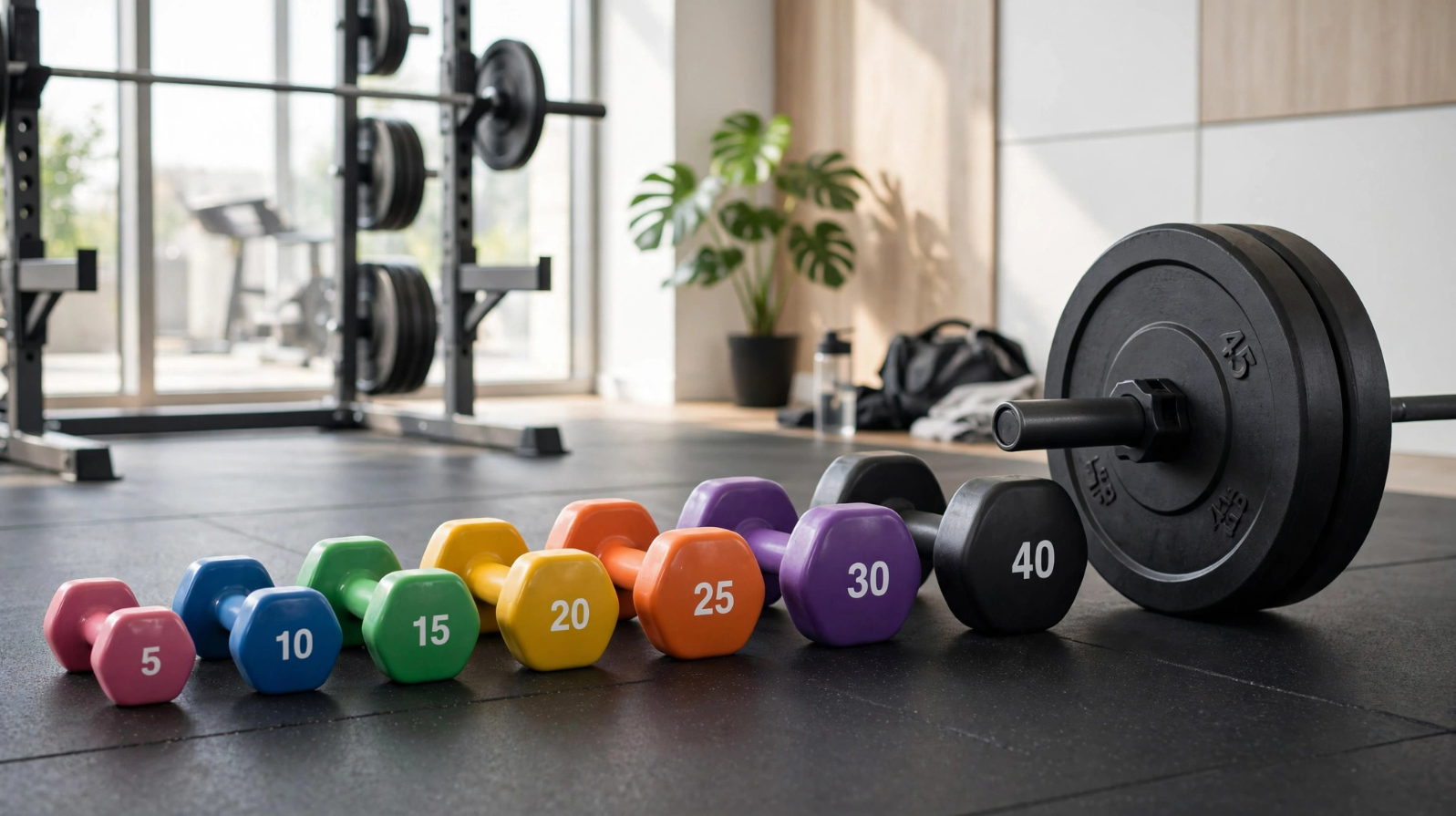
Method 1: Increase Weight (The Most Common)
How it works: Add weight to the bar or dumbbells.
Example: Squat 135 lbs for 3 sets of 8. Next week, squat 140 lbs for 3 sets of 8.
Best for: Weightlifting, building maximal strength
How much to add:
- Upper body exercises: 2.5–5 lbs per week
- Lower body exercises: 5–10 lbs per week
Method 2: Increase Reps
How it works: Add more repetitions with the same weight.
Example: Push-ups: 3 sets of 10 → 3 sets of 12 → 3 sets of 15
Best for: Calisthenics, muscular endurance, hypertrophy
How to add:
- Add 1–2 reps per set each week
- When you can do 3 sets of 15, progress to a harder variation or add weight
Method 3: Increase Sets
How it works: Add more sets of the same exercise.
Example: 3 sets of Bench Press → 4 sets of Bench Press
Best for: Building muscular endurance, breaking through plateaus
How to add:
- Add 1 set per exercise per week (up to 4–5 sets)
- If you add sets, you may need to reduce weight slightly to maintain quality
Method 4: Reduce Rest Time
How it works: Decrease the time you rest between sets.
Example: Rest 90 seconds between sets → 60 seconds → 45 seconds
Best for: Metabolic stress, muscular endurance, hypertrophy
How to reduce:
- Decrease rest by 15–30 seconds per week
- This increases the metabolic demand on your muscles
Important: Reducing rest too much can compromise your strength on subsequent sets. Find a balance.
Method 5: Increase Time Under Tension (Tempo)
How it works: Slow down the exercise to increase the time your muscles are working.
Example: Squat: 1 second down, 1 second up → 3 seconds down, 1 second up → 3 seconds down, 3 seconds up
Best for: Hypertrophy, building muscle control, calisthenics
How to slow down:
- Increase the eccentric (lowering) phase to 3–4 seconds
- Pause at the bottom for 1–2 seconds
- This increases the total time under tension
Method 6: Increase Range of Motion
How it works: Go deeper into the movement.
Example: Squat: Partial depth → Parallel → Full depth (ass-to-grass)
Best for: Calisthenics, improving mobility, functional strength
How to increase ROM:
- Gradually go deeper over time
- If you can’t maintain form, work on mobility first
Method 7: Increase Training Frequency
How it works: Train the same muscle group more often.
Example: Squat 1 time per week → 2 times per week
Best for: Intermediate and advanced trainees, breaking through plateaus
How to increase frequency:
- Add an extra training day
- Be careful not to overdo it—more frequency requires more recovery
Method 8: Progress to Harder Variations (Calisthenics)
How it works: Move from easier to harder bodyweight exercises.
Example: Knee Push-ups → Full Push-ups → Diamond Push-ups → Archer Push-ups → One-Arm Push-ups
Best for: Calisthenics, functional strength
How to progress:
- When you can do 3 sets of 15 with perfect form, move to the next variation
- Each variation should be challenging but doable
Section 3: Progressive Overload in Weightlifting
Linear Progression (For Beginners)
Linear progression is the simplest form of progressive overload. You add a small amount of weight to the bar each session.
The Starting Strength Model:
- Squat: Add 5 lbs each session
- Bench Press: Add 2.5–5 lbs each session
- Deadlift: Add 5–10 lbs each session
- Overhead Press: Add 2.5 lbs each session
Sample 8-Week Progression (Squat):
| Week | Monday | Wednesday | Friday |
|---|---|---|---|
| 1 | 95 lbs | 100 lbs | 105 lbs |
| 2 | 110 lbs | 115 lbs | 120 lbs |
| 3 | 125 lbs | 130 lbs | 135 lbs |
| 4 | 140 lbs | 145 lbs | 150 lbs |
| 5 | 155 lbs | 160 lbs | 165 lbs |
| 6 | 170 lbs | 175 lbs | 180 lbs |
| 7 | 185 lbs | 190 lbs | 195 lbs |
| 8 | 200 lbs | 205 lbs | 210 lbs |
When to Stop Linear Progression: When you can no longer add weight each session (you fail to complete all sets and reps with good form). At that point, you move to more advanced progression methods.
Double Progression (For Intermediates)
Double progression means you progress in two ways: first by increasing reps, then by increasing weight.
How It Works:
- Choose a weight you can lift for 3 sets of 8 reps
- Each session, try to add 1 rep to each set
- When you can lift 3 sets of 12 reps, increase the weight by 5–10 lbs
- Repeat the process
Example (Bench Press):
| Week | Weight | Sets x Reps |
|---|---|---|
| 1 | 135 lbs | 3 x 8 |
| 2 | 135 lbs | 3 x 9 |
| 3 | 135 lbs | 3 x 10 |
| 4 | 135 lbs | 3 x 11 |
| 5 | 135 lbs | 3 x 12 |
| 6 | 140 lbs | 3 x 8 |
| 7 | 140 lbs | 3 x 9 |
| 8 | 140 lbs | 3 x 10 |
Periodization (For Advanced)
Periodization involves planned variations in training volume and intensity over time.
Linear Periodization:
- Start with higher volume and lower intensity (e.g., 3 sets of 12 reps at 65% of max)
- Gradually increase intensity and decrease volume
- Example: 3 sets of 10 → 3 sets of 8 → 3 sets of 6 → 5 sets of 3
Undulating Periodization:
- Vary intensity and volume within the same week
- Example:
- Monday: Heavy (3 sets of 5 reps)
- Wednesday: Moderate (3 sets of 8 reps)
- Friday: Light (3 sets of 12 reps)
Section 4: Progressive Overload in Calisthenics
Calisthenics requires a different approach to progressive overload because you can’t just “add weight” (at least not easily). Here’s how to progress in bodyweight exercises.
Rep Progression
The simplest form of progression in calisthenics: add reps.
Example (Push-ups):
- Week 1: 3 sets of 10
- Week 2: 3 sets of 11
- Week 3: 3 sets of 12
- Week 4: 3 sets of 13
- Week 5: 3 sets of 15
- Week 6: Progress to a harder variation (e.g., Diamond Push-ups)
Variation Progression
Move from easier to harder variations.
Push-up Progression:
- Wall Push-ups
- Incline Push-ups
- Knee Push-ups
- Full Push-ups
- Diamond Push-ups
- Decline Push-ups
- Archer Push-ups
- One-Arm Push-ups
Pull-up Progression:
- Scapular Pull-ups
- Bodyweight Rows
- Negative Pull-ups
- Assisted Pull-ups (bands)
- Full Pull-ups
- Weighted Pull-ups
- Archer Pull-ups
- One-Arm Pull-ups
Tempo Progression
Slow down the movement to make it harder without changing the exercise.
Example (Squats):
- Standard: 1 second down, 1 second up
- Slow Eccentric: 3 seconds down, 1 second up
- Pause Squats: 2 seconds down, 2-second pause at bottom, 2 seconds up
Leverage Progression
Change your body position to make the exercise harder.
Example (Rows):
- Higher bar angle (easier) → Lower bar angle (harder) → Feet elevated (harder)
Example (Squats):
- Standard Squats → Wide Stance → Narrow Stance → Pistol Squats (one-legged)
Adding External Weight
When bodyweight becomes too easy, add external weight.
Options:
- Weighted vest
- Backpack with books or sand
- Resistance bands
- Holding a dumbbell or kettlebell
Example (Weighted Pull-ups):
- Week 1: Bodyweight (3 sets of 8)
- Week 2: +5 lbs (3 sets of 8)
- Week 3: +10 lbs (3 sets of 8)
- Week 4: +15 lbs (3 sets of 8)
Section 5: Sample Progressive Overload Plans
Plan A: 12-Week Beginner Program (3 Days/Week)
Goal: Build foundational strength and learn proper form
Week 1–4: Mastering Form
- Use light weights and easy calisthenics variations
- Focus on perfect technique
- Perform 3 sets of 10–12 reps
Week 5–8: Building Strength
- Start adding weight to main lifts
- For calisthenics, increase reps or progress to harder variations
- Perform 3 sets of 8–10 reps with challenging weight
Week 9–12: Intensifying
- Increase weight on all lifts
- For calisthenics, add weight or progress to next variation
- Perform 3–4 sets of 6–8 reps
Sample Weekly Progression:
| Week | Goblet Squat | Push-ups | Dumbbell Rows |
|---|---|---|---|
| 1 | 20 lbs x 3×12 | Incline x 3×10 | 20 lbs x 3×12 |
| 2 | 25 lbs x 3×12 | Incline x 3×12 | 20 lbs x 3×12 |
| 3 | 25 lbs x 3×12 | Knee x 3×10 | 25 lbs x 3×10 |
| 4 | 30 lbs x 3×10 | Knee x 3×12 | 25 lbs x 3×12 |
| 5 | 30 lbs x 3×10 | Full x 3×8 | 30 lbs x 3×10 |
| 6 | 35 lbs x 3×8 | Full x 3×10 | 30 lbs x 3×10 |
| 7 | 35 lbs x 3×8 | Full x 3×12 | 35 lbs x 3×8 |
| 8 | 40 lbs x 3×8 | Diamond x 3×8 | 35 lbs x 3×10 |
| 9 | 40 lbs x 3×8 | Diamond x 3×10 | 40 lbs x 3×8 |
| 10 | 45 lbs x 3×6 | Diamond x 3×12 | 40 lbs x 3×8 |
| 11 | 45 lbs x 3×6 | Decline x 3×8 | 45 lbs x 3×6 |
| 12 | 50 lbs x 3×6 | Decline x 3×10 | 45 lbs x 3×8 |
Plan B: Progressive Overload for Calisthenics (Push-up Focus)
Goal: Build from 0 to 50 push-ups in 8 weeks
| Week | Daily Volume | Sets x Reps | Notes |
|---|---|---|---|
| 1 | 30 reps | 3 x 10 | Incline Push-ups |
| 2 | 36 reps | 3 x 12 | Incline Push-ups |
| 3 | 45 reps | 3 x 15 | Incline Push-ups |
| 4 | 30 reps | 3 x 10 | Knee Push-ups |
| 5 | 36 reps | 3 x 12 | Knee Push-ups |
| 6 | 30 reps | 3 x 10 | Full Push-ups |
| 7 | 36 reps | 3 x 12 | Full Push-ups |
| 8 | 45 reps | 3 x 15 | Full Push-ups |
After 8 weeks: Continue adding reps (3 x 18 → 3 x 20) or progress to Diamond Push-ups.
Section 6: Common Progressive Overload Mistakes
Mistake 1: Adding Weight Too Quickly
The Problem: Adding too much weight too soon compromises form and increases injury risk.
The Fix: Add weight in small increments (2.5–5 lbs for upper body, 5–10 lbs for lower body). If you can’t maintain form, the weight is too heavy.
Mistake 2: Not Progressing at All (The “Comfort Zone” Trap)
The Problem: Doing the same workout week after week. Your body has adapted, and you’re no longer making progress.
The Fix: Track your workouts. If the numbers aren’t going up, you’re not progressing. Add weight, add reps, or increase difficulty.
Mistake 3: Progressing Only One Way
The Problem: Always adding weight, never varying reps or tempo.
The Fix: Vary your training stimulus. Sometimes add weight (strength), sometimes add reps (endurance), sometimes change tempo (hypertrophy). This keeps your body guessing and prevents plateaus.
Mistake 4: Ignoring Recovery
The Problem: Progressing too quickly without allowing adequate recovery.
The Fix: Progressive overload requires recovery. If you’re adding weight every session but feeling increasingly fatigued, joint pain, or poor sleep, you’re overreaching. Reduce the volume or take extra rest days.
Mistake 5: Not Using Periodization
The Problem: Pushing hard all the time. This leads to plateaus and burnout.
The Fix: Plan your training in cycles. Use lighter weeks (deload weeks) every 4–8 weeks to allow your body to fully recover and supercompensate. During deload weeks, reduce weight and volume by 40–60%.
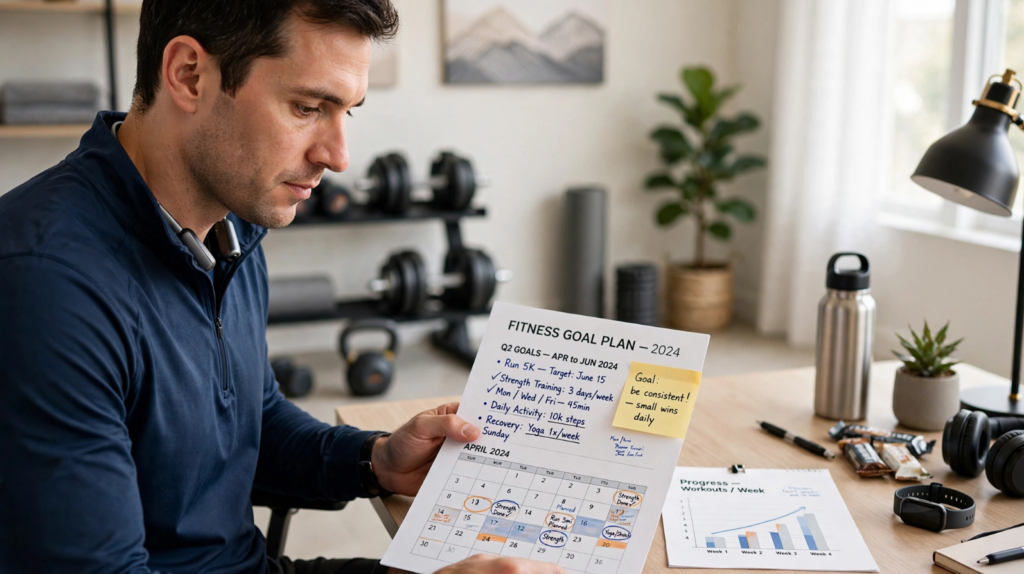
Section 7: Tracking Progress
What to Track
- Exercise: The specific movement
- Weight: How much you’re lifting
- Sets and Reps: How many sets and reps you complete
- Rest: How long you rest between sets
- Notes: Form notes, how you felt, any adjustments
How to Track
Option 1: Paper Log
- Get a notebook
- Write the date, exercises, weight, sets, reps
- Simple and effective
Option 2: Spreadsheet
- Create a simple spreadsheet on your phone or computer
- Track your lifts over time
- Easy to see trends and progress
Option 3: Training App
- Apps like Strong, JEFIT, or Fitbod track your workouts
- Many include progressive overload calculators
- Convenient and user-friendly
Section 8: When to Change Your Approach
Signs You’re Ready for More Advanced Progression
- You’ve been adding weight every session and can’t anymore: You’ve maxed out linear progression. It’s time for more advanced methods (periodization, double progression).
- You’ve been doing the same workout for 6+ months: If you’re still using the same weights and variations, you’re maintaining, not building. Progress to harder variations or add weight.
- You’re bored: This is a real concern. Boredom leads to inconsistency. Vary your training stimulus—new exercises, new rep ranges, new tempo.
- You’ve hit a plateau: You’ve been stuck at the same weight for 3+ weeks. Time to change something—more volume, different exercises, different intensity.
Section 9: FAQ—Your Top Progressive Overload Questions
Q: How much weight should I add each week?
A: For beginners, linear progression works well: 2.5–5 lbs for upper body exercises, 5–10 lbs for lower body exercises. For intermediates, use double progression—increase reps first, then weight. For advanced, use periodization—planned variations in intensity and volume.
Q: What if I can’t add weight or reps?
A: Try other forms of progressive overload: reduce rest time, slow down the tempo, increase range of motion, or add sets. If you’re consistently failing, you may need a deload week to allow recovery.
Q: How do I apply progressive overload to calisthenics?
A: In calisthenics, you progress by:
- Adding reps
- Moving to harder variations
- Changing tempo
- Adding weight
- Reducing leverage
Q: How often should I progress?
A: For beginners, every session or every week. For intermediates, every 1–2 weeks. For advanced, every 3–4 weeks. Listen to your body—if you’re consistently hitting your targets with good form, it’s time to progress.
Q: How do I know if I’m progressing?
A: Track your workouts. If you’re doing more weight, more reps, or harder variations compared to last week/month, you’re progressing. If the numbers are the same, you’re maintaining.
Q: What is a deload week?
A: A deload week is a planned reduction in training volume and intensity to allow for full recovery and supercompensation. During a deload, reduce weight by 40–60% and volume by 40–60%. Deload weeks help prevent plateaus and overtraining.
Q: Can I progress too quickly?
A: Yes. If you add weight too quickly, you risk injury and poor form. Your tendons, ligaments, and nervous system need time to adapt. Progressive overload should be progressive—small increases over time.
The VigorForty Take
Progressive overload is the engine of all strength gains. Without it, you’re just going through the motions. With it, you can continue making progress for years—building strength, muscle, and functional fitness that serve you for life.
The principles are simple:
- Start where you are
- Add a small amount of challenge each week (weight, reps, difficulty)
- Track your progress
- Listen to your body—recover when needed
- Be consistent
Remember:
- Small increments add up over time (5 lbs per week = 260 lbs per year)
- Consistency beats intensity
- Progress is not always linear—some weeks you’ll progress, some you won’t
- Recovery is part of the process
You don’t need to be perfect. You just need to keep moving forward. Add a little here. Add a little there. Over weeks and months, your strength will compound.
Progressive overload isn’t just a training principle—it’s a philosophy. It’s the belief that small, consistent steps lead to significant change. It’s the commitment to continuous improvement.
Start today. Add a rep. Add 2.5 pounds. Progress.
This article was reviewed by the Vigor Forty Editorial Review Board on July 19, 2026.
🔗 Related Articles
- How to Combine Calisthenics and Weight Training for Maximum Results
- Sample Weekly Workout Plan: Combining Weights, Bodyweight, and Core
- Weightlifting 101: A Simple Guide for Beginners
- Calisthenics for Beginners: Your First Bodyweight Workout Plan
Affiliate Disclosure: Some links in this article may be affiliate links. If you make a purchase through these links, Vigor Forty may earn a small commission at no extra cost to you. We only recommend products we trust.
Related Articles
- The Ultimate Beginner’s Guide to Strength Training (Weightlifting, Calisthenics, and Core)
- Weightlifting 101: A Simple Guide for Beginners
- Calisthenics for Beginners: Your First Bodyweight Workout Plan
- What is Core Stability and Why Does It Matter for Every Lift?
- 5 Foundational Movement Patterns for a Stronger Body
- Perfect Your Push-Up: A Step-by-Step Guide to Building Upper Body Strength
- How to Perform a Perfect Squat: Form Tips for Weightlifting and Bodyweight
- The Plank: More Than Just an Ab Exercise
- How to Combine Calisthenics and Weight Training for Maximum Results
- Sample Weekly Workout Plan: Combining Weights, Bodyweight, and Core
- The Importance of Progressive Overload in Strength Training
- How to Progress Calisthenics Exercises When Bodyweight Gets Easy
- Home Gym vs. Gym Membership: Which is Right for You?
- The Minimalist’s Guide to Strength Training: No Equipment Needed
- Top 5 Pieces of Equipment for a Home Strength Training Setup
- How to Choose the Right Weight for Your Workouts