
Author: Vigor Forty Editorial Team
Medically Reviewed By: Editorial Review Board
Disclaimer: This article is for informational purposes only and is not a substitute for professional medical advice. Read our full Medical Disclaimer.
📌 Key Takeaways
- A balanced weekly plan includes all three pillars: Weightlifting, calisthenics, and core stability work together to build complete strength and functionality.
- Frequency matters more than perfection: Two to three well-structured sessions per week, performed consistently, deliver better results than sporadic training.
- Recovery is built into the plan: Rest days and active recovery are as important as training days—this is when your muscles repair and grow stronger.
- You can choose the plan that fits your schedule: Whether you have 2, 3, or 4 days per week to train, there’s a plan that works for you.
- Progression is simple: Gradually increase weight, reps, or difficulty each week to keep making gains.
Introduction: Your Blueprint for Weekly Strength Training
You know the exercises. You understand the principles. Now it’s time to put it all together.
A well-designed weekly workout plan is the bridge between knowing what to do and actually doing it. It takes the guesswork out of training, ensures you’re hitting all the major muscle groups, and builds consistency—the single most important factor in long-term success.
This guide provides three complete weekly workout plans, each combining weightlifting, calisthenics, and core stability. Choose the plan that fits your schedule and experience level, and you’ll have everything you need to build strength, muscle, and functional fitness.
The plans are designed for Americans over 40, with an emphasis on joint health, functional movement, and sustainable progress. They’re scalable—you can adjust the exercises, weights, and volume to match your current fitness level.
Section 1: The Warm-Up—Do This Before Every Workout
Before any strength training session, spend 5–10 minutes preparing your body. This is not optional—it reduces injury risk, improves performance, and prepares your nervous system for the work ahead.
Dynamic Warm-Up (5–10 Minutes)
Perform each exercise for 30–60 seconds or 10–15 reps:
- Light Cardio: Jumping jacks, jogging in place, or stationary bike (2 minutes)
- Arm Circles: 10 forward, 10 backward
- Leg Swings: 10 forward, 10 side-to-side per leg
- Torso Twists: 10 each side
- Cat-Cow Stretch: 10 reps
- Bodyweight Squats (Light): 10 reps
- Hip Circles: 10 each direction
- Shoulder Shrugs and Rolls: 10 reps
Core Activation (3 Minutes)
Perform these before your main lifts to “turn on” your core:
- Dead Bugs: 10 per side (slow and controlled)
- Bird Dogs: 10 per side (hold for 2 seconds at extension)
- Glute Bridges: 15 reps (squeeze at the top)
Section 2: Plan A—The 3-Day Full Body Hybrid
Best for: Beginners, those with limited time, anyone wanting a balanced approach
Schedule: Monday, Wednesday, Friday (or any non-consecutive days)
Structure: Each workout includes weightlifting, calisthenics, and core work. All major muscle groups are trained each session.
Monday: Full Body Workout A
| Exercise | Type | Sets | Reps | Rest |
|---|---|---|---|---|
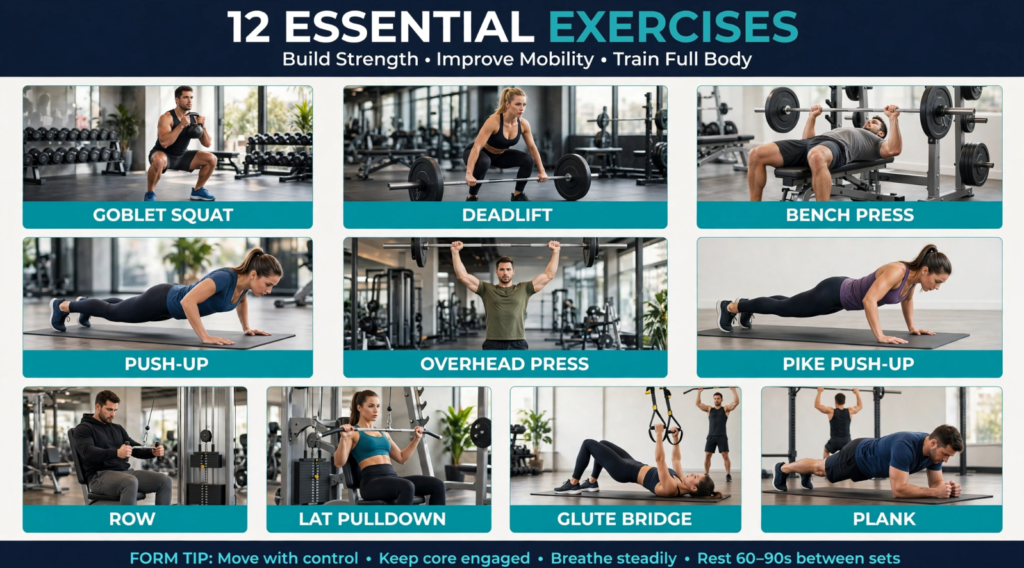
| Goblet Squats | Weightlifting | 3 | 10–12 | 60–90 sec |
| Push-ups (your variation) | Calisthenics | 3 | 8–12 | 60–90 sec |
| Dumbbell Bent-Over Rows | Weightlifting | 3 | 10–12 | 60–90 sec |
| Glute Bridges | Calisthenics | 3 | 15–20 | 60 sec |
| Dumbbell Overhead Press | Weightlifting | 3 | 8–10 | 60–90 sec |
| Plank | Core | 3 | 45–60 sec | 45–60 sec |
Wednesday: Full Body Workout B
| Exercise | Type | Sets | Reps | Rest |
|---|---|---|---|---|
| Dumbbell Deadlifts (RDL) | Weightlifting | 3 | 10–12 | 60–90 sec |
| Dips (chair or bench) | Calisthenics | 3 | 8–12 | 60–90 sec |
| Lat Pulldowns (or Pull-ups) | Weightlifting | 3 | 8–10 | 60–90 sec |
| Reverse Lunges | Calisthenics | 3 | 10 per leg | 60–90 sec |
| Dumbbell Lateral Raises | Weightlifting | 3 | 12–15 | 60 sec |
| Side Plank | Core | 3 | 30–45 sec per side | 45 sec |
Friday: Full Body Workout C
| Exercise | Type | Sets | Reps | Rest |
|---|---|---|---|---|
| Barbell Squats (or Goblet) | Weightlifting | 3 | 8–10 | 60–90 sec |
| Incline Push-ups (or weighted) | Calisthenics | 3 | 10–15 | 60–90 sec |
| Seated Cable Rows (or Rows) | Weightlifting | 3 | 10–12 | 60–90 sec |
| Bodyweight Squats (pulse) | Calisthenics | 3 | 15–20 | 60 sec |
| Dumbbell Bicep Curls | Weightlifting | 3 | 12–15 | 60 sec |
| Dead Bugs | Core | 3 | 10–12 per side | 45 sec |
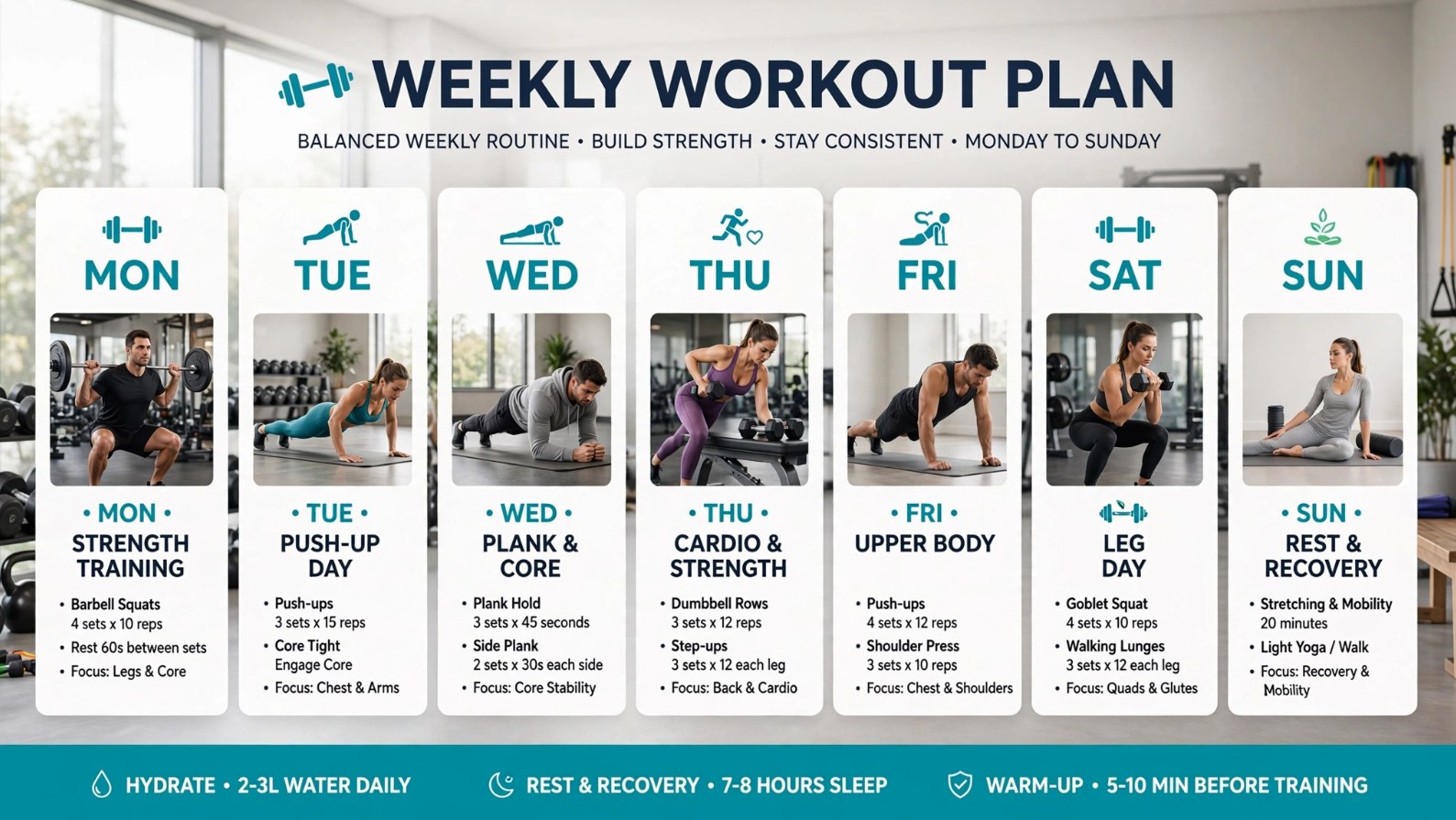
Weekly Schedule Overview (Plan A)
| Day | Activity |
|---|---|
| Monday | Full Body Workout A |
| Tuesday | Active Recovery (walking, stretching, light mobility) |
| Wednesday | Full Body Workout B |
| Thursday | Active Recovery |
| Friday | Full Body Workout C |
| Saturday | Optional: Light cardio or mobility work |
| Sunday | Complete Rest |
Section 3: Plan B—The 4-Day Upper/Lower Split
Best for: Intermediate trainees, those who can train 4 days per week, anyone wanting more focused sessions
Schedule: Monday, Tuesday, Thursday, Friday
Structure: Upper body focus on two days, lower body focus on two days. Each day includes both weightlifting and calisthenics.
Monday: Upper Body A (Strength Focus)
| Exercise | Type | Sets | Reps | Rest |
|---|---|---|---|---|
| Barbell Bench Press | Weightlifting | 4 | 6–8 | 90 sec |
| Bent-Over Rows | Weightlifting | 4 | 8–10 | 90 sec |
| Dumbbell Overhead Press | Weightlifting | 3 | 8–10 | 60–90 sec |
| Pull-ups (or assisted) | Calisthenics | 3 | Max | 60–90 sec |
| Plank | Core | 3 | 60 sec | 45 sec |
Tuesday: Lower Body A (Strength Focus)
| Exercise | Type | Sets | Reps | Rest |
|---|---|---|---|---|
| Barbell Squats | Weightlifting | 4 | 6–8 | 90 sec |
| Romanian Deadlifts | Weightlifting | 4 | 8–10 | 90 sec |
| Bulgarian Split Squats | Weightlifting | 3 | 8–10 per leg | 60–90 sec |
| Bodyweight Squats | Calisthenics | 3 | 20 | 60 sec |
| Glute Bridges | Calisthenics | 3 | 20 | 60 sec |
| Hollow Body Hold | Core | 3 | 45 sec | 45 sec |
Thursday: Upper Body B (Hypertrophy Focus)
| Exercise | Type | Sets | Reps | Rest |
|---|---|---|---|---|
| Dumbbell Bench Press | Weightlifting | 3 | 10–12 | 60–90 sec |
| Dumbbell Rows | Weightlifting | 3 | 10–12 | 60–90 sec |
| Dips | Calisthenics | 3 | 8–12 | 60–90 sec |
| Bodyweight Rows | Calisthenics | 3 | 10–15 | 60 sec |
| Face Pulls | Weightlifting | 3 | 15–20 | 60 sec |
| Side Plank | Core | 3 | 45 sec per side | 45 sec |
Friday: Lower Body B (Hypertrophy Focus)
| Exercise | Type | Sets | Reps | Rest |
|---|---|---|---|---|
| Goblet Squats | Weightlifting | 3 | 10–12 | 60–90 sec |
| Dumbbell Lunges | Weightlifting | 3 | 10–12 per leg | 60–90 sec |
| Lying Leg Curls (or Hamstring Sliders) | Weightlifting | 3 | 12–15 | 60–90 sec |
| Step-ups | Calisthenics | 3 | 10–12 per leg | 60 sec |
| Calf Raises | Weightlifting | 3 | 15–20 | 60 sec |
| Dead Bugs | Core | 3 | 12 per side | 45 sec |
Weekly Schedule Overview (Plan B)
| Day | Activity |
|---|---|
| Monday | Upper Body A |
| Tuesday | Lower Body A |
| Wednesday | Active Recovery |
| Thursday | Upper Body B |
| Friday | Lower Body B |
| Saturday | Optional: Light cardio, mobility, or active recovery |
| Sunday | Complete Rest |
Section 4: Plan C—The 2-Day Minimalist Plan
Best for: Extremely busy professionals, beginners, anyone who wants to start simple
Schedule: Any two non-consecutive days (e.g., Tuesday and Friday)
Structure: Each workout is a full-body session that hits all major muscle groups efficiently.
Day 1: Full Body Workout A
| Exercise | Type | Sets | Reps | Rest |
|---|---|---|---|---|
| Goblet Squats | Weightlifting | 3 | 10–12 | 60–90 sec |
| Push-ups (your variation) | Calisthenics | 3 | 8–12 | 60–90 sec |
| Dumbbell Rows | Weightlifting | 3 | 10–12 | 60–90 sec |
| Plank | Core | 3 | 45–60 sec | 45–60 sec |
| Dumbbell Overhead Press | Weightlifting | 3 | 8–10 | 60–90 sec |
| Glute Bridges | Calisthenics | 3 | 15–20 | 60 sec |
Day 2: Full Body Workout B
| Exercise | Type | Sets | Reps | Rest |
|---|---|---|---|---|
| Dumbbell Deadlifts | Weightlifting | 3 | 10–12 | 60–90 sec |
| Dips (chair or bench) | Calisthenics | 3 | 8–12 | 60–90 sec |
| Lat Pulldowns (or Pull-ups) | Weightlifting | 3 | 8–10 | 60–90 sec |
| Side Plank | Core | 3 | 30–45 sec per side | 45 sec |
| Reverse Lunges | Calisthenics | 3 | 10 per leg | 60–90 sec |
| Dumbbell Bicep Curls | Weightlifting | 3 | 12–15 | 60 sec |
Weekly Schedule Overview (Plan C)
| Day | Activity |
|---|---|
| Monday | Rest or Active Recovery |
| Tuesday | Full Body Workout A |
| Wednesday | Rest or Active Recovery |
| Thursday | Rest or Active Recovery |
| Friday | Full Body Workout B |
| Saturday | Optional: Light activity |
| Sunday | Complete Rest |
Section 5: Additional Training Options
Active Recovery Days
On rest days, light activity promotes blood flow and recovery:
| Activity | Duration | Intensity |
|---|---|---|
| Brisk Walking | 20–30 minutes | Light (Zone 1–2) |
| Light Cycling | 20–30 minutes | Light |
| Swimming | 20–30 minutes | Light |
| Yoga or Stretching | 15–20 minutes | Light |
| Foam Rolling | 10–15 minutes | Light |
Cardio Integration
If cardiovascular health is a priority, add 2–3 cardio sessions per week:
| Type | Duration | Frequency |
|---|---|---|
| Moderate-Intensity Steady State (MISS) | 30–45 minutes | 2–3 times/week |
| High-Intensity Interval Training (HIIT) | 15–20 minutes | 1–2 times/week |
Important: If you’re doing HIIT, don’t schedule it on heavy leg days. Space cardio sessions away from strength training, or do them after strength training.
Section 6: How to Progress Each Week
Weightlifting Progression
Linear Progression:
- Add 2.5–5 lbs to your main lifts each week
- Example: Squat 135 lbs → 140 lbs → 145 lbs
Double Progression:
- Stay at the same weight until you complete all sets and reps
- Example: 135 lbs for 3 sets of 8. When you can do 3 sets of 10, increase to 140 lbs
Calisthenics Progression
Rep Progression:
- Add 1–2 reps per set each week
- Example: Push-ups 3 sets of 10 → 3 sets of 12 → 3 sets of 15
Variation Progression:
- Progress to harder variations when you can do 3 sets of 15 with perfect form
- Example: Knee Push-ups → Full Push-ups → Diamond Push-ups
Core Progression
Time Progression:
- Add 5–10 seconds to each hold each week
- Example: Plank 45 seconds → 50 seconds → 55 seconds
Intensity Progression:
- Progress to harder variations
- Example: Forearm Plank → High Plank → Side Plank → Plank with Leg Lifts
Section 7: Tracking Your Progress
What to Track
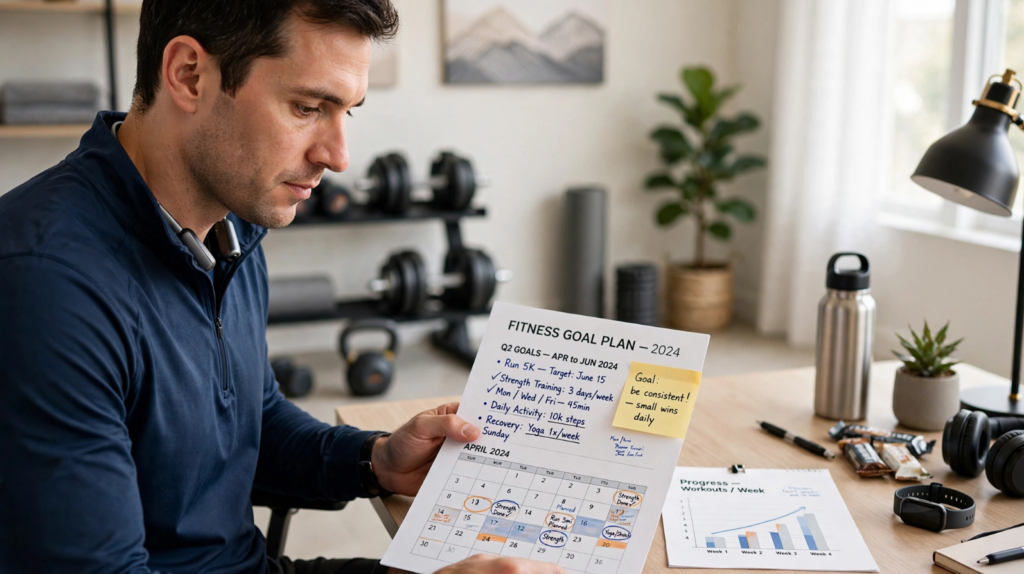
Keep a simple training log with:
- Date and Day
- Exercises performed
- Weight used (for weightlifting)
- Sets and Reps completed
- Perceived Effort (1–10 scale)
- Notes (form issues, how you felt, energy levels)
Sample Training Log Entry
| Date: 7/19/2026 | Day: Monday | Workout: Full Body A | |
|---|---|---|---|
| Exercise | Weight | Sets x Reps | Effort |
| Goblet Squats | 45 lbs | 3 x 10, 10, 9 | 7/10 |
| Push-ups | Bodyweight | 3 x 12, 10, 9 | 8/10 |
| Dumbbell Rows | 35 lbs | 3 x 12, 12, 11 | 7/10 |
| Plank | Bodyweight | 3 x 45s, 45s, 40s | 7/10 |
| Overhead Press | 30 lbs | 3 x 10, 9, 8 | 8/10 |
| Glute Bridges | Bodyweight | 3 x 20, 20, 20 | 6/10 |
Notes: Felt good today. Push-ups were challenging on the last set. Need to focus on keeping elbows at 45 degrees.
When to Progress
- Weightlifting: Increase weight when you can complete all reps with good form
- Calisthenics: Increase reps or progress to a harder variation when you can complete 3 sets of 15 with perfect form
- Core: Increase hold time or progress to a harder variation when you can hold for 60 seconds with perfect form
Section 8: Common Mistakes in Weekly Planning
Mistake 1: Doing Too Much Too Soon
The Fix: Start with 2–3 sessions per week. Your body needs time to adapt. Adding more sessions too quickly leads to overtraining, burnout, and injury.
Mistake 2: Neglecting Recovery
The Fix: Rest days are not “lazy days.” They’re an essential part of the training process. Your muscles repair and grow stronger during rest, not during workouts.
Mistake 3: Not Warming Up Properly
The Fix: Never skip the warm-up. Five to ten minutes of dynamic movement prepares your body for the work ahead and reduces injury risk.
Mistake 4: No Progression Plan
The Fix: Have a plan for how you’ll get stronger each week. If you’re not progressing, you’re stagnating. Track your workouts and apply progressive overload systematically.
Mistake 5: Ignoring Your Body’s Signals
The Fix: Pay attention to how you feel. If you’re excessively fatigued, experiencing joint pain, or feeling run down, take an extra rest day or reduce the intensity. Consistency over years is more important than intensity in any single session.
Section 9: Adjusting the Plan for Your Needs
If You’re a Beginner
- Start with Plan C (2 days/week)
- Use lighter weights and easier calisthenics variations
- Focus on form over intensity
- Build consistency first—don’t worry about progressing quickly
If You’re Short on Time
- Use Plan C or condense Plan A into 45-minute sessions
- Reduce rest periods (60 seconds instead of 90)
- Superset exercises (do two exercises back-to-back with minimal rest)
- Example: Squats superset with Push-ups
If You Want to Prioritize a Specific Goal
Strength Focus:
- Emphasize lower reps (5–8) with heavier weights
- Include more compound lifts (Squats, Deadlifts, Bench Press)
- Keep calisthenics as accessory work
Muscle Growth Focus:
- Emphasize moderate reps (8–12) with moderate weights
- Include more isolation exercises
- Use calisthenics for volume and variety
Functional Fitness Focus:
- Emphasize calisthenics and compound movements
- Include more core stability and balance work
- Use weights for strength maintenance
Section 10: FAQ—Your Top Weekly Planning Questions
Q: Can I do cardio on the same day as strength training?
A: Yes. For best results, do strength training first when you’re fresh, then cardio after. If you want to do cardio separately, morning cardio and afternoon strength training works well. Avoid high-intensity cardio before heavy leg training.
Q: What if I miss a workout?
A: Don’t panic. Just pick up where you left off. Don’t try to “make up” missed workouts by doing extra. Consistency over the long term matters more than perfection in any single week.
Q: How long should each workout take?
A: Plan A (3-day full body): 45–60 minutes. Plan B (4-day upper/lower): 45–60 minutes. Plan C (2-day minimalist): 30–45 minutes. This includes warm-up and cool-down.
Q: Can I do these workouts at home without a gym?
A: Yes, with some modifications:
- Replace barbell exercises with dumbbell or bodyweight variations
- Use a pull-up bar or sturdy table for rows and pull-ups
- Use chairs for dips
- Resistance bands add variety and progressive overload
Q: How much weight should I start with?
A: Start with a weight that allows you to complete all reps with good form but feels challenging. For beginners, this might be:
- Squats: Bodyweight or 10–20 lbs (goblet)
- Deadlifts: 20–30 lbs (dumbbells)
- Bench Press: 10–20 lbs per dumbbell
- Overhead Press: 5–10 lbs per dumbbell
Q: How do I know when to increase weight?
A: When you can complete all sets and reps with good form and still feel you could do 1–2 more reps, it’s time to increase the weight. Add 2.5–5 lbs (or 5–10 lbs for lower body) and test the new weight.
The VigorForty Take
A well-designed weekly plan is the difference between training and training effectively. It removes guesswork, builds consistency, and ensures you’re developing all the elements of fitness that matter most after 40: strength, muscle, joint health, and functional capacity.
The plans in this article give you everything you need:
- A balanced mix of weightlifting, calisthenics, and core work
- Progressive overload built into the schedule
- Adequate recovery to support growth
- Flexibility to fit your schedule and goals
Choose the plan that works for you:
- Plan A (3-day full body): Best for most people—balanced and efficient
- Plan B (4-day upper/lower): Best for those who want more focused sessions
- Plan C (2-day minimalist): Best for beginners or those with limited time
Start with the plan that fits your current schedule. As you build consistency, you can adjust volume, frequency, and intensity. The most important thing is to start—and keep going.
Your weekly plan is your commitment to yourself. Follow it, trust the process, and watch your strength, energy, and confidence grow.
This article was reviewed by the Vigor Forty Editorial Review Board on July 19, 2026.
🔗 Related Articles
- How to Combine Calisthenics and Weight Training for Maximum Results
- The Ultimate Beginner’s Guide to Strength Training
- 5 Foundational Movement Patterns for a Stronger Body
- What is Core Stability and Why Does It Matter for Every Lift?
Affiliate Disclosure: Some links in this article may be affiliate links. If you make a purchase through these links, Vigor Forty may earn a small commission at no extra cost to you. We only recommend products we trust.
Related Articles
- The Ultimate Beginner’s Guide to Strength Training (Weightlifting, Calisthenics, and Core)
- Weightlifting 101: A Simple Guide for Beginners
- Calisthenics for Beginners: Your First Bodyweight Workout Plan
- What is Core Stability and Why Does It Matter for Every Lift?
- 5 Foundational Movement Patterns for a Stronger Body
- Perfect Your Push-Up: A Step-by-Step Guide to Building Upper Body Strength
- How to Perform a Perfect Squat: Form Tips for Weightlifting and Bodyweight
- The Plank: More Than Just an Ab Exercise
- How to Combine Calisthenics and Weight Training for Maximum Results
- Sample Weekly Workout Plan: Combining Weights, Bodyweight, and Core
- The Importance of Progressive Overload in Strength Training
- How to Progress Calisthenics Exercises When Bodyweight Gets Easy
- Home Gym vs. Gym Membership: Which is Right for You?
- The Minimalist’s Guide to Strength Training: No Equipment Needed
- Top 5 Pieces of Equipment for a Home Strength Training Setup
- How to Choose the Right Weight for Your Workouts