
Author: Vigor Forty Editorial Team
Medically Reviewed By: Editorial Review Board
Disclaimer: This article is for informational purposes only and is not a substitute for professional medical advice. Read our full Medical Disclaimer.
📌 Key Takeaways
- Calisthenics and weightlifting are complementary, not competing: Each has unique strengths—weightlifting builds maximal strength and muscle size; calisthenics develops functional strength, body control, and joint stability. Combining them creates a complete strength program.
- The hybrid approach delivers the best of both worlds: You get the measurable progressive overload of weights and the functional, body-awareness benefits of bodyweight training.
- Periodization matters: How you combine them depends on your goals. You can do both in the same workout, alternate sessions, or block your training into phases.
- Balance is key: Avoid overemphasizing one method at the expense of the other. A well-designed hybrid program includes both pushing/pulling patterns and core stability work from both modalities.
- This approach is ideal for Americans over 40: It builds muscle, protects joints, improves mobility, and develops functional strength—everything you need to stay strong and capable through midlife and beyond.
Introduction: The Best of Both Worlds
For years, the fitness world was divided.
You had the weightlifting camp—barbells, dumbbells, progressive overload, and muscle hypertrophy. And you had the calisthenics camp—push-ups, pull-ups, bodyweight mastery, and functional movement.
Each side believed their approach was superior.
But here’s the truth: They’re both right. And they’re both wrong.
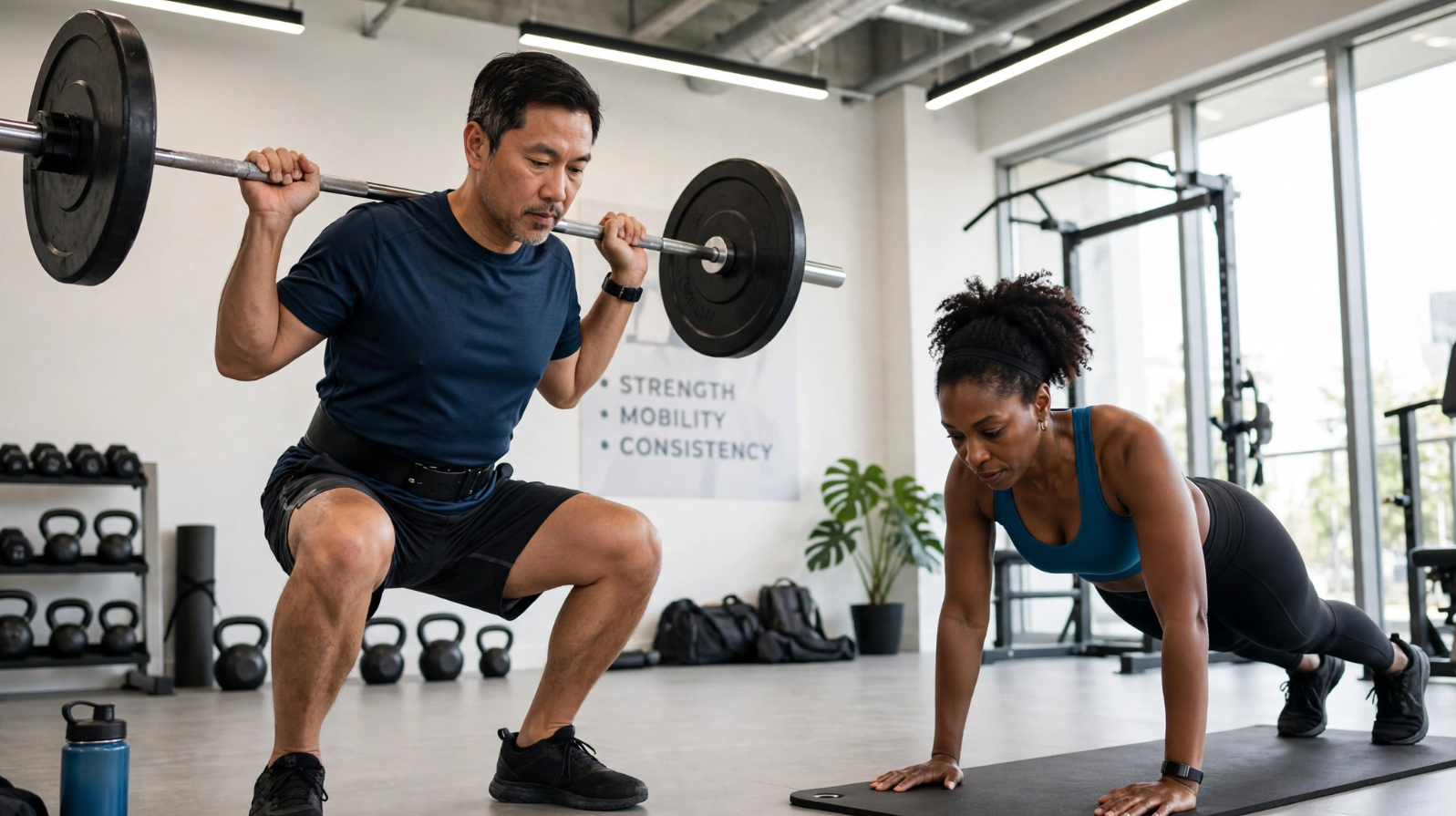
Weightlifting is the most efficient way to build maximal strength and muscle size. Calisthenics develops unparalleled body control, joint stability, and functional movement patterns. Neither is complete on its own. But together? They create a comprehensive strength training program that builds muscle, protects joints, and develops functional strength that translates to everyday life.
This is the hybrid approach—combining calisthenics and weight training for maximum results.
And it’s particularly powerful for Americans over 40. Why? Because as we age, we need both: the muscle-building stimulus of weights to combat sarcopenia (age-related muscle loss) and the joint-friendly, functional strength of calisthenics to maintain mobility and prevent injury.
Section 1: Why Combining Both Methods Works
Weightlifting: The Powerhouse
Strengths:
- Precise progressive overload: You can add weight in small increments (2.5–5 lbs) to drive continuous strength gains
- Maximal muscle hypertrophy: Heavy weights create the mechanical tension needed for significant muscle growth
- Measurable progress: You can track your strength gains objectively
- Targeted muscle development: Isolate specific muscles or address weaknesses
- Bone density benefits: Heavy loading stimulates bone formation, critical for preventing osteoporosis
Limitations:
- Requires equipment and often a gym
- Can be harsh on joints if form is compromised
- Less emphasis on body control and coordination
- May not translate directly to functional movement patterns
Calisthenics: The Sculptor
Strengths:
- Functional strength: Builds strength that translates directly to daily activities
- Joint health: Bodyweight exercises are generally joint-friendly and improve stability
- Body awareness: Develops proprioception and coordination
- Accessibility: No equipment required; can be done anywhere
- Core engagement: Almost every calisthenics exercise requires core stability
Limitations:
- Progressive overload is trickier: You need to modify leverage, tempo, or stability rather than just adding weight
- Maximal strength is limited: You’re limited by your body weight
- Isolation is difficult: Hard to target specific muscles in isolation
- Lower body development: Bodyweight squats and lunges can only build so much leg strength
The Hybrid Advantage
When you combine both methods, you get:
- Strength + Function: Maximal strength from weights + functional movement from calisthenics
- Muscle + Control: Hypertrophy from weights + body control from calisthenics
- Joint Protection: Calisthenics strengthens stabilizers and connective tissues, protecting joints during heavy lifting
- Variety + Sustainability: Mixing modalities keeps training interesting and reduces burnout
- Accessibility: You can train anywhere with calisthenics while also benefiting from the gym when you have access
Section 2: How to Structure Your Hybrid Program
There are several ways to combine calisthenics and weight training. The best approach depends on your goals, schedule, and preferences.
Option 1: Within the Same Workout (The Classic Hybrid)
Structure: Each workout includes both weightlifting and calisthenics exercises.
Example Full Body Workout:
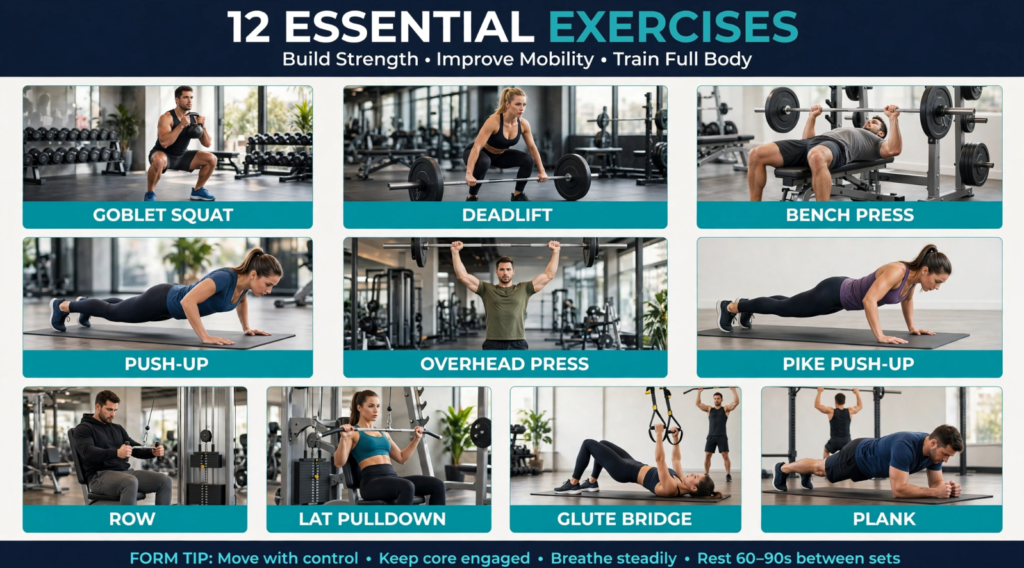
| Exercise | Type | Sets | Reps |
|---|---|---|---|
| Barbell Squats | Weightlifting | 3 | 8–10 |
| Push-ups | Calisthenics | 3 | 10–15 |
| Bent-Over Rows | Weightlifting | 3 | 8–10 |
| Plank | Calisthenics | 3 | 45–60 sec |
| Dumbbell Overhead Press | Weightlifting | 3 | 8–10 |
| Pull-ups (or assisted) | Calisthenics | 3 | 5–8 |
Best for: Beginners, those with limited time, anyone wanting a balanced approach in each session
Option 2: Alternating Sessions (Weight Days vs. Calisthenics Days)
Structure: You dedicate some workout days to weightlifting and others to calisthenics.
Sample Weekly Schedule:
| Day | Focus | Exercises |
|---|---|---|
| Monday | Weightlifting | Squats, Bench Press, Rows |
| Tuesday | Calisthenics | Push-ups, Pull-ups, Planks, Lunges |
| Wednesday | Rest | — |
| Thursday | Weightlifting | Deadlifts, Overhead Press, Pull-downs |
| Friday | Calisthenics | Dips, Bodyweight Rows, Core Circuit |
| Saturday | Active Recovery | Walking, stretching |
| Sunday | Rest | — |
Best for: Intermediate to advanced trainees who want focused sessions
Option 3: Block Periodization (Phased Approach)
Structure: You spend weeks or months focusing primarily on one method, then switch.
Example 12-Week Cycle:
- Weeks 1–4: Weightlifting focus (3 sessions/week) + light calisthenics (finishers)
- Weeks 5–8: Calisthenics focus (3 sessions/week) + light weightlifting (maintenance)
- Weeks 9–12: Hybrid (2 weightlifting + 2 calisthenics sessions/week)
Best for: Advanced trainees, athletes, those wanting to specialize temporarily
Option 4: Calisthenics as Accessory Work
Structure: Weightlifting forms the core of your program, with calisthenics used for accessory work, finishers, and warm-ups.
Example Workout:
- Main Lift: Barbell Squats (3 sets of 6–8)
- Main Lift: Bench Press (3 sets of 6–8)
- Main Lift: Bent-Over Rows (3 sets of 8–10)
- Accessory (Calisthenics): Push-ups (3 sets of max reps)
- Accessory (Calisthenics): Pull-ups (3 sets of max reps)
- Finisher (Calisthenics): Plank (3 sets of 60 seconds)
Best for: Those who primarily want to build strength and muscle with weights, while using calisthenics for conditioning
Option 5: Weightlifting as Accessory to Calisthenics
Structure: Calisthenics forms the core of your program, with weightlifting used to add load to specific movements.
Example Workout:
- Main Bodyweight: Push-ups (3 sets of max reps)
- Main Bodyweight: Pull-ups (3 sets of max reps)
- Main Bodyweight: Pistol Squat Progressions
- Accessory (Weightlifting): Weighted Dips (3 sets of 8–10)
- Accessory (Weightlifting): Dumbbell Rows (3 sets of 10–12)
- Finisher: Weighted Plank (3 sets of 45 seconds)
Best for: Calisthenics enthusiasts who want to add load to specific movements
Section 3: Sample Hybrid Weekly Programs
Program A: Full Body Hybrid (3 Days/Week)
Ideal for: Beginners, those with limited time, anyone wanting a balanced approach
Monday – Full Body A:
| Exercise | Type | Sets | Reps |
|---|---|---|---|
| Goblet Squats | Weightlifting | 3 | 10–12 |
| Push-ups (your variation) | Calisthenics | 3 | 8–12 |
| Dumbbell Rows | Weightlifting | 3 | 10–12 |
| Plank | Calisthenics | 3 | 45–60 sec |
| Dumbbell Overhead Press | Weightlifting | 3 | 8–10 |
| Glute Bridges | Calisthenics | 3 | 15–20 |
Wednesday – Full Body B:
| Exercise | Type | Sets | Reps |
|---|---|---|---|
| Dumbbell Deadlifts | Weightlifting | 3 | 10–12 |
| Dips (chair or bench) | Calisthenics | 3 | 8–12 |
| Lat Pulldowns (or Pull-ups) | Weightlifting | 3 | 8–10 |
| Side Plank | Calisthenics | 3 | 30–45 sec per side |
| Dumbbell Lunges | Weightlifting | 3 | 10–12 per leg |
| Bird Dogs | Calisthenics | 3 | 10–12 per side |
Friday – Full Body C:
| Exercise | Type | Sets | Reps |
|---|---|---|---|
| Barbell Squats | Weightlifting | 3 | 8–10 |
| Incline Push-ups (or weighted) | Calisthenics | 3 | 10–15 |
| Seated Cable Rows | Weightlifting | 3 | 10–12 |
| Dead Bugs | Calisthenics | 3 | 10–12 per side |
| Dumbbell Overhead Press | Weightlifting | 3 | 8–10 |
| Farmer’s Carries | Calisthenics (with weights) | 3 | 60 sec walk |
Program B: Upper/Lower Split (4 Days/Week)
Ideal for: Intermediate trainees who want to train more frequently and focus on specific muscle groups
Monday – Upper Body (Weightlifting Focus):
| Exercise | Type | Sets | Reps |
|---|---|---|---|
| Bench Press | Weightlifting | 4 | 6–8 |
| Bent-Over Rows | Weightlifting | 4 | 8–10 |
| Overhead Press | Weightlifting | 3 | 8–10 |
| Pull-ups | Calisthenics | 3 | Max |
| Plank | Calisthenics | 3 | 60 sec |
Tuesday – Lower Body (Calisthenics Focus):
| Exercise | Type | Sets | Reps |
|---|---|---|---|
| Bodyweight Squats | Calisthenics | 3 | 20 |
| Lunges | Calisthenics | 3 | 12–15 per leg |
| Glute Bridges | Calisthenics | 3 | 20 |
| Single-Leg Romanian Deadlifts | Weightlifting | 3 | 10–12 per leg |
| Hollow Body Hold | Calisthenics | 3 | 45 sec |
Thursday – Upper Body (Calisthenics Focus):
| Exercise | Type | Sets | Reps |
|---|---|---|---|
| Push-ups (weighted if possible) | Calisthenics | 4 | 10–15 |
| Bodyweight Rows | Calisthenics | 4 | 10–12 |
| Dips | Calisthenics | 3 | 8–12 |
| Face Pulls | Weightlifting | 3 | 15–20 |
| Side Plank | Calisthenics | 3 | 45 sec per side |
Friday – Lower Body (Weightlifting Focus):
| Exercise | Type | Sets | Reps |
|---|---|---|---|
| Barbell Squats | Weightlifting | 4 | 6–8 |
| Deadlifts | Weightlifting | 4 | 6–8 |
| Bulgarian Split Squats | Weightlifting | 3 | 8–10 per leg |
| Calf Raises | Weightlifting | 3 | 15–20 |
| Dead Bugs | Calisthenics | 3 | 12 per side |
Program C: The Minimalist Hybrid (2 Days/Week)
Ideal for: Extremely busy professionals, those new to strength training, anyone who wants to start simple
Day 1:
| Exercise | Type | Sets | Reps |
|---|---|---|---|
| Goblet Squats | Weightlifting | 3 | 10–12 |
| Push-ups | Calisthenics | 3 | 8–12 |
| Dumbbell Rows | Weightlifting | 3 | 10–12 |
| Plank | Calisthenics | 3 | 45 sec |
Day 2:
| Exercise | Type | Sets | Reps |
|---|---|---|---|
| Dumbbell Deadlifts | Weightlifting | 3 | 10–12 |
| Dips (chair) | Calisthenics | 3 | 8–12 |
| Dumbbell Overhead Press | Weightlifting | 3 | 8–10 |
| Bird Dogs | Calisthenics | 3 | 10–12 per side |
Section 4: The Principles of Hybrid Training
1. Progressive Overload Across Both Modalities
With Weights:
- Gradually increase the load (2.5–5 lbs at a time)
- Increase reps (e.g., from 8 to 10)
- Increase sets (e.g., from 3 to 4)
- Decrease rest periods
With Calisthenics:
- Progress to harder variations (e.g., knee push-ups → full push-ups → diamond push-ups)
- Add reps (e.g., from 10 to 15)
- Increase time under tension (slower reps, pauses)
- Add instability (e.g., using a stability ball, one-arm variations)
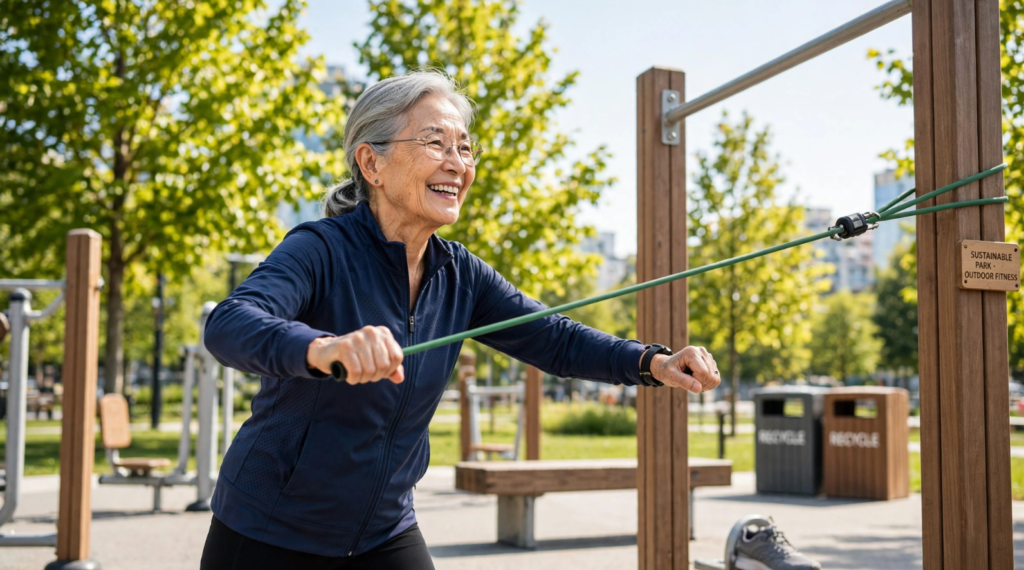
- Add weight (weighted vest, backpack, or resistance bands)
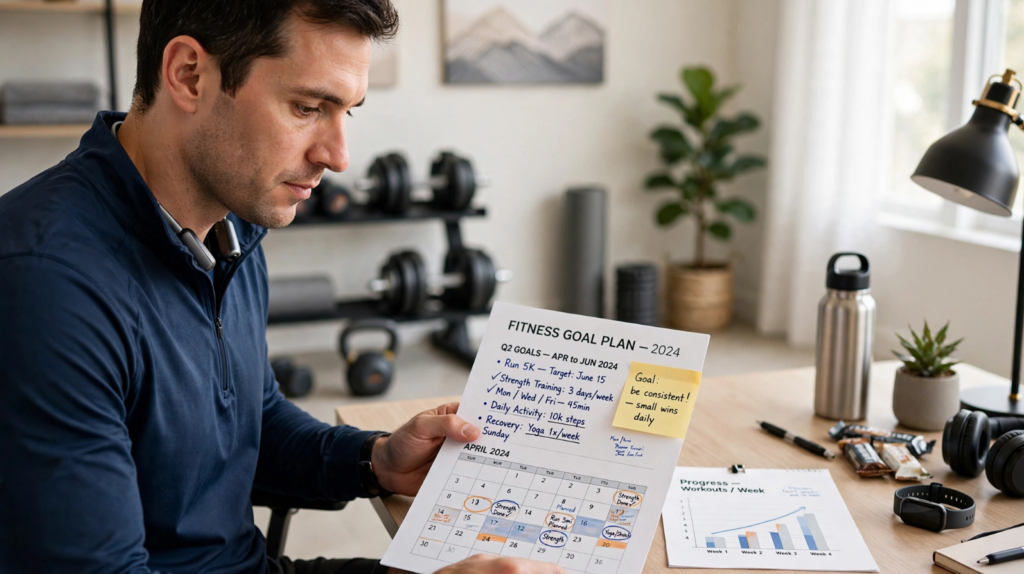
Key Point: Track your progress in both modalities. This is how you ensure you’re getting stronger across the board.
2. Balance Push and Pull
In both weightlifting and calisthenics, it’s critical to balance pushing and pulling movements to prevent muscle imbalances and shoulder issues.
Weightlifting Balance:
- Push exercises: Bench Press, Overhead Press
- Pull exercises: Rows, Pull-downs
Calisthenics Balance:
- Push exercises: Push-ups, Dips
- Pull exercises: Pull-ups, Bodyweight Rows
Rule of Thumb: Aim for roughly a 1:1 ratio of push to pull exercises in your weekly program.
3. Core Stability as the Foundation
Calisthenics excels at building core stability. Use calisthenics exercises to build the core strength that supports your heavy lifting.
Integration:
- Warm-up: 2 sets of Dead Bugs and Bird Dogs
- Between main lifts: Plank holds
- Finisher: Core circuit (Planks, Side Planks, Hollow Body Holds)
4. Joint Health and Mobility
Calisthenics exercises often involve full range-of-motion movements that improve joint health and mobility. Use them as a complement to weightlifting’s sometimes-compressive loading.
Example:
- Squat → Perform deep bodyweight squats with holds to improve hip and ankle mobility
- Overhead Press → Use band pull-aparts and scapular push-ups to improve shoulder health
- Deadlift → Use glute bridges and bird dogs to strengthen the posterior chain
Section 5: Common Mistakes in Hybrid Training
Mistake 1: Doing Too Much of One Method
The Fix: A balanced program includes both modalities in proportions that match your goals. Even if you prefer one method, include some work from the other.
Mistake 2: Neglecting Lower Body Calisthenics
The Fix: Many people use calisthenics for upper body and weights for lower body. While this can work, include some lower body calisthenics (squats, lunges, glute bridges) for mobility and joint health.
Mistake 3: Not Progressing in Either Modality
The Fix: Track your progress in both weightlifting (weights lifted) and calisthenics (reps achieved, variations mastered). If you’re not progressing in one, adjust your programming.
Mistake 4: Overtraining
The Fix: Combining two training methods can increase total training volume. Start with 3 sessions per week and build up. Listen to your body—fatigue is a sign to back off.
Mistake 5: Ignoring Recovery
The Fix: Recovery is even more critical when combining modalities. Prioritize sleep, nutrition, and rest days. Your body adapts during recovery, not during workouts.
Section 6: Progression Strategies for Hybrid Training
How to Progress in Weightlifting
Linear Progression:
- Add 2.5–5 lbs to the bar each week
- Example: Squat 135 lbs → 140 lbs → 145 lbs
Double Progression:
- Stay at the same weight until you can complete all sets and reps
- Example: 135 lbs for 3 sets of 8. When you can do 3 sets of 10, increase to 140 lbs
Volume Progression:
- Keep the weight the same but add sets or reps
- Example: 3 sets of 10 → 4 sets of 10 → 4 sets of 12
How to Progress in Calisthenics
Leverage Progression:
- Make the exercise harder by changing leverage
- Example: Incline Push-ups → Knee Push-ups → Full Push-ups → Diamond Push-ups
Tempo Progression:
- Slow down the movement
- Example: 3 seconds down, 3 seconds up
Range of Motion Progression:
- Increase the depth or range of motion
- Example: Partial Squats → Parallel Squats → Full Squats
Rep Progression:
- Add reps while maintaining perfect form
- Example: 3 sets of 10 → 3 sets of 12 → 3 sets of 15
Weighted Progression:
- Add external weight (vest, backpack, bands)
- Example: Weighted Push-ups → Weighted Pull-ups
Section 7: The VigorForty Hybrid Philosophy
We believe the ideal approach for Americans over 40 is:
- Start with a foundation of calisthenics: Build body awareness, joint stability, and basic strength with bodyweight exercises.
- Add weightlifting for maximal strength: Once you have a solid base, add weightlifting to build maximal strength and muscle mass.
- Maintain both modalities: Include both methods in your weekly program. Use weights for primary lifts and calisthenics for accessory work, warm-ups, and finishers.
- Progress intentionally: Track your progress in both modalities. Ensure you’re getting stronger in both.
- Prioritize recovery: As you age, recovery becomes more critical. Sleep, nutrition, and rest days are non-negotiable.
The Ultimate Hybrid Framework
Warm-Up (5–10 minutes):
- Light cardio (jumping jacks, stationary bike)
- Dynamic stretches (arm circles, leg swings, torso twists)
- Core activation (Dead Bugs, Bird Dogs)
Main Lift (Weightlifting, 3–4 sets of 6–10 reps):
- Squat, Deadlift, Bench Press, or Overhead Press
- This builds maximal strength
Secondary Lift (Weightlifting, 3 sets of 8–12 reps):
- Lunges, Rows, Pull-downs, or Push Press
- This builds muscle mass
Calisthenics Circuit (3 rounds, as many reps as possible with good form):
- Push-ups (or variation)
- Pull-ups (or variation)
- Squats (or variation)
- Core (Plank or variation)
Finisher (3 sets of 45–60 seconds):
- Plank
- Side Plank
- Hollow Body Hold
Cool-Down (5 minutes):
- Static stretching
- Deep breathing
Section 8: FAQ—Your Top Hybrid Training Questions
Q: Should I do weightlifting or calisthenics first in a workout?
A: It depends on your goals. If you want to prioritize strength, do weightlifting first (when you’re fresh). If you want to prioritize body control and movement quality, do calisthenics first. For most people, a mix works—alternate which you start with each session.
Q: Can I build muscle with calisthenics alone?
A: Yes, calisthenics can build significant muscle—especially for beginners and intermediates. However, weightlifting is more efficient for maximal muscle hypertrophy. Combining both gives you the best of both worlds.
Q: Do I need a gym to combine calisthenics and weightlifting?
A: Not necessarily. You can do a hybrid program at home with a pull-up bar, resistance bands, and a set of adjustable dumbbells. However, a gym gives you access to barbells, heavy weights, and machines for maximal strength development.
Q: How many times per week should I train with a hybrid approach?
A: 3–4 sessions per week is ideal for most people. This allows you to train each muscle group 2–3 times per week while allowing adequate recovery. Start with 3 sessions and increase to 4 if you’re recovering well.
Q: Is the hybrid approach better than sticking to one method?
A: For most people, yes. Combining calisthenics and weightlifting gives you a more complete training program than either method alone. You get the strength and muscle benefits of weights and the functional strength, joint health, and body control benefits of calisthenics.
Q: How do I progress if I’m a beginner?
A: Start with 2–3 sessions per week. Focus on mastering the basics in both modalities. Progress by:
- Adding 2.5–5 lbs to your main lifts each week (if possible)
- Progressing to harder calisthenics variations
- Adding reps or sets
Q: Can hybrid training help with weight loss?
A: Yes. Strength training—whether with weights or bodyweight—builds muscle, which increases your resting metabolic rate. The combination of modalities keeps training interesting and sustainable, which supports long-term consistency. Caloric expenditure during training is also significant.
The VigorForty Take
The debate between weightlifting and calisthenics is over. The answer is: both.
Weightlifting builds the raw strength and muscle mass that fights age-related decline. Calisthenics builds the functional strength, joint stability, and body control that allows you to move confidently and without pain. Together, they create a complete strength training program that serves you for life.
The hybrid approach is not about choosing one over the other—it’s about using each for what it does best.
The beauty of hybrid training is its flexibility. Whether you have access to a fully equipped gym or just a pull-up bar and a pair of dumbbells, you can combine both methods to create a program that works for you. Start with the basics. Focus on form. Progress intentionally. And stay consistent.
This is how you build a body that’s strong, capable, and resilient—at 40, 50, 60, and beyond.
This article was reviewed by the Vigor Forty Editorial Review Board on July 19, 2026.
🔗 Related Articles
- The Ultimate Beginner’s Guide to Strength Training
- Weightlifting 101: A Simple Guide for Beginners
- Calisthenics for Beginners: Your First Bodyweight Workout Plan
- 5 Foundational Movement Patterns for a Stronger Body
Affiliate Disclosure: Some links in this article may be affiliate links. If you make a purchase through these links, Vigor Forty may earn a small commission at no extra cost to you. We only recommend products we trust.
Related Articles
- The Ultimate Beginner’s Guide to Strength Training (Weightlifting, Calisthenics, and Core)
- Weightlifting 101: A Simple Guide for Beginners
- Calisthenics for Beginners: Your First Bodyweight Workout Plan
- What is Core Stability and Why Does It Matter for Every Lift?
- 5 Foundational Movement Patterns for a Stronger Body
- Perfect Your Push-Up: A Step-by-Step Guide to Building Upper Body Strength
- How to Perform a Perfect Squat: Form Tips for Weightlifting and Bodyweight
- The Plank: More Than Just an Ab Exercise
- How to Combine Calisthenics and Weight Training for Maximum Results
- Sample Weekly Workout Plan: Combining Weights, Bodyweight, and Core
- The Importance of Progressive Overload in Strength Training
- How to Progress Calisthenics Exercises When Bodyweight Gets Easy
- Home Gym vs. Gym Membership: Which is Right for You?
- The Minimalist’s Guide to Strength Training: No Equipment Needed
- Top 5 Pieces of Equipment for a Home Strength Training Setup
- How to Choose the Right Weight for Your Workouts