Author: Vigor Forty Editorial Team
Medically Reviewed By: Editorial Review Board
Disclaimer: This article is for informational purposes only and is not a substitute for professional medical advice. Read our full Medical Disclaimer.
📌 Key Takeaways
- Beyond “No Pain, No Gain”: Chronic inflammation from high-impact, ego-driven workouts destroys joint cartilage. Low-impact, intentional functional strength training is the true fountain of youth.
- The Joint-Muscle Alliance: You cannot preserve joint health without preserving muscle mass, and vice versa. The two systems are biologically inseparable, especially after 40.
- The “Barefoot” Re-Education: Foot strength and ankle mobility directly dictate knee and hip alignment. Rebuilding your foundation from the ground up is non-negotiable.
- Micro-Dosing Movement: A 20-minute daily practice outperforms a weekly two-hour punishing session for synovial fluid circulation and long-term tissue remodeling.
Read Related Articles
- The Non-Negotiable Blueprint: How to Build an Age-Defying Body After 4
- Knee Longevity: 5 Non-Surgical Strengthening Protocols Your Orthopedic Surgeon Agrees With
- The Deep Core Canister: Building a Natural Back Brace from the Inside Out
- Hip Integrity: Unlocking Mobility to Extend Your Movement Age
- Fast-Twitch After 50: Why Power (Not Just Strength) Prevents Falls
- The Essential Recovery Toolkit: Anti-Inflammatory Nutrition for Joint Preservation
Introduction: The Reckoning at 40
There is a moment that arrives, usually unannounced, somewhere in the fourth decade of life. It might appear as a stiff lower back when you rise from bed in the morning. It could be a sharp pinch in the front of your knee when descending a flight of stairs. Perhaps it is the unsettling realization that your golf swing has shortened, your tennis serve has slowed, or you no longer trust your body to sprint across the yard with your children without a week of recovery.
This is the reckoning. The body you once pushed through grueling two-hour gym sessions, contact sports, and weekend warrior extremes is no longer responding the way it used to. The old playbook—push harder, ignore the pain, sleep it off—has expired. Continuing to apply the training principles of a 25-year-old to a 45-year-old body is not discipline; it is a strategic error with compounding biological consequences.
The fitness industry has largely failed the over-40 demographic. It offers two extremes: the high-intensity, beat-down culture that grinds joints into premature osteoarthritis, or a soft, ineffective approach that treats aging as a terminal diagnosis requiring nothing more than gentle walks and seated machines. Neither path leads to a vigorous, pain-free, independent future.
There is a third way. It is called functional fitness for longevity, and it is built on a simple, non-negotiable blueprint. This is not a workout program. This is a biological operating system for the second half of life.
Section 1: The Biological Shift — What Actually Happens After 40
To build an age-defying body, you must first understand the biological terrain you are now navigating. Several interconnected physiological shifts begin to accelerate after age 40, and they dictate how you must train, eat, and recover.
The Anabolic Resistance Cascade
As natural circulating levels of testosterone, growth hormone, and insulin-like growth factor-1 (IGF-1) gradually decline, skeletal muscle tissue becomes less sensitive to the anabolic stimulus of dietary protein. This phenomenon, termed anabolic resistance, means the same meal that built muscle at age 25 may only maintain it at age 50. You must be more precise with protein quantity, quality, and distribution to achieve the same tissue-building response.
Collagen Synthesis Slows
The fibroblasts that produce collagen—the structural protein that gives tensile strength to tendons, ligaments, joint capsules, and cartilage—become less prolific. Tendon stiffness increases, but elastic resilience decreases. This creates a dangerous combination: tissues that are brittle rather than springy, prone to tearing under loads that were once handled easily.
Synovial Fluid Depletion
Articular cartilage, the smooth, white, shock-absorbing surface at the ends of your bones, has no direct blood supply. It relies entirely on the ebb and flow of synovial fluid for nutrition and waste removal. This fluid is circulated by movement—specifically, full-range, compressive and decompressive motion that squeezes and releases the cartilage like a sponge. Sedentary behavior and abbreviated movement patterns starve the cartilage, accelerating degenerative thinning.
Neuromuscular Speed Fades
The motor neurons that innervate your largest, most powerful Type II muscle fibers begin to retract and die off if not regularly stimulated with high-velocity signals. This is why an active 60-year-old can still have strong-looking legs but struggle to catch himself when he trips. The muscle mass is present, but the high-speed neural connection has atrophied.
These biological realities are not a reason to despair. They are a call to action. They demand a deliberate, scientifically-grounded training shift from performance to preservation, from ego to intentionality.
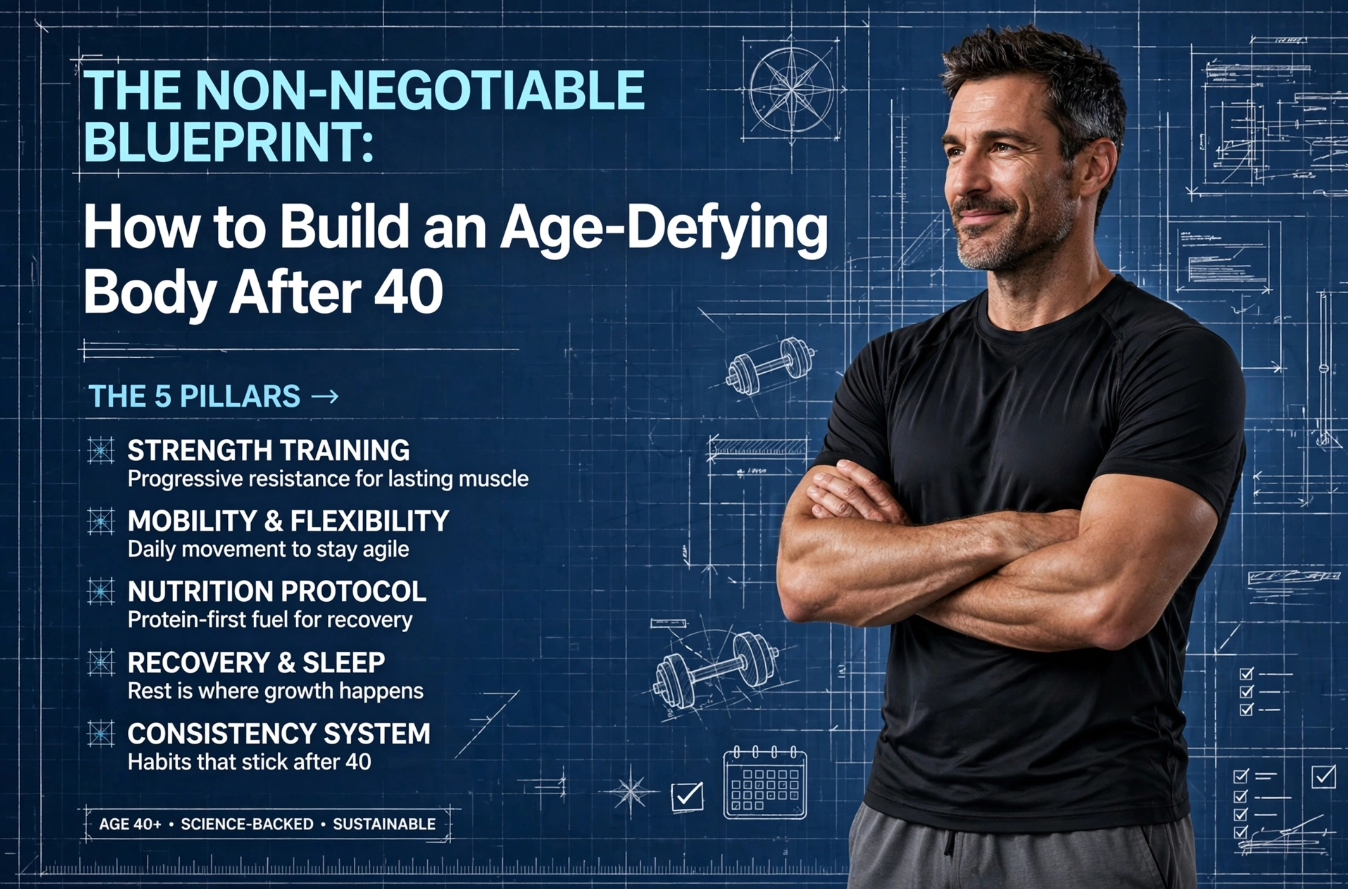
Section 2: The Five Pillars of the Age-Defying Blueprint
This blueprint rests on five interconnected pillars. Each supports the others. Neglect one, and the entire structure becomes vulnerable.
Pillar 1: Master the Movement Screen First
Before you add a single pound of external load, you must audit your fundamental movement patterns. The body operates on a prioritized hierarchy: mobility before stability, stability before strength, and strength before power. Most men over 40 walk into a gym and immediately violate this hierarchy, loading dysfunctional patterns and baking in compensation injuries.
The essential movement screen evaluates seven primal patterns:
| Pattern | Daily Life Application |
|---|---|
| Squat | Rising from a chair, getting off the toilet |
| Hinge | Picking up a bag of mulch, lifting a toddler |
| Lunge | Walking upstairs, stepping over obstacles |
| Push | Opening a heavy door, pushing a lawnmower |
| Pull | Rowing a boat, pulling a suitcase handle |
| Rotate | Reaching into the back seat of a car |
| Gait | Walking with a fluid, balanced stride |
If any of these patterns are restricted, asymmetrical, or painful when performed with body weight alone, adding a barbell or dumbbell to the equation multiplies the dysfunction. Spend two to four weeks auditing and correcting these patterns. The reward is a body that moves as a unified, efficient system rather than a collection of compensations.
Pillar 2: Pressurize the Canister — Core Stability Over Core Aesthetics
The deep core is not the rectus abdominis you see in the mirror. It is a hydraulic canister formed by the diaphragm above, the pelvic floor below, the transverse abdominis wrapping around the front and sides, and the multifidus locking the vertebrae together in the back. When these four structures co-contract with proper timing, they create intra-abdominal pressure that stabilizes the lumbar spine before any limb moves.
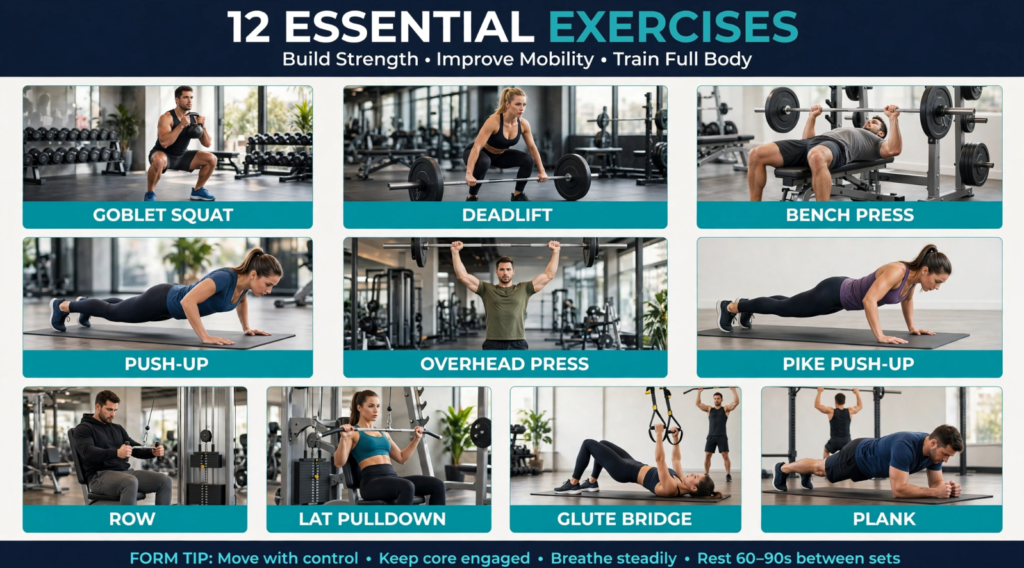
Training this system abandons crunches—which exacerbate the chronic flexion posture of desk work—in favor of anti-rotation and anti-extension exercises like the Pallof press, dead bug, and loaded carry. A pressurized canister is the biological back brace that protects your discs during every lift, twist, and reach.
Pillar 3: Save the Hinges — Knee and Hip Preservation
The knee is a passive hinge caught between the hip and ankle. It rarely generates its own problems. Knee pain is almost always a downstream symptom of poor hip control (weak glutes, tight hip flexors) or poor ankle mobility (limited dorsiflexion). Treating knee pain by solely focusing on the knee—icing, bracing, avoiding stairs—is like fixing a check engine light by unplugging the dashboard sensor.
Hip integrity, meanwhile, is the command center. The hips govern pelvic alignment, which dictates lumbar spine position, which cascades all the way up to the neck. Restoring full hip range of motion, particularly hip extension and internal rotation, creates the biological space for all lower-body movement to function without impingement or compensation.
Pillar 4: Keep the Springs Alive — Power and Reactivity
Strength is the ability to produce force. Power is the ability to produce force quickly. After age 50, power declines up to three times faster than strength. This specific loss of fast-twitch function—dynapenia—is the primary reason older adults fall. They don’t lack the strength to catch themselves; they lack the speed to call that strength into action before their body hits the ground.
Safe power training for the aging body does not require heavy Olympic lifts. It uses medicine ball slams, low box step-up drives, altitude drop landings, and lateral bounds. The key variable is the intention to move as explosively as possible. Every repetition must be a maximum-velocity signal to the nervous system, re-myelinating the fast-twitch pathways and preserving the biological springs.
Pillar 5: Fuel the Structure — Anti-Inflammatory Nutrition and Recovery
Training breaks down tissue. Recovery builds it back stronger. After 40, the recovery window narrows, and the margin for nutritional error shrinks. The age-defying body requires a deliberate combination of:
- Precision Protein: 1.6 to 2.0 grams per kilogram of bodyweight daily, distributed across 3-4 meals to overcome anabolic resistance.
- Omega-3 Fatty Acids: EPA and DHA from cold-water fish or algae oil, directly suppressing the chronic systemic inflammation that degrades joint cartilage.
- Collagen Co-Factors: Vitamin C-rich foods paired with collagen or glycine-rich bone broth to support the synthesis of tendon and ligament tissue.
- Sleep Architecture: 7-8 hours of quality sleep, during which growth hormone pulses drive tissue repair. Sleep deprivation directly elevates cortisol, which is catabolic to muscle and bone.
Section 3: The “Micro-Dosing” Revolution — Your Weekly Template
The outdated model of fitness was built around the idea of the “workout”—a single, exhausting, hour-long block of exercise performed three to four times per week, with sedentary behavior dominating the remaining hours. This model fails the aging body in two ways: it concentrates joint stress into damaging, high-dose events, and it leaves the body inactive for too long between sessions.
The modern blueprint embraces micro-dosing: brief, intentional movement practices distributed throughout the day and week. This approach mirrors how the human body evolved—constant, varied, low-to-moderate intensity activity punctuated by brief, intense bursts.
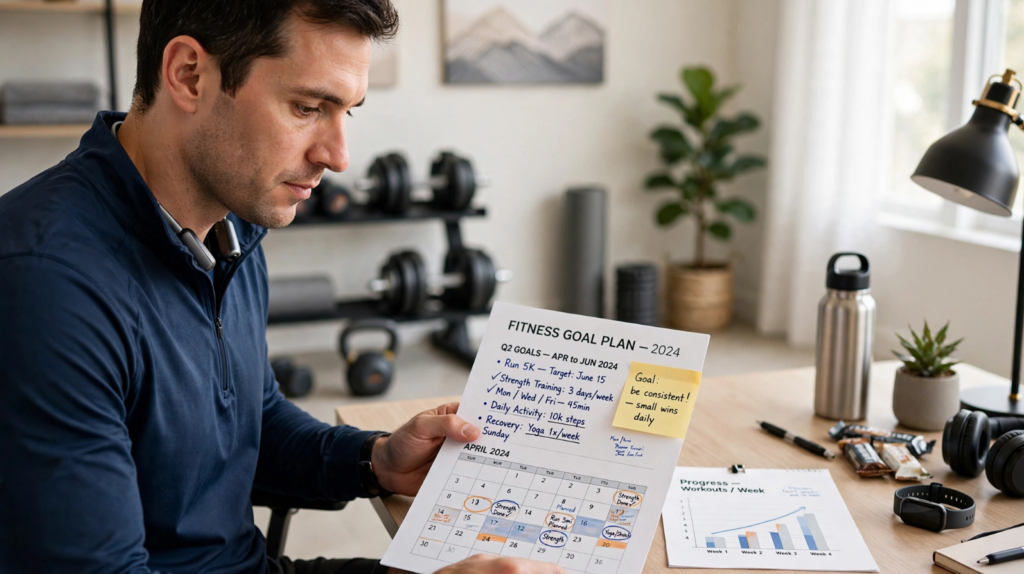
Sample Weekly Template (Total Commitment: 3-4 hours per week)
| Day | Morning Flow (5-10 min) | Main Session (20-30 min) | Daily Habit |
|---|---|---|---|
| Monday | Hip CARs + Ankle Mobility | Lower Body Strength (Squat, Deadlift Variations) | 10-minute walk after lunch |
| Tuesday | Thoracic Spine Rotations | Upper Body Push/Pull + Core Canister Breath Work | Stoplight brace at red lights |
| Wednesday | Full Body Joint Circles | 30-Minute Brisk Walk or Swim | Supported primal squat hold (2 min) |
| Thursday | Hip Flexor Active Release | Power Session (Medicine Ball Slams, Step Drives) | Single-leg balance while brushing teeth |
| Friday | Morning Hip Flow | Full Body Functional Strength + Loaded Carries | 10-minute walk after dinner |
| Saturday | Gentle Yoga or Tai Chi | Active Recreation (Hike, Golf, Tennis, Cycling) | Hydration focus |
| Sunday | Complete Rest | None | Meal prep with anti-inflammatory focus |
Section 4: The GLP-1 Era — Why This Blueprint Is More Critical Than Ever
The landscape of weight management has been transformed by GLP-1 receptor agonist medications like semaglutide and tirzepatide. For millions of American men over 40, these drugs offer a powerful tool to finally shed decades of accumulated excess body fat.
However, rapid pharmaceutical weight loss creates a structural vulnerability that demands this exact blueprint. When the body enters a steep caloric deficit, whether through diet or medication, it does not selectively burn fat. Without targeted intervention, a significant percentage of the weight lost comes from skeletal muscle and bone mineral density.
The body, sensing an energy crisis, prioritizes the breakdown of metabolically expensive Type II fast-twitch fibers. The external body mass that once provided passive joint stability and intra-abdominal pressure disappears. The individual steps on the scale and celebrates a lower number, but their internal structural scaffolding has been silently hollowed out.
This blueprint is the essential countermeasure. The combination of functional resistance training, high-protein intake, explosive power preservation, and deliberate joint mobility work sends a clear, powerful signal to the body: preserve this tissue, it is essential for survival. The synergy of modern pharmacology and intentional functional fitness is arguably the most potent longevity intervention available today.
Section 5: The 30-Year Healthspan Vision
The traditional fitness conversation focuses on “looking good naked” or achieving a one-rep max. These goals, while valid in certain contexts, are dramatically insufficient for the man who wants to thrive past 40, 60, and 80.
Reframe your timeline. You are not training for a beach trip next August. You are training to be the 80-year-old who:
- Stands up from a low chair without using his hands.
- Carries his own luggage through the airport with confidence.
- Gets down on the floor to play with grandchildren and rises without assistance.
- Walks 18 holes of golf without a stiff, aching back the next morning.
- Catches himself mid-stumble on an uneven sidewalk, sparing himself a hip fracture that statistics say will dramatically shorten his remaining years of independence.
This is the true definition of an age-defying body. It is not a physique that defies wrinkles or gray hair. It is a musculoskeletal system that defies fragility, dependence, and fear. It is a body that remains a capable, reliable vehicle for a vigorous life until the very end.
The blueprint is here. The biological need is urgent. The only remaining variable is your decision to act.
Next Steps: Dive Deeper Into Each Pillar
This article serves as the foundational overview. Each pillar is explored in precise, actionable detail in its own dedicated guide. Click below to continue building your age-defying body, one system at a time:
- [Knee Longevity: 5 Non-Surgical Strengthening Protocols Your Orthopedic Surgeon Agrees With]
- [The Deep Core Canister: Building a Natural Back Brace from the Inside Out]
- [Hip Integrity: Unlocking Mobility to Extend Your Movement Age]
- [Fast-Twitch After 50: Why Power (Not Just Strength) Prevents Falls]
- [The Essential Recovery Toolkit: Anti-Inflammatory Nutrition for Joint Preservation]