
Author: Vigor Forty Editorial Team
Medically Reviewed By: Editorial Review Board
Disclaimer: This article is for informational purposes only and is not a substitute for professional medical advice. Read our full Medical Disclaimer.
Key Takeaways
- Neuroplasticity in Action: Meditation is not about “clearing your mind”; it is a form of resistance training for your brain that physically alters grey matter density over time.
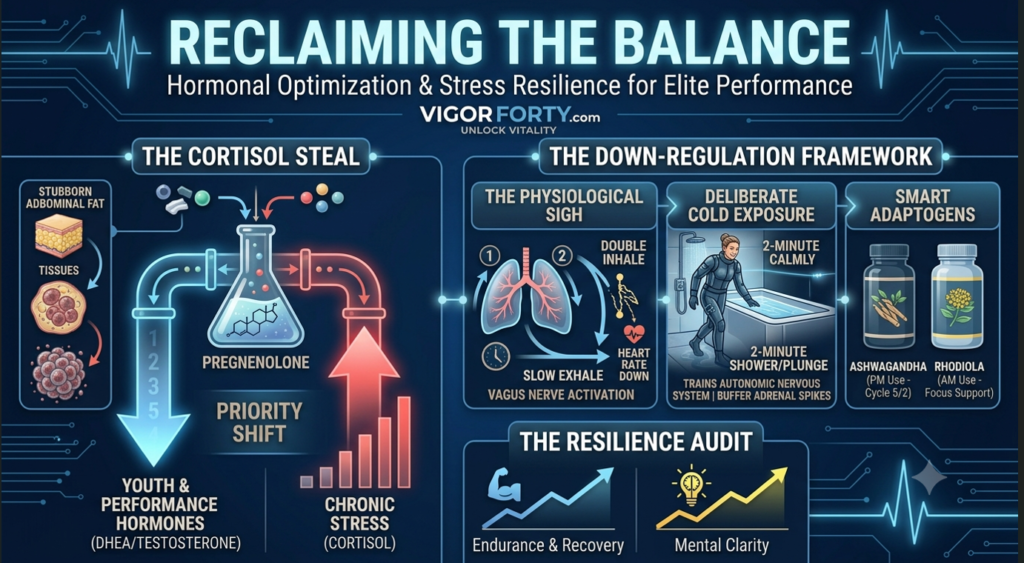
- Shrinking the Amygdala: Neuroimaging shows that consistent mindfulness practice shrinks the amygdala (the brain’s fear and stress center) while thickening the prefrontal cortex (the seat of logic and emotional control).
- The Default Mode Network (DMN): Meditation turns down the DMN—the brain network responsible for mind-wandering, worrying about the future, and negative self-talk.
- Clinical Alignment: Johns Hopkins Research and the National Institutes of Health (NIH) classify meditation as an effective clinical intervention for managing chronic pain, anxiety, and depressive symptoms.
Read Related Articles:
- The Cortisol Reset Protocol
- The Anatomy of Breathwork
- Meditation for the Stressed Brain
- The Vagal Tone: Your Nervous System’s Volume Knob
- The Circadian Stress Connection
- The Gut-Brain Axis: Neurochemistry of Stress
- Hormesis: Building Stress Resilience Through Physical Adversity
- Neuro-Architecture: Designing Spaces to De-Excite the Amygdala
- Social Jetlag and Chrono-Stress
- Digital Dopamine Detox: Rewiring the Attention-Stressed Brain
- Psychoneuroimmunology: How Stress Paralyzes Your Immune System
- Autophagy: The Cellular Housekeeping of Stress Recovery
- Decision Fatigue and Executive Stress
- Epigenetics: Rewriting Your Inherited Stress Response
- The Endocannabinoid System: The Body’s Equilibrium Engine
Introduction: The Neurological Default
Many people try meditation once, find that their mind is racing, and quit because they think they “can’t do it.” This stems from a misunderstanding of how the human brain operates. Left to its own devices, the human brain default setting is to wander, look for problems, and worry about what’s coming next.
Neurological data shows that our modern digital environment exploits this default setting, leaving us with fragmented attention spans and chronic mental fatigue. This state isn’t a personal failure; it is the natural consequence of an untrained brain reacting to constant stimulation. Meditation is the tool to retrain that system, offering a validated path to physically rewire your brain for resilience.
Section 1: The Neuroscience of Mindfulness
To appreciate mindfulness, we have to look past the spiritual tropes and look at neuroimaging data. When you sit in meditation, your brain undergoes measurable structural transformations through a process called neuroplasticity.
Specifically, regular meditation targets three key areas of the brain:
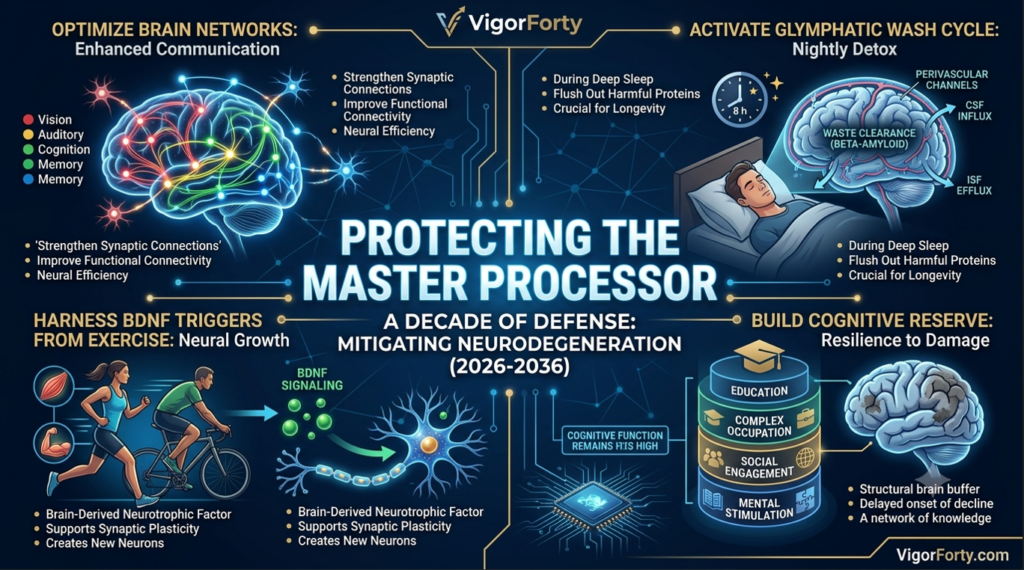
- The Prefrontal Cortex (The Anchor): Located right behind your forehead, this area handles decision-making, focus, and emotional regulation. Meditation increases grey matter density here, allowing you to respond to life’s stressors rather than reacting impulsively.
- The Amygdala (The Alarm System): This is the primal part of your brain that triggers the fight-or-flight response. In chronically stressed individuals, the amygdala is enlarged and hyper-reactive. Meditation physically shrinks the amygdala, lowering your baseline stress level.
- The Anterior Cingulate Cortex (The Pivot): This region governs your ability to redirect your attention when your mind wanders. Strengthening this area helps you quickly catch yourself slipping into negative thought patterns and bring your focus back to the present.
Section 2: Overcoming Meditation Barriers (The Practical Guide)
You do not need to sit cross-legged on the floor for an hour to enjoy the neurological benefits of meditation. Even a few minutes of daily, focused practice yields notable shifts in your stress response.
The table below replaces common misconceptions about meditation with practical, evidence-based practices:
| The Misconception | The Scientific Reality | How to Practice Today |
| “I can’t meditate because I can’t stop my thoughts.” | Thoughts are completely normal. Meditation is simply the act of noticing that your mind has wandered and gently bringing it back. | Breath-Focus Meditation (5 Min): Sit comfortably. Count your breaths from 1 to 10. When your mind wanders (and it will), simply restart at 1 without judging yourself. |
| “I don’t have 30 minutes in my day to sit quietly.” | Short, consistent sessions are vastly superior to long, sporadic ones. 5 minutes every day rewires the brain faster than 30 minutes once a week. | Micro-Mindfulness (2 Min): Pick a routine task (like washing dishes or drinking tea) and focus entirely on the physical sensations—the temperature, smells, and textures. |
| “Meditation is too passive to help with my real-world stress.” | Meditation trains your brain to pause before reacting, breaking automatic stress habits. | Open Awareness Practice: When an uncomfortable emotion arises (like frustration in traffic), label it mentally (“Here is frustration”) without fighting it, then let it pass. |
Section 3: The Medical Block (Johns Hopkins & NIH Guidelines)
The clinical validation of meditation has moved it from alternative medicine directly into mainstream healthcare protocols.
Johns Hopkins Medicine
A comprehensive meta-analysis conducted by researchers at Johns Hopkins University evaluated thousands of participants and concluded that mindfulness meditation programs produce measurable reductions in psychological stress, anxiety, and depression—with efficacy rates matching those of traditional anti-depressants for certain populations. Their medical findings emphasize that structured meditation programs significantly alleviate the cognitive burdens of chronic illness.
The National Institutes of Health (NIH)
The NIH, through the National Center for Complementary and Integrative Health (NCCIH), actively funds research into the biological mechanisms of mindfulness. The NIH guidelines explicitly state that meditation practices reduce blood pressure, ease symptoms of irritable bowel syndrome (IBS), and help manage insomnia. The federal health agency formally recognizes meditation as a safe, highly effective, non-invasive therapeutic approach to stress management.