
Author: Vigor Forty Editorial Team
Medically Reviewed By: Editorial Review Board
Disclaimer: This article is for informational purposes only and is not a substitute for professional medical advice. Read our full Medical Disclaimer.
Key Takeaways
- Hormesis Defined: It is a biological phenomenon where a brief, controlled dose of an environmental stressor (like cold, heat, or exercise) triggers an over-compensation mechanism that leaves the body more resilient.
- Heat Shock Proteins (HSPs): Brief exposure to high heat (saunas) activates HSPs, which repair damaged cellular structures, clear out metabolic waste, and reduce overall systemic inflammation.
- Mitochondrial Biogenesis: Short-term, acute stressors force your cells to clear away old, weak mitochondria and build new, highly efficient ones, drastically improving cellular energy.
- Clinical Alignment: The American College of Sports Medicine (ACSM) and the National Institutes of Health (NIH) classify hormetic stressors as vital preventative interventions for cellular longevity and emotional regulation.
Read Related Articles:
- The Cortisol Reset Protocol
- The Anatomy of Breathwork
- Meditation for the Stressed Brain
- The Vagal Tone: Your Nervous System’s Volume Knob
- The Circadian Stress Connection
- The Gut-Brain Axis: Neurochemistry of Stress
- Hormesis: Building Stress Resilience Through Physical Adversity
- Neuro-Architecture: Designing Spaces to De-Excite the Amygdala
- Social Jetlag and Chrono-Stress
- Digital Dopamine Detox: Rewiring the Attention-Stressed Brain
- Psychoneuroimmunology: How Stress Paralyzes Your Immune System
- Autophagy: The Cellular Housekeeping of Stress Recovery
- Decision Fatigue and Executive Stress
- Epigenetics: Rewriting Your Inherited Stress Response
- The Endocannabinoid System: The Body’s Equilibrium Engine
Introduction: The Comfort Paradox
Modern humans live in an unprecedented state of environmental comfort. We spend our days in climate-controlled rooms, sit in ergonomic chairs, and have food delivered directly to our doors at any hour. Yet, despite eliminating almost all immediate physical stressors, our psychological stress levels are at an all-time high.
Physiological data indicates that this lack of acute physical challenge is making us fragile. Without regular, brief physical stressors, our cellular defense mechanisms become lazy and atrophied. This is known as the comfort paradox: by shielding ourselves from all physical discomfort, we lower our baseline resilience, making our brains hyper-reactive to mental stressors. To build a truly stress-resistant mind, we must intentionally reintroduce controlled doses of physical adversity—a biological process known as hormesis.
Section 1: The Molecular Biology of Controlled Shock
The principle of hormesis is simple: what doesn’t kill you makes your cells stronger. When you experience an acute, short-term stressor, your body enters a brief state of crisis. Rather than degrading your tissues, this controlled shock acts as a cellular wake-up call, turning on protective genes that remain dormant in comfortable environments.
This adaptation process operates across three primary biological pathways:
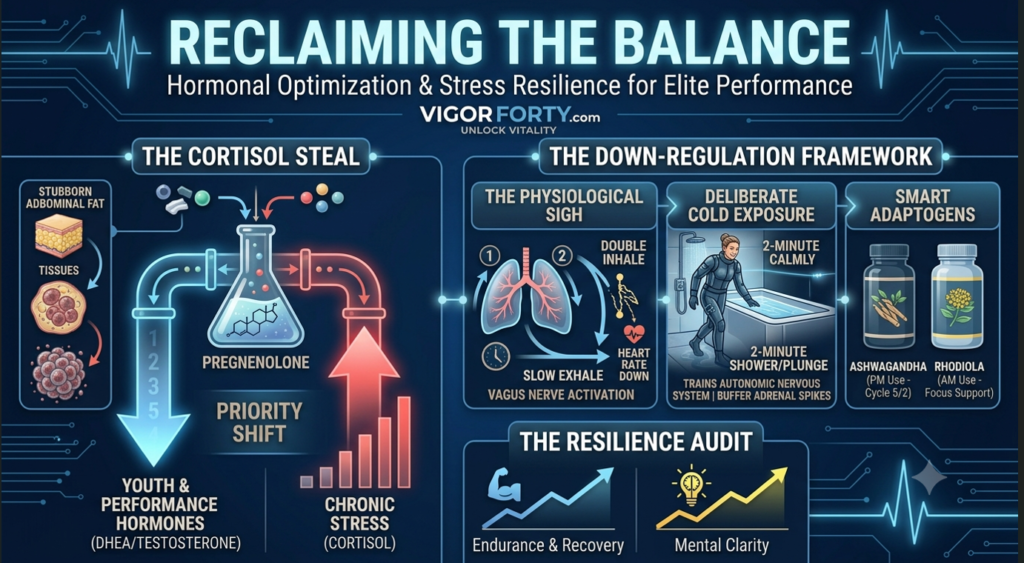
- Upregulation of Antioxidants: While chronic psychological stress creates sustained oxidative damage, acute hormetic stress triggers your body to produce its own master antioxidants, such as glutathione, which neutralizes free radicals far more effectively than any dietary supplement.
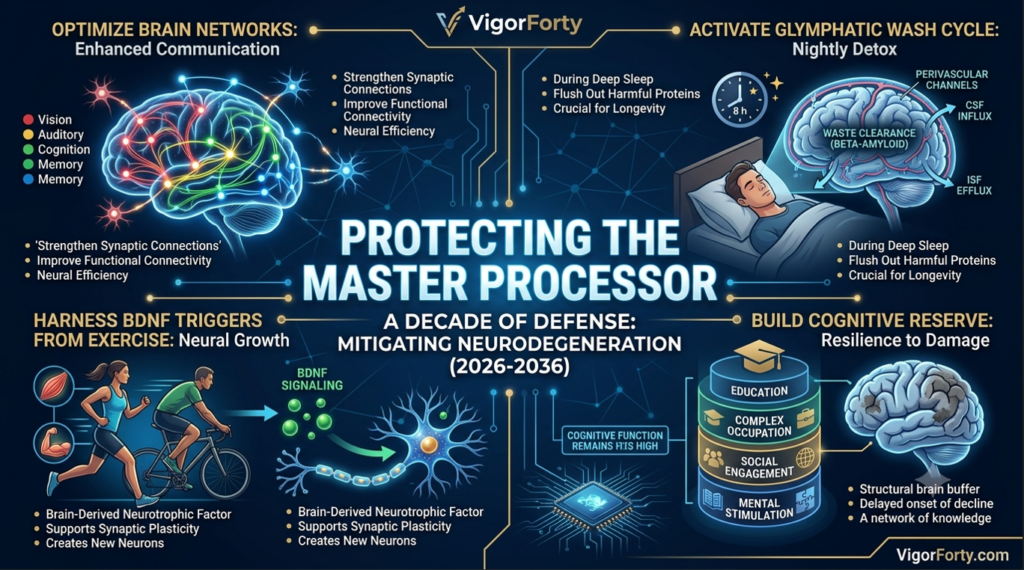
- Brain-Derived Neurotrophic Factor (BDNF): Hormetic triggers like intense exercise or cold exposure stimulate the release of BDNF. This chemical acts like fertilizer for your brain, promoting the birth of new neurons and improving emotional adaptability in the prefrontal cortex.
- The Norepinephrine Surge: Cold shock, in particular, triggers a massive, sustained release of norepinephrine in the brain. This neurotransmitter sharpens focus, stabilizes mood, and lowers systemic inflammatory markers for hours after the exposure ends.
Section 2: The Hormetic Protocol Matrix (Visual Adaptation Guide)
Hormesis requires strict dose control. Too much stress causes damage (distress), while just enough stress forces a positive cellular adaptation (eustress).
The table below outlines safe, evidence-based physical protocols to build mental and biological resilience:
| The Hormetic Stimulus | Precise Structural Execution | The Biological Reward |
| Cold Thermogenesis | Ending your morning shower with 60–90 seconds of pure cold water ($10\text{–}15^\circ\text{C}$), focusing on slow, controlled breathing. | Dopamine Baseline Elevation: Triggers a steady, non-spiking $2.5\times$ increase in plasma dopamine and norepinephrine levels, stabilizing mood and alertness for the entire afternoon. |
| Heat Thermogenesis | Utilizing a traditional sauna at $80\text{–}90^\circ\text{C}$ for 15–20 minutes, 2–3 times per week, followed immediately by clean hydration. | Cardiovascular & Cellular Repair: Activates heat shock proteins and increases nitric oxide production, dilating blood vessels and lowering baseline blood pressure. |
| Hypoxic Conditioning | Incorporating high-intensity interval training (HIIT) consisting of a 30-second all-out sprint followed by 90 seconds of rest, repeated 5 times. | Mitochondrial Renewal: Forces the body to rapidly clear away damaged, inefficient cellular engines (mitophagy) and build newer, high-capacity energy generators. |
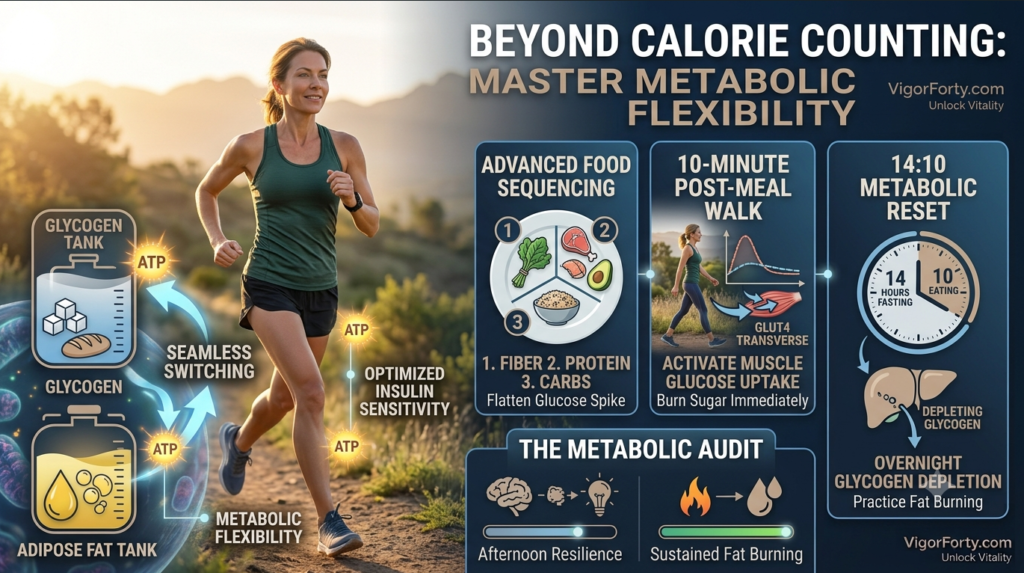
| Nutritional Hormesis | Integrating a 14-hour overnight fasting window (e.g., eating between 8:00 AM and 6:00 PM) two days per week. | Autophagy Activation: Triggers cellular housekeeping, where your body degrades and recycles old, malfunctioning proteins and damaged immune cells. |
Section 3: The Medical Block (ACSM & NIH Longevity Frameworks)
The utilization of biological stress to cure psychological vulnerability is fully integrated into modern sports science and longevity medicine.
The American College of Sports Medicine (ACSM)
The ACSM’s clinical guidelines place heavy emphasis on progressive overload and physical conditioning as tools for cognitive rehabilitation. Their directives state that acute, structured physical stressors are mandatory for preserving neuroplasticity and managing autonomic balance. The college explicitly notes that sedentary lifestyles compromise the HPA axis, while regular hormetic exercise normalizes cortisol curves.
The National Institutes of Health (NIH)
The NIH, through extensive cellular biology and longevity research, recognizes hormesis as a foundational mechanism for slowing down age-related cognitive decline. Their clinical briefs confirm that brief environmental shocks protect brain tissue from chronic oxidative stress and metabolic inflammation. The agency formally classifies controlled thermal and physical conditioning as low-cost, highly effective preventative tools for mental and physical health.