

Author: Vigor Forty Editorial Team
Medically Reviewed By: Editorial Review Board
Disclaimer: This article is for informational purposes only and is not a substitute for professional medical advice. Read our full Medical Disclaimer.
Key Takeaways
- Cellular Housekeeping: Autophagy is the body’s natural mechanism of recycling damaged cellular parts, misfolded proteins, and worn-out mitochondria into fresh, usable energy.
- The Autophagy Switch: While constant, low-grade stress inhibits cellular cleanup, short, intentional metabolic fasting windows switch autophagy into high gear.
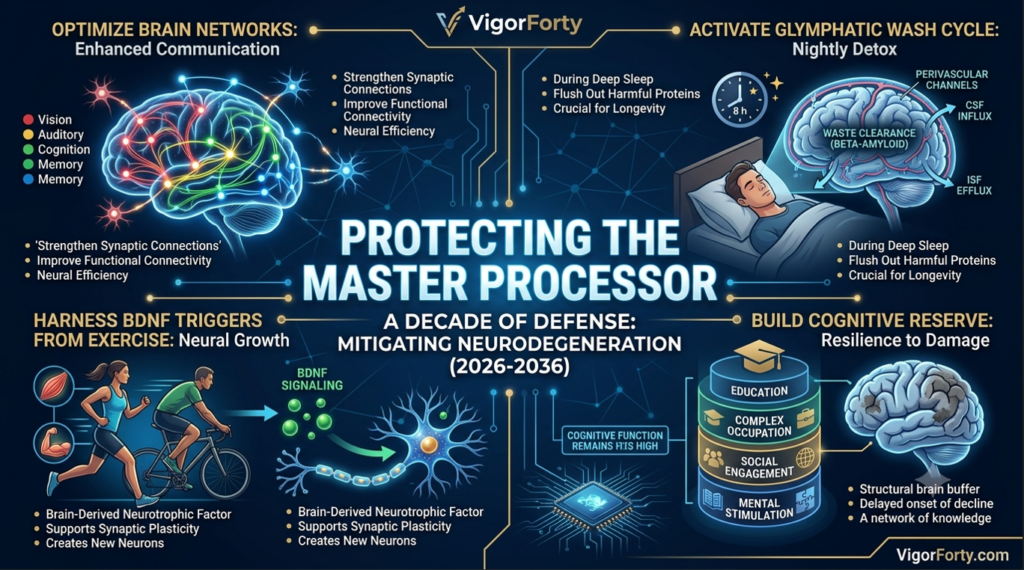
- Neurological Clearing: Autophagy acts as the brain’s waste disposal system, actively breaking down the amyloid-beta plaques associated with cognitive decline and chronic brain fog.
- Clinical Alignment: Nobel Prize-winning research and the National Institute on Aging formally recognize upregulated autophagy as a critical defense against neurodegenerative conditions and metabolic dysfunction.
Read Related Articles:
- The Cortisol Reset Protocol
- The Anatomy of Breathwork
- Meditation for the Stressed Brain
- The Vagal Tone: Your Nervous System’s Volume Knob
- The Circadian Stress Connection
- The Gut-Brain Axis: Neurochemistry of Stress
- Hormesis: Building Stress Resilience Through Physical Adversity
- Neuro-Architecture: Designing Spaces to De-Excite the Amygdala
- Social Jetlag and Chrono-Stress
- Digital Dopamine Detox: Rewiring the Attention-Stressed Brain
- Psychoneuroimmunology: How Stress Paralyzes Your Immune System
- Autophagy: The Cellular Housekeeping of Stress Recovery
- Decision Fatigue and Executive Stress
- Epigenetics: Rewriting Your Inherited Stress Response
- The Endocannabinoid System: The Body’s Equilibrium Engine
Introduction: The Invisible Debris
Every day, as your cells burn energy to keep you moving, thinking, and breathing, they accumulate metabolic waste. Over time, cellular components break down, proteins become misfolded, and the engines of your cells—the mitochondria—become sluggish and damaged.
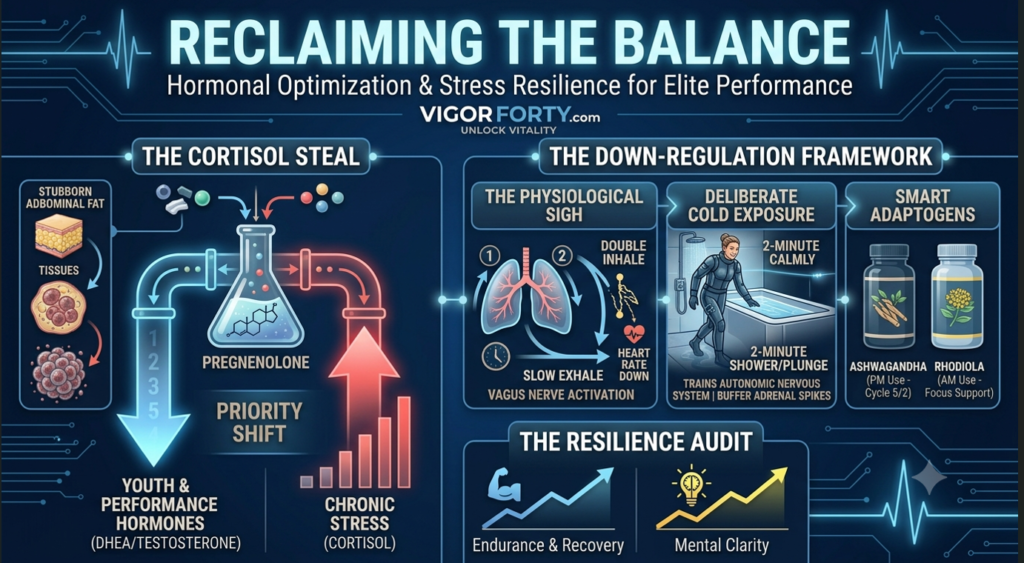
Data from molecular biology indicates that chronic psychological stress severely impairs the body’s natural ability to clear out this internal trash. When your system is continuously flooded with cortisol, it stays focused on immediate survival, entirely halting long-term maintenance. This leaves your cells choked with molecular debris, accelerating biological aging and lowering your physical resistance to mental exhaustion. To truly reset our stress baseline, we must understand how to trigger our internal cellular housekeeping: a process known as autophagy.
Section 1: The Molecular Switch Between Growth and Cleansing
Your body’s cellular maintenance operates via an elegant biological balancing act governed by two primary pathways: mTOR (mammalian target of rapamycin) and AMPK (AMP-activated protein kinase).
- The mTOR Pathway (Growth & Fueling): When you eat frequently, especially carbohydrates and proteins, mTOR is activated. It tells your cells to grow, divide, and build new tissues. However, when mTOR is constantly turned on, cellular cleanup comes to an absolute standstill.
- The AMPK Pathway (Cleansing & Recycling): When nutrients are scarce or when the body experiences brief, acute physical stress, AMPK takes over. AMPK acts as the primary master switch that activates autophagy (literally meaning “self-eating”).
- The Recycling Process: During autophagy, your cells create specialized trash bags called autophagosomes. These capture damaged, toxic proteins and deliver them to a cellular recycling center (the lysosome), where they are broken down into clean amino acids to rebuild a stronger cellular foundation.
Section 2: Autophagy Optimization Protocol (Visual Habit Matrix)
Upregulating your cellular cleaning mechanics does not require extreme starvation; it relies on structured, deliberate lifestyle habits that signal the AMPK pathway to begin housekeeping.
The table below replaces continuous metabolic consumption with targeted habits designed to maximize cellular recycling:
| Instead of (Autophagy Suppressing) | Swap With (Autophagy Promoting) | Why It Matters |
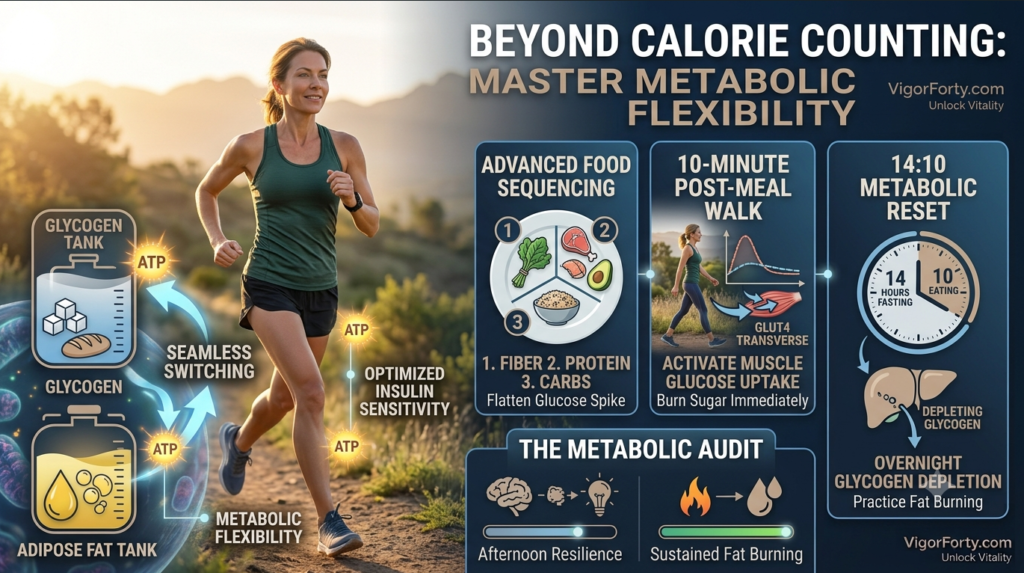
| Snacking continuously from 7:00 AM until 11:00 PM daily | Time-Restricted Feeding: Consuming your daily meals within a structured 8-to-10-hour window | Gives your liver and digestive tract a prolonged break, dropping insulin low enough for AMPK to initiate deep cellular cleanup. |
| Relying purely on low-intensity, steady-state cardio exercise | Incorporating 1–2 brief sessions of Zone 5 high-intensity intervals weekly | Acute, intense physical exertion rapidly depletes cellular energy (ATP), forcing cells to clear out weak mitochondria and build fresh, high-capacity ones. |
| Consuming high-carbohydrate meals right before going to bed | Keeping your final meal light, protein-focused, and at least 3 hours before sleep | Allows blood glucose to drop naturally during sleep, aligning your natural overnight fasting window with peak growth hormone and autophagy release. |
| Drinking sugary beverages or cream-filled coffees all morning | Drinking black coffee, green tea, or filtered water during fasting hours | Black coffee and green tea contain highly potent polyphenols that independently stimulate cellular autophagy without breaking your fast. |
Section 3: The Medical Block (National Institute on Aging & Molecular Consensus)
The clinical study of cellular recycling has moved from longevity research directly into the mainstream management of metabolic and neurological health.
National Institute on Aging
The National Institute on Aging’s clinical portfolios highlight that preserving robust autophagic capacity is a prerequisite for delaying age-related physical and cognitive decline. Their diagnostic frameworks reveal that a failure in cellular housekeeping directly correlates with the accumulation of cellular senescence and systemic inflammation. The institute strongly advocates for metabolic and lifestyle interventions that support natural cellular clearance mechanisms.
Nature Cell Biology
Long-term molecular data published in Nature Cell Biology confirms that regular upregulations of the autophagic pathway directly protect the central nervous system from chronic oxidative stress. Clinical consensus emphasizes that behavioral protocols targeting autophagy significantly reduce systemic metabolic stress, optimize mitochondrial health, and provide a vital physiological layer of armor against psychological burnout.