

Author: Vigor Forty Editorial Team
Medically Reviewed By: Editorial Review Board
Disclaimer: This article is for informational purposes only and is not a substitute for professional medical advice. Read our full Medical Disclaimer.
📌 Key Takeaways
- The Glucose Rollercoaster: The afternoon energy crash is not a character flaw; it is a measurable physiological response to blood sugar spikes followed by reactive hypoglycemia.
- Food Order Matters: Clinical research confirms that eating protein, fiber, and fat before carbohydrates in a meal can reduce post-meal glucose spikes by up to 75%.
- The Vinegar Effect: Consuming diluted vinegar before a carbohydrate-containing meal activates enzymes that slow starch-to-sugar conversion, acting as a natural metformin-like hack.
- The Savory Breakfast Mandate: Starting the day with a sweet breakfast sets a volatile glucose baseline. A protein-forward savory breakfast stabilizes mood, focus, and hunger hormones for the entire day.
Introduction: The Crash Is Not Your Fault
It is 2:30 PM on a Tuesday. You are sitting at your desk, staring at a screen that has suddenly become blurry. Your eyelids feel weighted. Your concentration has evaporated, replaced by a dull irritability and a desperate, specific craving for something sweet or starchy. You reach for a latte, a granola bar, or whatever is in the office snack drawer.
The American narrative tells you this is normal. A busy life, a heavy lunch, not enough sleep. But biologically, you have just been hijacked.
This afternoon collapse is not a natural rhythm of the workday. It is a predictable, preventable metabolic event called reactive hypoglycemia. You ate something that spiked your blood glucose too high, too fast. Your pancreas overreacted, flooding your bloodstream with insulin. That insulin cleared the glucose so aggressively that you crashed below baseline. Now your brain, starved of its primary fuel, is screaming for a quick fix—which will start the cycle all over again.
This article is about breaking the loop permanently. It introduces the science of food sequencing and strategic glucose management—a method that requires no calorie counting, no food group elimination, and no suffering. It simply asks you to eat your meal in a different order and design your breakfast with intention.
Section 1: The Science of the Spike — Understanding the Glucose Curve
To control something, you must first see it. Most Americans have never seen their own glucose curve and are therefore flying blind.
When you consume easily digestible carbohydrates—even “healthy” ones like oatmeal, brown rice, or fruit smoothies—without an adequate buffer of protein, fiber, and fat, digestion is rapid. Starch and sugars hit the small intestine quickly, enter the bloodstream, and create a sharp glucose peak.
The Three Phases of a Dysregulated Glucose Response:
- The Peak (Minutes 45-60): Blood glucose surges. You may feel a brief, subtle energy lift, or you may feel nothing at all. Internally, your blood vessels are experiencing oxidative stress, and inflammatory pathways are activating.
- The Insulin Flood (Minutes 60-90): The pancreas detects the spike and releases a large bolus of insulin. Insulin’s job is to move glucose out of the bloodstream and into cells—or into fat storage. The higher the spike, the larger the insulin surge.
- The Crash (Minutes 90-120): Insulin has overshot. Blood glucose drops below the pre-meal baseline. The brain senses an energy emergency and triggers a cortisol release to mobilize stored sugar. This cortisol surge is what makes you feel anxious, irritable, and desperately hungry for a quick carb fix.
The long-term consequences of repeating this cycle three to five times a day are severe: increased visceral fat storage, systemic inflammation, pancreatic beta-cell burnout, and a direct path toward insulin resistance and type 2 diabetes.
The immediate intervention is not about removing carbohydrates. It is about flattening the curve.
Section 2: The Food Sequencing Protocol — Order Over Calories
Groundbreaking research from Cornell University and replicated in clinical settings has demonstrated that the order in which you eat the components of an identical meal dramatically changes the resulting glucose curve.
In a landmark study, subjects with type 2 diabetes were given the exact same meal on two separate days. On the first day, they ate the carbohydrates (bread and orange juice) first, followed by the protein (chicken breast) and vegetables (salad) 10 minutes later. On the second day, the order was reversed: vegetables and protein first, carbohydrates last. The post-meal glucose spike was approximately 75% lower when carbohydrates were consumed last.
The Mechanism:
- Fiber from vegetables creates a physical mesh in the small intestine, slowing the passage of sugars into the bloodstream.
- Protein and fat trigger the release of satiety hormones (GLP-1 and cholecystokinin) that delay gastric emptying.
- By the time the carbohydrates arrive, they enter a system that is already primed for slow, deliberate absorption rather than a rapid dump.
The Vigor Forty Plate Sequencing Protocol:
You do not need to separate courses like a formal dinner. Even within a single bowl, apply this sequence:
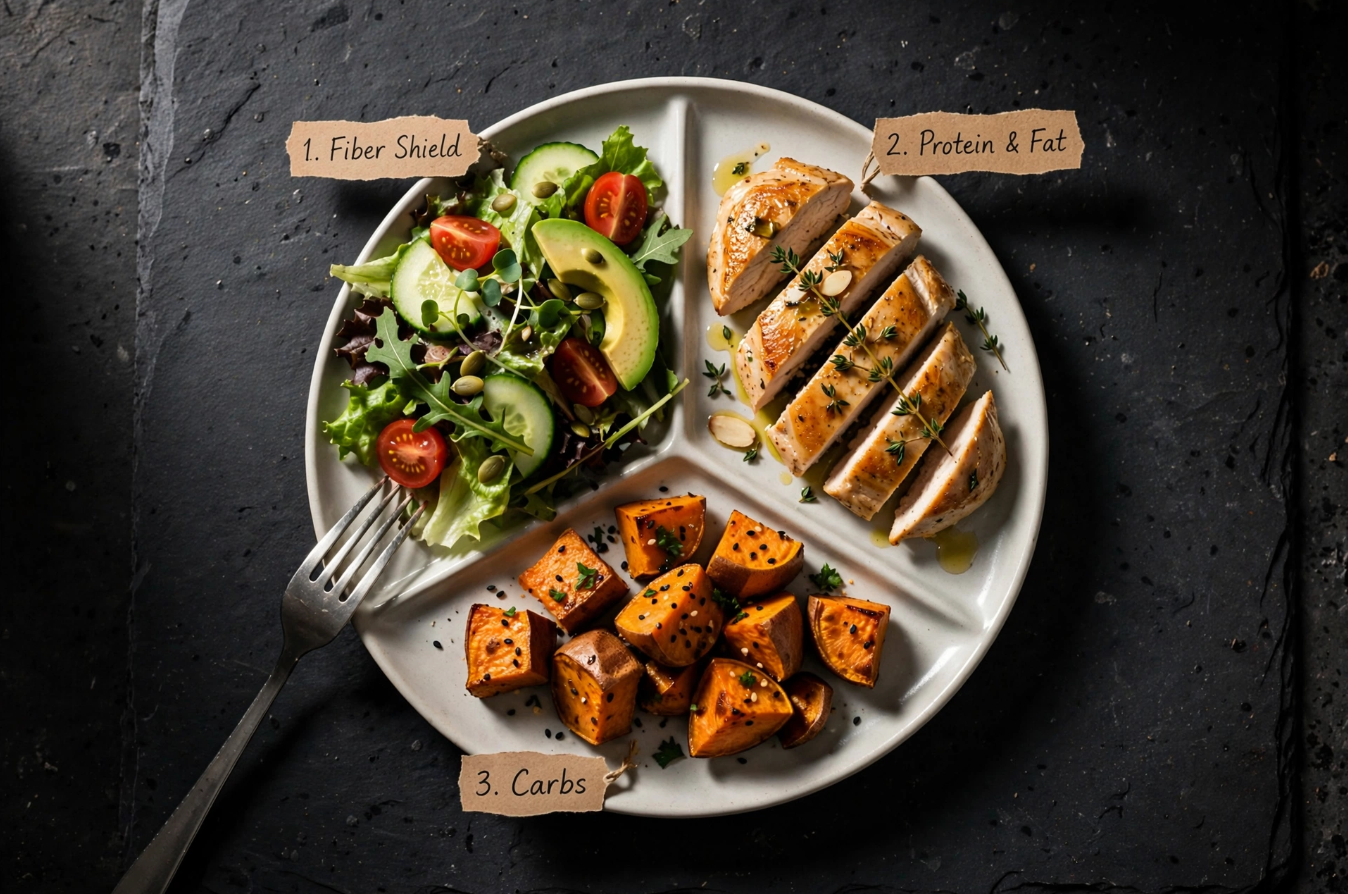
- First Bites (The Fiber Shield): Begin the meal with the non-starchy vegetables. Salad greens, steamed broccoli, roasted cauliflower, cucumber, bell peppers. Eat at least 3-4 bites of pure fiber before anything else touches your stomach.
- Second Pass (The Protein & Fat Anchor): Move next to the protein source. Chicken, fish, tofu, eggs, tempeh. Pair it with the healthy fat on your plate—avocado, olive oil dressing, nuts, seeds. Consume the majority of this component before touching the starch.
- Final Pass (The Carbohydrate Closure): Finish with the whole-food carbohydrate. Quinoa, sweet potato, lentils, brown rice, fruit. By the time you reach this component, you are already partially satiated, and your stomach is physically slowed by the fiber and protein, guaranteeing a gentler glucose curve.
This protocol costs zero dollars and requires zero extra time. It is a behavioral intervention with drug-level effects.
Section 3: The Savory Breakfast Mandate
The most metabolically damaging meal in the standard American diet is breakfast. Despite marketing narratives, a bowl of granola, a fruit smoothie, a stack of pancakes, or even a plain bagel is glucose disaster dressed in morning clothing.
When you break your overnight fast with a concentrated hit of sugar and starch, you set an aggressive baseline for glucose volatility that ripples through the entire day. The morning spike triggers a mid-morning crash, which triggers a high-carb lunch craving, which triggers the afternoon crash, which triggers evening overeating. The cycle begins before you leave the house.
The Sweet Breakfast Trap:
- The Offender: A “healthy” acai bowl with granola and honey, a banana smoothie, oatmeal with maple syrup and dried fruit.
- The Mechanism: After 8-10 hours of fasting, your stomach is empty. Liquid or processed carbohydrates hit the small intestine with zero resistance, creating the sharpest glucose spike of the day.
The Savory Breakfast Protocol:
Build your first meal around protein, fiber, and fat. Carbohydrates are optional, and if included, should be whole-food, fiber-intact, and eaten last per the sequencing protocol.
Three Vigor Forty Savory Breakfast Templates:
- Template 1: The Egg Scramble Foundation
2-3 whole eggs scrambled with a handful of spinach and mushrooms. Served with 1/4 avocado and a side of kimchi or sauerkraut for gut health. If carbs are desired, 1 slice of sprouted grain toast eaten last. - Template 2: The Greek Yogurt Power Bowl
1 cup plain full-fat Greek yogurt. Stir in 2 tablespoons of hemp hearts and 1 tablespoon of chia seeds. Top with a small handful of walnuts. No honey, no granola. If sweetness is required, add a few fresh berries on top—whole fruit fiber buffers the fructose. - Template 3: The Savory Dinner Leftover
There is no biological rule that breakfast must look different from lunch or dinner. Last night’s herb-crusted salmon and lentils, eaten cold or quickly reheated, is a metabolically superior breakfast to 99% of breakfast-branded products.
Section 4: The Strategic Vinegar Intervention
One of the oldest and most overlooked metabolic tools in the human diet is acetic acid—the active component in vinegar.
The Clinical Evidence:
Multiple controlled trials have demonstrated that consuming 1-2 tablespoons of vinegar (diluted in water) before a carbohydrate-containing meal significantly blunts the post-meal glucose and insulin response. The effect is so pronounced that vinegar is sometimes referred to as a “natural metformin.”
The Mechanism:
Acetic acid partially inhibits the enzyme alpha-amylase, which breaks down starches into simple sugars in the mouth and small intestine. It also increases glucose uptake by muscle tissue, pulling sugar out of the bloodstream via an insulin-independent pathway.
The Vigor Forty Practical Application:
- Drink 1 tablespoon of raw, unfiltered apple cider vinegar diluted in 4-6 ounces of water, 10 minutes before your largest carbohydrate-containing meal (typically dinner).
- If drinking vinegar is unpalatable, use it as a vinaigrette on the fiber-rich salad you are already eating as your first course. The effect is the same.
- Important Caution: Undiluted vinegar damages tooth enamel and esophageal tissue. Always dilute. Those with gastroparesis or active gastric ulcers should consult their physician.
Section 5: The Glucose Guardian Plate Matrix (3 Flattened-Curve Meals)
These meals are designed to be executed in 20 minutes or less using the pantry infrastructure from our previous article. Eat them in the sequence prescribed.
Breakfast: The Pro Metabolic Start
- Plate: 3-egg scramble with smoked salmon and wilted power greens. Side of 1/4 avocado with everything bagel seasoning.
- Sequence: Greens within the scramble first, then eggs and salmon, then avocado. If adding 1 slice of sprouted grain toast, it comes dead last.
- Glucose Win: Zero added sugar. High protein and fat blunt the morning cortisol rise.
Lunch: The 75% Reduction Bowl
- Plate: Large bed of arugula and shaved fennel (Fiber Shield). 5 oz leftover poached or seared chicken breast, 1/2 cup chickpeas (Protein & Fat Anchor). 1/2 cup roasted purple sweet potato cubes (Carbohydrate Closure).
- Dressing: 1 tablespoon apple cider vinegar, 1 tablespoon olive oil, 1 teaspoon Dijon mustard, salt and pepper.
- Glucose Win: The vinegar in the dressing, combined with the fiber-first sequence, flattens the sweet potato’s glucose curve.
Dinner: The Circadian Wind-Down
- Plate: 6 oz seared salmon fillet. 2 cups roasted broccoli and cauliflower tossed with garlic and olive oil. 1/2 cup lentil and quinoa blend.
- Sequence: Broccoli and cauliflower first. Salmon second. Lentil blend last.
- Glucose Win: A lower-carbohydrate dinner prevents an overnight glucose elevation that can disrupt deep sleep architecture.
Section 6: The Glucose Guardian Shopping List
Add these specific items to your existing pantry infrastructure.
Savory Breakfast Staples
- Pasture-raised eggs (1 dozen)
- Full-fat plain Greek yogurt (large tub)
- Hemp hearts and chia seeds
- Kimchi or raw sauerkraut
Fiber Shields (Non-Starchy Vegetables)
- Pre-washed arugula or mixed greens
- Broccoli crowns
- Cauliflower
- Fennel bulb
- Avocados (4, ripening on counter)
Glucose Buffers
- Raw, unfiltered apple cider vinegar (with the “mother”)
- Extra-virgin olive oil
- Dijon mustard
- Everything bagel seasoning (for avocado)
Smart Carbohydrates (Fiber-Intact)
- Purple sweet potatoes
- Sprouted grain bread
- Canned chickpeas (BPA-free)
- Pre-cooked lentil packets
Stable energy is not a genetic gift. It is a biological engineering problem, and the solution is not found in a supplement bottle or a second cup of coffee. It is found in the order you eat your food, the first meal you choose each day, and the tablespoon of vinegar you take before dinner. Hack the sequence, and you own your afternoon.
Read Related Articles
- Precision Protein: How to Calculate Your Exact Intake for Muscle Preservation (Especially on GLP-1s)
- The Metabolic Kitchen: A 5-Day Nutrient-Dense Meal Prep Guide for Lasting Energy
- The 15-Minute Metabolic Plate: High-Speed Nutrient-Dense Cooking for the Time-Starved Professional
- The Gut-Brain Kitchen: Fermented Foods, Prebiotic Fibers, and the 30-Plant Diversity Challenge
- The Focus Plate: Brain-Boosting Nutrients and Recipes for Mental Clarity and Cognitive Longevity
- The Fat Clarity Guide: Healthy vs. Inflammatory Fats and How to Cook with Each One
- The Functional Hydration Guide: Nutrient-Dense Beverages for Energy, Focus, and Metabolic Health
- The Anti-Inflammatory Kitchen: Foods That Heal, Foods That Harm, and Building a Pain-Relieving Plate
- The Immune-Resilient Kitchen: Year-Round Foods and Recipes to Fortify Your Body’s Defenses
- The Sleep-Enhancing Kitchen: Foods, Timing, and Rituals for Deep, Restorative Rest
- The Hormone-Balancing Kitchen: Foods and Recipes to Support Thyroid, Insulin, and Endocrine Health