

Author: Vigor Forty Editorial Team
Medically Reviewed By: Editorial Review Board
Disclaimer: This article is for informational purposes only and is not a substitute for professional medical advice. Read our full Medical Disclaimer.
📌 Key Takeaways
- The Brain-Food Connection: Your brain consumes 20% of your daily caloric intake. The quality of those calories directly determines the speed of synaptic firing, working memory, and long-term neuroprotection.
- Fat Is Not the Enemy of Focus: The brain is 60% fat by dry weight. Specific fatty acids—omega-3s, phosphatidylserine, and medium-chain triglycerides—are structural building blocks for neurons.
- The Polyphenol Shield: Deeply pigmented plant compounds (in berries, dark leafy greens, and spices) cross the blood-brain barrier and activate antioxidant defense systems that slow cognitive aging.
- Breakfast Is the Cognitive Launchpad: The composition of your first meal predicts mid-morning focus, reaction time, and decision quality more accurately than any supplement.
Introduction: Your Brain Is Hungry
You feel it by 10:30 AM. The spreadsheet blurs. The email requires reading three times. A dull fog settles behind your eyes, and the sharp, decisive thinking that started your morning has eroded into a sluggish, distracted haze. You reach for another coffee. You blame poor sleep or a heavy workload.
But what if the problem is not how much you slept, but what you ate—or didn’t eat—for breakfast?
Your brain is the most metabolically demanding organ in your body. Weighing roughly three pounds, it consumes approximately 20% of your daily caloric expenditure despite representing only 2% of your total body mass. It is an energy hog, but it is also a picky eater. Feed it the wrong fuels—refined sugars, inflammatory seed oils, nutrient-poor processed carbohydrates—and its performance degrades measurably. Reaction time slows. Working memory capacity shrinks. Mood regulation falters.
The emerging field of nutritional psychiatry has produced a robust body of evidence linking dietary patterns to cognitive function and mental health. The Mediterranean diet, the MIND diet (Mediterranean-DASH Intervention for Neurodegenerative Delay), and similar whole-food eating patterns are consistently associated with lower rates of depression, better cognitive aging, and sharper executive function.
This article is not about biohacking with exotic nootropics. It is about building a daily plate that delivers the specific nutrients your brain requires to focus deeply, remember clearly, and protect itself against the slow erosion of cognitive decline.
Section 1: The Cognitive Fuel Triad — Three Nutrients Your Brain Cannot Function Without
While the brain requires dozens of micronutrients to operate optimally, three categories stand out for their outsized impact on daily cognitive performance.
1. Omega-3 Fatty Acids (DHA & EPA)
Docosahexaenoic acid (DHA) is the most abundant structural fat in the human brain. It is concentrated in the gray matter, where it provides fluidity to neuronal cell membranes, allowing signals to pass rapidly and efficiently. Low DHA status is linked to accelerated brain aging, smaller brain volume, and higher rates of depression.
Eicosapentaenoic acid (EPA) is less structural and more anti-inflammatory. It reduces neuroinflammation, a silent driver of brain fog, slow processing speed, and mood disorders.
- The Vigor Forty Strategy: Prioritize cold-water fatty fish (wild salmon, mackerel, sardines, anchovies) at least three times per week. For plant-based eaters, microalgae oil supplements provide DHA/EPA directly, as the conversion of flaxseed ALA into DHA is inefficient in most humans.
2. Choline
Choline is the precursor to acetylcholine, the neurotransmitter responsible for learning, memory encoding, and muscle control. The brain’s demand for choline is constant, and insufficient intake impairs focus and recall. Eggs are the single richest dietary source, specifically the yolk.
- The Vigor Forty Strategy: Two whole eggs for breakfast provide approximately 300 mg of choline, roughly 55% of the adequate daily intake for men and 70% for women. Do not discard the yolk; you would be throwing away the very nutrient you are seeking.
3. Polyphenols & Flavonoids
These brightly pigmented plant compounds are not just antioxidants. They cross the blood-brain barrier and activate specific signaling pathways—most notably the BDNF (Brain-Derived Neurotrophic Factor) pathway. BDNF is essentially fertilizer for brain cells. It promotes the growth of new neurons (neurogenesis) and strengthens existing connections (synaptic plasticity). Higher BDNF levels are associated with improved learning and lower depression risk.
- The Vigor Forty Strategy: Deeply colored berries (wild blueberries, blackberries, tart cherries), dark leafy greens, raw cacao, and spices like turmeric. One cup of wild blueberries per day has been shown in clinical trials to improve memory recall and executive function in older adults within weeks.
Section 2: The MIND Diet Simplified — A Neuroprotective Eating Pattern
The MIND diet, developed by researchers at Rush University Medical Center and Harvard School of Public Health, is a hybrid of the Mediterranean and DASH diets, specifically designed to target brain health. In longitudinal studies, strict adherence to the MIND diet was associated with a 53% reduction in Alzheimer’s disease risk. Even moderate adherence reduced risk by 35%.
Unlike complex diet protocols, the MIND diet is elegantly simple. It emphasizes ten brain-healthy food groups and limits five unhealthy ones.
The MIND Diet “Eat More” List:
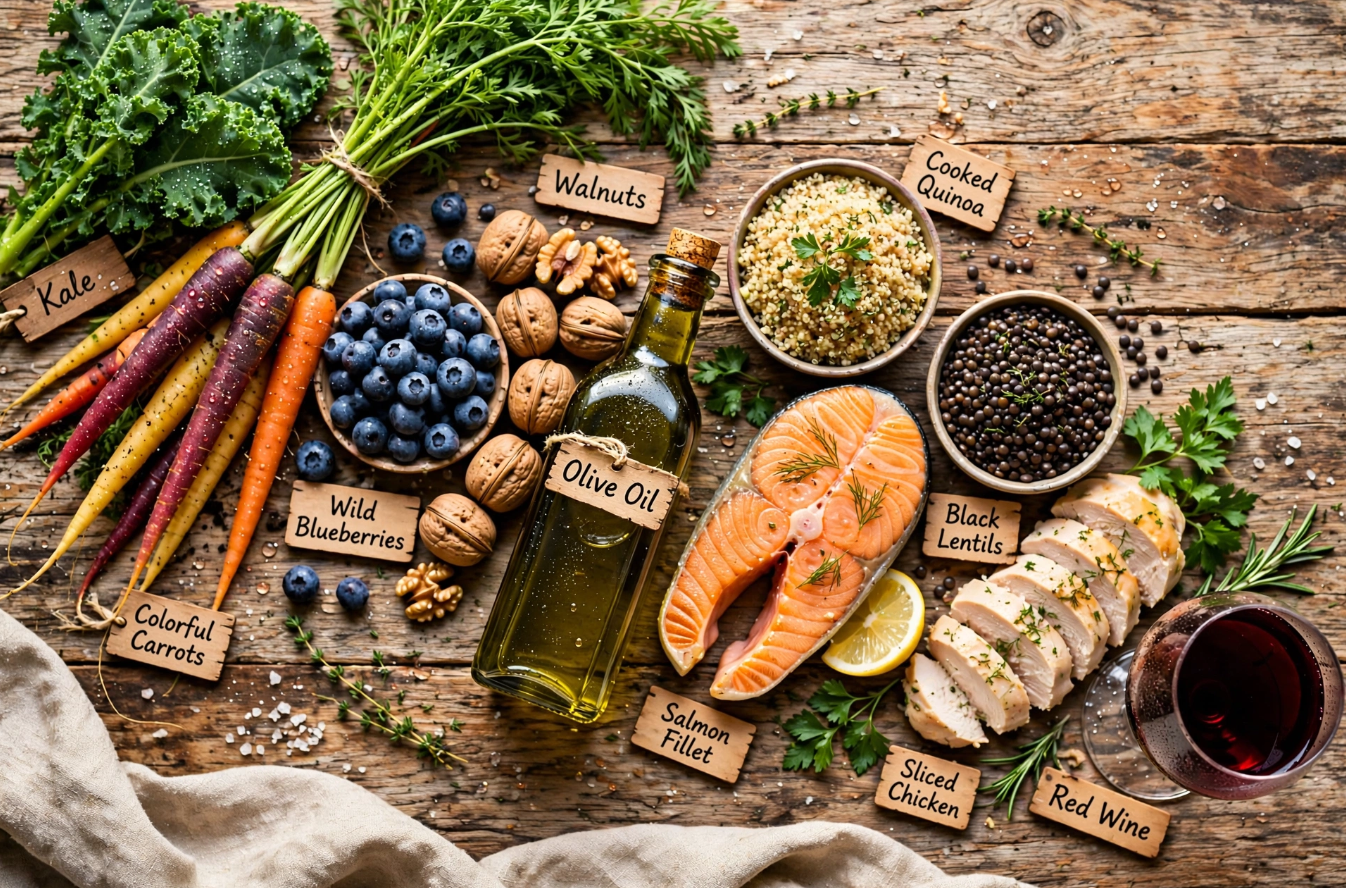
- Green Leafy Vegetables: 6+ servings per week. Kale, spinach, collard greens, arugula, Swiss chard.
- Other Vegetables: 1+ serving per day, especially colorful ones (bell peppers, carrots, broccoli).
- Berries: 2+ servings per week. Blueberries and strawberries are specifically called out for their anthocyanin content.
- Nuts: 5+ servings per week. A serving is a small handful. Walnuts are prioritized for their omega-3 and polyphenol content.
- Olive Oil: Primary cooking and finishing fat.
- Whole Grains: 3+ servings per day. Oats, quinoa, barley, brown rice.
- Fish: 1+ serving per week, preferably fatty fish.
- Beans/Legumes: 4+ servings per week. Lentils, chickpeas, black beans.
- Poultry: 2+ servings per week. Not fried.
- Wine (Optional): 1 glass per day, preferably red for its resveratrol content. If you do not drink, this is not a recommendation to start.
The MIND Diet “Limit” List:
- Red meat (under 4 servings per week)
- Butter and stick margarine (under 1 tablespoon per day)
- Cheese (under 1 serving per week)
- Pastries and sweets (under 5 servings per week)
- Fried or fast food (under 1 serving per week)
This is not a restrictive diet. It is a positive reframe: crowd the plate with the brain-boosters, and the less helpful foods naturally get crowded out.
Section 3: The Focus-Boosting Breakfast — Your Cognitive Launchpad
The first meal of the day is the single highest-leverage cognitive intervention within your control. After an overnight fast, your brain’s glycogen stores are partially depleted. Cortisol is naturally elevated to mobilize energy. What you eat determines whether cortisol subsides and your brain enters a calm, focused state, or whether a glucose spike-and-crash cycle destabilizes your entire morning.
A brain-optimized breakfast contains three components:
- High-Quality Protein (Choline & Tyrosine): Eggs, smoked salmon, Greek yogurt. Tyrosine is a precursor to dopamine and norepinephrine, neurotransmitters that govern alertness and motivation.
- Slow-Low Glycemic Carbohydrates (Steady Glucose Supply): Rolled oats, sprouted grain toast, a small portion of sweet potato. The brain requires glucose, but it requires a steady drip, not a flood.
- Polyphenol-Rich Fruit (BDNF Activation): Wild blueberries, tart cherries, or blackberries.
The Vigor Forty Cognitive Breakfast Template:
The “Focused Morning” Scramble
- Base: 2 whole eggs + 1 egg white, scrambled gently in olive oil or grass-fed butter.
- Greens: A large handful of baby spinach, wilted into the eggs at the last moment. Spinach delivers folate and Vitamin K, both linked to slower cognitive decline.
- Topping: 1 ounce of crumbled goat cheese or feta for flavor and additional choline. A generous pinch of turmeric and black pepper.
- Side: 1/2 cup wild blueberries (frozen and thawed is fine and more affordable). Eat them after the savory scramble to avoid a blood sugar spike on an empty stomach.
- Cognitive Win: This breakfast delivers choline (eggs), tyrosine (eggs), omega-3s (if using pasture-raised eggs), folate (spinach), curcumin (turmeric), and anthocyanins (blueberries). It covers five MIND diet food groups in one plate.
Section 4: The Neuroprotective Lunch & Dinner Matrix (3 Brain-Boosting Meals)
Each meal builds on the MIND diet framework and the cognitive fuel triad.
Meal 1: The MIND Diet Salmon Bowl
- Brain Nutrients: DHA/EPA (salmon), lutein and folate (kale), polyphenols (olive oil, lemon), anthocyanins (blueberries in dressing).
- Build:
- Base: Massaged curly kale, chopped and massaged with olive oil and lemon juice until tender.
- Protein: 5 oz wild salmon, pan-seared with skin on for maximum omega-3 retention.
- Carb: 1/2 cup cooked farro or quinoa.
- Topping: 1/4 avocado, sliced. 2 tablespoons pomegranate seeds (polyphenol power).
- Dressing: A vinaigrette of olive oil, apple cider vinegar, a teaspoon of Dijon mustard, and a handful of crushed fresh blueberries mashed in.
- Cognitive Win: This bowl is a MIND diet powerhouse. It hits leafy greens, fish, whole grains, olive oil, and berries in a single sitting. The kale is a rich source of lutein, a carotenoid that accumulates in brain tissue and is correlated with preserved cognitive function in aging.
Meal 2: The Walnut & Lentil Stuffed Sweet Potato
- Brain Nutrients: ALA omega-3s and polyphenols (walnuts), folate and prebiotic fiber (lentils), beta-carotene (sweet potato), choline (egg, if added).
- Build:
- Base: 1 medium roasted sweet potato, split open.
- Filling: 3/4 cup cooked French lentils tossed with chopped toasted walnuts, fresh parsley, minced red onion, and a red wine vinegar and olive oil dressing.
- Protein Boost: A poached egg on top, yolk runny, to add choline and richness.
- Finish: Cracked black pepper and a pinch of flaky sea salt.
- Cognitive Win: Walnuts are the nut with the highest polyphenol content and the only nut significantly high in ALA omega-3s. Lentils provide steady glucose and prebiotic fiber for gut-brain axis support. The sweet potato’s beta-carotene is a fat-soluble antioxidant that protects neuronal membranes.
Meal 3: The Sardine & Avocado Grain Bowl (The 5-Minute Cognitive Reset)
- Brain Nutrients: DHA/EPA (sardines), healthy monounsaturated fats and potassium (avocado), sulforaphane (broccoli sprouts or microgreens).
- Build:
- Base: 90-second brown rice or quinoa packet.
- Protein: 1 tin of wild sardines packed in olive oil (do not drain; the oil is part of the meal). Mackerel works as a substitute.
- Creamy Element: 1/2 avocado, diced.
- Cruciferous Crunch: A handful of broccoli sprouts or microgreens. These tiny greens contain up to 100 times the sulforaphane precursor of mature broccoli, and sulforaphane is a potent activator of the brain’s detoxification and antioxidant pathways.
- Finish: A squeeze of fresh lemon and a pinch of red pepper flakes.
- Cognitive Win: This is the fastest brain-boosting meal in your arsenal. Canned sardines are shelf-stable, affordable, and deliver some of the highest DHA/EPA concentrations of any food. The avocado provides the fat to carry the fat-soluble brain nutrients, and the sprouts deliver a concentrated neuroprotective phytochemical punch.
Section 5: The Cognitive Spice Rack — Seasonings That Sharpen the Mind
Your spice cabinet is an overlooked nootropic pharmacy. Specific dried herbs and spices contain concentrated polyphenol compounds with documented cognitive benefits.
| Spice | Active Compound | Cognitive Benefit | Usage |
|---|---|---|---|
| Turmeric | Curcumin | Crosses blood-brain barrier; reduces neuroinflammation; increases BDNF. Requires black pepper (piperine) for absorption. | Scrambled eggs, soups, golden milk, roasted vegetables. |
| Cinnamon (Ceylon) | Cinnamaldehyde | Stabilizes blood sugar; inhibits tau protein aggregation, a hallmark of Alzheimer’s pathology. | Coffee grounds, oatmeal, yogurt, stewed fruit. |
| Saffron | Crocin, Safranal | Clinically demonstrated in multiple trials to be as effective as SSRIs for mild-to-moderate depression. | Rice dishes, teas, broths. Use sparingly; it is potent and expensive. |
| Rosemary | Rosmarinic Acid, 1,8-Cineole | Inhalation of rosemary essential oil has been shown to improve prospective memory and alertness. Ingestion provides antioxidant protection. | Roasted meats, potatoes, focaccia, infused olive oil. |
| Sage | Salvianolic Acid | Inhibits acetylcholinesterase, the enzyme that breaks down acetylcholine, effectively increasing the brain’s available learning neurotransmitter. | Brown butter sauces, roasted squash, poultry seasoning. |
Section 6: The Brain Food Shopping List
Integrate these cognitive staples into your existing Vigor Forty pantry.
Cold-Water Fatty Fish
- Wild Sockeye salmon fillets (fresh or frozen, 4 portions)
- Wild sardines in olive oil (3-4 tins, shelf-stable emergency brain food)
- Wild mackerel fillets (if available)
The Choline & Protein Vault
- Pasture-raised eggs (2 dozen; you will use them daily)
- Plain full-fat Greek yogurt
- Goat cheese or feta
The Polyphenol Produce Drawer
- Wild blueberries (frozen, large bag; more concentrated anthocyanins than fresh)
- Pomegranate seeds (fresh or frozen)
- Dark leafy greens: kale, spinach, arugula
- Broccoli sprouts or microgreens (find at farmers markets or grow on your windowsill)
- Avocados (4)
The Neuroprotective Pantry
- Raw walnuts (large bag, store in fridge to prevent oxidation)
- Farro, quinoa, or brown rice
- French green lentils
- Extra-virgin olive oil (large bottle)
- Turmeric, Ceylon cinnamon, rosemary, sage, black pepper
- Saffron threads (small jar; a luxury investment in your brain)
Your brain is the only organ that named itself and the only one that can deliberately choose the fuel that will sharpen or dull its own function. Feed it with the precision it deserves. The morning fog is not inevitable. The afternoon crash is not normal. They are choices made visible, and the next meal is a chance to choose differently.
Read Related Articles
- Precision Protein: How to Calculate Your Exact Intake for Muscle Preservation (Especially on GLP-1s)
- The Metabolic Kitchen: A 5-Day Nutrient-Dense Meal Prep Guide for Lasting Energy
- The 15-Minute Metabolic Plate: High-Speed Nutrient-Dense Cooking for the Time-Starved Professional
- The Gut-Brain Kitchen: Fermented Foods, Prebiotic Fibers, and the 30-Plant Diversity Challenge
- The Focus Plate: Brain-Boosting Nutrients and Recipes for Mental Clarity and Cognitive Longevity
- The Fat Clarity Guide: Healthy vs. Inflammatory Fats and How to Cook with Each One
- The Functional Hydration Guide: Nutrient-Dense Beverages for Energy, Focus, and Metabolic Health
- The Anti-Inflammatory Kitchen: Foods That Heal, Foods That Harm, and Building a Pain-Relieving Plate
- The Immune-Resilient Kitchen: Year-Round Foods and Recipes to Fortify Your Body’s Defenses
- The Sleep-Enhancing Kitchen: Foods, Timing, and Rituals for Deep, Restorative Rest
- The Hormone-Balancing Kitchen: Foods and Recipes to Support Thyroid, Insulin, and Endocrine Health