

Author: Vigor Forty Editorial Team
Medically Reviewed By: Editorial Review Board
Disclaimer: This article is for informational purposes only and is not a substitute for professional medical advice. Read our full Medical Disclaimer.
📌 Key Takeaways
- The “Protein+” Trend: While grocery shelves are flooded with protein-fortified snacks, true muscle retention relies on total daily intake and sourcing rather than buzzwords.
- Precision Calculation: Generalized guesses fall short; optimal intake scales dynamically based on your physical activity and metabolic goals.
- The GLP-1 Necessity: For Americans using advanced weight-loss medications, deliberate protein consumption is a vital shield against hazardous muscle wasting.
- Source Balance: Blending lean animal proteins with fiber-rich plant proteins yields the highest metabolic and cardiovascular rewards.
Introduction: Beyond the “Protein+” Hype
Walk down any American grocery aisle today and you will be bombarded by “Protein+” branding. From protein-fortified cereals to chips and cookies, the United States is currently experiencing a massive demand for protein-focused foods. This craze is driven by a collective desire to build lean tissue, stay full longer, and optimize metabolic health.
However, this commercial boom has birthed a prevailing myth: the idea that more protein is always better, no matter the source or distribution.
While protein is an essential macronutrient, blindly consuming heavily processed protein snacks won’t automatically yield a lean physique. This is particularly critical for a rapidly growing demographic in the US: the millions of Americans utilizing GLP-1 weight-loss medications (like semaglutide and tirzepatide). Because these medical interventions dramatically suppress appetite, individuals must be incredibly deliberate about consuming high-quality protein. Without it, rapid weight loss can lead to muscle wasting rather than targeted fat loss.
To break free from the hype, we must look at the actual science of how to preserve muscle mass. This guide will give you the exact math, the best whole-food sources, and a practical meal prep blueprint to execute.
Section 1: The Exact Math — Calculating Your Real Requirement
Generic guidelines often suggest a flat daily number for protein, but your body doesn’t work in broad generalizations. To effectively trigger satiety and preserve muscle mass, your intake needs to be calculated precisely based on your total body weight and lifestyle demands.
The baseline Recommended Dietary Allowance (RDA) set by federal guidelines is just 0.8 grams per kilogram of body weight (0.36 grams per pound). It is crucial to understand that this number is the bare minimum required to avoid malnutrition—it is not the optimal level needed to maintain functional lean mass as we age or during fat loss.
To find your true requirement, use this personalized calculation:
Optimal Daily Protein (Grams) = Body Weight in kg × Activity Factor
(To get your weight in kilograms, divide your weight in pounds by 2.2)
Step 1: Choose Your Activity Factor
- Maintenance & General Fitness: Multiply your weight in kg by 1.2 to 1.4. Choose this if you are active but keeping your weight stable.
- Active Muscle Building & Resistance Training: Multiply your weight in kg by 1.6 to 1.8. Choose this if you lift weights regularly to shift your body composition.
- Caloric Deficits & GLP-1 Weight-Loss Therapy: Multiply your weight in kg by 2.0. Choose this if you are actively eating fewer calories or using weight-loss medications. When total energy intake drops, your body actively tries to burn muscle for fuel; an elevated intake acts as a structural shield.
Step 2: Mind the Satiety Threshold
Your body cannot efficiently store excess protein for structural use later in the day. Spacing your target protein intake across 3 to 4 meals (roughly 25 to 40 grams per meal) keeps muscle protein synthesis active while keeping your hunger hormones (like ghrelin) entirely suppressed throughout the afternoon.
Section 2: The Vigor Forty Whole-Food Protein Matrix (Animal vs. Plant-Based)
When increasing your daily target, look past processed bars and focus on whole food sources. A balanced intake incorporates both clean animal sources and nutrient-dense plant alternatives. This approach directly aligns with the American Heart Association (AHA) dietary guidelines, which heavily emphasize shifting toward lean cuts, fish, and rich plant-derived proteins to maintain vascular health.
Clean Animal Sources (High Essential Amino Acids)
- Wild-Caught Cold-Water Fish: Salmon, mackerel, and sardines deliver clean protein alongside powerful Omega-3 fatty acids that support heart health and reduce joint inflammation.
- Lean Poultry & Eggs: Skinless chicken breast, turkey, and whole eggs provide highly bioavailable proteins with an optimal distribution of leucine—the key amino acid that sparks muscle recovery.
- Low-Fat Cultured Dairy: Plain Greek yogurt and cottage cheese provide slow-digesting casein protein, making them exceptional choices for sustained overnight satiety.
Plant-Based Champions (High Fiber & Micronutrients)
- Legumes & Pulses: Lentils, chickpeas, and black beans are excellent sources of protein that also supply dense amounts of prebiotic fiber to optimize the gut microbiome.
- Organic Soy Varieties: Tempeh and edamame are rare plant options that serve as “complete proteins,” meaning they contain all nine essential amino acids your body cannot synthesize on its own.
- Seeds & High-Protein Snacks: Swapping out processed vending machine snacks for dry-roasted pumpkin seeds, hemp hearts, or raw almonds provides a clean shot of protein, magnesium, and healthy monounsaturated fats.
Section 3: The Medical Block — Muscle Preservation in Deficits
The absolute necessity of adequate protein intake during weight loss is strongly supported by clinical literature and major sports medicine organizations.
Sports Medicine Guidelines
The American College of Sports Medicine (ACSM) and the International Society of Sports Nutrition (ISSN) explicitly state that lifestyle changes involving caloric deficits must be accompanied by elevated protein intake. Their data demonstrates that when individuals drop their calories without prioritizing protein, a significant percentage of the weight lost comes directly from skeletal muscle mass. This loss lowers resting metabolic rates and leaves the individual more vulnerable to quick weight rebound once the diet ends.
Clinical Findings on Accelerated Deficits
Modern clinical trials focusing on metabolic health and weight loss interventions—including data tracking patients on GLP-1 weight-loss medications—clearly highlight a structural risk: rapid fat loss without muscle preservation steps compromises functional longevity.
When protein intake meets or exceeds the 2.0 g/kg threshold alongside basic resistance exercise, the body safely preserves lean skeletal muscle while drawing its energy deficit almost exclusively from adipose (fat) tissue. This preservation keeps your metabolism firing efficiently, maintains your physical strength, and ensures that your weight loss journey genuinely improves your long-term healthspan.
Section 4: The Nutrient-Dense Meal Prep Blueprint
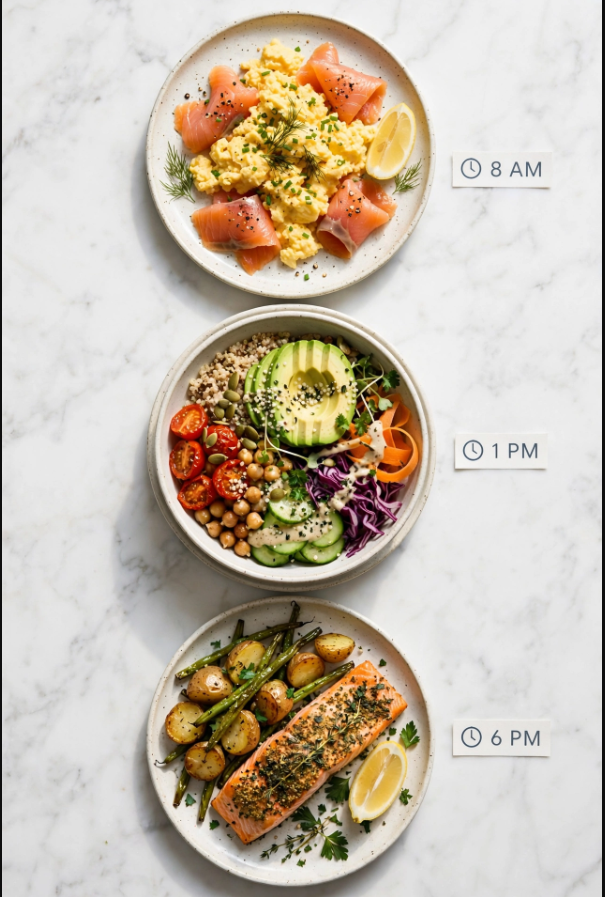
Knowing the science is only half the battle. To make this sustainable, you need a practical, nutrient-dense cooking strategy. This blueprint is designed for a standard 1-day cycle targeting ~140g of protein, easily scalable up or down based on your calculation in Section 1.
Meal 1: The Metabolic Igniter (Breakfast)
Target: ~35g Protein
Scrambled Eggs with Smoked Salmon & Dill
- Base: 2 whole eggs + 3 liquid egg whites, scrambled in grass-fed butter.
- Elevation: Fold in 2 oz of wild smoked salmon and fresh dill.
- Side: 1 slice of sprouted grain toast for slow-release energy.
- Why it works: This meal combines fast-digesting leucine from the eggs and whites with Omega-3s from the salmon to target both muscle synthesis and inflammation reduction first thing in the morning.
Meal 2: The GLP-1 Power Bowl (Lunch)
Target: ~40g Protein
High-Protein Tempeh & Quinoa Macro Bowl
- Base: 1 cup cooked tri-color quinoa (a complete protein grain).
- Protein: 4 oz organic tempeh, pan-seared with tamari and ginger.
- Greens: 3 cups of power greens (baby kale & spinach), lightly massaged with olive oil.
- Topping: 1 tbsp hemp hearts and a squeeze of lime.
- Why it works: For those with suppressed appetite, this bowl is calorically efficient but dense. The tempeh provides 20g of complete protein, which stacks with the quinoa to create a plant-based essential amino acid profile comparable to meat.
Meal 3: The Recovery Synthesizer (Dinner)
Target: ~45g Protein
One-Pan Herb-Crusted Salmon with Lentils
- Protein: 6 oz wild-caught Sockeye salmon fillet, crusted with Dijon mustard and fresh herbs.
- Foundation: 3/4 cup cooked beluga lentils, tossed with fire-roasted red peppers and artichoke hearts.
- Fat Source: A drizzle of finishing extra-virgin olive oil.
- Why it works: This is a high-yield recipe meeting almost a third of the daily target in one sitting. The lentils are specifically chosen for their prebiotic fiber content, crucial for gut health during a restricted calorie phase.
Strategic Snack: The Afternoon Shield
Target: ~20g Protein
- Cottage Cheese & Hemp Heart Bowl: 3/4 cup low-fat cottage cheese (casein for slow release) topped with cracked black pepper and 2 tablespoons of hemp hearts.
- Why it works: Inserted between lunch and dinner, this bridge prevents the ghrelin surge that usually crashes a diet in the late afternoon.
Section 5: Your Precision Protein Shopping List
Print this list before visiting the grocery store to ensure your cart supports your body composition goals.
Fresh Produce
- Power Greens (Baby Kale & Spinach)
- Lemons & Limes
- Fresh Dill & Mixed Herbs
- Fire-Roasted Red Peppers (jarred is fine)
- Artichoke Hearts (jarred)
- Garlic & Ginger
The Protein Core
- 1 dozen Organic Eggs
- 1 carton Liquid Egg Whites
- Wild Smoked Salmon (4 oz pack)
- Wild Sockeye Salmon Fillets (2 x 6 oz portions)
- Organic Tempeh (8 oz block)
- Low-Fat Cottage Cheese (16 oz tub)
The Pantry Staples
- Sprouted Grain Bread
- Tri-Color Quinoa
- Beluga or French Green Lentils
- Hemp Hearts
- Tamari (gluten-free soy sauce)
- Dijon Mustard
- Extra-Virgin Olive Oil
Ready to start cooking? This blueprint prioritizes whole-food sourcing, precise portioning, and metabolic safety, ensuring that every gram of protein you consume translates directly into a stronger, leaner physique.
Read Related Articles
- Precision Protein: How to Calculate Your Exact Intake for Muscle Preservation (Especially on GLP-1s)
- The Metabolic Kitchen: A 5-Day Nutrient-Dense Meal Prep Guide for Lasting Energy
- The 15-Minute Metabolic Plate: High-Speed Nutrient-Dense Cooking for the Time-Starved Professional
- The Gut-Brain Kitchen: Fermented Foods, Prebiotic Fibers, and the 30-Plant Diversity Challenge
- The Focus Plate: Brain-Boosting Nutrients and Recipes for Mental Clarity and Cognitive Longevity
- The Fat Clarity Guide: Healthy vs. Inflammatory Fats and How to Cook with Each One
- The Functional Hydration Guide: Nutrient-Dense Beverages for Energy, Focus, and Metabolic Health
- The Anti-Inflammatory Kitchen: Foods That Heal, Foods That Harm, and Building a Pain-Relieving Plate
- The Immune-Resilient Kitchen: Year-Round Foods and Recipes to Fortify Your Body’s Defenses
- The Sleep-Enhancing Kitchen: Foods, Timing, and Rituals for Deep, Restorative Rest
- The Hormone-Balancing Kitchen: Foods and Recipes to Support Thyroid, Insulin, and Endocrine Health