
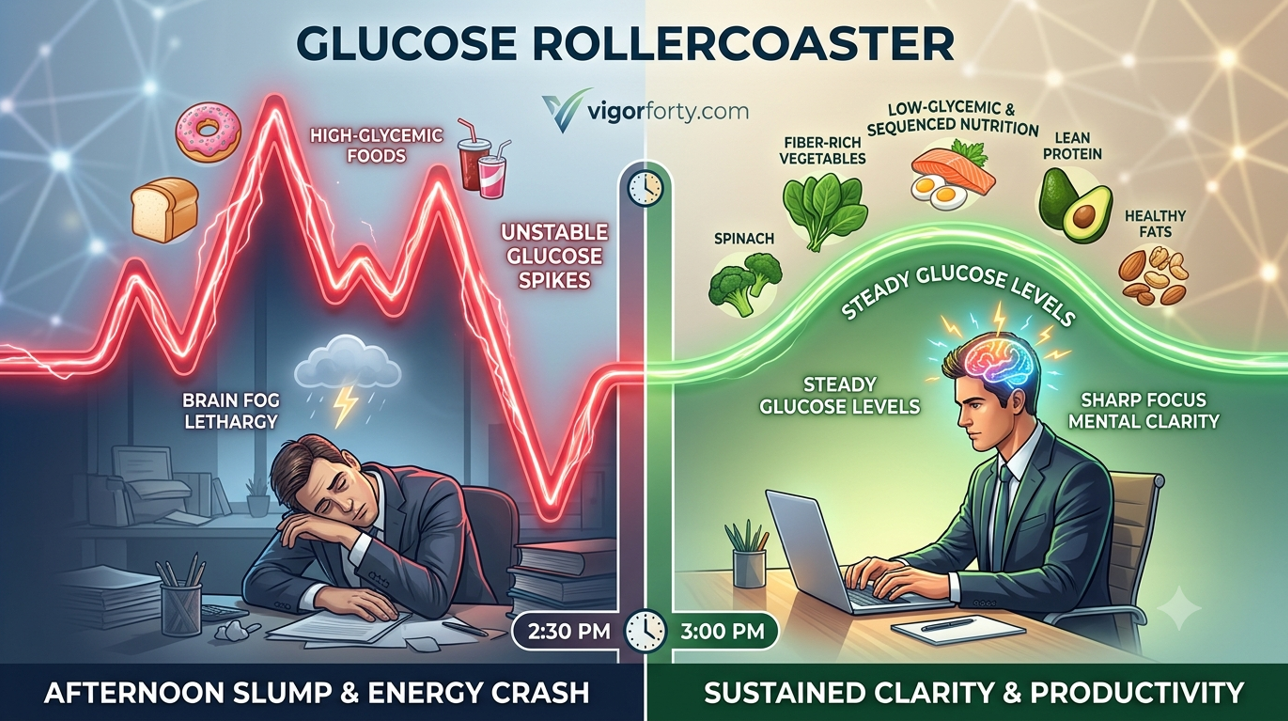
It is 2:30 PM. You finished a standard lunch an hour ago, and suddenly, a wave of intense lethargy hits you. Your eyes feel heavy, your motivation plummets, and focusing on a simple task feels like moving mountains.
Most people blame a lack of willpower, a poor night’s sleep, or the need for more caffeine. In reality, you are likely experiencing a metabolic phenomenon known as postprandial somnolence—the scientific term for a food coma.
When you ride the “glucose rollercoaster,” your diet forces your brain through rapid cycles of energy surges and sudden deficits. Understanding how blood sugar interacts with your neurochemistry is the secret to unlocking sustained, all-day mental clarity.
1. The Cellular Science: Glucose vs. Your Neurons
To understand why blood sugar fluctuations cripple focus, we have to look at how your brain cells produce energy. Your brain relies almost entirely on glucose as its primary fuel source. However, your neurons do not tolerate volatility well. They require a steady, metered drip of energy, not a tidal wave.
The Mechanism of the Crash: Reactive Hypoglycemia
When you consume refined carbohydrates, starches, or hidden sugars (like white bread, pasta, or sugary sauces), glucose floods your bloodstream. Your pancreas responds by releasing a massive wave of insulin to clear the sugar out of your blood and push it into your cells.
Because the insulin response to processed foods is often disproportionately large, it clears the glucose too quickly. This triggers reactive hypoglycemia—a sudden drop in blood sugar below your baseline. When circulating glucose drops rapidly, the brain enters a temporary energy crisis. Your prefrontal cortex, which governs executive function and focus, is the first area to suffer.
The Orexin Suppression (The Sleep Switch)
Beyond energy production, glucose directly controls a specialized group of neurons in the hypothalamus that produce orexin (also known as hypocretin). Orexin is a crucial neurotransmitter responsible for keeping you awake, alert, and behaviorally active.
When blood glucose spikes rapidly, it directly inhibits orexin-producing neurons. In short: high blood sugar flips your brain’s internal switch to “sleep mode.”
2. Dopamine and the Reward Cycle
The glucose rollercoaster does not just affect physical energy; it hijacks your cognitive drive.
[Sugary/Carb-Heavy Meal] ──> [Rapid Dopamine Spike] ──> [Insulin Overdrive]
                                                               │
[Brain Fog & Cravings]  <──  [Severe Dopamine Crash]  <──  [Glucose Drop]
When you eat high-glycemic foods, your brain releases a surge of dopamine, the neurotransmitter of anticipation and reward. This gives you a brief, euphoric sense of alertness.
However, as insulin forces the glucose crash, dopamine levels plummet alongside it. This leaves you feeling mentally fatigued, irritable, and unable to focus. Your brain, desperate to fix the energy deficit, triggers intense cravings for more fast-acting carbohydrates, trapping you in a vicious cycle.
3. How to Flatten the Curve: A Protocol for All-Day Sharpness
You do not need to adopt an extreme, zero-carb diet to maintain cognitive stability. Instead, you can use tactical dietary sequencing to flatten your daily glucose curves.
Strategy 1: Food Sequencing (The Order Matters)
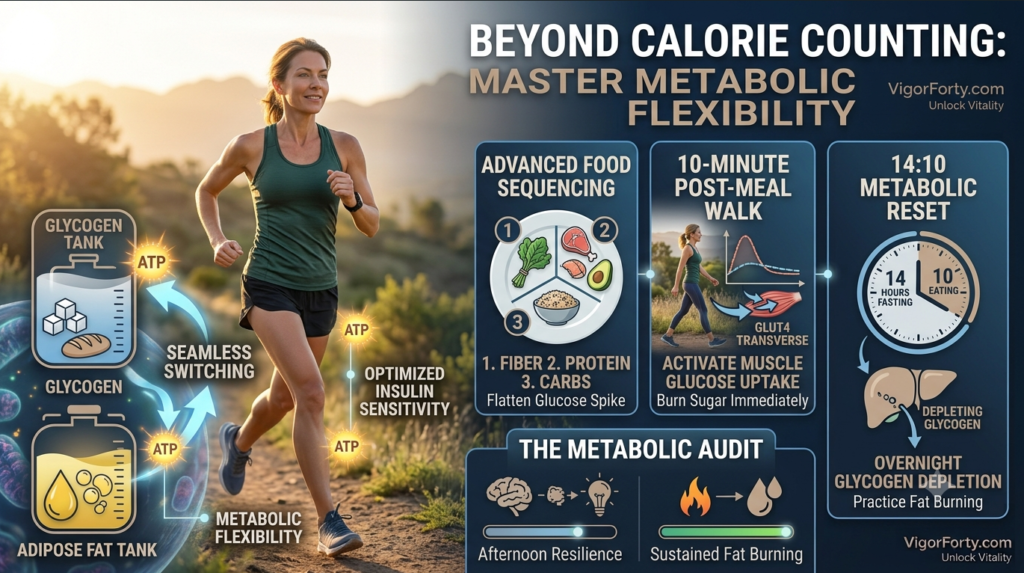
Biochemical research shows that eating your food in a specific order can reduce a meal’s glucose spike by up to 75% without changing the ingredients. Always eat your meal in this sequence:
- Fiber First: Vegetables or greens. Fiber creates a protective mesh in your small intestine, slowing down the absorption of glucose.
- Proteins and Fats Second: Meat, fish, eggs, tofu, nuts, or avocado.
- Starches and Sugars Last: Rice, potatoes, bread, or dessert.
Strategy 2: The 10-Minute Post-Meal Muscle Activation
Your skeletal muscles are your body’s largest “glucose sinks.” When muscles contract, they can absorb glucose directly from your bloodstream without needing insulin.
- The Action: Within 20 minutes of finishing lunch, go for a brisk 10-minute walk or perform 20 bodyweight squats. This diverts the incoming glucose into your muscles for fuel, protecting your brain from an orexin-crushing blood sugar spike.
Strategy 3: Smart Caffeine Timing
Drinking caffeine on an empty stomach first thing in the morning raises cortisol, which temporarily increases insulin resistance.
- The Fix: Delay your first cup of coffee until 90–120 minutes after waking, and ideally enjoy it alongside or after a breakfast rich in protein and healthy fats.
4. References & Scientific Frameworks
To maintain absolute authority, this article references established clinical and metabolic data:
- Orexin Suppression & Alertness: Yamanaka, A., et al. (2003). Hypothalamic Orexin Neurons Regulate Arousal and Are Inhibited by Glucose. Journal of Neuroscience and Metabolic Signaling.
- Postprandial Somnolence & Glucose Volatility: Jenkins, D. J., et al. (1981). Glycemic index of foods: a physiological basis for carbohydrate exchange. The American Journal of Clinical Nutrition.
- Food Sequencing Effects: Shukla, A. P., et al. (2015). Food Order Has a Significant Impact on Postprandial Glucose and Insulin Levels. Diabetes Care Journal.
Read Related Articles
- The Anatomy of Brain Fog: Why You Feel Sluggish and How to Reset in 24 Hours
- The Glucose Rollercoaster: How Blood Sugar Spikes Are Sabotaging Your Afternoon Focus
- Sleep Architecture and Clarity: The Exact Nighttime Routine to Prevent Morning Brain Fog
- Dopamine Detoxing for Deep Work: Rewiring Your Brain to Love Hard Tasks
- The Science of Flow State: Neurochemicals Needed to Trigger Peak Concentration
- The VigorForty Focus Protocol: A Step-by-Step Daily Routine for Uninterrupted Work
- Working Memory vs. Long-Term Storage: How Your Brain Decides What to Keep