

Author: Vigor Forty Editorial Team
Medically Reviewed By: Editorial Review Board
Disclaimer: This article is for informational purposes only and is not a substitute for professional medical advice. Read our full Medical Disclaimer.
📌 Key Takeaways
- The Fat Fallacy Is Over: Decades of low-fat dietary guidance were based on incomplete science. Healthy fats are essential for hormone production, brain function, and the absorption of fat-soluble vitamins A, D, E, and K.
- The Omega Ratio Crisis: The modern American diet is drowning in omega-6 fatty acids while starving for omega-3s. This imbalance drives systemic inflammation at the cellular level.
- Smoke Point Is Not the Full Story: Choosing a cooking fat based solely on smoke point ignores oxidative stability. An oil’s fatty acid composition—specifically its saturated and monounsaturated content—determines whether it becomes toxic when heated.
- The Fat-Burning Kitchen: Strategically incorporating medium-chain triglycerides (MCTs) and monounsaturated fats can enhance metabolic flexibility and support healthy body composition without deprivation.
Introduction: The Demonization and Redemption of Fat
For nearly half a century, dietary fat was the official villain of American nutrition policy. Beginning with the 1977 McGovern Report and crystallizing in the 1980 USDA Dietary Guidelines, the message was clear and relentless: fat makes you fat. Fat clogs your arteries. Fat must be minimized at all costs. The food industry responded with a flood of low-fat, high-sugar, high-refined-carbohydrate products that, we now understand, directly fueled the obesity and diabetes epidemics.
The science has since undergone a thorough and humbling correction. We now know that dietary fat is not merely harmless in moderation—it is essential. Every cell membrane in your body is constructed from fatty acids. Your brain is 60% fat. Your steroid hormones (testosterone, estrogen, cortisol) are synthesized from cholesterol, a fat-like molecule. The fat-soluble vitamins A, D, E, and K cannot be absorbed without dietary fat present in the meal.
However, the rehabilitation of fat has created its own confusion. If fat is healthy, does that mean butter is a health food? Is coconut oil a miracle or a menace? Should you cook with olive oil or is that dangerous? The supplement aisle now offers MCT oil, fish oil, flaxseed oil, and dozens of others, each claiming superiority.
This article is your clarity guide. We will categorize fats by their chemical structure and biological effect, identify the ones that heal and the ones that harm, and provide precise cooking instructions so you know exactly which fat to reach for, at what temperature, for what purpose.
Section 1: The Fatty Acid Taxonomy — Know Your Molecules
All dietary fats are composed of fatty acids, but their chemical structure—specifically the presence or absence of double bonds between carbon atoms—determines their behavior in your body and in your pan.
1. Saturated Fatty Acids (SFA)
- Structure: No double bonds. Straight, rigid chains that pack tightly together.
- At Room Temperature: Solid (butter, coconut oil, animal fats).
- Culinary Property: Extremely stable at high heat. Resistant to oxidation.
- Biological Effect: Mixed. Saturated fat raises both LDL (“bad”) and HDL (“good”) cholesterol. The food matrix matters enormously—saturated fat in dark chocolate or yogurt behaves differently than saturated fat in a highly processed fast-food burger. The current consensus: moderate intake from whole-food sources is neutral to mildly positive; high intake from processed sources is harmful.
- Sources: Grass-fed butter, ghee, coconut oil, red palm oil, animal fats (tallow, lard, duck fat), full-fat dairy.
2. Monounsaturated Fatty Acids (MUFA)
- Structure: One double bond. A single kink in the chain.
- At Room Temperature: Liquid, but solidifies in the refrigerator.
- Culinary Property: Moderately stable at medium heat. The cornerstone of the Mediterranean diet.
- Biological Effect: Overwhelmingly positive. MUFAs improve insulin sensitivity, reduce inflammation, and are associated with lower cardiovascular disease risk. Oleic acid, the primary MUFA in olive oil, is one of the most studied and health-protective molecules in nutrition.
- Sources: Extra-virgin olive oil, avocado oil, macadamia nut oil, whole avocados, almonds, hazelnuts.
3. Polyunsaturated Fatty Acids (PUFA)
- Structure: Multiple double bonds. Highly bent, kinked chains that cannot pack tightly.
- At Room Temperature: Always liquid.
- Culinary Property: Chemically unstable. Highly susceptible to oxidation when exposed to heat, light, or air. These are the oils that go rancid.
- Biological Effect: Highly context-dependent. This category splits into two essential fatty acids with opposing effects.
The Critical Sub-Division: Omega-6 vs. Omega-3
- Omega-6 (Linoleic Acid): Found abundantly in industrial seed oils (soybean, corn, sunflower, safflower, cottonseed). Omega-6 fats are precursors to pro-inflammatory signaling molecules (prostaglandins, leukotrienes). Inflammation is necessary for acute injury repair, but the chronic, low-grade inflammation driven by omega-6 excess is implicated in nearly every modern chronic disease. The human body evolved on an omega-6 to omega-3 ratio of approximately 1:1 to 4:1. The modern Western diet delivers a ratio between 15:1 and 30:1.
- Omega-3 (Alpha-Linolenic Acid, EPA, DHA): Found in cold-water fatty fish, flaxseeds, chia seeds, walnuts, and microalgae. Omega-3 fats are precursors to anti-inflammatory, pro-resolving signaling molecules. They actively calm the inflammatory fires that omega-6 fats stoke. ALA from plants must be converted to EPA and DHA in the body, a process that is inefficient (under 10% conversion). Direct consumption of EPA and DHA from marine sources is biologically superior.
Section 2: The Industrial Seed Oil Problem — Oils to Eliminate
The single most impactful change you can make to your dietary fat intake is the elimination of industrial seed oils. These oils are not pressed from seeds in a traditional manner; they are extracted using high heat, mechanical pressure, and chemical solvents (typically hexane), then deodorized, bleached, and refined to make them palatable. The result is a chemically altered, oxidation-prone, pro-inflammatory product that did not exist in the human food supply 150 years ago.
The “Never Oils” — Remove These From Your Kitchen:
- Soybean oil
- Corn oil
- Canola oil (unless cold-pressed and unrefined, which is rare)
- Sunflower oil
- Safflower oil
- Grapeseed oil
- Cottonseed oil
- Vegetable oil (a blend of the above)
- Margarine and vegetable shortening
These oils are pervasive in restaurant cooking, packaged snacks, salad dressings, and fried foods. They are the default fat of the industrial food system because they are cheap and shelf-stable. Their stability comes at the cost of your metabolic health.
The Vigor Forty Swap:
- Instead of vegetable oil for cooking: use avocado oil, ghee, or coconut oil.
- Instead of bottled salad dressing made with soybean oil: make a 60-second vinaigrette with extra-virgin olive oil and vinegar.
- Instead of margarine: use grass-fed butter or olive oil.
- When dining out: ask if the kitchen can cook your protein in butter or olive oil instead of “vegetable oil.”
Section 3: The Cooking Fat Matrix — Match the Fat to the Heat
The question “Can I cook with olive oil?” has a nuanced answer. It depends on the temperature, the duration of cooking, and whether the oil is refined or extra-virgin. The key metric is not just smoke point, but oxidative stability—a fat’s resistance to chemical breakdown when heated.
Saturated fats are the most stable (no double bonds to oxidize). Monounsaturated fats are moderately stable (one double bond). Polyunsaturated fats are highly unstable (multiple double bonds) and should never be deliberately heated.
The Vigor Forty Cooking Fat Guide:
| Fat/Oil | Smoke Point | Best Use | Notes |
|---|---|---|---|
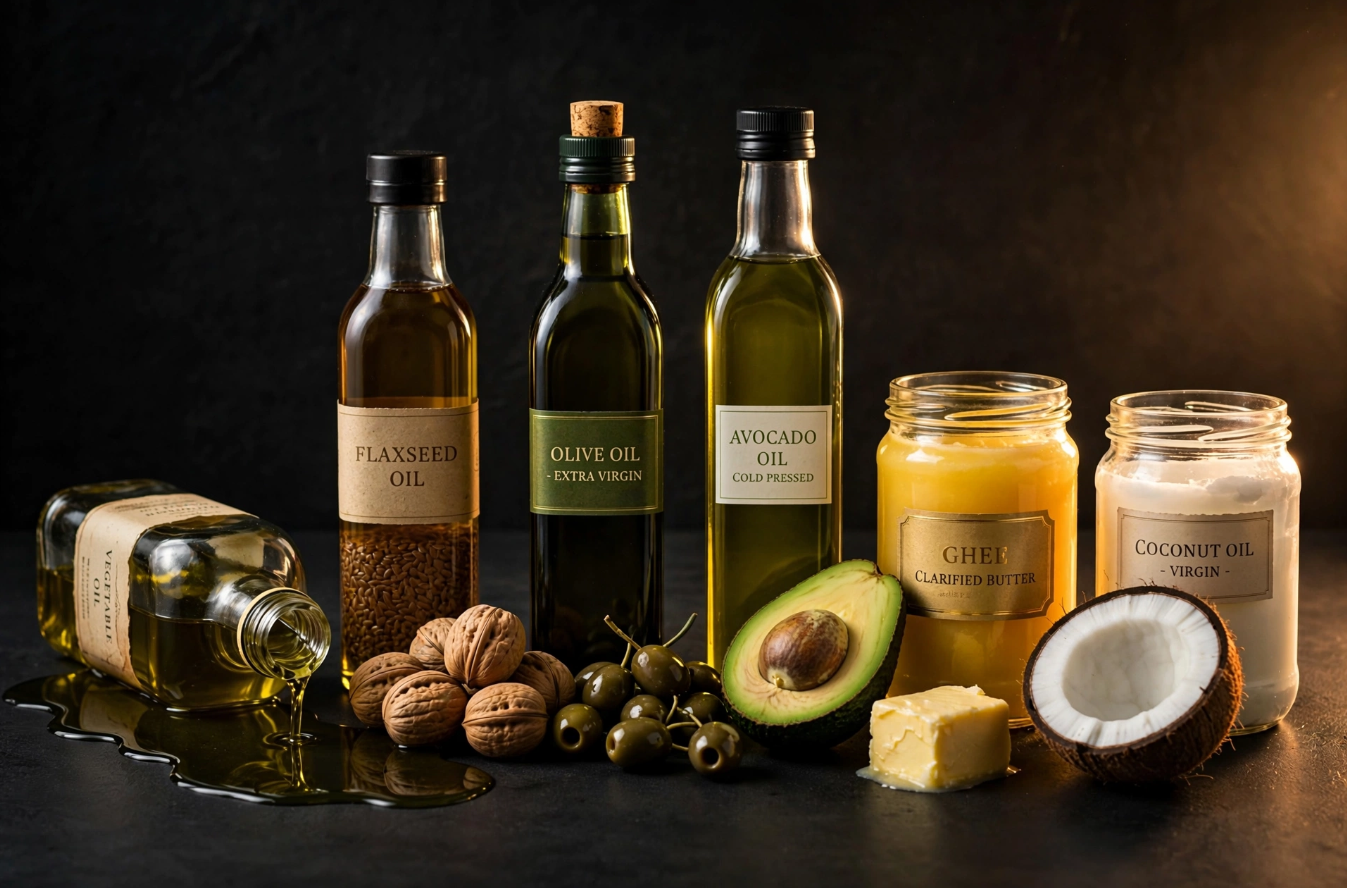
| Ghee (Clarified Butter) | 485°F (250°C) | High-heat searing, roasting, frying | Milk solids removed, pure butterfat. Rich in butyrate. Excellent for steak sear. |
| Avocado Oil | 520°F (270°C) | High-heat searing, grilling, roasting | Neutral flavor. High monounsaturated content. The best all-purpose high-heat oil. |
| Coconut Oil (Refined) | 400°F (204°C) | Medium-high heat sautéing, baking | No coconut flavor. Stable saturated fat. |
| Extra-Virgin Olive Oil | 325-375°F (165-190°C) | Low-medium heat sautéing, finishing, dressings | Low smoke point, but high oxidative stability due to protective polyphenols. Do not deep-fry. Perfect for gentle sweating of aromatics. |
| Grass-Fed Butter | 300°F (150°C) | Low-heat cooking, finishing, spreading | Milk solids burn at high heat. Add to pan at end for flavor. |
| Toasted Sesame Oil | 350°F (177°C) | Finishing, low-heat stir-fries | Primarily a flavoring oil. A few drops at the end of cooking. |
| Walnut/Flaxseed Oil | Do Not Heat | Cold applications only: salad dressings, drizzling over finished food | High in delicate omega-3s. Store in refrigerator. |
The Golden Rule:
- Searing and high-heat roasting: Avocado oil, ghee.
- Medium-heat sautéing and gentle cooking: Extra-virgin olive oil, coconut oil, butter (with attention).
- Finishing, drizzling, and cold preparations: Extra-virgin olive oil, toasted sesame oil, walnut oil, flaxseed oil.
Section 4: The Omega-3 Restoration Protocol
Given the profound omega-6 to omega-3 imbalance in the modern diet, active restoration is necessary. This is not about taking a handful of fish oil capsules (though high-quality supplements have a role). It is about rebuilding your dietary fat architecture.
Step 1: Drastically Reduce Omega-6 Intake
- Eliminate the “Never Oils” listed above from your home.
- Check ingredient labels on salad dressings, mayonnaise, crackers, and sauces. Soybean oil is ubiquitous. Find alternatives made with avocado oil or olive oil.
- Limit deep-fried restaurant foods, which are almost universally cooked in reused, oxidized seed oils.
Step 2: Increase Marine Omega-3s (DHA & EPA)
- Eat fatty cold-water fish at least 3 times per week: wild salmon, mackerel, sardines, anchovies, herring.
- If fish intake is insufficient, consider a high-quality, third-party tested fish oil or algal oil supplement providing a combined 1,000-2,000 mg of EPA and DHA daily.
Step 3: Add Plant-Based ALA Sources
- 1 tablespoon of freshly ground flaxseed or chia seeds daily.
- 1 small handful of raw walnuts daily.
- Hemp hearts sprinkled on meals.
Step 4: Protect the Oils You Buy
- Store polyunsaturated oils (flaxseed, walnut, fish oil) in dark glass bottles in the refrigerator.
- Store olive oil in a cool, dark cupboard, never next to the stove where heat accelerates oxidation.
- Buy oils in smaller bottles you can finish within a few months.
Section 5: The Fat-Smart Meal Matrix (3 Recipes That Honor the Fat Spectrum)
Each meal uses the correct fat for the correct purpose, balances omega ratios, and maximizes flavor.
Meal 1: The Omega-Rich Breakfast
- Dish: Smoked Mackerel & Avocado Tartine
- Fat Strategy:
- Omega-3s (DHA/EPA): Smoked mackerel is one of the richest seafood sources of pre-formed DHA and EPA.
- MUFAs: Ripe avocado, mashed onto toasted sprouted grain bread with a squeeze of lemon.
- Finishing Fat: A drizzle of extra-virgin olive oil and a pinch of red pepper flakes.
- Fat Clarity Win: This open-faced sandwich delivers a full spectrum of anti-inflammatory fats with zero refined seed oils. The mackerel is shelf-stable and ready in seconds.
Meal 2: The Stable Sear Lunch
- Dish: Ghee-Seared Chicken Thighs with Turmeric Cauliflower Rice
- Fat Strategy:
- High-Heat Cooking Fat: Ghee. The clarified butterfat sears the chicken skin to perfect crispness without burning or oxidizing. The butyrate in ghee is also anti-inflammatory for the gut lining.
- Medium-Heat Finishing: Extra-virgin olive oil drizzled over the finished dish.
- Garnish: Toasted pumpkin seeds for crunch and magnesium.
- Fat Clarity Win: Ghee for the sear (stable), olive oil for the finish (flavor and polyphenols). The right fat at the right stage.
Meal 3: The Cold-Fat Dinner Bowl
- Dish: Sardine Niçoise-Style Salad
- Fat Strategy:
- Omega-3s (DHA/EPA): Wild sardines packed in olive oil. Do not drain the oil—it is part of the meal.
- MUFAs and Polyphenols: A warm vinaigrette of extra-virgin olive oil, Dijon mustard, and red wine vinegar.
- Satiety Fat: Soft-boiled eggs and a handful of Niçoise or Kalamata olives.
- Vegetables: Blanched green beans, halved cherry tomatoes, steamed baby potatoes (cooked and cooled for resistant starch).
- Fat Clarity Win: This entire meal is built on fats that are consumed cold or at room temperature, preserving their delicate chemical structures. Zero heat damage. Maximum flavor.
Section 6: The Fat Clarity Shopping List
Restock your kitchen with the right fats.
High-Heat Stable Fats
- Avocado oil (large bottle, for all-purpose high-heat cooking)
- Ghee (jar, grass-fed preferred)
- Refined coconut oil (optional, for neutral-flavored high-heat baking)
Medium-Heat & Finishing Fats
- Extra-virgin olive oil (2 bottles: one for cooking, one premium for finishing)
- Grass-fed butter (for low-heat and spreading)
- Toasted sesame oil (small bottle, for flavor finishing)
Cold-Use Omega-3 Oils
- Walnut oil or flaxseed oil (small bottle, refrigerate after opening)
Omega-3 Rich Foods
- Wild salmon fillets (fresh or frozen)
- Canned wild sardines in olive oil (4-5 tins)
- Smoked mackerel (vacuum-sealed packs)
- Raw walnuts (store in fridge)
- Chia seeds, flaxseeds (whole, grind fresh), hemp hearts
The “Never Oils” to Purge
- Soybean, corn, canola, sunflower, safflower, grapeseed, cottonseed, vegetable oil, margarine, vegetable shortening. Read all labels and discard.
Fat is not a macronutrient to fear. It is a family of molecules to understand. Cook with the stable ones. Finish with the flavorful ones. Eliminate the industrial ones. Your brain, your hormones, and your cellular integrity depend on it.
Read Related Articles
- Precision Protein: How to Calculate Your Exact Intake for Muscle Preservation (Especially on GLP-1s)
- The Metabolic Kitchen: A 5-Day Nutrient-Dense Meal Prep Guide for Lasting Energy
- The 15-Minute Metabolic Plate: High-Speed Nutrient-Dense Cooking for the Time-Starved Professional
- The Gut-Brain Kitchen: Fermented Foods, Prebiotic Fibers, and the 30-Plant Diversity Challenge
- The Focus Plate: Brain-Boosting Nutrients and Recipes for Mental Clarity and Cognitive Longevity
- The Fat Clarity Guide: Healthy vs. Inflammatory Fats and How to Cook with Each One
- The Functional Hydration Guide: Nutrient-Dense Beverages for Energy, Focus, and Metabolic Health
- The Anti-Inflammatory Kitchen: Foods That Heal, Foods That Harm, and Building a Pain-Relieving Plate
- The Immune-Resilient Kitchen: Year-Round Foods and Recipes to Fortify Your Body’s Defenses
- The Sleep-Enhancing Kitchen: Foods, Timing, and Rituals for Deep, Restorative Rest
- The Hormone-Balancing Kitchen: Foods and Recipes to Support Thyroid, Insulin, and Endocrine Health